
Flour and Sugar Sifter FaceOff: Rotary vs Handheld for Lighter Results

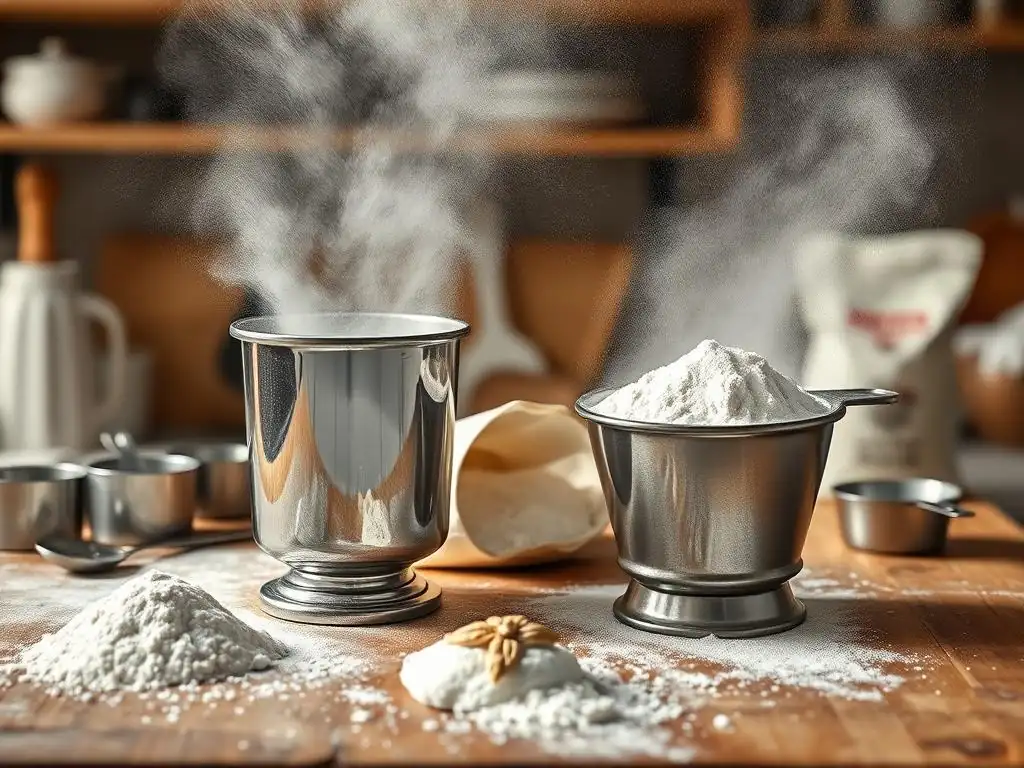
Welcome to BakeWithEase, where baking becomes a joy, not a chore! Ever wonder if your sifting method is truly giving you the lightest results? Dive into our latest article where we put two popular sifters head-to-head in a battle of Rotary Sifter vs Handheld. Which one reigns supreme for perfectly airy baked goods? Read on to unlock the secrets to smoother batters and fluffier cakes – the answer might surprise you!
- Introduction: Achieving Baking Perfection with the Right Sifter
- Rotary Sifters: The Crank-Powered Option
- Handheld Sifters: The Simple and Direct Approach
-
Rotary vs Handheld Sifter: A Detailed Comparison
- Sifting Speed and Efficiency: Which Sifter is Faster?
- Sifting Capacity: How Much Flour Can Each Hold?
- Ease of Use and Cleaning: Rotary vs Handheld Sifter
- Consistency of Results: Achieving Light and Airy Flour
- Ergonomics and Comfort: Which Sifter is Easier on the Hands?
- Price Point: Which Sifter Offers the Best Value?
- Achieving Lighter Baking Results: Sifter Techniques and Tips
- Choosing the Right Sifter for Your Baking Needs: A Personalized Guide
- Conclusion: Selecting the Best Sifter for Lighter, Fluffier Baked Goods
-
Frequently Asked Questions
- What is the primary difference between a rotary sifter and a handheld sifter?
- Which type of sifter, rotary or handheld, is better for achieving lighter, fluffier baked goods?
- Are rotary sifters generally easier to clean than handheld sifters?
- Which sifter is more suitable for someone with limited hand strength or arthritis?
- Can either type of sifter be used for ingredients other than flour and sugar?
- Final Reflection: The Perfect Rise: Choosing Your Sifter for Baking Bliss
- Unleash Your Inner Baker: Lighter Cakes & Cookies Await!
Introduction: Achieving Baking Perfection with the Right Sifter
Why Sifting Flour and Sugar Matters for Baking Success
Sifting might seem like an extra step, but it's a fundamental technique in baking that can significantly impact the texture and volume of your baked goods. When flour sits in a bag, it can become compacted, and sifting helps to aerate it, breaking up clumps and incorporating air. This added air contributes to a lighter, fluffier crumb in cakes, biscuits, and pastries. Think of it as pre-fluffing your flour!
Beyond aeration, sifting also serves a practical purpose: removing any potential impurities or lumps that might be present in the flour or sugar. While modern milling processes are quite refined, sifting acts as a final quality check, ensuring a smooth, consistent texture in your dry ingredients before they are combined with wet ones. This is especially crucial for delicate recipes like angel food cake or macarons, where a perfectly smooth mixture is essential for success.
Understanding the Key Differences Between Rotary and Handheld Sifters
At their core, both rotary and handheld sifters perform the same function: pushing dry ingredients through a fine mesh screen. However, the mechanism by which they achieve this differs significantly, leading to variations in ease of use, capacity, speed, and ultimately, which tasks they are best suited for. Understanding these differences is key to deciding which tool deserves a spot in your baking arsenal.
The primary distinction lies in the sifting action. A rotary sifter typically features a crank that turns blades or wires against the mesh screen, actively forcing the ingredients through. A handheld sifter, on the other hand, usually relies on a squeeze handle or a side-to-side shaking motion to agitate the contents and push them through the mesh. This difference in operation is the root of many of the pros and cons associated with each type when considering a rotary sifter vs handheld model.
Rotary Sifters: The Crank-Powered Option
How Rotary Sifters Work: A Step-by-Step Guide
Using a rotary sifter is quite straightforward, involving a simple mechanical action. First, you measure your dry ingredients – typically flour, but sometimes powdered sugar or cocoa powder – and place them into the cup or bowl of the sifter. It's important not to overfill, as this can make turning the crank difficult and inefficient. Most rotary sifters have a capacity marked on the side, often ranging from 3 to 8 cups.
Once filled appropriately, you hold the sifter over your mixing bowl or parchment paper and begin turning the side crank. Inside the sifter, wires or paddles attached to the crank rotate against the mesh screen at the bottom. This rotation breaks up clumps and pushes the fine powder through the mesh, leaving behind any larger particles or debris. You continue turning the crank until all the desired ingredient has passed through the screen, resulting in a pile of perfectly aerated and lump-free powder.
Advantages of Using a Rotary Flour Sifter
One of the main advantages of a rotary sifter is its capacity and efficiency, particularly for larger baking projects. Many models can comfortably hold 4 to 5 cups of flour at once, allowing you to sift a significant amount in a single go.
The mechanical cranking action makes the sifting process relatively quick and requires less manual effort compared to repeatedly squeezing a handle or shaking. For instance, sifting 6 cups of flour for a large layered cake might take only a minute or two with a rotary sifter, while a smaller handheld model might require multiple refills and more time.
Furthermore, the continuous turning motion of the crank tends to provide a consistent sifting action, resulting in uniformly aerated flour. This consistency is valuable for recipes where precise texture is critical. Bakers tackling wedding cakes, multiple batches of cookies, or large quantities of bread dough often find the higher capacity and steady operation of a rotary flour sifter to be a significant time-saver and a more comfortable option for their hands.
Disadvantages of Rotary Sifters: Considerations Before You Buy
Despite their advantages, rotary sifters do have some potential drawbacks. One common complaint is that they can sometimes be a bit clunky or awkward to store due to their size and shape, often resembling a large metal cup with a handle. Cleaning can also be slightly more involved than with simpler models, as flour can get trapped in the crank mechanism or around the internal blades.
Another consideration is that some rotary sifters, particularly older or less expensive metal models, can be prone to bending or rusting if not properly cared for. The mechanical parts, while efficient, also mean there are more potential points of failure compared to a basic handheld design. When weighing the pros and cons of a rotary sifter vs handheld, these factors of storage, cleaning, and durability are important to keep in mind.
Best Uses for Rotary Sifters: Cakes and Large Batches of Baked Goods
Rotary sifters truly shine when you're dealing with recipes that call for a substantial amount of sifted dry ingredients. Think elaborate layer cakes requiring 5-6 cups of flour, large batches of holiday cookies where you might need to sift several pounds of flour over the course of an afternoon, or multiple loaves of enriched bread where sifting adds necessary lightness to the dough.
Their higher capacity means fewer stops to refill, streamlining the process for high-volume baking. The consistent cranking action also makes them well-suited for sifting ingredients like cocoa powder or confectioners' sugar for frostings and glazes in larger quantities, ensuring a smooth, lump-free finish without tiring your hand from repeated squeezing. For the dedicated baker who frequently prepares big batches, a rotary flour sifter is often the tool of choice.
Handheld Sifters: The Simple and Direct Approach
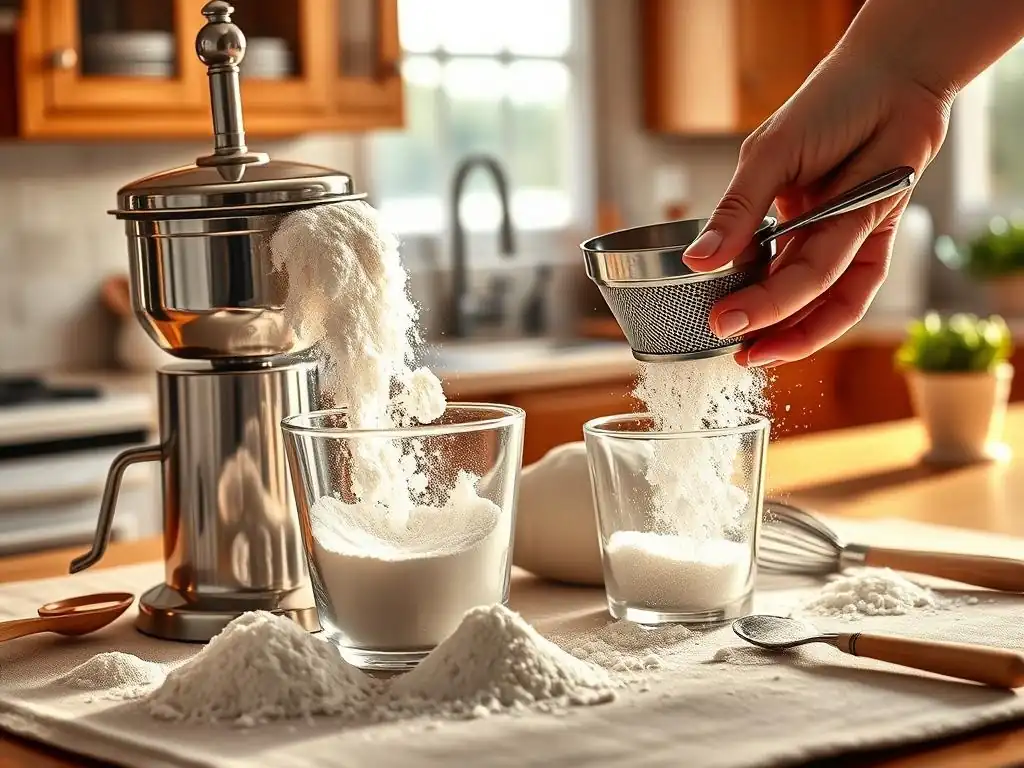
How Handheld Sifters Work: A Quick and Easy Method
Handheld sifters operate on a simpler principle than their rotary counterparts, typically requiring a squeezing or shaking motion. The most common type features a handle that, when squeezed, activates a wire or plate inside the sifter cup, pushing the contents against the mesh screen at the bottom. You simply hold the sifter over your bowl or surface and repeatedly squeeze the handle until the ingredient is sifted through.
Another variation of the handheld sifter is often just a fine-mesh sieve with a handle. With this type, you place the ingredient in the sieve and gently shake or tap the sides, or even use a spoon or scraper to push the ingredient through the mesh. Both methods are direct and give the baker more control over the speed and intensity of the sifting action, making them easy to use for quick tasks.
Advantages of Using a Handheld Flour Sifter
Handheld sifters are celebrated for their simplicity and ease of use, especially for smaller tasks. They are typically more compact than rotary models, making them easier to store in a drawer or hang on a hook. Cleaning is often a breeze; many are dishwasher safe or can be quickly rinsed out. Their straightforward design means there are fewer parts that can break.
For recipes requiring only a cup or two of sifted flour, or just a dusting of powdered sugar, a handheld sifter is incredibly convenient and fast. Sifting 1.5 cups of flour for a batch of muffins or dusting a cake with 1/4 cup of confectioners' sugar takes mere seconds with a handheld model. Their affordability is also a significant plus, often costing less than half the price of a good quality rotary sifter, making them an accessible tool for beginner bakers or those with limited budgets.
Disadvantages of Handheld Sifters: Potential Drawbacks
While great for small jobs, handheld sifters can become tedious and even uncomfortable to use for larger quantities. Repeatedly squeezing a handle or shaking a sieve can lead to hand fatigue, especially when sifting 3 cups of flour or more for a bigger recipe. The smaller capacity of many handheld models (often 1-3 cups) means you have to stop and refill multiple times for larger batches, interrupting your workflow.
Another potential issue is that the squeezing or shaking action might not always provide the same level of consistent aeration as the continuous motion of a rotary sifter, especially if you're tired or rushing. Some users find that residual flour can remain in the cup more easily than with a rotary model. When comparing the rotary sifter vs handheld for significant baking volume, the handheld's limitations become more apparent.
Best Uses for Handheld Sifters: Small Batches and Quick Breads
Handheld sifters are the ideal tool for everyday baking tasks and smaller recipes. They are perfect for sifting the 1-2 cups of flour needed for a single loaf of quick bread, a batch of scones, or a dozen cupcakes. Their quick action makes them excellent for dusting surfaces with flour when kneading dough or rolling out pastry.
They are also indispensable for finishing touches, such as sifting confectioners' sugar over brownies or French toast, or sifting cocoa powder for a light dusting on a tiramisu. For bakers who primarily make smaller quantities or just need a quick tool for occasional sifting, the convenience and simplicity of a handheld flour sifter make it an excellent choice.
Rotary vs Handheld Sifter: A Detailed Comparison
Sifting Speed and Efficiency: Which Sifter is Faster?
When comparing the rotary sifter vs handheld in terms of speed for larger quantities, the rotary sifter generally takes the lead. Its mechanical crank forces a significant amount of material through the mesh with each turn. Sifting 4 cups of flour might take around 60-90 seconds with a rotary sifter, assuming it's not overfilled and is operating smoothly.
A handheld sifter, while fast for small amounts (e.g., 30 seconds for 1 cup), becomes less efficient as the quantity increases. To sift 4 cups with a 2-cup handheld sifter, you'd need to fill and sift twice, potentially taking 2-3 minutes or more due to the refilling time and manual effort involved in squeezing or shaking repeatedly. So, for bulk sifting, the rotary sifter is typically faster.
Sifting Capacity: How Much Flour Can Each Hold?
Capacity is a major differentiating factor when considering the rotary sifter vs handheld. Rotary sifters are designed for larger volumes, commonly featuring cups that hold 3 to 8 cups of dry ingredients. A standard size is often around 5 cups, which is sufficient for most cake recipes or a double batch of cookies.
Handheld sifters, by contrast, usually have a smaller capacity, typically ranging from 1 to 3 cups. A popular size is the 2-cup model, which is adequate for smaller recipes but requires multiple refills for larger baking projects. If your recipes frequently call for 4 cups or more of sifted ingredients, a rotary sifter's capacity offers a significant advantage in workflow.
Ease of Use and Cleaning: Rotary vs Handheld Sifter
Ease of use varies depending on the task. For large quantities, a rotary sifter can be easier on the hands due to the mechanical crank, reducing hand fatigue compared to constant squeezing. However, they can sometimes feel a bit bulky to hold and turn, especially when full. Handheld sifters are generally lighter and simpler to operate for small amounts, often requiring just a simple squeeze.
- Rotary Sifter Cleaning: More potential for flour to get stuck in the mechanism.
- Handheld Sifter Cleaning: Often simpler cup design, easier to rinse or pop in the dishwasher.
Cleaning is generally simpler for handheld sifters due to fewer moving parts. Many handheld models are dishwasher safe, whereas rotary sifters often require careful hand washing to protect the mechanism from water damage or rust, particularly metal versions. Flour can sometimes cling stubbornly to the mesh or internal components of rotary sifters.
Consistency of Results: Achieving Light and Airy Flour
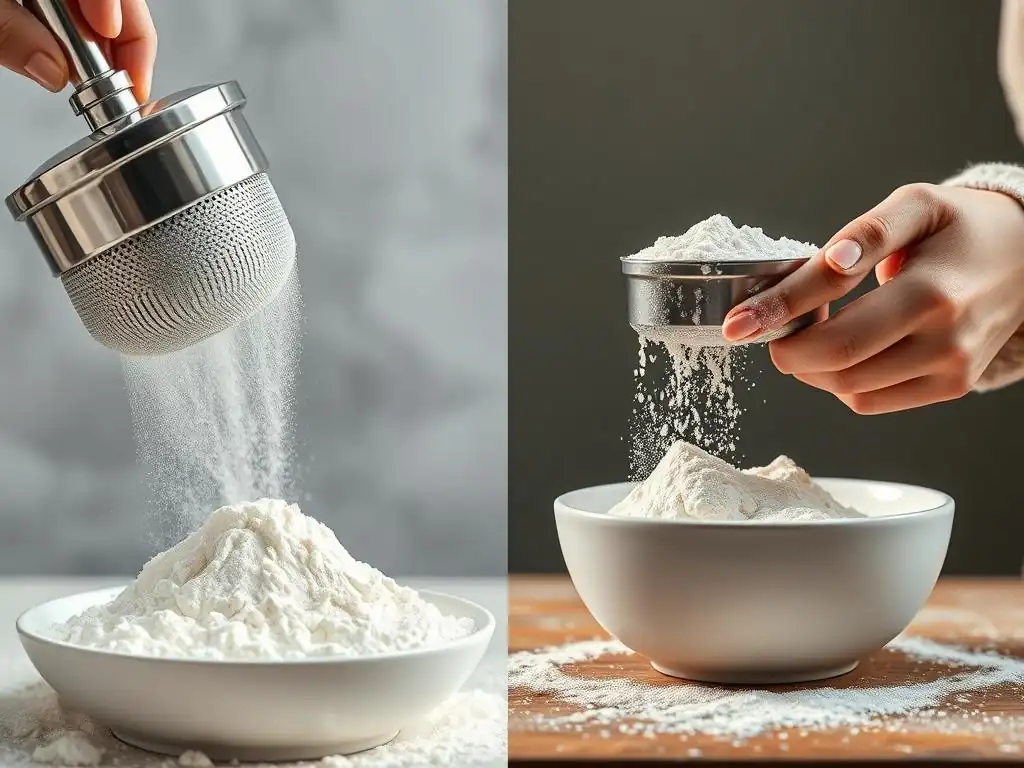
Both types of sifters can produce light and airy flour, but the consistency can differ. A well-functioning rotary sifter provides a continuous, uniform sifting action as you turn the crank, leading to consistently aerated results throughout the batch. This steady motion ensures that clumps are efficiently broken up.
Handheld sifters rely more on the user's action – the speed and strength of squeezing or shaking. This can sometimes lead to slightly less uniform results, especially if the user's hand tires or they rush the process. However, for most standard baking applications, both types of sifters, when used properly, will deliver sufficiently aerated flour for successful results. The key is to ensure all the ingredient passes through the mesh.
Ergonomics and Comfort: Which Sifter is Easier on the Hands?
For small amounts (1-2 cups), a handheld sifter is often considered more comfortable due to its lighter weight and simple squeeze action. It's quick and requires minimal sustained effort.
[ ] Sift 1 cup flour with handheld
[ ] Sift 1 cup flour with rotary
[ ] Compare hand fatigue for small amounts
However, for larger quantities (3+ cups), the ergonomics shift. Repeatedly squeezing a handheld sifter's handle can cause significant hand and wrist strain, sometimes leading to discomfort or fatigue, especially for bakers with arthritis or carpal tunnel issues. The rotary sifter, while requiring some arm movement to turn the crank, distributes the effort differently and can be less taxing on the hands for prolonged sifting tasks.
Price Point: Which Sifter Offers the Best Value?
Generally, handheld sifters are the more budget-friendly option. Simple mesh sieves can cost as little as $5-$10, while squeeze-handle models typically range from $10-$20. They offer a low-cost entry into the world of sifting.
Rotary sifters tend to have a higher price point due to their mechanical components and larger size. Basic metal rotary sifters might start around $15-$25, while more durable stainless steel models or those with special features can range from $25 to $40 or more. When evaluating the rotary sifter vs handheld cost, consider your baking frequency and batch sizes to determine which offers better long-term value for your needs.
Achieving Lighter Baking Results: Sifter Techniques and Tips
Sifting Flour Multiple Times: Does it Make a Difference?
Yes, sifting flour multiple times absolutely makes a difference, especially for delicate recipes like angel food cake, chiffon cake, or very light sponges. Each pass through the sifter adds more air to the flour, further breaking up any remaining micro-clumps and resulting in a finer, more voluminous powder.
For example, sifting cake flour once might weigh approximately 120 grams per cup, but sifting it three times could reduce the weight to closer to 100-110 grams per cup due to the increased aeration. This extra volume of air translates directly into a lighter, more tender texture and a higher rise in your baked goods. While one sift is sufficient for most standard recipes like cookies or muffins, sifting two or three times is a technique often employed by professional bakers aiming for the lightest possible texture.
Sifting Sugar for Smooth Frosting and Glazes
Sifting isn't just for flour; it's equally important for powdered sugar (confectioners' sugar). Powdered sugar, especially after sitting for a while, is notorious for developing hard, stubborn lumps. Sifting it before making frosting, glazes, or icings is crucial for achieving a perfectly smooth, silky consistency without gritty bits.
Consider a buttercream frosting recipe calling for 4 cups of powdered sugar. Attempting to mix unsifted, lumpy sugar into butter and liquid will result in a frustrating battle to break up those lumps, often leaving small gritty pieces throughout the frosting. Sifting those 4 cups of sugar, whether with a handheld sifter or a rotary sifter, takes just a minute or two but guarantees a smooth base, making it much easier to achieve that desirable glossy finish on your cakes and cupcakes.
Combining Sifting with Other Baking Techniques: Creaming and Folding
Sifting works synergistically with other fundamental baking techniques. When creaming butter and sugar, the goal is to incorporate air and create a light, fluffy base. Adding sifted flour to this mixture during the dry ingredient incorporation phase builds upon that aeration. The light, airy flour combines more easily and evenly with the creamed mixture without deflating the air pockets you've already created.
Similarly, when folding dry ingredients into wet ones, particularly in delicate batters like those for soufflés or sponge cakes, using sifted flour is paramount. The lightness of the sifted flour allows it to be folded in gently with fewer strokes, minimizing the risk of overmixing and developing tough gluten. This gentle incorporation preserves the air bubbles, contributing to a tender, light final product.
Tip: Always sift your dry ingredients *before* measuring, especially for recipes that call for a specific volume (like "1 cup sifted flour"). If the recipe calls for "1 cup flour, sifted", measure first, then sift. Pay close attention to recipe instructions!
Choosing the Right Sifter for Your Baking Needs: A Personalized Guide
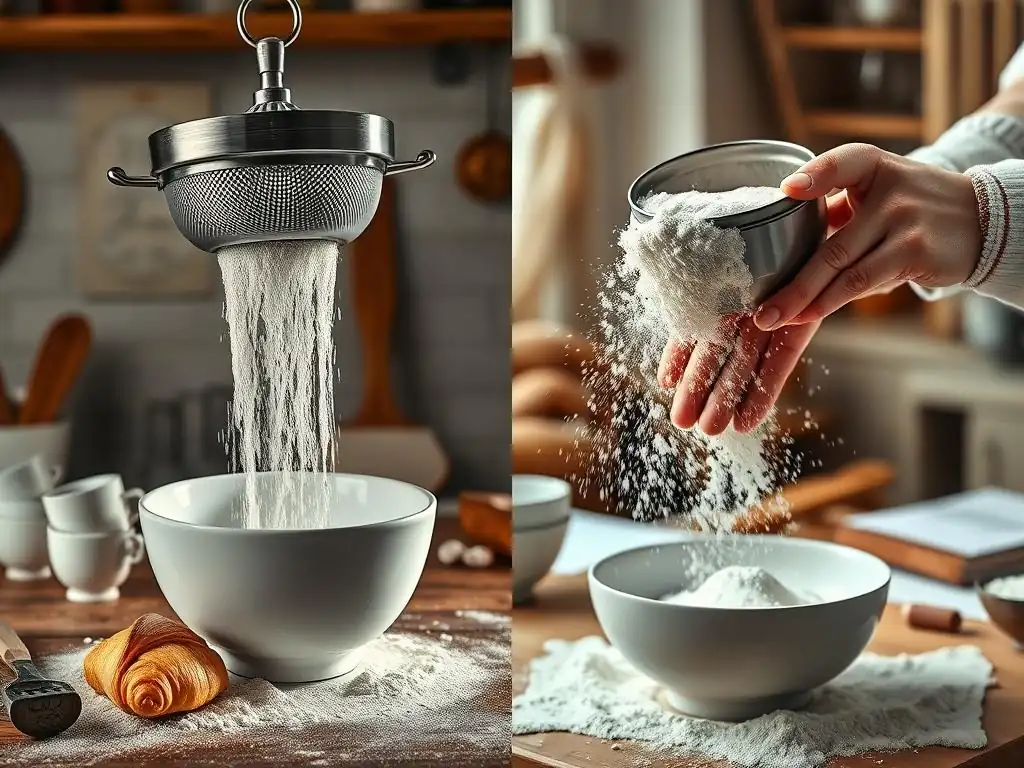
Consider Your Baking Style and Frequency
Your personal baking habits are the most important factor in choosing between a rotary sifter vs handheld. If you're an occasional baker who primarily makes small batches of cookies, muffins, or quick breads, a simple, easy-to-store handheld sifter might be perfectly adequate and offer the best value. It's quick for those small tasks and requires minimal fuss.
However, if you bake frequently, often tackle larger recipes like multi-layer cakes, bread in significant quantities, or large batches for events, the efficiency and capacity of a rotary sifter will likely save you time and effort in the long run. Consider how often you'll be sifting more than 3-4 cups of dry ingredients at once.
Evaluating Your Kitchen Space and Storage
Kitchen space is always a consideration when adding new tools. Handheld sifters are typically more compact and can often fit neatly into a drawer alongside whisks and spatulas, or hang conveniently on a hook. They require minimal dedicated storage space.
Rotary sifters, with their cup shape and crank handle, are bulkier and require more room. They often need to be stored in a cupboard or pantry shelf. If your kitchen is very small and storage is at a premium, the larger footprint of a rotary flour sifter might be a deciding factor against it, regardless of its sifting prowess for big jobs.
Matching the Sifter to Your Specific Recipes
Look at the types of recipes you most frequently make or plan to make.
- Small batch cookies, muffins, quick breads (1-3 cups flour): Handheld sifter is ideal.
- Large cakes, multiple cookie batches, bread (4+ cups flour): Rotary sifter is more efficient.
- Dusting cakes/surfaces (small amounts of sugar/flour): Handheld sifter (or a fine mesh sieve) is excellent.
- Recipes requiring multiple sifts (e.g., Angel Food Cake): A rotary sifter can make this less tedious for large quantities, but a handheld works fine for smaller batches.
Consider the quantity of ingredients needing sifting in your typical recipes. If you often scale recipes up, a higher capacity rotary sifter will be a better investment than relying solely on a small handheld model.
Conclusion: Selecting the Best Sifter for Lighter, Fluffier Baked Goods
The Final Verdict: Rotary or Handheld – Which Sifter Wins?
There's no single "winner" in the rotary sifter vs handheld debate; the best sifter is the one that fits your specific baking habits and needs.
- Choose a Handheld Sifter if:
- You bake occasionally or primarily in small batches (under 3-4 cups of flour).
- You value simplicity, easy cleaning, and compact storage.
- Your budget is limited.
- You mainly need a sifter for quick tasks like dusting.
- Choose a Rotary Sifter if:
- You bake frequently, especially large batches (over 4 cups of flour).
- You want maximum efficiency and speed for big projects.
- You prefer a mechanical action over repeated squeezing for comfort during long tasks.
- You have sufficient storage space.
Many enthusiastic bakers find value in owning both! A handheld sifter for quick dusting or small jobs, and a rotary sifter for tackling larger quantities for cakes or multiple batches. This provides the ultimate flexibility in the kitchen.
Elevate Your Baking: Further Resources and Recipes
No matter which sifter you choose, incorporating sifting into your baking routine is a simple step that yields noticeable improvements in the lightness and texture of your baked goods. Experiment with sifting different ingredients and observe the difference it makes.
Ready to put your sifter to good use? Explore recipes that benefit from perfectly sifted ingredients:
- Light and Airy Vanilla Cake
- Classic Chocolate Chip Cookies
- Fluffy Scones
- Smooth Buttercream Frosting
Mastering the use of your sifter, whether it's a rotary sifter vs handheld model, is a fundamental skill on your journey to becoming a more confident and successful baker. Happy sifting!
Frequently Asked Questions
What is the primary difference between a rotary sifter and a handheld sifter?
The main difference lies in their sifting mechanism. A rotary sifter uses a crank-operated paddle, while a handheld sifter relies on a squeeze-handle or tap-and-shake action.
Which type of sifter, rotary or handheld, is better for achieving lighter, fluffier baked goods?
Both can achieve lighter results, but many bakers find the rotary sifter more consistent because of its even distribution of flour. This leads to less dense baked goods.
Are rotary sifters generally easier to clean than handheld sifters?
Generally, handheld sifters are considered easier to clean. Rotary sifters often have more complex mechanisms that require more careful cleaning to prevent clogging.
Which sifter is more suitable for someone with limited hand strength or arthritis?
A rotary sifter is usually recommended. The crank mechanism requires less grip strength compared to the squeeze-handle action of many handheld sifters.
Can either type of sifter be used for ingredients other than flour and sugar?
Yes, both rotary and handheld sifters can be used for other dry ingredients, like cocoa powder, baking powder, or powdered sugar. Just ensure the ingredient is finely ground enough to pass through the mesh.
Final Reflection: The Perfect Rise: Choosing Your Sifter for Baking Bliss
The quest for the lightest, airiest baked goods continues, and the choice between a rotary and handheld sifter remains a crucial step in achieving that perfect rise. The subtle differences in performance, ease of use, and overall efficiency, as explored throughout this article, ultimately impact the texture and quality of your final product. This isn't just about sifting flour; it's about mastering the art of baking.
The impact of this seemingly small kitchen tool extends far beyond the individual baker. It speaks to a larger appreciation for the details in culinary craftsmanship, a dedication to perfecting technique, and a pursuit of excellence in even the simplest of tasks. The debate between rotary and handheld sifters reflects a broader conversation about the tools we choose and how those choices shape our creative process. The difference between ordinary and extraordinary is that little extra.
This quote, though not directly about sifters, perfectly encapsulates the spirit of this exploration – the pursuit of that "little extra" that elevates the ordinary to the extraordinary.
Now, consider your own baking journey. Which sifter resonates most with your needs and style? Do you value speed and efficiency above all else, or do you find satisfaction in the more hands-on approach of a handheld sifter? Take this knowledge, this newfound understanding of the subtle nuances between these tools, and apply it to your next baking project. Embrace the process, appreciate the details, and discover the joy of achieving that perfect, light-as-air texture. The choice is yours, and the possibilities are endless.
Thanks for joining us on this flour-and-sugar sifting adventure! We hope you now feel confident in choosing the perfect sifter for your baking needs. Ready to put your newfound knowledge to the test?
- Master the art of light-as-air baking: Try out the sifting technique we discussed, using your preferred sifter, and notice the difference in your next batch of cookies or cake! Feel the texture, taste the lightness—you’ll be amazed.
- Share your sifting success (or challenges!): We’d love to see your baking creations—post a picture on social media and tag us! Let's build a community of bakers perfecting their sifting skills together.
- Explore more baking tips & tricks: Dive deeper into our extensive library of baking guides to discover even more secrets to perfect pastries and delightful desserts.
Which sifter will you choose for your next baking project—and what delicious treat will you create?