
Egg Whites vs. Whole Eggs: Whipping Techniques for Optimal Rise

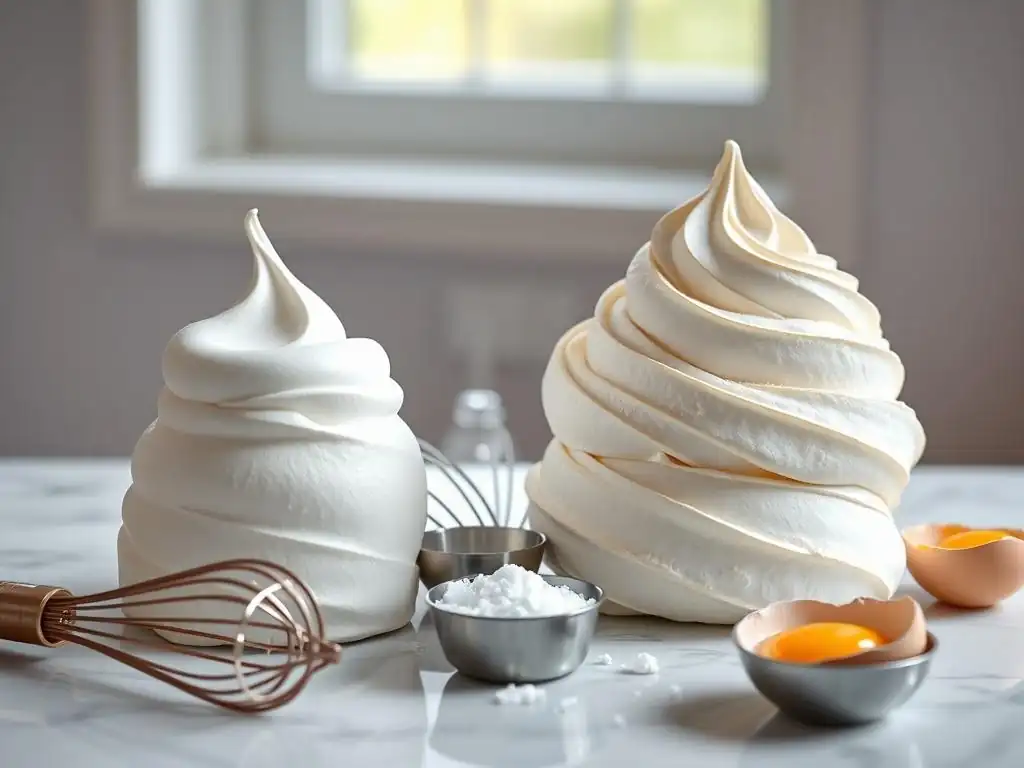
Welcome to BakeWithEase, your sanctuary for unlocking baking brilliance! Ever wondered if you could skip the egg separation and still achieve that cloud-like, perfect meringue? You absolutely can! This article delves into the secrets of perfecting meringue with whole eggs, offering a revolutionary approach to achieving optimal rise and texture. Prepare to be amazed as we debunk myths and share expert techniques that will transform your baking game. Ready to whip up something extraordinary? Let's get started!
- Egg Whites vs. Whole Eggs: Whipping Techniques for Optimal Rise on BakeWithEase
- Introduction: Understanding Egg's Role in Baking Leavening
- Egg Whites: The Key to Light and Airy Baked Goods
- Whole Eggs: Richness, Flavor, and Leavening Combined
- Egg Whites vs. Whole Eggs: A Detailed Comparison for Optimal Rise
- Troubleshooting Common Whipping Problems
- Advanced Techniques: Elevating Your Whipping Skills on BakeWithEase
- Recipes Showcasing Egg White and Whole Egg Whipping Techniques
- Conclusion: Choosing the Right Egg for Your Baking Needs
-
Frequently Asked Questions
- What is the main difference between using egg whites and whole eggs when making meringue?
- Why might someone choose to use whole eggs over just egg whites for meringue?
- What are some key techniques to ensure a successful meringue when using whole eggs?
- How does the addition of sugar affect the whipping process when using whole eggs?
- Are there any specific recipes that benefit from using whole egg meringue instead of just egg white meringue?
- Final Reflection: The Unexpected Majesty of the Whole Egg Meringue
- Unlock Your Baking Potential: Master the Art of Egg White Whipping!
Egg Whites vs. Whole Eggs: Whipping Techniques for Optimal Rise on BakeWithEase
Introduction: Understanding Egg's Role in Baking Leavening
Why Eggs Matter for BakeWithEase Recipes
Eggs are truly foundational ingredients in countless BakeWithEase recipes, serving far more purposes than just binding ingredients together. They are complex structures containing proteins and fats that undergo remarkable transformations when heated or manipulated, particularly through whipping. This ability to create structure and incorporate air is critical for achieving light, airy textures in everything from delicate meringues and fluffy cakes to rich custards and tender breads. Understanding the specific roles of egg whites and whole eggs, and how to best prepare them, is a key step in mastering baking techniques and ensuring consistent, successful results in your kitchen.
Beyond their structural contribution, eggs add richness, flavor, and color to baked goods. The yolks, rich in fat and lecithin, contribute to moisture and emulsification, helping to create smooth batters and tender crumbs. The proteins in both the white and yolk coagulate when heated, setting the structure formed by leavening agents. This dual function of providing structure and aiding leavening makes eggs indispensable for achieving the desired rise and texture in a vast array of baked treats, setting the stage for understanding why different recipes call for different egg preparations.
Exploring the Leavening Power of Egg Whites and Whole Eggs
The primary way eggs act as leavening agents in baking is through the incorporation of air via whipping. When egg whites are whipped, their proteins (primarily albumin) denature and unfold, forming a flexible network that traps air bubbles. This process can increase the volume of the egg whites by a factor of six to eight times, creating a remarkably light foam that provides significant lift when baked. Think of how dramatically cloud-like a meringue can become!
Whole eggs, while containing the same proteins as egg whites, also contain fat from the yolk. This fat interferes with the ability of the proteins to form a stable, voluminous foam. However, whole eggs can still be whipped, incorporating air and contributing to rise, though typically not to the same dramatic extent as egg whites alone.
The technique for whipping whole eggs is different, often involving heat or longer whipping times to achieve sufficient aeration. Recipes like Genoise sponge cakes rely heavily on the air whipped into whole eggs for their structure and rise, demonstrating that while the mechanism is slightly different due to the presence of fat, whole eggs are still powerful leavening contributors.
Egg Whites: The Key to Light and Airy Baked Goods
Mastering Meringue: The Science Behind Whipped Egg Whites
Perfecting meringue is perhaps the quintessential example of harnessing the leavening power of egg whites. Meringue is essentially a foam created by whipping egg whites, usually with sugar. The science behind it is fascinating: egg whites are about 90% water and 10% protein. When you whip them, mechanical energy unfolds the protein molecules. These unfolded proteins then rearrange themselves at the air-water interface of the bubbles being incorporated. They link together, forming a stable, elastic network that surrounds and stabilizes the air bubbles, preventing them from collapsing.
The addition of sugar is crucial for perfecting meringue structure. Sugar helps to stabilize the foam by dissolving in the water phase, reducing the drainage of liquid from the protein network. It also binds to the protein molecules, making the network stronger and less prone to breakage.
Different types of meringue (French, Swiss, Italian) incorporate sugar in different ways – added gradually while whipping, heated with the whites over a bain-marie, or added as a hot sugar syrup – each method affecting the final stability, texture, and safety of the meringue. Understanding this protein-sugar interaction is key to achieving glossy, stable peaks.
Techniques for Maximizing Egg White Volume and Stability
Achieving maximum volume and stability when whipping egg whites requires attention to a few critical details. Starting with clean, grease-free equipment is paramount, as even a tiny amount of fat can prevent the proteins from forming a stable foam, significantly reducing volume and stability. Room temperature egg whites whip up faster and achieve greater volume than cold ones because the proteins are more elastic and unfold more easily. Allowing eggs to sit out for 20-30 minutes before separating is a simple but effective step.
The speed of whipping also plays a role. Starting on medium speed to break up the whites and create a loose foam, then increasing to medium-high or high speed as they become opaque and begin to thicken allows for controlled air incorporation and protein unfolding. Adding sugar gradually, usually after soft peaks have formed, gives the proteins time to build a structure before the sugar adds weight and stability. Over-whipping can lead to a dry, curdled texture where the protein network tightens too much and expels liquid, so stopping at the desired peak stage is essential.
Achieving Stiff Peaks: Essential Tips for Egg White Whipping
Reaching the stiff peak stage is often the goal when whipping egg whites for meringue or specific cake batters. Stiff peaks are characterized by a foam that holds its shape firmly when the whisk is lifted, with the peak standing straight up without drooping. To achieve this, ensure your egg whites are at room temperature and your bowl and whisk are scrupulously clean – even a trace of yolk or grease is detrimental. Begin whipping on medium speed until the whites are frothy, then increase to medium-high.
Once the whites are opaque and beginning to thicken (soft peaks), gradually add your sugar, one or two tablespoons at a time, allowing each addition to dissolve before adding the next. Continue whipping on high speed until the mixture is glossy and smooth, and when you lift the whisk, the peaks stand tall and rigid. This process typically takes anywhere from 5 to 10 minutes depending on the quantity of egg whites and the power of your mixer. Stopping just as stiff peaks form is crucial; over-whipping past this point can break the protein network.
The Importance of Clean Bowls and Room Temperature Eggs
Using exceptionally clean, grease-free bowls and whisks is arguably the single most important factor in successful egg white whipping. Fat molecules, even minute traces from residual grease, soap, or a speck of egg yolk, interfere with the proteins' ability to denature and link together to form a stable foam. The proteins prefer to interact with fat rather than air and water, preventing the formation of the crucial air-trapping network. Washing equipment thoroughly with hot, soapy water, rinsing well, and even wiping down with a bit of vinegar or lemon juice before drying completely can help ensure a fat-free environment.
Room temperature eggs (around 68-72°F or 20-22°C) whip up significantly better than cold eggs. The proteins in warmer egg whites are more relaxed and elastic, allowing them to stretch and unfold more easily when whipped. This results in a greater volume of foam and a more stable structure.
While cold eggs are easier to separate (the yolk is firmer and less likely to break), it's highly recommended to separate them while cold and then let the whites sit at room temperature for 20-30 minutes before whipping. This simple step dramatically improves whipping performance and helps in perfecting meringue and other egg-white leavened recipes.
Whole Eggs: Richness, Flavor, and Leavening Combined
Whipping Whole Eggs for Cakes: A Different Approach
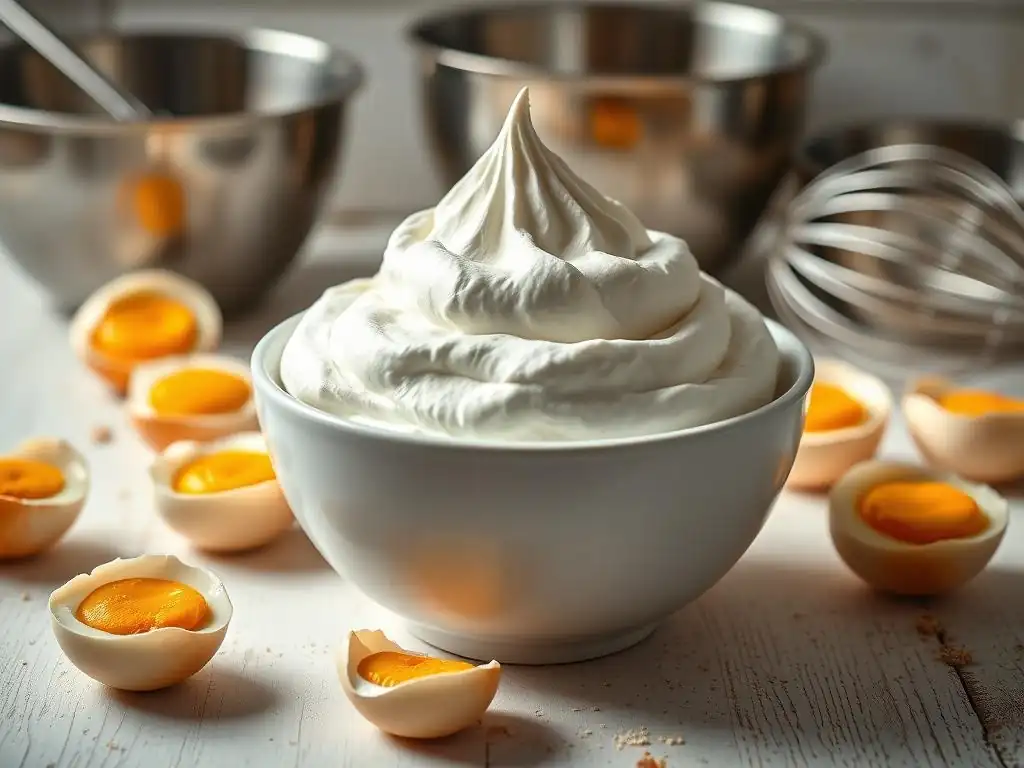
Whipping whole eggs serves a different, yet equally vital, leavening purpose in many cake recipes, particularly those like Genoise or sponge cakes that rely heavily on egg aeration rather than chemical leaveners like baking powder or soda. Unlike egg whites, whole eggs contain fat from the yolk, which inhibits the formation of a rigid, stand-alone foam.
Therefore, the goal when whipping whole eggs is not to achieve stiff, glossy peaks that stand on their own for applications like meringue, but rather to incorporate a significant amount of air into a stable, emulsified mixture that provides lift and structure when baked.
The technique for whipping whole eggs often involves warming them gently, typically over a bain-marie (a bowl set over simmering water), while whisking. Warming the eggs helps to thin the yolk's fat and makes the proteins more receptive to whipping, allowing them to trap air more effectively. The mixture is then whipped off the heat, often with sugar added gradually, until it becomes pale yellow, thick, and significantly increased in volume – often described as reaching the "ribbon stage" or "folding stage."
At this point, when the whisk is lifted, the mixture falls back in a ribbon-like stream that holds its shape briefly on the surface before disappearing. This aerated base provides the primary leavening for the cake.
Whipping Whole Eggs: Challenges and Solutions for BakeWithEase Bakers
Whipping whole eggs presents unique challenges compared to whipping egg whites, primarily due to the presence of fat in the yolk. Fat molecules surround and coat the protein molecules, hindering their ability to unfold and link together to form a stable protein network that can trap air as effectively as in pure egg whites. This means achieving the same dramatic volume increase seen in meringue is impossible when whipping whole eggs. The resulting foam is less stable and more delicate, requiring careful handling during the subsequent mixing steps of the batter.
However, BakeWithEase bakers can overcome these challenges with specific techniques. Warming the whole eggs with sugar over a bain-marie to around 110-120°F (43-49°C) is a common solution. This warming helps the sugar dissolve completely, which stabilizes the proteins, and also makes the mixture easier to whip and emulsify the fat.
Whipping the warm mixture with a powerful stand mixer for a longer duration (often 8-15 minutes) is necessary to incorporate enough air. The mixture should become very pale, thick, and airy, increasing significantly in volume. The delicate nature of this foam means that subsequent dry ingredients must be folded in gently to avoid deflating the precious air bubbles, often using a light hand or a spatula rather than a mixer.
Understanding the Impact of Fat Content on Whole Egg Volume
The fat content in egg yolks is the primary reason why whole eggs cannot achieve the same light, voluminous foam as egg whites. A large egg yolk contains approximately 5 grams of fat, while the white is virtually fat-free. This fat disrupts the protein network that forms during whipping. Instead of the protein molecules solely focusing on creating a stable structure around air bubbles, they also interact with the fat molecules. This competition prevents the proteins from forming the tight, interlocking network essential for a highly stable, high-volume foam like meringue.
Consequently, whipping whole eggs results in a foam that is denser and less voluminous compared to whipped egg whites. While a cup of egg whites might whip up to 6-8 cups of foam, a cup of whole eggs might only double or triple in volume under optimal whipping conditions.
The presence of lecithin in the yolk, a powerful emulsifier, also contributes to the different structure, creating more of a stable emulsion with trapped air rather than a pure foam. Understanding this inherent limitation due to fat is crucial for setting realistic expectations when whipping whole eggs and for choosing the appropriate recipes where this technique provides sufficient leavening.
How to Incorporate Whole Eggs for Optimal Rise
Incorporating whipped whole eggs into a cake batter requires a delicate touch to preserve the air that provides the rise. Once the whole eggs (often warmed with sugar) have been whipped to the ribbon stage – pale, thick, and significantly increased in volume – subsequent ingredients, particularly dry ones, must be added with care. The goal is to combine everything thoroughly without deflating the airy egg foam. This is typically achieved using a folding technique.
Folding involves gently cutting through the mixture with a spatula, scooping from the bottom of the bowl, and lifting it over the top, rotating the bowl as you go. This motion combines ingredients with minimal agitation, preserving the delicate air bubbles trapped within the whipped egg structure. Dry ingredients like flour are often sifted over the egg mixture in small additions and folded in just until no dry streaks remain.
Melted butter or other liquids, often added last, are also gently folded in. Over-mixing at this stage is the quickest way to lose the incorporated air, resulting in a dense cake. Mastering this gentle folding technique is as important as the whipping itself for achieving optimal rise from whole eggs.
Egg Whites vs. Whole Eggs: A Detailed Comparison for Optimal Rise
Rise and Texture: Comparing the Results of Egg White and Whole Egg Whipping
The most significant difference between whipping egg whites and whole eggs lies in the potential for rise and the resulting texture of the baked good. Whipped egg whites, free from fat, can incorporate a vast amount of air, expanding 6-8 times their original volume. This results in baked goods that are incredibly light, airy, and often crisp, such as meringues, angel food cakes, and soufflés. The structure is primarily a protein foam, leading to a delicate, sometimes slightly chewy or crisp texture depending on the baking method and sugar content.
Whipped whole eggs, while they do incorporate air and contribute to rise, do so to a lesser extent, typically doubling or tripling in volume. The presence of yolk fat and emulsifiers creates a richer, denser foam. When baked, this results in cakes with a fine, tender crumb and a more substantial texture compared to those leavened solely by whipped whites. Think of the difference between an ethereal Angel Food cake (egg whites) and a tender Genoise sponge (whole eggs). Both are light compared to butter-based cakes, but the whole egg leavened cake has more richness and structure.
Flavor Profile: The Impact of Egg Choice on Taste
The choice between using whipped egg whites or whipped whole eggs also significantly impacts the flavor profile of the final baked good. Egg whites themselves have a very neutral, almost imperceptible flavor. When whipped and combined with sugar, as in meringue, their flavor is largely determined by the sugar and any added extracts (like vanilla or almond). This allows other flavors in the recipe to shine through, resulting in a clean, sweet taste.
Whole eggs, conversely, bring the distinct richness and flavor of the yolk to the table. The fat in the yolk carries flavor compounds and contributes a characteristic eggy richness and depth. While this isn't always desirable in delicate items like pure meringue, it is essential for the classic flavor of cakes like Genoise, sponge cakes, and many butter-based cakes where whole eggs contribute both leavening and a tender, moist crumb with a richer taste. The difference is subtle but noticeable, influencing whether a dessert feels light and purely sweet or more substantial and rich.
Recipe Suitability: When to Use Egg Whites vs. Whole Eggs in Baking
Understanding when to use whipped egg whites versus whipped whole eggs is key to successful baking on BakeWithEase. Whipped egg whites are ideal for recipes where maximum lightness, airiness, and a pure, clean flavor profile are desired. This includes:
- Meringues (French, Swiss, Italian)
- Angel Food Cake
- Soufflés
- Macarons
- Certain light mousses or parfaits
These applications rely on the significant volume and stable foam created by egg whites for their signature texture and rise. Perfecting meringue, for instance, is entirely dependent on the protein network of the whites.
Whipped whole eggs are suitable for recipes that require a good amount of air incorporation but also benefit from the richness, emulsifying properties, and structure provided by the yolk. These recipes often have a slightly denser, more tender crumb than egg-white leavened items. Examples include:
- Genoise sponge cakes
- Some types of sponge rolls
- Pâte à bombe bases for mousses or ice creams
- Certain butter-based cakes where whipped eggs supplement chemical leavening
While you might explore perfecting meringue with whole eggs in the sense of adapting recipes or creating variations, traditional meringue strictly uses whites. Whole egg whipping for rise is a technique applied to different types of batters and bases where the yolk's properties are an advantage.
Troubleshooting Common Whipping Problems
Over-whipping Egg Whites: Recognizing and Correcting the Issue
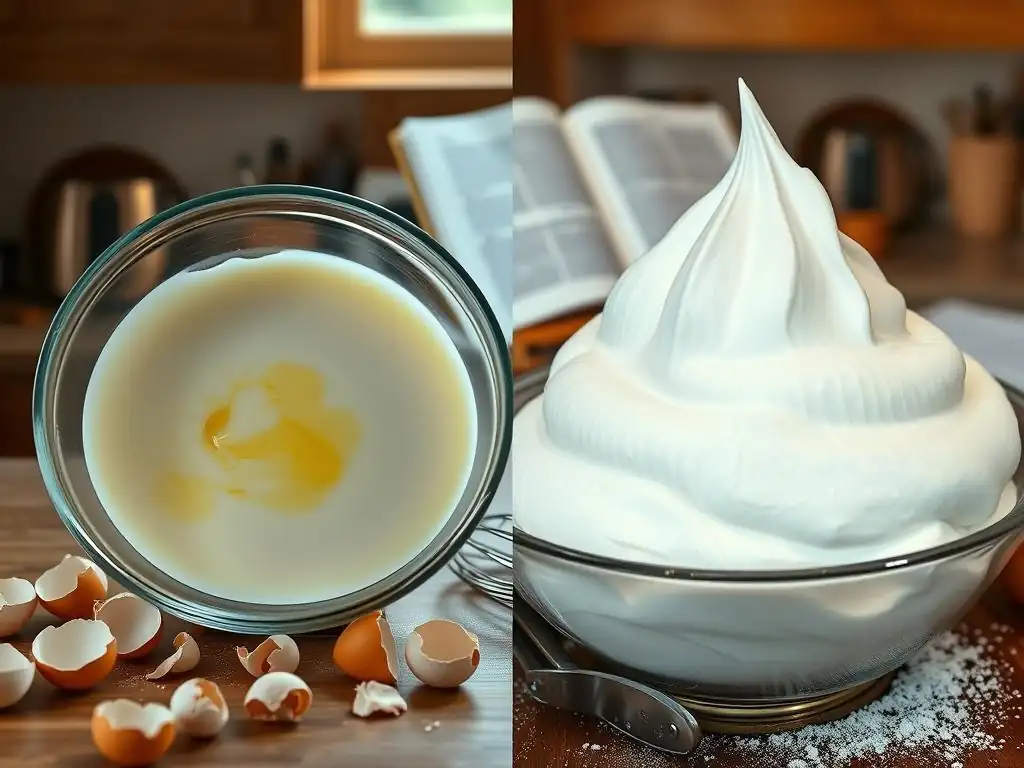
Over-whipping egg whites is a common pitfall that can lead to a dry, curdled, or grainy texture. As egg whites are whipped past the stiff peak stage, the protein network becomes too tight and brittle. The proteins squeeze out the trapped water, causing the foam to break and separate into distinct clumps and watery liquid. This happens relatively quickly once stiff peaks are achieved, especially with a powerful stand mixer.
Recognizing over-whipped whites is easy: they will look lumpy, dry, and possibly separated, rather than smooth and glossy. Unfortunately, once egg whites are significantly over-whipped to the point of curdling, they are difficult to fully salvage for delicate applications like meringue. You can try whisking in one fresh, unwhipped egg white by hand to re-emulsify the mixture slightly, but the original volume and smooth texture will likely not be fully recovered.
It's often better to discard them and start over, paying close attention to the consistency as you whip. For less critical applications, slightly over-whipped whites might still be usable, though the final texture of the baked good may be compromised.
Under-whipping Whole Eggs: Achieving the Right Consistency
Under-whipping whole eggs is a frequent cause of dense or flat cakes like Genoise. Because whole eggs contain fat, they take longer to whip to a sufficient volume and stability compared to egg whites. Stopping too early means not enough air has been incorporated to provide the necessary leavening for the batter. This results in a cake that doesn't rise properly and has a heavy, tight crumb.
To ensure whole eggs are sufficiently whipped, especially when using the warmed egg technique, look for the "ribbon stage." The mixture should be pale yellow, thick, and significantly increased in volume (often at least double). When you lift the whisk or beaters, the mixture should fall back into the bowl in a thick ribbon that sits on the surface for a few seconds before slowly dissolving.
If the mixture is still dark yellow, runny, or disappears instantly, it needs more whipping. Continue beating on high speed, checking periodically, until the proper ribbon stage is reached. This might take 8-15 minutes or even longer depending on your mixer's power and the quantity of eggs.
Addressing Grainy Texture in Swiss Meringue Buttercream
A common complaint when making Swiss meringue buttercream (which starts with egg whites and sugar heated over a bain-marie) is a grainy or gritty texture. This is almost always due to undissolved sugar crystals. In Swiss meringue, the sugar is whisked into the egg whites and heated until the mixture reaches a specific temperature, typically 140-160°F (60-71°C). The heat helps dissolve the sugar, but insufficient heating or not whisking long enough during the heating phase can leave sugar crystals intact.
To avoid a grainy texture, ensure you heat the egg white and sugar mixture over the bain-marie while constantly whisking until all the sugar crystals have dissolved. You can test this by rubbing a small amount of the mixture between your fingers; it should feel completely smooth, not gritty. A thermometer is crucial to reach the correct temperature for safety and optimal sugar dissolution.
Once the correct temperature is reached and the sugar is dissolved, immediately remove the bowl from the heat and whip vigorously until stiff peaks form and the meringue is cool. If your finished buttercream is grainy, gently warming a small portion and re-whipping the whole batch can sometimes help dissolve the remaining crystals, but prevention is key.
Advanced Techniques: Elevating Your Whipping Skills on BakeWithEase
Incorporating Stabilizers: Cream of Tartar and Other Options
For BakeWithEase bakers looking to achieve even more stable and voluminous whipped egg whites, incorporating stabilizers can be a game-changer. Cream of tartar, an acidic salt (potassium bitartrate), is the most common additive for egg whites. A small amount (typically 1/8 to 1/4 teaspoon per large egg white) helps to strengthen the protein network by making the proteins less likely to bond tightly with each other, allowing them to spread out and trap more air.
It also increases the heat tolerance of the foam, making it more forgiving when baked. Add cream of tartar at the frothy stage of whipping, before soft peaks form.
Other stabilizers include a tiny pinch of salt (which can help proteins denature faster but also makes them more prone to collapsing if over-whipped) or a teaspoon of lemon juice or white vinegar, which provides acidity similar to cream of tartar. For recipes like Italian or Swiss meringue, the hot sugar syrup itself acts as a powerful stabilizer, cooking the egg proteins as it's streamed in, resulting in a very stable, glossy meringue that is less likely to weep or collapse.
Understanding how these stabilizers work allows for greater control over the whipping process and the final texture of your baked goods.
The Role of Sugar: Achieving the Perfect Sweetness and Structure
Sugar is not merely a sweetener when it comes to whipping eggs, especially egg whites for meringue; it's a critical structural component. As sugar dissolves in the whipped egg whites, it forms hydrogen bonds with the water and proteins, stabilizing the delicate foam. It cushions the protein network, preventing it from becoming brittle and collapsing. Sugar also contributes to a glossy appearance and a smoother texture.
The amount and type of sugar, as well as when it's added, significantly impact the final meringue. Generally, superfine or caster sugar dissolves more easily than granulated sugar, reducing the risk of a grainy texture. Adding sugar gradually after soft peaks have formed allows the protein network to develop before the weight and density of the sugar are introduced.
For French meringue, sugar is simply whipped in. For Swiss and Italian meringues, heating the sugar with the whites or adding it as a hot syrup creates a more stable foam because the heat helps dissolve the sugar completely and partially cooks the egg proteins, resulting in a denser, more stable, and safer meringue. Mastering the balance of sugar and whipping time is key to perfecting meringue texture and stability.
Pasteurizing Eggs for Safer Meringue
For BakeWithEase bakers concerned about the safety of consuming raw or lightly cooked egg whites in meringues or other preparations, pasteurization is a valuable technique. Traditional French meringue, where sugar is simply whipped into raw egg whites, carries a small risk of salmonella. Swiss and Italian meringues, where the whites are heated with sugar to specific temperatures (140-160°F or 60-71°C for Swiss, boiling syrup for Italian), offer a higher degree of safety as the heat kills most bacteria.
However, for recipes requiring raw or minimal heating, or for extra peace of mind, using commercially pasteurized egg whites or pasteurizing whole eggs or whites at home is an option. Home pasteurization of whole eggs involves holding them at a precise temperature (around 140°F or 60°C) in a water bath for a specific time (about 3-5 minutes) while monitoring the internal temperature.
While this process requires careful temperature control and can slightly affect the eggs' whipping properties (they may take longer to whip and yield slightly less volume), it significantly reduces the risk of foodborne illness, allowing you to enjoy delicate meringues and mousses with greater confidence.
Recipes Showcasing Egg White and Whole Egg Whipping Techniques
BakeWithEase's Signature Meringue Recipe (Egg White Focused)
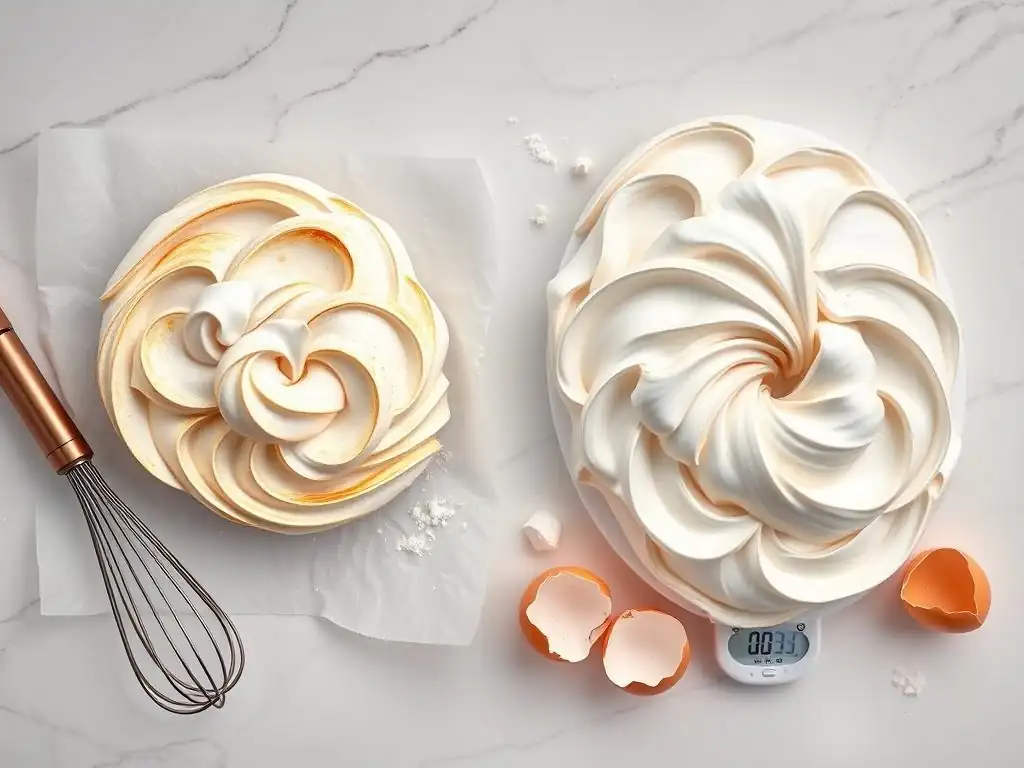
Our signature meringue recipe on BakeWithEase highlights the power of perfectly whipped egg whites. This recipe, a classic French meringue base, uses just three ingredients: egg whites, sugar, and a touch of cream of tartar for stability. We recommend using large, room-temperature egg whites, typically starting with 4 large whites (about 1/2 cup or 120ml). These are whipped with 1/4 teaspoon of cream of tartar until soft peaks form.
Gradually adding 1 cup (approximately 200g) of superfine sugar, about two tablespoons at a time, while whipping on high speed is crucial. Each addition must be fully incorporated before adding the next. The goal is to whip until stiff, glossy peaks form – this usually takes 6-8 minutes in a stand mixer. The resulting meringue is incredibly light, airy, and stable, perfect for topping pies, baking into meringue cookies, or folding into mousses. This recipe demonstrates the fundamental principles of egg white whipping for maximum volume and stability.
Genoise Sponge Cake Recipe: A Whole Egg Masterpiece
The BakeWithEase Genoise Sponge Cake recipe is a prime example of leavening primarily through whipped whole eggs. This classic cake relies entirely on the air incorporated into the eggs for its rise and tender crumb; it contains no chemical leavening agents. Our recipe typically calls for 4 large whole eggs and 3/4 cup (about 150g) of sugar.
The technique involves warming the eggs and sugar together over a bain-marie to about 115°F (46°C) while whisking constantly. This warming step is vital for achieving sufficient volume. The mixture is then transferred to a stand mixer and whipped on high speed for 8-10 minutes until it is pale, thick, and reaches the "ribbon stage" – meaning a ribbon of batter falls from the whisk and holds its shape briefly on the surface.
This aerated egg mixture is then gently folded with flour (about 1 cup or 125g) and sometimes melted butter, taking care not to deflate the foam. The resulting cake is light, airy, and has a fine, delicate crumb, showcasing the successful whipping of whole eggs for leavening.
Angel Food Cake vs. Chiffon Cake: A Leavening Comparison
Comparing Angel Food cake and Chiffon cake beautifully illustrates the different leavening powers of whipped egg whites versus a combination of whipped whole eggs, oil, and chemical leavening. Angel Food cake is leavened solely by a massive amount of air whipped into egg whites, sugar, and flour. Our BakeWithEase Angel Food recipe might use up to 12-15 egg whites, whipped to stiff peaks with sugar, creating an incredibly light, fat-free cake with a distinctly chewy texture and large air pockets. It's the epitome of egg white leavening.
Chiffon cake, on the other hand, is a hybrid. It uses whipped egg whites for significant lift, but also incorporates egg yolks, vegetable oil, and chemical leavening (baking powder). The yolks and oil contribute moisture, richness, and tenderness that Angel Food lacks.
The whipped egg whites provide substantial rise, while the baking powder ensures consistent lift and a finer crumb structure than Angel Food. Our Chiffon recipe might use 5 whole eggs, separating the whites to be whipped separately and folding them into a batter made with the yolks, oil, flour, sugar, and baking powder. This comparison clearly shows how egg white whipping alone achieves maximum lightness, while combining it with other elements (including yolks and fat) results in a different, often more moist and tender, cake structure.
Conclusion: Choosing the Right Egg for Your Baking Needs
Mastering Leavening: Empowering BakeWithEase Bakers
Mastering the art of whipping eggs – both whites and whole eggs – is a powerful skill for any BakeWithEase baker. Understanding the distinct properties of egg whites and whole eggs, and the specific techniques required to whip them effectively, unlocks the potential for creating a wide range of textures, from the ethereal lightness of meringue to the tender crumb of a Genoise sponge. We've explored how egg whites, free from fat, can incorporate vast amounts of air to create stable, voluminous foams perfect for meringues and angel food cakes, highlighting the steps needed for perfecting meringue.
Conversely, we've seen how whole eggs, despite the challenge posed by yolk fat, can be whipped to incorporate sufficient air for leavening richer cakes, often requiring warming and longer whipping times to reach the ribbon stage. By recognizing the impact of fat, temperature, equipment cleanliness, and the role of sugar and stabilizers, you gain control over these fundamental techniques. This knowledge empowers you to choose the right egg preparation for your desired outcome, troubleshoot common issues, and confidently tackle more advanced recipes, ultimately elevating your baking skills and creativity.
The Future of Baking: Continued Exploration of Egg Techniques
The world of baking is constantly evolving, and the exploration of egg techniques continues to yield exciting possibilities. Beyond the classic French, Swiss, and Italian meringues, bakers are experimenting with different sugar types, alternative stabilizers, and even exploring the properties of different egg sources. While perfecting meringue with whole eggs isn't a traditional approach, understanding the principles of whole egg whipping opens doors to innovative recipes that leverage the richness of the yolk alongside the aeration potential of the white in novel ways.
As BakeWithEase continues to grow, we'll keep exploring these techniques, sharing new insights and recipes that push the boundaries of what's possible with these incredible ingredients. Whether you're perfecting your classic meringue, mastering the delicate fold for a Genoise, or experimenting with new hybrid cake structures, the fundamental understanding of how eggs contribute to leavening through whipping remains a cornerstone. We encourage you to keep practicing, experimenting, and enjoying the delicious results that come from harnessing the power of the humble egg in your baking adventures.
Frequently Asked Questions
What is the main difference between using egg whites and whole eggs when making meringue?
The primary difference lies in the structure and stability of the meringue. Egg whites provide a lighter, airier meringue, while whole eggs contribute to a richer flavor and a slightly denser, more stable final product.
Why might someone choose to use whole eggs over just egg whites for meringue?
Whole eggs offer a more forgiving meringue, less prone to collapse due to over-whipping or humidity. They also impart a richer, more complex flavor that some bakers prefer.
What are some key techniques to ensure a successful meringue when using whole eggs?
It's crucial to whip the eggs slowly and steadily, incorporating air gradually. Also, adding sugar gradually and ensuring it dissolves completely is vital for stability.
How does the addition of sugar affect the whipping process when using whole eggs?
Sugar helps to stabilize the egg proteins, creating a more robust meringue structure. The timing and method of sugar addition are critical to avoid collapsing.
Are there any specific recipes that benefit from using whole egg meringue instead of just egg white meringue?
Recipes like Italian meringue buttercream or certain types of baked Alaska can benefit from the added stability and richness that whole egg meringues provide.
Final Reflection: The Unexpected Majesty of the Whole Egg Meringue
The quest for the perfect meringue, once a niche pursuit, has blossomed into a widespread culinary fascination. From delicate pavlovas to towering macarons, the airy lightness of a well-whipped meringue elevates desserts to an art form. Understanding the subtle differences between egg whites and whole eggs in achieving this lightness is key to unlocking meringue mastery.
This exploration into the world of meringue-making has underscored for me the often-overlooked versatility of the whole egg. While the traditional focus on egg whites is understandable, given their superior whipping properties, the richness and depth of flavor imparted by the yolk adds an entirely new dimension. The challenge lies not in dismissing the egg white's contribution, but in harnessing the unique qualities of the whole egg to create a meringue that is both visually stunning and deliciously complex. The best things in life are often the simplest, but simplicity is a masterpiece of complexity.
This quote perfectly encapsulates the seemingly simple act of whipping a meringue, revealing the intricate interplay of protein, fat, and air.
Now, consider your own culinary journey. Will you continue down the well-trodden path of egg white-only meringues, or will you dare to explore the uncharted territory of the whole egg, embracing the potential for richer flavor and a unique textural experience? The choice is yours, but remember that the pursuit of perfection is not about adhering to rigid rules, but about understanding the ingredients and techniques to create something truly magnificent. Experiment, innovate, and discover the joy of unlocking the full potential of the humble egg.
Unlock Your Baking Potential: Master the Art of Egg White Whipping!
Thanks for diving into the world of egg white whipping with us! You've now gained valuable insights into achieving those perfect peaks for lighter-than-air cakes and meringues. Ready to put your new knowledge into practice?
- Try the technique: Whip up a batch of egg whites using your preferred method from the article—and see the difference! Note the texture and volume.
- Share your results: Show off your perfectly whipped egg whites on social media using #BakeWithEaseEggWhites and tag us! Let's see your baking creations!
- Experiment with recipes: Explore new recipes that highlight perfectly whipped egg whites – maybe a delicate pavlova or a fluffy angel food cake?
What incredible baking creations will your newfound egg-whipping mastery inspire? Let us know in the comments!