
High Altitude Baking Zones: Find Your Specific Adjustment Needs

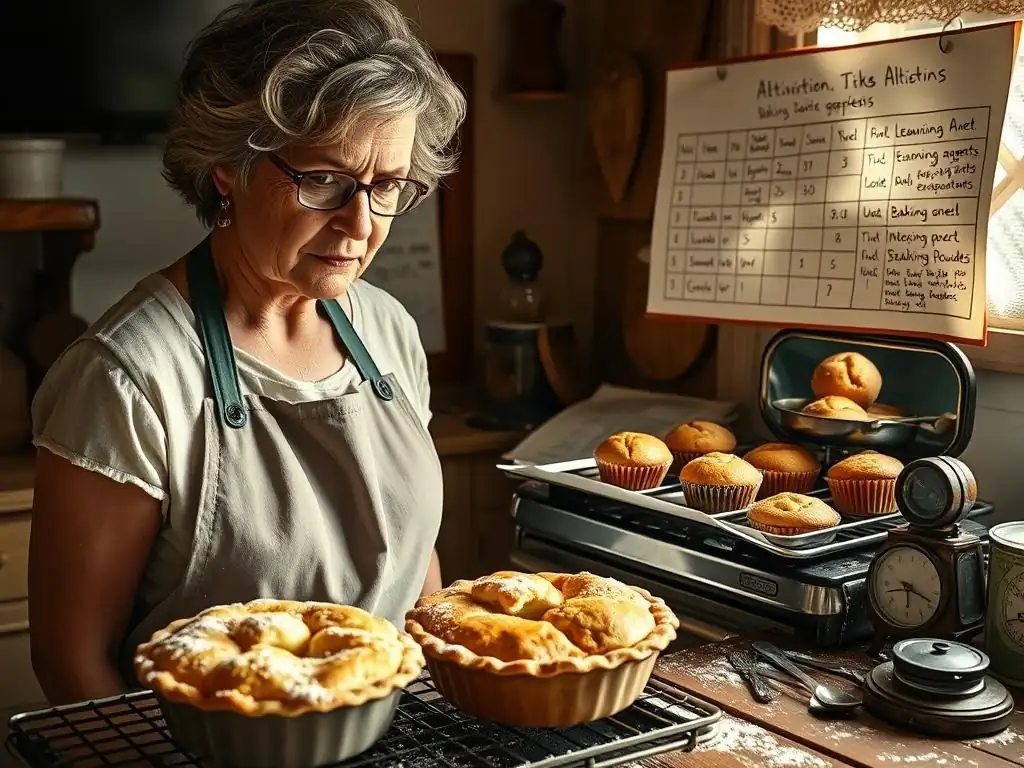
Welcome to BakeWithEase, your trusted guide to baking brilliance! Ever wondered why your cakes fall flat in Denver or your cookies spread thin in Santa Fe? This article dives deep into the secrets of high altitude baking adjustments, uncovering the specific tweaks you need to conquer the unique challenges of baking above sea level. Discover the science behind successful high-altitude baking, and unlock a world of perfectly risen cakes and chewy cookies, no matter where you are! Ready to elevate your baking game? Let's get started!
- Understanding High Altitude Baking Adjustments
- Identifying Your High Altitude Baking Zone
- Common High Altitude Baking Problems and Solutions
- Specific High Altitude Baking Adjustment Techniques
- High Altitude Baking Adjustments for Different Baked Goods
- Troubleshooting High Altitude Baking: Common Mistakes and How to Fix Them
- Advanced High Altitude Baking Techniques
- Resources for High Altitude Bakers
- Frequently Asked Questions
- Final Reflection: Scaling the Peaks of Perfect Baking
- Unlock Your High-Altitude Baking Secrets!
Understanding High Altitude Baking Adjustments
Why Baking at High Altitude Requires Adjustments
Baking at higher elevations presents a unique set of challenges compared to baking at sea level. The primary reason for needing high altitude baking adjustments is the difference in atmospheric pressure. As you ascend, the air pressure decreases. This lower pressure affects how ingredients behave during the baking process, particularly gases and liquids. Without proper modifications, recipes developed for sea level simply won't produce the same results, leading to sunken cakes, dry cookies, or dense bread.
At altitudes significantly above sea level, typically starting around 3,000 feet (roughly 900 meters), the reduced pressure causes leavening gases (like carbon dioxide from baking powder or yeast) to expand more rapidly and with less resistance. Simultaneously, liquids evaporate faster because water boils at a lower temperature. For instance, at 5,000 feet (about 1,500 meters), water boils at approximately 200°F (93°C), whereas at sea level, it boils at 212°F (100°C). These combined factors necessitate specific high altitude baking adjustments to achieve successful outcomes.
The Science Behind High Altitude Baking Challenges
The science behind high altitude baking challenges revolves around the behavior of gases, liquids, and proteins under lower atmospheric pressure. As mentioned, leavening agents like baking powder and yeast produce gas bubbles that cause baked goods to rise. At high altitude, with less pressure pushing down on the batter or dough, these bubbles expand faster and larger than intended. This can cause the structure of the baked good to stretch too thin and eventually collapse, especially in delicate items like cakes.
Furthermore, the faster evaporation of liquids at lower boiling points affects the moisture content and structure development. As water evaporates more quickly, batters and doughs can dry out prematurely. The starches and proteins (like gluten) in flour may not hydrate properly, leading to tough or crumbly textures. Sugars also become more concentrated as water evaporates, which can weaken the structure and contribute to collapsing. Effective high altitude baking adjustments counteract these scientific principles by modifying ingredient ratios, baking times, and temperatures to stabilize the structure, retain moisture, and control leavening.
Identifying Your High Altitude Baking Zone
Defining Altitude Zones for Baking
To make effective high altitude baking adjustments, it's helpful to understand the general altitude zones used in many baking guides. While the need for adjustments can start as low as 2,500 feet, most significant changes are recommended for altitudes above 3,000 feet (approximately 900 meters). A common way to categorize these zones is:
- Moderate Altitude: 3,000 - 5,000 feet (approx. 900 - 1,500 meters). Minor adjustments are often needed, primarily reducing leavening slightly and increasing liquid slightly.
- High Altitude: 5,000 - 7,500 feet (approx. 1,500 - 2,300 meters). More significant adjustments are required, including further reductions in leavening and sugar, increases in liquid, and potentially changes to baking temperature and time.
- Very High Altitude: Above 7,500 feet (approx. 2,300 meters). Recipes may need substantial modifications, sometimes requiring specialized recipes designed specifically for these extreme elevations.
Understanding which zone you fall into provides a starting point for applying general high altitude baking adjustments, although fine-tuning based on specific recipes and conditions is always necessary.
Denver, Colorado Baking Zone: Specific Considerations
Denver, Colorado, often referred to as the "Mile-High City," sits at an official elevation of 5,280 feet (about 1,609 meters), placing it squarely in the "High Altitude" baking zone. This specific altitude presents classic high altitude baking challenges, making it a prime example for discussing necessary adjustments. In Denver, bakers routinely encounter issues like cakes that dome excessively and then sink, cookies that spread too much or are too dry, and bread that rises too quickly before collapsing.
For bakers in the Denver area, standard adjustments often involve reducing baking powder by about 1/4 teaspoon per teaspoon called for in a sea-level recipe, decreasing sugar by 1-2 tablespoons per cup, and increasing liquid by 2-4 tablespoons per cup. Baking temperature might also be increased by 15-25°F (8-14°C) to help set the structure before the leavening gases expand too much. These specific high altitude baking adjustments are widely practiced in the region and serve as a good baseline for anyone baking around 5,000-5,500 feet.
Finding Your Exact Altitude for Precise Baking
While altitude zones provide a general guideline, finding your exact altitude is crucial for making the most precise high altitude baking adjustments. Even within a city like Denver, elevations can vary slightly, and small differences can impact delicate recipes. Knowing your precise elevation allows you to use more specific adjustment charts and guides tailored to your location, leading to more consistent results.
Several methods can help you determine your exact altitude. You can use a GPS device or a smartphone app with an altimeter function. Many online mapping services also provide elevation data for specific locations when you search for an address. Another simple method is to check your local airport's elevation, as this data is readily available. Pinpointing your exact altitude allows you to move beyond general "high altitude" advice and apply adjustments that are specifically calibrated for your kitchen's environment, refining your high altitude baking adjustments for optimal outcomes.
Common High Altitude Baking Problems and Solutions
Dry Cakes and Bread: Altitude Adjustments for Moisture Retention
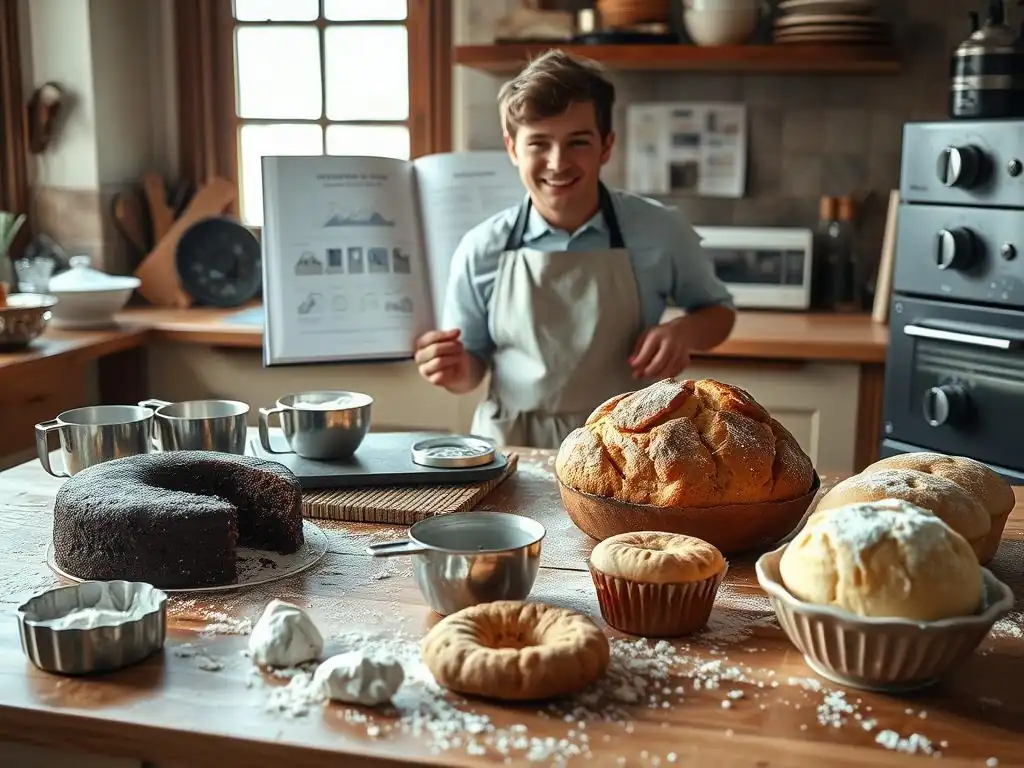
One of the most frequent issues encountered when baking at high altitude is dryness in cakes and bread. This is primarily due to the faster evaporation of liquids caused by the lower boiling point of water at reduced atmospheric pressure. Without sufficient moisture, baked goods can become crumbly, dense, or simply lack the desired tenderness. Effective high altitude baking adjustments aim to counteract this rapid moisture loss.
To combat dryness, bakers at high altitude often need to increase the liquid content in their recipes. This might involve adding an extra tablespoon or two of milk, water, or buttermilk per cup of liquid specified in a sea-level recipe. Another common strategy is to decrease the baking time slightly, as faster cooking can also contribute to dryness. Additionally, sometimes increasing fat content or using ingredients like oil, sour cream, or applesauce can help retain moisture, serving as valuable high altitude baking adjustments.
Reducing Sugar for Moist Cakes at High Altitude
While it might seem counterintuitive, reducing sugar is a critical high altitude baking adjustment that helps retain moisture in cakes. Sugar is hygroscopic, meaning it attracts and holds onto water. However, sugar also weakens the gluten structure in cakes and contributes to tenderness. At high altitude, where the structure is already fragile due to rapid leavening expansion, too much sugar further destabilizes it, leading to collapse. When the cake collapses or doesn't set properly, moisture evaporates unevenly, resulting in dry spots or a gummy, wet layer at the bottom and dryness elsewhere.
Reducing the amount of sugar strengthens the cake's structure, allowing it to hold moisture better during baking. A typical adjustment for cakes at 5,000 feet might be to reduce the sugar by 1 to 3 tablespoons per cup called for in the original recipe. For very high altitudes (above 7,500 feet), even more significant reductions might be necessary. This careful balance of reducing sugar while potentially increasing other liquids is a key part of successful high altitude baking adjustments for cakes.
Increasing Liquids for Better Hydration
Increasing the liquid content is a direct response to the faster evaporation rate experienced at higher elevations. As water and other liquids evaporate more quickly during baking, the remaining batter or dough can become too dry before the structure fully sets. This leads to poor hydration of flour proteins (gluten) and starches, resulting in a tough, dry, or crumbly texture.
For most recipes at 5,000 feet, adding 1 to 4 tablespoons of liquid per cup of total liquid in the original recipe is a standard practice. The exact amount depends on the recipe's initial hydration and the specific altitude. For instance, a moist chocolate cake recipe might need less added liquid than a lean bread dough. The goal of this high altitude baking adjustment is to ensure there is enough moisture present throughout the entire baking process to allow for proper structure development and prevent the final product from being dry.
Flat or Collapsed Cakes: Adjusting Leavening Agents
One of the most visually frustrating problems in high altitude baking is cakes that rise beautifully in the oven only to fall or collapse soon after, or simply bake up flat and dense. This issue is primarily caused by the leavening agents working too effectively and too quickly under lower atmospheric pressure. The gas bubbles expand rapidly, overstretching the developing gluten and egg protein structure before it has a chance to set. Once the structure is overstretched, it can no longer support the weight of the cake, leading to collapse.
To prevent this, a crucial high altitude baking adjustment is to reduce the amount of chemical leaveners like baking powder and baking soda. By using less leavening, the production of gas is slowed, allowing the cake's structure more time to strengthen as it bakes before the full expansion occurs. This helps the cake maintain its shape and height throughout the baking process and cooling.
Reducing Baking Powder or Baking Soda for Altitude
Reducing baking powder or baking soda is one of the most common and effective high altitude baking adjustments. Since the gases produced by these agents expand more readily at lower pressure, using the amount specified for sea level will likely cause your baked goods, especially cakes and muffins, to over-rise and then collapse or have a coarse, crumbly texture.
A general guideline for altitudes around 5,000 feet is to reduce the baking powder by 1/8 to 1/4 teaspoon for every teaspoon called for in the sea-level recipe. For baking soda, which is typically used in smaller quantities and requires an acid to activate, the reduction might be slightly less, perhaps 1/8 teaspoon per teaspoon. It's important to note that baking soda also affects spread and browning, so adjustments must be made carefully. These specific high altitude baking adjustments help control the rise and ensure the structure can support the final product.
The Role of Gluten Development in High Altitude Cakes
While we often think of gluten development as crucial for bread structure, it also plays a role in the structure of cakes, albeit differently. In cakes, gluten provides some support to hold the delicate crumb together. At high altitude, the rapid expansion of leavening gases puts significant stress on this developing structure. If the gluten network isn't strong enough, or if it's weakened by too much sugar or fat, it can't withstand the internal pressure, leading to a collapsed cake.
Making high altitude baking adjustments involves ensuring the structure is robust enough. This can sometimes mean slightly increasing the mixing time (though not to the point of developing tough gluten like in bread) or adjusting the ratio of flour to other ingredients to provide more structural components. Coupled with reducing leavening and sugar, promoting a slightly stronger, yet still tender, gluten network is part of successfully baking cakes at higher elevations.
Tough or Gummy Textures: Addressing Gluten and Starch
Another common issue at high altitude is baked goods turning out tough, gummy, or dense. This can result from a combination of factors, including improper hydration of flour components (gluten and starch) and the faster setting of the outside of the product before the inside is fully cooked. When liquid evaporates too quickly, the flour doesn't hydrate evenly, leading to poor texture development. Also, if the structure collapses due to too much leavening, the dense layer can become gummy.
Addressing tough or gummy textures often involves fine-tuning the liquid and flour ratios as part of your high altitude baking adjustments. Ensuring adequate hydration allows gluten to develop properly (or minimally, in the case of cakes) and starches to gelatinize correctly, creating a tender crumb. Adjusting baking temperature can also help ensure the interior cooks thoroughly before the exterior becomes too set or dry.
Adjusting Flour Amounts for Optimal Texture
Adjusting the amount of flour is sometimes necessary when making high altitude baking adjustments, particularly for recipes that become too dry or spread too much. While it's less common than adjusting leavening or liquid, in some cases, slightly increasing the flour can help strengthen the structure of cakes and cookies, preventing them from collapsing or spreading excessively. This added structure can indirectly help with texture.
Conversely, if a recipe is consistently too dense or tough, it might indicate that the flour-to-liquid ratio is off for your specific altitude, or that gluten is being overdeveloped. In cakes, reducing flour slightly (or increasing liquid/fat) might be the necessary high altitude baking adjustment to achieve a more tender crumb. The key is finding the right balance for your specific recipe and altitude zone.
Increasing Baking Temperature for Proper Setting
Increasing the oven temperature is a widely recommended high altitude baking adjustment, especially for cakes and quick breads. While it might seem counterintuitive when dealing with dryness, a slightly higher temperature helps the structure of the baked good set more quickly. This faster setting provides support against the rapid expansion of leavening gases, reducing the likelihood of collapse.
For altitudes around 5,000 feet, increasing the oven temperature by 15-25°F (8-14°C) is a typical starting point. The baking time will likely need to be reduced accordingly, so it's crucial to start checking for doneness earlier than a sea-level recipe suggests. This high altitude baking adjustment helps create a stable structure early in the bake, preventing the center from sinking and contributing to a more even texture throughout.
Specific High Altitude Baking Adjustment Techniques
Adjusting Oven Temperature for High Altitude
As mentioned earlier, increasing the oven temperature is a key high altitude baking adjustment. The rationale is that a hotter oven helps the exterior of the baked good set faster, creating a stable framework that can support the internal structure as the leavening gases expand rapidly. This is particularly effective for items like cakes, muffins, and quick breads that rely heavily on chemical leaveners.
For altitudes between 3,000 and 5,000 feet, an increase of 10-15°F (5-8°C) might suffice. For altitudes between 5,000 and 7,500 feet, an increase of 15-25°F (8-14°C) is more common. Above 7,500 feet, even higher temperatures or other significant modifications might be necessary. Always remember to check for doneness earlier when using a higher temperature, as baking times will be shorter. Using an oven thermometer is also highly recommended to ensure your oven is accurately calibrated, as variations can greatly impact high altitude baking adjustments.
Modifying Recipes: A Step-by-Step Guide to Altitude Adjustments
Modifying a sea-level recipe for high altitude baking adjustments can seem daunting, but a systematic approach makes it manageable. Here's a general step-by-step guide:
- Determine Your Altitude: Use a reliable source (GPS, online map) to find your kitchen's exact elevation.
- Identify Your Altitude Zone: Based on your elevation, determine if you are in a moderate, high, or very high altitude zone.
- Start with General Adjustments: Apply the typical adjustments for your zone to the original recipe, focusing on leavening, liquid, and potentially sugar.
- Leavening: Reduce baking powder/soda (e.g., 1/8-1/4 tsp per tsp at 5k ft).
- Liquid: Increase liquid (e.g., 1-4 tbsp per cup at 5k ft).
- Sugar: Reduce sugar (e.g., 1-3 tbsp per cup at 5k ft).
- Oven Temp: Increase temperature (e.g., 15-25°F at 5k ft).
- Mix and Bake: Prepare the recipe using the adjusted ingredient amounts and bake at the adjusted temperature. Start checking for doneness several minutes earlier than the original recipe suggests.
- Evaluate Results: Carefully examine the baked product. Was it dry? Did it collapse? Was the texture tough? Note what went wrong.
- Fine-Tune Adjustments: Based on your evaluation, make further, smaller high altitude baking adjustments for the next attempt. For example, if the cake still collapsed, reduce leavening slightly more. If it was dry, add a bit more liquid next time.
This iterative process is key to mastering high altitude baking adjustments for specific recipes.
High Altitude Conversion Charts for Common Baking Ingredients
While the step-by-step guide provides a method, having a reference chart for common ingredients can greatly simplify making initial high altitude baking adjustments. These charts offer typical ranges of adjustments for different altitude zones. It's important to remember that these are starting points, and individual recipes may require slight variations.
Here's a simplified example of what a high altitude conversion chart might include for altitudes around 5,000 feet:
| Ingredient Type | Typical Adjustment (per unit in sea-level recipe) |
|---|---|
| Baking Powder | Reduce by 1/8 to 1/4 teaspoon per teaspoon |
| Baking Soda | Reduce by 1/8 teaspoon per teaspoon |
| Sugar | Reduce by 1 to 3 tablespoons per cup |
| Liquid (Milk, Water) | Increase by 1 to 4 tablespoons per cup |
| Flour (less common) | Occasionally increase by 1-2 tablespoons per cup |
| Baking Temperature | Increase by 15-25°F (8-14°C) |
| Baking Time | Reduce by 5-10 minutes per hour |
Using such charts as a guide helps streamline the process of applying high altitude baking adjustments, providing a solid foundation for successful baking at elevation.
High Altitude Baking Adjustments for Different Baked Goods
Cakes: High Altitude Cake Baking Tips
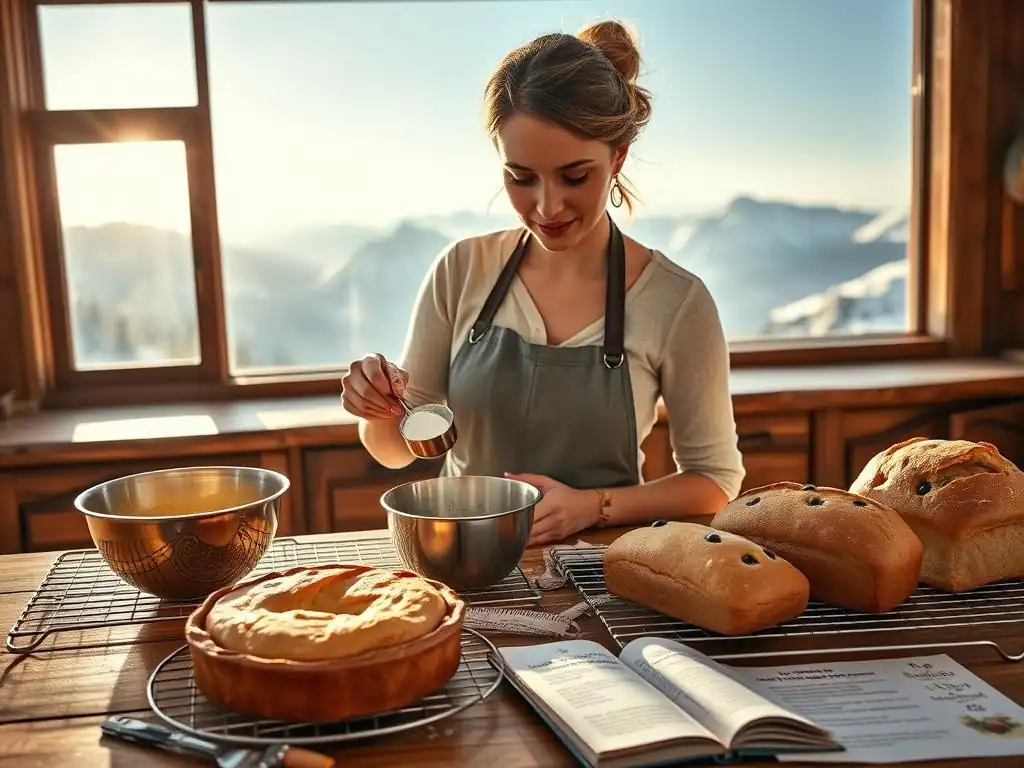
Cakes are arguably the most sensitive baked goods to altitude changes due to their delicate structure and reliance on leavening. Successful high altitude cake baking requires careful attention to balancing leavening, structure, and moisture. Key high altitude baking adjustments for cakes include reducing baking powder and sugar, increasing liquid, and increasing baking temperature.
Beyond ingredient ratios, mixing technique can also play a role. Avoid overmixing, which can develop too much tough gluten. Ensure ingredients are at room temperature for proper emulsification. Using recipes specifically developed for high altitude is often the easiest path to success, but understanding the principles allows you to adapt any sea-level recipe. Remember that even small changes in ingredients or method can significantly impact the outcome of your high altitude cake.
High Altitude Chocolate Cake Adjustments
Baking chocolate cakes at high altitude presents specific challenges because cocoa powder can be drying and the rich ingredients (like chocolate and butter) can weigh down the batter. High altitude baking adjustments for chocolate cakes often involve slightly more aggressive liquid increases than vanilla cakes to counteract the drying effect of cocoa. You might add an extra 3-4 tablespoons of liquid per cup, depending on the recipe.
Reducing leavening is still crucial, typically by the standard 1/8 to 1/4 teaspoon per teaspoon of baking powder. Sugar reduction is also important for structure, perhaps reducing by 2-3 tablespoons per cup. Some high altitude bakers find adding an extra egg yolk helps with richness and moisture retention without adding too much protein that could toughen the cake. These specific high altitude baking adjustments help ensure your chocolate cake stays moist and stable at elevation.
High Altitude Vanilla Cake Adjustments
Vanilla cakes, often lighter and more delicate than chocolate, are highly susceptible to collapsing at high altitude. The standard high altitude baking adjustments apply: reduce baking powder/soda, increase liquid, and reduce sugar. For a typical vanilla layer cake around 5,000 feet, you might reduce baking powder by 1/4 teaspoon per teaspoon, increase milk by 2-3 tablespoons per cup, and reduce sugar by 1-2 tablespoons per cup.
Increasing the baking temperature by 15-25°F is particularly effective for vanilla cakes to help the structure set quickly. Some bakers also find that using cake flour, which has lower protein content than all-purpose flour, can result in a more tender crumb, though this isn't a direct altitude adjustment but rather a technique that complements other high altitude baking adjustments. Careful measurement and gentle mixing are paramount for achieving a light, airy vanilla cake at high altitude.
Cookies generally require fewer drastic high altitude baking adjustments than cakes, but they still benefit from modification. The main issues with cookies at high altitude are excessive spreading, dryness, or becoming too crispy/hard. Faster evaporation and lower external pressure affect how the dough behaves as it bakes.
Common high altitude baking adjustments for cookies include slightly increasing flour (to provide more structure and reduce spread), slightly decreasing leavening (if used), and sometimes increasing liquid or fat to prevent dryness. Chilling the dough thoroughly before baking is also a helpful technique at high altitude, as it solidifies the fat and slows spread.
High Altitude Cookie Dough Adjustments
Making high altitude cookie dough adjustments focuses on controlling spread and moisture. For many drop cookies, adding 1-2 tablespoons of flour per cup of flour in the original recipe can provide enough structure to prevent excessive spreading. If the recipe uses baking powder or soda, a slight reduction (e.g., 1/8 teaspoon per teaspoon) might be needed, especially if the cookies are spreading too much or becoming cakey.
To combat dryness, you might slightly increase the amount of butter or add an extra tablespoon of milk or egg. Another effective, non-ingredient high altitude baking adjustment for cookie dough is to chill it in the refrigerator for at least 30 minutes (or even overnight) before scooping and baking. This helps the fat remain solid longer in the oven, reducing spread and promoting a thicker cookie.
Preventing Flat Cookies at High Altitude
Flat cookies are a common complaint when baking at high altitude. This is usually due to a combination of factors: leavening working too quickly, inadequate structure in the dough, and fat melting too fast before the dough sets. Preventing flat cookies involves specific high altitude baking adjustments aimed at counteracting these issues.
As mentioned, slightly increasing the flour amount (1-2 tablespoons per cup) adds structure. Reducing chemical leaveners (if used) controls the rise. Chilling the dough is perhaps the most effective technique – cold dough spreads much less. Some bakers also slightly increase the baking temperature by 10-15°F (5-8°C) to help the cookies set faster. Using parchment paper can also sometimes help control spread. Implementing these high altitude baking adjustments will help you achieve cookies with better height and texture at elevation.
Bread: High Altitude Bread Baking Strategies
Baking bread at high altitude requires different high altitude baking adjustments than cakes or cookies because bread relies on yeast fermentation for leavening and gluten development for structure. The primary challenges are the dough rising too quickly, potentially collapsing during proofing or baking, and the finished loaf being dry or having a dense, uneven crumb.
Key high altitude baking adjustments for bread involve reducing yeast, decreasing the fermentation and proofing times, and potentially increasing hydration slightly. The faster rise means you need to monitor the dough closely and move through the steps (kneading, first rise, shaping, second rise, baking) more quickly than a sea-level recipe would suggest.
Adjusting Yeast in High Altitude Bread Recipes
Since yeast produces carbon dioxide gas, which expands more readily at lower atmospheric pressure, bread dough will rise much faster at high altitude. Using the amount of yeast specified for sea level can cause the dough to over-proof, leading to collapse in the oven and a dense crumb. Therefore, reducing the amount of yeast is a common high altitude baking adjustment for bread.
For altitudes around 5,000 feet, you might reduce the yeast by 1/4 to 1/3 of the amount called for in the recipe. Alternatively, you can use the full amount of yeast but significantly shorten the proofing times. Many high altitude bread bakers prefer reducing yeast as it allows for slightly longer fermentation, which can contribute to better flavor development. Experimentation is key to finding the perfect balance for your recipe and environment when making these high altitude baking adjustments.
High Altitude Bread Dough Adjustments
Beyond adjusting yeast, other high altitude baking adjustments for bread dough can improve results. Slightly increasing the hydration (adding a tablespoon or two of water per cup of flour) can help compensate for faster evaporation during kneading and baking, though too much water can make the dough difficult to handle.
Monitoring and controlling fermentation and proofing times are critical. Dough will rise faster, so the first rise might take only 30-45 minutes instead of an hour or more. The second rise (proof) will also be quicker. Baking temperature might be increased slightly (10-15°F) to help set the crust faster, providing support for the rising loaf. Kneading technique is also important; developing adequate gluten is crucial for structure, but be mindful that dough can dry out faster during kneading. These high altitude baking adjustments ensure your bread has proper structure and moisture.
Pastries: Mastering High Altitude Pastry Baking
Baking delicate pastries like pie crusts, puff pastry, and choux pastry at high altitude requires precision. Issues can include dryness, toughness, excessive spread (in cookies/crackers within pastries), or components not cooking properly. High altitude baking adjustments for pastries often focus on managing moisture and ensuring proper structure development.
For flaky pastries like pie crust, ensuring the fat is very cold and handling the dough minimally are even more critical at altitude to prevent toughness due to rapid moisture loss and potential overmixing. For pastries relying on steam for lift, like choux, the lower boiling point of water means steam is generated at a lower temperature, potentially affecting structure. Adjustments might involve slightly increasing liquid, adjusting baking temperature, or modifying ratios to maintain the desired texture and structure.
Delicate Pastries Adjustments
Delicate pastries such as croissants, danishes, and puff pastry are sensitive to high altitude conditions. The rapid evaporation of water can lead to dry layers and reduced flakiness. High altitude baking adjustments for these items often involve slightly increasing the liquid in the dough formula. For example, adding an extra tablespoon or two of milk or water per cup of liquid can help maintain hydration.
Baking temperature might also be adjusted. Some bakers find a slightly higher initial temperature helps create a good steam lift and sets the layers quickly, followed by a reduction to ensure the pastry cooks through without burning. Proper chilling between folds is also paramount at high altitude to keep the fat solid and defined, which is essential for creating flaky layers. These careful high altitude baking adjustments are necessary to achieve the desired light, airy, and flaky texture.
Preventing Dry Pastries at High Altitude
Dryness is a common problem in many types of pastries baked at high altitude, from pie crusts to scones. This is directly linked to the faster evaporation of moisture during baking. Preventing dry pastries requires targeted high altitude baking adjustments focused on retaining or adding moisture.
Increasing the liquid content in the dough or batter is the most direct approach, adding a tablespoon or two of liquid per cup of the original amount. Using ingredients that add moisture and richness, such as butter, sour cream, or eggs, can also help. For pie crusts, ensuring you use enough cold liquid to just bring the dough together is crucial, and handling it minimally prevents gluten overdevelopment, which contributes to toughness and perceived dryness. Adjusting baking time to prevent overbaking is another important high altitude baking adjustment to keep pastries moist.
Troubleshooting High Altitude Baking: Common Mistakes and How to Fix Them
Over-Adjusting Recipes: Recognizing the Signs
One of the most common pitfalls when learning high altitude baking adjustments is over-adjusting a recipe. Faced with a collapsed cake or dry cookies, it's tempting to make large, multiple changes at once (e.g., drastically reducing leavening, adding a lot of liquid, and changing sugar). However, this can throw the recipe completely out of balance and lead to new, unexpected problems. Signs of over-adjustment might include a cake that is too dense (too little leavening), gummy (too much liquid/sugar reduction), or tough (too much flour/mixing).
The best way to avoid over-adjusting is to make small, incremental high altitude baking adjustments. Start with the most common adjustments for your altitude zone (e.g., slight reduction in leavening, slight increase in liquid) and bake the item. Evaluate the results and then make one or two further small adjustments for the next attempt based on the specific problem you observed. Keep notes on the changes you make and the results. This systematic approach helps you zero in on the correct adjustments without ruining the recipe entirely.
Ingredient Quality and its Impact on High Altitude Baking
While high altitude baking adjustments are crucial, the quality and freshness of your ingredients also play a significant role in baking success, especially at elevation where the margin for error is smaller. Stale flour, inactive leavening agents (baking powder/soda), or old yeast will negatively impact your results, regardless of how perfectly you've adjusted for altitude.
Using fresh ingredients ensures that leavening agents perform predictably and that flour hydrates correctly. For instance, baking powder can lose its potency over time, resulting in poor rise even with the correct high altitude baking adjustments. Similarly, yeast that is past its prime won't produce enough gas for your bread to rise properly. Store ingredients correctly (flour in airtight containers, yeast in the refrigerator/freezer, baking powder/soda in a cool, dry place) and replace them regularly to give your high altitude baking the best chance of success.
The Importance of Accurate Measurements in High Altitude Baking
Accuracy in measuring ingredients is always important in baking, but it becomes absolutely critical when making high altitude baking adjustments. Small deviations in flour, sugar, or liquid amounts can have a magnified effect on the delicate balance of a recipe at elevation. Using measuring cups and spoons correctly (leveling dry ingredients, measuring liquids at eye level) is essential.
For even greater accuracy, especially when fine-tuning high altitude baking adjustments, consider using a kitchen scale to weigh your ingredients, particularly flour. Volume measurements of flour can vary significantly depending on how packed it is, whereas weight is consistent. Precise measurements ensure that the adjusted ratios you've calculated for your altitude are actually what goes into your mixing bowl, leading to more reliable and consistent results in your high altitude baking endeavors.
Advanced High Altitude Baking Techniques
Using Specialty Flours for High Altitude Baking
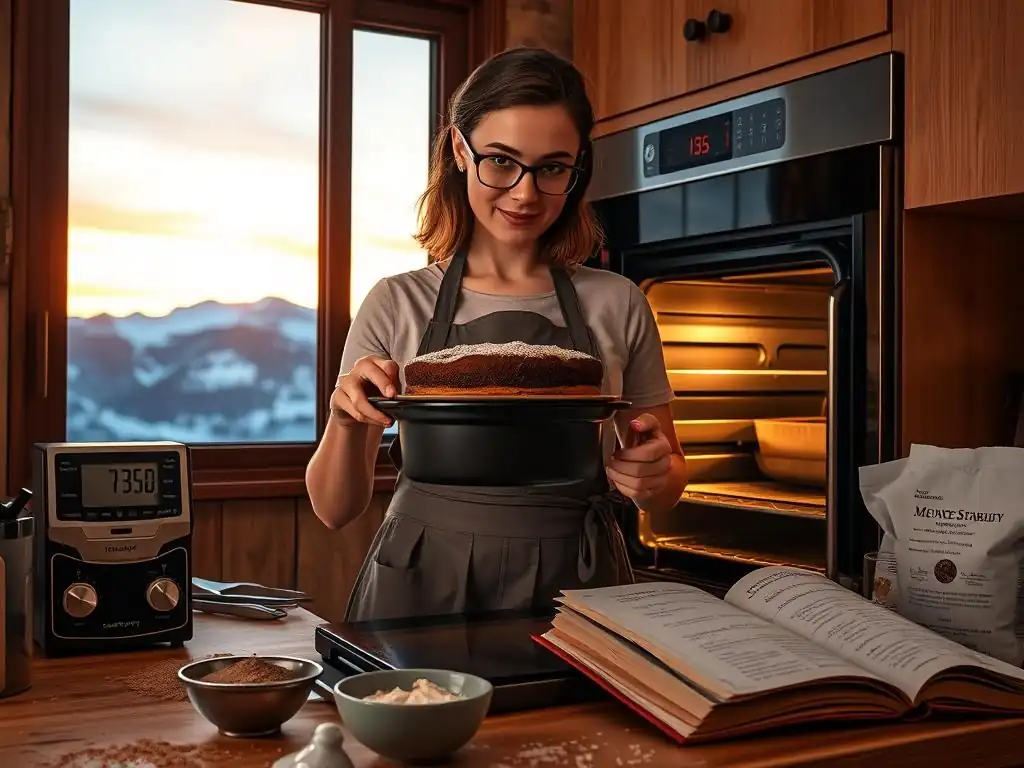
Beyond standard all-purpose flour, experimenting with specialty flours can be an advanced high altitude baking adjustment technique. Different flours have varying protein contents, which affects gluten development and structure. For instance, using a lower-protein cake flour can result in a more tender cake crumb, while a higher-protein bread flour might be beneficial for certain rustic bread types that need a strong structure to support a high rise at altitude.
Some high altitude bakers also experiment with substituting a small portion of the all-purpose flour with alternatives like pastry flour, whole wheat flour, or even non-wheat flours, understanding how these changes impact hydration and structure at elevation. While not a primary adjustment, incorporating specialty flours, alongside standard high altitude baking adjustments, can help fine-tune texture and flavor for specific recipes.
Experimenting with Different Fat Ratios for Texture
Adjusting fat ratios is another advanced technique in high altitude baking adjustments, primarily used to influence moisture and tenderness. Fat tenderizes baked goods by coating flour particles and inhibiting gluten development. It also contributes to richness and helps retain moisture. At high altitude, where dryness can be an issue, sometimes a slight increase in fat can help keep items moist.
Conversely, in recipes where spread is a problem (like cookies), reducing fat slightly or using a different type of fat (e.g., more butter vs. shortening) can alter the texture and spread. This high altitude baking adjustment requires careful testing, as too much fat can make items greasy or heavy, while too little can result in dryness or toughness. Understanding how different fats behave at high altitude is key to successful experimentation.
Mastering the Tangzhong Method for High Altitude Bread
The Tangzhong method, or water roux method, is an advanced technique particularly beneficial for high altitude bread baking. This Japanese technique involves cooking a small portion of the flour with a liquid (usually milk or water) to form a thick paste before adding it to the main dough. This pre-gelatinizes the starches in the flour, allowing them to absorb and retain significantly more liquid.
Incorporating Tangzhong into high altitude bread recipes is an excellent high altitude baking adjustment for combating dryness and improving the softness and shelf life of the loaf. The increased hydration locked within the Tangzhong makes the dough more manageable and results in a moister crumb that is less prone to drying out during the faster baking process at altitude. This technique, combined with standard yeast adjustments, can transform your high altitude bread.
Resources for High Altitude Bakers
Recommended Baking Books for High Altitude Adjustments
For those serious about mastering high altitude baking adjustments, investing in specialized baking books is invaluable. While many general baking books include small sections on altitude adjustments, books specifically written by authors who bake at high altitude provide more comprehensive guidance, tested recipes, and detailed explanations tailored to the unique challenges of elevation.
Look for titles that explicitly mention "high altitude" in their name or description. These books often provide specific charts, troubleshooting tips, and recipes that have been developed and tested at elevations like Denver or other mountainous regions. They offer a depth of knowledge on high altitude baking adjustments that general resources might lack, covering a wide range of baked goods from cakes and cookies to breads and pastries.
Online Communities and Forums for High Altitude Baking Support
Connecting with other bakers who live at high altitude can provide practical support and shared knowledge on high altitude baking adjustments. Online communities and forums dedicated to baking are great places to find others facing similar challenges. Many regional baking groups exist for areas known for high altitude, such as Colorado, Utah, or parts of the Rocky Mountains.
These platforms allow you to ask specific questions about recipes that aren't working, share your successes and failures, and get real-time advice from experienced high altitude bakers. Members often share their favorite adjusted recipes, discuss specific local conditions that might affect baking, and offer encouragement. Engaging with these communities is a fantastic way to learn from others' experiences and refine your own high altitude baking adjustments.
Frequently Asked Questions
How does altitude affect baking?
Higher altitudes have lower air pressure, which causes liquids to evaporate faster and leavening agents to rise more quickly. This can lead to dry or collapsed baked goods.
What are some common adjustments needed for high altitude baking?
Common adjustments include reducing the amount of leavening, increasing the liquid, and lowering the oven temperature. Specific adjustments depend on the recipe and altitude.
Where can I find specific adjustment recommendations for my altitude?
BakeWithEase.com offers resources to help you find your specific adjustment needs, including charts and calculators based on elevation. These tools provide tailored advice.
Why is it important to adjust baking recipes for high altitude?
Without adjustments, baked goods can have an undesirable texture, rise too quickly and then collapse, or be dry and crumbly. Adjustments ensure proper structure and moisture.
What types of baked goods are most affected by high altitude?
Cakes and quick breads are particularly susceptible, but all baked goods benefit from altitude adjustments. Yeast breads may require less proofing time.
Final Reflection: Scaling the Peaks of Perfect Baking
High-altitude baking isn't just about adjusting recipes; it's about understanding the science behind the rise. The lower air pressure at higher elevations significantly impacts baking, leading to flat cakes, dense cookies, and other baking mishaps. Mastering these adjustments isn't merely about following a formula; it's about unlocking the potential for delicious baked goods regardless of your elevation.
The journey of perfecting high-altitude baking has been a personal one, filled with both triumphs and failures. It's a testament to the enduring power of culinary creativity and adaptation. The best way to find yourself is to lose yourself in the service of others.
While not directly about baking, this quote speaks to the dedication and experimentation required to overcome the challenges of high-altitude baking, and to share that knowledge with others. The impact of this knowledge extends beyond individual kitchens; it fosters a sense of community among bakers who share the unique experience of adapting recipes to their environment.
Now, it's your turn. Don't let the thin air limit your baking aspirations. Experiment with the adjustments outlined in this article, embrace the learning process, and discover the joy of creating perfectly risen treats, no matter how high you live. Your next high-altitude baking adventure awaits – are you ready to conquer the peaks of deliciousness?
Unlock Your High-Altitude Baking Secrets!
Thanks for exploring the fascinating world of high-altitude baking! You've learned how important it is to understand your specific zone to achieve perfect results. Ready to elevate your baking skills?
- Start adjusting your recipes today: Use the altitude-adjustment chart or the calculator available on our website to modify your favorite recipes and enjoy excellent results.
- Share your high-altitude baking successes and challenges: Join our vibrant community on social media or forums and inspire fellow bakers!
- Discover our extensive collection of recipes curated specifically for high-altitude baking: Find new and exciting recipes perfectly suited to your zone.
What high-altitude baking challenge are you most eager to conquer now?