
HighAltitude Cookie Calamities? Bake Perfect Sugar Cookies in Thin Air

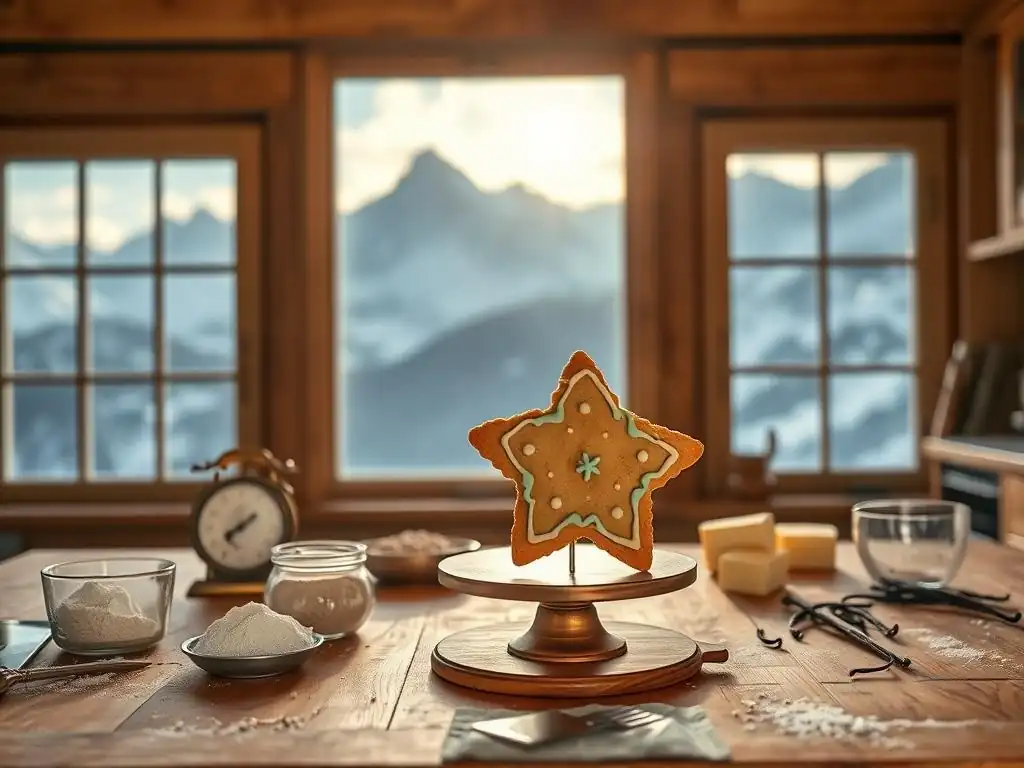
Welcome to BakeWithEase, your guide to conquering the kitchen, one delicious bake at a time! Are you tired of high altitude baking nightmares? Discover the secrets to crafting perfect sugar cookies high altitude, even when the air is thin. Uncover simple adjustments that transform flat, dry failures into light, airy masterpieces. Read on to unlock the key to baking success, regardless of your elevation!
- High-Altitude Cookie Calamities? Bake Perfect Chocolate Chip Cookies in Thin Air
- Introduction: Conquering Cookie Baking at Altitude
- Understanding the Science: Altitude's Impact on Chocolate Chip Cookies
- Troubleshooting Common High-Altitude Chocolate Chip Cookie Problems
- The Ultimate High-Altitude Chocolate Chip Cookie Recipe Adaptations
-
Step-by-Step Guide: Baking Perfect Chocolate Chip Cookies at High Altitude
- Step 1: Accurate Measurements - The Foundation of Success
- Step 2: Creaming Butter and Sugar Correctly
- Step 3: Chilling for Enhanced Flavor and Texture
- Step 4: Incorporating Chocolate Chips Evenly
- Step 5: Baking to Perfection (Monitoring Doneness)
- Step 6: Cooling and Enjoying Your High-Altitude Chocolate Chip Cookies
- Essential High-Altitude Baking Tips for Chocolate Chip Cookies
- High-Altitude Chocolate Chip Cookie Recipe: A Tested and Proven Formula "Summit Sweets"
- Conclusion: Achieving Chocolate Chip Cookie Perfection, No Matter the Altitude
-
Frequently Asked Questions
- How does high altitude affect sugar cookie baking?
- What are the key adjustments needed for perfect sugar cookies at high altitude?
- Why do my sugar cookies spread too thin at high altitude?
- How can I prevent my sugar cookies from becoming dry at high altitude?
- What's the ideal oven temperature for baking sugar cookies at high altitude?
- Final Reflection: The Sweet Success of High-Altitude Baking
- Unlock Your High-Altitude Baking Secrets!
Baking cookies is a delightful experience, a comforting ritual that fills the home with warmth and sweet aromas. Yet, for those living at higher elevations, this simple pleasure can quickly turn into a frustrating series of flat, dry, or overly cakey disasters. The reduced atmospheric pressure and drier air characteristic of high altitudes significantly alter how ingredients behave during the baking process. Understanding these unique challenges is the first step toward achieving glorious cookie success, whether you're aiming for perfect sugar cookies high altitude or classic chocolate chip delights.
The Unique Challenges of High-Altitude Baking
Baking at altitudes typically above 3,000 feet (approximately 900 meters) presents a distinct set of challenges compared to sea-level baking. The primary factors at play are lower air pressure and lower humidity. Lower air pressure allows leavening gases (like carbon dioxide produced by baking soda and baking powder) to expand more rapidly and to a greater extent before the cookie's structure sets.
This can cause cookies to puff up excessively initially, then collapse, leading to a dense or flat result. Additionally, water and other liquids evaporate faster in the drier, lower-pressure environment, potentially leading to dry or crumbly baked goods. These combined effects necessitate adjustments to standard recipes to ensure proper texture and structure.
For instance, a recipe that produces beautifully chewy chocolate chip cookies at sea level might yield cookies that spread into thin, greasy puddles at 5,000 feet. The increased leavening expansion and faster moisture loss disrupt the delicate balance of ingredients designed for a different atmospheric pressure. Similarly, achieving perfect sugar cookies high altitude requires similar considerations regarding spread and moisture. Overcoming these hurdles involves strategic modifications to ingredients, measurements, temperature, and baking time, transforming potential failures into consistent triumphs.
Chocolate chip cookies, with their specific ratios of fat, sugar, flour, and leavening, are particularly susceptible to high-altitude woes. Their relatively high fat and sugar content contributes to spread, which is exacerbated when leavening agents cause the dough to rise too quickly in lower pressure. The rapid expansion can weaken the structure before the flour and eggs have a chance to set, resulting in excessive spreading and thin, often crispy-edged, chewy-centered cookies becoming uniformly flat and sometimes greasy.
Furthermore, the balance between moisture and dry ingredients is critical for the signature chewy texture of a great chocolate chip cookie. At high altitude, the faster evaporation rate can dry out the dough prematurely during baking. This leads to cookies that might be crumbly, hard, or lack that desirable moist chewiness. The delicate interplay of ingredients that works perfectly at sea level is thrown off balance, making chocolate chip cookies a prime candidate for needing specific high-altitude adjustments to achieve that coveted perfect texture.
Baking is often described as a science, and nowhere is this more apparent than when baking at high altitudes. The fundamental physical properties of air and water change with elevation, directly influencing the chemical reactions and physical transformations that occur in your cookie dough in the oven. Grasping the 'why' behind these changes makes the necessary recipe adjustments intuitive and helps troubleshoot future baking challenges, whether you're making perfect sugar cookies high altitude or tackling a batch of classic chocolate chip cookies.
At higher altitudes, the atmospheric pressure is lower because there is less air pressing down from above. This lower pressure has two main effects relevant to baking. First, gases expand more readily.
When your cookie dough heats up, the carbon dioxide produced by baking soda or baking powder, as well as steam from the liquid ingredients, expands with less resistance. This causes cookies to rise faster and higher than they would at sea level. If this rapid expansion happens before the proteins in the flour and eggs have coagulated and set the structure of the cookie, the cookie will likely collapse as it cools, resulting in a flat, dense product.
Second, water boils at a lower temperature at high altitude. At sea level, water boils at 212°F (100°C). At 5,000 feet, it boils around 203°F (95°C), and at 10,000 feet, it's closer to 194°F (90°C).
While cookie dough doesn't reach boiling temperatures internally for long, this lower boiling point contributes to faster evaporation of moisture during baking. This faster evaporation can also contribute to the cookie spreading more before the structure sets, as the dough remains softer for a longer period before moisture is fully released or structural components solidify. The combination of increased leavening expansion and altered moisture dynamics directly leads to the common issue of excessive spread and flat chocolate chip cookies at high altitude.
Faster Evaporation: Dealing with Dryness in High-Altitude Baking
The drier air and lower boiling point at high altitudes accelerate the rate at which moisture evaporates from baking goods. In cookie dough, this means that liquids like water, milk, or eggs are drawn out of the dough more quickly during baking. This rapid loss of moisture can lead to cookies that are dry, crumbly, and hard, lacking the desired chewiness or tenderness. The balance of wet to dry ingredients that works perfectly at sea level can result in a noticeably drier finished product when baked at elevation.
To combat this, high-altitude baking often requires increasing the liquid content in recipes. Adding an extra tablespoon or two of milk, water, or even an extra egg yolk can help compensate for the accelerated evaporation. Another strategy is to slightly decrease the baking time or oven temperature, allowing the cookies to set before too much moisture escapes. Managing this faster evaporation is crucial for maintaining the desired texture in high-altitude chocolate chip cookies and is a key factor in achieving perfect sugar cookies high altitude as well.
Successfully baking chocolate chip cookies at high altitude hinges on making precise adjustments to the standard recipe. These modifications counteract the effects of lower pressure and faster evaporation, ensuring the cookies bake correctly. The primary adjustments typically involve flour, sugar, liquid, and leavening agents.
Increasing the amount of flour adds structure to the dough, helping it withstand the increased pressure from leavening gases and preventing excessive spread. A common adjustment is to add 1-3 tablespoons of flour per cup used in the original recipe. Decreasing the amount of sugar is also important because sugar contributes to spread and tenderness; reducing it by 1-3 tablespoons per cup helps control spread and prevents the cookies from becoming too thin or crispy.
Conversely, increasing liquid ingredients by 1-2 tablespoons per cup helps combat dryness caused by faster evaporation. Finally, reducing chemical leaveners like baking soda and baking powder by as much as 1/4 to 1/2 teaspoon per teaspoon called for limits the amount of gas produced, controlling the rise and preventing collapse. Balancing these adjustments is the art of high-altitude baking.
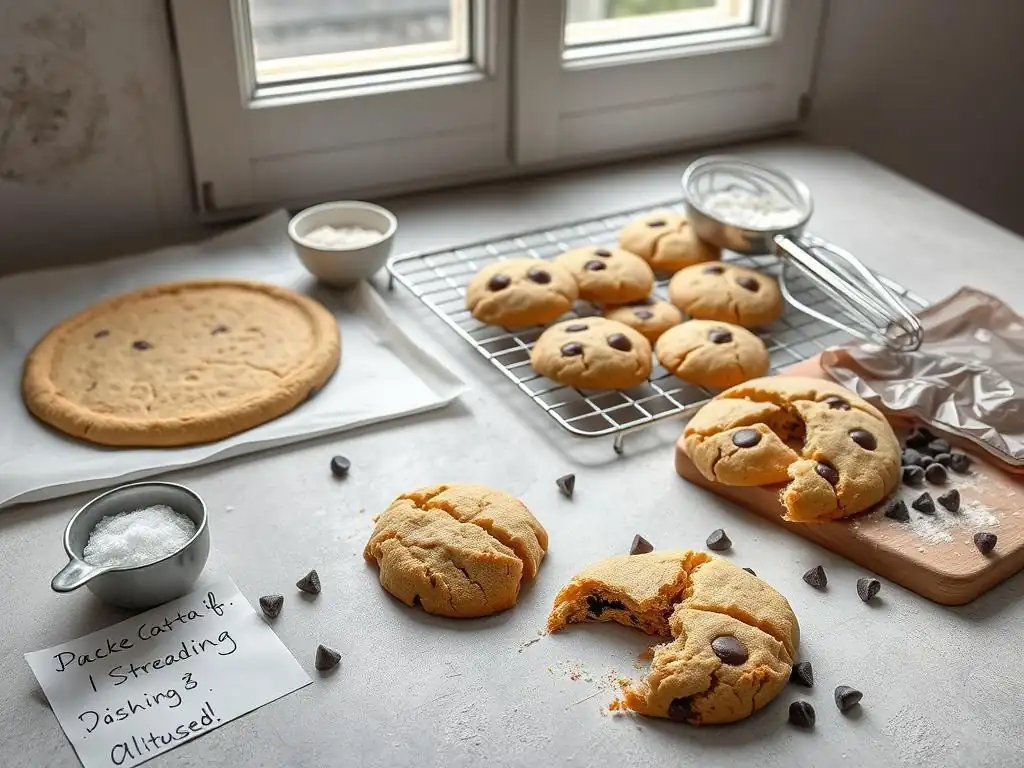
Even with general high-altitude knowledge, specific issues can arise. Recognizing the symptoms of common cookie problems at altitude and knowing the targeted solutions can save a batch from the bin. Whether your chocolate chip cookies are spreading too much, ending up dry, or having a cakey texture, there are specific adjustments you can make to correct the course. These troubleshooting techniques are applicable not only to chocolate chip cookies but also help in achieving perfect sugar cookies high altitude.
This is perhaps the most common complaint from high-altitude bakers. Cookies that spread into thin, uniform discs lack the desirable thickness and chewy interior. This usually indicates that the structure of the cookie hasn't set before the dough spreads too much, often due to the rapid expansion of leavening gases and potentially too much fat or sugar relative to the flour.
Solution: Increasing Flour for Structure
Adding extra flour is a direct way to provide more structure to your cookie dough. Flour contains proteins that create a network when mixed with liquid and heated, giving the cookie its shape. At high altitude, with gases expanding more, this structure needs to be stronger to hold the cookie together.
For many recipes, adding 1 to 3 extra tablespoons of all-purpose flour per cup of flour called for can make a significant difference. This extra flour absorbs more liquid and strengthens the dough matrix, helping the cookies hold their shape during baking and preventing excessive spread. Start with a smaller increase and adjust in future batches.
Solution: Reducing Fat to Control Spread
Fat (butter, shortening, etc.) melts during baking and contributes significantly to how much a cookie spreads. While fat is essential for tenderness and flavor, too much fat relative to other ingredients, especially at high altitude where spread is already an issue, can lead to flat cookies. Slightly reducing the amount of butter or shortening can help. Try decreasing the fat by 1 to 2 tablespoons per cup called for in the original recipe. This small reduction can limit spread without drastically altering the texture or flavor, resulting in thicker cookies.
Solution: Chilling the Dough Thoroughly
Chilling cookie dough before baking is a simple yet highly effective technique to control spread at any altitude, and it's particularly beneficial at high elevations. When dough is chilled, the fat within solidifies, and the flour has more time to absorb moisture. This results in a firmer dough that spreads less rapidly when it hits the hot oven.
Chilling for at least 30 minutes, or preferably several hours (or even overnight), allows the flavors to meld and the dough to firm up, leading to thicker, chewier cookies. This is a crucial step for achieving perfect sugar cookies high altitude or any cookie variety prone to spreading.
Cookies that come out of the oven looking dry, feeling hard, or crumbling easily are often a result of excessive moisture loss during baking, a common issue in the drier high-altitude air. This can also be exacerbated by over-baking or using too much dry ingredient relative to liquid.
Solution: Adding Extra Moisture (Liquid or Brown Sugar)
To counteract the faster evaporation at high altitude, increasing the liquid content in the dough is key. This can be done by adding an extra tablespoon or two of milk, water, or even an extra egg yolk to the recipe. Egg yolks, in particular, add richness and moisture.
Another effective way to add moisture is by slightly increasing the proportion of brown sugar to granulated sugar. Brown sugar contains molasses, which adds moisture and chewiness. For example, if a recipe calls for equal parts granulated and brown sugar, you might use a slightly higher ratio of brown sugar (e.g., 60% brown, 40% granulated).
Solution: Shortening Baking Time
Since moisture evaporates faster at high altitude, cookies may bake and dry out more quickly than at sea level. Reducing the baking time can prevent them from becoming excessively dry. Start checking for doneness a few minutes earlier than the recipe suggests. Look for visual cues like slightly golden edges but still soft centers (for chewy cookies) or uniform light browning (for crispier ones). A reduction of 1-3 minutes from the standard baking time can make a significant difference in moisture retention.
Solution: Using a Lower Oven Temperature
Baking at a slightly lower oven temperature can also help manage moisture loss and prevent dryness. A lower temperature allows the cookies to bake more slowly, giving the interior more time to set before the exterior dries out. While high-altitude baking often suggests increasing oven temperature to set structure faster (as discussed later), for dryness specifically, a slight decrease (perhaps 10-15°F) can be beneficial, provided other adjustments (like increased flour) are made to control spread. Experimentation is key here, balancing structure setting with moisture retention.
Sometimes, despite avoiding dryness, high-altitude cookies can end up with a cake-like texture rather than the desired chewiness or crispness. This is often due to too much leavening, too much liquid, or using the wrong type of flour.
Solution: Reducing Baking Powder/Soda
Excessive leavening is a primary cause of cakey texture in cookies. Baking soda and baking powder create gas bubbles that cause baked goods to rise. At high altitude, these gases expand more, leading to a lighter, more open (cakey) crumb structure. Reducing the amount of baking soda and/or baking powder is crucial. A common adjustment is to reduce leavening by 1/4 to 1/2 teaspoon per teaspoon called for in the original recipe. This limits the rise, encouraging a denser, chewier cookie texture.
Solution: Using All-Purpose Flour Instead of Cake Flour
Cake flour has a lower protein content and is milled more finely than all-purpose flour, which contributes to a tender, cakey crumb. While excellent for cakes, using cake flour in cookies, especially at high altitude, can exacerbate the tendency towards a cake-like texture. All-purpose flour, with its higher protein content, provides more structure and chewiness, which is generally desired in chocolate chip cookies. Ensure you are using standard all-purpose flour unless the recipe specifically calls for cake flour and you are prepared to make further adjustments to compensate for the protein difference.
Creating the perfect chocolate chip cookie at high altitude requires a synthesis of the adjustments discussed. It's not just about fixing problems, but proactively adapting the recipe from the start. These adaptations form the foundation of a reliable high-altitude cookie formula, ensuring your cookies bake correctly the first time, helping you achieve truly perfect sugar cookies high altitude or chocolate chip ones.
Adjusting Flour Ratios for High-Altitude Success
As mentioned, increasing flour is vital for structure at high altitude. For a typical chocolate chip cookie recipe using about 2 cups of flour, you might start by adding 2-4 extra tablespoons (1/8 to 1/4 cup) of all-purpose flour. This provides the necessary structural support to prevent excessive spread caused by lower pressure and increased leavening expansion.
The specific amount will depend on your altitude and the original recipe's flour content, but adding approximately 1-2 tablespoons per cup of flour is a good starting point for most recipes above 3,000 feet. Too little extra flour results in flat cookies; too much can make them dry or tough.
For example, if your standard recipe calls for 2 1/4 cups of flour, a high-altitude adaptation might use 2 1/4 cups plus 3 tablespoons of flour. This incremental addition strengthens the dough matrix without significantly altering the moisture balance if other ingredients are also adjusted correctly. This fine-tuning of the dry ingredients is a cornerstone of successful high-altitude cookie baking.
Modifying Sugar Content for Perfect Sweetness and Texture
Sugar plays multiple roles in cookies: it provides sweetness, contributes to tenderness, aids in browning, and helps with spread. At high altitude, reducing sugar helps control spread and prevents cookies from becoming too thin or overly crispy due to increased browning at lower boiling points. Reducing total sugar by 1 to 3 tablespoons per cup of sugar called for is a common practice.
Consider a recipe with 1 cup (200g) of granulated sugar and 3/4 cup (150g) of brown sugar. A high-altitude adjustment might reduce the granulated sugar to 3/4 cup (150g) and the brown sugar to 1/2 cup (100g), a total reduction of 3/4 cup (100g) or approximately 5 tablespoons. This reduction helps limit spread while still providing adequate sweetness and aiding in desirable browning. The proportion of brown sugar can also be slightly increased relative to white sugar, as brown sugar's molasses content adds moisture and chewiness, counteracting the drying effect of high altitude.
Liquid Adjustments: Adding Moisture Without Ruining the Dough
To combat the accelerated evaporation in high-altitude conditions, slightly increasing the liquid in your cookie dough is often necessary. This could involve adding an extra tablespoon or two of milk, water, or even incorporating an extra egg yolk. The goal is to add just enough moisture to compensate for loss without making the dough too wet or sticky, which would also lead to excessive spread.
If your recipe uses 2 eggs, you might add an extra egg yolk for richness and moisture without adding too much extra albumen (egg white), which can contribute to cakiness. Alternatively, adding 1-2 tablespoons of milk or water along with the standard egg amount can provide the needed hydration. For instance, in a recipe using 2 eggs and no additional liquid, you might add 1-2 tablespoons of milk. This small addition helps keep the cookies moist and chewy, preventing them from becoming dry and crumbly after baking in the thin, dry air.
Oven Temperature and Baking Time: Key Adjustments for Altitude
Adjusting oven temperature and baking time is critical for ensuring high-altitude cookies bake correctly. The lower boiling point of water and the faster expansion of gases mean cookies bake differently. While some sources suggest lowering the temperature for moisture, a common high-altitude adjustment is to increase the oven temperature slightly (by 15-25°F or 8-14°C) and decrease the baking time.
Increasing the temperature helps set the cookie's structure more quickly before the leavening gases expand too much and cause collapse. For example, if a recipe calls for baking at 350°F (175°C), you might bake at 365°F to 375°F (185°C to 190°C) at high altitude. Because the oven is hotter and moisture evaporates faster, the cookies will bake more quickly.
Therefore, the baking time needs to be reduced. If the original time is 10-12 minutes, start checking for doneness at 7 or 8 minutes. This balance of higher heat and shorter time helps achieve a properly set cookie with a good texture, avoiding both excessive spread and dryness.
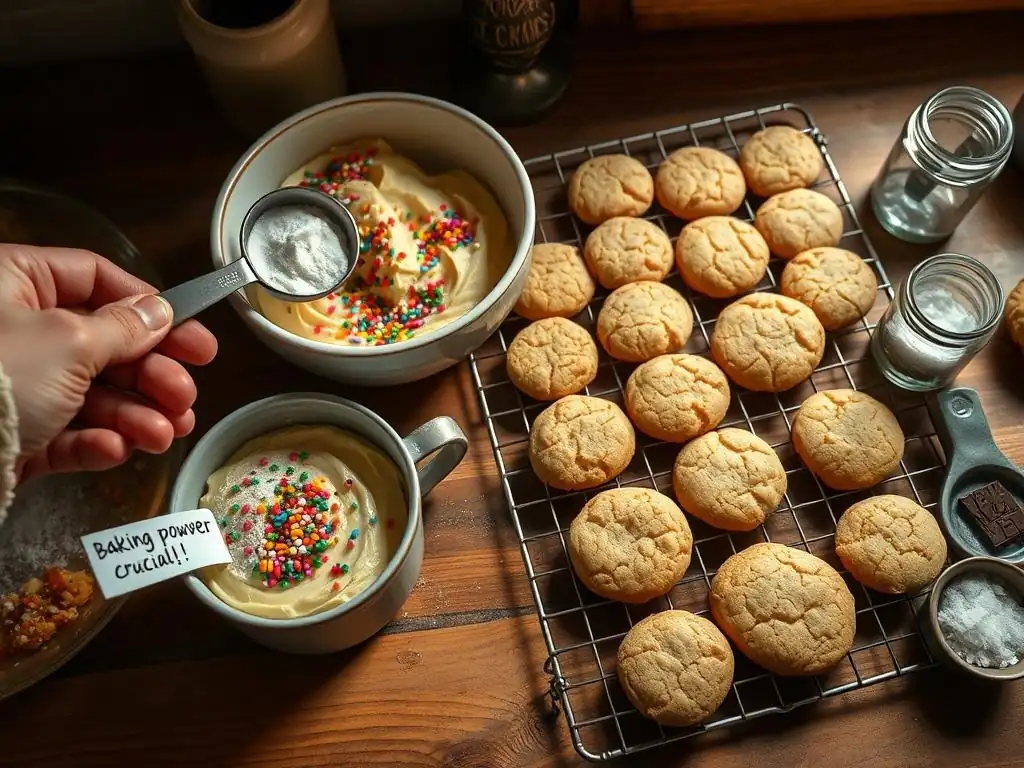
Armed with the knowledge of high-altitude adjustments, let's walk through the process of baking perfect chocolate chip cookies. Each step, from measuring ingredients to cooling the final product, requires careful attention, especially when baking in the thin air. Following these steps ensures your high-altitude adaptations translate into delicious results.
Step 1: Accurate Measurements - The Foundation of Success
Accurate measurement is paramount in baking, even more so at high altitude where small variations can have significant impacts. Use a kitchen scale for dry ingredients like flour and sugar whenever possible, as volume measurements can vary greatly depending on how the ingredient is scooped and leveled. For liquids, use liquid measuring cups placed on a flat surface. For adjustments like adding extra flour or reducing sugar, measure precisely using tablespoons or grams.
For instance, if your adapted recipe calls for 2 cups plus 3 tablespoons of flour, weigh out the standard 2 cups (approximately 240g using the spoon-and-level method or 250g if scooping) and then add the precise weight for 3 tablespoons (approximately 21-24g). This precision ensures the correct ratio of dry to wet ingredients and leavening, which is critical for controlling spread and texture at high altitude. Achieving perfect sugar cookies high altitude also hinges on this initial precision.
Step 2: Creaming Butter and Sugar Correctly
The creaming method, where softened butter is beaten with sugar until light and fluffy, incorporates air into the dough, contributing to lift and texture. At high altitude, where leavening is already more active, it's important not to over-cream. Creaming for too long can incorporate too much air, leading to excessive expansion and potential collapse. Cream the butter and sugar just until they are combined and look light and fluffy, typically 2-3 minutes with an electric mixer on medium speed, scraping down the bowl as needed. Avoid beating for 5-10 minutes as some sea-level recipes might suggest.
Properly softened butter is also key – it should be pliable but not melted or greasy. Cold butter won't cream properly, and melted butter will lead to excessive spread. Aim for a temperature around 65-68°F (18-20°C). This controlled creaming process helps manage the initial lift in the dough.
Step 3: Chilling for Enhanced Flavor and Texture
Chilling the dough is a non-negotiable step for high-altitude chocolate chip cookies seeking controlled spread and enhanced flavor. After mixing your high-altitude adapted dough, cover it tightly with plastic wrap and refrigerate for at least 30 minutes. For best results, chill for 2-24 hours.
Chilling solidifies the fat, making the dough firmer and less prone to spreading rapidly in the hot oven. It also allows the flour to fully hydrate and the flavors to deepen. This step significantly improves the thickness and chewiness of the final cookie. You can also freeze portioned dough balls for future baking; frozen dough requires a minute or two longer in the oven. This step is equally beneficial for producing perfect sugar cookies high altitude that hold their shape beautifully.
Step 4: Incorporating Chocolate Chips Evenly
While seemingly simple, how you add and distribute chocolate chips can affect the final cookie. Add the chips towards the end of mixing, just until they are evenly distributed throughout the dough. Overmixing after adding chips can develop too much gluten or warm the dough unnecessarily.
Use a sturdy spatula or mix on low speed for just a few seconds. Ensure an even distribution so each cookie has plenty of melty chocolate goodness. The type and size of chocolate chips (standard chips, chunks, or wafers) can also slightly affect texture and spread, but the most important factor here is uniform incorporation into your carefully adapted high-altitude dough.
Step 5: Baking to Perfection (Monitoring Doneness)
Preheat your oven to the adjusted high-altitude temperature (e.g., 365°F - 375°F) and use an oven thermometer to confirm accuracy. Place dough balls on a baking sheet lined with parchment paper, spacing them adequately (about 2 inches apart) to allow for some spread. Bake for the adjusted shorter time, starting to check for doneness a few minutes early.
Look for visual cues: the edges should be set and lightly golden, while the centers still look slightly soft and perhaps a little shiny. Cookies continue to bake slightly from residual heat after they are removed from the oven. Overbaking is a common mistake that leads to dry cookies, especially at high altitude. Aim for cookies that look just done. For instance, if your adjusted time is 8-10 minutes, start checking at 7 minutes.
Once out of the oven, resist the urge to move the cookies immediately. Let them cool on the hot baking sheet for 5-10 minutes. This crucial step allows the centers to finish setting from the residual heat and helps prevent them from breaking when you transfer them.
After they have set on the baking sheet, carefully transfer the cookies to a wire rack to cool completely. Cooling on a wire rack allows air circulation on all sides, preventing the bottoms from getting soggy and ensuring the cookies reach their final texture. Patience during this cooling phase is key to enjoying your perfectly baked high-altitude chocolate chip cookies.
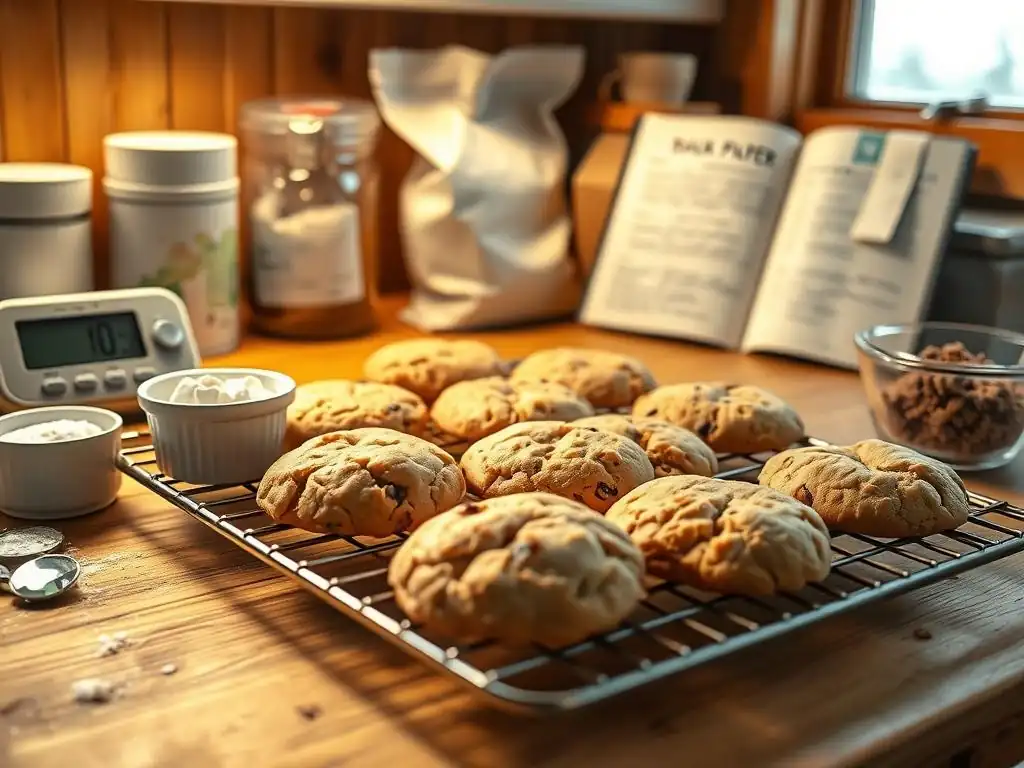
Beyond recipe adjustments, several general tips can further improve your high-altitude cookie baking success. These practices are beneficial for all types of cookies baked at elevation, from achieving perfect sugar cookies high altitude to mastering delicate shortbread. Incorporating these habits into your baking routine will lead to more consistent and delicious results.
Use a Reliable Oven Thermometer
Oven temperatures can fluctuate significantly and are often inaccurate compared to the setting on the dial. At high altitude, where precise temperature and timing are critical, relying solely on the oven's thermostat is risky. An inexpensive oven thermometer placed inside the oven will give you an accurate reading of the actual temperature. Preheat your oven for a full 15-20 minutes after it indicates it's reached temperature, ensuring it is truly heated through and stable at your adjusted high-altitude setting (e.g., 365°F).
Don't Overbake: Watch for Visual Cues
Overbaking is a leading cause of dry cookies, a problem exacerbated by faster moisture evaporation at high altitude. Learn to recognize the visual cues that indicate your chocolate chip cookies are done. Look for set edges that are just starting to turn golden brown. The centers should still appear soft and slightly underbaked. Remember, cookies continue to bake on the hot sheet after removal. When in doubt, err on the side of slightly underbaking; you can always return them to the oven for a minute or two if needed, but you can't fix an overbaked, dry cookie.
This step is often overlooked but is vital for texture and structure, especially with high-altitude cookies that might be slightly more delicate initially. Allowing the cookies to cool on the hot baking sheet for 5-10 minutes gives the internal structure time to set and firm up. If you try to move them too soon, they may break apart or collapse. This period of continued gentle baking and cooling on the sheet is essential for achieving the desired chewy or crisp texture without breakage.
Once your high-altitude chocolate chip cookies have cooled completely on a wire rack, store them in an airtight container. Proper storage helps maintain their freshness and texture. If you've achieved a chewy texture, storing them with a slice of bread can help keep them moist (though this isn't always necessary if your high-altitude adjustments were spot on). For crisp cookies, ensure the container is truly airtight to prevent them from absorbing moisture from the air and becoming soft. Store at room temperature for typical enjoyment.
Developing a reliable high-altitude recipe takes experimentation. Based on the principles discussed, here is an adapted formula designed for elevations around 5,000 feet (approximately 1,500 meters), which can serve as a starting point for your high-altitude chocolate chip cookie baking journey. Remember that minor adjustments may still be needed based on your specific altitude and oven. This formula incorporates the key adjustments needed to achieve great results.
This list is adapted from a standard sea-level recipe typically yielding about 3 dozen cookies.
- 1 cup (2 sticks) unsalted butter, softened (about 65-68°F / 18-20°C)
- 3/4 cup granulated sugar (reduced from 1 cup)
- 1/2 cup packed light or dark brown sugar (reduced from 3/4 cup, but maintaining a good brown sugar ratio for chewiness)
- 2 large eggs + 1 large egg yolk (added yolk for extra moisture)
- 1 teaspoon vanilla extract
- 2 1/4 cups all-purpose flour + 3 tablespoons all-purpose flour (added 3 tbsp for structure)
- 1/2 teaspoon baking soda (reduced from 1 teaspoon)
- 1/4 teaspoon salt
- 2 cups (12 ounces) chocolate chips (adjust to preference)
Ingredient Adjustments Summary (vs. typical sea-level):
- Granulated Sugar: Reduced by approx. 1/4 cup (or 3-4 tbsp)
- Brown Sugar: Reduced by approx. 1/4 cup (or 3-4 tbsp)
- Eggs: Added 1 extra yolk
- Flour: Added approx. 3 tbsp
- Baking Soda: Reduced by approx. 1/2 tsp
Note: These adjustments are approximations and may need slight tuning for your specific altitude and environment.
Baking Instructions Tailored for Altitude
- Preheat oven to 365°F (185°C). Place an oven thermometer inside to verify temperature accuracy.
- Line baking sheets with parchment paper.
- In a large bowl, cream the softened butter with the granulated and brown sugars using an electric mixer on medium speed until light and fluffy, about 2-3 minutes, scraping down the sides of the bowl. Do not over-cream.
- Beat in the 2 large eggs and the extra egg yolk one at a time, mixing well after each addition. Stir in the vanilla extract.
- In a separate medium bowl, whisk together the measured flour (2 1/4 cups + 3 tablespoons), baking soda, and salt.
- Gradually add the dry ingredients to the wet ingredients, mixing on low speed just until combined. Do not overmix.
- Stir in the chocolate chips.
- Cover the dough tightly and refrigerate for at least 30 minutes, or preferably 2-24 hours.
- Scoop rounded tablespoons of chilled dough (or use a cookie scoop) onto the prepared baking sheets, spacing about 2 inches apart.
- Bake one sheet at a time in the preheated oven for 8-10 minutes, or until the edges are set and lightly golden, and the centers still look soft.
- Remove from oven and let cookies cool on the baking sheet for 5-10 minutes before transferring to a wire rack to cool completely.
Baking at high altitude presents unique challenges, but they are far from insurmountable. By understanding the science behind how lower pressure and drier air affect ingredients, and by making strategic adjustments to your recipes and techniques, you can consistently bake delicious, perfectly textured chocolate chip cookies. The journey to achieving perfect sugar cookies high altitude or any other baked good at elevation is one of understanding, adaptation, and a little bit of experimentation.
Mastering high-altitude cookie baking is about becoming a more intuitive and observant baker. It requires paying close attention to the dough's consistency, how it behaves during baking, and the final texture of the cookies. Start with tested high-altitude adaptations, like the "Summit Sweets" formula provided, and be willing to make small tweaks based on your specific environment and results. Keep notes on what works and what doesn't. With practice, you'll develop a feel for the necessary adjustments, turning potential calamities into consistent successes.
The reward for understanding high-altitude baking principles is the ability to enjoy perfectly baked goods, including your favorite chocolate chip cookies, no matter how high you live. Say goodbye to flat, dry, or cakey disappointments. With the right knowledge and a willingness to adapt, you can confidently bake cookies that are chewy, soft, and full of flavor, proving that delicious baking is achievable even in the thin air. Enjoy sharing your high-altitude baking triumphs!
Frequently Asked Questions
High altitude baking generally requires adjustments due to lower air pressure. This leads to faster evaporation of liquids and increased expansion of gases, potentially resulting in dry or overly puffy cookies.
Common adjustments include reducing the amount of sugar and baking powder to control spread and rise, and increasing the liquid content to compensate for faster evaporation. Sometimes, a slightly lower oven temperature is also beneficial.
This is often caused by excessive leavening (baking powder) or too much sugar, which are exacerbated by the reduced air pressure. Adjusting these ingredients is crucial for preventing excessive spreading.
Combat dryness by adding more liquid to the dough, such as milk or water, and ensuring the cookies are not over-baked. Monitoring the baking time closely is essential.
While it depends on your specific altitude and recipe, a slightly lower oven temperature (around 25-50 degrees Fahrenheit less) can help prevent the cookies from drying out or browning too quickly before they are fully baked.
Final Reflection: The Sweet Success of High-Altitude Baking
Mastering the art of the perfect sugar cookie at high altitude isn't just about following a recipe; it's about understanding the science behind the bake. The challenges presented by reduced air pressure are real, leading to flat, dense, or even cracked cookies – a culinary catastrophe for any aspiring baker. But as we've explored, with the right adjustments and a dash of perseverance, even the thin air can't stand in the way of achieving perfectly crisp edges and a delightfully chewy center.
The quest for the perfect high-altitude cookie reflects a larger cultural yearning for mastery and adaptation. We strive for perfection in our baking, mirroring our desire for excellence in all aspects of life. The struggle to overcome the unique challenges of high-altitude baking mirrors the challenges we face in adapting to different environments and circumstances. The only way to do great work is to love what you do.
– Steve Jobs. This applies not only to professional endeavors but also to the simple joy of baking a perfect cookie, no matter the altitude.
Now, consider your own baking journey. Have you faced similar challenges in your pursuit of culinary perfection? What adjustments have you made to conquer the unique conditions of your kitchen? I encourage you to embrace the process, experiment with different techniques, and don't be afraid to fail. Each failed batch brings you closer to that moment of triumph, that perfect bite of a high-altitude sugar cookie, a testament to your resilience and dedication. The sweet taste of success is well worth the effort.
Unlock Your High-Altitude Baking Secrets!
Thanks for joining us on this delicious journey into high-altitude baking! We hope you now feel confident tackling those tricky sugar cookies, even with the thinner air. Ready to put your newfound knowledge to the test?
- Bake a batch of your favorite cookies, using the adjusted recipe techniques we've explored. Share a picture on social media using #BakeWithEaseHighAltitude – we'd love to see your creations!
- Explore other high-altitude recipes on our website to expand your baking horizons.
- Leave a comment below and share your biggest high-altitude baking challenge – we're here to help!
So, what incredible high-altitude baking adventure will you embark on next?