
The History and HowTo of German Pretzels (Yes, They're Bread!)

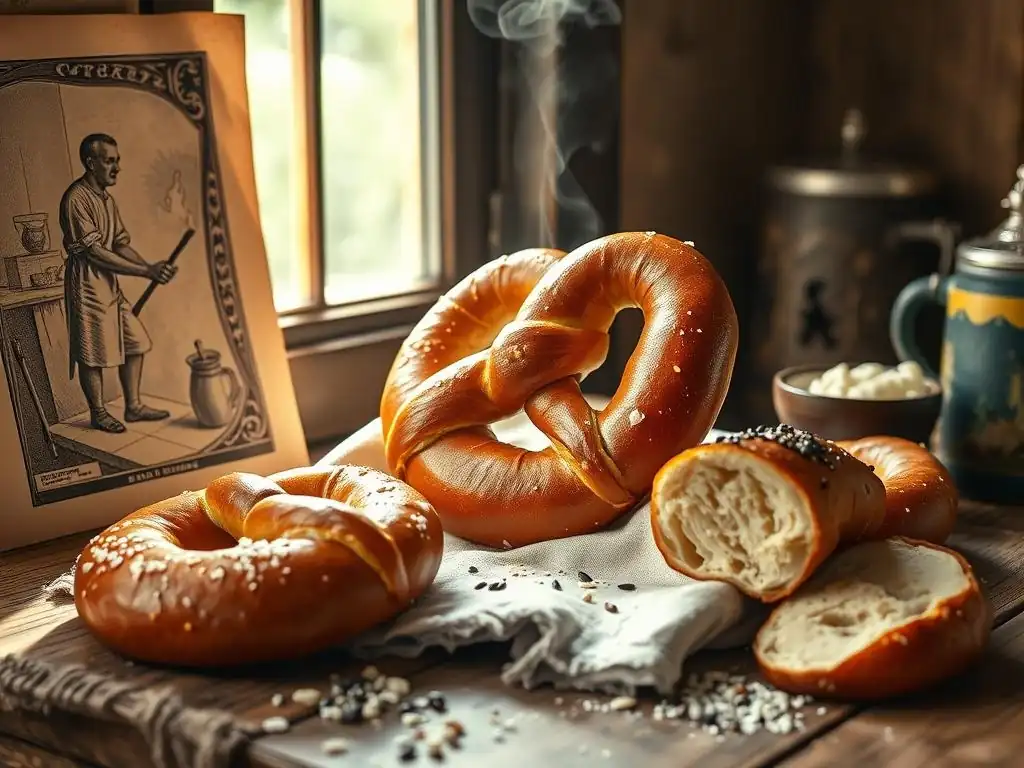
Welcome to BakeWithEase, your guide to confident baking! Ever wondered about the intriguing history behind that perfectly twisted treat? Dive into our exploration of the German pretzel recipe easy – a journey that uncovers the story and secrets behind crafting authentic, delicious pretzels right in your own kitchen. Get ready to learn more than just a recipe; prepare to master a time-honored tradition. Let's get baking!
- The History and How-To of Bavarian Pretzels - The German Foodie
- Introduction to Bavarian Pretzels: A Culinary Staple
- The Rich History of the Bavarian Pretzel: From Bakery to Beer Garden
-
Mastering the Bavarian Pretzel Recipe: A Detailed Step-by-Step Guide
- Essential Ingredients for the Perfect Homemade Bavarian Pretzel
- The Secret to Achieving a Chewy and Soft Texture: Dough Preparation Techniques
- Shaping the Classic Bavarian Pretzel: A Visual and Tactile Guide
- The Lye Bath: Achieving the Signature Mahogany Crust
- Baking Your Bavarian Pretzels to Perfection: Time, Temperature, and Steam
- Bavarian Pretzel Recipe Variations and Serving Suggestions
- Troubleshooting Your Bavarian Pretzel Baking: Common Issues and Solutions
- Conclusion: Your Journey to Mastering the Authentic Bavarian Pretzel
-
Frequently Asked Questions
- What makes a German pretzel different from other types of pretzels?
- What is the "lye bath" mentioned in the article, and is it safe to use at home?
- Can I use different types of flour for the German pretzel recipe?
- How do I know when my German pretzels are properly baked?
- What are some common toppings or variations for German pretzels?
- Final Reflection: The Enduring Magic of the Simple Pretzel
- Unleash Your Inner Bäcker: Make Authentic German Pretzels!
The History and How-To of Bavarian Pretzels - The German Foodie
Introduction to Bavarian Pretzels: A Culinary Staple
The German Foodie Explores the Authentic Bavarian Pretzel
Welcome to the delightful world of Bavarian pretzels! These aren't just any pretzels; they are a cornerstone of Southern German cuisine, particularly in the region of Bavaria. Known for their unique shape, chewy interior, and distinctive dark brown, shiny crust, authentic Bavarian pretzels, or Brezn as they are called locally, offer a truly special baking experience.
Mastering a genuine German pretzel recipe easy enough for home bakers can seem daunting, but with the right guidance, it's surprisingly achievable and incredibly rewarding. This article will take you on a journey from the historical roots of this iconic bread to a detailed, step-by-step guide on how to bake them in your own kitchen.
Exploring the authentic Bavarian pretzel means understanding its place at the heart of local culture. You'll find them everywhere in Bavaria, from bustling bakeries and street vendors to traditional beer gardens (Biergärten) and festive occasions. They are much more than just a snack; they are a symbol of hospitality and tradition. Learning this simple German pretzel recipe allows you to bring a piece of this rich heritage into your home, sharing a truly authentic taste of Bavaria with friends and family. It's a baking project that connects you directly to centuries of German culinary history.
What Makes a Bavarian Pretzel Unique?
The distinctiveness of a Bavarian pretzel lies primarily in two key areas: its texture and its crust. Unlike softer, often sweeter American-style pretzels, the Bavarian Brezn boasts a dense, chewy interior that transitions to a thin, slightly crisp crust. This texture is achieved through specific dough preparation techniques, including the careful development of gluten and often a period of cold fermentation. The iconic shape, with its looped arms and thick belly, also contributes to the varied texture within a single pretzel.
However, the most defining characteristic is the deep mahogany brown crust, achieved through a quick dip in a food-grade lye solution before baking. This alkali bath is crucial; it's not just for color. It prevents the Maillard reaction from occurring too quickly on the surface, allowing the crust to develop its signature color and unique slightly alkaline flavor profile during baking. Without the lye bath, you'd simply get a pale, standard bread crust. Understanding these elements is key to creating an authentic German pretzel recipe easy enough to replicate successfully at home.
The Rich History of the Bavarian Pretzel: From Bakery to Beer Garden
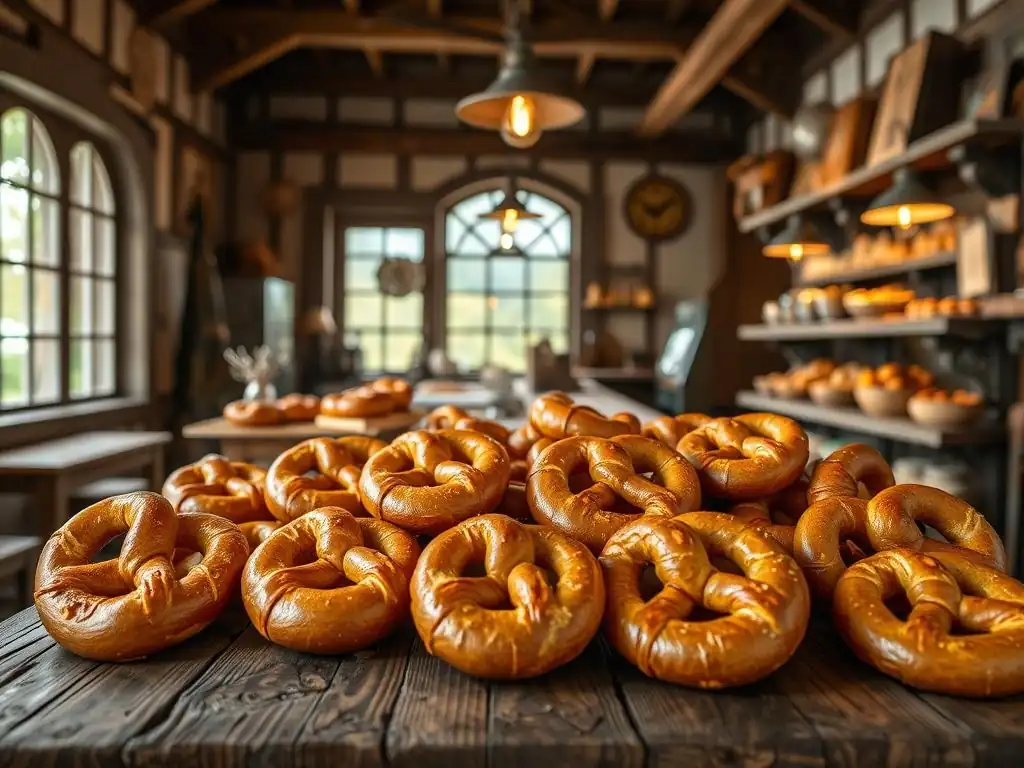
Origins in Southern Germany: The Pretzel's Regional Roots
The exact origins of the pretzel are shrouded in legend, but most historical accounts place its birth in Southern Germany, or possibly nearby areas like Alsace (now part of France) or Austria, sometime around the 6th or 7th century. One popular tale suggests that a monk invented the pretzel as a reward for children who had learned their prayers.
The shape, with its three holes, was said to represent the Holy Trinity, and the name might have come from the Latin word bracellae, meaning "little arms." Another story claims a baker, facing execution for poor bread, was given one last chance and created the pretzel shape to look through three windows at the sun as a sign of hope.
While the precise origin remains debated, what is clear is that the pretzel became firmly established in the region that is now Southern Germany. Bakers guilds in cities like Augsburg and Munich were making pretzels by the 12th century. Historical records indicate that pretzels were sometimes used as symbols of bakers' guilds and were even depicted in religious texts and artwork. The tradition of the Laugenbrezel (lye pretzel) specifically, with its distinctive dark crust, is a development that solidified its place as a unique regional bread.
The Pretzel's Role in Bavarian Culture: Festivals and Traditions
In Bavaria, the pretzel is far more than just food; it is deeply woven into the fabric of cultural life. It's an indispensable accompaniment to many traditional Bavarian dishes and beverages. At the world-famous Oktoberfest in Munich, millions of pretzels are consumed alongside litres of beer. Large, softball-sized pretzels are common at such festivals, designed to be shared and to help absorb the copious amounts of liquid. Pretzels also feature prominently at other regional festivals and celebrations throughout the year.
Beyond large events, pretzels are a daily presence. They are a standard offering at breakfast (Frühstück), often served with butter ( Butterbrezn). They are a popular snack with coffee or beer and are essential at any traditional Bavarian Brotzeit (a light meal often consisting of bread, cheese, and cold cuts). The pretzel's role is so significant that it's hard to imagine Bavarian cuisine without it. Learning a simple German pretzel recipe allows you to participate in this cultural tradition, whether you're celebrating Oktoberfest at home or simply enjoying a quiet Brotzeit.
Bavarian Pretzel Variations: Size, Shape, and Texture
While the classic Bavarian pretzel shape and lye crust are standard, there are regional and stylistic variations within Bavaria itself. The most common form is the familiar loop with a thick 'belly' and thinner arms. However, you might encounter Stangen (pretzel sticks) or Brezensemmeln (pretzel rolls), which use the same lye-treated dough but are shaped differently. The size can also vary significantly, from small individual portions to massive festival pretzels weighing a kilogram or more.
Texture can also differ slightly depending on the baker and recipe. Some prefer a very dense, uniformly chewy interior, while others aim for a slightly airier crumb in the thickest part. The crispness of the crust can also range from barely firm to quite brittle, though the signature chewiness remains constant. The toppings also vary, though coarse salt is by far the most traditional. Understanding these nuances helps appreciate the breadth of Bavarian pretzel baking, even as you focus on mastering a standard, easy German pretzel recipe.
Mastering the Bavarian Pretzel Recipe: A Detailed Step-by-Step Guide
Essential Ingredients for the Perfect Homemade Bavarian Pretzel
Creating an authentic Bavarian pretzel requires a few key ingredients, most of which are standard pantry staples, with one crucial exception. You'll need high-protein bread flour (typically 12-14% protein content) to develop sufficient gluten for that signature chew. Water, fresh or active dry yeast, a touch of malt (diastatic malt powder or barley malt syrup are ideal, though a pinch of sugar can work as a substitute in a pinch) to aid fermentation and browning, and salt are also necessary for the dough itself.
The unique ingredient is food-grade sodium hydroxide, also known as lye. This is not baking soda, which is used for American-style soft pretzels. Lye is a strong alkali and requires careful handling and precise measurement. A typical lye bath uses a concentration of around 3-4% food-grade sodium hydroxide dissolved in cold water.
Always add lye to water, never the other way around, and wear gloves and eye protection. This ingredient is non-negotiable for achieving the authentic color, flavor, and crust of a Bavarian pretzel. Sourcing food-grade lye is the first step towards a truly authentic German pretzel recipe easy enough to make at home, provided safety is paramount.
The Secret to Achieving a Chewy and Soft Texture: Dough Preparation Techniques
Mixing and Kneading: Developing Gluten for Optimal Texture
The foundation of a great Bavarian pretzel is a well-developed dough. Start by combining your flour, yeast, malt/sugar, and salt. Gradually add water while mixing until a cohesive dough forms. Kneading is crucial for developing the gluten network that gives the pretzel its characteristic chew. Knead the dough vigorously, either by hand on a lightly floured surface for about 10-15 minutes, or in a stand mixer with a dough hook on medium speed for 6-8 minutes. The dough should become smooth, elastic, and pass the windowpane test (a small piece of dough can be stretched thinly without tearing).
Proper gluten development ensures that the dough can hold its shape during the lye bath and baking, and it contributes significantly to the final texture. Avoid adding too much extra flour during kneading, as this can result in a dry dough. A slightly tacky dough is preferable. Once kneaded, the dough should be rounded into a ball and placed in a lightly oiled bowl for its initial rise, though for Bavarian pretzels, this initial rise is often followed by a critical cold proofing step.
The Importance of a Cold Proof: Enhancing Flavor and Structure
While some recipes call for a warm bulk fermentation, many authentic German pretzel recipes incorporate a cold proofing stage. After a short initial rest (optional, but can help with shaping), the shaped pretzels (or sometimes the bulk dough) are chilled in the refrigerator for a significant period, typically 8 to 24 hours. This slow, cold fermentation does several things: it deepens the flavor by allowing enzymes to break down starches and proteins, and it firms up the dough.
The firmness from the cold proof is essential for handling the dough during the lye bath. A cold, firm pretzel shape is less likely to distort or absorb too much lye solution. It also contributes to a better oven spring, helping the pretzel puff up nicely in the oven before the crust sets. Skipping the cold proof will result in a less flavorful pretzel that is much harder to handle in the lye bath, making this step vital for a truly authentic and successful simple German pretzel recipe.
Shaping the Classic Bavarian Pretzel: A Visual and Tactile Guide
Step-by-Step Instructions for Forming the Authentic Bavarian Shape
Shaping is perhaps the most visually iconic part of making Bavarian pretzels. Start with chilled dough (this is key!). Divide the dough into equal portions, typically ranging from 80g to 120g depending on your desired pretzel size. Roll each portion into a long, thin rope. The rope should be significantly thicker in the center (the 'belly') and taper towards the ends (the 'arms'). A common length for a medium pretzel rope is around 50-60 cm (about 20-24 inches).
To form the shape:
- Lay the rope flat on your work surface with the thickest part in the middle.
- Cross the two thinner ends over each other twice, about 10-15 cm (4-6 inches) from the ends. This creates the twist.
- Bring the twisted ends down and press them firmly onto the thick 'belly' section of the pretzel. Ensure they are well-attached so they don't come apart during the lye bath or baking.
- Place the shaped pretzel on a baking sheet lined with parchment paper or a silicone mat. Repeat with the remaining dough portions.
- Return the shaped pretzels to the refrigerator or freezer for at least 15-30 minutes before the lye bath. They must be cold and firm!
Achieving the Correct Thickness: Balancing Aesthetics and Functionality
The varying thickness of the pretzel rope is not just for looks; it affects the final texture and baking. The thick 'belly' section needs to be substantial enough to remain soft and chewy in the center after baking. Aim for a thickness of roughly 3-4 cm (1.2-1.6 inches) at the widest point. The arms, in contrast, should be much thinner, perhaps 1-1.5 cm (0.4-0.6 inches) in diameter.
This differential thickness ensures that the thinner arms bake up slightly crispier, providing textural contrast to the soft, doughy belly. Rolling the rope evenly, tapering from the center outwards, requires practice but is essential for the classic look and feel. Don't make the arms too thin, or they will overbake and become brittle. Conversely, if the belly is too thin, the whole pretzel might become uniformly dense. Achieving this balance is part of mastering this delicious simple German pretzel recipe.
The Lye Bath: Achieving the Signature Mahogany Crust
Why a Lye Bath is Crucial: The Chemical Reaction Behind the Color and Flavor
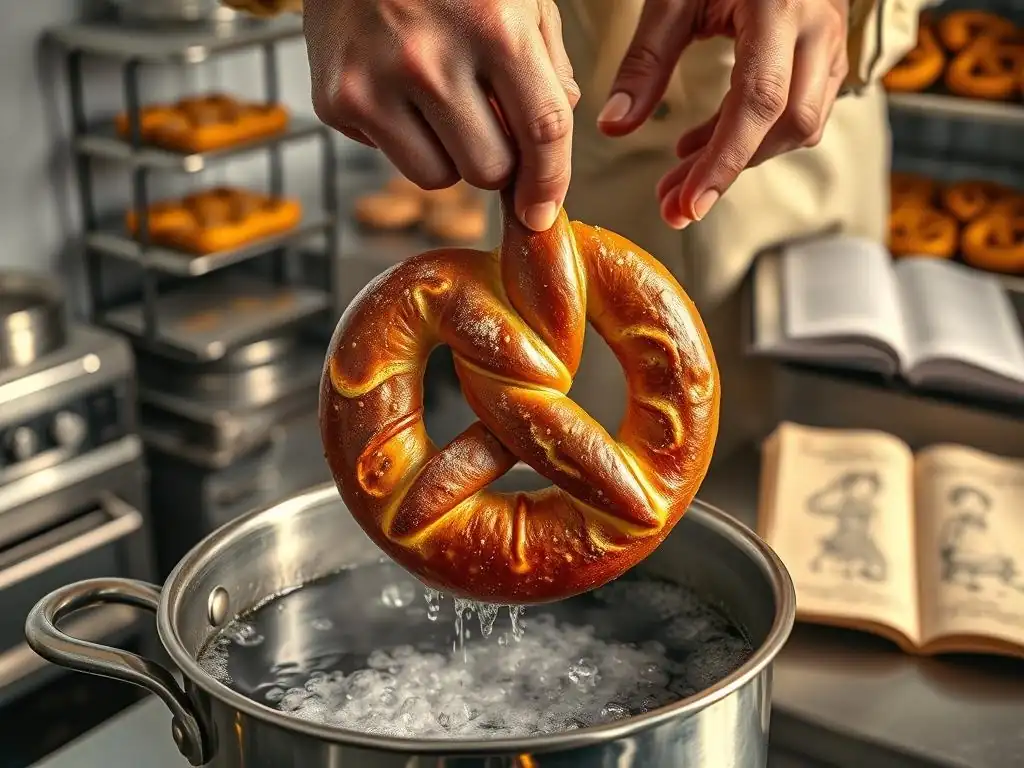
The characteristic dark brown, shiny crust and slightly alkaline flavor of Bavarian pretzels are a direct result of the lye bath. When the raw pretzel dough, which is slightly acidic, is briefly submerged in the alkaline lye solution, a chemical reaction occurs on the surface. This reaction gelatinizes the starches on the dough's exterior, creating a smooth, slightly sticky surface.
More importantly, the alkaline environment drastically accelerates the Maillard reaction during baking. The Maillard reaction is a complex chemical process responsible for the browning and flavor development in many cooked foods. In the presence of the lye, this reaction happens much more quickly at lower temperatures than it would with just water or baking soda. This allows the crust to achieve its deep color and unique flavor before the interior of the pretzel overbakes, resulting in the perfect contrast between crust and crumb. It's the secret ingredient that elevates a good pretzel to an authentic Bavarian Brezn.
Precise Lye Bath Instructions for Authentic Bavarian Pretzels (Safety First!)
- Safety is paramount when working with lye. Always wear chemical-resistant gloves and eye protection (safety glasses or goggles). Work in a well-ventilated area, ideally with an open window. Keep vinegar handy – it's an acid that can neutralize lye spills, though dilute solutions are generally less hazardous than concentrated ones. Keep pets and children away from the work area.
- Prepare the lye solution: Carefully measure cold water into a non-reactive container (glass, stainless steel, or food-grade plastic). Slowly and carefully add the pre-measured food-grade sodium hydroxide pellets or flakes to the water while stirring gently with a non-reactive spoon or whisk. The solution will heat up; this is normal. Allow it to cool to room temperature (around 20-25°C or 68-77°F) before use. A typical concentration is 3-4% lye by weight of water. For example, for 1000g (1 liter) of water, you would add 30-40g of lye. Use precise measurements, preferably with a digital scale.
- Handling the pretzels: Ensure your shaped pretzels are cold and firm from chilling. Using a slotted spatula or a baking spider, carefully lift one pretzel and submerge it completely in the lye solution for about 10-30 seconds. The exact time depends on the concentration and desired color, but typically 15-20 seconds is sufficient.
- Draining: Lift the pretzel out, allowing excess lye solution to drip back into the container. Do not let it soak for too long, or the surface can become slimy.
- Placement: Carefully place the lye-dipped pretzel onto a baking sheet lined with parchment paper or a silicone mat. The lye solution will cause the dough surface to tighten slightly.
- Salting: Immediately sprinkle coarse pretzel salt (not table salt, which melts) onto the wet surface of the pretzel. The salt will adhere firmly. Sprinkle generously, especially on the 'belly'.
- Repeat for all pretzels. Work efficiently but carefully. Discard the lye solution safely according to local regulations (often by careful neutralization with vinegar before disposal).
Baking Your Bavarian Pretzels to Perfection: Time, Temperature, and Steam
Oven Temperature and Baking Time: Achieving the Ideal Color and Texture
Baking Bavarian pretzels requires a hot oven to ensure rapid oven spring and quick crust formation after the lye bath. Preheat your oven to a high temperature, typically between 200°C and 230°C (400°F to 450°F). The precise temperature might vary slightly depending on your oven. Place the salted, lye-dipped pretzels on the hot baking sheet.
Bake the pretzels for approximately 12 to 18 minutes. The baking time is relatively short due to the high temperature and the lye bath's effect on browning. You'll know they're done when they've achieved a deep, rich mahogany brown color across the entire surface, including the arms and belly. The salt should be clearly visible, and the pretzel should sound hollow when tapped on the bottom. Over-baking will result in a dry, tough pretzel, while under-baking will leave them pale and doughy. Keep an eye on them, especially the first time you use an easy German pretzel recipe.
The Importance of Steam: Creating a Shiny and Crisp Crust
Introducing steam into the oven at the beginning of the baking process is highly beneficial for achieving the perfect pretzel crust. While the lye bath is the primary driver of the dark color and unique flavor, steam helps the crust remain pliable longer, allowing the pretzel to expand fully (oven spring) before the crust sets. This contributes to a slightly airier interior and a more uniform, shiny exterior crust.
There are several ways to create steam. You can place a pan of hot water on the bottom rack of your oven while preheating, or, more effectively, you can preheat a cast iron pan or baking tray on the bottom rack and carefully pour a cup of hot water into it just as you place the pretzels in the oven, quickly closing the door. Be cautious of the burst of steam.
Let the steam work for the first 5-10 minutes of baking, then remove the steam pan if desired, although many bakers leave it in for the duration. This simple step significantly enhances the visual appeal and texture of your homemade Bavarian pretzels.
Bavarian Pretzel Recipe Variations and Serving Suggestions
Savory Pretzel Toppings and Flavors: Exploring Regional Preferences
While coarse salt is the undisputed king of Bavarian pretzel toppings, regional variations and personal preferences allow for delicious alternatives. An easy German pretzel recipe can serve as a base for exploring these options.
Classic Salted Pretzels: A Staple in Bavaria
The most traditional Bavarian pretzel is simply topped with coarse salt. The large salt crystals don't dissolve during baking and provide bursts of salty flavor that perfectly complement the slightly sweet and alkaline crust and chewy interior. This is the standard accompaniment to beer and is often served with butter ( Butterbrezn).
Cheese-Topped Pretzels: A Hearty Variation
A popular variation, particularly in beer gardens, is the cheese-topped pretzel ( Käsebrezn). After the lye bath and salting (or instead of), grated cheese is sprinkled generously over the pretzel before baking. Emmental or a similar hard cheese is commonly used. The cheese melts and browns, creating a savory, sometimes slightly crispy, topping that is incredibly satisfying.
Seeded Pretzels: Adding Texture and Flavor
Less common in the most traditional settings but still found are pretzels topped with seeds. Poppy seeds, sesame seeds, or a mix of seeds can be sprinkled on the wet lye-bathed surface before baking, similar to how salt is applied. This adds a different layer of texture and a nutty flavor profile. Some bakeries also offer pretzels topped with pumpkin seeds or sunflower seeds.
Serving Your Freshly Baked Bavarian Pretzels: Enjoying a Taste of Bavaria
The best way to enjoy Bavarian pretzels is fresh out of the oven, while they are still warm and the crust is at its peak. They are incredibly versatile and pair well with a variety of foods and drinks.
Pairing Suggestions: Weisswurst, Obatzda, and Bavarian Beer
For a classic Bavarian experience, serve your pretzels with Weisswurst (traditional Bavarian white sausage, often served with sweet mustard), Obatzda (a creamy cheese spread made with Camembert, butter, paprika, and sometimes onion), or simply a generous slathering of cold butter. And, of course, no Bavarian pretzel feast is complete without a refreshing Bavarian beer, particularly a wheat beer ( Weissbier) or a lager ( Helles). The combination of salty pretzel and cold beer is a match made in culinary heaven.
Storing Your Pretzels: Maintaining Freshness and Texture
Bavarian pretzels are best enjoyed on the day they are baked. Their unique texture is perishable. If you have leftovers, store them at room temperature in a paper bag to prevent the crust from becoming soggy. Avoid plastic bags, which trap moisture.
To refresh a day-old pretzel, lightly mist it with water (especially the salt) and warm it in a moderate oven (around 180°C or 350°F) for a few minutes until the crust crisps up again. They can also be frozen once completely cooled; wrap them tightly in plastic wrap and then foil. Reheat frozen pretzels in a preheated oven (around 200°C or 400°F) for 8-12 minutes until warmed through. While not quite the same as fresh, this method preserves the texture better than microwave reheating.
Troubleshooting Your Bavarian Pretzel Baking: Common Issues and Solutions
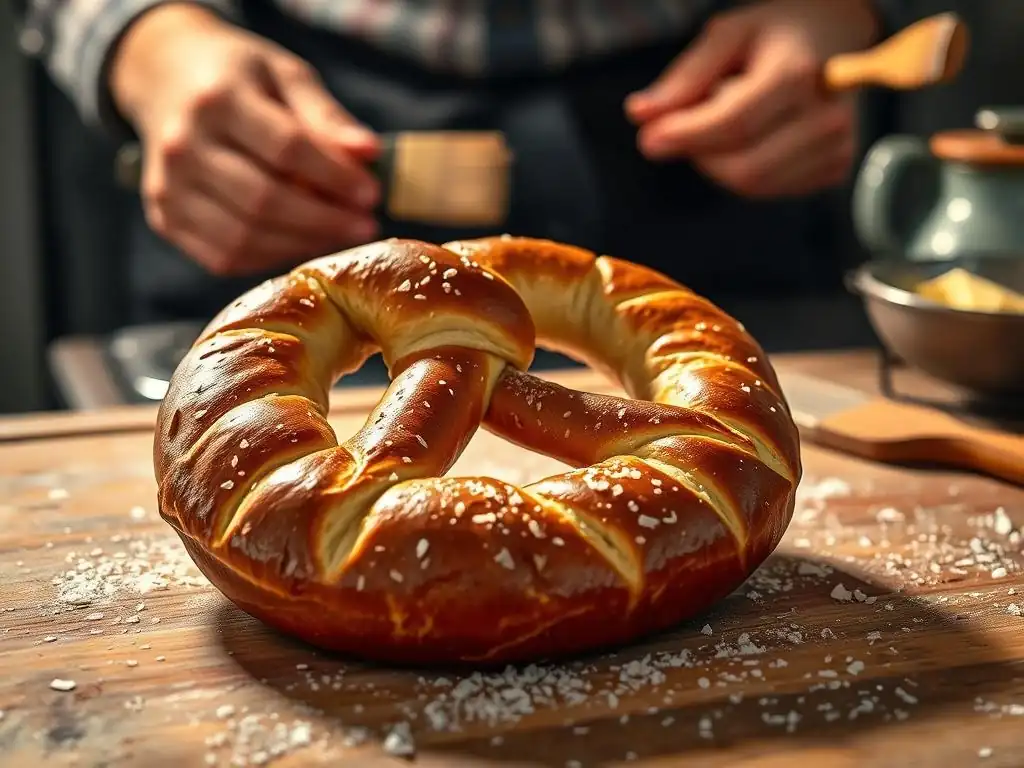
Even with an easy German pretzel recipe, baking can sometimes present challenges. Here are a few common problems and how to address them.
Dough Problems: Too Sticky, Too Dry, Over-Proofed
- Too Sticky: If your dough is excessively sticky after initial mixing and kneading, resist the urge to add large amounts of flour. A slightly tacky dough is normal. If it's unmanageable, add flour one tablespoon at a time until it's workable but still soft. Humidity can affect flour absorption, so slight adjustments are sometimes necessary. Ensure you're using high-protein bread flour, as all-purpose flour may not develop enough structure.
- Too Dry: A dry, stiff dough is difficult to knead and shape. This usually means not enough water was added initially or too much flour during kneading. If kneading by hand, ensure you're scraping the surface well to incorporate all ingredients. If the dough is already formed, you can try kneading in a tablespoon of water at a time, though this is challenging. Prevention is key: measure ingredients carefully and aim for a soft, slightly tacky dough.
- Over-Proofed: Dough that has proofed too long (especially at warm temperatures) can become slack, lose its structure, and be difficult to shape and handle, particularly in the lye bath. It may also develop a strong, overly yeasty flavor. The cold proof helps prevent over-proofing. If your dough seems too puffy and soft after chilling, try shaping and dipping them quickly. If they lose shape in the lye, they were likely over-proofed or not chilled enough. Ensure your refrigerator is cold enough (around 4°C or 40°F).
Shaping Challenges: Difficulty Maintaining the Shape
- Dough is Too Warm/Soft: This is the most common reason for shaping issues. If the dough is warm, it becomes elastic and resists being rolled into long ropes. It also sags and distorts easily. Always work with cold, firm dough, ideally straight from the refrigerator. If the dough warms up while you're shaping, pop it back in the fridge for 10-15 minutes.
- Ropes Break or Tear: This could indicate insufficient gluten development during kneading or dough that is too dry. Ensure you kneaded for the recommended time until the dough was smooth and elastic. Allow for proper hydration. When rolling ropes, apply even pressure and work from the center outwards, gradually lengthening the rope.
- Ends Don't Stick: Make sure you firmly press the twisted ends onto the thick belly section. If the dough surface has dried out slightly, you can lightly moisten the spot where you attach the ends with a tiny bit of water before pressing. Ensuring the dough is cold helps the ends adhere better before the lye bath.
Baking Issues: Uneven Baking, Pale Crust, Tough Texture
- Uneven Baking: This is often caused by hot spots in the oven. Try rotating your baking sheet halfway through the baking time. Ensure pretzels are spaced evenly on the sheet, not touching. Using a baking stone or steel can help distribute heat more evenly.
- Pale Crust: A pale crust on a lye-bathed pretzel is usually due to one of two things: the lye solution was too weak (incorrect concentration or not food-grade lye) or the pretzels were not baked at a high enough temperature or for long enough. Double-check your lye concentration measurements and ensure your oven is accurately preheated to the recommended high temperature. Make sure the pretzels were properly submerged in the lye bath.
- Tough Texture: While Bavarian pretzels are chewy, they shouldn't be tough or hard throughout. This can happen if the dough was too dry, kneaded too much (over-development of gluten), or baked for too long at too low a temperature. Ensure proper hydration and kneading time. Bake at the high temperature recommended and check for doneness by color and sound rather than just time.
Conclusion: Your Journey to Mastering the Authentic Bavarian Pretzel
The German Foodie Encourages You to Embrace Bavarian Baking
Embarking on the journey to bake authentic Bavarian pretzels is a rewarding experience. It connects you directly to a rich culinary heritage and results in a truly unique and delicious bread product. While the lye bath might seem intimidating at first, with proper safety precautions and precise measurements, it is a straightforward step that is absolutely essential for achieving the signature characteristics of a true Brezn. Don't be discouraged if your first batch isn't perfect; like any baking skill, mastering the German pretzel recipe takes practice.
Each step, from developing the dough's gluten to the crucial cold proof and the final lye dip and high-temperature bake, plays a vital role. By understanding the purpose behind each technique, you gain confidence and control over the process. This simple German pretzel recipe is more than just ingredients and steps; it's an invitation to explore a beloved regional specialty.
Enjoy the Taste of Authentic Bavarian Pretzels at Home
Now that you've explored the history and detailed process of making Bavarian pretzels, it's time to put on your apron and give it a try! Imagine pulling a tray of perfectly browned, salty pretzels from your oven – the aroma alone is worth the effort. Serve them warm with traditional accompaniments like butter, Obatzda, or just enjoy them plain with a cold drink.
Sharing homemade Bavarian pretzels is a wonderful way to share a piece of German culture and your baking passion. Whether you're hosting a themed party or simply want a special treat, these pretzels are sure to impress. So, gather your ingredients, prioritize safety with the lye, and enjoy the process of bringing this authentic German pretzel recipe to life in your own kitchen. Guten Appetit!
Frequently Asked Questions
What makes a German pretzel different from other types of pretzels?
German pretzels, or Brezeln, are characterized by their distinctive shape and their signature lye bath, which gives them their dark, shiny crust and unique flavor. They are also traditionally made with a chewier dough.
What is the "lye bath" mentioned in the article, and is it safe to use at home?
The "lye bath" is a crucial step using sodium hydroxide to create the pretzel's crust. While it's used traditionally, it can be dangerous. The article likely explains how to use baking soda as a safer alternative for home baking.
Can I use different types of flour for the German pretzel recipe?
While the recipe likely calls for a specific type of flour (probably bread flour or all-purpose flour), experimenting is possible. Different flours will affect the texture and rise of the dough. Adjust hydration accordingly if you switch flours.
How do I know when my German pretzels are properly baked?
Properly baked German pretzels should have a deep brown color and a firm crust. Tapping the bottom should produce a hollow sound. Use a thermometer to ensure internal temperature is reached.
What are some common toppings or variations for German pretzels?
Besides the classic coarse salt, German pretzels can be topped with sesame seeds, poppy seeds, or even cheeses. Sweet variations exist as well, using cinnamon sugar or chocolate.
Final Reflection: The Enduring Magic of the Simple Pretzel
The humble pretzel, a symbol of Bavarian tradition, remains surprisingly relevant in today's fast-paced world. Its simple ingredients and satisfyingly chewy texture offer a comforting counterpoint to the complexities of modern life, proving that sometimes, the most enduring pleasures are the simplest. This enduring appeal is a testament to the power of tradition and the timeless comfort of good food.
The pretzel's journey, from medieval monastic kitchens to global snack staple, reflects a fascinating interplay between cultural exchange and culinary innovation. Its evolution speaks to our shared human desire for connection through food, a desire that transcends borders and generations. Food is symbolic of love when words are inadequate.
- Alan D. Wolfelt. This quote perfectly encapsulates the pretzel's ability to bring people together, fostering a sense of community and shared experience, regardless of background.
Now, armed with the knowledge of this iconic bread's history and a simple, easy-to-follow recipe, I invite you to embark on your own pretzel-making adventure. Don't be intimidated by the seemingly complex process; embrace the joy of creating something delicious with your own hands. The aroma of baking pretzels, the satisfying chew, and the simple pleasure of sharing your creations with loved ones – these are the rewards that await you. So, gather your ingredients, preheat your oven, and experience the magic of the pretzel for yourself.
Unleash Your Inner Bäcker: Make Authentic German Pretzels!
Thanks for joining us on this delicious journey into the world of German pretzels! We hope you now appreciate the rich history and surprising simplicity behind this iconic treat. Ready to put your new knowledge to the test?
- Dive into our exclusive pretzel-making recipe: We've created a step-by-step guide with helpful tips and tricks to ensure your first batch is a triumph. This is your chance to experience the satisfaction of making these perfectly browned, salty delights from scratch!
- Share your pretzel creations: Tag us on social media with your baking adventures! We'd love to see your delicious results and share them with our community.
- Challenge a friend to a pretzel-making duel: Who can create the most authentic German pretzel? Let the baking battle begin!
So, are you ready to transform your kitchen into a Bavarian bakery?