
Savory Viennoiseries: Creative Ideas for Intermediate Bakers

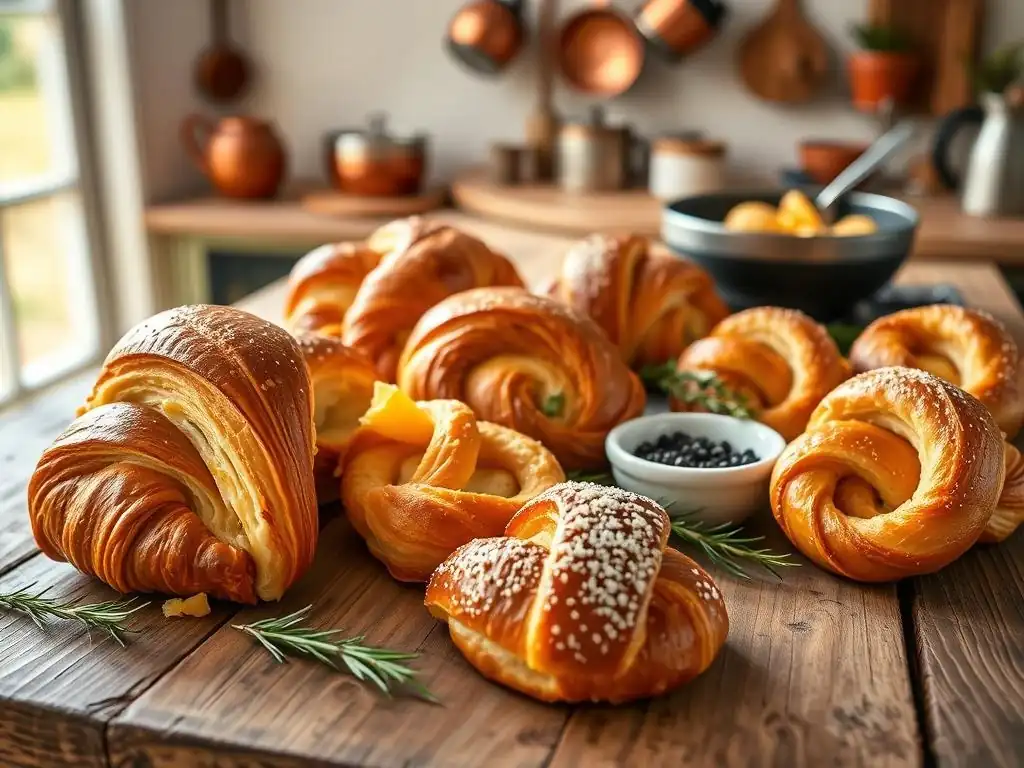
Welcome to BakeWithEase, where baking becomes a joy, not a chore! Ready to elevate your baking game beyond the basics? This week, we're diving into the delightful world of Savory Viennoiseries. Prepare to be inspired with creative recipe ideas that will impress your friends and family, and maybe even yourself. But what exactly are savory viennoiseries, and how can you master them? Let's find out!
- Savory Viennoiseries: Creative Ideas for Intermediate Bakers | BakeWithEase
- Introduction to Savory Viennoiseries: Beyond Sweet Pastries
- Understanding the Fundamentals of Viennoiserie Dough for Savory Creations
- Savory Viennoiseries Recipe Ideas: Inspiration for Intermediate Bakers
- Tips and Tricks for Baking Perfect Savory Viennoiseries
- Advanced Savory Viennoiseries Techniques: Taking Your Baking to the Next Level
- Storing and Serving Your Savory Viennoiseries
- Conclusion: Unleash Your Creativity with Savory Viennoiseries Recipes
-
Frequently Asked Questions
- What exactly are viennoiseries, and are they always sweet?
- What level of baking experience is required to try savory viennoiseries recipes?
- Can I substitute ingredients in the savory viennoiseries recipes?
- What are some examples of creative savory fillings for viennoiseries?
- Where can I find the specific savory viennoiseries recipes mentioned in the article?
- Final Reflection: The Unexpected Delights of Savory Viennoiseries
- Unleash Your Inner Pâtissier: Elevate Your Baking Game!
Savory Viennoiseries: Creative Ideas for Intermediate Bakers | BakeWithEase
Introduction to Savory Viennoiseries: Beyond Sweet Pastries
Elevating Your Baking Skills with Savory Viennoiseries
Stepping into the realm of savory viennoiseries offers an exciting challenge and a rewarding expansion of your baking repertoire. While classic sweet pastries like pain au chocolat and croissants are staples, applying those same intricate dough-handling techniques to savory fillings opens up a world of sophisticated flavors and textures. For intermediate bakers who have mastered the fundamentals of lamination and proofing, this is a natural next step to refine precision and creativity. It requires a nuanced understanding of how different ingredients interact with the delicate laminated dough, from moisture levels in fillings to the salt content affecting yeast activity.
Embracing savory viennoiseries allows you to move beyond simply following a recipe and encourages experimentation with ingredient pairings. Imagine the satisfaction of crafting a perfectly flaky croissant filled with a rich mushroom duxelles or a tender Danish topped with roasted vegetables. This shift not only broadens your skill set but also makes your baking more versatile, suitable for brunch, appetizers, or even light meals. By focusing on savory viennoiseries recipe ideas, you unlock new possibilities and deepen your appreciation for the craft of laminated dough.
Exploring the World of Savory Baking at BakeWithEase
At BakeWithEase, we believe that baking is a journey of continuous learning and discovery. Our resources are designed to guide you through new techniques and inspire creative variations on classic themes. Moving into savory baking, particularly with complex structures like viennoiseries, aligns perfectly with our mission to help intermediate bakers push their boundaries. We provide insights into adapting traditional methods and ingredients to achieve delicious savory results.
Our platform offers detailed guides on dough handling, lamination troubleshooting, and ingredient selection, all crucial when tackling savory viennoiseries. We emphasize understanding the 'why' behind each step, ensuring that you can confidently modify recipes and develop your own unique savory viennoiseries recipe ideas. Whether you're aiming for a flaky savory croissant or a rich savory pain au chocolat, our aim is to equip you with the knowledge and confidence to succeed.
Understanding the Fundamentals of Viennoiserie Dough for Savory Creations
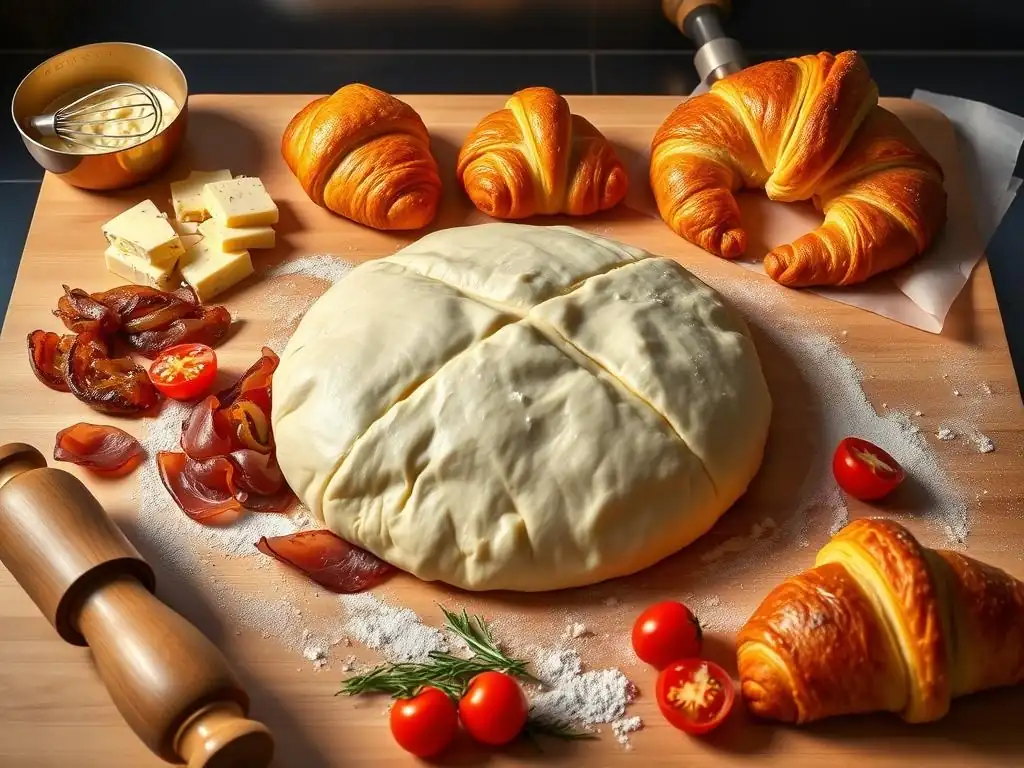
Adapting Classic Viennoiserie Dough for Savory Flavors
The foundational dough for viennoiseries, often an enriched laminated dough, requires careful adaptation when shifting from sweet to savory applications. The primary consideration is the sugar content. Traditional recipes often include a significant amount of sugar to aid browning, tenderize the crumb, and feed the yeast. For savory versions, this sugar is often reduced or eliminated entirely. Reducing sugar impacts yeast activity and browning, so adjustments to proofing times and baking temperatures may be necessary to ensure proper rise and a golden crust.
Another critical adaptation involves the salt level. While salt is present in sweet doughs to enhance flavor and control yeast, savory fillings often contain their own salt (e.g., cheese, cured meats). The dough's salt content needs to be carefully calibrated to avoid an overly salty final product while still providing necessary structure and flavor to the dough itself. Typically, the salt percentage in savory viennoiserie dough might be slightly higher than in a sweet version (around 1.5% to 2% of the flour weight) if the filling is low in salt, or kept moderate if the filling is salty.
Key Ingredients for a Perfect Savory Viennoiserie Dough
Selecting the right ingredients is paramount for achieving the desired texture and flavor in savory viennoiseries. High-quality bread flour with a protein content of 12-13% is ideal, providing the necessary gluten structure to withstand lamination and create flaky layers. European-style butter with a high-fat content (82% or more) is crucial for the lamination process, ensuring clean layers and a rich flavor. The butter should be cold and pliable, not hard or soft.
Yeast, typically active dry or instant, is the leavening agent. The quantity might be slightly adjusted compared to sweet doughs due to the lower sugar content. Milk or water can be used as the liquid; whole milk adds richness, while water can result in a slightly crispier crust.
Eggs, often included for richness and color, contribute to the dough's structure and tenderness. For savory dough, you might consider adding a pinch of black pepper or a small amount of dried herbs directly into the dough mixture for an extra layer of flavor, enhancing the overall savory profile of your viennoiseries.
Mastering the Lamination Technique for Savory Applications
Lamination, the process of repeatedly folding butter into dough to create alternating layers, is the heart of viennoiserie. For savory applications, the technique remains the same, but attention to detail is even more critical as fillings can add moisture and weight, potentially compromising the delicate layers. Achieving the optimal butter temperature and dough consistency before lamination is essential. The butter block should be firm but pliable, and the dough should be well-rested and elastic.
The standard technique involves enclosing the butter block within the dough and performing a series of folds (typically two or three "turns," such as a single turn or a book turn, followed by rest periods) to create hundreds of layers. Proper chilling between turns is non-negotiable; the dough and butter must be cold enough to prevent the butter from melting into the dough, which would result in a bready, rather than flaky, texture.
Each fold should be executed carefully, ensuring even thickness and square corners, which makes the final shaping much easier and yields consistent results across all your savory viennoiseries.
Savory Viennoiseries Recipe Ideas: Inspiration for Intermediate Bakers
Savory Pain au Chocolat Variations: A Twist on a Classic
Taking the classic pain au chocolat concept and replacing the chocolate batons with savory fillings offers exciting possibilities. The key is to use fillings that hold their shape and don't release too much moisture during baking, preserving the flaky interior. These savory pain au chocolat recipe ideas offer a delightful departure from the norm.
Recipe Idea 1: Spinach and Feta Savory Pain au Chocolat
Imagine tender, blanched spinach mixed with crumbled feta cheese, a pinch of nutmeg, and a touch of black pepper. This mixture replaces the chocolate batons. The saltiness of the feta complements the rich, buttery dough beautifully. To prepare, wilt about 200g of fresh spinach, squeeze out all excess moisture, chop finely, and mix with 100g of crumbled feta. Roll out the dough, cut rectangles, place a strip of the spinach-feta mixture along one edge, and roll up like a traditional pain au chocolat.
The baking process for this savory pain au chocolat needs careful temperature management. A slightly lower initial temperature (around 375°F or 190°C) for the first 10-15 minutes can help the filling heat through without causing the cheese to ooze excessively, followed by increasing the temperature to 400°F (200°C) to achieve the golden-brown crust. The moisture from the spinach must be minimal to prevent a soggy bottom.
Recipe Idea 2: Mushroom and Gruyere Savory Pain au Chocolat
This variation features a rich, earthy filling of finely chopped mushrooms sautéed with shallots and thyme, bound with grated Gruyere cheese. Sauté about 250g of finely chopped mixed mushrooms (like cremini and shiitake) with one finely minced shallot in butter until all moisture has evaporated – this is crucial. Stir in a teaspoon of fresh thyme leaves and let cool completely. Mix the cooled mushroom mixture with 75g of grated Gruyere cheese.
Using this savory filling in a pain au chocolat requires ensuring it is completely dry before wrapping. The Gruyere melts beautifully, creating pockets of rich, nutty flavor within the flaky pastry. Roll the dough, cut rectangles, place a strip of the mushroom-Gruyere mix, and roll. The cheese helps bind the filling, making it easier to handle. This savory pain au chocolat recipe idea delivers a sophisticated flavor profile, perfect for brunch or a light lunch.
Savory Croissant Creations: Beyond the Traditional
The versatility of the croissant shape lends itself wonderfully to savory applications. Fillings can be incorporated before or after baking, offering different textural experiences. These savory croissant ideas expand the possibilities significantly.
Recipe Idea 1: Prosciutto and Parmesan Savory Croissant
A simple yet elegant savory croissant idea involves filling the rolled dough triangles with thinly sliced prosciutto and grated Parmesan cheese before shaping. As the croissant bakes, the prosciutto becomes slightly crisp, and the Parmesan melts into the layers. Use about 1-2 slices of prosciutto and 10-15g of grated Parmesan per croissant, placed on the wider end of the triangle before rolling.
This combination provides a delightful salty kick against the buttery pastry. The fat from the prosciutto also renders slightly, potentially adding moisture, so ensure your lamination is robust. Baking time might be slightly longer than a plain croissant to ensure the filling is heated through and the pastry is golden and crisp. These savory croissants are excellent served warm.
Recipe Idea 2: Smoked Salmon and Cream Cheese Savory Croissant
This is often a post-bake filling, transforming a plain baked croissant into a luxurious savory treat. Once the croissants are baked and cooled slightly, they can be sliced horizontally and filled. A classic pairing is smoked salmon with cream cheese, perhaps enhanced with fresh dill, capers, and a squeeze of lemon juice.
To assemble, slice the croissant carefully, spread a generous layer of cream cheese (about 20g), top with sliced smoked salmon (about 25-30g), and sprinkle with fresh dill and capers. This method avoids the moisture issues that could arise from baking these ingredients inside the dough. It's a fresh, flavorful savory croissant idea perfect for a sophisticated breakfast or appetizer.
Savory Danish Pastries: A Delectable Alternative
Danish pastries, with their open face or shaped pockets, are perfect vehicles for showcasing vibrant savory fillings. The slightly sweeter dough (though less sweet than a traditional fruit Danish) provides a lovely contrast to the savory components. These savory Danish recipes offer creative ways to use seasonal ingredients.
Recipe Idea 1: Tomato and Basil Savory Danish
Shaped into squares or rounds with a raised edge, these Danish pastries can hold a simple yet flavorful filling. A mixture of diced fresh tomatoes (seeds and excess liquid removed), chopped fresh basil, a little garlic, and perhaps some mozzarella or ricotta cheese makes a bright filling. Drain the diced tomatoes thoroughly to remove as much liquid as possible – this is paramount for preventing a soggy base.
Place about 30-40g of the tomato-basil-cheese mixture in the center of each shaped Danish before the final proof and bake. The tomatoes soften and become intensely flavorful, while the basil infuses the pastry with its aroma. Baking at a slightly higher temperature initially (around 400°F or 200°C) can help set the base quickly before reducing the heat to finish baking. This savory Danish recipe is best enjoyed fresh.
Recipe Idea 2: Caramelized Onion and Goat Cheese Savory Danish
This combination offers a deeper, sweeter savory flavor profile. Slowly caramelized onions (about 1 large onion per 6-8 Danish) provide a rich, sweet base, which pairs beautifully with the tangy creaminess of goat cheese. Cook the onions low and slow for 30-45 minutes until deeply golden and sweet. Let them cool completely.
Fill the shaped Danish pastries with a dollop of caramelized onions (about 20-25g) and crumble fresh goat cheese (about 15-20g) over the top. The goat cheese will soften and brown slightly during baking. This savory Danish recipe is incredibly satisfying and pairs well with a sprinkle of fresh thyme or a drizzle of balsamic glaze after baking.
Tips and Tricks for Baking Perfect Savory Viennoiseries
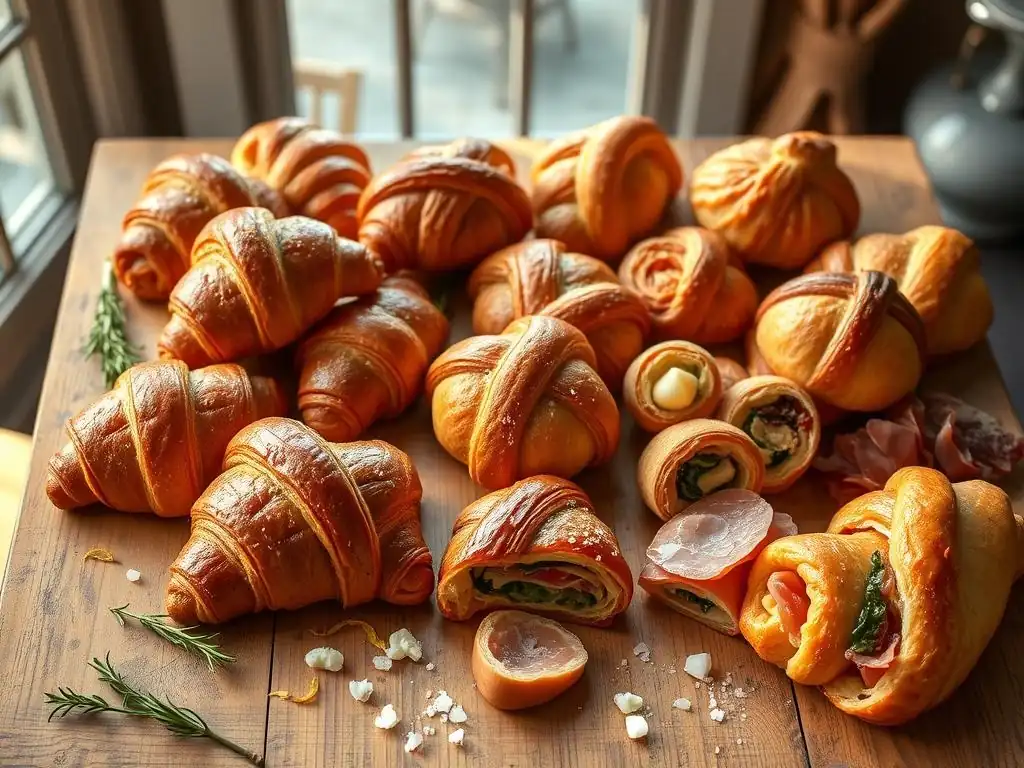
Temperature Control for Savory Fillings
Managing the temperature of savory fillings is crucial to prevent issues during baking. Fillings should always be completely cool before being enclosed in or placed on the dough. Warm fillings can melt the butter layers prematurely, ruining the lamination. Furthermore, fillings with high moisture content, like sautéed vegetables or fresh cheese, need careful preparation to reduce liquid. Sautéing vegetables until very dry, draining excess liquid from cheeses like ricotta, or removing seeds from tomatoes are essential steps.
The oven temperature also plays a role. While viennoiseries typically bake at relatively high temperatures (around 400-425°F or 200-220°C) to achieve rapid rise and browning, savory fillings might benefit from a slightly adjusted approach. For thicker or denser fillings, starting at a moderate temperature (around 375°F or 190°C) for the first part of the bake can ensure the filling heats through without burning the pastry, then increasing the heat to finish with a golden crust.
Achieving the Perfect Golden-Brown Crust
A hallmark of well-baked viennoiseries is a beautiful golden-brown crust. This is achieved through a combination of proper proofing, egg wash, and correct oven temperature. Savory doughs, with less sugar, might brown less readily than sweet ones. Applying a generous egg wash (usually a whole egg whisked with a tablespoon of milk or water) before baking is vital for color and shine.
Ensuring the oven is properly preheated to the correct temperature is also key. A hot oven provides the initial burst of heat needed for the pastry to puff and the layers to separate. If the crust starts browning too quickly before the interior is cooked, you can loosely tent the pastries with foil. Rotating the baking sheet halfway through the bake ensures even browning across all your savory viennoiseries.
Preventing Soggy Bottoms in Savory Viennoiseries
Soggy bottoms are a common pitfall when baking with moist fillings. The primary culprit is excess moisture leaching from the filling into the bottom layer of dough during baking. To combat this, rigorous moisture removal from fillings is the first line of defense. For instance, if using spinach, squeeze it dry after cooking. If using roasted vegetables, ensure they are not oily or watery.
Baking on a preheated surface, such as a baking stone or steel, can also help. The intense heat from the preheated surface quickly sets the bottom crust, creating a barrier against moisture. Using a perforated baking sheet or a wire rack set inside a baking sheet can improve air circulation around the base, further helping to prevent sogginess. Finally, ensuring the pastries are baked thoroughly until the bottom is visibly golden brown confirms that moisture has evaporated sufficiently.
Advanced Savory Viennoiseries Techniques: Taking Your Baking to the Next Level
Incorporating Herbs and Spices into the Dough
Adding herbs and spices directly into the viennoiserie dough itself can infuse every bite with subtle or pronounced savory flavors, creating more complex savory viennoiseries. Finely minced fresh herbs like chives, rosemary, or thyme can be kneaded into the dough after the initial mixing phase, before the first fold. The quantity should be moderate (perhaps 1-2 tablespoons per 500g of flour) to avoid disrupting the gluten structure.
Dried spices, such as black pepper, smoked paprika, or a touch of garlic powder, can also be added with the dry ingredients. For a more intense flavor, consider infusing the liquid (milk or water) with herbs or spices before adding it to the dough mixture, then straining them out. This imparts flavor without adding fibrous material to the dough, which could interfere with lamination. Experimenting with these additions allows you to tailor the dough's flavor profile to complement specific savory fillings.
Experimenting with Different Savory Cheeses
Cheese is a natural partner for savory viennoiseries, and the possibilities extend far beyond standard cheddar or mozzarella. Different cheeses melt and behave differently when baked. Hard, aged cheeses like Parmesan or Pecorino add sharp, salty notes and crisp up nicely. Semi-hard cheeses like Gruyere, Fontina, or Emmental melt smoothly and add nuttiness. Softer cheeses like goat cheese or feta add tang and creaminess.
Consider incorporating cheese in various ways: grated and mixed into a filling, layered directly onto the dough before rolling (like with the prosciutto and Parmesan idea), or sprinkled on top before baking for a cheesy crust. Combining cheeses can also add complexity – for example, a blend of mozzarella for meltiness and Parmesan for flavor. Understanding how different cheeses respond to heat is key to selecting the best ones for your savory viennoiseries recipe ideas.
Creating Unique Savory Fillings and Toppings
Moving beyond simple combinations allows for truly unique savory viennoiseries. Think about combining textures and flavors: roasted red peppers with olives and provolone, caramelized apple and sharp cheddar, or even a small amount of slow-cooked pulled pork with a touch of BBQ sauce. The rule of thumb remains: manage moisture and ensure the filling is cohesive enough to be enclosed or contained.
Toppings can also elevate savory viennoiseries. A sprinkle of flaky sea salt, sesame seeds, poppy seeds, or even everything bagel seasoning before baking adds visual appeal and flavor. A light brush of melted butter infused with garlic or herbs immediately after baking can add another layer of aroma and taste. Don't be afraid to draw inspiration from quiches, tarts, or even pizza toppings when developing your own signature savory viennoiseries recipe ideas.
Storing and Serving Your Savory Viennoiseries
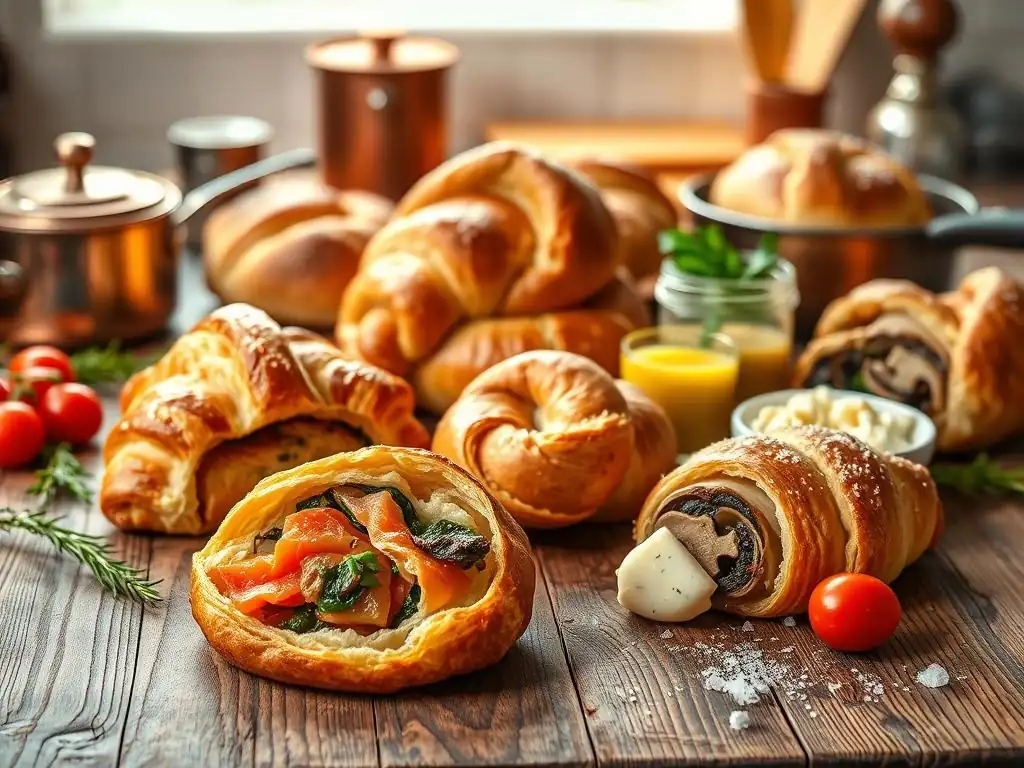
Best Practices for Storing Savory Baked Goods
Savory viennoiseries, like their sweet counterparts, are best enjoyed fresh from the oven when their layers are crisp and the filling is warm. However, leftovers can be stored. Once completely cooled, they should be stored in an airtight container at room temperature for up to 1-2 days. For longer storage, refrigerate for up to 3-4 days.
To preserve freshness and prevent sogginess, avoid stacking the pastries if they have moist fillings or toppings. For storage beyond a few days, freezing is an option. Wrap cooled viennoiseries individually in plastic wrap, then place them in a freezer-safe bag or container. They can be frozen for up to 1-2 months. Thaw overnight in the refrigerator before reheating.
Creative Serving Suggestions for Savory Viennoiseries
Savory viennoiseries are incredibly versatile and can be served in numerous ways. They make an excellent addition to a brunch spread, alongside eggs, salads, or fruit. A warm savory croissant or pain au chocolat can be a delightful light breakfast. Larger savory Danish pastries can function as a sophisticated appetizer or even a light lunch served with a side salad.
Consider pairing different savory viennoiseries recipe ideas together for variety. A selection of mushroom and Gruyere pain au chocolat, prosciutto and Parmesan croissants, and tomato and basil Danish makes an impressive offering. Reheat them gently in a moderate oven (350°F or 175°C) for 5-10 minutes to crisp up the layers before serving. They are also delicious at room temperature, making them perfect for picnics or packed lunches.
Conclusion: Unleash Your Creativity with Savory Viennoiseries Recipes
Embarking on the journey of creating savory viennoiseries is a rewarding experience for any intermediate baker. It pushes your technical skills in lamination and dough handling while igniting your culinary creativity through diverse flavor pairings. From adapting classic dough formulas to inventing unique fillings and toppings, each step offers an opportunity to learn and grow.
The savory viennoiseries recipe ideas explored here – from innovative pain au chocolat twists to sophisticated croissant and Danish variations – are just starting points. Armed with a solid understanding of the fundamentals and a willingness to experiment, you can develop your own signature savory viennoiseries that will impress friends and family. So, gather your ingredients, embrace the challenge of lamination, and discover the delicious possibilities that lie beyond sweet pastries.
Frequently Asked Questions
What exactly are viennoiseries, and are they always sweet?
Viennoiseries are a category of baked goods similar to pastries, often made with a yeasted or laminated dough. While commonly sweet, like croissants, they can also be savory with fillings like cheese and herbs.
What level of baking experience is required to try savory viennoiseries recipes?
The BakeWithEase article suggests these recipes are ideal for intermediate bakers. This means having some familiarity with yeast doughs and baking techniques such as lamination.
Can I substitute ingredients in the savory viennoiseries recipes?
Yes, but with caution. BakeWithEase encourages experimentation, but suggests keeping the dough ratios consistent to maintain the desired texture. Filling substitutions are generally more flexible.
What are some examples of creative savory fillings for viennoiseries?
The article likely explores a variety of fillings, but examples could include cheese and spinach, ham and Gruyere, or sun-dried tomato and pesto.
Where can I find the specific savory viennoiseries recipes mentioned in the article?
The recipes are available on the BakeWithEase website, specifically within the article "Savory Viennoiseries: Creative Ideas for Intermediate Bakers" under the "Recipes" section.
Final Reflection: The Unexpected Delights of Savory Viennoiseries
The art of savory viennoiseries is not merely a culinary trend; it's a testament to the boundless creativity inherent in baking. This exploration into the world of savory pastries has revealed a fascinating intersection of classic French technique and modern gastronomic innovation, proving that the buttery, flaky textures of viennoiserie are not limited to sweet applications. The possibilities are truly endless.
The journey through these recipes has highlighted the power of unexpected flavor combinations and the satisfaction of mastering a challenging yet rewarding baking technique. The delicate balance of savory and sweet, the interplay of textures, and the sheer elegance of a perfectly executed croissant or pain au chocolat, filled with unexpected ingredients like Gruyère and caramelized onions, is truly captivating. As Julia Child once said, Find something you're passionate about and keep tremendously interested in it.
This exploration into savory viennoiseries has certainly ignited that passion in me, and I hope it has done the same for you.
Now, I invite you to step into your kitchen and experiment. Don't be afraid to deviate from the recipes, to substitute ingredients, and to let your creativity guide you. The world of savory viennoiseries awaits your unique touch, your personal twist on these classic pastries. What unexpected flavor combinations will you discover? What culinary masterpieces will you create? The possibilities are as limitless as your imagination. Embrace the challenge, savor the process, and enjoy the delicious results.
Unleash Your Inner Pâtissier: Elevate Your Baking Game!
Thanks for joining us on this delicious journey into the world of savory viennoiseries! We hope you’ve gained some inspiration and confidence to tackle these delightful treats. Now it’s time to put your new skills to the test!
- Embrace the challenge: Try out one of the savory viennoiserie recipes discussed, adapting it to your own unique preferences. Think about unusual flavor combinations – what excites you?
- Share your creations!: Post a photo of your masterpiece on social media and tag #BakeWithEaseSavory to inspire others. Let's see those delicious results!
- Dive deeper: Explore our extensive recipe archive for more exciting baking adventures. You might just discover your next favorite savory pastry!
So, what unexpected ingredient will you incorporate into your next savory viennoiserie creation? Let us know in the comments below!