
What's the Ideal Temperature to Bake Perfect Croissants?

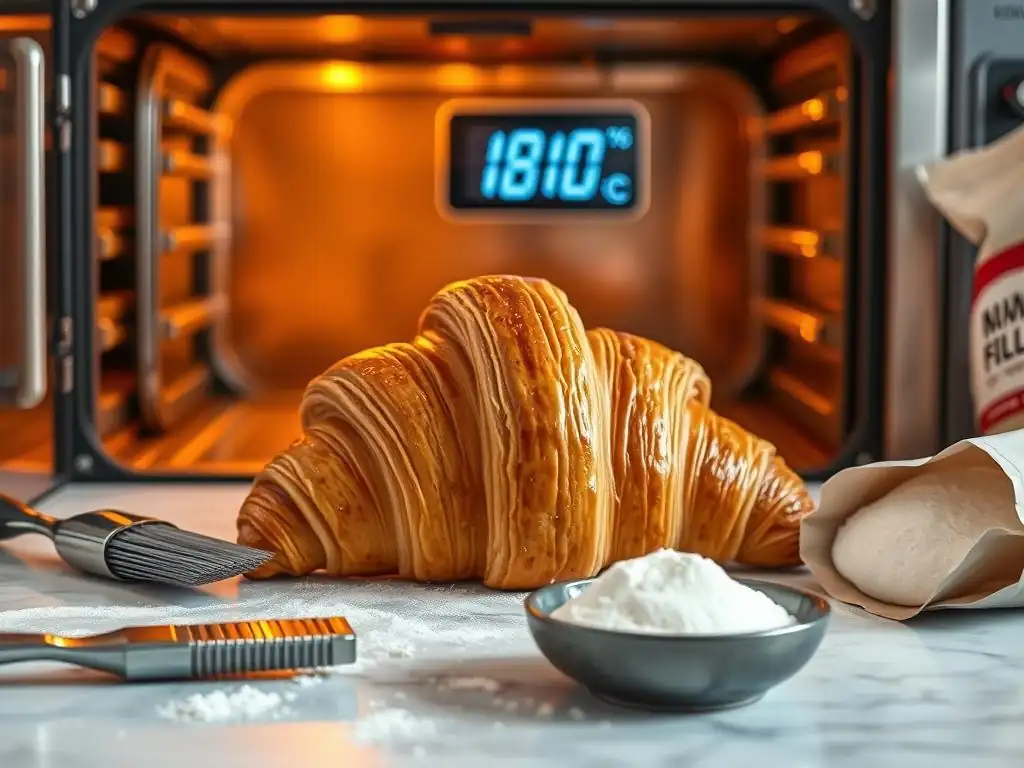
Welcome to BakeWithEase, your companion on the journey to baking brilliance! Ever wondered if you're really hitting that sweet spot for perfectly flaky croissants? Our latest article, a Baking Croissants Temperature Guide, dives deep into the crucial details that separate a good croissant from a great one. Discover the secrets to achieving that golden-brown hue and irresistible crispness. Ready to elevate your croissant game? Let's get baking!
- Baking Perfect Croissants: Mastering Temperature for Flaky Layers
- Understanding Croissant Baking Temperatures
- The Importance of Temperature in Croissant Baking
- The Ideal Oven Temperature for Baking Croissants
- Stage-by-Stage Croissant Baking Temperatures
- Troubleshooting Croissant Baking Issues
- Factors Affecting Croissant Baking
- Achieving Golden-Brown Perfection
- Tools for Monitoring Baking Temperature
- Mastering Croissant Baking: Final Tips
- Beyond Temperature: Key Factors for Croissant Success
-
Frequently Asked Questions
- How important is the oven temperature when baking croissants?
- What is the ideal temperature range for baking croissants?
- Why does the "BakeWithEase" article recommend a specific temperature for croissants?
- Can the baking temperature affect the flakiness of croissants?
- What happens if the oven temperature is too high or too low when baking croissants?
- Final Reflection: The Golden Ratio of Croissant Baking
- Unlock Your Inner Pastry Chef: Bake the Perfect Croissant!
Baking Perfect Croissants: Mastering Temperature for Flaky Layers
Understanding Croissant Baking Temperatures
Baking perfect croissants at home is a rewarding journey, and temperature plays a starring role in achieving those coveted flaky layers and airy interiors. It's not just about setting your oven to one temperature; it's a delicate dance that requires understanding how heat interacts with your dough at different stages. Mastering the temperature aspect is a fundamental step in any successful baking croissants temperature guide.
From the initial blast of heat that creates steam and lift to the lower temperature that ensures a golden-brown crust without burning, each degree matters. The precise control of heat is what transforms chilled, laminated dough into the light, buttery pastries we adore. This guide will walk you through the critical temperatures needed for a triumphant batch of homemade croissants.
The Importance of Temperature in Croissant Baking
Temperature control is arguably one of the most critical factors when following a baking croissants temperature guide. It influences everything from the dough's texture before baking to the final rise and crust development in the oven. Without proper temperature management, even perfectly laminated dough can result in flat, dense, or unevenly baked croissants.
Getting the oven temperature right, along with managing the dough's temperature throughout the process (from chilling to proofing), ensures that the butter within the layers melts at the right time, producing steam that separates the dough layers. This steam is the engine driving the croissant's characteristic rise and flakiness, making temperature a non-negotiable element for success.
Why Temperature Matters for Flaky Croissants
The flakiness of a croissant is directly linked to the controlled melting of the butter layers within the dough. When the cold, laminated dough hits a hot oven, the water in the butter quickly turns to steam. This steam expands rapidly, forcing the thin layers of dough apart. If the oven temperature is too low initially, the butter might melt and seep out before enough steam is generated, resulting in a greasy, flat croissant without distinct layers.
Conversely, if the temperature is too high and not adjusted, the outside of the croissant can burn before the inside is cooked through and the steam has done its work. A high initial temperature, typically in the range of 400-425°F (200-220°C), is crucial for this explosive steam production and initial puff.
How Heat Impacts Croissant Lamination
The structure of a croissant relies entirely on its lamination – the process of folding butter into dough to create many alternating layers. As the dough bakes, the heat transfers through these layers. The goal is for the butter to melt gradually and uniformly, creating steam that pushes the dough layers apart. This process is most effective when the dough is cold going into a hot oven.
The heat causes the gluten structure in the dough layers to set as the steam separates them. If the heat is uneven or the temperature isn't managed correctly, some layers might stick together, or the butter might melt out prematurely. This disrupts the delicate laminated structure, preventing the formation of those beautiful, airy pockets and resulting in a less flaky, denser crumb.
The Ideal Oven Temperature for Baking Croissants
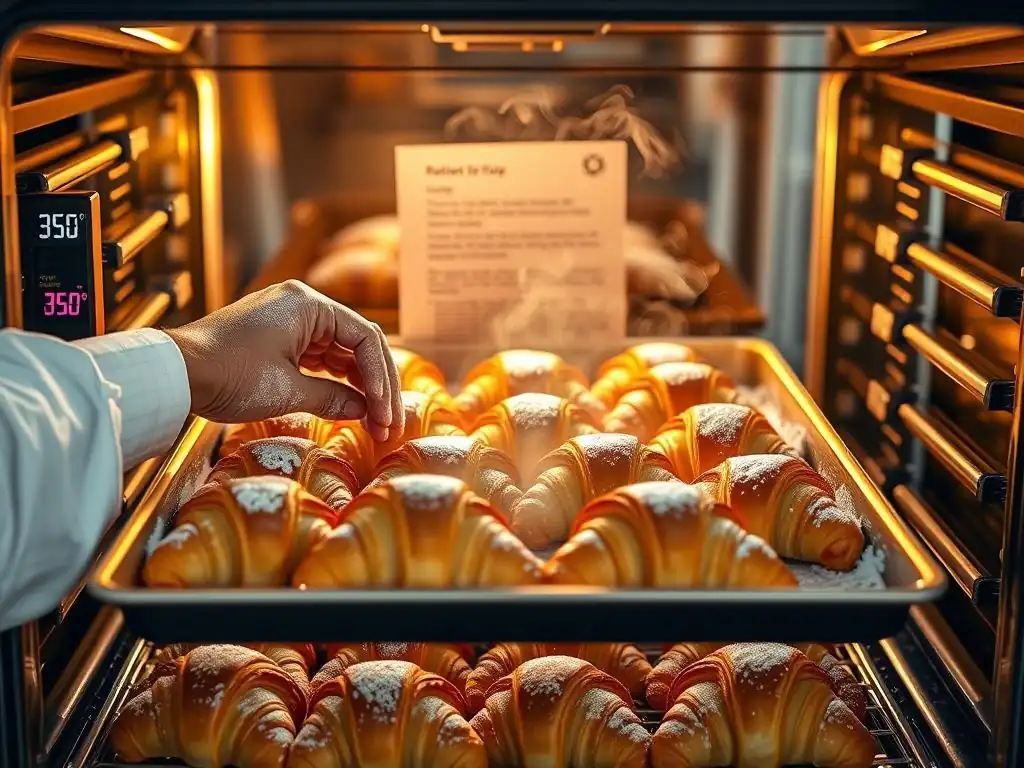
Setting your oven to the correct temperature is perhaps the most discussed aspect of any baking croissants temperature guide. However, it's important to note that the "ideal" temperature often involves a two-stage process: starting high and then reducing the heat. This technique maximizes initial lift while ensuring even cooking.
Most recipes recommend preheating your oven to a relatively high temperature, often around 425°F (220°C), to create that crucial burst of steam. After the first 10-15 minutes, the temperature is typically lowered to a moderate range, usually between 350°F and 375°F (175°C and 190°C), to allow the croissants to bake through and achieve a golden-brown color without burning the exterior.
Preheating Your Oven for Croissant Quality
Thorough preheating is non-negotiable for croissant success. Placing cold, proofed croissants into an oven that hasn't reached its target temperature will significantly hinder their rise. A properly preheated oven, hitting that initial high temperature of 400-425°F (200-220°C), ensures that the shock of heat immediately begins converting the water in the butter to steam.
This rapid steam generation is what provides the initial dramatic puff and separates the layers effectively. Aim to preheat your oven for at least 20-30 minutes after it indicates it has reached the set temperature, especially if using an oven stone or steel, to ensure the heat is fully saturated throughout the oven cavity.
Optimal Baking Temperature for Croissants
As mentioned, the optimal baking temperature for croissants often involves two phases. The initial phase, typically 10-15 minutes at 400-425°F (200-220°C), focuses on maximizing oven spring and layer separation through steam. After this initial burst, the temperature is lowered to a range of 350-375°F (175-190°C) for the remaining baking time, usually another 15-25 minutes.
This lower temperature allows the interior of the croissant to fully cook and the outer crust to develop a rich, golden-brown color without becoming too dark or hard. The exact timing and temperature might vary slightly depending on your specific oven and the size of your croissants, but this two-stage approach is a cornerstone of most successful baking croissants temperature guides.
Precise Temperature Control for Consistent Results
Achieving consistent results batch after batch hinges on precise temperature control. Oven thermostats can be notoriously inaccurate, sometimes varying by as much as 50°F (15°C) from the set temperature. Relying solely on the oven's internal display can lead to unpredictable outcomes.
Using an independent oven thermometer placed inside the oven cavity is crucial for verifying and adjusting the temperature. This allows you to know the actual temperature your croissants are baking at, enabling you to make necessary adjustments to your oven's setting. This simple tool is invaluable for anyone serious about mastering the art of baking croissants.
Stage-by-Stage Croissant Baking Temperatures
Baking croissants is a dynamic process where the required temperature changes as the pastry transforms. It's not just the oven temperature that matters, but also the temperature of the dough itself before it enters the oven and throughout the baking cycle. Understanding these stages is key to following any comprehensive baking croissants temperature guide.
From the moment the cold, proofed dough meets the hot oven air, a series of reactions are triggered by the heat. The goal is to manage this heat transfer to achieve maximum puff, a fully cooked interior, and a beautiful crust.
Initial Baking Temperature: Achieving Maximum Rise
The first 10-15 minutes of baking at a high temperature (400-425°F or 200-220°C) is when the magic of oven spring happens. The cold butter layers rapidly melt, and the trapped water flashes into steam. This steam expands with incredible force, pushing the dough layers apart and causing the croissant to puff up dramatically.
During this phase, the heat also starts to set the gluten structure, preventing the layers from collapsing once the steam dissipates. A temperature that is too low during this initial stage will result in less steam, less lift, and a denser final product. It's the thermal shock that initiates the characteristic open, airy crumb.
Lowering the Temperature: Ensuring Thorough Baking
After the initial rapid rise, the oven temperature is typically reduced to 350-375°F (175-190°C). This lower temperature prevents the exterior from burning while allowing the heat to penetrate to the center of the croissant. It gives the dough structure time to fully set and the interior to cook through.
Baking at this moderate temperature allows the Maillard reaction and caramelization to occur on the crust, developing complex flavors and the desired golden-brown color. The total baking time, including both stages, usually ranges from 25 to 40 minutes, depending on the size of the croissants and your oven.
Monitoring Internal Croissant Temperature
While visual cues like color and puff are important, for absolute certainty that your croissants are fully baked, you can monitor their internal temperature. A fully baked croissant should reach an internal temperature of approximately 190-200°F (88-93°C).
Using an instant-read digital thermometer is the best way to check this. Carefully insert the probe into the center of a croissant (avoiding a large air pocket). This is especially useful when you are first developing your baking croissants temperature guide for your specific oven, helping you confirm bake times and temperatures.
Troubleshooting Croissant Baking Issues
Even with the best baking croissants temperature guide, issues can arise. Many common problems are directly related to temperature, either the oven temperature itself or the dough temperature before baking. Understanding how temperature influences these outcomes is crucial for fixing them.
Let's look at some common troubleshooting scenarios and how temperature adjustments can help.
Croissants Baking Too Quickly: Solutions
If your croissants are browning too fast on the outside but seem undercooked inside, the oven temperature is likely too high, or the baking time at the high initial temperature is too long.
- Solution: Verify your oven temperature with an independent thermometer. If it's accurate, try reducing your initial high temperature slightly (e.g., from 425°F to 400°F) or shortening the time spent at the high temperature by a few minutes before dropping it to the lower setting. You might also need to lower the second stage temperature slightly, perhaps from 375°F to 350°F.
Croissants Not Baking Evenly: Addressing Uneven Heat
Uneven baking, where croissants on one side of the tray or oven bake faster than others, is almost always due to uneven heat distribution in your oven.
- Solution: Use an oven thermometer to check for hot and cold spots. Rotate your baking sheet halfway through the baking time, especially when you drop the temperature. If your oven has a convection setting, using it can help circulate air and even out the temperature, though you might need to reduce the temperature slightly (e.g., by 25°F or 15°C) and monitor closely as convection bakes faster.
Croissants Not Rising: Temperature Adjustments
If your croissants come out flat and dense with poor layer separation, temperature issues during proofing or baking could be the cause.
- Solution: Ensure your proofing temperature is correct (typically 75-80°F or 24-27°C) and that the croissants are adequately proofed but not over-proofed. For baking, make sure your oven is fully preheated to the correct high initial temperature (400-425°F or 200-220°C). Placing cold, under-proofed dough into a too-cool oven will prevent the necessary steam expansion for lift. Also, confirm your butter didn't melt out during proofing, which can happen if the proofing temperature is too high.
Factors Affecting Croissant Baking
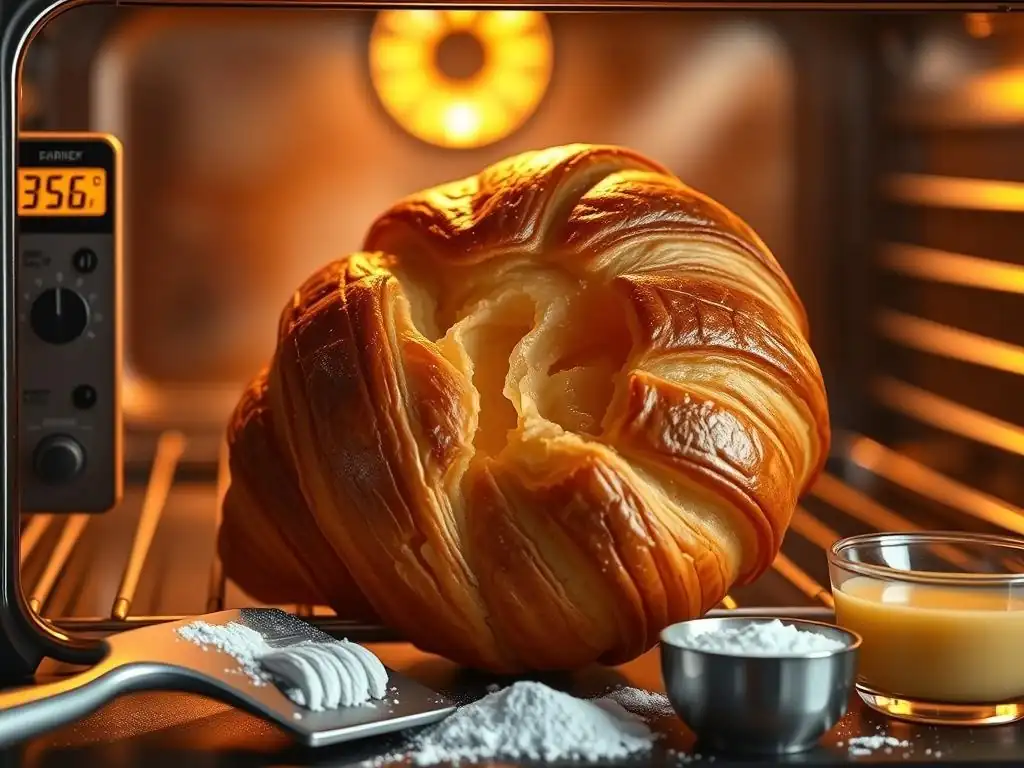
Beyond just setting the oven dial, several other factors can influence how your croissants bake and how you might need to adjust your baking croissants temperature guide. Recognizing these variables helps you adapt and achieve consistent results regardless of your environment or equipment.
Understanding these external influences allows for more informed adjustments to temperature and timing.
Oven Type and Croissant Baking
Different oven types handle heat differently. Conventional ovens rely on radiant heat, often leading to hot spots. Convection ovens use a fan to circulate hot air, providing more even heating and faster baking.
- Conventional Oven: May require rotating trays for even baking. The two-stage temperature method is standard.
- Convection Oven: Generally bakes faster and more evenly. You might need to reduce the temperature by 25°F (15°C) and/or reduce baking time compared to a conventional oven. Monitor closely when first using a convection oven for croissants.
Croissant Size and Baking Temperature Adjustments
The size and weight of your individual croissants will significantly impact the required baking time and potentially the temperature. Larger croissants take longer for heat to penetrate to the center.
- Larger Croissants: May require a slightly longer baking time, particularly at the lower temperature setting, to ensure they are cooked through. You might also start at the lower end of the initial high-temperature range (e.g., 400°F instead of 425°F) to prevent the exterior from burning before the interior is done. Checking the internal temperature is highly recommended for larger pastries.
- Smaller Croissants: Will bake faster. Reduce the overall baking time. Monitor closely during the second stage to prevent over-browning.
Humidity and Its Impact on Baking
While less direct than oven temperature, ambient humidity can affect the dough's surface moisture, which in turn impacts crust development. High humidity environments can sometimes lead to a softer crust.
- Impact: In very humid conditions, the surface of the croissant might remain moist longer, potentially affecting the crispness of the crust.
- Adjustment: While you can't easily change ambient humidity, ensuring proper air circulation around the croissants in the oven can help. Some bakers slightly extend the second stage of baking or slightly increase the temperature during the final few minutes to promote a crisper crust, but this must be done carefully to avoid burning.
Achieving Golden-Brown Perfection
The visual appeal of a croissant is almost as important as its taste and texture. That beautiful, rich golden-brown color is a sign of successful baking and flavor development, directly influenced by temperature and baking time. It's the final touch in any good baking croissants temperature guide.
This desirable color is the result of specific chemical reactions occurring on the surface of the dough under heat.
Maillard Reaction and Croissant Flavor
The Maillard reaction is a complex chemical process that occurs when amino acids and reducing sugars in the dough are heated. It's responsible for the browning of baked goods and the development of hundreds of flavor compounds. This reaction primarily takes place on the crust during the second stage of baking at moderate temperatures (300-400°F or 150-200°C).
The rich, toasty, and complex flavors characteristic of a well-baked croissant are largely thanks to the Maillard reaction occurring on the surface. The lower temperature stage of baking is crucial for allowing this reaction to proceed without burning the pastry.
Achieving a Uniform Golden-Brown Crust
A uniform golden-brown color indicates that the croissant has baked evenly and the crust has developed properly. Uneven coloring can point to hot spots in the oven or inconsistent heat distribution.
- Technique: Ensuring even spacing between croissants on the baking sheet allows hot air to circulate freely around each pastry. Using an oven thermometer and rotating the pan halfway through the bake addresses potential hot spots. The egg wash applied before baking also contributes significantly to the final color and sheen.
Tools for Monitoring Baking Temperature
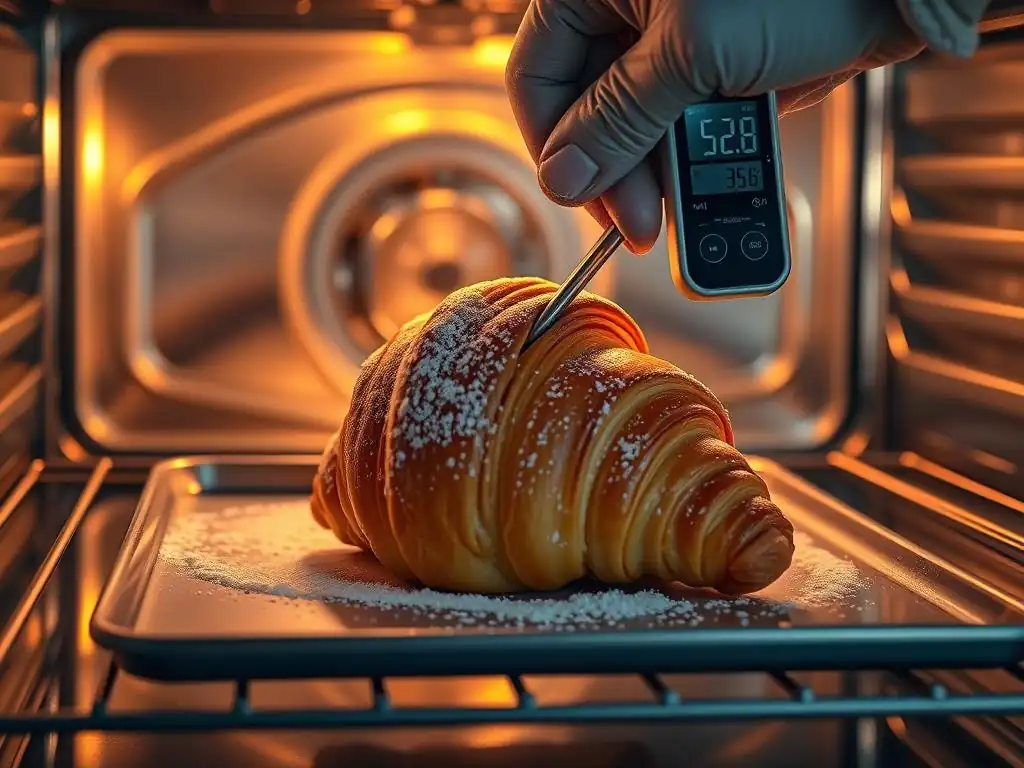
To truly master the baking croissants temperature guide, relying solely on your oven's built-in thermostat is insufficient. Accurate temperature measurement is key to consistent results.
Investing in a couple of simple tools can make a significant difference in your baking accuracy.
Using an Oven Thermometer
An independent oven thermometer is essential for verifying the actual temperature inside your oven. Place it near where your croissants will bake, away from the walls or heating elements.
- Benefit: It provides an accurate reading of the ambient temperature, allowing you to see if your oven is running hot or cold compared to the setting. You can then adjust your oven's dial accordingly to hit the target temperature specified in your recipe or baking croissants temperature guide.
Digital Thermometer for Internal Temperature
An instant-read digital thermometer is invaluable for confirming that the interior of your croissants is fully cooked.
- Benefit: By checking the internal temperature (aiming for 190-200°F or 88-93°C), you eliminate guesswork and ensure a safe and properly textured interior, preventing that dreaded doughy center.
Mastering Croissant Baking: Final Tips
Beyond the core temperatures, a few additional tips can help you refine your baking process and consistently produce perfect croissants.
Adjusting Temperatures for Your Oven
Every oven is different. The temperatures suggested in recipes are guidelines. Your personal baking croissants temperature guide should be tailored to your specific oven's performance, verified by an oven thermometer.
- Tip: Keep notes! Once you find the initial high temperature and subsequent lower temperature that work best in your oven for achieving good rise and even browning within the typical time frame, stick with them. It might take a couple of batches to dial it in.
Maintaining Consistent Baking Temperatures
Fluctuations in oven temperature during baking can negatively impact the result. Avoid opening the oven door unnecessarily, especially during the critical first 10-15 minutes, as this causes the temperature to drop significantly.
- Tip: Have everything ready before you open the oven to load the croissants. Once they are in, resist the urge to peek frequently. Use the oven light to check on progress.
Beyond Temperature: Key Factors for Croissant Success
While temperature is paramount, it's part of a larger ecosystem of techniques required for perfect croissants. A comprehensive baking croissants temperature guide works best when combined with mastery of other fundamental steps.
High-Quality Ingredients
Using good quality ingredients, especially high-fat butter (European-style butter with 82% fat content is often preferred) and strong bread flour, is crucial for developing the necessary structure and flavor. The quality of butter directly impacts the lamination process and the resulting flakiness.
Mastering the Lamination Process
Achieving thin, even layers of dough and butter through precise folds and chilling is fundamental. If the lamination is poor, no amount of temperature control will create a truly flaky croissant. The butter must be cold and pliable, not soft or hard, during the folding process.
Proper Proofing Techniques
Proofing allows the yeast to produce gases that expand the dough, giving the croissants volume and contributing to the open crumb structure. Proofing at the correct temperature (around 75-80°F or 24-27°C) and humidity is essential. Over-proofing can cause the structure to collapse in the oven, while under-proofing results in a dense, heavy croissant. The croissants should look visibly puffy and jiggly but not so fragile that they can't be moved.
Frequently Asked Questions
How important is the oven temperature when baking croissants?
Oven temperature is absolutely crucial for achieving the perfect croissant. It affects the rise, flakiness, and overall texture. Too low, and they won't puff properly; too high, and they'll burn.
What is the ideal temperature range for baking croissants?
Generally, croissants are best baked between 375°F and 400°F (190°C and 204°C). This range allows for proper browning and ensures the internal layers cook through.
Why does the "BakeWithEase" article recommend a specific temperature for croissants?
The specific temperature recommended on BakeWithEase is based on extensive testing and experimentation to find the sweet spot. This aims to achieve optimal rise and a golden-brown color without burning the delicate layers.
Can the baking temperature affect the flakiness of croissants?
Yes, absolutely! A consistent and accurate temperature is vital for creating steam within the layers of dough. This steam is what causes the dough to separate and become flaky.
What happens if the oven temperature is too high or too low when baking croissants?
If the temperature is too high, the outside will burn before the inside is cooked. Too low, and the butter will melt prematurely, resulting in a dense and greasy croissant instead of a light and flaky one.
Final Reflection: The Golden Ratio of Croissant Baking
The pursuit of the perfect croissant is not merely a culinary quest; it's a testament to the power of precision in achieving culinary excellence. Finding that ideal temperature range, as explored throughout this guide, isn't just about achieving a beautiful golden-brown crust; it's about unlocking the full potential of the delicate layers and achieving that signature flaky texture. This seemingly small detail significantly impacts the final product, transforming a good croissant into a truly exceptional one.
The journey of mastering croissant baking, as I've discovered, is a microcosm of life itself – a delicate balance between patience, precision, and a willingness to experiment. The subtle nuances of temperature control, the careful monitoring of oven performance, and the understanding of how heat interacts with the dough's complex structure – these are all lessons that extend far beyond the kitchen. The difference between ordinary and extraordinary is that little extra.
This quote, though not specifically about baking, perfectly encapsulates the essence of achieving perfection in any endeavor, especially when dealing with the intricacies of croissant-making.
Now, armed with this temperature guide, I invite you to embark on your own croissant journey. Don't be afraid to experiment, to adjust the temperature based on your oven's quirks, and to savor the process as much as the final product. Remember, the perfect croissant isn't just about following a recipe; it's about understanding the science behind the art and embracing the journey of culinary exploration. The reward? A flaky, buttery, and utterly unforgettable croissant, baked to perfection, just for you.
Unlock Your Inner Pastry Chef: Bake the Perfect Croissant!
Thanks for taking the time to explore the world of flaky, buttery croissants with us! We hope you now feel confident in achieving that perfect bake. Ready to put your newfound knowledge to the test?
- Bake a batch of croissants today! Use your oven's ideal temperature and let us know how they turn out!
- Share your croissant creations on social media using #BakeWithEaseCroissants – let's inspire each other!
- Consider experimenting with different types of butter for an even richer flavor. What will you try next?
Ready to become a croissant master? What unique twist will you add to your next batch?