
From Sugar to Syrup: Simple Conversion Ratios for Baking Alternatives

Welcome to BakeWithEase, your friendly guide to the sweet science of baking!
Ever wondered how to perfectly substitute one sugar for another in your favorite recipe? Unlock the secrets to foolproof baking with our guide to baking sugar syrup conversion ratios. Discover the nuances of different sugars and syrups, and learn how to adapt your recipes for truly delicious results. Ready to become a sugar savvy baker? Let's get started!
- From Sugar to Syrup: Baking Conversions for Flavor & Health - BakeWithEase
- Understanding Sugar to Syrup Conversions in Baking
- Mastering Sugar to Syrup Conversions: A Practical Guide
- Tips for Baking with Syrup Alternatives
- Conclusion: Mastering Syrup Conversions for Delicious Baking
-
Frequently Asked Questions
- How can I convert granulated sugar to liquid sugar syrup for baking?
- Why would I want to use sugar syrup instead of granulated sugar in a baking recipe?
- Are there different types of sugar syrups, and how does that impact the conversion ratios?
- Can I substitute honey or maple syrup for granulated sugar, and what are the conversion considerations?
- Where can I find more detailed information on specific sugar syrup conversion ratios for different recipes?
- Final Reflection: Sweetening the Future of Baking
- Unlock Your Baking Potential: Sweeten Your Success!
From Sugar to Syrup: Baking Conversions for Flavor & Health - BakeWithEase
Baking is a delightful mix of art and science, where small adjustments can lead to big differences. As bakers explore beyond traditional granulated sugar, understanding the nuances of converting sugar to syrup becomes essential. This guide delves into the practical aspects of baking sugar syrup conversion ratios, helping you achieve delicious results with natural sweeteners like honey, maple syrup, and molasses. Mastering these substitutions opens a world of new textures and flavors, enhancing your baked goods in unexpected ways.
Whether you're aiming for a moister cake or a cookie with a deeper flavor profile, knowing how to correctly substitute sugar with syrups is key. It's not just a simple one-to-one swap; syrups introduce liquid and different sugar compositions (like fructose and glucose versus sucrose), which affect everything from texture and sweetness level to browning and overall structure. Let's unlock the secrets to successful baking sugar syrup conversion ratios.
Understanding Sugar to Syrup Conversions in Baking
Substituting granulated sugar with liquid sweeteners like maple syrup, honey, or molasses is a common practice in baking, driven by various reasons. These syrups offer distinct advantages that can elevate your baked goods beyond what traditional sugar provides. Understanding why bakers make these conversions is the first step toward mastering the technique.
The primary motivations often center around achieving specific textual qualities, introducing unique flavor dimensions, and sometimes exploring alternatives perceived as having different health implications. Each type of syrup brings its own set of characteristics to the baking process, influencing everything from how the batter comes together to the final crumb and crust.
Why Use Syrup Instead of Sugar in Baking?
Using syrups instead of granulated sugar in baking offers several compelling benefits that go beyond simple sweetness. These liquid sweeteners can fundamentally change the outcome of a recipe, often for the better, depending on the desired result.
Firstly, syrups are hydroscopic, meaning they attract and retain moisture. This property is invaluable in baking, as it can lead to baked goods that stay moist and tender for longer. Consider a muffin made with maple syrup versus one made with sugar; the syrup version is likely to have a softer crumb and resist drying out. Beyond moisture, syrups impart their own unique flavors.
Honey can add floral or earthy notes depending on its source, maple syrup offers a distinct caramel-like depth, and molasses provides a rich, sometimes slightly bitter complexity. These flavors don't just add sweetness; they contribute significantly to the overall taste profile of the finished product, creating more complex and interesting baked goods. While often debated, some choose syrups for perceived health benefits, noting differences in glycemic index or the presence of trace minerals in less refined options like molasses compared to highly processed white sugar.
Mastering Sugar to Syrup Conversions: A Practical Guide
Successfully converting a recipe from sugar to syrup requires more than just swapping ingredients; it involves understanding how syrups behave differently in the baking process. This practical guide breaks down the steps, from selecting the right syrup to adjusting your technique, ensuring your baking sugar syrup conversion ratios yield delicious results.
It’s a journey of experimentation and learning, but with a few key principles, you can confidently tackle recipes using honey, maple syrup, or molasses. The goal is to balance the sweetness, moisture, and structure to achieve a result that is both flavorful and texturally pleasing.
Step 1: Selecting the Right Syrup for Your Recipe
The type of syrup you choose significantly impacts the flavor, color, and moisture content of your baked goods. Matching the syrup's characteristics to the recipe's requirements is crucial for success.
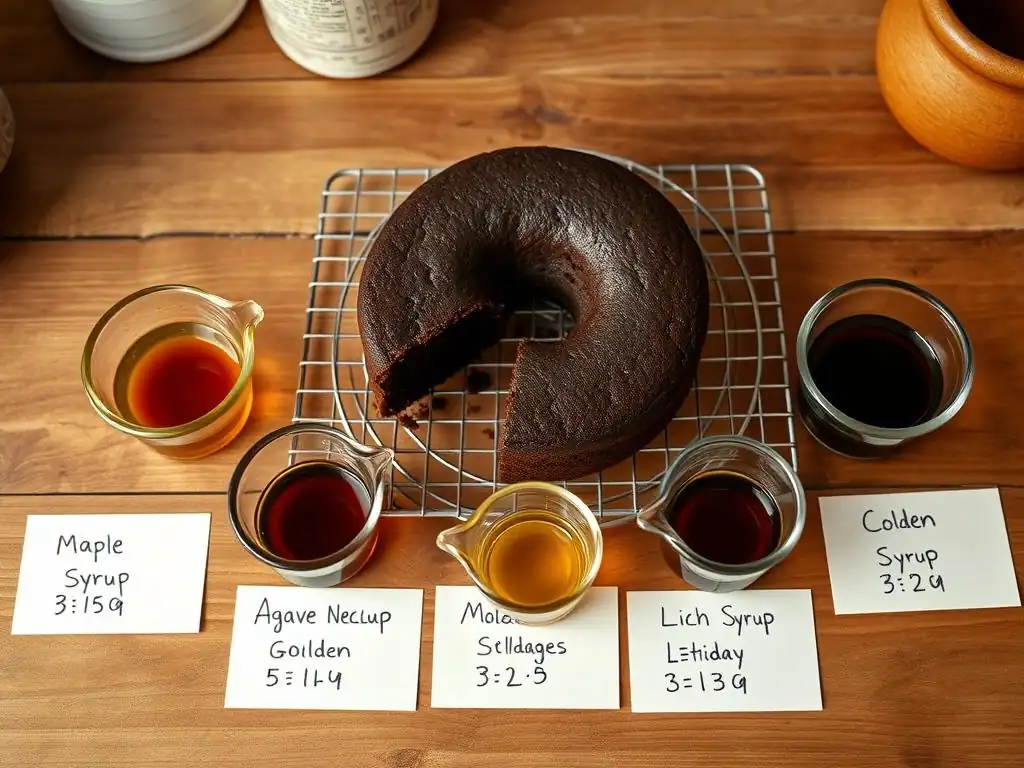
When choosing maple syrup, for instance, the grade matters. Lighter grades, like Golden Delicate, have a subtle, sweet flavor perfect for delicate cakes or custards where you don't want the syrup to overpower other ingredients.
Darker grades, such as Dark Robust, offer a more intense maple flavor and darker color, making them excellent for robust recipes like gingerbread or pecan pie. Honey varieties also range widely in flavor, from the mild sweetness of clover honey, which works well in most general baking, to the strong, almost malty flavor of buckwheat honey, ideal for assertive recipes like dark cookies or certain breads.
Molasses comes in light and dark varieties, with blackstrap being the darkest and most intense. Light molasses is often used in cookies and cakes for a touch of color and mild flavor, while blackstrap, with its potent, slightly bitter taste, is best used sparingly in recipes like baked beans or dark fruitcakes where its strong profile is desired.
Step 2: Calculating Accurate Sugar to Syrup Ratios
The most critical part of converting sugar to syrup is determining the correct quantity. Syrups are not only sweet but also liquid, and this liquid component must be accounted for in the overall recipe balance.
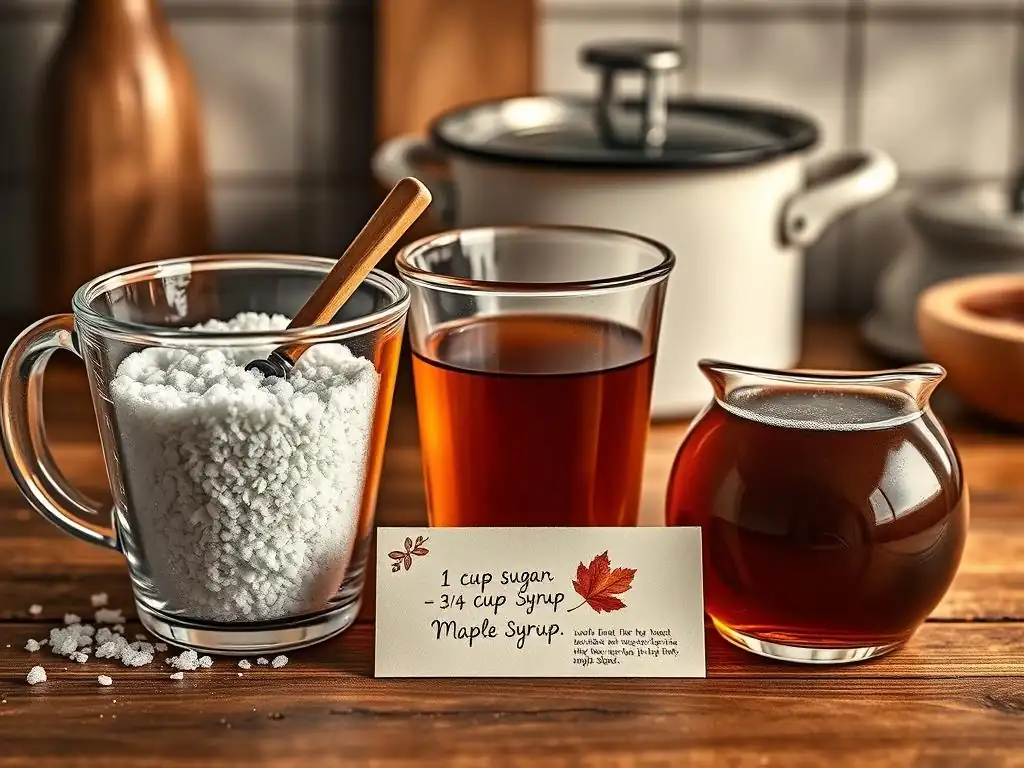
A common starting point for baking sugar syrup conversion ratios is to substitute 1 cup of granulated sugar with approximately 2/3 cup to 3/4 cup of syrup. The exact amount can vary slightly depending on the syrup's viscosity and sweetness level, but this range is a reliable base. Crucially, because you are adding liquid with the syrup, you must reduce other liquids in the recipe.
A general guideline is to reduce the total liquid (milk, water, juice, etc.) by about 1/4 cup for every cup of sugar replaced by syrup. For example, if a recipe calls for 1 cup of sugar and 1 cup of milk, and you substitute with 2/3 cup of maple syrup, you would reduce the milk to about 3/4 cup.
This adjustment prevents the batter from becoming too wet and ensures the correct structure. It's often helpful to use a digital kitchen scale to measure ingredients accurately when making substitutions, as volume measurements for syrups can be less precise than for granulated sugar.
Step 3: Adjusting Baking Time and Temperature for Syrups
Syrups contain fructose and glucose, which caramelize and brown faster than sucrose (table sugar). This means syrup-sweetened baked goods tend to brown more quickly and can even burn if the temperature isn't adjusted.
To prevent over-browning or burning, it's generally recommended to lower the oven temperature when baking with syrups. A common adjustment is to reduce the temperature by about 25°F (around 15°C) from what the original recipe calls for. For instance, if a recipe specifies 350°F (175°C), try baking at 325°F (160°C) when using syrup. You may also find that the baking time needs to be slightly shorter.
Keep a close eye on your baked goods, especially towards the end of the suggested baking time. The toothpick test remains a reliable method for checking doneness in cakes and muffins; insert a toothpick into the center, and if it comes out clean or with a few moist crumbs attached, it's likely done. For cookies, look for golden edges rather than deep brown, which can indicate burning.
Step 4: Baking Examples & Troubleshooting
Putting baking sugar syrup conversion ratios into practice is best learned through examples and by understanding how to fix common issues that may arise.
Let's consider converting a simple vanilla cake recipe. If the original calls for 1 cup granulated sugar and 1 cup milk, you could adapt it to use maple syrup.
Based on our conversion ratio, you'd substitute the 1 cup sugar with about 2/3 cup maple syrup and reduce the milk by 1/4 cup, using only 3/4 cup milk. Bake this cake at a slightly lower temperature, perhaps 325°F (160°C), and check for doneness a few minutes earlier than the original recipe suggests.
For honey-sweetened oatmeal cookies, which might call for 1 cup white sugar and 1/4 cup milk, you could use 3/4 cup honey and potentially omit the milk entirely, as cookies often benefit from less liquid. Common problems when converting include baked goods that are too sticky or gummy (often due to too much syrup or not enough liquid reduction), not sweet enough (adjust syrup quantity slightly next time), or burnt edges (lower temperature, use a lighter baking sheet, or line the pan).
**Common Syrup Baking Issues & Quick Fixes:**

*   **Problem:** Baked goods are too moist or gummy.
    *   **Solution:** Ensure you reduced the liquid sufficiently. Next time, try reducing the liquid by a little more (e.g., an extra tablespoon per cup of syrup used).
*   **Problem:** Edges are burning before the center is cooked.
    *   **Solution:** Lower the oven temperature by 25°F (15°C). Consider using a lighter-colored baking pan or lining it with parchment paper.
*   **Problem:** Not sweet enough.
    *   **Solution:** While syrups are sweet, their flavor profile differs. You can slightly increase the amount of syrup (e.g., use a full 3/4 cup if you used 2/3 cup), or consider adding a pinch of salt to enhance sweetness perception.
Tips for Baking with Syrup Alternatives
Beyond the basic conversion ratios, a few additional tips can help you achieve consistent and delicious results when substituting sugar with syrups. These pointers focus on ingredient pairing and quality, ensuring the best possible flavor and texture in your baked goods.
Experimentation is key, but starting with these guidelines can save you time and prevent common pitfalls. Understanding how different syrups interact with other ingredients and flavors will enhance your ability to create truly memorable treats.
Matching Syrup to Baking Needs
The flavor intensity and profile of a syrup should complement the other flavors in your recipe. A careful pairing can elevate your baked goods from good to outstanding.
For recipes with delicate flavors, such as a classic vanilla bean cake, angel food cake, or light shortbread cookies, opt for syrups with a subtle presence. Light-colored clover honey or a Golden Delicate Grade A maple syrup work beautifully, adding sweetness without overwhelming the nuances of vanilla or butter. Conversely, for robustly flavored items like gingerbread, spice cakes, or hearty bran muffins, choose syrups that can stand up to or enhance strong spices.
Dark molasses, buckwheat honey, or a Dark Robust Grade A maple syrup contribute rich, complex notes that complement ginger, cinnamon, and cloves exceptionally well. For vegan baking, where honey is not used, maple syrup and agave nectar are excellent alternatives, providing sweetness and moisture in cakes, cookies, and bars.
Prioritizing Ingredient Quality
The quality of your syrup directly impacts the flavor and success of your baked goods. Not all syrups are created equal, and choosing high-quality options can make a significant difference.
Look for pure, unadulterated syrups. For maple syrup, this means finding bottles labeled as 100% pure maple syrup, free from corn syrup or artificial flavors. The grade indicates color and flavor intensity, not necessarily quality, but pure is the key.
When choosing honey, raw or minimally processed varieties often retain more of their natural flavor compounds, offering a richer taste than highly filtered options. For molasses, unsulphured varieties are generally preferred for baking as they have a cleaner flavor than sulphured versions. Investing in good quality syrups ensures that the unique flavor profile you expect comes through in your final product, making your efforts with baking sugar syrup conversion ratios truly worthwhile.
Conclusion: Mastering Syrup Conversions for Delicious Baking
Embracing baking sugar syrup conversion ratios opens up a world of possibilities in your kitchen. By understanding the properties of different syrups, adjusting liquids, and fine-tuning baking times and temperatures, you can successfully substitute granulated sugar in many recipes.
This skill allows you to experiment with new flavors, textures, and moisture levels, creating unique baked goods that are both satisfying and exciting.
Unlock New Flavors with Syrup Baking
Moving from sugar to syrups is more than just a technical substitution; it's an opportunity to infuse your baking with the distinctive character of natural sweeteners. Maple syrup brings autumnal warmth, honey offers floral or earthy complexity, and molasses provides deep, comforting notes.
By mastering these conversions and understanding how different syrups behave, you can confidently adapt your favorite recipes or explore new ones designed specifically for liquid sweeteners. This journey into baking sugar syrup conversion ratios will undoubtedly enhance your baking repertoire and delight anyone who tastes your creations.
Frequently Asked Questions
How can I convert granulated sugar to liquid sugar syrup for baking?
To convert granulated sugar to liquid sugar syrup, use a 1:1 ratio by weight (e.g., 100g sugar to 100g water). Heat until sugar dissolves completely, creating a simple syrup.
Why would I want to use sugar syrup instead of granulated sugar in a baking recipe?
Sugar syrup dissolves more easily and evenly in batters and doughs, resulting in a smoother texture. It can also add moisture and prevent a grainy consistency in some baked goods.
Are there different types of sugar syrups, and how does that impact the conversion ratios?
Yes, there are different types, like simple syrup (1:1) and rich syrup (2:1 sugar to water). The conversion ratios will vary depending on the desired concentration and sweetness level.
Can I substitute honey or maple syrup for granulated sugar, and what are the conversion considerations?
Yes, but adjust the liquid content in the recipe accordingly. Honey and maple syrup are sweeter and have higher moisture content than granulated sugar, requiring adjustments.
Where can I find more detailed information on specific sugar syrup conversion ratios for different recipes?
BakeWithEase.com offers a variety of resources, including articles and guides, that provide specific conversion charts and tips for various baking scenarios. You can also find information by searching for "Baking sugar syrup conversion ratios".
Final Reflection: Sweetening the Future of Baking
The quest for perfect sweetness in baking is a timeless pursuit, and understanding the nuances of sugar substitutions is more relevant than ever. With growing awareness of dietary needs and the increasing availability of alternative sweeteners, mastering the art of conversion ratios is no longer a niche skill but a fundamental aspect of modern baking. This knowledge empowers bakers to create delicious and healthy treats tailored to individual preferences and dietary restrictions.
The exploration of sugar syrup conversion ratios has profoundly impacted my own baking journey, shifting my perspective from simply following recipes to understanding the underlying chemistry of sweetness. It's a journey of discovery, constantly revealing new possibilities and challenges. The best bakers are those who understand not just the recipe, but the science behind it,
a wise mentor once told me, and this article is a testament to that truth. The impact extends beyond individual kitchens; as more bakers embrace these techniques, we see a wider range of inclusive and accessible recipes emerging, catering to diverse dietary needs and preferences.
Now, it's your turn. Consider the recipes you cherish, the sweeteners you use, and the possibilities that open up when you understand the intricacies of sugar syrup conversions. Experiment with different ratios, explore new flavor profiles, and most importantly, enjoy the process of creating something delicious and uniquely your own. Let this knowledge be a springboard for culinary creativity, allowing you to bake with confidence, intention, and a deeper appreciation for the sweet science of baking.
Unlock Your Baking Potential: Sweeten Your Success!
Thanks for diving into the world of sugar substitutes with us! We hope you now feel confident in swapping sugars for syrups in your baking adventures. Ready to put your new knowledge into practice?
- Whip up your next masterpiece: Try substituting maple syrup for sugar in your favorite cookie recipe – the results might surprise you! (Remember to adjust for moisture content as discussed in the article).
- Share your sweet success: Post a picture of your creation on social media and tag us @BakeWithEase – we’d love to see what you bake!
- Explore our recipe library: Discover more delicious and adaptable recipes designed for effortless baking.
What delicious creation will you sweeten with syrup first?