
Mastering High Altitude Baking: Your StepbyStep Guide

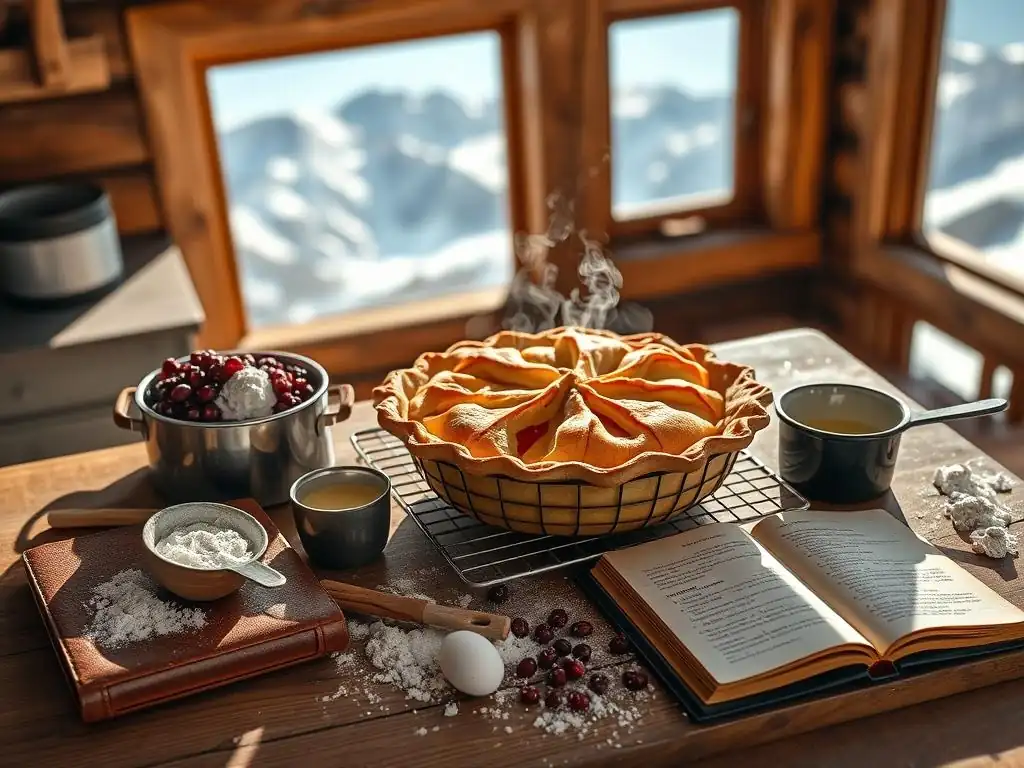
Welcome to BakeWithEase, your guide to baking bliss! Ever wondered why your cakes sink or your cookies spread thin at higher altitudes? Unlock the secrets to perfect bakes with our comprehensive guide to high altitude baking tips, designed to transform your kitchen into a high-performance bakery, no matter where you live. Read on to conquer the challenges and celebrate the delicious rewards!
- Introduction to High Altitude Baking Adjustments
- Step 1: Understanding Your Altitude and Its Impact on Baking
- Step 2: Adjusting Leavening Agents for High Altitude
- Step 3: Modifying Liquids in High Altitude Baking Recipes
- Step 4: Sweeteners and Their Role in High Altitude Baking
- Step 5: Flour Adjustments for High Altitude Baking
- Step 6: Oven Temperature and Baking Time Modifications
- Step 7: High Altitude Baking Recipe Testing and Troubleshooting
- Step 8: Adapting Your Favorite Recipes for High Altitude
- Conclusion: Becoming a High Altitude Baking Pro
- Frequently Asked Questions
- Final Reflection: Scaling New Heights in the Kitchen
- Unlock Your High-Altitude Baking Potential!
Introduction to High Altitude Baking Adjustments
Why Baking at High Altitude is Different
Baking above 3,000 feet poses unique challenges because lower air pressure causes gases to expand more rapidly. This means that cakes, cookies, and breads can rise too quickly, then collapse before their structure sets, resulting in dense or sunken centers.
Moreover, moisture evaporates faster at altitude, leading to dry, crumbly textures if no adjustments are made. By understanding these dynamics, you can apply targeted high altitude baking tips to achieve consistent results.
Understanding the Science Behind High Altitude Baking Problems
At altitude, the boiling point of water drops by roughly 1°F for every 500 feet above sea level. For example, at 5,000 feet, water boils at about 202°F instead of 212°F. This accelerates starch gelatinization and sugar concentration, altering crumb structure.
Leavening agents like baking powder and yeast produce larger air bubbles in batter and dough, which can burst prematurely. Recognizing the underlying physics—gas expansion, moisture loss, and starch behavior—is the first step in mastering high-altitude baking.
Step 1: Understanding Your Altitude and Its Impact on Baking
Determine Your Specific Altitude for Baking Accuracy
Accurate altitude measurement is critical. You can find your exact elevation using a GPS app or topographic map; many smartphones display altitude in weather widgets. For instance, Boulder, Colorado, sits at roughly 5,430 feet above sea level.
Knowing your altitude to within 100 feet allows for precise recipe adjustments. If you live at 4,800 feet but use guidelines for 5,000 feet, you might undercorrect, leading to slightly dense loaves or overspread cookies.
Key Differences in Baking at 5,000 Feet
At around 5,000 feet, expect a 10–15% faster rise in yeast doughs and 5–10% quicker gas expansion in cakes. This often yields:
- Overinflated crumb structures
- Coarse texture in quick breads
- Cracked cake domes
Adjusting ingredients and bake times at this elevation can reduce collapse and dryness, ensuring a moist crumb and even browning.
Step 2: Adjusting Leavening Agents for High Altitude
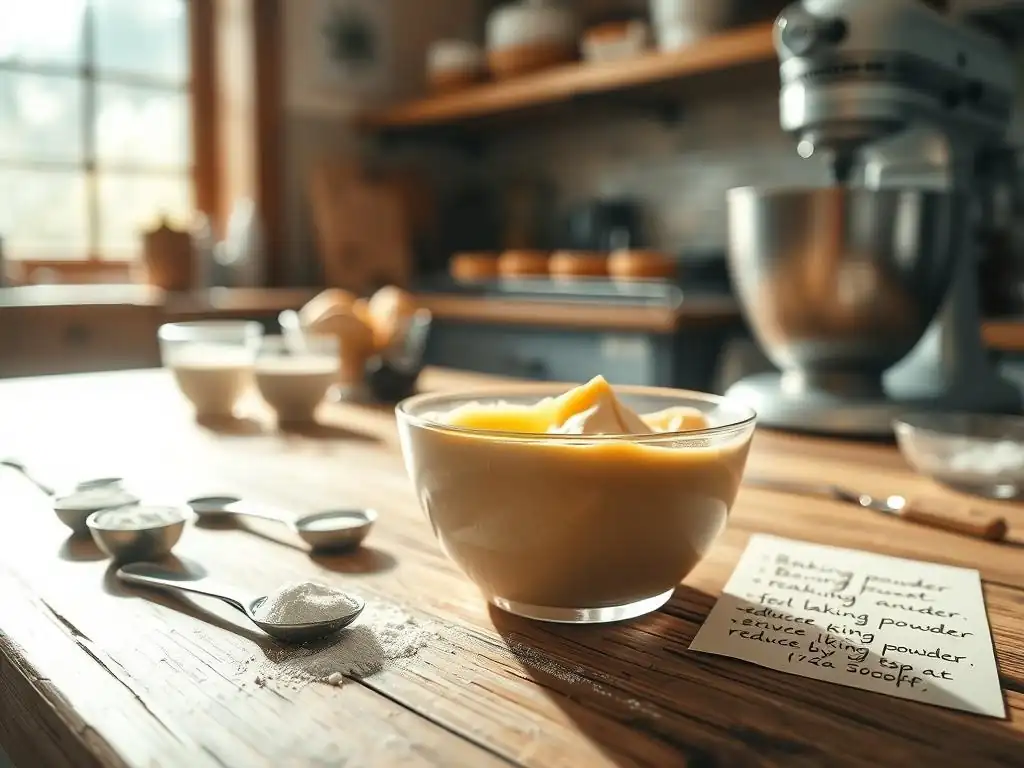
Reducing Baking Powder and Baking Soda in High Altitude Recipes
To prevent over-rising and collapse, decrease chemical leaveners by 1/8 to 1/4 teaspoon per teaspoon in the recipe. For example, if a sea-level cake uses 2 teaspoons of baking powder, reduce it to about 1.5 teaspoons at 5,000 feet.
This subtle tweak slows gas production, balancing rise and structure. Incorporating high altitude baking tips like this helps maintain cake volume without excessive doming or cracking.
The Role of Leavening in High Altitude Baked Goods
Leavening agents generate CO₂ quickly at altitude, so timing in mixing and baking is crucial. Overmixing introduces extra air, compounding rapid expansion.
By carefully calibrating leaveners, you ensure a gradual rise that the starch–protein matrix can support. This results in uniform crumb without tunnels or oversized holes.
High Altitude Baking: Adjusting Yeast for Bread
For yeast breads, reduce active dry yeast by about 25%. Instead of 2¼ teaspoons for a 1.5-pound loaf, use roughly 1½ teaspoons at 6,000 feet.
Alternatively, shorten fermentation time by 10–15 minutes or cool-proof dough in the refrigerator. These strategies limit overproofing and large air pockets, leading to a tighter, more even crumb.
Step 3: Modifying Liquids in High Altitude Baking Recipes
Increasing Liquids for Better Hydration
Higher evaporation rates mean recipes often run dry. Increase water, milk, or other liquids by 1 to 2 tablespoons per cup at 5,000 feet. For example, a cookie recipe calling for ½ cup milk may need an extra tablespoon.
This compensates for faster moisture loss in the oven and during mixing, ensuring doughs and batters stay pliable and yield soft, tender crumbs.
Best Practices for Adding Moisture in High Altitude Baking
Use ingredients with high water content—applesauce or mashed banana—to naturally boost hydration. You can also incorporate an extra egg white for additional moisture and structure.
Keep liquids at room temperature to blend more evenly into the batter, ensuring consistent hydration throughout and preventing dry streaks.
Step 4: Sweeteners and Their Role in High Altitude Baking
Reducing Sugar Content to Prevent Spreading
Sugar competes with starch for water, weakening structure when overused. At 4,000–6,000 feet, reduce granulated sugar by 1 to 2 tablespoons per cup to prevent cookies from spreading excessively.
In cakes, cut back sugar by 5–8%—for a recipe calling for 1 cup, use about ½ to ¾ tablespoon less sugar. This helps maintain proper rise and set without sacrificing sweetness.
Choosing the Right Sweeteners for High Altitude Baking
Opt for crystalline sweeteners like granulated sugar over liquid syrups, which can introduce extra moisture variability. If using honey or agave, reduce other liquids correspondingly by 1 to 2 tablespoons.
Natural sugar substitutes such as stevia blends may require recipe rebalancing; start with a 25% reduction in other liquids and taste-test a small batch.
Step 5: Flour Adjustments for High Altitude Baking
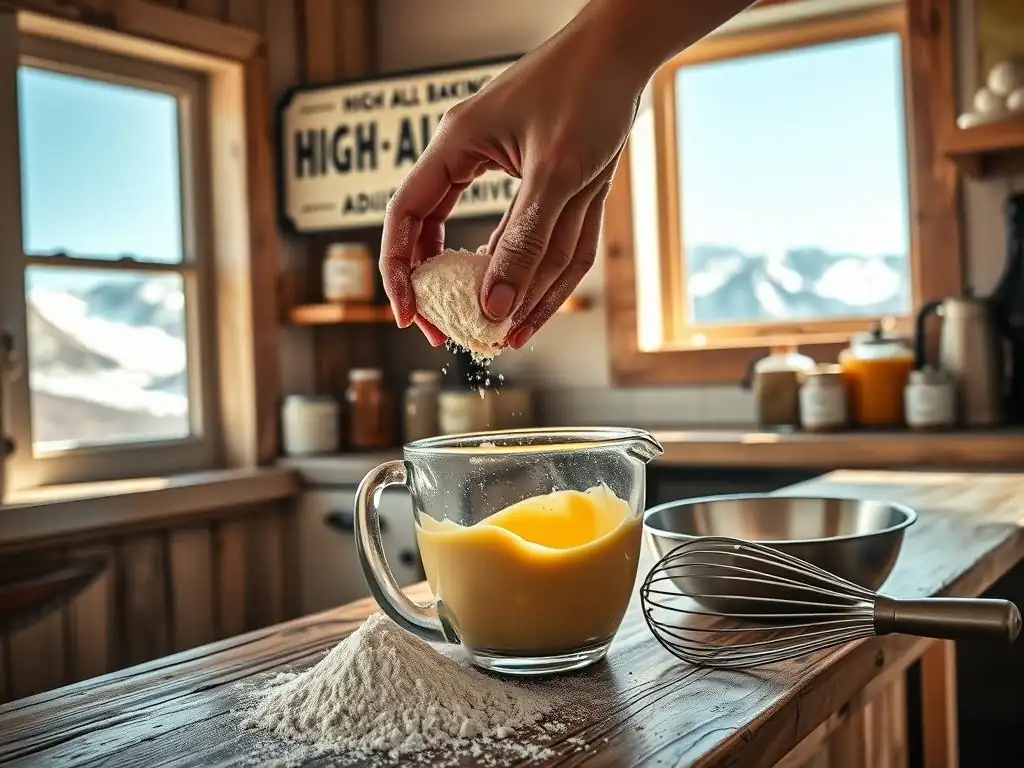
Increasing Flour to Strengthen Structure
Higher altitudes demand more structure to support expanded gases. Increase all-purpose flour by 1 to 2 tablespoons per cup. For a 3-cup recipe, that’s an extra 3 to 6 tablespoons (around 30–60 grams).
This adds vital gluten support, preventing collapse and improving chew in bread, cakes, and cookies alike.
Best Flour Types for High Altitude Baking Projects
High-protein bread flour (12–14% protein) offers stronger gluten networks, ideal for loaves at altitude. For cakes, use a blend of 8–9% protein cake flour and all-purpose to maintain tenderness.
Experiment with whole wheat pastry flour for muffins and quick breads; its moderate protein content withstands rapid gas expansion while adding nutritious fiber.
Step 6: Oven Temperature and Baking Time Modifications
Lowering Oven Temperature for Even Baking
Reduce oven temperature by 15–25°F to allow interiors to set before exteriors brown. If a cookie recipe calls for 350°F, bake at 335–340°F at 5,000 feet.
This slower heat penetration prevents overly browned edges and undercooked centers, resulting in uniform doneness.
Monitoring Baking Time for Optimal Results at High Altitude
High altitude can shorten bake times by 5–10%. Always begin checking doneness 5 minutes early. For a cake normally baked 30 minutes, start testing at 25 minutes to avoid dryness.
Use an instant-read thermometer—cakes are done at 200–205°F, breads at 190–200°F internal temperature—to ensure precision.
Step 7: High Altitude Baking Recipe Testing and Troubleshooting
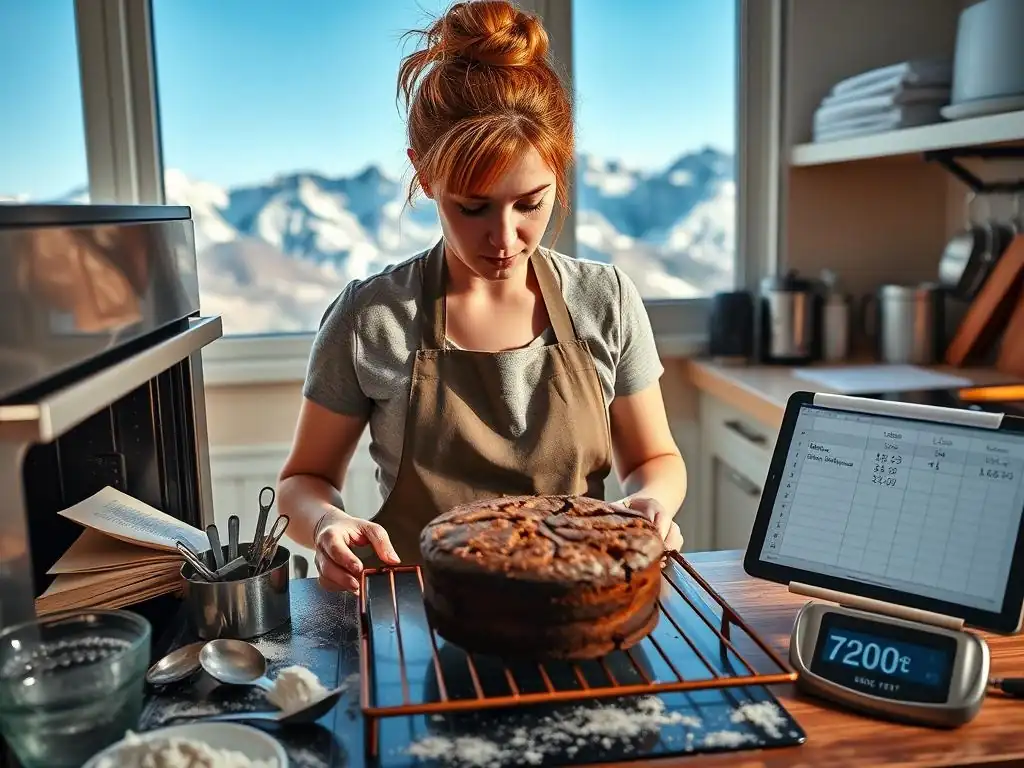
Common High Altitude Baking Problems and Solutions
- Sunken centers: Reduce leavening and increase flour.
- Dry crumb: Boost liquids by 1–2 tablespoons per cup.
- Excessive spreading: Cut sugar or fats by 5–10%.
Addressing each issue with targeted adjustments ensures your treats turn out consistently.
Tips for Perfecting Your High Altitude Baking Techniques
“Test one variable at a time for precise results.”
Maintain a baking journal to record altitude, ingredient tweaks, and outcomes. Over 10 trial batches, you’ll identify the ideal formula for cookies, cakes, and breads at your specific elevation.
Troubleshooting Collapsed Cakes
Task List:
- [ ] Verify ingredient freshness, especially leaveners.
- [ ] Ensure correct oven temperature with a calibrated thermometer.
- [ ] Reduce initial leavening amounts by 10–15%.
- [ ] Bake on the center rack for even heat distribution.
This systematic approach helps pinpoint and correct the root cause of collapse.
Step 8: Adapting Your Favorite Recipes for High Altitude
Converting Sea Level Recipes to High Altitude: A Practical Guide
- Reduce leavening agents by 10–15%.
- Add 1–2 tablespoons of liquid per cup.
- Increase flour by 1–2 tablespoons per cup.
- Lower oven temperature by 15–25°F.
- Decrease bake time by 5–10%.
Follow these steps in sequence to transform any sea-level recipe into a high-altitude success.
Sample High Altitude Baking Recipe Conversion Chart
| Ingredient        | Sea Level Amount | 5,000 ft Adjustment        |
|-------------------|------------------|----------------------------|
| Baking powder     | 2 tsp            | 1.5–1.75 tsp               |
| Baking soda       | 1 tsp            | 0.75–0.9 tsp               |
| All-purpose flour | 2 cups           | 2 cups + 2–4 tbsp (30–60g) |
| Granulated sugar  | 1 cup            | 1 cup − 1–2 tbsp           |
| Liquid (milk/water)| 1 cup           | 1 cup + 1–2 tbsp           |
| Oven temp         | 350°F            | 335–340°F                  |
| Bake time         | 30 min           | 27–28 min                  |
Conclusion: Becoming a High Altitude Baking Pro
Mastering the Art of High Altitude Baking with Confidence
Armed with high altitude baking tips, you can tweak ingredients, times, and temperatures with precision. A methodical approach—adjust, test, and document—builds confidence and consistency in every batch.
Whether you’re at 4,000 or 8,000 feet, these guidelines will help you achieve moist cakes, tender cookies, and perfect artisan breads that rival sea-level results.
Enjoying Delicious Baked Goods at Any Altitude
High-altitude baking need not be a mystery or a chore. By incorporating the adjustments outlined above, you’ll turn potential pitfalls into predictable outcomes.
Celebrate your altitude advantage—faster rises, unique crusts, and exceptional textures—while savoring every homemade loaf, muffin, and slice of cake, no matter how high you bake.
Frequently Asked Questions
How does high altitude affect baking?
At higher altitudes, there's less air pressure, causing liquids to evaporate faster and gases to expand more quickly. This can result in dry, crumbly cakes or breads that collapse.
What are some common adjustments for high altitude baking?
Common adjustments include reducing sugar and baking powder, and increasing liquid. You might also need to increase baking temperature slightly.
Why is it important to adjust baking powder in high altitude recipes?
Too much baking powder at high altitudes can cause baked goods to rise too rapidly and then collapse. Reducing the amount helps maintain a stable structure.
How can I prevent my cake from drying out at high altitude?
Increasing the amount of liquid in your recipe, such as water or milk, can help prevent dryness. You can also try covering the cake during baking to retain moisture.
What role does gluten play in high altitude baking?
Gluten provides structure and elasticity to baked goods. At high altitudes, you may need to slightly increase the protein in your flour to compensate for the faster rise and prevent collapse.
Final Reflection: Scaling New Heights in the Kitchen
Mastering high-altitude baking isn't just about adjusting recipes; it's about understanding the science behind the rise. The subtle shifts in air pressure drastically alter baking behavior, demanding a nuanced approach that goes beyond simply adding more flour. This knowledge empowers home bakers to conquer the challenges of high altitude and create consistently delicious results, regardless of elevation.
The journey of learning to bake at altitude has been a deeply rewarding one, filled with both triumphs and humbling failures. It's a testament to the enduring power of adaptation and the joy of culinary exploration. The most beautiful discovery true friends make is that they can enjoy silence together.
This quote resonates deeply, as the quiet focus required for precise high-altitude baking often leads to a meditative state, a connection between the baker and the process. The subtle adjustments, the careful observations, and the eventual success all contribute to a sense of accomplishment that transcends the simple act of creating a cake or bread.
Now, it's your turn to embark on this rewarding journey. Don't be intimidated by the challenges of high-altitude baking; embrace them! Experiment with the techniques outlined in this guide, adapt them to your own style, and most importantly, enjoy the process. Each perfectly risen loaf, each flawlessly textured cookie, is a testament to your dedication and a delicious reward for your efforts. The mountains may be high, but with the right knowledge and a little patience, the culinary heights are within your reach.
Unlock Your High-Altitude Baking Potential!
Thanks for taking the time to explore the world of high-altitude baking with us! We hope you now feel confident tackling those tricky altitude adjustments. Ready to put your newfound knowledge into practice?
- Bake your favorite recipe at altitude today! Use the adjustments you learned to transform a familiar recipe into a high-altitude success story. This is your chance to shine!
- Share your baking triumphs (or challenges!) with our community. Let's connect and learn from each other's experiences!
- Explore more of our high-altitude baking resources on BakeWithEase.com (although this is not a link).
What delicious high-altitude treat will you conquer first?