
Temperature Trails: Using InstantRead Thermometers to Nail Cookie Doneness

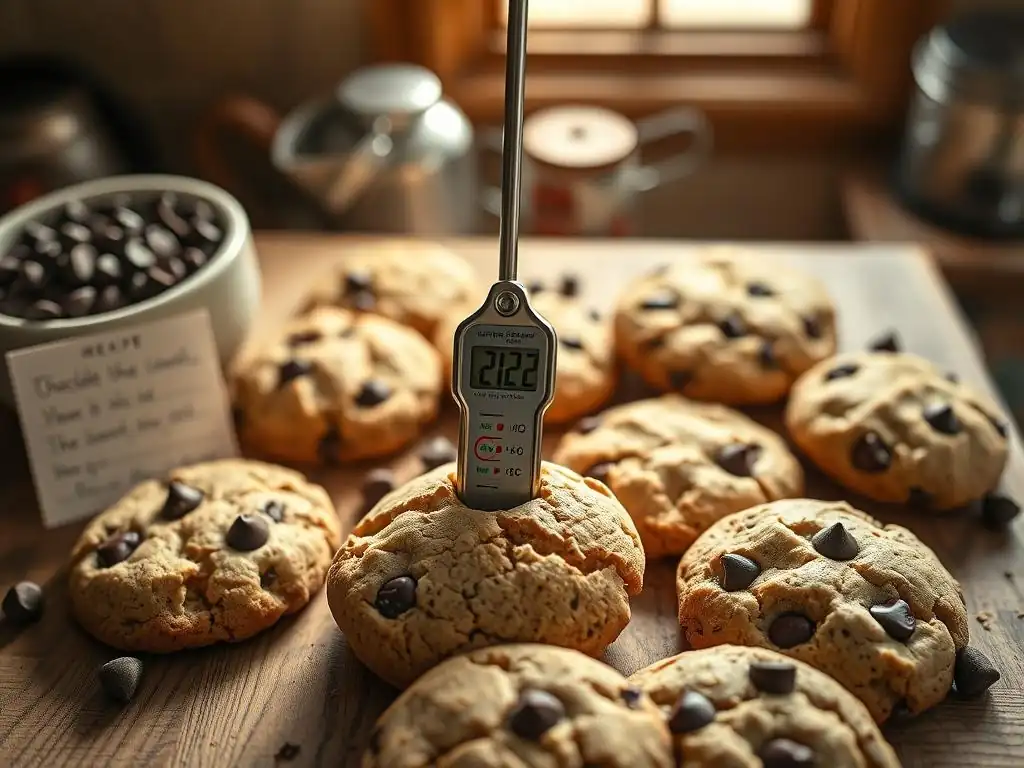
Welcome to BakeWithEase, where we unlock the secrets to baking success! Ever wondered how professional bakers achieve perfectly baked cookies, batch after batch? This week, we're diving deep into a game-changing technique: mastering temperature control. Discover how using an instant-read thermometer can revolutionize your cookie game and help you nail that elusive "perfecting cookie temperature consistently". Ready to say goodbye to underbaked centers and burnt edges forever? Let's get baking!
- Introduction: Achieving Cookie Perfection with Temperature Control
- Understanding the Science of Cookie Baking Temperatures
- The Instant-Read Thermometer: Your Cookie Baking Ally
- Mastering the Technique: How to Use an Instant-Read Thermometer for Cookies
- Temperature Guide: Achieving Perfect Doneness for Popular Cookie Varieties
- Troubleshooting: What If Your Cookies Aren't Reaching the Target Temperature?
- Beyond Doneness: Using Temperature to Customize Cookie Texture
- Maintaining Your Instant-Read Thermometer for Accurate Readings
- Conclusion: BakeWithEase and Perfect Cookie Temperature Consistently
-
Frequently Asked Questions
- What is the ideal internal temperature for perfectly baked cookies?
- Why is cookie temperature so important for achieving the perfect texture?
- How does an instant-read thermometer help with perfecting cookie temperature consistently?
- What are some common mistakes people make when using an instant-read thermometer for cookies?
- Can cookie temperature be used as a reliable indicator of doneness for all types of cookies?
- Final Reflection: The Sweet Science of Perfect Cookies
- Unlock Perfectly Baked Cookies Every Time!
Welcome to BakeWithEase, where we believe that mastering baking should be, well, easy! We understand the frustration of pulling a batch of cookies from the oven, only to find some are perfect while others are either too pale and underbaked or too dark and crispy. Achieving consistent results, especially when you're perfecting cookie temperature consistently, can feel like a mystery. But what if there was a tool that could take the guesswork out of knowing exactly when your cookies are done?
This is where the humble instant-read thermometer comes in. Often seen as a tool for roasting meats or tempering chocolate, it's surprisingly effective for monitoring the internal temperature of your cookies. By understanding and measuring the internal temperature, you gain a level of precision that visual cues alone simply cannot provide, leading you towards truly perfecting cookie temperature consistently batch after batch.
For many bakers, the go-to method for checking cookie doneness is visual: looking for golden-brown edges, a set center, or slight cracks. While these cues offer some indication, they are highly subjective and can vary wildly depending on lighting, oven hot spots, and even the specific recipe's ingredients. Relying solely on appearance often leads to inconsistent results, making it difficult to replicate that perfect cookie texture.
The internal temperature of a cookie is a far more reliable indicator of its state of doneness. As a cookie bakes, chemical reactions occur – proteins set, sugars caramelize, and moisture evaporates. These processes happen at specific temperature ranges. By measuring the internal temperature, you're directly assessing these transformations, allowing you to pull the cookies at the exact moment they reach the desired stage, thus perfecting cookie temperature consistently and achieving predictable outcomes every time.
Temperature plays a critical role in how a cookie transforms from raw dough into a baked treat. Heat affects the fats, sugars, and proteins in the dough. As the temperature rises, butter melts, causing the cookie to spread. Sugars begin to melt and caramelize, contributing to color and flavor, typically starting around 320°F (160°C). Proteins in the flour and eggs coagulate, providing structure to the cookie.
Moreover, the rate of heat transfer dictates how quickly these changes occur. A higher oven temperature will cause faster melting and spreading, potentially leading to thinner, crispier cookies. A lower temperature allows for slower spreading and more time for gases (from leaveners like baking soda or powder) to expand and set the structure, often resulting in thicker, chewier cookies. Understanding this interplay is key to perfecting cookie temperature consistently for your desired result.
Not all cookies are created equal, and neither are their ideal internal temperatures. A delicate sugar cookie aiming for a soft, slightly chewy center will have a different temperature target than a shortbread cookie designed to be crumbly and sandy. For instance, a chewy chocolate chip cookie might be considered done when its internal temperature reaches around 180-195°F (82-90°C), while a crisp cookie might need to reach a slightly higher temperature to ensure sufficient moisture evaporation and caramelization.
Conversely, a soft-baked cookie might be pulled from the oven at a lower internal temperature, perhaps closer to 175-185°F (79-85°C), allowing it to finish setting as it cools and retain more moisture. These target temperatures are not universal laws but rather helpful guidelines that vary based on ingredients, size, and desired texture. Using an instant-read thermometer helps you identify these specific points for various recipes, significantly aiding in perfecting cookie temperature consistently across different types.
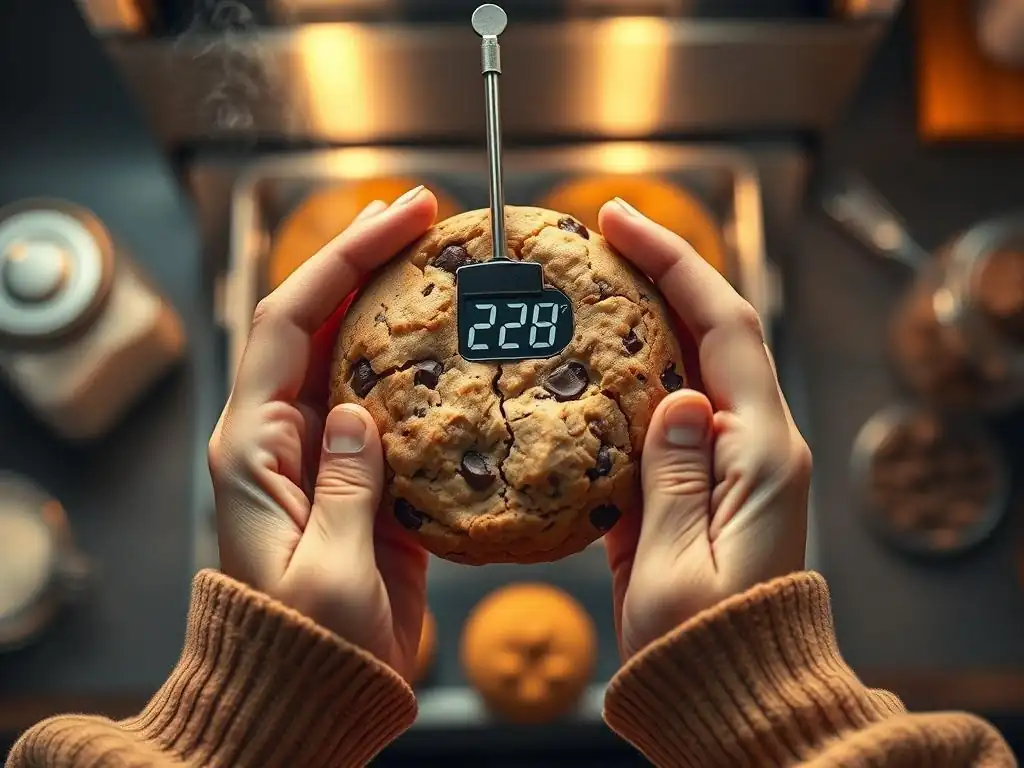
Why Visual Cues Aren't Enough: The Inaccuracy of Guesswork
Relying solely on visual cues when baking cookies is akin to guessing the temperature outside just by looking at the sky. While you might get close sometimes, you'll often be off the mark. Oven temperatures can fluctuate significantly, sometimes by as much as 25-50°F (14-28°C) from the set temperature, even in modern ovens. Hot spots within the oven can cause cookies on one side of the tray to bake faster than those on the other.
Furthermore, the appearance of a cookie can be misleading. A cookie with dark edges might be perfectly done inside, or it might be completely overbaked. A pale cookie might be deliciously soft, or it could be raw dough in the center. An instant-read thermometer cuts through this ambiguity by giving you a direct, objective measurement of the cookie's internal state, providing the critical data needed for perfecting cookie temperature consistently.
Types of Instant-Read Thermometers for Baking: A Comparison
When it comes to instant-read thermometers suitable for baking, the most common types are digital probe thermometers. These typically feature a sharp metal probe attached to a digital display via a wire or directly connected to the head. Wired probe thermometers are great for monitoring temperatures over a longer period, perhaps if you were roasting or deep-frying, but for quick checks on cookies, a direct-connect instant-read digital thermometer is ideal.
These digital instant-read thermometers provide a temperature reading within a few seconds (often 1-3 seconds for high-quality models) after inserting the probe. They are far more accurate and faster than older dial-type thermometers. While infrared thermometers can measure surface temperature, they are not suitable for measuring the internal temperature of a cookie, which is what truly determines its doneness. For perfecting cookie temperature consistently, a fast, accurate digital probe thermometer is the tool of choice.
Selecting the right instant-read thermometer for perfecting cookie temperature consistently involves considering a few key features. Speed is paramount; look for a thermometer that gives a reading in 1-3 seconds. Accuracy is also crucial; a good thermometer should be accurate to within ±1°F or ±0.5°C. The probe itself should be thin enough to insert into a cookie without causing excessive damage, often referred to as a "thin tip" or "fine tip" probe.
Durability and ease of cleaning are also practical considerations. Many instant-read thermometers are water-resistant, which is helpful for cleaning. A backlit display is useful in dimly lit kitchens. While fancy features aren't strictly necessary for cookies, these elements contribute to the tool's overall usability and longevity, making your efforts in perfecting cookie temperature consistently much more efficient and reliable.
Using an instant-read thermometer for cookies is straightforward but requires a careful approach to ensure accuracy. First, have your thermometer ready as the cookies approach their expected baking time. Once you suspect they might be close to done based on visual cues or time, carefully open the oven door (minimize heat loss! ).
- Carefully remove the baking sheet from the oven and place it on a heatproof surface.
- Select a cookie from the center of the tray or one that appears to be representative of the batch's progress.
- Quickly but gently insert the tip of the instant-read thermometer probe into the side or center of the cookie, aiming for the thickest part. Avoid pushing it all the way through.
- Wait for the temperature reading to stabilize on the display (this should only take a few seconds).
- Note the temperature. Compare it to your target temperature for that specific cookie type.
- Based on the reading, decide if the cookies need more time in the oven. If they do, return the tray promptly. If they are at or near the target temperature, remove the tray to cool.
This quick process allows you to assess doneness objectively, moving you closer to perfecting cookie temperature consistently with every batch.
Where to Insert the Thermometer for Optimal Results
The ideal spot to insert the thermometer probe depends slightly on the cookie's shape and type, but a general rule is to aim for the center or the thickest part. For round, relatively flat cookies like chocolate chip or sugar cookies, inserting the probe horizontally into the side, towards the center, is often the best approach. This allows you to measure the temperature of the core, which is typically the last part of the cookie to finish baking.
For thicker or irregularly shaped cookies, locate the area that seems densest or thickest and insert the probe there. Avoid inserting the probe too close to the edge, as the edges will always be hotter and will give a misleadingly high reading. The goal is to measure the temperature where the dough is least exposed to the oven's direct heat, ensuring you're truly checking the doneness of the bulk of the cookie, which is crucial for perfecting cookie temperature consistently.
Several pitfalls can lead to inaccurate temperature readings when checking cookies. One common mistake is not inserting the probe deep enough; if the tip is too close to the surface, it will register a higher temperature than the interior. Conversely, pushing the probe completely through the cookie can also give an inaccurate reading due to exposure to air or the hot baking sheet.
Another error is taking too long to get the reading, allowing the cookie to cool down slightly outside the oven, or leaving the oven door open for an extended period, which affects the temperature for the remaining cookies. Ensure your thermometer is fast and you work quickly. Also, always clean your probe between batches or different types of cookies to prevent cross-contamination and ensure accurate readings. By being mindful of these points, you enhance your ability to get precise measurements, essential for perfecting cookie temperature consistently.
For classic, chewy chocolate chip cookies, a common target internal temperature range is approximately 185-195°F (85-90°C). When cookies reach this temperature, the proteins have set sufficiently to hold their shape, the sugars have begun to caramelize slightly for flavor and color, but enough moisture remains to ensure a soft, chewy center after cooling. Pulling them at the lower end of this range might result in a slightly gooier center, while the higher end yields a more uniformly chewy texture.
Checking the temperature of one or two representative cookies in the batch as they approach their baking time (e.g., after 8-10 minutes for a recipe that typically bakes for 11-13 minutes) helps you gauge progress accurately. If they are significantly below this range, you know they need more time. If they are within the range, you can make an informed decision about whether to pull them based on your desired final texture, making perfecting cookie temperature consistently for this beloved classic much easier.
The ideal internal temperature for sugar cookies depends heavily on the desired outcome. For soft, slightly puffy sugar cookies (often used for cutouts), a target temperature around 180-190°F (82-88°C) is usually appropriate. At this temperature, the structure is set, but the cookie retains softness and doesn't become overly crisp. They might appear slightly underbaked in the center when you pull them, but they will continue to set as they cool.
If you're aiming for a crisper sugar cookie, you might let the temperature rise slightly higher, perhaps to 195-205°F (90-96°C). This allows for more moisture evaporation and potentially more extensive caramelization of the sugars, resulting in a firmer, snappier texture. Experimenting within these ranges and noting the correlating internal temperature is key to perfecting cookie temperature consistently for your specific sugar cookie recipe and preference.
Chewy oatmeal cookies benefit from being pulled from the oven when their internal temperature is in the range of 185-195°F (85-90°C), similar to chewy chocolate chip cookies. The presence of oats absorbs moisture, and achieving this temperature ensures the cookie is cooked through without becoming dry or brittle. At this point, the edges should be lightly golden, and the center might still look a little soft.
Allowing oatmeal cookies to bake much beyond this temperature range, say towards 200°F (93°C) or higher, will result in a significantly firmer, possibly crispy cookie, as more moisture is driven off. For that sought-after chewy texture, monitoring the internal temperature with a thermometer is a reliable method for perfecting cookie temperature consistently.
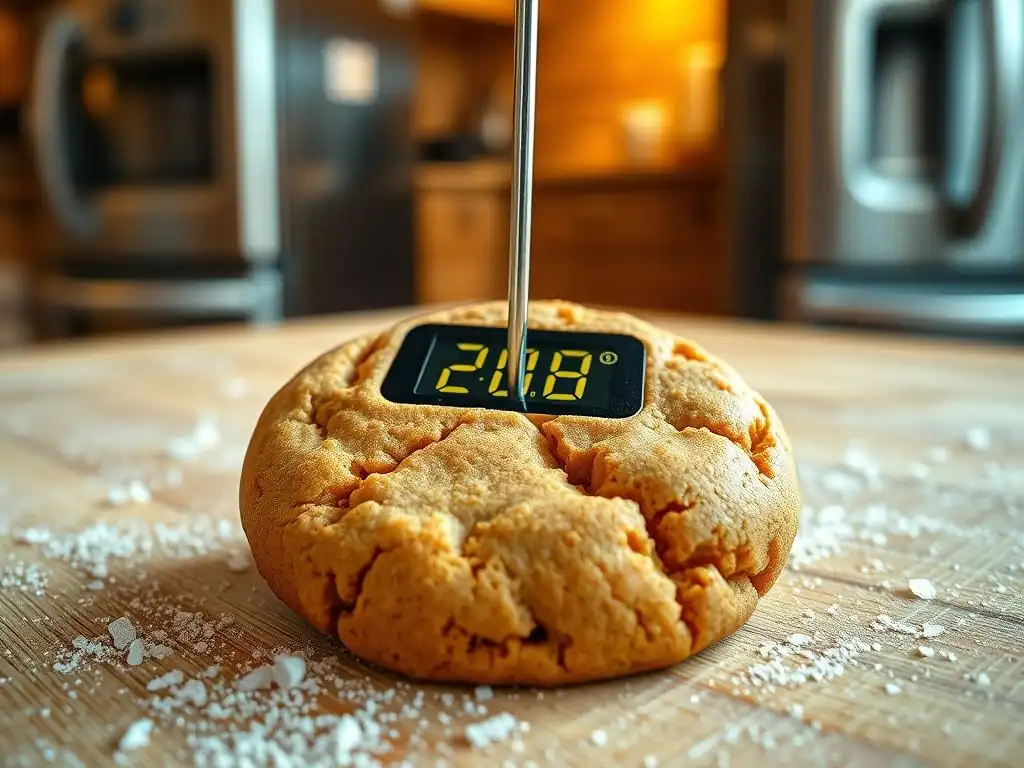
Peanut butter cookies, known for their tender, sometimes crumbly texture, are often done when their internal temperature reaches approximately 180-190°F (82-88°C). The high fat content from the peanut butter means they can brown quickly on the outside while the inside is still underbaked. Visual cues like the traditional fork crosshatch becoming firm are helpful, but temperature provides greater certainty.
Pulling peanut butter cookies within this temperature range helps ensure they remain soft and tender rather than becoming hard or dry. Like many cookies, they will continue to set as they cool on the baking sheet. Using an instant-read thermometer helps you avoid overbaking, a common issue with these delicate cookies, aiding in perfecting cookie temperature consistently for that perfect crumb.
Snickerdoodles: Achieving the Perfect Softness
Snickerdoodles are characterized by their soft, pillowy texture and tangy flavor from cream of tartar. To maintain this signature softness, snickerdoodles are typically baked until they are just set around the edges but still appear quite soft and perhaps slightly puffy in the center. An internal temperature target of 180-190°F (82-88°C) is often ideal for achieving this texture.
Baking them to a higher temperature will cause them to lose their softness and become more like a standard crisp sugar cookie. The crackled surface, dusted with cinnamon sugar, is a visual cue, but checking the internal temperature confirms that the interior is properly cooked yet still moist. This precision is invaluable for perfecting cookie temperature consistently and getting that classic snickerdoodle texture every time.
Shortbread cookies are designed to be dense, buttery, and crumbly, with minimal spread. They are typically baked at lower temperatures for a longer time compared to other cookies, often around 300-325°F (150-160°C). The goal is to cook them through without significant browning, preserving their pale color and tender structure. Their internal temperature when done is usually in the range of 170-180°F (77-82°C).
Because shortbread has a high fat content and low moisture, the temperature doesn't need to reach as high as chewier cookies to be considered "done." The lower temperature ensures the butter melts slowly, contributing to tenderness, rather than quickly spreading. Using a thermometer helps confirm they've reached the necessary internal heat to set without developing unwanted crispness or browning, assisting in perfecting cookie temperature consistently for that signature crumbly texture.
Oven Calibration: Ensuring Accurate Oven Temperature
If your cookies consistently fail to reach the expected internal temperature within the recipe's suggested baking time, the first suspect should be your oven's calibration. Ovens can be significantly off from the temperature they indicate. A simple oven thermometer placed inside will tell you the true temperature. If your oven is consistently 25°F (14°C) cooler than the setting, it will take longer for your cookies to reach their target internal temperature.
Knowing your oven's true temperature allows you to adjust the dial accordingly (e.g., set it 25°F higher if it runs cool) or simply understand why things are taking longer. Regularly checking your oven's calibration with an external thermometer is a fundamental step towards perfecting cookie temperature consistently and reliable baking in general.
Adjusting Baking Time Based on Temperature Readings
Once you start using an instant-read thermometer, you'll rely less on the clock and more on the temperature reading. If your cookies are baking slower than expected, continue baking and check the temperature periodically (every 1-2 minutes) until they reach your target range. If they are baking faster, you know for future batches that you might need to reduce the overall baking time.
Using temperature as your guide allows you to adapt to variations in dough thickness, ingredient temperature, and oven performance. For example, if a recipe says bake for 10-12 minutes, but after 10 minutes your cookies are only at 160°F (71°C) when your target is 190°F (88°C), you know they need significantly more time. This proactive adjustment based on real data is key to perfecting cookie temperature consistently.
An underbaked cookie is one that hasn't reached the necessary internal temperature for its structure to set and flavors to develop properly. It might be too soft, gooey, or even raw in the center. An overbaked cookie has exceeded this temperature, leading to excessive moisture loss, hardness, dryness, or burnt flavors.
By identifying the ideal internal temperature for your desired cookie type and texture, you create a clear benchmark. If your cookies are underbaked, they simply haven't reached that temperature yet; they need more heat exposure. If they are overbaked, you know you exceeded the temperature threshold in that batch. Using the thermometer helps you identify the exact point where "done" occurs, allowing you to replicate it and avoid future under or overbaking issues, thereby perfecting cookie temperature consistently.
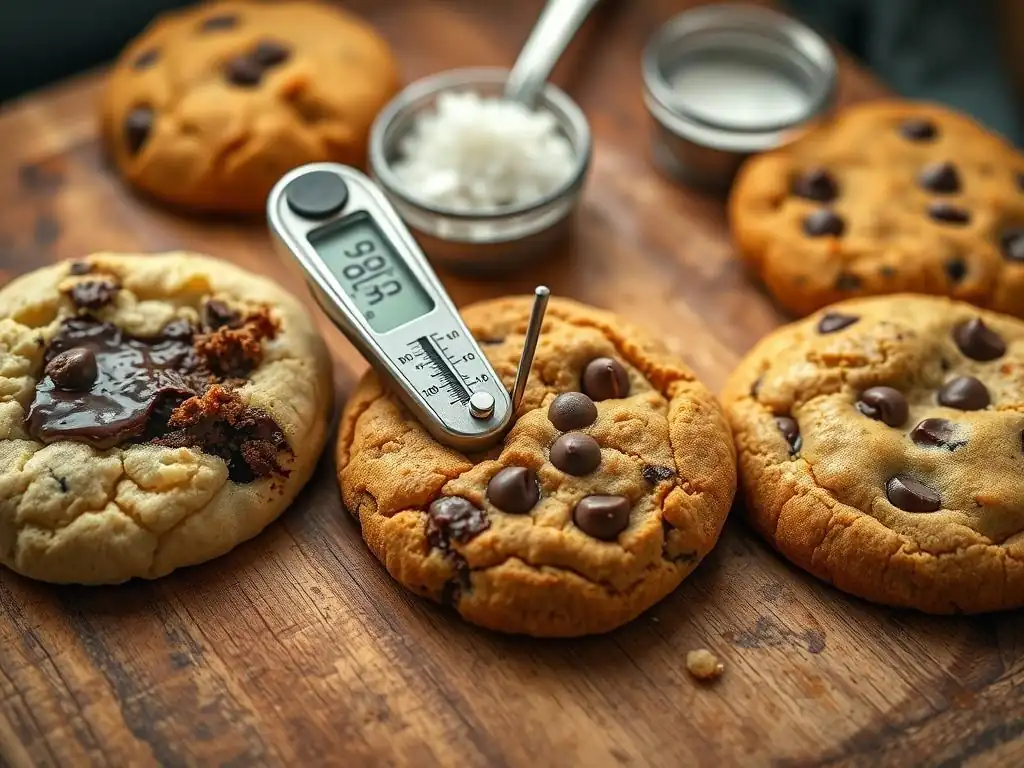
Once you are comfortable using an instant-read thermometer to achieve a standard "done" cookie, you can start experimenting with temperature to deliberately alter the texture. For instance, pulling a cookie at a slightly lower internal temperature (e.g., 180°F/82°C instead of 190°F/88°C for a chocolate chip cookie) will generally result in a softer, chewier, or even slightly gooey center because less moisture has evaporated and less protein has set.
Conversely, letting the cookie bake to a slightly higher temperature (e.g., 200°F/93°C) will drive off more moisture and encourage more extensive caramelization and protein setting, leading to a firmer, crispier cookie. By systematically varying the pull temperature by just a few degrees, you can fine-tune the final texture of your cookies, adding another layer of control to your baking and further perfecting cookie temperature consistently for custom results.
The temperature at which a cookie is baked significantly impacts its spread and crispness. Baking at a higher oven temperature (e.g., 375°F/190°C) causes the butter to melt faster, leading to more rapid spread before the structure sets, often resulting in thinner, crispier cookies. Baking at a lower oven temperature (e.g., 325°F/160°C) allows the dough to heat through more slowly, giving the leaveners more time to lift the cookie before the fat melts completely, resulting in thicker, puffier cookies.
Furthermore, the internal temperature the cookie reaches directly correlates with moisture content and the degree of sugar caramelization and protein setting. A higher internal temperature means more moisture has evaporated, leading to a crispier cookie. A lower internal temperature retains more moisture, resulting in a softer or chewier texture. Understanding these relationships and using your thermometer to hit precise internal temperatures is crucial for perfecting cookie temperature consistently and controlling the final texture.
Maintaining Your Instant-Read Thermometer for Accurate Readings
Cleaning and Calibration Tips for Long-Lasting Accuracy
To ensure your instant-read thermometer continues to provide accurate readings for perfecting cookie temperature consistently, proper care and occasional checks are essential. Always clean the probe after each use, especially after inserting it into dough or baked goods. Most digital probes can be wiped clean with a damp cloth and mild soap, but avoid immersing the entire unit unless it's specifically rated as fully waterproof.
While most modern digital thermometers are factory-calibrated and hold their accuracy well, it's a good practice to check calibration periodically, perhaps every few months or if you suspect issues. A simple way to check is the ice bath test: fill a glass with crushed ice and add a little cold water. Stir for a minute, then insert the probe without touching the sides or bottom. An accurate thermometer should read 32°F (0°C). If it's off by more than a degree or two, consult your thermometer's manual for recalibration instructions or consider replacing it if it's not user-adjustable.
Elevate Your Baking with Precision Temperature Control
Moving beyond guesswork and embracing precision is a game-changer in baking. Using an instant-read thermometer to measure the internal temperature of your cookies provides objective data that visual cues simply cannot match. This tool empowers you to understand exactly what is happening inside your cookies as they bake, giving you the control needed to replicate perfect results batch after batch.
Whether you're aiming for a soft, chewy center or a crisp, snappy bite, knowing and hitting the right internal temperature is the most reliable path to success. It takes the stress out of wondering if they're "done yet" and replaces it with confidence based on a concrete measurement, truly perfecting cookie temperature consistently in your kitchen.
Mastering cookie baking is a journey, and temperature is just one piece of the puzzle. To deepen your understanding and continue perfecting cookie temperature consistently alongside other skills, explore resources that delve into the science of ingredients, the impact of mixing techniques, and the nuances of different oven types. Look for detailed guides and recipes that explain the why behind the steps, not just the how.
Understanding how factors like ingredient temperature, dough resting times, and cooling methods interact with baking temperature will further elevate your cookie game. Embrace experimentation, take notes on temperatures and results, and enjoy the process of perfecting your favorite cookie recipes with newfound precision.
Frequently Asked Questions
While it varies by recipe, a general guideline is between 190-210°F. Using an instant-read thermometer ensures consistent doneness across batches. This helps to avoid underbaked or overbaked cookies.
Temperature directly impacts the chemical reactions within the cookie dough. Underbaking leads to doughiness, while overbaking results in dryness; proper temperature ensures optimal moisture and chewiness.
An instant-read thermometer provides a precise measurement of the internal temperature. This eliminates guesswork and allows you to adjust baking time accordingly for consistent results.
Not inserting the thermometer far enough into the cookie or checking the temperature in multiple spots can skew results. Also, ensure your thermometer is properly calibrated for accuracy.
Yes, while visual cues are helpful, internal temperature is a more reliable indicator, especially for thicker or darker cookies. It is a consistent measurement regardless of cookie type.
Mastering the art of baking the perfect cookie hinges on more than just the recipe; it's about achieving consistent, precise temperature control. A seemingly small detail, the internal temperature of your cookie dough, drastically impacts the final texture and taste, transforming a potentially disappointing bake into a culinary triumph. This journey into the world of instant-read thermometers has revealed the power of precise measurement in achieving consistent results, elevating the simple act of baking into a more scientific and satisfying process.
The impact of understanding precise temperature control extends far beyond the individual cookie. It's a microcosm of the larger pursuit of perfection in any craft, demanding attention to detail and a willingness to embrace the tools that enhance our skills. The difference between ordinary and extraordinary is that little extra.
This quote resonates deeply, as the seemingly small act of using a thermometer to ensure perfectly baked cookies elevates the entire experience, from the baking process itself to the ultimate enjoyment of the finished product. The pursuit of consistent temperature translates to consistent quality, a principle applicable across numerous creative endeavors.
Now, consider your own baking journey. What other areas of your cooking or baking could benefit from this level of precision? Perhaps you're struggling with consistently fluffy cakes or perfectly cooked meats. I encourage you to embrace the power of measurement, to explore the possibilities of precise temperature control, and to discover the joy of achieving consistent, exceptional results in your own kitchen. The path to culinary mastery is paved with attention to detail, and the instant-read thermometer is a valuable tool on that journey. Embrace it, and unlock a new level of baking excellence.
Thanks for joining us on this delicious journey into the world of perfectly baked cookies! We hope you now feel confident in achieving that coveted golden-brown perfection. Ready to take your cookie game to the next level?
- Master the art of the instant-read thermometer: Practice using your thermometer on a batch of cookies today – you'll be amazed at the difference! Experiment with different cookie types and see how the internal temperature changes!
- Share your cookie triumphs (and challenges!): Tell us about your baking experiences in the comments below. We'd love to hear your stories and tips!
- Challenge a friend to a cookie bake-off: Why not spread the baking joy and see who can bake the most perfectly textured cookie?
What innovative baking techniques will you try next to elevate your cookie baking?