
How to Achieve Chewy Caramels Every Time Using the Water Bath Method

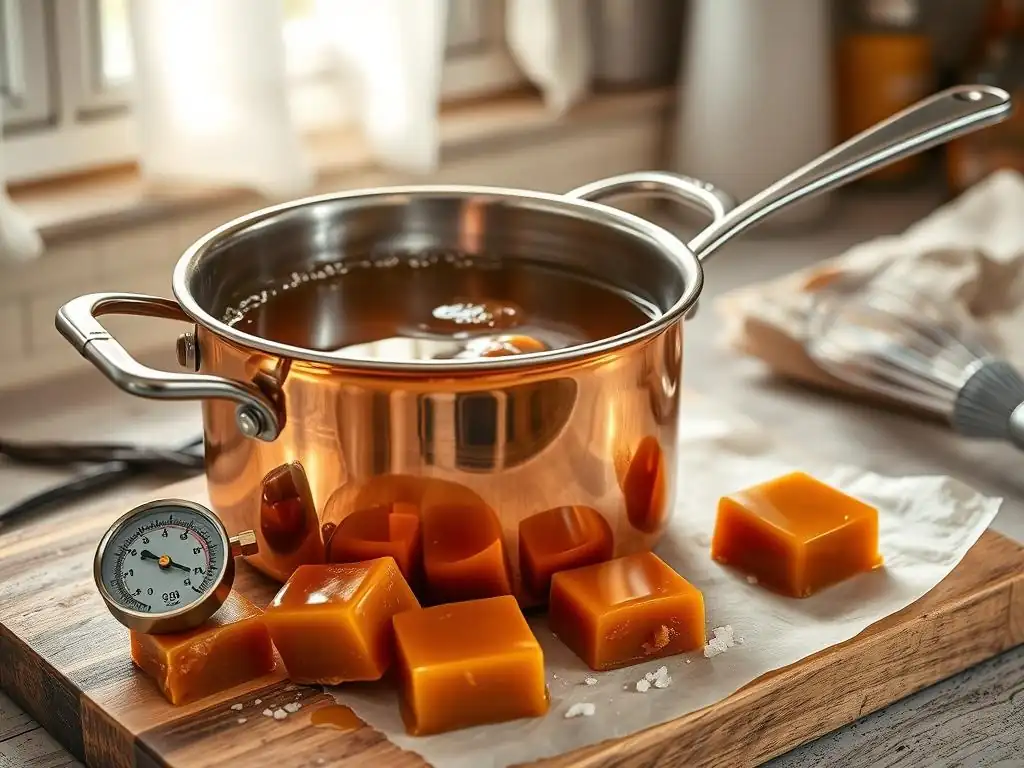
Welcome to BakeWithEase, where we demystify the delicious world of baking! Are you ready to unlock the secret to perfectly chewy caramels? Forget about hard, grainy results. In this article, we'll guide you through the water bath method, a game-changer that ensures your caramels are consistently smooth and delightfully chewy. Curious to see how this simple technique can elevate your candy-making game? Let's dive in!
- Bake Chewy Caramels Perfectly: The Water Bath Secret
- Understanding the Water Bath for Caramel Success
- Ingredients for Water Bath Chewy Caramels
- Step-by-Step Guide: Water Bath Chewy Caramel Recipe
- Troubleshooting Common Water Bath Caramel Problems
- Tips for Extra Chewy and Flavorful Caramels
- Water Bath Caramel Variations & Ideas
-
Frequently Asked Questions
- What exactly is the water bath method when making caramels?
- Why is a water bath recommended for chewy caramels?
- Can I skip the water bath and still get chewy caramels?
- What temperature should the water in the water bath be?
- What kind of pan is best for the caramel itself when using the water bath method?
- Final Reflection: The Sweet Science of Perfect Caramels
- Unlock Your Inner Caramel Master!
Bake Chewy Caramels Perfectly: The Water Bath Secret
Achieving that ideal, yielding chew in homemade caramels can feel like a culinary quest. Many home bakers struggle with caramel that turns out too hard, too soft, or worse, grainy. The traditional method of cooking caramel directly over heat requires constant vigilance and precise timing, as temperature fluctuations can easily ruin the texture. This is where the water bath method for chewy caramels becomes a game-changer, offering a gentler, more controlled way to cook your confection to perfection.
Using a water bath, also known as a bain-marie, provides a buffer against the direct heat of your stovetop. This indirect heating method ensures that your caramel mixture heats up gradually and evenly, significantly reducing the risk of scorching and promoting a uniform texture throughout the batch. For anyone aiming for consistently chewy caramels water bath cooking is a technique worth mastering. It simplifies the process and drastically improves the chances of success, making homemade chewy caramels an achievable treat for bakers of all skill levels.
Understanding the Water Bath for Caramel Success
Why Use a Water Bath for Making Chewy Caramels?
The primary reason to employ a water bath when making chewy caramels is temperature regulation. Sugar, the main component of caramel, is highly sensitive to heat. Direct contact with the bottom of a hot pan on a burner can lead to rapid, uneven heating, causing some parts of the sugar to caramelize too quickly or even burn before the rest of the mixture reaches the desired temperature. This uneven cooking is a major culprit behind grainy or hard caramels.
A water bath surrounds the caramel pan with gently simmering water, which never exceeds the boiling point (around 212°F or 100°C at sea level). This creates a stable, moderate heat source that transfers slowly and evenly to the caramel mixture. As a result, the sugar melts and caramelizes uniformly, allowing the mixture to reach the precise temperature needed for a soft, pliable texture without the risk of hot spots or burning. This controlled environment is essential for producing consistently chewy caramels using the water bath technique.
Water Bath Benefits: Even Heat Distribution for Perfect Caramel Texture
The most significant benefit of using a water bath for making chewy caramels is the unparalleled even heat distribution it provides. Imagine heating a pan directly on a burner – the heat is concentrated at the bottom, and hot spots can easily develop. In contrast, a pan placed in a water bath is heated gently from all sides submerged in the water, ensuring that the entire mixture cooks at a consistent rate. This even heating is critical for developing the complex flavors of caramel without bitterness.
Furthermore, the water bath method helps prevent crystallization, another common issue when making caramel. Rapid temperature changes and stirring at the wrong time can cause dissolved sugar crystals to reform, resulting in a grainy texture. The stable, gentle heat from the water bath minimizes these temperature shocks, helping the sugar stay dissolved and preventing unwanted crystallization. For truly smooth and chewy caramels water bath cooking is the secret weapon that ensures a silky, non-grainy finish every time.
Ingredients for Water Bath Chewy Caramels
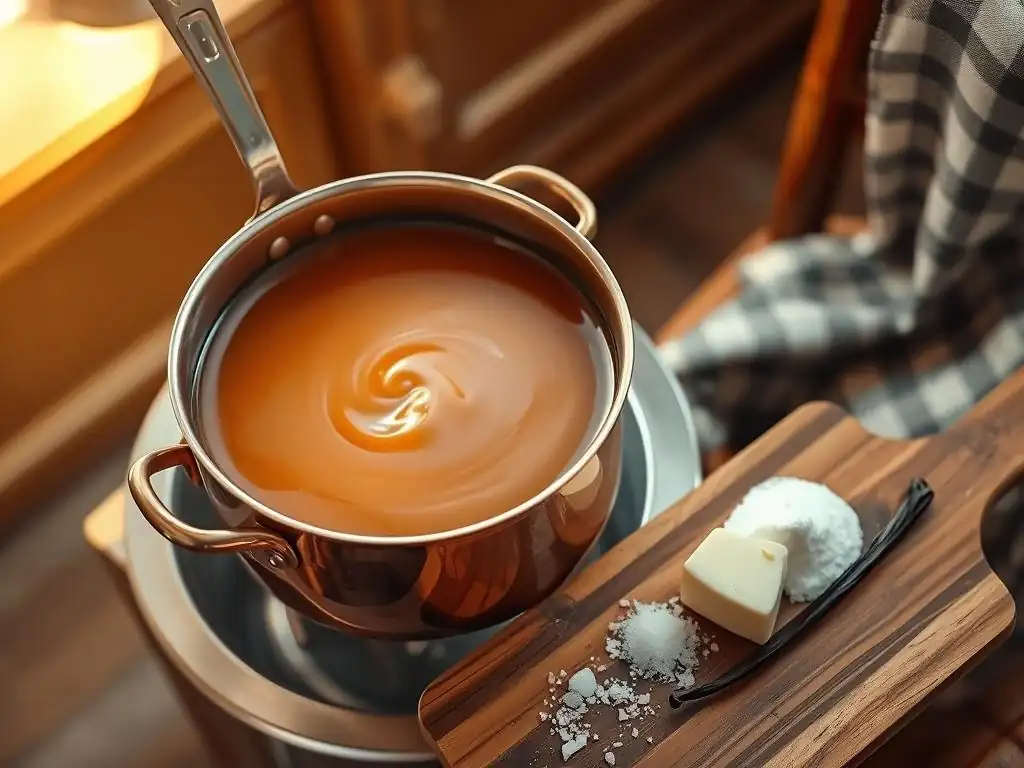
Essential Caramel Ingredients Checklist
Crafting perfect chewy caramels starts with selecting the right ingredients. High-quality dairy and sugar are paramount for achieving rich flavor and the desired chewy texture. Using a water bath won't compensate for poor ingredients, so choose wisely!
Here is a checklist of the essential ingredients you'll need:
- [ ] Granulated Sugar: Provides the primary sweetness and structure.
- [ ] Light Corn Syrup: Crucial for preventing crystallization and contributing to chewiness.
- [ ] Unsalted Butter: Adds richness, flavor, and helps create a smooth texture.
- [ ] Heavy Cream: Provides fat and liquid, contributing significantly to the caramel's creaminess and chew.
- [ ] Salt: Balances the sweetness and enhances the overall flavor.
- [ ] Vanilla Extract: Adds aromatic depth (usually added off the heat).
Using ingredients at room temperature, especially the dairy, can sometimes help the mixture combine more smoothly initially, though this is less critical with the gentle water bath method than direct heat.
Key Ingredients for Chewy Caramel Texture
While all ingredients play a role, several are particularly critical for achieving that signature chewy texture in water bath chewy caramels. Granulated sugar provides the base, but it's the combination with light corn syrup and heavy cream that truly defines the chewiness. Corn syrup, a liquid sugar, interferes with the crystallization of sucrose (granulated sugar), keeping the caramel smooth and preventing it from becoming brittle. It acts as an interfering agent, promoting a softer, chewier consistency rather than a hard, glassy one.
Heavy cream contributes fat and moisture, which are essential for a tender, chewy bite. The higher fat content in heavy cream (typically 36% or more) emulsifies with the sugar and butter, resulting in a rich, pliable caramel. Using milk or half-and-half will yield a softer, less chewy caramel due to lower fat content. The ratio of these key ingredients – sugar, corn syrup, butter, and heavy cream – is carefully balanced in recipes designed for water bath chewy caramels to ensure the perfect balance of sweetness, richness, and chewiness.
Step-by-Step Guide: Water Bath Chewy Caramel Recipe
Preparing Your Baking Pan and Water Bath
Preparation is key to a smooth caramel-making process. First, select your baking pan for cooling the finished caramel. A standard 8x8 or 9x13 inch pan is common, depending on the desired thickness of your caramels. Line the pan completely with parchment paper or aluminum foil, leaving an overhang on the sides. This overhang will serve as handles to lift the set caramel out later. Lightly grease the paper or foil with butter or non-stick spray.
Next, prepare your water bath setup. You will need a larger pot or pan that can comfortably hold the saucepan you'll use for the caramel mixture. Fill the larger vessel with about 1-2 inches of water.
Place this larger pot on your stovetop burner and bring the water to a gentle simmer over medium heat. Ensure the water level is sufficient so that when you place the caramel saucepan inside, the water comes up the sides of the saucepan, but not so high that it risks splashing into the caramel mixture. This setup is the foundation for making perfect water bath chewy caramels.
Combining the Caramel Ingredients: The First Steps
Once your pan and water bath are ready, combine the sugar, light corn syrup, butter (cut into pieces), and salt in the saucepan you'll use for cooking. Do not add the heavy cream or vanilla extract yet. Place the saucepan into the simmering water bath. Stir the mixture gently with a heatproof spatula or wooden spoon until the butter is melted and the sugar begins to dissolve.
Continue stirring occasionally as the mixture heats. The gentle heat from the water bath will slowly melt the sugar and butter together with the corn syrup. This initial melting phase is important for ensuring a smooth caramel base. Once the sugar is mostly dissolved and the mixture is warm, you can add the heavy cream. Whisk or stir the heavy cream into the sugar mixture until it is fully incorporated and the mixture is smooth. At this point, insert your candy thermometer.
Cooking the Caramel in the Water Bath: Temperature and Timing
Cooking the caramel in the water bath requires patience, as it will heat more slowly than direct-heat methods. Keep the water bath at a consistent, gentle simmer throughout the cooking process. Stir the caramel mixture frequently, especially as it begins to thicken and the temperature rises, to prevent anything from sticking to the bottom or sides of the pan.
Monitor the temperature using a reliable candy thermometer clipped to the side of the saucepan, ensuring the bulb is submerged in the caramel but not touching the bottom of the pan. For chewy caramels, you are aiming for a temperature range typically between 245°F and 250°F (118°C to 121°C). This corresponds to the firm ball stage on a candy thermometer.
The exact temperature will affect the final chewiness – 245°F will yield a softer chew, while 250°F will be firmer. Cooking in the water bath ensures a steady, predictable rise to this target temperature, making it easier to hit the mark for perfect water bath chewy caramels.
Testing for Doneness: Achieving the Perfect Chewy Caramel Consistency
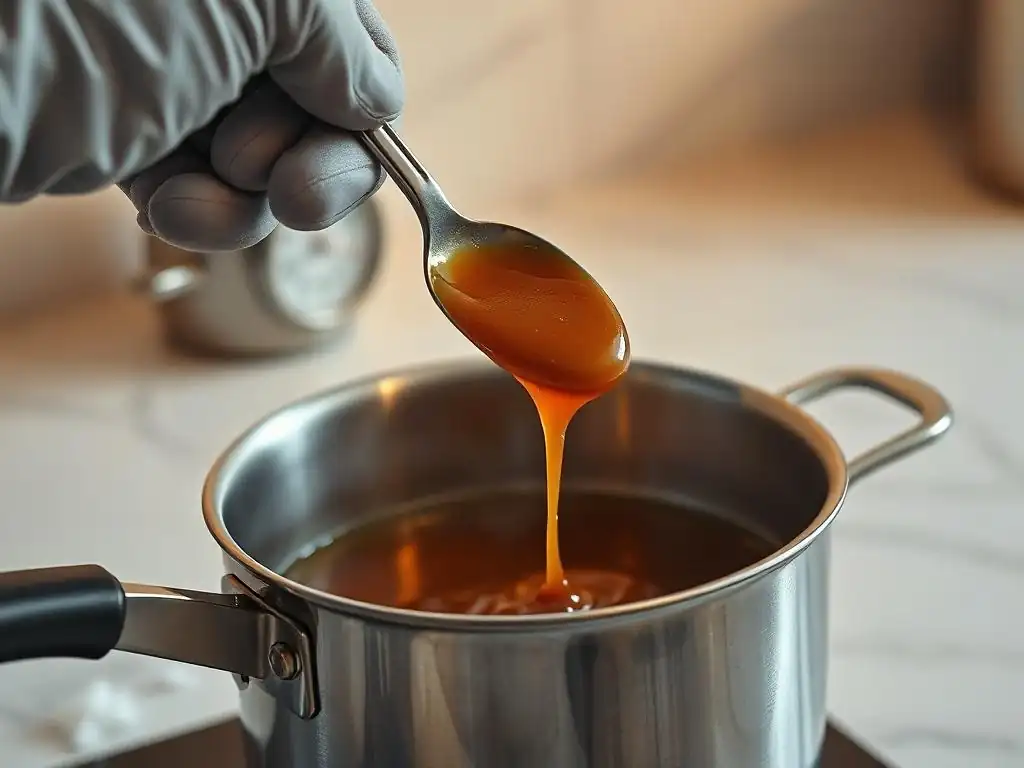
While the candy thermometer is your most reliable tool, performing a cold water test can also help confirm the consistency of your caramel. Have a small bowl of very cold water ready. When the caramel is within a few degrees of your target temperature (e.g., around 243-248°F), carefully drop a small amount (about half a teaspoon) of the hot caramel into the cold water.
Allow the caramel to cool in the water for a few seconds, then pick it up and feel its texture.
- If it forms a soft ball that flattens easily when pressed, it's at the soft ball stage (around 235-240°F) and needs more cooking for chewiness.
- If it forms a firm ball that is pliable but holds its shape when removed from the water, it's at the firm ball stage (245-250°F) – perfect for water bath chewy caramels.
- If it forms a hard, brittle thread, it's overcooked (hard ball or crack stage).
This test helps calibrate your thermometer and gives you a tactile sense of the caramel's readiness. Once the caramel reaches the desired temperature on your thermometer and passes the cold water test for a firm ball, carefully remove the saucepan from the water bath.
Cooling and Cutting Your Water Bath Chewy Caramels
Immediately after removing the caramel from the water bath, stir in the vanilla extract (if using). Be cautious as the caramel is very hot and will bubble. Stir until the vanilla is fully incorporated. Carefully pour the hot caramel into your prepared pan, using a spatula to scrape out all the delicious mixture. Do not scrape the bottom of the pan aggressively if there are any darker bits, as these could introduce off-flavors or graininess.
Allow the caramel to cool completely at room temperature. This can take several hours, or even overnight. Avoid refrigerating the caramel to speed up cooling, as this can sometimes negatively affect the texture. Once the caramel is fully set and firm enough to handle, use the parchment or foil overhangs to lift the entire slab out of the pan.
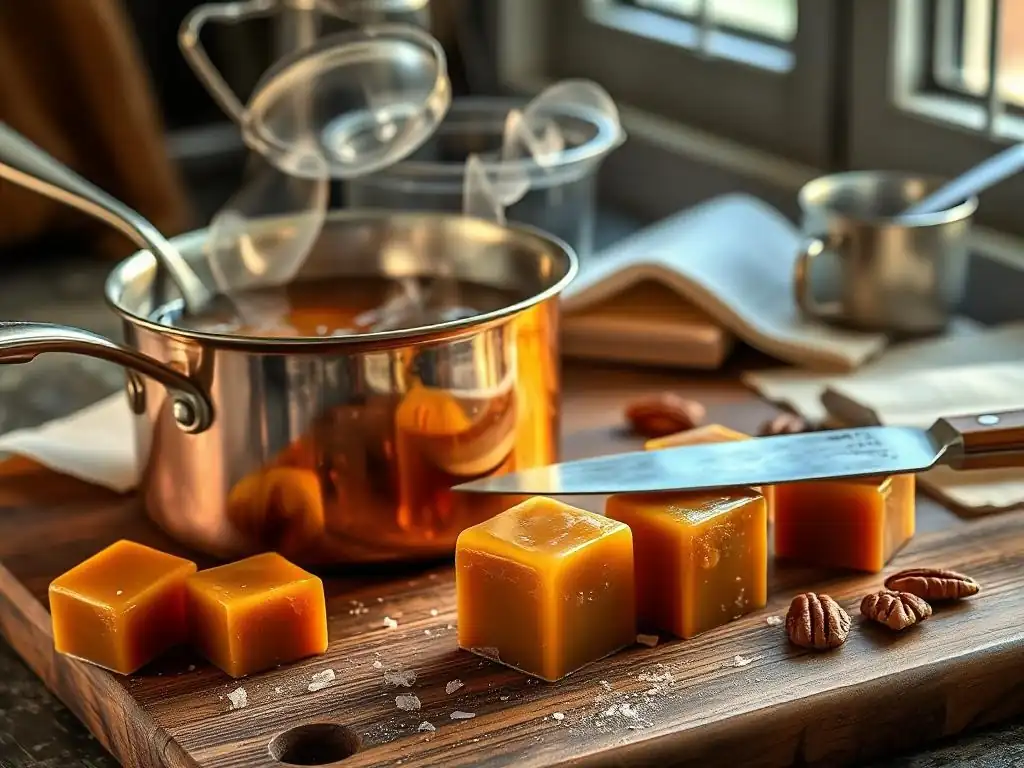
Place it on a cutting board. Use a sharp, lightly oiled knife or a pizza cutter to cut the caramel into your desired size squares or rectangles. Wrap each water bath chewy caramel individually in wax paper or cellophane twists to prevent them from sticking together.
Troubleshooting Common Water Bath Caramel Problems
Avoiding Grainy Caramel: Tips and Tricks
Grainy caramel is a common frustration, and it's usually caused by crystallization of sugar. Even with the gentle heat of a water bath, crystallization can occur if not careful. One key tip is to avoid stirring the caramel mixture excessively once the sugar has dissolved and the mixture starts to heat up significantly. While some stirring is needed initially and as it thickens, constant agitation, especially scraping down the sides where sugar crystals might form, can introduce these crystals back into the mixture, seeding further crystallization.
Another crucial step is to ensure that any sugar crystals clinging to the sides of the pan are dissolved. You can achieve this by occasionally brushing down the sides of the saucepan with a pastry brush dipped in clean water before the caramel reaches high temperatures. The steam from the water bath also helps keep the sides of the pan clean. By minimizing agitation during the critical cooking phase and ensuring all sugar is dissolved, you maximize your chances of achieving smooth, non-grainy water bath chewy caramels.
Fixing Overcooked or Burnt Caramel
While the water bath significantly reduces the risk of burning compared to direct heat, it's still possible to overcook your caramel if the temperature gets too high or it cooks for too long past the target temperature. Overcooked caramel will often smell slightly acrid and may develop a very dark color. Caramel that goes much past the firm ball stage (above 250°F) will become increasingly hard and brittle rather than chewy.
If your caramel is only slightly overcooked (a few degrees too high), you might still salvage it, though the texture will be firmer. If it smells burnt or has visible burnt bits, unfortunately, there's no fixing it – the burnt sugar imparts an irreversible bitter flavor. The best approach is prevention: use a reliable candy thermometer and monitor the temperature closely, removing the pan from the water bath as soon as it hits your target temperature for water bath chewy caramels.
What to Do if Your Caramel Doesn't Set
If your caramels are too soft and don't set properly after cooling, the most likely reason is that the mixture did not reach a high enough temperature during cooking. The temperature directly correlates to the final firmness. If you cooked to 235°F (soft ball), you will get a very soft, almost saucy caramel, not a chewy one. For a truly chewy texture, hitting that 245-250°F (firm ball) range is essential.
If your caramel is too soft after cooling, you can attempt to re-cook it. Gently reheat the soft caramel in a clean saucepan, ideally using the water bath method again for control. Insert your candy thermometer and cook the mixture carefully, stirring constantly, until it reaches the correct temperature range (245-250°F). Be extremely cautious as reheating can sometimes encourage crystallization. Once the correct temperature is reached, pour it back into your prepared pan and let it cool and set again. This re-cooking can sometimes save an undercooked batch of water bath chewy caramels.
Tips for Extra Chewy and Flavorful Caramels
Adding Flavor Extracts and Spices to Your Caramel
Elevating the flavor of your water bath chewy caramels is easy with the addition of extracts and spices. Vanilla extract is a classic, and its warm, aromatic notes complement the rich caramel flavor beautifully. Always add vanilla after you remove the caramel from the heat, just before pouring it into the pan. High heat can cause the vanilla flavor compounds to evaporate.
Beyond vanilla, consider other flavorings. A pinch of cinnamon, a dash of nutmeg, or even a touch of cardamom can add subtle warmth. Citrus zest (like orange or lemon) can brighten the flavor profile. For a more intense spice flavor, you can gently steep spices like star anise or a cinnamon stick in the heavy cream before adding it to the sugar mixture, then strain the cream before use. Experimenting with extracts like almond or maple can also yield delicious results, always adding them off the heat.
Using Different Sugars for Unique Caramel Flavors
While granulated white sugar and light corn syrup are the standard for classic water bath chewy caramels, using different types of sugar can impart unique flavors and colors. Substituting a portion of the granulated sugar with brown sugar (light or dark) will introduce molasses notes, resulting in a richer, slightly deeper flavor and darker color caramel. Dark brown sugar will provide a more pronounced molasses taste than light brown sugar.
Maple sugar can be used for a distinct maple-caramel flavor. Be aware that substituting sugars can sometimes affect the final texture and the temperature at which the caramel reaches the desired stage, as different sugars caramelize at different rates. However, for adventurous bakers, experimenting with 10-20% substitution of the granulated sugar with brown sugar or maple sugar using the controlled environment of the water bath can lead to exciting variations of your favorite chewy treat.
Storing Your Homemade Chewy Caramels
Proper storage is essential to maintain the quality and chewiness of your water bath chewy caramels. Once cut and individually wrapped, store the caramels in an airtight container. This protects them from moisture, which can make them sticky, and from drying out, which can make them hard.
Store the airtight container at cool room temperature, away from direct sunlight or heat sources. Caramels stored this way typically stay fresh and chewy for several weeks. While you can refrigerate or freeze caramels, it's often not necessary and can sometimes affect the texture, making them firmer initially. If you do refrigerate or freeze, allow them to come back to room temperature before enjoying them for the best chewy experience.
Water Bath Caramel Variations & Ideas
Salted Caramel Water Bath Recipe
Salted caramel is a beloved variation that perfectly balances sweet and savory. To turn your water bath chewy caramels into salted caramels, you have a couple of options. You can increase the amount of salt added to the initial mixture slightly, or add a pinch of flaky sea salt directly to the caramel just before pouring it into the pan.
Alternatively, and for a more pronounced salt flavor, you can sprinkle flaky sea salt over the top of the poured caramel before it sets. This creates beautiful flecks of salt on the surface and provides bursts of salty flavor as you eat the caramel. Use a high-quality sea salt like fleur de sel or Maldon for the best results. The controlled cooking of the water bath makes it easy to achieve the perfect chewy base for this popular variation.
Chocolate Caramel Water Bath Recipe
Introducing chocolate to your water bath chewy caramels creates a decadent treat. There are a few ways to do this. You can stir in finely chopped chocolate (milk, dark, or semi-sweet) or chocolate chips after the caramel has reached its target temperature and been removed from the water bath, along with the vanilla. Stir until the chocolate is completely melted and smooth.
For a richer chocolate flavor, you can melt chocolate with the heavy cream before adding it to the sugar mixture. Gently heat the cream and chocolate together until smooth, then proceed with the recipe using this chocolate cream. The water bath ensures the caramel base cooks perfectly before the chocolate is incorporated, preventing the chocolate from scorching. The resulting chocolate water bath chewy caramels are rich, fudgy, and delightfully chewy.
Vanilla Bean Caramel Water Bath Recipe
For a truly gourmet experience, elevate your water bath chewy caramels with real vanilla bean. Instead of or in addition to vanilla extract, you can infuse the heavy cream with a vanilla bean. Split a vanilla bean lengthwise and scrape out the seeds. Add both the seeds and the pod to the heavy cream in a small saucepan. Gently heat the cream over low heat until warm, allowing the vanilla flavor to infuse for about 15-20 minutes. Be careful not to boil it.
Remove the vanilla pod from the infused cream before adding the cream to the sugar mixture in the caramel recipe. The tiny vanilla seeds will be visible throughout the finished caramel, adding both intense vanilla flavor and a beautiful visual element. Cooking the caramel base in a water bath ensures that the delicate vanilla flavor isn't masked by any off-flavors from scorching, resulting in pure, rich vanilla bean water bath chewy caramels.
Frequently Asked Questions
What exactly is the water bath method when making caramels?
The water bath method involves placing your caramel mixture in a pan set inside a larger pan filled with hot water. This gentle, even heat prevents burning and ensures a smooth, chewy texture in the final product.
Why is a water bath recommended for chewy caramels?
The water bath helps to regulate the temperature during cooking, preventing the caramel from overheating and becoming hard or grainy. It promotes even cooking and results in a consistently chewy texture.
Can I skip the water bath and still get chewy caramels?
While possible, skipping the water bath significantly increases the risk of burning the caramel and achieving a less desirable, hard texture. The water bath provides a more forgiving environment for beginners.
What temperature should the water in the water bath be?
The water should be hot, but not boiling. Aim for a temperature that allows you to maintain a consistent heat without causing the caramel to cook too quickly. A gentle simmer is ideal.
What kind of pan is best for the caramel itself when using the water bath method?
A light-colored metal baking pan is best. Light colors help to reflect heat evenly, and metal conducts heat well, ensuring that the caramel cooks uniformly within the water bath.
Final Reflection: The Sweet Science of Perfect Caramels
The pursuit of the perfect chewy caramel, once a culinary enigma, is now within everyone's reach. Mastering the water bath method unlocks a world of sweet possibilities, transforming a seemingly complex process into a rewarding culinary adventure. This isn't just about achieving the right texture; it's about understanding the delicate balance of sugar, butter, and heat, and the patience required to create something truly special.
The journey of making caramels, much like life itself, requires careful attention to detail and a willingness to embrace the unexpected. The subtle shifts in color and consistency during the cooking process are a testament to the alchemy involved. The satisfying crackle as the caramel cools and sets is a reward for the effort invested. The best things in life are worth waiting for,
and this certainly holds true for the perfectly chewy caramel. This process transcends mere recipe following; it's about understanding the underlying principles and applying them to create your own unique caramel creations.
Now, I invite you to step into your kitchen and embark on your own caramel-making journey. Don't be afraid to experiment, to adjust the recipe to your own taste, and to savor the sweet success of perfectly chewy caramels. Remember the lessons learned here – patience, precision, and a touch of culinary courage – and apply them to other aspects of your life. The satisfaction of creating something delicious and beautiful is a reward in itself, a reminder that even the most challenging endeavors can yield incredibly sweet results.
Unlock Your Inner Caramel Master!
Thanks for joining us on this sweet journey into the world of chewy caramels! We hope you've gained the confidence to tackle this classic confection with ease. Now it's time to put your newfound knowledge into action.
- Dive into the kitchen and whip up a batch of your own perfect caramels! Use the water bath method outlined in the article, and don't be afraid to experiment with different flavors.
- Share your caramel creations on social media and tag us – we'd love to see your delicious results! Use #BakeWithEaseCaramels to join the conversation.
- Challenge a friend to a caramel-making showdown! See who can create the chewiest, most delicious caramel.
Ready to experience the joy of homemade, perfectly chewy caramels? What unique flavor will you add to your next batch?