
Proven Techniques for High Altitude Cookie Perfection

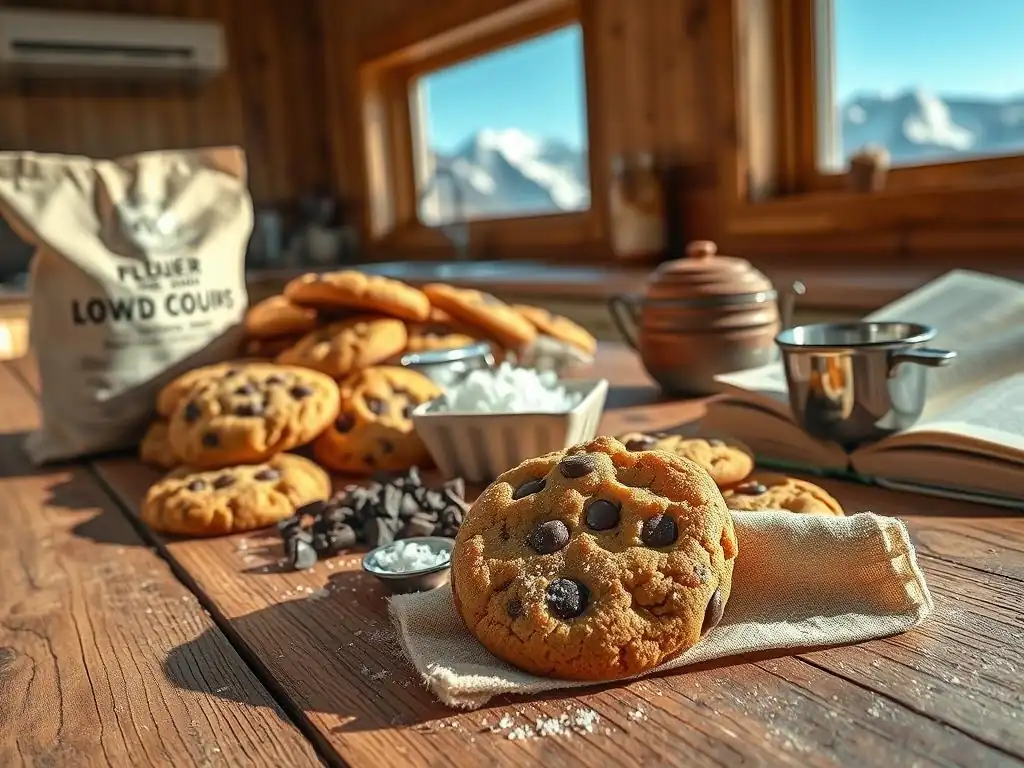
Welcome to BakeWithEase, your secret ingredient to baking success! Ever wondered why your cookies spread thin and flat at high altitude? You're not alone! Dive into our article, "Proven Techniques for High Altitude Cookie Perfection," and discover the simple adjustments that will transform your baking, guaranteeing perfectly textured, delicious cookies every time. Prepare to conquer the complexities of altitude and unlock your cookie-baking potential. Keep reading to find out how!
- Mastering High Altitude Cookie Baking: Recipes and Techniques for Success
- Understanding the Science of High Altitude Cookie Baking
- Adjusting Cookie Recipes for High Altitude: Key Ingredients
- Essential Techniques for High Altitude Cookie Baking
- High Altitude Cookie Recipes: Adapted and Perfected
- Troubleshooting Common High Altitude Cookie Issues
- Advanced High Altitude Cookie Baking Tips
- Conclusion: Confidently Bake Delicious Cookies at High Altitude
-
Frequently Asked Questions
- What makes high-altitude baking different for cookies?
- What adjustments should I make to my cookie recipe at high altitude?
- What type of flour works best for high-altitude cookie recipes?
- How can I prevent my cookies from spreading too thin at high altitude?
- Where can I find reliable high-altitude cookie recipes specifically designed for my altitude?
- Final Reflection: The Sweet Science of High-Altitude Baking
- Unlock Your High-Altitude Baking Secrets!
Baking at higher elevations presents unique challenges due to the differences in atmospheric pressure and humidity compared to sea level. These environmental factors significantly impact how ingredients behave during the baking process, often leading to results that differ from standard recipes. Understanding the science behind these changes is the first step to achieving perfect high altitude cookie recipes.
At higher altitudes, the atmospheric pressure is lower. This reduced pressure has several effects on baking. Firstly, leavening gases (produced by baking soda, baking powder, or yeast) expand more readily and quickly than they would at sea level. This can cause cookies to rise too much initially, only to collapse later, resulting in a dense or crumbly texture.
Furthermore, the lower pressure affects the boiling point of liquids. Water boils at a lower temperature at high altitude – approximately 1°F lower for every 500 feet above sea level. For example, at 5,000 feet, water boils around 202°F (94°C) instead of 212°F (100°C). This means that moisture in your cookie dough evaporates faster during baking, potentially leading to dry cookies before they are fully cooked through. Standard high altitude cookie recipes account for this accelerated gas expansion and evaporation.
The Role of Evaporation in High Altitude Baking
Lower atmospheric pressure also means that the air is typically drier at higher elevations. This lack of humidity contributes significantly to increased evaporation rates, not just during baking but also during dough preparation and resting. Dough can dry out quickly if left uncovered, affecting its consistency and how it spreads in the oven.
During baking, the combination of lower boiling points and drier air accelerates the loss of moisture from the cookie dough. This rapid evaporation can cause the dough to set faster than intended, potentially leading to cookies that are dry, crumbly, or have burnt edges while the center is still undercooked. Successful high altitude cookie recipes require adjustments to compensate for this increased moisture loss, ensuring the cookies remain tender and chewy.
Adapting standard cookie recipes for high altitude involves tweaking ingredient ratios to counteract the effects of lower pressure and increased evaporation. Small changes can make a big difference in the final texture and appearance of your cookies. Let's look at the essential adjustments needed for perfect high altitude cookie recipes.
Flour Adjustments: Reducing Gluten Development
Flour provides structure in cookies through gluten development. At high altitude, the dough can become too dry and the leavening action is stronger, which can lead to a more brittle or cakey texture if the flour amount isn't adjusted. Reducing the flour slightly helps to prevent the cookie from becoming too stiff or dry, allowing for better spread and a more tender crumb.
A common guideline for high altitude baking is to reduce the all-purpose flour by about 1 to 2 tablespoons per cup used in the original recipe. For example, if a recipe calls for 2 cups of flour, you might start by using 2 tablespoons less (1 cup and 14 tablespoons total). This adjustment helps balance the structure provided by the flour against the increased leavening power and moisture loss, contributing to the desired texture in high altitude cookie recipes.
Liquid Adjustments: Maintaining Moisture Balance
Because moisture evaporates faster at high altitude, increasing the liquid content in your cookie dough is crucial. This helps prevent the cookies from becoming dry and ensures they spread properly and remain tender. Liquids can include milk, water, eggs, or even vanilla extract, depending on the recipe.
Adding an extra tablespoon or two of liquid per batch is a typical starting point for high altitude adjustments. For instance, if a recipe uses one egg, you might add an extra tablespoon of milk or water. The goal is to compensate for the accelerated evaporation during baking and the drier air during preparation. Properly hydrated dough is key to achieving moist and chewy results in high altitude cookie recipes.
Sugar Adjustments: Controlling Spread and Sweetness
Sugar plays a significant role in cookie spread, tenderness, and browning. At high altitude, the increased leavening and faster evaporation can sometimes lead to excessive spread or overly crisp edges. Reducing the sugar content slightly can help control this spread, preventing the cookies from becoming too thin or greasy.
A reduction of about 1 to 2 tablespoons of sugar per cup is often recommended. For example, if a recipe calls for 1 cup of granulated sugar, try using 1 cup minus 2 tablespoons. This adjustment not only helps manage spread but also slightly concentrates the remaining sweetness, which is often desirable as flavors can be less intense at higher altitudes. Finding the right sugar balance is vital for successful high altitude cookie recipes.
Fat Adjustments: Achieving Desired Texture and Flavor
Fat, such as butter or shortening, contributes to tenderness, flavor, and spread in cookies. While major fat adjustments are less common than those for flour, liquid, or sugar, sometimes a slight increase in fat can help counteract dryness and improve texture at high altitude. This is particularly true for recipes that tend to bake up dry or crumbly.
If your high-altitude cookies are consistently dry despite liquid adjustments, consider adding an extra tablespoon of softened butter or shortening. This can help ensure the cookies remain moist and tender throughout the baking process. However, be cautious not to add too much fat, as this can lead to excessive spreading. Experimentation with small increments is key when adapting high altitude cookie recipes.
Leavening Agents: Balancing Rise and Structure
Leavening agents like baking soda and baking powder cause cookies to rise. At lower atmospheric pressure, these agents work more efficiently and rapidly. Using the standard amount of leavening from a sea-level recipe at high altitude can result in cookies that rise too quickly, develop large air pockets, and then fall, leading to a dense or crumbly texture.
Reducing the amount of baking powder and/or baking soda is a critical adjustment for high altitude baking. A general guideline is to reduce baking powder by 1/8 to 1/4 teaspoon per teaspoon called for, and baking soda by 1/16 to 1/8 teaspoon per teaspoon. For instance, if a recipe uses 1 teaspoon of baking powder, reduce it to about 3/4 teaspoon. This helps control the rise, allowing the cookie structure to set properly before collapsing, which is essential for well-formed high altitude cookie recipes.
Beyond adjusting ingredients, employing specific techniques can further improve your success when baking cookies at high altitude. These methods help manage dough consistency, control spread, and ensure even baking despite the environmental challenges. Incorporating these techniques into your process will elevate your high altitude cookie recipes.
Chilling Dough: Preventing Excessive Spreading
Chilling cookie dough is beneficial at any altitude, but it becomes even more critical in high altitude baking. Lower pressure can contribute to dough spreading too quickly before the structure sets. Chilling the dough solidifies the fat (like butter), which slows down the spread in the oven, allowing the edges to set before the center becomes too thin.
Aim to chill your cookie dough for at least 30 minutes in the refrigerator before baking. For some high altitude cookie recipes, longer chilling times (1-2 hours or even overnight) can yield even better results, leading to thicker, chewier cookies with more concentrated flavors. Ensure the dough is well-wrapped to prevent it from drying out in the drier high-altitude air during chilling.
Oven Temperature: Lowering for Even Baking
Since liquids boil at a lower temperature and evaporation is faster at high altitude, reducing the oven temperature slightly is often necessary. Baking at a slightly lower temperature helps the cookies bake more evenly, allowing the center to cook through before the edges become too dark or burnt. It also gives the structure more time to set before the leavening gases cause the cookie to spread excessively.
A common recommendation is to lower the oven temperature by 15 to 25°F (about 8-14°C) from the temperature specified in a sea-level recipe. For example, if a recipe calls for 375°F (190°C), try baking at 350°F (175°C). Always use an oven thermometer to ensure your oven is calibrated correctly, as oven temperatures can vary significantly. This temperature adjustment is key for perfectly baked high altitude cookie recipes.
Baking Time: Monitoring for Doneness
Even with a lower oven temperature, cookies at high altitude may bake faster than their sea-level counterparts due to increased evaporation. It's crucial to monitor your cookies closely and rely on visual cues for doneness rather than strictly following the time specified in the original recipe.
Start checking your cookies a few minutes earlier than the recipe suggests. Look for signs like lightly golden edges, a set but still slightly soft center, and a matte rather than glossy surface. Since different high altitude cookie recipes will have varying baking times, getting to know your oven and observing the cookies is the best approach. A cookie that looks slightly underdone when removed from the oven will often continue to set as it cools on the baking sheet.
For consistent baking results at high altitude, ensuring that all cookies are the same size and thickness is more important than ever. Unevenly sized cookies will bake at different rates, making it challenging to achieve the perfect texture for the entire batch. Some cookies might be overdone and dry while others are still raw in the center.
Using a cookie scoop or a kitchen scale to portion your dough helps guarantee uniformity. Aim for scoops or portions that are consistent in weight or volume. This simple technique ensures that each cookie on the baking sheet requires the same amount of time to bake through evenly, leading to consistently delicious results across all your high altitude cookie recipes.
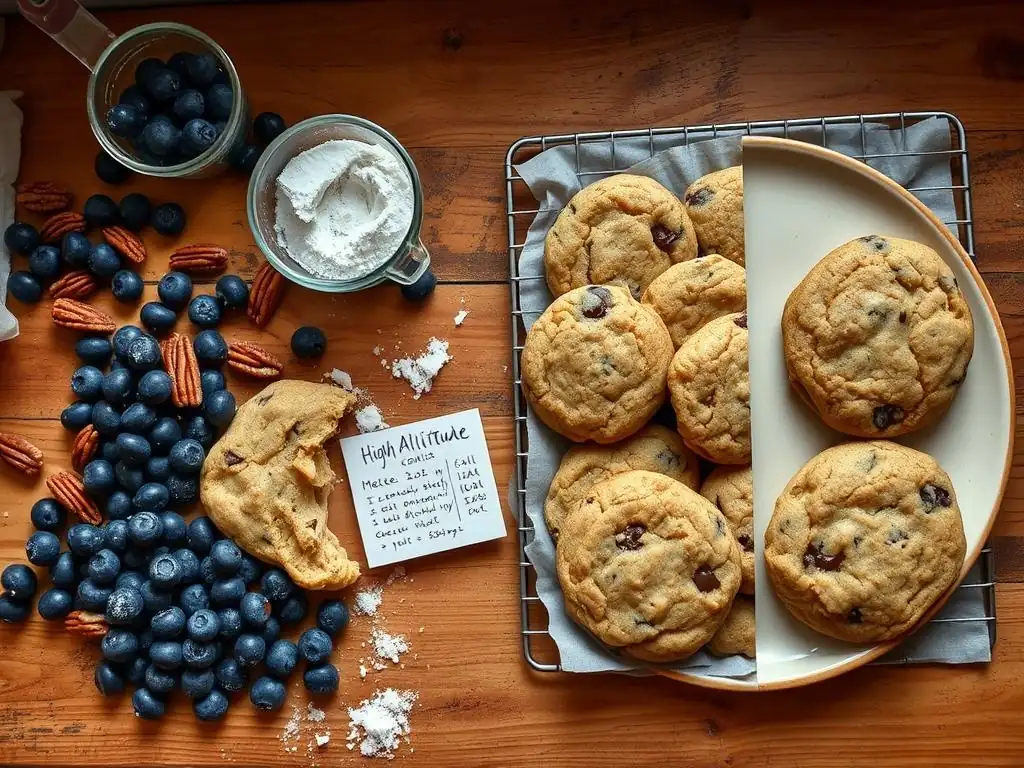
Adapting classic cookie recipes for high altitude allows bakers to enjoy their favorites without the common issues of spreading, dryness, or cakiness. By applying the ingredient adjustments and techniques discussed, you can create chewy, moist, and flavorful cookies even at elevation. Here are examples of how popular high altitude cookie recipes turn out when properly adapted.
Adapting the quintessential chocolate chip cookie for high altitude typically involves reducing flour and leavening, increasing liquid, and often chilling the dough longer. These adjustments counteract the tendency for chocolate chip cookies to spread excessively and become thin and crispy at higher elevations. The goal is a cookie that retains its shape, has slightly crisp edges, and a wonderfully chewy, gooey center.
With proper adjustments, high altitude chocolate chip cookie recipes should result in cookies that are thicker and hold their structure better than their sea-level counterparts baked unmodified. The reduced leavening prevents them from puffing up too much and collapsing, while increased moisture ensures the center remains soft and molten with chocolate chips. Chilling the dough is particularly effective for achieving that desirable chewy texture.
Peanut butter cookies, known for their rich flavor and often soft texture, also benefit significantly from high altitude adjustments. Without adaptation, they can sometimes turn out too dry and crumbly due to increased evaporation. Adjustments focus on maintaining moisture and controlling spread to keep them soft and tender.
Increasing the liquid slightly (often just an extra tablespoon of milk or water) and potentially adding a bit more peanut butter (the fat helps with tenderness) can help retain moisture. Reducing the sugar and leavening prevents them from becoming too flat or overly crisp. Adapted high altitude peanut butter cookie recipes should be delightfully soft, moist, and bursting with peanut butter flavor, holding their classic fork-tine shape without cracking excessively.
Oatmeal raisin cookies rely on a delicate balance of chewiness from the oats, softness from the dough, and plumpness from the raisins. At high altitude, they can easily become dry and hard if not adjusted. Maintaining moisture content is key to achieving the desired chewy texture.
Adjustments typically involve reducing flour and leavening, and importantly, increasing liquid. Some bakers also find soaking the raisins briefly before adding them to the dough helps prevent them from absorbing too much moisture from the dough itself during baking. Properly adapted high altitude oatmeal raisin cookie recipes should yield cookies that are wonderfully chewy, moist, and satisfying, with plump, soft raisins dispersed throughout.
Classic sugar cookies require precise adjustments to maintain their shape and achieve the desired texture – often crisp edges with a softer center, especially for drop-style cookies. Rolled and cut-out sugar cookies need dough that is stable enough to handle without becoming too dry or crumbly.
For drop sugar cookies, reducing leavening and sugar helps control spread, while increased liquid prevents dryness. For rolled sugar cookies, careful flour and liquid adjustments are crucial to create a dough that is pliable but not sticky, and doesn't dry out during rolling or baking. Chilling is essential for both types. Successful high altitude sugar cookie recipes will have beautiful shape definition (if cut out), lovely golden edges, and a tender crumb.
Even with careful adjustments, baking at high altitude can sometimes present challenges. Knowing how to identify common problems and apply targeted solutions is part of mastering the art of baking at elevation. Don't get discouraged if your first batch isn't perfect; troubleshooting is key to perfecting your high altitude cookie recipes.
Excessive Spreading: Causes and Solutions
Excessive spreading is one of the most frequent issues encountered when baking cookies at high altitude. This is primarily caused by the lower atmospheric pressure allowing leavening gases to expand too rapidly before the cookie structure has set, combined with potentially too much moisture or fat, or insufficient chilling. The result is thin, flat, and sometimes greasy cookies.
To fix excessive spreading, first ensure you have reduced your leavening agents (baking soda/powder) appropriately according to high-altitude guidelines. Next, check your flour and sugar measurements – slight reductions here also help control spread. Crucially, make sure your butter isn't too soft and that you are chilling your dough sufficiently (at least 30-60 minutes, or longer). Sometimes, a slight increase in flour (1-2 teaspoons per cup) can also help provide more structure to prevent spreading in high altitude cookie recipes.
Cookies that turn out dry, hard, or crumbly are often a result of the increased evaporation and drier air at high altitude. The dough loses moisture too quickly during mixing, resting, and baking, leaving the finished cookie parched. This issue indicates a need for increased hydration in the recipe.
The primary solution is to increase the liquid content in your dough. Add an extra tablespoon or two of milk, water, or egg (depending on the recipe's liquid source) per batch. Ensure you are measuring your flour accurately (scooping and leveling, not packing) as too much flour can also lead to dryness. Using slightly less flour than a sea-level recipe calls for is also a standard high-altitude adjustment that helps combat dryness. Proper hydration is fundamental for moist and tender high altitude cookie recipes.
Cakey Texture: Reducing Leavening and Flour
Cookies that have a cakey texture, rather than being chewy or crisp, often have too much structure and/or too much leavening working too effectively. At high altitude, the leavening gases expand more readily, and if there's too much flour providing structure, the cookie can set into a bread-like or cake-like consistency rather than spreading and becoming dense.
To address a cakey texture, focus on reducing your leavening agents (baking soda and/or baking powder). Start by reducing them by 1/8 to 1/4 teaspoon per teaspoon called for in the original recipe. Also, ensure you have made the standard high-altitude reduction in flour (1-2 tablespoons per cup). These adjustments decrease the lift and structure, allowing the cookie to spread and become denser and chewier, which is usually the desired texture for most high altitude cookie recipes.
Burnt Edges: Temperature and Rack Placement Adjustments
Burnt edges with an undercooked center is a common issue when baking at high altitude, often stemming from the faster evaporation and the oven's heat being too intense for the reduced boiling point of liquids. The edges dry out and brown (or burn) before the interior has a chance to cook through.
Lowering your oven temperature by 15-25°F (8-14°C) is the primary fix for burnt edges. This allows the cookies to bake more slowly and evenly. Also, check your oven's calibration with an oven thermometer to ensure it's accurate. Using parchment paper or silicone baking mats can also help insulate the bottom of the cookies slightly, preventing the bottoms and edges from burning. Finally, consider placing your baking sheets on a higher rack in the oven, further away from the direct heat source at the bottom, for more even baking in high altitude cookie recipes.
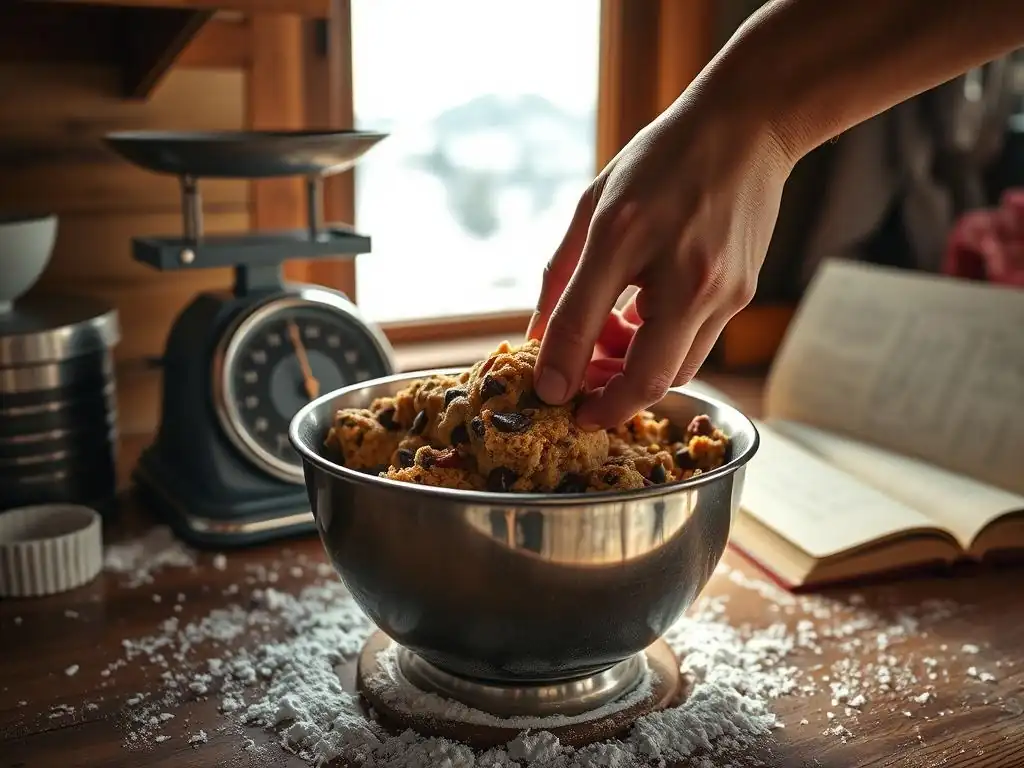
Once you've mastered the basic adjustments for high altitude baking, you can explore more nuanced techniques and ingredients to further refine your cookie creations. These advanced tips can help you achieve specific textures, enhance flavors, and ensure your high altitude cookie recipes are truly exceptional.
Utilizing Different Flour Types: Cake Flour vs. Bread Flour
The type of flour used significantly impacts cookie texture. While all-purpose flour is standard, experimenting with others can fine-tune results at high altitude. Cake flour, with its lower protein content, develops less gluten, leading to a more tender and softer cookie. This can be beneficial if your high-altitude cookies tend to be tough or dry. Try substituting a small portion of the all-purpose flour with cake flour (e.g., replace 1/4 cup of the total flour with cake flour).
Conversely, if you desire a chewier cookie that holds its shape well, bread flour (higher protein) can contribute to more gluten development. However, use this sparingly, as too much can lead to a tough cookie, especially given the dryness at high altitude. Understanding how different flours interact with your high-altitude adjustments allows for greater control over the final texture of your high altitude cookie recipes.
Adding Cornstarch: Enhancing Softness
Adding a small amount of cornstarch to your cookie dough is a popular trick for achieving a softer, more tender cookie texture, and it can be particularly helpful at high altitude where dryness is a concern. Cornstarch interferes with gluten development, resulting in a more delicate crumb. It also helps absorb some moisture, which might seem counterintuitive but can actually prevent excessive spread while keeping the interior soft.
Try adding 1 to 2 teaspoons of cornstarch per cup of flour in your recipe. Whisk it together with the dry ingredients. This small addition can make a noticeable difference in preventing a cakey or dry texture, contributing to that coveted soft center in your high altitude cookie recipes. It's a simple yet effective technique for improving texture.
Incorporating Acidic Ingredients: Balancing Flavors
Acidic ingredients, such as vinegar, lemon juice, or even brown sugar (which is slightly acidic), can interact with baking soda to enhance leavening and also add depth of flavor. At high altitude, where leavening is already more active, using acidic ingredients strategically can help balance the rapid rise and contribute to a more complex flavor profile.
A small amount of acid, like 1/4 teaspoon of vinegar or lemon juice added to the liquid ingredients, can react with baking soda to produce carbon dioxide, aiding in leavening. While you are reducing overall leavening at high altitude, ensuring the remaining baking soda has an acid to react with helps control the lift. Acidic ingredients can also brighten flavors which might seem muted at higher elevations. Experimenting with these additions can take your high altitude cookie recipes to the next level.
Proper Storage Techniques: Maintaining Freshness
Even perfectly baked high-altitude cookies can quickly become stale or dry if not stored properly, especially in the drier air. Proper storage is just as important as proper baking techniques for enjoying your delicious creations.
Allow cookies to cool completely on a wire rack before storing. Store soft cookies (like chocolate chip or oatmeal raisin) in an airtight container at room temperature. Adding a slice of bread to the container can help maintain moisture and keep them soft.
Crisp cookies (like sugar cookies) should also be stored in an airtight container but without bread, as excess moisture will make them soft. For longer storage, most baked cookies freeze well in airtight containers or freezer bags for up to 2-3 months. Implementing good storage practices ensures the effort put into adapting your high altitude cookie recipes pays off with lasting freshness.
Mastering high altitude cookie recipes is an achievable goal for any baker willing to understand the science and apply the necessary adjustments. By recognizing how lower atmospheric pressure and increased evaporation affect ingredients and dough, you can confidently modify standard recipes or seek out already-adapted ones. Tweaking flour, liquid, sugar, fat, and leavening, along with employing essential techniques like chilling dough and adjusting oven temperature, are the keys to success.
Don't be afraid to experiment and troubleshoot; each batch provides valuable learning. With these proven techniques and tips, you can consistently bake delicious, perfectly textured cookies, no matter how high your kitchen is. Happy baking!
Frequently Asked Questions
High altitude baking requires adjustments because of lower air pressure and decreased humidity. This can lead to cookies spreading too thin or drying out quickly.
Common adjustments include reducing sugar and fat, and increasing liquid. You might also consider slightly increasing baking temperature to help set the cookies faster.
All-purpose flour is generally suitable, but some bakers prefer using bread flour for its higher protein content. This can help provide more structure to the cookies.
Try chilling the dough for at least 30 minutes before baking. Also, reduce the amount of butter or shortening in the recipe.
BakeWithEase.com offers proven high-altitude cookie recipes with detailed instructions. Look for recipes specifically tested at your altitude for best results.
Final Reflection: The Sweet Science of High-Altitude Baking
Mastering the art of high-altitude baking isn't just about following a recipe; it's about understanding the science behind perfectly crisp edges and chewy centers. The challenges posed by thinner air and lower boiling points are real, but as this article has demonstrated, surmountable with the right techniques. These aren't just recipes; they're keys to unlocking consistent baking success, no matter your elevation.
The quest for the perfect high-altitude cookie has profoundly impacted my own baking journey. It's taught me patience, precision, and the importance of adapting to unique circumstances. The best bakers are those who are not afraid to experiment and adjust.
This quote, though not specifically about high-altitude baking, perfectly encapsulates the spirit of this endeavor. The subtle adjustments detailed in this article—from altering ingredient ratios to understanding oven temperature nuances—represent a deeper understanding of the baking process itself, applicable far beyond the mountain peaks.
Now, it's your turn. Don't let the thin air intimidate you. Take the knowledge gained from these proven techniques, experiment with your favorite recipes, and embrace the challenge of creating high-altitude cookie perfection. The reward? The unparalleled satisfaction of a perfectly baked cookie, a testament to your skill and dedication, enjoyed at any altitude. So, preheat your oven, gather your ingredients, and embark on your own high-altitude baking adventure. The perfectly crisp, chewy cookie awaits!
Unlock Your High-Altitude Baking Secrets!
Thanks for joining us on this delicious journey to high-altitude baking success! We hope you've gained valuable insights and the confidence to tackle those challenging recipes. Now it's time to put your newfound knowledge into practice.
- Bake your perfect high-altitude cookies today! Experiment with one of the techniques you learned and share your results with us – we'd love to see your creations!
- Share this article with fellow bakers who are struggling with high-altitude baking. Let's spread the knowledge and help everyone achieve cookie perfection.
- Try a new recipe specifically designed for high altitudes and let us know how it turns out in the comments!
Ready to conquer those high-altitude baking challenges and create the most amazing cookies? What innovative technique will you try first?