
Olive Oil in Bread Baking: Health Benefits and FlavorBoosting Techniques

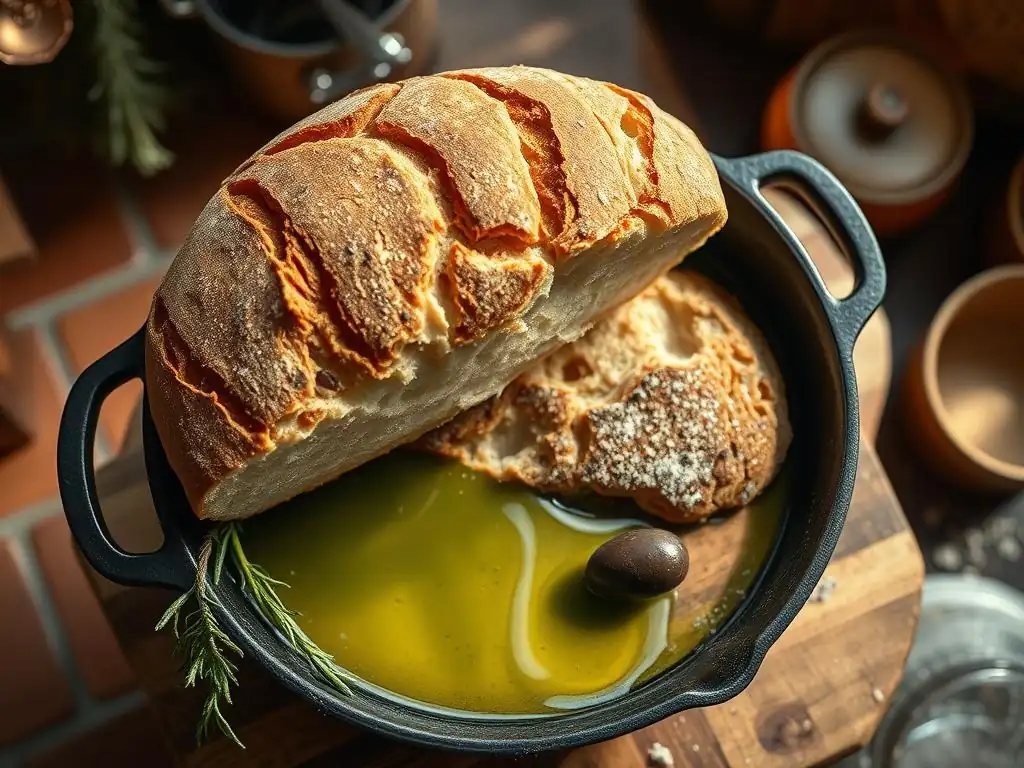
Welcome to BakeWithEase, your haven for baking bliss! Ever wondered how to elevate your bread game while adding a touch of healthy goodness? This is where it begins! Dive into our article and discover the secrets of crafting a delectable olive oil sourdough bread recipe, unlocking its incredible flavor and health benefits. But that's just a taste – prepare to explore a world of baking tips & hacks that will transform your kitchen into a bakery of dreams! What's the secret ingredient to bakery-level bread? Let's find out...
- Olive Oil Sourdough Bread Recipe
-
Frequently Asked Questions
- What are the primary benefits of using olive oil in sourdough bread, according to BakeWithEase?
- Can I substitute other oils for olive oil in the BakeWithEase Olive Oil Sourdough Bread Recipe?
- Is the BakeWithEase Olive Oil Sourdough Bread Recipe suitable for beginner bakers?
- How does the use of olive oil impact the health benefits of sourdough bread, according to BakeWithEase?
- Where can I find the complete Olive Oil Sourdough Bread Recipe on BakeWithEase.com?
- Final Reflection: The Golden Thread of Olive Oil in Sourdough
- Unleash the Power of Olive Oil in Your Baking!
Olive Oil Sourdough Bread Recipe
Crafting a delicious olive oil sourdough bread recipe adds a wonderful depth of flavor and tenderness to your loaf. This section walks you through the process, from gathering your ingredients to achieving that perfect bake, incorporating the unique qualities that olive oil brings to the classic sourdough method. Follow these steps to bake a truly exceptional loaf that highlights the richness of olive oil.
Making an olive oil sourdough bread recipe is a rewarding experience, resulting in a loaf with a beautifully tender crumb and a slightly richer flavor profile than traditional sourdough. By integrating olive oil into the dough, you not only enhance its taste but also contribute to its overall texture and keeping quality. Let's dive into the specifics of bringing this delightful bread to life in your own kitchen.
Ingredients for the Olive Oil Sourdough
To begin your olive oil sourdough bread recipe, you'll need a few key components. At the heart of it is, of course, your active sourdough starter. You'll typically need around 100-150 grams of bubbly, fed starter for a standard loaf (approximately 900-1000 grams dough weight). For the flour, a blend often works best – perhaps 400 grams of strong white bread flour and 100 grams of whole wheat or rye flour for added complexity and structure.
Water is crucial; aim for around 350-380 grams of lukewarm water, adjusting based on your flour's absorption and your starter's hydration. Salt, essential for flavor and dough structure, will be about 10-12 grams. And for the star ingredient, incorporate 20-40 grams of good quality olive oil, preferably extra virgin, depending on how pronounced you want the olive oil flavor to be.
The choice of olive oil significantly impacts the final taste of your olive oil sourdough bread recipe. A robust extra virgin olive oil will impart a stronger, sometimes peppery, flavor, while a milder or light olive oil will be more subtle, primarily contributing to texture. Consider the profile you desire in your finished bread when selecting your oil.
Ensure all ingredients are measured accurately, ideally using a digital scale, as precision is key in baking, especially with sourdough. Having everything ready before you start mixing makes the process smoother and helps ensure consistent results for your olive oil sourdough bread.
Mixing and Kneading the Dough
Mixing your olive oil sourdough bread dough begins by combining the water and active sourdough starter in a large bowl, stirring until the starter is mostly dissolved. Then, add the flour and salt. Mix everything together with a spatula or your hands until no dry flour remains and a shaggy dough forms. At this stage, it's beneficial to let the dough rest for 20-30 minutes, a process called autolyse.
This allows the flour to hydrate fully, making the dough easier to work with. After the autolyse, it's time to incorporate the olive oil. Pour the measured olive oil over the dough and begin to knead or perform a series of stretch and folds to work it in.
Incorporating olive oil into the dough requires a bit of patience. The dough might feel slippery at first as you try to integrate the oil. Gentle kneading or repeated stretch and folds will help the oil become fully emulsified into the dough.
Continue this process for 5-10 minutes until the oil is no longer sitting on the surface and the dough starts to become smoother and more cohesive. Olive oil inhibits gluten development slightly, contributing to a softer crumb, so avoid overworking the dough excessively after the oil is incorporated. The goal is a smooth, slightly elastic dough that holds its shape reasonably well.
Bulk Fermentation with Olive Oil
Bulk fermentation is the crucial first rise where your dough develops flavor and strength. For your olive oil sourdough bread recipe, place the mixed dough in a lightly oiled container (using a little more olive oil is perfect here). Over the next 3-5 hours (or longer, depending on your room temperature and starter activity), you'll perform a series of stretch and folds. Typically, 3-4 sets of stretch and folds, spaced 30-45 minutes apart during the first 2-3 hours of bulk fermentation, are sufficient. This builds gluten structure and helps distribute the olive oil evenly throughout the dough.
During this bulk fermentation period, observe your dough. It should increase in volume by about 30-50% and become noticeably more airy and bubbly. The presence of olive oil can sometimes make the dough feel a bit less tacky than a traditional sourdough, but it should still show good signs of fermentation, such as surface bubbles and a slightly domed shape. Trust the process and your starter.
If your kitchen is cooler, the fermentation might take longer, perhaps 6-8 hours. Conversely, in a warmer environment (above 24°C or 75°F), it might be quicker. This slow fermentation is key to developing the complex flavors characteristic of a great olive oil sourdough bread recipe.
Shaping and Proofing Your Olive Oil Sourdough Loaf
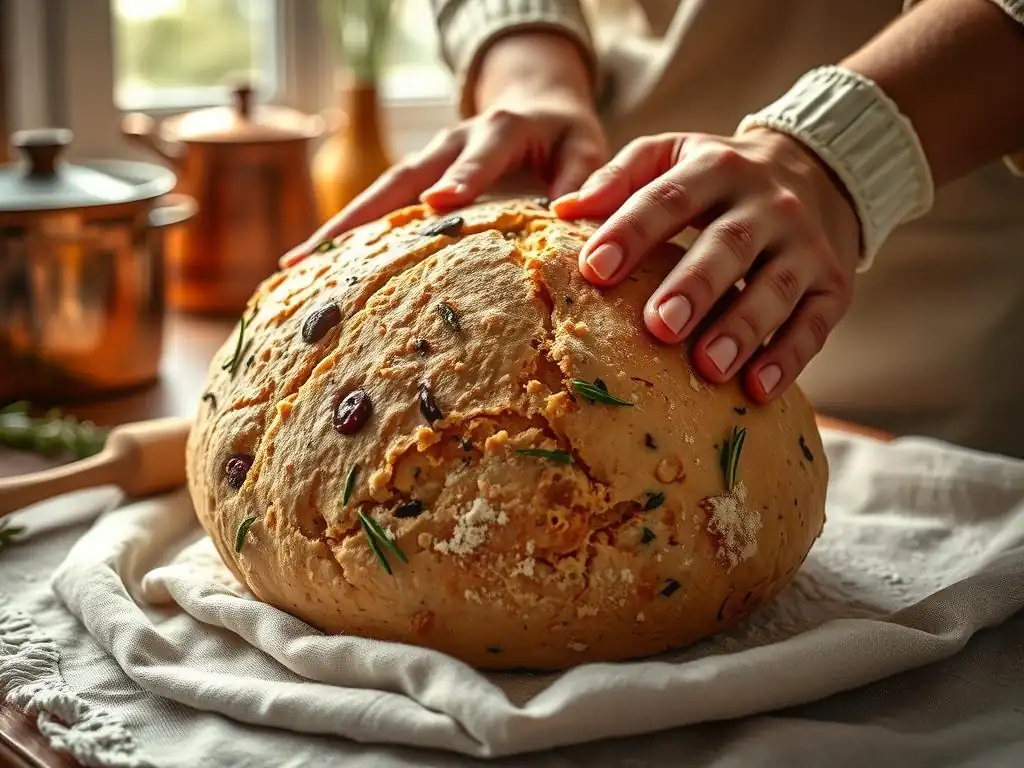
Once bulk fermentation is complete and your dough has increased sufficiently in volume, it's time to shape your loaf for your olive oil sourdough bread recipe. Gently turn the dough out onto a lightly floured or unoiled surface (the olive oil in the dough helps prevent sticking). Be careful not to degas it completely. Perform a pre-shape, forming the dough into a loose ball or log, and let it rest for 15-20 minutes.
This allows the gluten to relax, making the final shaping easier. Then, proceed with your final shaping method, whether it's a boule (round) or a bâtard (oval). The olive oil in the dough can make it slightly more extensible, so handle it with gentle tension.
For the final proof, place the shaped dough into a proofing basket (banneton) that has been well-floured with rice flour or a mix of rice and wheat flour. The olive oil adds richness, so ensuring the basket is adequately floured is important to prevent sticking. Cover the basket with a plastic bag or towel and refrigerate for 12-18 hours.
This cold proof significantly develops flavor and makes the dough easier to score. Alternatively, you can proof at room temperature for 2-4 hours, but the cold proof is highly recommended for superior flavor and handling, contributing significantly to a successful olive oil sourdough bread recipe.
Baking the Perfect Olive Oil Sourdough Bread
Baking is the final step in completing your olive oil sourdough bread recipe. Preheat your oven with your baking vessel inside (like a Dutch oven or baking stone with a steam setup) to a high temperature, typically 230-250°C (450-480°F), for at least 45-60 minutes. This ensures the vessel is scorching hot, providing the necessary initial burst of heat and steam for oven spring.
Carefully transfer the cold dough from the proofing basket onto a piece of parchment paper or directly into your hot vessel. Score the top of the dough with a sharp razor or lame to allow for controlled expansion during baking.
If using a Dutch oven, place the lid on and bake for 20-25 minutes. The trapped steam is crucial for a great crust and maximum oven spring. After this initial phase, remove the lid (if applicable) and reduce the oven temperature slightly, perhaps to 220°C (430°F).
Continue baking for another 25-35 minutes, or until the crust is a deep golden brown and the internal temperature of the loaf reaches around 95-100°C (205-210°F). The olive oil in the dough contributes to a lovely, slightly softer crust and a tender interior crumb. Let the finished olive oil sourdough bread cool completely on a wire rack before slicing to ensure the crumb sets properly.
Frequently Asked Questions
What are the primary benefits of using olive oil in sourdough bread, according to BakeWithEase?
Olive oil enhances the flavor and texture of sourdough bread. It also contributes to a moister crumb and a longer shelf life.
Can I substitute other oils for olive oil in the BakeWithEase Olive Oil Sourdough Bread Recipe?
While other oils can be used, BakeWithEase recommends olive oil for its unique flavor profile. Substituting may alter the taste and texture of the bread.
Is the BakeWithEase Olive Oil Sourdough Bread Recipe suitable for beginner bakers?
BakeWithEase aims to provide simple recipes for all levels. While sourdough can be challenging, the recipe includes step-by-step instructions to guide beginners.
How does the use of olive oil impact the health benefits of sourdough bread, according to BakeWithEase?
Olive oil contributes healthy fats to the bread, increasing its nutritional value. It complements the benefits already present in sourdough fermentation.
Where can I find the complete Olive Oil Sourdough Bread Recipe on BakeWithEase.com?
The complete recipe, with step-by-step guides and easy-to-find ingredients, can be found directly on the BakeWithEase website under the "Breads" or "Sourdough" sections.
Final Reflection: The Golden Thread of Olive Oil in Sourdough
The ancient art of sourdough bread making meets the vibrant health benefits and exquisite flavor of olive oil – a combination as relevant today as it was centuries ago. This powerful pairing offers not just a delicious loaf, but a conscious choice towards healthier eating and a deeper connection to traditional food practices. The rising popularity of sourdough, coupled with a growing awareness of the nutritional value of olive oil, makes this exploration more timely than ever.
The journey through this article has highlighted not only the technical aspects of incorporating olive oil into sourdough, but also the cultural significance of both ingredients. Olive oil, a staple in Mediterranean diets for millennia, represents more than just a cooking fat; it's a symbol of heritage, health, and culinary excellence. Sourdough, with its slow fermentation and complex flavors, embodies a similar sense of tradition and craftsmanship. Bread is the staff of life,
a simple phrase that resonates deeply when considering the nourishment and cultural importance of both olive oil and sourdough. The combination elevates both, creating a truly exceptional culinary experience.
Consider the possibilities: the subtle fruity notes of a good olive oil enhancing the tangy complexity of your sourdough, the added moisture leading to a softer crumb, and the potential health benefits of incorporating monounsaturated fats into your daily diet. You, the baker, now hold the power to transform a simple loaf of bread into a testament to mindful eating and culinary artistry.
Experiment with different olive oil varieties, explore variations in the recipe, and savor the journey of creating your own perfect olive oil sourdough. The rewards are far beyond a delicious loaf; they are a connection to tradition, a celebration of health, and a testament to your own culinary creativity.
Unleash the Power of Olive Oil in Your Baking!
Thanks for exploring the wonderful world of olive oil baking with us! You've now discovered how this healthy and flavorful ingredient can elevate your bread-making to new heights. Ready to put your new knowledge into action?
- Bake your first olive oil loaf: Try one of the recipes mentioned in the article – or experiment with your own! Note the difference in texture and taste.
- Share your baking journey: Post a picture of your olive oil creation on social media and tag #BakeWithEaseOliveOil. Let's inspire others!
- Explore different olive oil varieties: Next time you're at the market, try a different type of olive oil to see how it changes the flavor profile of your bread.
What unique flavor combinations will you create with olive oil in your next baking adventure?