
Mastering the Art of French Pastry Cream Fillings


Welcome to BakeWithEase, where baking dreams become delicious realities! Ever wondered about the secret to that perfectly smooth and decadent filling in your favorite French pastries? This week, we unlock the secrets of the classic French pastry cream filling recipe. Prepare to be amazed at how easy it is to elevate your baking with this versatile and essential technique – read on to discover the simple steps to creating a truly unforgettable filling!
- Mastering Pastry Cream: A Guide to Crème Pâtissière for Exceptional Desserts
- Introduction to Crème Pâtissière: A Foundational Baking Skill
- Classic Crème Pâtissière Recipe: A Detailed Guide
- Step-by-Step Instructions for Making Crème Pâtissière
- Flavor Variations for Crème Pâtissière
- Troubleshooting Common Crème Pâtissière Issues
- Applications of Crème Pâtissière in Baking
- Tips for Achieving Perfect Crème Pâtissière
- Advanced Crème Pâtissière Techniques
- Conclusion: Enhancing Your Desserts with Excellent Crème Pâtissière
-
Frequently Asked Questions
- What exactly is French pastry cream filling?
- What makes a good French pastry cream filling recipe?
- Can I use something other than vanilla extract to flavor my French pastry cream?
- How should I store leftover French pastry cream filling?
- What are some common pastries I can fill with French pastry cream?
- Final Reflection: The Enduring Allure of Crème Pâtissière
- Unlock Your Inner Pâtissier: Master French Pastry Cream!
Mastering Pastry Cream: A Guide to Crème Pâtissière for Exceptional Desserts
Introduction to Crème Pâtissière: A Foundational Baking Skill
What is Crème Pâtissière?
Crème pâtissière, often simply called pastry cream, is a rich, thick custard used as a filling in countless French and international desserts. At its core, it's a mixture of milk, sugar, egg yolks, and a starch thickener (usually cornstarch or flour), flavored most commonly with vanilla. Unlike lighter creams or sauces, crème pâtissière is cooked until it's substantial enough to hold its shape, making it ideal for piping or spreading within pastries. It's a fundamental component in classic French baking, providing a creamy, stable base for many sweet creations.
This versatile cream serves as the foundation for many other preparations, such as crème diplomate (pastry cream lightened with whipped cream), crème mousseline (pastry cream enriched with butter), and crème chiboust (pastry cream mixed with Italian meringue). Mastering a basic French pastry cream filling recipe opens the door to a vast repertoire of sophisticated desserts. While the ingredients are simple, the technique requires attention to detail to achieve the perfect smooth, glossy texture without lumps or scorching.
Why is Mastering Crème Pâtissière Important?
Mastering a reliable French pastry cream filling recipe is akin to learning essential knife skills for a chef; it's a foundational technique that underpins many other skills and recipes. A well-made crème pâtissière is smooth, rich, and holds its shape beautifully, making your tarts, éclairs, and cakes look and taste professional. Conversely, a poorly made cream – lumpy, runny, or scorched – can ruin an otherwise perfect pastry.
The ability to consistently produce excellent pastry cream provides confidence and flexibility in the kitchen. Once you have a solid basic recipe down, you can easily adapt it with different flavors, creating variations like chocolate, coffee, or citrus pastry cream. This single skill unlocks the potential to bake a wide variety of desserts, from simple fruit tarts to complex layered cakes and classic choux pastries like éclairs and cream puffs, all relying on that perfect creamy filling.
Classic Crème Pâtissière Recipe: A Detailed Guide
Essential Ingredients for Authentic Crème Pâtissière
Creating a classic French pastry cream filling recipe requires a few key ingredients, each playing a vital role in achieving the desired texture and flavor. Typically, a standard batch uses around 500ml (about 2 cups) of whole milk, which provides richness. You'll need approximately 100-125g (about 1/2 cup) of granulated sugar for sweetness and structure. The richness and classic yellow hue come from egg yolks, usually 4-6 yolks for this quantity of milk, providing emulsification and contributing to thickening.
The primary thickener is crucial. While some traditional recipes use all-purpose flour (around 40g or 1/4 cup), many modern recipes prefer cornstarch (around 30-40g or 1/4 cup) because it results in a more transparent, glossy finish and is less likely to impart a floury taste. A pinch of salt helps balance the sweetness. Finally, flavor is paramount; a vanilla bean scraped into the milk is traditional and provides the most authentic taste, though vanilla extract (about 1-2 teaspoons added at the end) is a common alternative.
Necessary Equipment for Successful Pastry Cream
Having the right tools on hand makes the process of making a French pastry cream filling recipe much smoother and helps ensure success. A medium-sized, heavy-bottomed saucepan is essential; the heavy base distributes heat evenly, significantly reducing the risk of scorching the bottom of the cream. A whisk is indispensable for continuously stirring the cream as it cooks, preventing lumps from forming and ensuring even thickening.
You'll also need a heatproof bowl for whisking the egg yolks and sugar, and for tempering. A fine-mesh sieve is highly recommended to strain the finished cream, catching any potential lumps or bits of cooked egg, resulting in a perfectly smooth texture. Measuring cups and spoons, as well as a rubber spatula for scraping down the sides of the pan, are also standard tools. Finally, a piece of plastic wrap is crucial for covering the cream while it cools, preventing a skin from forming on the surface.
Step-by-Step Instructions for Making Crème Pâtissière
Step 1: Infusing Flavor (Vanilla Bean Example)
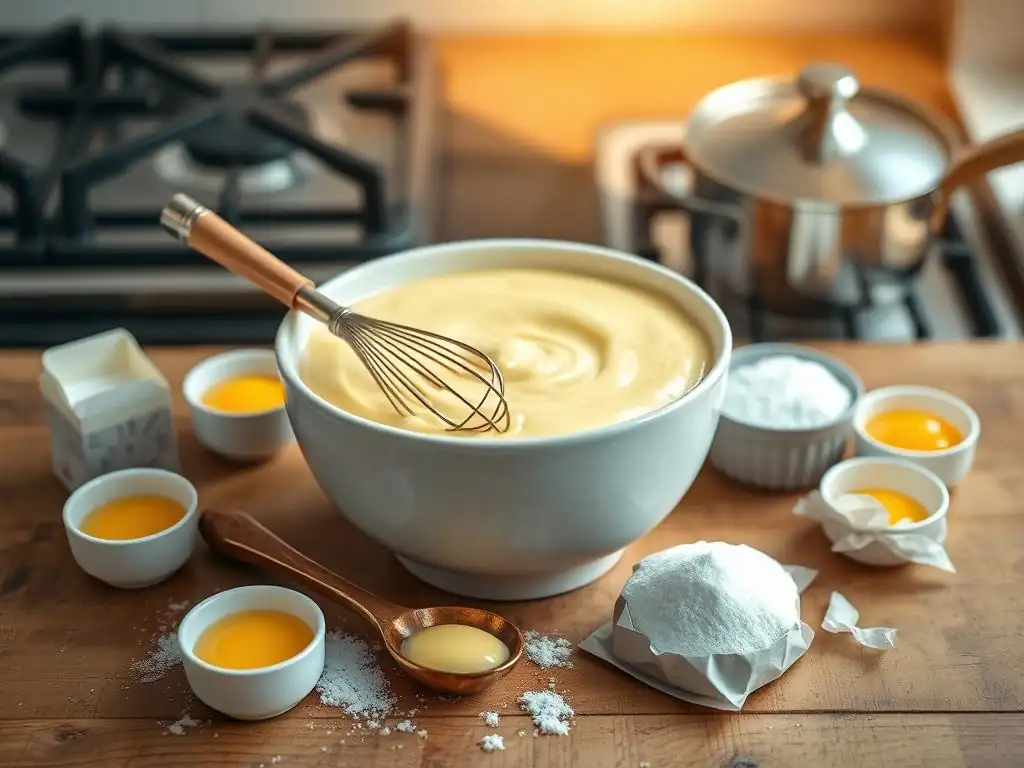
The first step in many classic French pastry cream filling recipes is to infuse the milk with your chosen flavor. If using a vanilla bean, slice it lengthwise with a sharp knife and scrape out the tiny black seeds using the back of the knife. Add both the seeds and the pod to the milk in your heavy-bottomed saucepan. If using other infusing ingredients like citrus zest or cinnamon sticks, add them now as well.
Gently heat the milk mixture over medium heat until it is just simmering around the edges – do not let it boil vigorously. This slow heating allows the vanilla bean (or other flavorings) to release their aromatic compounds into the milk effectively. Once it reaches a simmer, remove the pan from the heat, cover it, and let it steep for about 10-15 minutes to allow the flavor to deepen. If you're not using an infusing ingredient and just adding extract later, you can skip this steeping time and just heat the milk until warm.
Step 2: Preparing the Dry Ingredient Mixture
While the milk is steeping or heating, prepare the egg yolk and sugar mixture. In a heatproof bowl, whisk together the egg yolks and granulated sugar until the mixture is pale yellow and slightly thickened. This process, sometimes called "blanching" the yolks, helps dissolve the sugar and prevents it from "burning" the yolks when hot milk is added.
Next, whisk in the starch thickener – either cornstarch or flour – and the pinch of salt. Whisk until the mixture is completely smooth and no lumps of starch remain. This step is critical; any lumps of starch at this stage will likely result in a lumpy finished cream, even with straining. Some recipes also add a small amount of the cold milk here to create a smoother paste, making it easier to incorporate the hot milk in the next step.
Step 3: Tempering Egg Yolks and Creating the Base
Tempering is a crucial step to prevent the egg yolks from scrambling when combined with the hot milk. After the milk has steeped (if applicable), return the saucepan to low heat briefly to warm it back up if needed, then remove the vanilla bean pod (or other infusing ingredients). Slowly ladle about one-third to half of the hot milk into the egg yolk mixture while whisking constantly and vigorously.
This gradual addition of hot liquid gently raises the temperature of the egg yolks without cooking them instantly. Continue whisking until the mixture is smooth and well combined. This tempered egg-milk mixture is now ready to be added back to the remaining milk in the saucepan, forming the base for your French pastry cream filling recipe.
Step 4: Cooking the Cream to the Correct Consistency
Pour the tempered egg yolk mixture back into the saucepan with the remaining hot milk. Place the pan over medium heat. Now comes the most critical part: cooking and whisking. Whisk constantly, reaching into the corners of the pan to prevent sticking and scorching. The mixture will initially be thin, but as it heats, the starch will activate, and the cream will begin to thicken noticeably.
Continue whisking and cooking after the cream thickens and comes to a boil. It's important to boil the cream for at least 1-2 minutes while whisking to ensure the starch is fully cooked and activated, which prevents a raw, starchy taste and ensures the cream reaches its maximum thickness and stability. The cream should be very thick, coating the back of a spoon heavily and holding soft peaks if you lift the whisk. Do not rush this step; undercooking is a common cause of runny pastry cream.
Step 5: Cooling and Storing the Finished Crème Pâtissière
Once the cream is cooked to the proper thickness, remove the pan from the heat immediately. If using vanilla extract, whisk it in now. For the smoothest possible texture, strain the hot cream through a fine-mesh sieve into a clean bowl. This step removes any tiny lumps of cooked egg or starch that might have formed.
Cooling correctly is vital. To prevent a skin from forming on the surface and to cool it rapidly (which helps prevent bacterial growth), immediately cover the surface of the hot cream directly with plastic wrap, pressing it down so it touches the entire surface. This creates a seal.
Allow the cream to cool slightly at room temperature for about 15-20 minutes, then transfer it to the refrigerator to chill completely, ideally for at least 2-3 hours, until cold and set. Properly stored in an airtight container with the plastic wrap still touching the surface, your French pastry cream filling recipe will keep in the refrigerator for 3-4 days.
Flavor Variations for Crème Pâtissière
Vanilla Bean Crème Pâtissière Recipe
The classic French pastry cream filling recipe is flavored with vanilla, offering a pure, aromatic richness that complements almost any dessert. To achieve the best vanilla flavor, using a real vanilla bean is highly recommended. You'll need one plump bean for a standard 500ml milk batch. Split the bean, scrape the seeds into the milk along with the pod, and heat gently to infuse, as described in Step 1 of the basic instructions.
Once the cream is cooked and strained, the pure, warm notes of vanilla will shine through. This vanilla bean pastry cream recipe is the perfect base for fruit tarts, éclairs, cream puffs, and as a simple yet elegant filling for cakes or pastries. The tiny black specks of vanilla seeds (often called "vanilla caviar") are a visual hallmark of authentic, high-quality crème pâtissière.
Chocolate Crème Pâtissière Recipe
Transforming the basic French pastry cream filling recipe into a rich chocolate version is simple and incredibly rewarding. After your vanilla-infused milk (or plain milk if skipping vanilla) has heated and steeped, melt about 100-150g (around 3.5 to 5 ounces) of finely chopped good-quality dark or semi-sweet chocolate in a separate bowl.
Once the pastry cream is cooked and strained according to the basic steps, add the melted chocolate to the hot cream. Whisk thoroughly until the chocolate is completely melted and incorporated, resulting in a smooth, glossy, chocolate-flavored cream. This chocolate pastry cream recipe is excellent for filling chocolate éclairs, tarts, or layering in chocolate cakes. Adjust the amount and type of chocolate based on your desired intensity.
Coffee Crème Pâtissière Recipe
For coffee lovers, a coffee-infused French pastry cream filling recipe adds a sophisticated bitterness and aroma. There are a couple of ways to achieve this. One method is to add about 2-3 tablespoons of instant espresso powder or very strong instant coffee granules directly to the milk along with the sugar at the beginning of the process. Heat and proceed with the recipe as usual.
Alternatively, you can infuse the milk with coffee beans. Add about 1/4 cup of lightly crushed coffee beans to the milk and heat gently, then steep for 15-20 minutes before straining out the beans and proceeding with the recipe. A third option is to add about 1-2 tablespoons of strong brewed espresso or coffee extract to the finished, strained hot cream, whisking until combined. This coffee pastry cream recipe pairs wonderfully with chocolate or caramel desserts.
Citrus-Infused Crème Pâtissière (Lemon or Orange)
A bright and zesty citrus-infused French pastry cream filling recipe is perfect for complementing fruit tarts or lighter pastries. The easiest way to infuse citrus flavor is by adding the zest of one or two lemons or oranges to the milk at the very beginning of the process. Use a vegetable peeler or microplane to remove only the colored part of the peel, avoiding the bitter white pith.
Add the zest strips or finely grated zest to the milk in the saucepan and heat gently, allowing it to steep for about 15-20 minutes off the heat before straining out the zest and proceeding with the recipe. The heat helps extract the essential oils from the zest, imbuing the milk with vibrant citrus flavor. This citrus pastry cream recipe is particularly delightful in lemon tarts or paired with berries.
Troubleshooting Common Crème Pâtissière Issues
Fixing Lumpy Pastry Cream
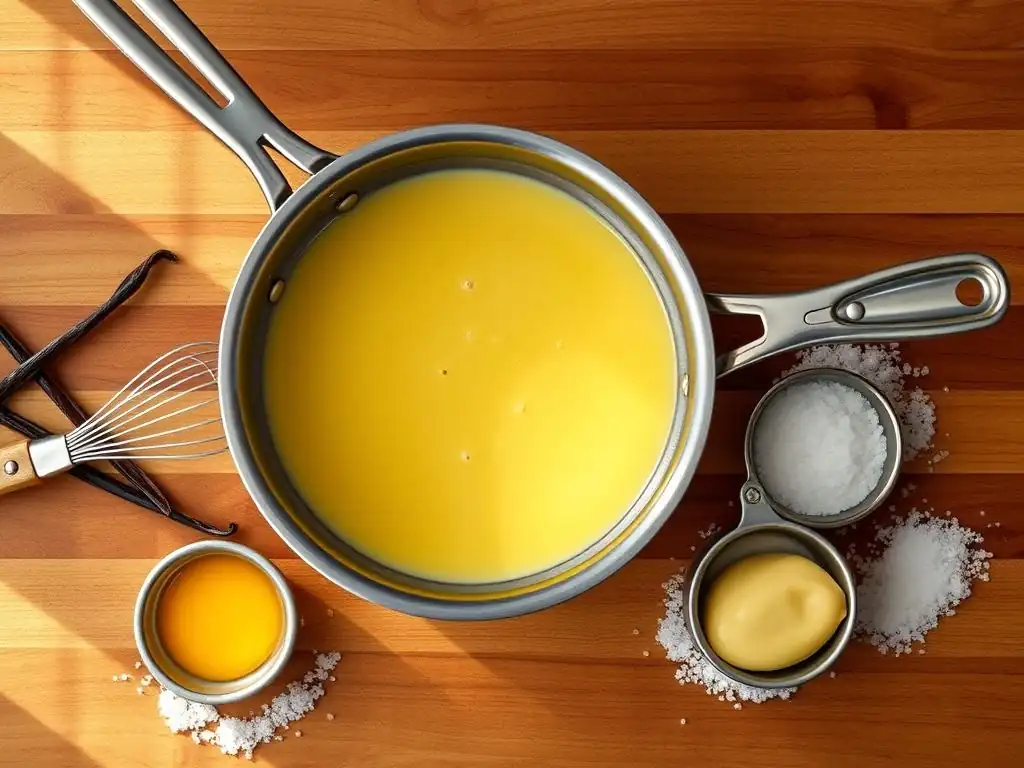
One of the most frustrating issues when making a French pastry cream filling recipe is ending up with a lumpy texture. This often happens if the starch wasn't fully incorporated into the egg yolks initially, or if the cream wasn't whisked constantly and vigorously while cooking, allowing parts to seize or overcook. If your cooked cream has lumps, don't despair!
The easiest and most effective fix is to strain the warm cream immediately after cooking through a fine-mesh sieve into a clean bowl. Push the cream through the sieve using a rubber spatula; this action will break up most small lumps and leave behind any larger ones or bits of cooked egg. For stubborn lumps or a desire for extra smoothness, you can also carefully blend the warm cream using an immersion blender or transfer it to a regular blender (making sure to vent the lid carefully for steam) until smooth.
Thickening Runny Pastry Cream
A runny French pastry cream filling recipe usually indicates that the cream wasn't cooked long enough or at a high enough temperature for the starch to fully activate and gelatinize. Starch requires boiling for a minute or two to reach its maximum thickening potential. If your cream is too thin after cooling, gently reheat it in a clean saucepan over medium-low heat, whisking constantly.
Bring the cream back to a gentle boil, whisking vigorously, and let it boil for 1-2 minutes. It should thicken significantly. If it's still not thick enough, you may need to make a slurry of 1-2 tablespoons of cornstarch mixed with an equal amount of cold milk or water, whisk this slurry into the simmering cream, and continue to boil and whisk for another minute or two until thickened. Be careful not to overcook, as this can sometimes break the cream.
Preventing and Handling Scorched Pastry Cream
Scorching is a common pitfall when making a French pastry cream filling recipe, resulting in an unpleasant burnt taste and potentially ruining the batch. It occurs when the bottom layer of the cream overheats and sticks to the pan. Using a heavy-bottomed saucepan helps distribute heat more evenly, reducing this risk. More importantly, constant and vigorous whisking while the cream is on the heat is absolutely essential, ensuring the cream doesn't sit stagnant at the bottom of the pan.
If you do notice scorching (often by a brownish layer stuck to the bottom of the pan or a faint burnt smell), immediately remove the pan from the heat. Do not scrape the bottom of the pan into the cream. Carefully pour the unscorched cream from the top into a clean bowl, leaving behind the burnt layer.
Strain the cream through a fine-mesh sieve to catch any small burnt bits that might have transferred. While you can salvage the unscorched portion, if the burnt flavor is strong, it may be best to start over. Prevention through constant whisking is key!
Applications of Crème Pâtissière in Baking
Filling Éclairs and Cream Puffs
One of the most classic uses for a French pastry cream filling recipe is in choux pastry creations like éclairs and cream puffs (profiteroles). The stability of a well-made crème pâtissière makes it the perfect filling that won't collapse or weep inside the delicate choux shells. Once the choux shells are baked and cooled, they are traditionally filled by piping the cold pastry cream into them.
For éclairs, holes are typically made on the underside or ends, and the cream is piped in using a pastry bag fitted with a plain or star tip until the éclair feels heavy and full. Cream puffs can be sliced in half horizontally and filled generously, or small holes can be made at the bottom for piping. A standard batch of crème pâtissière (using 500ml milk) can fill approximately 15-20 standard-sized éclairs or 20-30 cream puffs, depending on their size and how generously they are filled.
Crème Pâtissière in Fruit Tarts
Crème pâtissière forms the essential base layer in many beautiful French fruit tarts. It provides a rich, creamy contrast to the crisp pastry shell and the fresh, often slightly tart, fruit arranged on top. After baking and cooling a sweet pastry crust (pâte sucrée) or shortcrust pastry shell, the chilled French pastry cream filling recipe is spread evenly into the bottom of the tart shell.
The cream acts as a moisture barrier, preventing the fruit from making the bottom crust soggy. Approximately 300-400g of pastry cream is typically needed to fill a standard 9-inch tart shell. Fresh fruits like strawberries, raspberries, kiwi, or sliced peaches are then artfully arranged on top of the cream. Sometimes the fruit is glazed with a warm apricot or red currant glaze for shine and preservation.
Using Crème Pâtissière in Layer Cakes
While buttercreams are perhaps more common, a French pastry cream filling recipe can be a delightful and slightly lighter option for filling layer cakes, particularly those with fruit or lighter sponge layers. It adds a classic bakery-style touch and pairs wonderfully with vanilla, fruit, or even chocolate cakes. The pastry cream should be fully chilled and relatively firm before spreading between cake layers.
To use it in a layer cake, ensure the cake layers are completely cooled. Place the first layer on your serving plate or cake board. Spread a generous, even layer of chilled crème pâtissière over the cake, leaving a small border if you plan to frost the outside with something else. Repeat with subsequent layers. A standard 500ml batch of pastry cream is usually sufficient for filling the layers of an 8-inch or 9-inch two or three-layer cake.
Crème Pâtissière in Mille-Feuille
Mille-feuille, meaning "a thousand leaves," is a classic French pastry composed of layers of crisp puff pastry and rich pastry cream. It's an elegant dessert where the texture contrast between the flaky pastry and the smooth, creamy filling is paramount. A firm, well-set French pastry cream filling recipe is crucial here to ensure clean layers when the pastry is sliced.
Baked puff pastry sheets are cooled and often trimmed into even rectangles. Chilled crème pâtissière is then spread thickly and evenly onto one layer of puff pastry. Another layer of pastry is placed on top, followed by more cream, and finally, a third layer of pastry, often topped with fondant icing or a dusting of powdered sugar. Approximately 200-250g of pastry cream is needed per standard mille-feuille layer, meaning a 500ml batch can make enough filling for a medium-sized mille-feuille.
Tips for Achieving Perfect Crème Pâtissière
Achieving a Smooth, Silky Texture
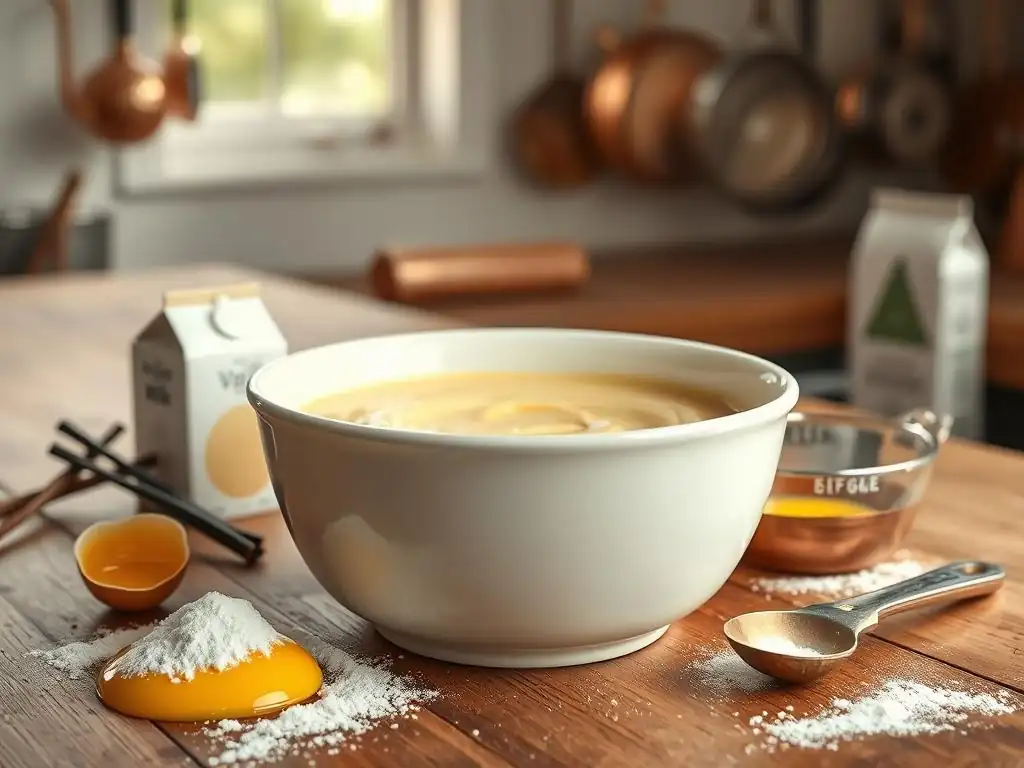
The hallmark of an excellent French pastry cream filling recipe is its smooth, silky, and glossy texture, free from any graininess or lumps. Achieving this requires attention at several stages. First, ensure your starch is fully incorporated into the egg yolks and sugar before adding the hot milk. Whisking vigorously and continuously while the cream cooks is non-negotiable; this prevents the starch or eggs from clumping or sticking.
Cooking the cream for the full 1-2 minutes of boiling ensures the starch is properly hydrated and activated, contributing to a smooth finish. Finally, straining the hot cream through a fine-mesh sieve after cooking is a simple step that acts as an insurance policy, removing any small imperfections and guaranteeing that coveted silky texture. After chilling, whisk the cold cream gently to loosen it before using, which also helps restore silkiness if it has become too stiff.
Preventing Skin Formation
Pastry cream, like many custards, tends to form an unappetizing skin on its surface as it cools if left exposed to the air. This skin is dense and rubbery and can introduce lumps into your smooth French pastry cream filling recipe when you try to stir it in. The best way to prevent this is to cover the cream immediately after cooking and straining.
While the cream is still hot, press a piece of plastic wrap directly onto the surface of the cream, ensuring there are no air pockets between the cream and the wrap. The plastic wrap should be in full contact with the entire surface. This creates a barrier that prevents evaporation and skin formation. Leave the plastic wrap in place while the cream cools at room temperature and then chills in the refrigerator.
Proper Storage for Freshness
Proper storage is essential to maintain the quality and safety of your French pastry cream filling recipe. Because it contains eggs and dairy, crème pâtissière is perishable and must be kept refrigerated. As mentioned, after cooking and straining, cover the surface of the warm cream directly with plastic wrap to prevent a skin from forming.
Once it has cooled slightly at room temperature, transfer the covered bowl to the refrigerator. For best quality and safety, chilled pastry cream should be used within 3-4 days. Always store it in an airtight container in the coldest part of your refrigerator. Before using the chilled cream, give it a gentle whisk to loosen it and restore its smooth consistency, as it will firm up considerably upon chilling.
Advanced Crème Pâtissière Techniques
Crème Diplomate: Adding Whipped Cream
Crème Diplomate, also known as Crème Légère (light cream), is a lighter, airier version of a standard French pastry cream filling recipe. It's made by folding whipped cream into chilled pastry cream. This technique results in a cream that is less dense and richer than plain pastry cream, making it perfect for filling delicate pastries, fruit tarts where a lighter texture is desired, or as a filling for sponges and cakes.
To make it, prepare your basic crème pâtissière and chill it thoroughly until it is very cold and firm. In a separate bowl, whip cold heavy cream (typically about half the volume of your pastry cream, e.g., 250ml whipped cream for a 500ml milk pastry cream batch) with a little sugar and vanilla until medium-firm peaks form. Gently whisk the chilled pastry cream to loosen it, then fold the whipped cream into the pastry cream in two or three additions using a spatula, being careful not to deflate the mixture, until it is evenly combined and airy.
Crème Chiboust: Incorporating Italian Meringue
Crème Chiboust is a more complex variation of the French pastry cream filling recipe, created by combining crème pâtissière with Italian meringue (meringue made by whisking hot sugar syrup into egg whites). This results in a very light, airy, and stable cream, often used for filling St. Honoré cakes or tarts that require a baked meringue topping, as it can be gently browned under a broiler or with a torch.
To make Crème Chiboust, prepare your crème pâtissière and keep it warm (around 55-60°C or 130-140°F). Simultaneously, prepare an Italian meringue by whisking egg whites and pouring hot sugar syrup (cooked to the soft-ball stage, about 118°C or 245°F) into them until the meringue is glossy and stiff. Gently whisk a small amount of the warm pastry cream into the Italian meringue to loosen it, then fold the meringue into the remaining warm pastry cream until fully incorporated. The warmth of the pastry cream helps prevent the meringue from deflating.
Crème Mousseline: Enriching with Butter
Crème Mousseline is a rich, smooth, and stable cream made by whisking a significant amount of softened butter into chilled crème pâtissière. This process emulsifies the butter into the cream, creating a velvety texture that is firmer than plain pastry cream when chilled, making it ideal for piping intricate decorations or filling desserts like Paris-Brest or Fraisier cake (French strawberry cake).
To create Crème Mousseline, prepare your French pastry cream filling recipe and chill it thoroughly. Ensure the butter you plan to incorporate is at cool room temperature, softened but not melted (typically around 150-200g of butter for a 500ml milk batch of pastry cream). Whisk the chilled pastry cream until smooth and loosened.
Then, gradually add the softened butter, piece by piece, whisking continuously with a stand mixer (using the whisk attachment) or a hand mixer on medium-high speed. Continue whisking until all the butter is incorporated and the cream is light, fluffy, and increased in volume, resembling a very smooth buttercream.
Conclusion: Enhancing Your Desserts with Excellent Crème Pâtissière
Mastering the French pastry cream filling recipe is a genuinely rewarding skill for any baker. It's a foundation that opens up a world of classic desserts, from the humble cream puff to the elegant mille-feuille. While the process requires precision and attention, particularly during the cooking stage, the result is a versatile, delicious cream that elevates countless sweet creations.
By understanding the role of each ingredient and following the steps carefully, you can consistently produce a smooth, rich, and perfectly set crème pâtissière. Don't be discouraged by initial attempts; practice makes perfect. Once you've mastered the basic technique, experimenting with flavor variations and advanced preparations like Crème Diplomate or Mousseline will further expand your baking repertoire. So grab your whisk, embrace the process, and get ready to fill your kitchen with the delightful possibilities unlocked by this fundamental French classic.
Frequently Asked Questions
What exactly is French pastry cream filling?
French pastry cream, also known as crème pâtissière, is a thick, rich custard used to fill pastries. It's made with milk, sugar, eggs, flour or cornstarch, and flavorings like vanilla extract.
What makes a good French pastry cream filling recipe?
A good recipe should have clear instructions, use readily available ingredients, and result in a smooth, lump-free cream. It should also provide guidance on achieving the correct consistency for filling pastries.
Can I use something other than vanilla extract to flavor my French pastry cream?
Absolutely! While vanilla is classic, you can use other extracts like almond or lemon. You can also infuse the milk with citrus zest, coffee beans, or spices for a different flavor profile.
How should I store leftover French pastry cream filling?
Store leftover cream in an airtight container in the refrigerator for up to 3 days. Cover the surface with plastic wrap to prevent a skin from forming.
What are some common pastries I can fill with French pastry cream?
French pastry cream is incredibly versatile! It's used in éclairs, cream puffs, tarts, and even as a filling for cakes and donuts.
Final Reflection: The Enduring Allure of Crème Pâtissière
The perfect French pastry cream filling isn't just a recipe; it's a gateway to culinary artistry. From humble beginnings as a simple custard, it has evolved into a cornerstone of countless delectable desserts, its creamy texture and subtle sweetness enhancing everything from éclairs to profiteroles. Its enduring popularity speaks volumes about its versatility and timeless appeal.
The journey of mastering crème pâtissière is more than just following a recipe; it's about understanding the delicate balance of ingredients and the patience required to achieve that perfect silky smooth texture. It's a testament to the power of tradition, a connection to generations of pastry chefs who have perfected this technique. As Julia Child once said, Find something you're passionate about and keep tremendously interested in it.
This sentiment perfectly encapsulates the dedication required to truly master this classic filling, and the joy it brings in return.
Now, it's your turn. Don't just read this recipe; experience it. Embrace the challenge, savor the process, and allow the creation of this exquisite filling to become a moment of mindful culinary exploration. The reward? Not just a delicious dessert, but a deeper appreciation for the artistry and precision that goes into creating something truly special. So, gather your ingredients, and let the magic begin.
Unlock Your Inner Pâtissier: Master French Pastry Cream!
Thanks for taking the time to explore the delightful world of French pastry cream! We hope you've gained valuable insights and inspiration. Now it's time to put your new knowledge into practice.
Here's how you can take the next step:
- Whip up your first batch of Crème Pâtissière: Use our guide as your recipe roadmap and experience the silky-smooth perfection firsthand. Don't be afraid to experiment with flavors!
- Share your creation: Show off your pastry prowess on social media – use #BakeWithEaseCreme and tag us! We’d love to see your masterpiece.
- Explore variations: Dive deeper into the versatility of crème pâtissière. Try adding different extracts, fruits, or even chocolate! What unique flavor profile will you create?
Ready to transform your baking game? What exciting flavor combination will you try first?