
Temperature Control: Key to Achieving Maximum Puff in Pastry

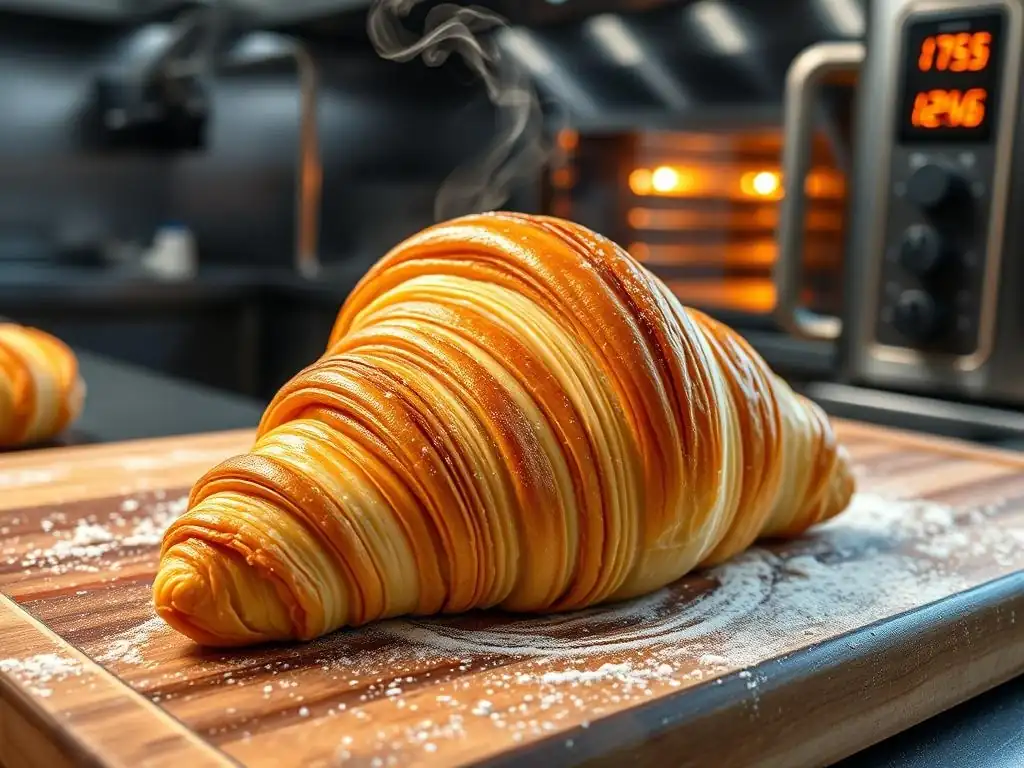
Welcome to BakeWithEase, your companion in the delightful world of baking! Ever wondered what separates good pastry from exquisite pastry? It often boils down to a single, crucial element: temperature. Dive into "Temperature Control: Key to Achieving Maximum Puff in Pastry" and unlock the secrets to perfecting pastry puff temperature control, a skill that will elevate your baking from amateur to artisan. Are you ready to master the heat and achieve pastry perfection? Let's get baking!
- Introduction to Perfecting Pastry Puff Temperature Control
- The Ideal Temperature Zones for Puff Pastry
- Mastering Ingredient Temperatures for Maximum Puff
- Techniques for Maintaining the Right Temperature Throughout the Puff Pastry Process
- Troubleshooting Temperature-Related Puff Pastry Problems
- Baking for Puff: Oven Temperature Control is Critical
- Advanced Temperature Control Techniques for Puff Pastry
- Recipes and Temperature Guidance for Specific Puff Pastry Applications
- Conclusion: The Art and Science of Temperature Control in Puff Pastry
-
Frequently Asked Questions
- How important is temperature control when making puff pastry?
- What is the ideal temperature range for butter when making puff pastry?
- How does the ambient temperature of my kitchen affect puff pastry success?
- What happens if my puff pastry dough gets too warm during the lamination process?
- What are some tips for keeping puff pastry dough cool while working with it?
- Final Reflection: The Art and Science of the Perfect Puff
- Unlock Flaky Perfection: Master Your Puff Pastry
Introduction to Perfecting Pastry Puff Temperature Control
Why Temperature Matters for Puff Pastry Success
Mastering the art of puff pastry hinges significantly on one critical factor: temperature control. Unlike many other baked goods where slight variations might be forgiving, puff pastry is a delicate dance between dough and butter, and their respective temperatures dictate the final outcome – specifically, how much glorious puff you achieve. Getting the temperature right ensures that the distinct layers of butter remain solid during the rolling and folding process, creating the crucial separation required for leavening in the hot oven.
Without precise temperature management, your butter can either melt into the dough, resulting in a heavy, bread-like texture, or be too hard, causing it to break through the dough layers. Achieving the desired light, airy, and incredibly flaky result that defines great puff pastry is directly tied to maintaining the optimal temperature throughout every stage, from mixing the dough to the final bake. It's a fundamental skill in perfecting pastry puff temperature control.
Understanding the Science Behind Puff Pastry Lamination and Temperature
The magic of puff pastry lies in its lamination – the process of creating hundreds, or even thousands, of alternating thin layers of dough and butter through repeated rolling and folding (turns). When the pastry hits a hot oven, two key things happen: the water in the dough turns rapidly into steam, and the cold butter melts and then essentially fries the surrounding dough layers. The steam is trapped between the butter layers, forcing them apart and causing the dough to rise dramatically.
Temperature is paramount here because the butter needs to stay solid and distinct from the dough layers until it enters the oven. Butter typically melts around 30-35°C (86-95°F). If your dough or butter gets too warm during preparation, the butter will start to soften and blend with the dough, destroying the distinct layers necessary for steam leavening. Perfecting pastry puff temperature control is all about keeping those layers separate and intact until the heat triggers the transformation into flaky goodness.
The Ideal Temperature Zones for Puff Pastry
The Goldilocks Zone: Defining the Optimal Temperature Range for Puff Pastry
For successful puff pastry lamination, the dough itself needs to be cool and firm, but still pliable enough to roll without the butter cracking. The ideal temperature range for working with puff pastry dough is generally between 4°C and 10°C (40°F and 50°F). Within this "Goldilocks Zone," the butter layers remain solid and separate, allowing for clean folds and turns without the butter squeezing out or melting into the dough.
Working above this temperature range risks softening the butter prematurely, leading to messy turns and compromised layers. Conversely, if the dough is too cold, below 4°C (40°F), it becomes stiff, difficult to roll, and the butter layers are prone to cracking and breaking, which also disrupts the lamination structure. Finding and maintaining this narrow window is crucial for perfecting pastry puff temperature control during the crucial lamination phase.
Temperature's Impact on Butter Layers in Pastry
The state of the butter is arguably the single most temperature-sensitive element in puff pastry. The goal is to have butter that is firm enough to be rolled into very thin sheets alongside the dough, yet flexible enough not to shatter. Butter straight from the refrigerator is usually too hard.
It needs to be slightly softened to a state known as "plastic," where it can bend without breaking. This is typically achieved by letting it sit at cool room temperature for a short period or gently warming it, aiming for an internal temperature perhaps around 8-12°C (46-54°F) before encasing it in the dough.
Once the butter block is enclosed and you begin the turns, maintaining the overall dough temperature within the 4-10°C (40-50°F) range ensures the butter layers remain distinct. If the dough warms up, say to 15°C (59°F), the butter will likely be soft enough to start integrating with the dough during rolling, diminishing the separation needed for puff. This precise management of the butter's temperature relative to the dough is fundamental to perfecting pastry puff temperature control.
Mastering Ingredient Temperatures for Maximum Puff
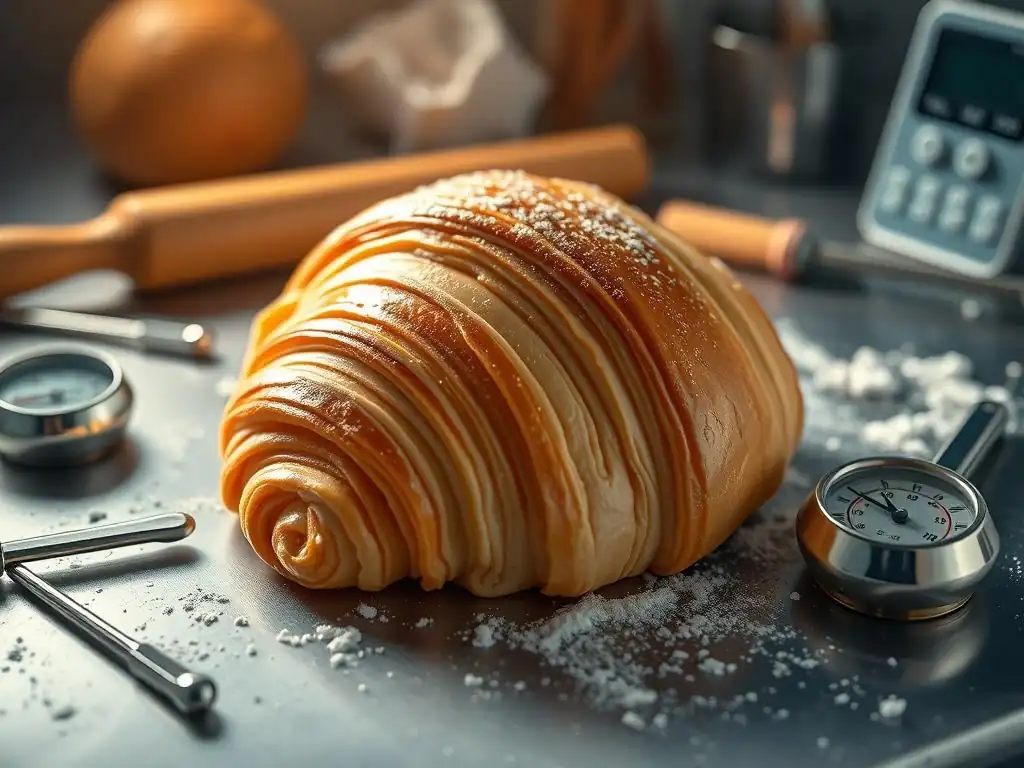
Keeping Butter Cold: The Cornerstone of Flaky Pastry
The quality and temperature of your butter are paramount. High-quality butter with a higher fat content (often 82% or more) is preferred as it contains less water, leading to flakier results. More importantly, this butter must be kept cold and firm throughout the dough preparation process. Starting with butter that is properly chilled, ideally straight from the refrigerator around 4-8°C (40-46°F), is the first step before slightly softening it to the plastic stage for initial incorporation.
Once the butter is enclosed in the dough, the focus shifts to keeping the entire dough mass cold. This requires frequent chilling between turns. If the butter warms up during rolling, it will smear into the dough rather than staying in distinct layers. Think of it like trying to build a house with melting bricks – it simply won't work. Maintaining this cold environment is non-negotiable for perfecting pastry puff temperature control.
Tips for Maintaining Butter Temperature During Dough Preparation
- Chill Everything: Before you even start, chill your flour, water, and even your mixing bowl in the refrigerator for 30-60 minutes. A cold starting point helps keep the dough temperature down.
- Work on a Cold Surface: If possible, use a marble or granite pastry slab, which naturally stays cooler than wood or laminate. Alternatively, chill your work surface by placing ice packs underneath or rubbing ice over it (and then drying it thoroughly).
- Cut Your Butter Cold: Cube your butter while it's very cold. If softening a block for enclosing, do so minimally until it reaches that plastic state, and work quickly.
- Minimize Handling: Your hands transfer heat. Use a bench scraper or rolling pin as much as possible instead of your hands to move or shape the dough.
- Work in a Cool Room: If your kitchen is warm, consider working during the coolest part of the day or using air conditioning if available. Even a few degrees difference in ambient temperature can impact your dough.
Water Temperature: Its Role in Gluten Development and Dough Consistency
While the focus is often on cold butter, the temperature of the water used in the dough also plays a role. Typically, cold water is preferred for puff pastry dough. Cold water slows down gluten development, resulting in a more extensible dough that is easier to roll thinly without snapping back excessively. It also helps keep the overall dough temperature low from the start, which is essential for maintaining the butter's integrity.
Using cold water, ideally around 4°C (40°F), ensures that the dough is cool from the initial mix. While slightly warmer water (lukewarm) can sometimes be used if you need to develop a little more gluten for structure, for classic puff pastry aiming for maximum puff and flakiness, colder is generally better. It contributes to the overall goal of keeping the dough temperature in that crucial 4-10°C (40-50°F) range during lamination.
Flour and Room Temperature Considerations
Even seemingly minor factors like the temperature of your flour and the ambient temperature of your kitchen can influence the final dough temperature. Flour stored in a warm pantry will raise the dough temperature more quickly than flour stored in a cooler spot. Similarly, working in a warm kitchen (say, above 24°C / 75°F) makes it significantly harder to keep the butter and dough cool compared to working in a cooler environment (ideally below 20°C / 68°F).
To combat warmer conditions, you can chill your flour in the refrigerator or freezer for 30-60 minutes before mixing. This helps lower the initial dough temperature. While you can't always control your kitchen's thermostat, being aware of how the ambient temperature affects your dough allows you to adjust your process – perhaps chilling the dough more frequently and for longer durations between turns when the room is warm. These small considerations are part of mastering perfecting pastry puff temperature control.
Techniques for Maintaining the Right Temperature Throughout the Puff Pastry Process
Refrigeration Strategies: When and How to Chill Your Dough
Frequent and adequate chilling is non-negotiable for puff pastry success. After each turn (folding sequence), the dough needs time in the refrigerator to relax the gluten and, more importantly, re-chill the butter and dough back into that optimal 4-10°C (40-50°F) range. A typical chilling time between turns is 30 to 60 minutes, though this can vary depending on the thickness of the dough, the efficiency of your refrigerator, and the ambient temperature of your kitchen.
Properly wrapping the dough before chilling is also important. Use plastic wrap pressed directly against the surface to prevent a skin from forming, which can lead to cracks. Chill the dough on a flat surface in the coldest part of your refrigerator. Don't rush this step; insufficient chilling is one of the most common reasons for butter leakage and poor puff. Patience in chilling is key to perfecting pastry puff temperature control.
Working Quickly: Minimizing Butter Softening
Time is of the essence when working with puff pastry dough outside of refrigeration. The longer the dough sits at room temperature, the more the butter softens. Aim to complete each rolling and folding turn efficiently, taking no more than 5-10 minutes if possible. Have your workspace prepared, flour readily available, and know the sequence of steps before you start rolling.
If you feel the dough starting to warm or the butter becoming too soft and pliable, stop immediately and return the dough to the refrigerator for another 30-60 minute chill. It's better to add an extra chilling session than to force a turn with warm dough, which will compromise your layers. Speed and efficiency during the active working phases are critical components of perfecting pastry puff temperature control.
Handling Techniques: Avoiding Overworking the Dough
Excessive handling is another source of unwanted heat transfer to the dough. Every time you touch, knead, or manipulate the dough more than necessary, you are adding warmth from your hands and the friction of movement. For puff pastry, the initial dough mix should be just enough to bring the ingredients together, not kneaded like bread dough.
During rolling and folding, use firm, even pressure with the rolling pin, but avoid excessive rolling back and forth or unnecessary shaping with your hands. Trim edges cleanly with a sharp knife or pastry wheel rather than pinching or pulling. Minimizing contact and using appropriate tools helps keep the dough temperature stable and protects those precious butter layers, contributing significantly to perfecting pastry puff temperature control.
Dough Too Warm: Causes and Solutions
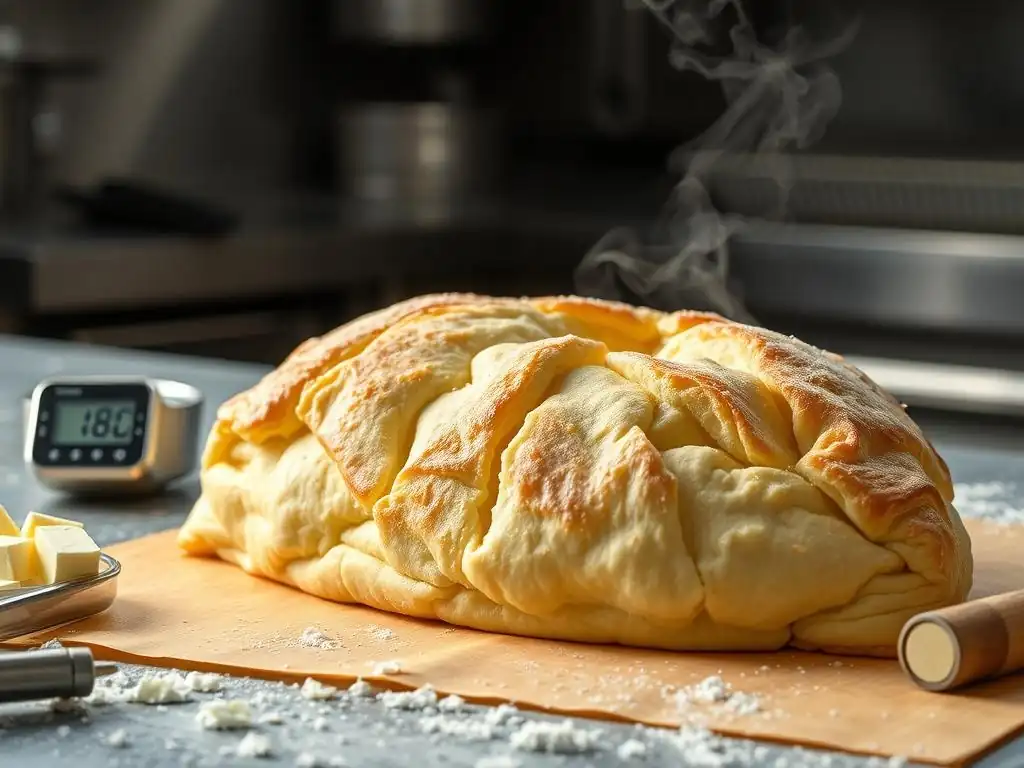
One of the most common puff pastry problems is dough that is too warm. This often manifests as sticky dough, butter squeezing out from the edges during rolling, or the dough feeling slack and difficult to handle. Causes include insufficient chilling between turns, working in a warm environment, or taking too long during rolling and folding.
The immediate solution is to stop working with the dough and return it to the refrigerator. Wrap it well and chill it thoroughly, ideally for at least 60 minutes, or until it feels firm and cool to the touch again (ideally 4-10°C / 40-50°F). If butter has already leaked significantly, you may need to carefully pat it back in or trim the edges, understanding that the final puff might be slightly compromised in those areas. Prevention through diligent chilling is far easier than fixing a warm dough issue.
Dough Too Cold: Causes and Solutions
While less common than warm dough, puff pastry dough that is too cold can also present problems. When the dough is straight out of a very cold refrigerator (below 4°C / 40°F), it can be stiff and difficult to roll. The cold butter layers might crack or break into pieces rather than rolling out smoothly with the dough, creating gaps in the lamination structure.
If your dough feels too stiff and brittle, let it sit at cool room temperature for just a few minutes (5-15 minutes usually suffices) until it becomes slightly more pliable. You should be able to gently press an indentation into it. Be careful not to let it warm up too much; you want it firm but not rigid. Rolling very gently at first can also help prevent cracking when the dough is on the colder side of the optimal range. Adjusting based on the dough's feel is part of perfecting pastry puff temperature control.
Identifying and Correcting Common Temperature Mistakes in Puff Pastry
Many puff pastry woes can be traced back to temperature. Here are some common mistakes and how to correct them:
- Mistake: Butter is too hard or too soft when initially encased.
- Correction: Ensure butter is at the 'plastic' stage (bends without breaking) before enclosing.
- Mistake: Not chilling enough between turns.
- Correction: Always chill for a minimum of 30-60 minutes after each turn, or until dough is firm. Err on the side of longer chilling if unsure or working in a warm kitchen.
- Mistake: Working too slowly during rolling.
- Correction: Have a plan, clear your workspace, and work efficiently to minimize the time the dough is at room temperature.
- Mistake: Kitchen is too warm.
- Correction: Try working early in the morning or late in the evening, use air conditioning, or increase chilling time between turns.
- Mistake: Not using a cold work surface.
- Correction: Use marble or granite, or chill your regular surface before starting.
By being mindful of these potential pitfalls and proactively managing temperature, you significantly increase your chances of achieving maximum puff, truly perfecting pastry puff temperature control.
Baking for Puff: Oven Temperature Control is Critical
The Importance of Preheating Your Oven
Once your meticulously laminated dough is ready, its fate rests with the oven. Proper oven preheating is not just a suggestion; it's a necessity for puff pastry. The dough needs to hit a very hot environment immediately. This instant high heat causes the water in the dough to flash into steam rapidly, creating the explosive lift needed for maximum puff before the butter has a chance to completely melt and leak out.
Loading puff pastry into an oven that hasn't reached its target temperature, or one with uneven hot spots, will result in slow, uneven puffing and potential butter leakage. Always preheat your oven for at least 20-30 minutes beyond the time it indicates it has reached temperature, using an oven thermometer to verify accuracy. A well-preheated, stable oven is crucial for perfecting pastry puff temperature control during the final bake.
Optimal Oven Temperature for Puff Pastry Baking
Puff pastry is typically baked at a high initial temperature, often in the range of 200-220°C (400-425°F). This high heat provides the necessary thermal shock to create rapid steam expansion and maximum lift. The pastry puffs dramatically in the first 10-15 minutes. After this initial rise, some recipes recommend slightly lowering the oven temperature (e.g., to 180-190°C / 350-375°F) to allow the layers to crisp up and cook through without burning the exterior.
However, the exact optimal temperature can vary depending on the size and thickness of your pastry pieces and your specific oven. Smaller items like palmiers might bake entirely at the higher temperature, while larger items or those with fillings might benefit from the temperature reduction. Experimentation with your oven is key, but starting hot is almost always the rule for achieving that signature puff, central to perfecting pastry puff temperature control in the oven.
Adjusting Baking Time Based on Oven Performance
Even with careful preheating, ovens can be notoriously inaccurate and have significant temperature variations. An oven set to 200°C might actually be baking at 180°C or 220°C. This is why using an independent oven thermometer is highly recommended for all baking, but especially for temperature-sensitive puff pastry.
Beyond temperature accuracy, ovens also have different hot spots and air circulation patterns. Pay attention to how your pastry is baking. If one side is browning faster, you might need to rotate the baking sheet halfway through. The baking time provided in recipes is always an estimate; look for visual cues like golden brown color, fully separated layers, and a hollow sound when tapped (for larger items like shells). Trust your observations and adjust baking time as needed, using an oven thermometer to ensure you're starting at the correct temperature specified for perfecting pastry puff temperature control during baking.
Advanced Temperature Control Techniques for Puff Pastry
Using a Marble Slab for Dough Preparation
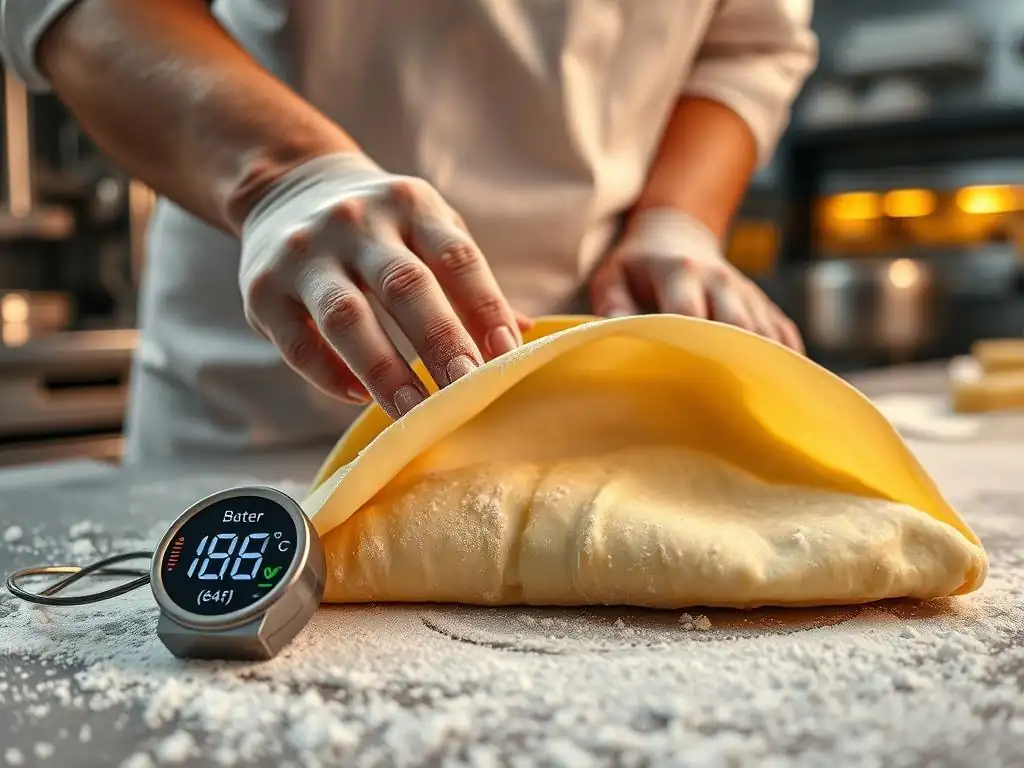
For bakers serious about perfecting pastry puff temperature control, a marble or granite pastry slab is an invaluable tool. Stone surfaces naturally stay cooler than wood or laminate countertops, especially if kept in a cool kitchen. Working directly on a chilled stone surface helps to absorb heat from the dough as you roll, keeping the butter firmer for longer during the lamination process.
Before starting, you can even place the marble slab in a refrigerator for 30-60 minutes to make it extra cold. When rolling your dough, the cold surface helps prevent the butter from softening and sticking, allowing for cleaner turns and better layer definition. While not strictly necessary, it provides a significant advantage, particularly if you live in a warm climate or your kitchen tends to be warm.
Employing a Dough Thermometer
Taking the guesswork out of dough temperature is possible with a simple digital instant-read thermometer. While you can learn to gauge dough temperature by feel, using a thermometer provides objective data. After chilling or during rolling, quickly insert the probe into the thickest part of the dough to check its core temperature.
Aim for a reading between 4°C and 10°C (40°F and 50°F) before proceeding with rolling or a turn. If the temperature is above this range, it's time for more chilling. If it's too low and the dough is stiff, let it warm up slightly. Using a dough thermometer adds a layer of precision to your process, making perfecting pastry puff temperature control more consistent and reliable.
Cold Fermentation Techniques for Enhanced Flavor and Puff
While classic puff pastry dough often uses just flour, water, and salt (plus the butter block), enriched doughs like croissant dough or Danish pastry dough incorporate yeast, milk, and sugar. These doughs often benefit from cold fermentation – an extended, slow rise in the refrigerator, typically 8-24 hours or even longer.
Cold fermentation not only develops deeper flavors but also allows the dough to relax thoroughly, making it incredibly easy to roll thinly without excessive elasticity. The long, cold rest also ensures the butter layers are completely chilled and firm before the final shaping and proofing stages. While different from traditional puff pastry, this technique highlights another way temperature (specifically, cold temperatures over time) contributes to both flavor and structure in laminated doughs, further illustrating the importance of perfecting pastry puff temperature control.
Recipes and Temperature Guidance for Specific Puff Pastry Applications
Croissants: Achieving the Perfect Honeycomb Structure
Croissants, a type of enriched laminated dough, require precise temperature control throughout their multi-day process. After the initial lamination (often 3-4 turns), the shaped croissants undergo a crucial proofing stage, typically at a controlled temperature and humidity (around 24-26°C / 75-79°F and 70-80% humidity) for 2-3 hours. This warm, humid environment allows the yeast to ferment and the butter to soften slightly, preparing the layers for maximum expansion.
Baking croissants usually starts at a high temperature, like 200-220°C (400-425°F), to initiate rapid puff, similar to classic puff pastry. However, the temperature is often reduced after 10-15 minutes to 175-190°C (350-375°F) to ensure the interior cooks fully and develops the signature open, airy "honeycomb" structure without the exterior burning. This nuanced approach to temperature is vital for perfecting pastry puff temperature control in croissants.
Palmiers: Ensuring Even Caramelization and Crispness
Palmiers, simple rolled and sliced puff pastry cookies, rely on even temperature for both their puff and their characteristic caramelized sugar crust. The dough is typically rolled relatively thin (around 3-4 mm) and coated with sugar before rolling and slicing. The high baking temperature (often 200-220°C / 400-425°F) is critical here.
The intense heat causes the puff pastry to rise quickly, separating the layers, while simultaneously melting and caramelizing the sugar coating. Even heat distribution in the oven is key; hot spots can cause some palmiers to burn while others remain pale. Using a reliable oven thermometer and potentially rotating the baking sheet ensures the sugar caramelizes evenly to a deep golden brown, resulting in perfectly crisp and caramelized palmiers – a testament to perfecting pastry puff temperature control even in seemingly simple applications.
Vol-au-vents: Temperature Tips for Creating a Light and Airy Shell
Vol-au-vents, hollow puff pastry shells designed to be filled, require maximum, even lift to create their signature cavity. These are typically cut using round cutters (one solid, one ring) and often weighted slightly in the center during the initial bake to prevent the middle from rising excessively.
Baking vol-au-vents demands a high initial oven temperature, often 220°C (425°F) or even higher, to ensure explosive puff and a well-defined shell structure. The high heat rapidly sets the outer layers while the inner layers expand dramatically. After the initial rapid rise (usually 10-15 minutes), the temperature is often reduced slightly (e.g., to 190°C / 375°F) to allow the shells to dry out and become crisp throughout without burning the exterior. Achieving a light, airy, and stable shell is a prime example of perfecting pastry puff temperature control for structural integrity.
Conclusion: The Art and Science of Temperature Control in Puff Pastry
Recap: Key Takeaways for Achieving Maximum Puff
Achieving maximum puff in pastry is a direct result of mastering temperature control throughout the entire process. From the initial chilling of ingredients to the final hot oven bake, temperature dictates the success of your lamination and the resulting flakiness. Remember these key takeaways:
- Keep butter cold and distinct within the dough layers during lamination, aiming for a dough temperature of 4-10°C (40-50°F).
- Chill the dough thoroughly (30-60 minutes) after each turn to relax gluten and re-firm the butter.
- Work quickly and on a cool surface to minimize butter softening while the dough is out of the refrigerator.
- Bake in a very hot, well-preheated oven (200-220°C / 400-425°F initially) to create rapid steam expansion.
- Use an oven thermometer to verify baking temperature accuracy.
By diligently managing temperature at every stage, you ensure the butter layers perform their magical role in the oven, transforming simple dough into a marvel of flaky, airy perfection.
Further Resources and Practice for Perfecting Pastry Puff
Perfecting pastry puff temperature control is a skill that improves with practice. Don't be discouraged if your first attempts aren't perfect. Pay close attention to the feel of the dough and butter at different temperatures. Observe how your oven bakes. Keep notes on what worked and what didn't.
Experiment with chilling times based on your kitchen's temperature. Try using a thermometer to check dough temperature before rolling. Each batch is an opportunity to learn more about how temperature influences the outcome. With patience and attention to temperature, you'll be well on your way to consistently achieving impressive puff and truly mastering this fundamental technique in baking.
Frequently Asked Questions
How important is temperature control when making puff pastry?
Temperature control is absolutely crucial for achieving maximum puff. If the butter melts too quickly, the layers will combine, resulting in a dense, flat pastry.
What is the ideal temperature range for butter when making puff pastry?
The ideal temperature range for butter is generally between 60°F and 65°F (15°C and 18°C). This ensures it remains solid enough to create distinct layers but pliable enough to work with.
How does the ambient temperature of my kitchen affect puff pastry success?
A warm kitchen will cause the butter to soften too rapidly, hindering the formation of those crucial layers. Try to bake on cooler days or use strategies like chilling the dough frequently to combat this.
What happens if my puff pastry dough gets too warm during the lamination process?
If the dough gets too warm, the butter will melt and seep into the flour, preventing proper lamination. The resulting pastry will be tough, greasy, and lack the desired puff.
What are some tips for keeping puff pastry dough cool while working with it?
Keep the dough and butter chilled between turns. Work quickly and efficiently. Consider placing the dough in the freezer for a few minutes if it starts to feel too soft.
Final Reflection: The Art and Science of the Perfect Puff
Mastering temperature control isn't just about achieving a beautiful, flaky pastry; it's about understanding the very essence of baking itself. The seemingly simple act of controlling oven temperature and dough temperature reveals a complex interplay of physics and culinary artistry, impacting everything from gluten development to fat crystallization. This delicate dance between heat and ingredients ultimately determines whether your pastry rises to magnificent heights or falls flat.
The pursuit of the perfect puff has profoundly shaped my own baking journey, pushing me to observe, experiment, and appreciate the subtle nuances of this seemingly simple process. The precision required fosters a deep respect for the ingredients and the transformative power of heat. As the renowned chef Julia Child once said, A good cook is someone who can cook anything, anywhere, with whatever is available.
This sentiment resonates deeply with the principles of temperature control in pastry making – adapting to different ovens, ingredients, and environments to achieve consistent results.
Now, it's your turn. Consider the lessons learned here – the importance of pre-chilling, the impact of oven temperature fluctuations, and the significance of maintaining consistent dough temperature. Don't just bake a pastry; understand the pastry. Experiment, adapt, and refine your technique. With each puff, you'll not only create a delicious treat but also cultivate a deeper understanding of the science and art behind this timeless culinary craft. The journey to the perfect puff is a continuous one, filled with learning, discovery, and the undeniable satisfaction of a perfectly risen, golden-brown masterpiece.
Unlock Flaky Perfection: Master Your Puff Pastry
Thanks for joining us on this journey to puff pastry perfection! We hope you now feel confident in understanding the crucial role temperature plays in achieving those glorious, flaky layers. Ready to take your baking to the next level?
- Bake a batch today! Put your newfound knowledge to the test and see the difference. Experiment with different temperatures and chilling times to find your perfect technique.
- Share your results! Show us your magnificent creations on social media using #BakeWithEasePuffPastry – we love seeing your baking successes!
- Consider experimenting with different flours or fats to further refine your puff pastry game.
What unique temperature technique will you try first to elevate your puff pastry?