
Chilling is Crucial: Why Rest Time Makes or Breaks Puff Pastry

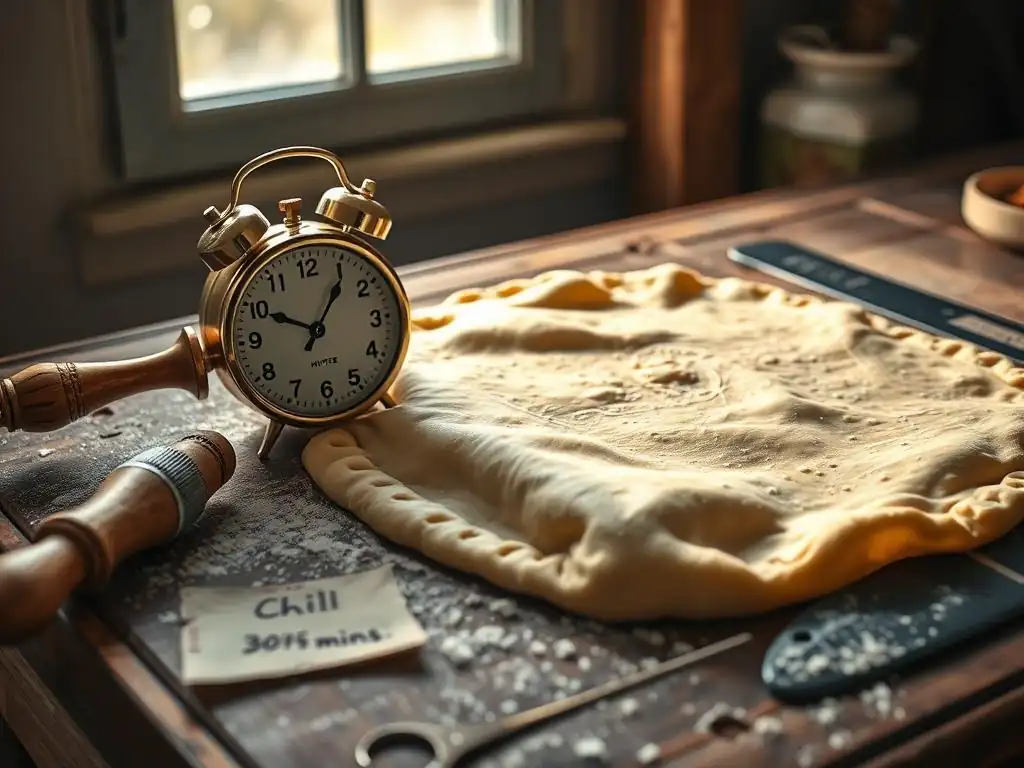
Welcome to BakeWithEase, your partner in creating delicious baked goods! Ever wonder why your puff pastry just isn't puffing? We're diving deep into a critical, often overlooked step that can make or break your flaky creations. Discover the secrets behind optimal puff pastry resting time and unlock the full potential of your dough. Ready to transform your baking? Let's get started!
- Understanding the Importance of Puff Pastry Resting Time
- The Impact of Inadequate Puff Pastry Resting
- Optimizing Puff Pastry Resting: A Step-by-Step Guide
- Mastering Puff Pastry Dough Temperature for Optimal Results
- Different Types of Puff Pastry and Their Resting Needs
- Tips and Tricks for Perfect Puff Pastry Resting
- Troubleshooting Common Puff Pastry Problems Related to Resting
- Frequently Asked Questions
- Final Reflection: The Unsung Hero of Flaky Perfection
- Unlock Flaky Perfection: Master the Art of Puff Pastry Resting
Understanding the Importance of Puff Pastry Resting Time
What is Puff Pastry and Why is Resting Essential?
Puff pastry, or pâte feuilletée, is a classic French dough renowned for its incredibly light, airy, and flaky texture. It's created through a meticulous process called lamination, where layers of butter are folded into layers of dough. When baked at high temperatures, the water in the butter turns to steam, forcing the layers apart and creating hundreds of delicate flakes. This distinctive structure relies heavily on the dough and butter being at the correct consistency and temperature throughout the process.
Resting the dough is not just a suggestion; it's a fundamental step that directly impacts the final outcome. Adequate puff pastry resting time allows the gluten structure within the dough to relax, preventing it from springing back excessively during rolling and folding. Crucially, resting also chills the butter layers, keeping them firm and distinct from the dough layers. Without proper chilling, the butter can melt into the dough, destroying the stratification essential for the pastry's signature puff. Think of it as giving the dough a necessary pause to prepare for the next rigorous step.
The Science Behind Puff Pastry Lamination and Gluten Development
Lamination is the heart of puff pastry. It involves repeatedly rolling and folding the dough and butter block (known as the pâton). Each fold creates more layers; for instance, a simple book fold (four layers) repeated six times can result in over 4,000 layers! The goal is to maintain distinct, thin layers of dough separated by thin layers of butter. This is where the science of gluten and fat comes into play.
Flour contains proteins that, when hydrated and worked, develop gluten strands. Gluten provides structure and elasticity, which is necessary for rolling. However, too much elasticity makes the dough difficult to roll thinly without tearing or shrinking.
Resting periods allow the developed gluten network to relax, making the dough pliable. Simultaneously, resting chills the butter, ensuring it remains solid and forms clean layers rather than integrating into the dough. An ideal dough temperature during lamination and resting is typically between 10°C and 15°C (50°F and 59°F) – cold enough to keep the butter firm, but warm enough for the dough to be workable.
The Impact of Inadequate Puff Pastry Resting
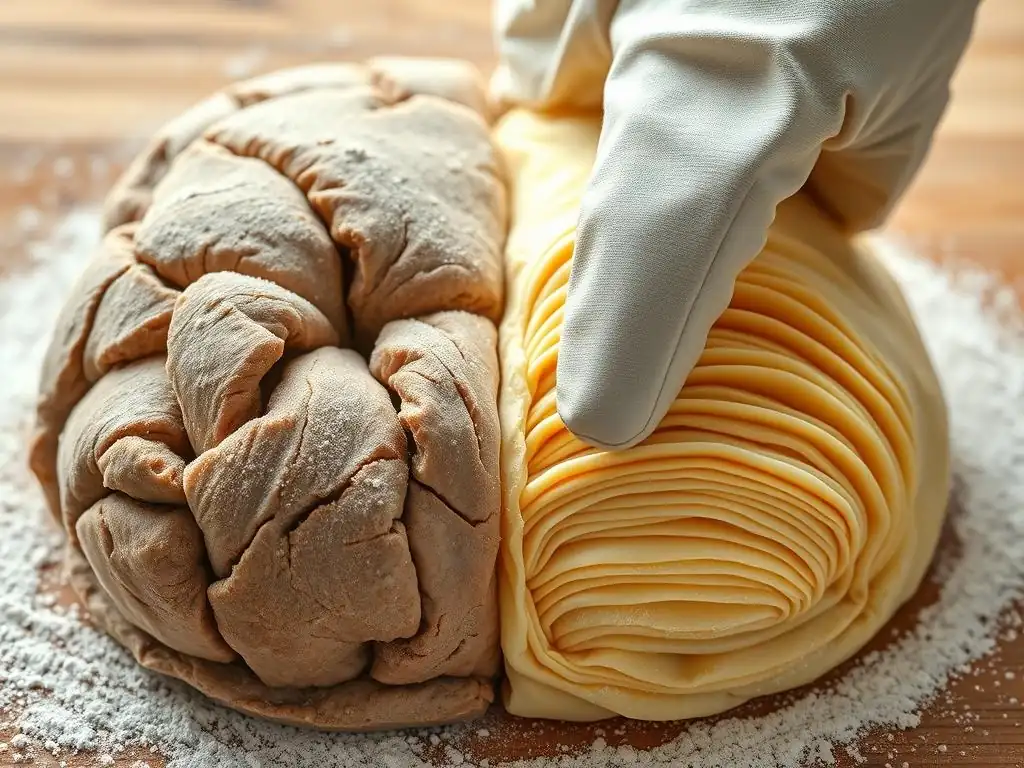
Tough and Shrinkage-Prone Dough: The Consequences of Skipping Rest
One of the most immediate consequences of insufficient puff pastry resting time is dough that is tough and resistant to rolling. The gluten hasn't had a chance to relax after being worked during mixing and folding. As you try to roll it out, it constantly fights back, springing significantly when you stop applying pressure. This makes achieving even thickness extremely difficult.
Furthermore, this tension in the gluten network leads to significant shrinkage during baking. Instead of holding its shape, the pastry might contract by 20-30% or more in the oven, resulting in misshapen pastries or those that don't fit their intended molds or purposes. Imagine trying to make vol-au-vents that shrink into small, dense discs – a direct result of inadequate dough rest periods allowing the gluten to remain too tense.
Gluten Overdevelopment: How Insufficient Rest Affects Texture
While some gluten development is necessary for structure, overdeveloped gluten, combined with insufficient rest, leads to a tough, bready texture rather than the desired flakiness. If the dough isn't allowed to rest and the gluten relax between rolling and folding steps, you are essentially working a tense, resistant network repeatedly. This can strengthen the gluten more than desired, especially if the dough warms up.
When this overly tense, insufficiently rested dough bakes, the layers might not separate properly. The steam generated by the butter struggles to lift and separate the stiff, unyielding dough layers. The result is a pastry that is dense, chewy, and lacks the characteristic delicate crispness and hundreds of airy layers that define excellent puff pastry. It becomes more akin to a tough pie crust than a light puff.
Butter Leakage: Why Warm Dough Ruins Lamination
Perhaps the most critical function of puff pastry resting time is keeping the butter cold and solid. The success of lamination hinges on having distinct layers of dough and butter. If the dough isn't properly chilled during and between folds, the butter warms up quickly from the heat of your hands, the rolling pin, and the ambient temperature.
Once the butter reaches a temperature where it becomes soft or even melty (typically above 20°C or 68°F), it begins to ooze out from between the dough layers during rolling. This is often visible as greasy patches on your work surface or rolling pin. When this happens, the distinct butter layers are lost, mixing into the dough instead of forming separate sheets. In baking, there's no solid butter left to create steam and lift the layers, resulting in a flat, greasy, and heavy pastry with little to no puff.
Optimizing Puff Pastry Resting: A Step-by-Step Guide
Initial Dough Resting: The First Chill for Gluten Relaxation
The very first rest for your puff pastry dough is crucial immediately after mixing the basic dough (before incorporating the butter block). After combining flour, water, and maybe a little salt and butter, the dough needs time to hydrate fully and for the gluten to begin relaxing.
A typical initial rest involves shaping the dough into a rectangle or square, wrapping it tightly, and chilling it in the refrigerator. This initial chill should last at least 30 minutes, and often longer, such as 1-2 hours. This period allows the water to distribute evenly and the gluten developed during mixing to relax significantly, making the dough much easier to roll out into the sheet needed to enclose the butter block. Skipping or shortening this step means starting the lamination process with a tense, elastic dough.
Resting Between Turns: Preventing Elasticity and Shrinkage
The resting periods between each series of folds (or "turns") are equally vital. After you complete a turn (e.g., a simple fold or a book fold) and roll the dough out, the gluten gets worked again, and the dough warms slightly. Immediately attempting another turn without chilling will lead to the dough resisting rolling and the butter softening.
The standard practice is to rest the dough for at least 30-60 minutes in the refrigerator between turns. Some recipes even recommend longer rests of 1.5 to 2 hours. This time allows the gluten to relax from the strain of rolling and folding, making the dough pliable enough for the next turn without excessive force. It also ensures the butter layers firm up again, maintaining their integrity for successful lamination. A common sequence might be: Turn 1, rest 1 hour; Turn 2, rest 1 hour; Turn 3, rest 2 hours before final shaping.
Final Chill Before Baking: Ensuring Maximum Puff and Flakiness
The final chill before baking is arguably the most critical puff pastry resting time. After completing all the required turns and shaping the pastry (cutting into shapes, assembling tarts, etc. ), the dough must be thoroughly chilled one last time.
This final rest, typically lasting from 30 minutes to several hours, or even overnight, ensures the butter is completely solid and the dough is very cold. When placed in a hot oven (often 200-220°C or 400-425°F), the rapid temperature change causes the solid butter to melt and instantly turn to steam, creating maximum lift and separation between the layers.
A warm or insufficiently chilled pastry will result in butter leaking out before it can turn to steam, leading to less puff and a greasy texture. A minimum final chill of 30-60 minutes is essential, but longer is often better for optimal results.
Mastering Puff Pastry Dough Temperature for Optimal Results
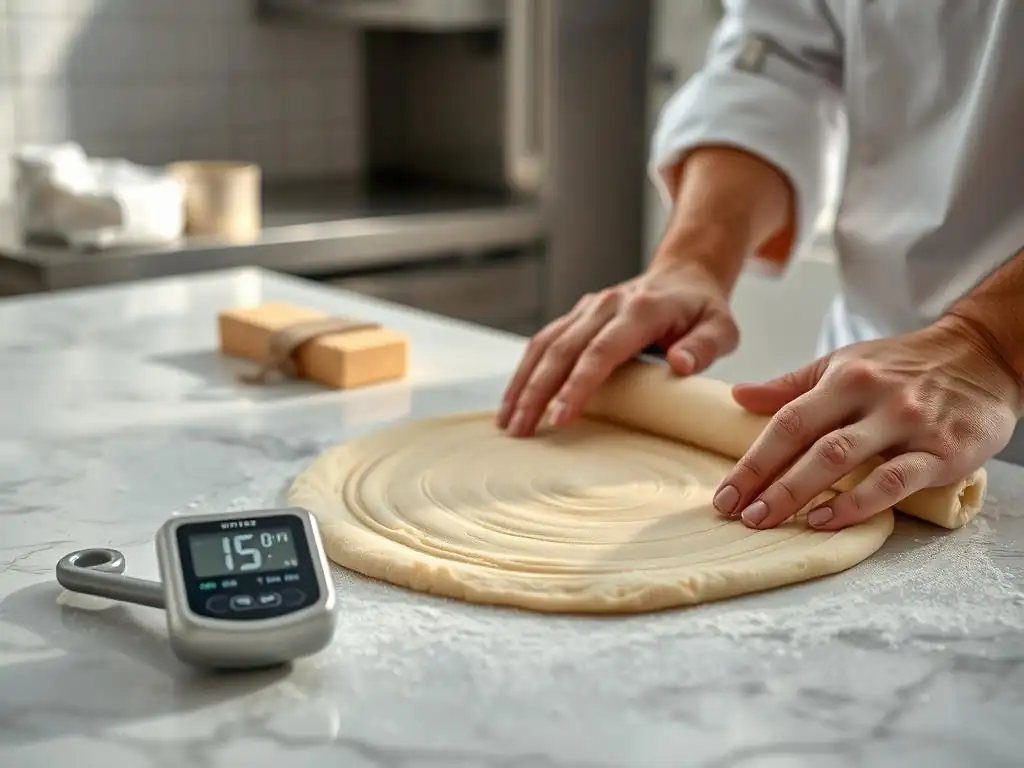
The Ideal Dough Temperature Range for Puff Pastry
Maintaining the correct temperature is paramount throughout the puff pastry process, especially during resting periods and lamination. The ideal working temperature for puff pastry dough is generally considered to be between 10°C and 15°C (50°F and 59°F). At this temperature, the dough is pliable enough to roll without tearing, while the butter remains solid and flexible, allowing it to flatten into thin, distinct layers rather than breaking or melting.
If the dough is too cold (below 10°C), the butter becomes brittle and can break into pieces during rolling, resulting in an uneven distribution of fat. If the dough is too warm (above 15°C), the butter softens too much and risks melting into the dough layers, destroying the lamination. Therefore, controlling the dough temperature during all stages, including puff pastry resting time, is key to success.
Techniques for Maintaining Dough Chill: Using Ice Packs and a Cold Marble Surface
Keeping the dough within that ideal 10-15°C range requires conscious effort. One effective technique is to work on a cold surface, such as a marble slab that has been chilled. Marble stays cooler than wood or laminate countertops. You can also place ice packs or bags of ice around your work area (not directly touching the dough) to help lower the ambient temperature slightly, especially in a warm kitchen.
During resting periods, always refrigerate the dough. Ensure your refrigerator is set to the correct temperature, typically below 4°C (40°F). When rolling, work relatively quickly to minimize the time the dough is exposed to warmer room temperature. If your kitchen is warm, consider doing your rolling and folding in shorter bursts, incorporating brief 10-15 minute chills in the freezer if the dough or butter starts to feel too soft, though extended freezer time isn't a substitute for proper refrigerator resting.
Troubleshooting Temperature Issues: Dough Too Warm or Too Cold
Dealing with dough temperature issues is common when making puff pastry. If your dough feels too warm or the butter seems too soft and is starting to ooze, stop working immediately. Wrap the dough tightly and return it to the refrigerator for at least 30-60 minutes, or until it feels firm and cool to the touch again. Trying to force a warm dough will inevitably lead to butter leakage and ruined layers.
Conversely, if the dough is too cold and stiff straight from the refrigerator, attempting to roll it will be difficult, and the cold, brittle butter layers might crack. Let the dough sit at room temperature for just 5-10 minutes before rolling, or gently flex it a few times. It should still feel very cold, but have lost its initial rigidity, allowing the butter to flatten rather than break. This brief tempering makes rolling much smoother and preserves the integrity of the layers during the puff pastry resting time transitions.
Different Types of Puff Pastry and Their Resting Needs
Classic Puff Pastry: Traditional Resting Guidelines
Classic or traditional puff pastry ( pâte feuilletée classique) involves enclosing a single block of butter within the dough and then performing multiple series of folds (turns), typically 6 single folds or 3 double/book folds, with significant resting time between each.
For classic puff pastry, the resting guidelines are quite strict:
- Initial dough rest: 1-2 hours.
- Resting between turns: 30-60 minutes minimum between each turn. Many recipes recommend an hour or more.
- Final chill before baking: At least 1-2 hours, often overnight (8-12 hours) for best results.
Adhering to these significant puff pastry resting time periods ensures the maximum number of distinct layers and the highest potential for puff and flakiness.
Rough Puff Pastry: Adjusting Resting Times
Rough puff pastry ( pâte rapide or pâte feuilletée rapide) is a quicker method where small pieces of cold butter are mixed into the dough before rolling and folding. While faster, it still relies on layers of dough and butter for puff, and therefore, still requires resting, although the times can sometimes be slightly shorter than classic puff.
For rough puff:
- Initial dough rest (after mixing butter chunks): At least 30 minutes, often 1 hour.
- Resting between turns: 20-40 minutes between each turn. Because the butter isn't in a single block, it might soften slightly faster, making chilling important.
- Final chill before baking: At least 30-60 minutes. While overnight is still beneficial, a shorter final chill can sometimes suffice compared to classic puff due to the different butter distribution. However, proper puff pastry resting time is still non-negotiable for a good result.
Inverted Puff Pastry (Pâte Feuilletée Inversée): Specific Resting Recommendations
Inverted puff pastry is a variation where the butter block encloses the dough block, meaning the outer layer is butter and the inner is dough. This method is favored by many professionals as it can result in a more consistent puff and less risk of butter leakage, as the butter is on the outside being rolled cold against the work surface.
The resting requirements for inverted puff pastry are similar to classic puff, emphasizing cold temperatures and gluten relaxation:
- Initial rest for both dough and butter blocks: Both components need to be well-chilled and pliable before assembly, typically 1-2 hours.
- Resting between turns: 45-90 minutes between each turn is common. Since the butter is on the outside, keeping it very cold is paramount, making adequate puff pastry resting time crucial.
- Final chill before baking: At least 1-2 hours, and often overnight is highly recommended to ensure the outer butter layer is very firm for maximum oven spring.
Tips and Tricks for Perfect Puff Pastry Resting
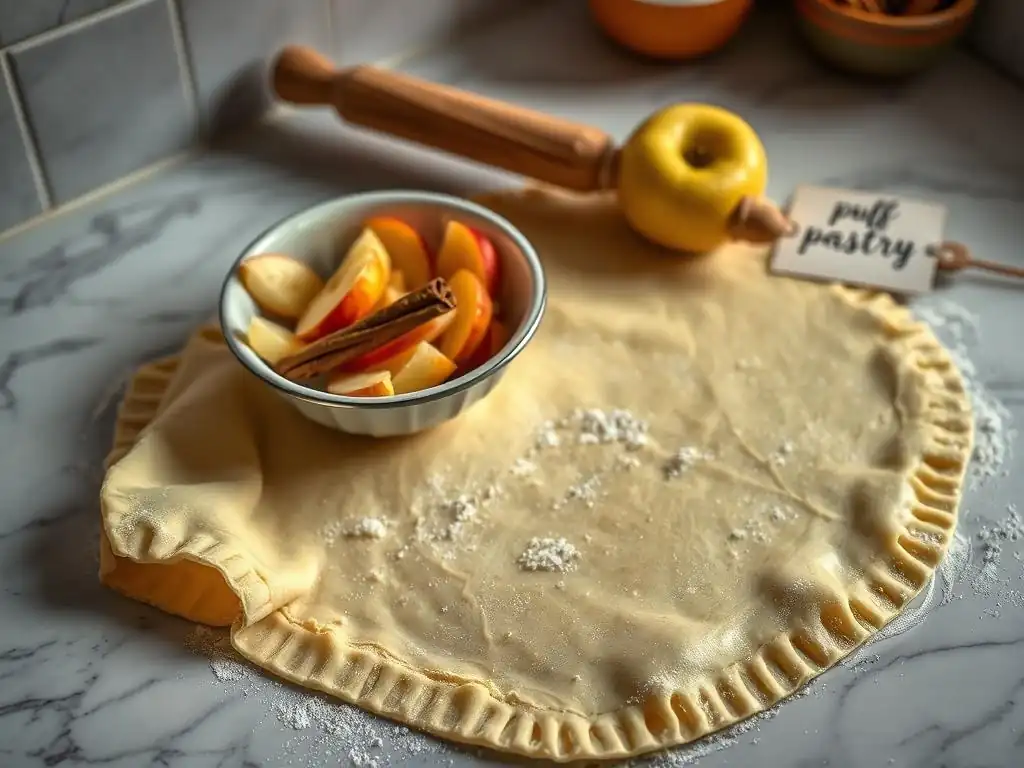
Using a Dough Thermometer for Precise Temperature Control
Guessing the temperature of your dough and butter can be risky. A simple digital probe thermometer is an invaluable tool for making puff pastry. Before rolling out the dough for a turn, insert the thermometer into the thickest part of the dough/butter block.
Aim for a temperature between 10°C and 15°C (50°F and 59°F). If it's warmer, it needs more puff pastry resting time in the fridge. If it's colder, let it sit out briefly until it reaches the workable range. Using a thermometer takes the guesswork out of chilling and helps ensure your butter layers are solid enough to maintain their structure during rolling, directly impacting the success of your lamination.
Wrapping and Storing Puff Pastry During Resting
Properly wrapping your puff pastry dough during resting periods is essential. Always wrap the dough tightly in plastic wrap (cling film). This prevents the dough from drying out and forming a skin on the surface, which can lead to uneven layers and affect the puff. Ensure the wrap is snug against the dough.
For longer rests, especially overnight, consider wrapping the plastic-wrapped dough again in aluminum foil for extra protection against drying and absorbing refrigerator odors. Store the dough on a flat surface in the coldest part of your refrigerator. When resting between turns, placing the dough on a small baking sheet makes it easy to transfer in and out of the fridge without distorting its shape. Adequate wrapping is a simple step that contributes significantly to successful puff pastry resting time.
Recognizing the Signs of Properly Rested Dough
How do you know if your puff pastry dough is properly rested and ready for the next step?
- Temperature: As mentioned, check the temperature; it should be in the 10-15°C range.
- Feel: The dough should feel firm and cold to the touch, but not rock hard. The butter within should feel solid.
- Pliability: When you gently press the dough, it should yield slightly but still feel firm. When you start to roll, it should lengthen relatively easily without excessive spring-back. If it's very resistant and snaps back aggressively, it needs more puff pastry resting time. If it's too soft and floppy, it's too warm and needs more chilling.
- Appearance: The surface should look smooth and even, without cracks or dry spots (assuming it was wrapped correctly).
Recognizing these signs ensures you work the dough at its optimal state, maximizing your chances of achieving that perfect puff.
Puff Pastry Not Rising: Causes and Solutions
One of the most disappointing outcomes is puff pastry that doesn't rise properly in the oven. While many factors can contribute, inadequate puff pastry resting time is a primary culprit. If the butter wasn't cold enough during lamination or the final chill, it leaks out instead of creating steam pockets.
- Cause: Insufficient chilling between turns or before baking. Butter was too soft during rolling.
- Solution: Ensure dough temperature is between 10-15°C during lamination. Strictly adhere to resting times (at least 30-60 mins between turns, 1-2 hours minimum final chill). If dough warms up while working, stop and chill immediately. Ensure oven is preheated to a high temperature (200-220°C) as recommended, as this rapid heat is needed for the steam lift.
Uneven Baking: The Role of Resting in Uniform Results
Sometimes puff pastry puffs unevenly, with some parts rising beautifully and others remaining flat or dense. This can often be traced back to inconsistencies in dough thickness or butter distribution, which are exacerbated by insufficient or uneven puff pastry resting.
- Cause: Dough not rested enough between turns leading to uneven rolling thickness. Butter not consistently cold resulting in patchy leakage during lamination. Dough not uniformly chilled before baking.
- Solution: Always allow adequate puff pastry resting time between turns to ensure the dough is relaxed enough to roll evenly. Roll with consistent pressure. Make sure the entire sheet of dough is thoroughly chilled before cutting and baking; a drafty spot in the fridge could mean one side is colder than the other. Rotate the baking sheet halfway through baking if your oven has hot spots.
Soggy Bottoms: Addressing Moisture Issues and Resting Techniques
Soggy bottoms in puff pastry can occur if moisture isn't managed properly, and resting plays a role. If the dough is too wet initially or if condensation forms on cold dough brought into a warm room, this excess moisture can hinder proper baking.
- Cause: Dough too wet. Condensation forming on cold dough left out too long before baking. Insufficient final chilling leading to slow initial puff, allowing moisture to accumulate at the base.
- Solution: Ensure your initial dough hydration is correct. When taking the dough out for the final step before baking, work quickly to minimize time at room temperature. Place the shaped pastry onto a cold baking sheet, ideally lined with parchment paper, and put it straight into a hot oven. The rapid heat helps set the base quickly. Adequate puff pastry resting time, ensuring the dough is very cold before baking, promotes rapid steam lift which helps the layers separate before the bottom becomes saturated.
Frequently Asked Questions
Why is resting time so important when making puff pastry?
Resting allows the gluten to relax, preventing the dough from shrinking back during baking. It also helps the butter solidify, creating distinct layers that result in the characteristic puff.
What happens if I skip the resting time for puff pastry?
Skipping rest periods often results in a tough and shrunken pastry. The butter will melt too quickly, and the gluten will be overworked, leading to a dense, less flaky outcome.
How long should I typically rest my puff pastry dough?
Resting times vary depending on the recipe, but generally, aim for at least 30 minutes in the refrigerator between folds. Longer resting periods, even overnight, can improve the final product.
Can I rest puff pastry dough for too long?
Yes, while extended resting is beneficial, over-resting can lead to excessively relaxed gluten. This can make the dough difficult to handle. If this happens, gently work it again.
What's the best way to rest puff pastry dough in the refrigerator?
Wrap the dough tightly in plastic wrap to prevent it from drying out. Ensure it's lying flat on a baking sheet for even chilling.
Final Reflection: The Unsung Hero of Flaky Perfection
The seemingly insignificant act of resting puff pastry dough is, in reality, the cornerstone of its success. Without proper chilling, the delicate layers of butter and dough fail to achieve the magical transformation that results in those coveted, airy, melt-in-your-mouth layers. This isn't just about technique; it's about understanding the fundamental science behind a culinary masterpiece.
The impact of chilling on puff pastry extends far beyond the individual baker's kitchen. It speaks to a broader appreciation for patience and precision in the culinary arts, a reminder that the most impressive results often require the most meticulous attention to detail. The reward of patience is always sweet.
This adage rings particularly true when considering the transformative power of chilling time on puff pastry, a testament to the beauty of slow, deliberate processes.
Now, consider your own projects, your own ambitions. Are you rushing through crucial steps, neglecting the "resting" periods necessary for true growth and development? I urge you to reflect on this parallel. Take the time to chill, to pause, to allow your own "layers" to settle and solidify before moving forward. Embrace the power of rest, not just in baking, but in every aspect of your life. The results, I promise, will be breathtakingly flaky.
Unlock Flaky Perfection: Master the Art of Puff Pastry Resting
Thanks for taking the time to explore the secrets of perfect puff pastry! You now understand how crucial resting periods are to achieving that melt-in-your-mouth flakiness. Ready to put your new knowledge into action?
- Bake a batch of show-stopping puff pastry: This is your chance to create the golden, flaky masterpiece you've always dreamed of. Use what you learned today and enjoy the process!
- Share your baking journey: Tag us on social media with your results—we'd love to see your creations!
- Challenge yourself: Try adjusting resting times slightly next time to observe the impact on texture. What variations will you explore?
What unexpected flavors will you incorporate into your next puff pastry creation?