
How pH Influences Crumb Structure and Leavening Agent Performance

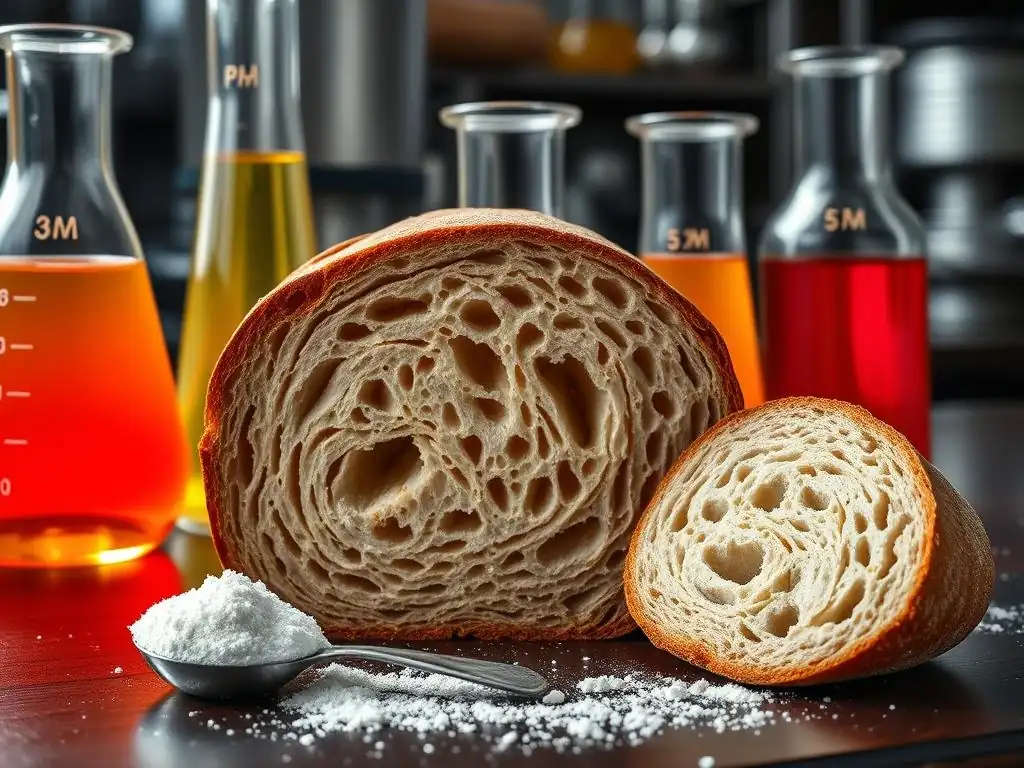
Welcome to BakeWithEase, your trusted guide to baking brilliance! Ever wondered how the invisible world of chemistry impacts your sourdough loaf? This week, we're diving deep into a fascinating element that can drastically alter your bake: pH. Discover exactly how pH affects sourdough crumb structure and leavening agent performance, unlocking the secrets to consistently perfect loaves. Prepare to elevate your baking game – let's get started!
- Impact of pH on Gluten Development, Leavening, and Crumb Structure
- Understanding pH in Baking
- Sourdough Crumb and pH
- Leavening Agents and pH
- Chemistry of Crumb Structure and pH
- Adjusting pH Levels
- Troubleshooting Crumb Issues Related to pH
- Case Studies: pH Manipulation
- Mastering pH
-
Frequently Asked Questions
- How does pH specifically affect the crumb structure of sourdough bread?
- What role does pH play in the performance of the leavening agent in sourdough?
- How can I measure the pH of my sourdough starter and dough?
- What is the ideal pH range for sourdough bread, and why is it important?
- What are some ways to adjust the pH of my sourdough starter if it's not within the ideal range?
- Final Reflection: The Crucial Role of pH in Sourdough Crumb Structure
- Unlock Your Baking Potential: Master the pH Factor!
Impact of pH on Gluten Development, Leavening, and Crumb Structure
Understanding pH in Baking
What is pH and Its Significance in Baking?
pH is a scale used to specify the acidity or basicity of an aqueous solution. It ranges from 0 to 14, with 7 being neutral. Values below 7 indicate increasing acidity, while values above 7 indicate increasing alkalinity (or basicity). In baking, pH is a critical factor that influences a wide range of chemical reactions, affecting everything from how gluten develops and starch gelatinizes to how leavening agents perform and the final crumb structure forms. Understanding and controlling pH can be the difference between a perfectly airy loaf and a dense, disappointing bake.
The significance of pH in baking extends beyond just leavening; it impacts enzyme activity, protein denaturation, and even sugar caramelization. For instance, enzymes present in flour or added ingredients have optimal pH ranges for activity. Amylase enzymes, which break down starches into sugars, are often more active in slightly acidic conditions, influencing fermentation and crust browning. The overall pH environment dictated by ingredients like flour, water, salt, leavening agents, and any added acids (like vinegar or lemon juice) or bases (like baking soda) creates a unique chemical environment that shapes the final product's texture, flavor, and appearance.
Impact of pH on Gluten Development
Gluten, the protein network that provides structure and elasticity to baked goods made from wheat flour, is highly sensitive to pH. Gluten development occurs when glutenin and gliadin proteins in flour hydrate and are worked, forming cross-links. This process is most efficient within a specific pH range, typically slightly acidic to neutral, roughly between pH 5 and pH 6. In this range, the proteins can hydrate effectively and form a strong, elastic network capable of trapping gases produced during leavening.
Moving outside this optimal range significantly impacts gluten structure. In highly acidic environments (below pH 4), the gluten network can weaken. The acid hydrolysis breaks down the protein chains, resulting in a dough that is less elastic and more prone to tearing.
This can lead to a denser crumb structure because the weakened network cannot hold onto the leavening gases as effectively. Conversely, in alkaline environments (above pH 7-8), gluten can become too tough and less extensible. While some alkalinity can initially strengthen gluten, excessive alkalinity can hinder proper hydration and interfere with the protein interactions needed for optimal network formation, also potentially leading to a tougher or less desirable crumb.
pH's Role in Starch Gelatinization
Starch gelatinization is a crucial process in baking where starch granules absorb water and swell when heated, eventually thickening the batter or dough and contributing to the final structure of the crumb. This process is also influenced by pH. Starch gelatinization typically occurs as the internal temperature of the dough or batter reaches around 140-180°F (60-82°C), depending on the type of starch and the presence of other ingredients.
The pH of the system affects the temperature at which gelatinization occurs and the final viscosity of the gel. In acidic conditions (low pH), starch gelatinization generally happens at a lower temperature compared to neutral conditions. However, if the pH is too low (e.g., below pH 4), the acid can start to hydrolyze the starch molecules, breaking them down into smaller fragments.
This breakdown can result in a weaker gel structure and a less firm crumb. In alkaline conditions (high pH), gelatinization might occur at a slightly higher temperature, and the resulting gel can sometimes be firmer. Balancing pH is therefore essential to ensure starches properly gelatinize, contributing to a moist and stable crumb structure without becoming gummy or overly rigid.
Sourdough Crumb and pH
Sourdough Starters as pH Regulators
Sourdough starters are complex ecosystems of wild yeasts and lactic acid bacteria (LAB). The bacteria, primarily Lactobacillus species, produce lactic acid and acetic acid as byproducts of fermentation. These acids are responsible for the characteristic tangy flavor of sourdough and, crucially, significantly lower the pH of the starter and the final dough. A healthy, active sourdough starter typically has a pH ranging from 3.5 to 4.5, far more acidic than a conventional yeast dough made with commercial yeast, which might start around pH 5.5-6.0.
This low pH is vital for several reasons beyond flavor. The acidity inhibits the growth of undesirable microorganisms that could spoil the dough. It also influences enzyme activity; for example, it helps control amylase activity, preventing excessive breakdown of starch which could lead to a gummy crumb. Furthermore, the acidic environment created by the starter directly affects the gluten network's behavior and the activity of the wild yeasts, ultimately influencing how pH affects sourdough crumb texture. The consistent acidity from a well-maintained starter provides a predictable environment for fermentation and dough development.
Optimal pH Range for Sourdough Fermentation
For optimal sourdough fermentation and dough development, the pH typically needs to drop from the initial mix pH (often around 5.5-6.0) down into the range of 4.0 to 4.5 during the bulk fermentation and proofing stages. This gradual decrease in pH is driven by the LAB producing organic acids. Within this range, the wild yeasts in the starter are active, producing carbon dioxide for leavening, while the acidity tenderizes the gluten slightly, contributing to a more extensible dough that can trap gas efficiently, which is key to achieving an open and airy sourdough crumb.
If the pH drops too low too quickly (e.g., below 3.8) during fermentation, it can inhibit yeast activity, leading to poor leavening and a dense crumb. It can also cause excessive breakdown of gluten and starch, resulting in a gummy texture.
Conversely, if the pH doesn't drop sufficiently (remaining above 4.5-5.0), it might indicate insufficient LAB activity, leading to slower fermentation, less flavor development, and potentially a tighter crumb structure. Monitoring the pH, often alongside volume increase and dough feel, is a technique used by experienced bakers to ensure conditions are right for a beautiful sourdough crumb where pH affects sourdough crumb in a positive way.
pH's Influence on Sourdough Flavor
The signature tangy flavor of sourdough bread is a direct result of the organic acids produced by the lactic acid bacteria in the starter. Lactic acid provides a milder, yogurt-like tang, while acetic acid contributes a sharper, vinegar-like note. The ratio of these acids, and thus the specific flavor profile, is influenced by the fermentation temperature and hydration level of the starter and dough, which in turn affects the predominant types of LAB and their metabolic activity.
A lower pH generally correlates with a more pronounced sour flavor. For example, a starter fermented at cooler temperatures (around 70°F / 21°C) or higher hydration tends to produce more acetic acid, leading to a tangier bread with a lower pH. Warmer temperatures (around 80°F / 27°C) and stiffer starters often favor lactic acid production, resulting in a milder sourness despite a similar final pH range. The interplay of pH and fermentation conditions allows bakers to manipulate the flavor profile, adding another layer to how pH affects sourdough crumb, not just structurally but also sensorially.
Leavening Agents and pH
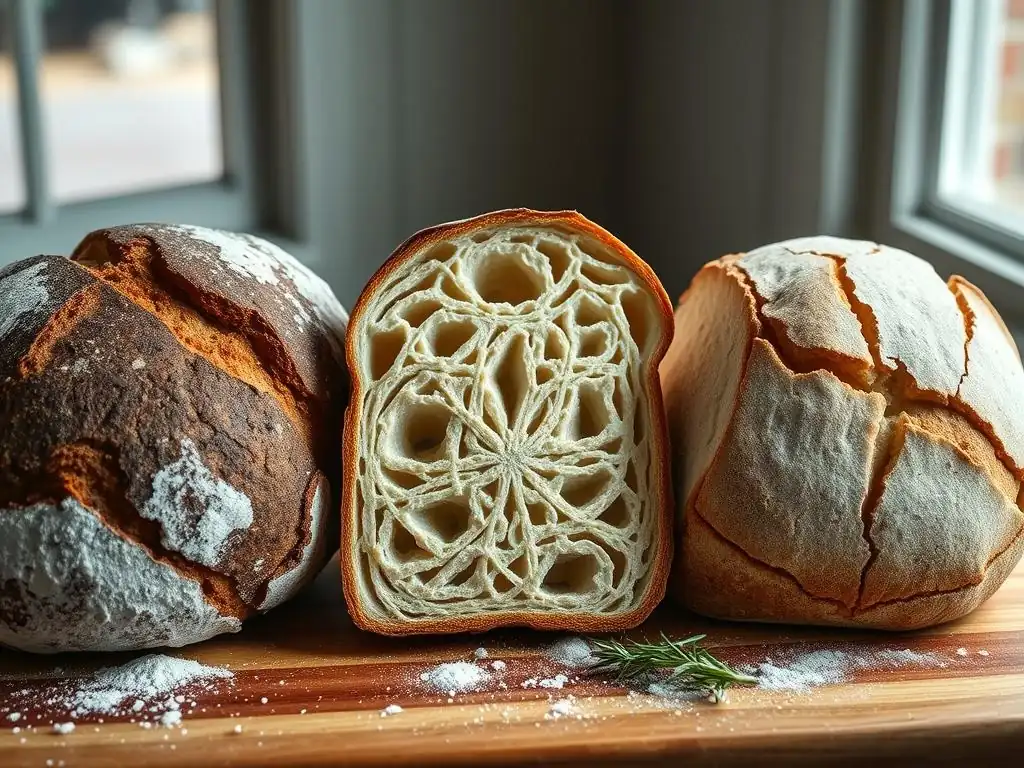
Baking Soda: pH Activation Mechanism
Baking soda, chemically known as sodium bicarbonate (NaHCO₃), is a chemical leavening agent that requires an acid to produce carbon dioxide gas. When baking soda encounters an acidic ingredient in the presence of moisture, a chemical reaction occurs: Acid + NaHCO₃ → Salt + Water + CO₂. The carbon dioxide gas is trapped within the dough or batter's structure, causing it to rise. This reaction happens immediately upon mixing the wet and dry ingredients containing both baking soda and an acid.
Baking soda alone, without an added acid, will only produce a small amount of gas when heated due to thermal decomposition (2 NaHCO₃ + Heat → Na₂CO₃ + H₂O + CO₂). However, this reaction is much slower and produces less gas than the acid-driven reaction. Furthermore, the sodium carbonate (Na₂CO₃) byproduct is alkaline and can leave a soapy or bitter taste if not neutralized by sufficient acid.
Therefore, recipes using baking soda rely on acidic ingredients like buttermilk (pH ~4.5), yogurt (pH ~4.0-4.6), molasses (pH ~5.0-5.5), honey (pH ~3.9), brown sugar (slightly acidic), vinegar (pH ~2.4-3.3), or citrus juice (pH ~2.0-4.0) to ensure full activation and a balanced flavor. The amount of baking soda used is typically balanced with the amount and strength of the acidic ingredients.
Baking Powder: pH Considerations for Double-Acting Varieties
Baking powder is a complete leavening system containing a mixture of baking soda, one or more solid acids, and a buffer (like cornstarch) to keep the components separate and dry. Most commercially available baking powders are "double-acting," meaning they produce gas in two stages. The first stage occurs when the baking powder is moistened; a fast-acting acid reacts with the baking soda. Common fast-acting acids include monocalcium phosphate.
The second stage of gas production occurs when the batter or dough is heated in the oven. A slow-acting acid reacts with the remaining baking soda. Common slow-acting acids are sodium aluminum sulfate (in SAS-phosphate powders) or sodium acid pyrophosphate (in SAPP-phosphate powders).
This two-stage reaction provides a more sustained lift. Because baking powder contains both the acid and the base, recipes using only baking powder (and no additional acidic ingredients) will typically have a final pH closer to neutral (around pH 7-7.5) compared to recipes relying heavily on baking soda and acidic components. This difference in final pH can impact crumb tenderness, crust color, and flavor.
Yeast Activity and pH Requirements
Commercial baker's yeast ( Saccharomyces cerevisiae) is a living organism that produces carbon dioxide and alcohol through fermentation of sugars. Yeast activity is significantly influenced by temperature, sugar availability, and pH. While yeast is quite resilient and can function over a relatively broad pH range, its optimal activity typically occurs in slightly acidic conditions, roughly between pH 4.0 and pH 6.0.
In doughs with a pH much lower than 4.0, such as very acidic sourdoughs or doughs containing large amounts of acidic ingredients, yeast activity can be inhibited, slowing down fermentation and leavening. Conversely, in alkaline doughs (pH above 6.5-7.0), yeast can also become less active, although this is less common in standard bread making unless specific alkaline ingredients are used.
Maintaining the dough within the yeast's preferred slightly acidic range ensures vigorous fermentation, leading to good volume and an open crumb structure. This is another reason why pH affects sourdough crumb development so significantly – the natural acidity of the starter creates an environment favorable to both yeast activity and desirable bacterial fermentation.
Chemistry of Crumb Structure and pH
pH's Effect on Air Cell Formation and Stability
The structure of the crumb, characterized by its network of air cells, is profoundly influenced by pH. During leavening, gases (primarily carbon dioxide from yeast or chemical leavening) are produced and trapped within the dough or batter's matrix. This matrix, composed mainly of gluten (in bread) or a combination of coagulated proteins (like egg proteins) and gelatinized starches (in cakes and muffins), needs to be elastic enough to expand with the gas and strong enough to hold the expanded structure once set by heat.
As discussed, pH affects the strength and extensibility of the gluten network. A slightly acidic pH (around 5-6 for wheat bread) allows for optimal gluten development, creating a strong yet flexible network capable of trapping and holding gas bubbles effectively, leading to a well-aerated crumb. In cakes and muffins using chemical leavening, the interaction of leavening agents with the batter's pH dictates the rate and volume of gas production.
The batter's pH also affects how proteins (from flour, eggs, milk) coagulate and starches gelatinize around these gas bubbles during baking. An imbalanced pH can lead to weak cell walls that collapse (dense crumb) or uneven expansion (large, irregular holes). For instance, in sourdough, how pH affects sourdough crumb openness is directly linked to the gluten structure's ability to handle the acidic environment and trap the CO₂ produced by the yeast.
pH and the Maillard Reaction: Crust Color and Flavor
The Maillard reaction is a complex series of chemical reactions between amino acids and reducing sugars that occurs when food is heated, particularly above 300°F (150°C). This reaction is responsible for the browning of the crust on bread and other baked goods, as well as the development of hundreds of flavorful compounds that contribute to the aroma and taste. The rate and extent of the Maillard reaction are significantly influenced by temperature, moisture content, and pH.
The Maillard reaction proceeds much more readily in alkaline conditions (higher pH). This is why pretzels, which are traditionally dipped in an alkaline solution (like lye or baking soda), develop a deep brown, shiny crust very quickly during baking. Conversely, in acidic conditions (lower pH), the Maillard reaction is slowed down.
Sourdough bread, with its naturally low pH, often requires a longer baking time or higher temperature to achieve a deep brown crust compared to a standard commercial yeast bread baked at the same temperature. This is a clear example of how pH affects sourdough crumb – not just internally, but also the development of the characteristic crust color and flavor compounds.
pH, Moisture, and Crumb Texture Relationship
pH also plays a role in how moisture is held within the crumb structure, which directly impacts its texture. The interaction between water molecules and the components of the dough or batter (proteins, starches) is influenced by the electrical charges on these molecules, which are pH-dependent. In slightly acidic conditions, proteins like gluten tend to bind water effectively, contributing to a moist and tender crumb.
In highly acidic environments, excessive protein breakdown can occur, potentially releasing bound water and leading to a slightly drier or even gummy texture if starch breakdown is also significant. In alkaline conditions, while some initial water binding might occur, excessive alkalinity can lead to a "soapy" mouthfeel or a crumb that stales more quickly.
The final moisture content and distribution within the crumb, regulated in part by pH's influence on protein and starch hydration and gelatinization, are crucial determinants of whether the crumb is perceived as moist, tender, dry, or gummy. Understanding this relationship is key to controlling how pH affects sourdough crumb moisture and overall texture.
Adjusting pH Levels
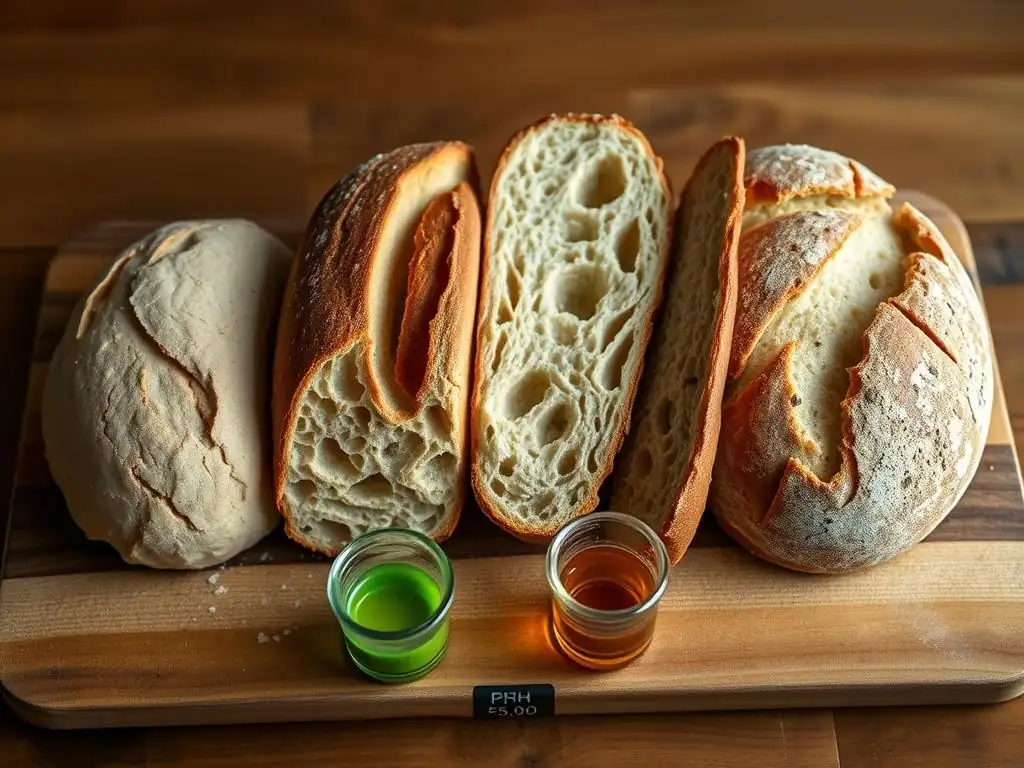
Acidic Ingredients for Lowering pH
To lower the pH of a dough or batter, acidic ingredients can be incorporated. The choice of acidic ingredient depends on the desired flavor profile and the strength of the acid needed. Common acidic ingredients used in baking include:
- Vinegar (Acetic Acid): Very effective at lowering pH quickly. Used in recipes with baking soda (like some cakes or muffins) or occasionally in bread doughs to slightly lower pH and strengthen gluten. Approximately 1 teaspoon of white vinegar can significantly lower the pH of a standard batter.
- Lemon Juice (Citric Acid): Provides a fresh, citrus flavor along with acidity. Also used with baking soda or in glazes/icings. Its pH is typically around 2.0-2.4.
- Buttermilk, Yogurt, Sour Cream (Lactic Acid): These cultured dairy products provide acidity and fat, contributing to tenderness. Their pH is usually between 4.0 and 4.6. Often used in recipes with baking soda.
- Molasses, Brown Sugar (Organic Acids): Contain organic acids and contribute moisture and flavor. Molasses is more acidic (pH ~5.0-5.5) than brown sugar (slightly acidic).
- Honey (Organic Acids): Contains various organic acids, contributing to acidity and moisture (pH ~3.9).
- Cream of Tartar (Potassium Bitartrate): A dry acid powder often used in meringue to stabilize egg whites or in baking powder as an acid component. It has a pH around 3.4-3.7 in solution.
Using these ingredients allows bakers to specifically target a lower pH for desired outcomes, whether it's activating baking soda, tenderizing gluten, or influencing flavor and crust color.
Alkaline Ingredients for Raising pH
To raise the pH (make it more alkaline) of a dough or batter, alkaline ingredients are used. The most common is baking soda itself, which is alkaline (pH ~8.3 in solution). However, using too much baking soda without sufficient acid will result in an unneutralized alkaline residue and a soapy flavor. Other alkaline ingredients sometimes used, often in specific cultural contexts or for particular results like intense browning, include:
- Lye (Sodium Hydroxide): A very strong alkali (high pH) used sparingly and with caution for the exterior treatment of pretzels and bagels to achieve a characteristic chewy texture and dark, shiny crust. It's not mixed into the dough itself.
- Potassium Carbonate or Ammonium Carbonate (Baker's Ammonia): Historically used in some cookies (like gingerbread or speculoos) to promote spread and crispness. They decompose completely upon heating, leaving no alkaline residue, but produce a strong ammonia smell during baking which dissipates.
- Milk: While close to neutral (pH ~6.7), it is slightly more alkaline than water and can subtly influence the overall pH compared to using water alone.
Raising the internal pH of a baked good is less common than lowering it for leavening purposes, but it can be used to achieve specific textural or browning effects, particularly on the crust.
pH Testing Methods
For home bakers interested in understanding and controlling pH, several methods are available, ranging in precision and cost.
- pH Indicator Strips: These are small strips of paper that change color when dipped into a liquid or a paste made from the dough/batter. The color is then compared to a chart on the packaging to estimate the pH. They are relatively inexpensive and easy to use but provide only an approximate pH value (e.g., within 0.5 pH units). They are useful for getting a general idea of acidity levels, like tracking the pH drop in a sourdough starter.
- Liquid pH Indicator Drops: Similar to strips, these involve adding drops of an indicator solution to a small sample of the liquid or paste. The resulting color indicates the pH range. Also relatively inexpensive and easy to use for rough estimations.
- Digital pH Meters: These electronic devices offer the most accurate way to measure pH. They consist of a probe that is inserted directly into the liquid, paste, or even the dough itself (using a specialized probe). They provide a numerical reading, often with two decimal places. While more expensive than strips or drops, they offer precise measurements, which can be invaluable for serious bakers wanting to understand exactly how pH affects sourdough crumb development, yeast activity, or chemical leavening performance. Regular calibration is necessary for accuracy.
Using these methods allows bakers to move beyond guesswork and understand the actual acidity or alkalinity of their ingredients and doughs, enabling more consistent results and targeted troubleshooting.
Dense Crumb: Causes and pH Solutions
A dense crumb is a common issue in baking, often resulting from insufficient leavening or a weak structure unable to hold the gas produced. pH plays a significant role in both.
- Insufficient Leavening: If using baking soda, check if enough acidic ingredients are present to react with all the soda. An imbalance can lead to poor gas production and residual alkaline taste. Adjust the recipe by adding more acid or slightly less baking soda. If using yeast, a pH that is too low (below 4.0) or too high (above 6.5) can inhibit yeast activity. For sourdough, if the starter's pH didn't drop adequately or the dough pH is too high during bulk fermentation, yeast activity might be sluggish. Ensure your starter is active and the fermentation environment is within the optimal pH range (4.0-4.5) for yeast.
- Weak Structure: In bread, a very low pH (below 4.0) can cause excessive gluten breakdown, resulting in a weak network that collapses instead of holding gas. This is particularly relevant to how pH affects sourdough crumb density if fermentation goes too long or the starter is excessively acidic. Ensure fermentation is stopped at the right time. In cakes and muffins, an incorrect pH can affect protein coagulation and starch gelatinization, leading to weak cell walls. For instance, too much acid can break down starch, while too much alkali can hinder protein setting. Balancing the leavening system (baking soda/powder and acids) according to the recipe's original design is key.
Identifying the specific pH imbalance allows for targeted adjustments, improving gas production and structural integrity to prevent a dense crumb.
Achieving Open Crumb Through pH Control
An open crumb, characterized by large, irregular air pockets, is often desired in artisan breads like sourdough. Achieving this requires vigorous leavening and a strong, extensible gluten network capable of stretching around large gas bubbles. pH control is fundamental to both aspects, especially in sourdough where pH affects sourdough crumb structure so dramatically.
- Optimal Yeast Activity: Ensure the dough pH stays within the optimal range (4.0-4.5) during bulk fermentation and proofing. This encourages active yeast fermentation, producing ample CO₂. If the dough is too acidic or not acidic enough, yeast activity can be suboptimal, leading to smaller gas production and a tighter crumb.
- Balanced Gluten Development: In sourdough, the acidity helps tenderize the gluten slightly, making it more extensible while still maintaining strength. This allows the dough to capture large bubbles without tearing. However, if the pH drops too low, the gluten can be overly degraded, leading to collapse. Proper fermentation time and temperature, guided by pH measurement, help maintain the right balance for gluten structure.
- Controlling Enzyme Activity: The acidic environment in sourdough helps control amylase activity, preventing excessive starch breakdown that could result in a gummy texture and collapsed structure.
By managing the fermentation process to achieve the ideal pH progression, bakers can promote strong leavening and a resilient gluten network, essential for that coveted open sourdough crumb where pH affects sourdough crumb aeration directly.
Off-flavors in baked goods can sometimes be traced back to pH imbalances. Understanding the relationship between pH and flavor compounds helps in troubleshooting.
- Soapy/Bitter Flavor: This is a classic sign of unreacted baking soda. It occurs when there isn't enough acid in the recipe to neutralize all the sodium bicarbonate. The residual alkaline sodium carbonate tastes unpleasant. Correct by ensuring the ratio of baking soda to acidic ingredients is balanced, or switch to baking powder which is self-neutralizing.
- Excessive Sourness: While some tang is desirable, especially in sourdough, an overwhelmingly sour or vinegary taste can occur if the pH drops too low, particularly if excessive acetic acid is produced (often due to long, cool fermentation in sourdough). This is a direct manifestation of how pH affects sourdough crumb flavor. To correct, adjust fermentation parameters (temperature, duration) to favor lactic acid production over acetic acid, or use a less acidic starter.
- Flat/Lack of Flavor: If a chemically leavened product lacks flavor depth, it might be due to insufficient browning reactions. In recipes that could benefit from increased Maillard reaction (like chocolate cakes), a slightly higher pH (achieved with baking soda and cocoa, which is acidic) promotes browning and flavor development. If the recipe relies only on baking powder, the final pH is closer to neutral, resulting in less intense browning flavors compared to a recipe using baking soda and acid.
By recognizing these flavor cues and understanding their connection to pH, bakers can make informed adjustments to their recipes and techniques.
Case Studies: pH Manipulation
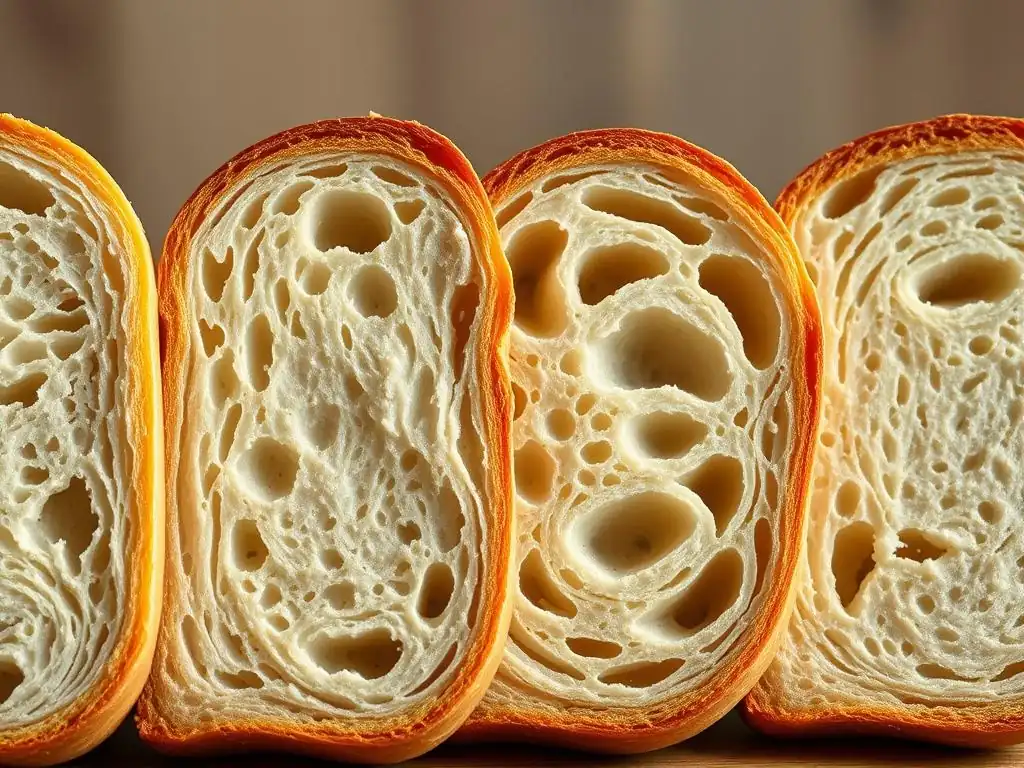
Sourdough: pH Optimization
Achieving the perfect sourdough crumb structure often involves deliberate pH management. Consider a common issue: a dense, gummy sourdough. Measuring the pH throughout the process might reveal the dough pH dropped excessively low (e.g., below 3.8) during a long bulk fermentation, especially if the starter was very active and acidic. This low pH degraded the gluten and potentially led to excessive starch breakdown. The solution involves shortening the bulk fermentation time, fermenting at a slightly cooler temperature to slow acid production, or using a starter fed at a different ratio to reduce its acidity.
Conversely, if a sourdough lacks tang and rise, pH measurement might show the pH didn't drop enough (staying above 4.5). This indicates insufficient bacterial and yeast activity. The fix could involve using a more active starter, fermenting at a warmer temperature (around 78-80°F / 25-27°C) to encourage LAB and yeast, or extending the bulk fermentation slightly. These adjustments, guided by understanding how pH affects sourdough crumb development, allow bakers to dial in their process for optimal results.
Cakes: pH Balance for Texture
Chocolate cakes are a classic example where pH manipulation is used for both color and texture. Many traditional chocolate cake recipes use natural cocoa powder, which is acidic (pH ~5.0-5.3), and pair it with baking soda. The reaction between the acidic cocoa and alkaline baking soda provides leavening. Critically, the resulting pH of the batter is often slightly alkaline (around pH 7.5-8.5), especially if Dutch-processed cocoa (which is neutral or slightly alkaline, pH ~6.8-8.1) is used with baking soda.
This alkaline environment contributes to a darker, richer color in the final cake crumb due to enhanced Maillard reactions. It also affects texture; the alkalinity can tenderize the cake by slightly weakening the flour proteins and promoting starch gelatinization. A cake made with only baking powder (resulting in a neutral pH) and natural cocoa would be lighter in color and potentially have a slightly different texture – often a finer, more uniform crumb compared to the softer, darker crumb achieved with baking soda and cocoa. This demonstrates how pH balance is intentionally used to define cake characteristics.
pH also plays a significant role in cookie characteristics, particularly spread and crispness. Recipes using baking soda tend to result in cookies that spread more and are crisper than those using only baking powder. This is because baking soda, especially when not fully neutralized by acid, creates a more alkaline environment.
The alkalinity weakens the gluten network in the cookie dough, allowing it to spread more freely during baking before the structure sets. The higher pH also promotes faster evaporation of water, contributing to a crispier texture. For example, a classic chocolate chip cookie recipe often uses baking soda reacting with brown sugar (slightly acidic) and sometimes chocolate (slightly acidic).
Adjusting the type and amount of leavening and acidic ingredients allows bakers to control the final pH and thus manipulate the cookie's spread and chewiness versus crispness. Using more baking soda relative to acid results in a higher pH, more spread, and crispier edges, while a more neutral pH from baking powder leads to less spread and a softer, cakeier texture.
Mastering pH
Key Takeaways
- pH is a scale measuring acidity (below 7) and alkalinity (above 7), significantly impacting baking outcomes.
- Optimal gluten development occurs in a slightly acidic to neutral range (pH 5-6). High acidity or alkalinity weakens gluten.
- Starch gelatinization is affected by pH; acidity lowers the temperature but can cause breakdown at very low levels.
- Sourdough acidity (pH 3.5-4.5 in starter, 4.0-4.5 in dough) is crucial for yeast/LAB activity, gluten structure, flavor, and inhibiting spoilage. How pH affects sourdough crumb is fundamental to its nature.
- Baking soda requires acid for leavening; baking powder is self-contained, often double-acting. The final pH differs depending on the leavening system.
- Yeast is most active in slightly acidic conditions (pH 4.0-6.0).
- pH influences air cell formation, stability, crust browning (Maillard reaction favors alkalinity), and moisture retention in the crumb.
- Acidic ingredients (vinegar, citrus, buttermilk, cream of tartar) lower pH; alkaline ingredients (baking soda, lye) raise pH.
- pH can be measured using indicator strips or digital meters for troubleshooting.
- Dense crumb, open crumb, and off-flavors can often be linked to pH imbalances and corrected by adjusting ingredients or fermentation processes.
Further Resources
- Consult reliable baking science books for in-depth chemical explanations.
- Explore online baking forums and communities where experienced bakers discuss pH and its effects.
- Practice using pH strips or a meter with your sourdough starter and dough to observe how pH changes over time and correlates with fermentation activity and final crumb structure.
- Experiment with small, controlled recipe variations (e.g., slightly adjusting baking soda/acid ratios in muffins) to directly observe the impact of pH on texture and flavor.
- Read scientific articles or food chemistry resources focusing on specific ingredients like gluten, starch, and leavening agents to deepen your understanding.
Frequently Asked Questions
How does pH specifically affect the crumb structure of sourdough bread?
The pH level influences the gluten development in sourdough. A lower pH (more acidic) can weaken gluten, leading to a more open and airy crumb, while a higher pH (more alkaline) can result in a tighter crumb.
What role does pH play in the performance of the leavening agent in sourdough?
pH affects the activity of wild yeasts and bacteria in the starter. An optimal pH encourages their growth, leading to better fermentation and leavening power, resulting in a properly risen loaf.
How can I measure the pH of my sourdough starter and dough?
You can use pH strips or a digital pH meter to measure acidity. Monitoring the pH helps ensure that the fermentation process is progressing correctly for optimal results.
What is the ideal pH range for sourdough bread, and why is it important?
The ideal pH range is typically between 3.5 and 4.5. This range is crucial for optimal gluten development, flavor development, and microbial activity, contributing to the desired sourdough characteristics.
What are some ways to adjust the pH of my sourdough starter if it's not within the ideal range?
If the pH is too high (too alkaline), add a small amount of whole wheat or rye flour. If the pH is too low (too acidic), you can feed the starter more frequently or increase the hydration level to dilute the acidity.
Final Reflection: The Crucial Role of pH in Sourdough Crumb Structure
Understanding the intricate relationship between pH and sourdough crumb structure is more relevant today than ever, as bakers and food enthusiasts alike seek to perfect their craft. The science of baking is not merely about following a recipe; it is a delicate dance of chemistry that can significantly influence the texture and flavor of our beloved bread. As we delve deeper into the world of sourdough, we uncover the profound impact that pH levels have on leavening agents and the overall quality of the crumb.
The exploration of pH in sourdough baking has reshaped our understanding of fermentation and its cultural significance. As bakers experiment with different pH levels, they are not only honing their skills but also connecting with a rich tradition that spans centuries. This journey reveals how vital it is to appreciate the science behind our food. Baking is both an art and a science; understanding the science allows for greater creativity in the art.
This quote encapsulates the essence of how knowledge of pH can empower bakers to innovate while respecting the age-old techniques that define sourdough.
As you reflect on the insights shared in this article, consider how you can apply this knowledge in your own baking endeavors. Challenge yourself to experiment with pH levels in your sourdough recipes, and observe the transformations in crumb structure and flavor. By embracing the science of baking, you not only enhance your skills but also contribute to a vibrant community of bakers who celebrate the beauty of sourdough. Let this be an invitation to explore, create, and share your discoveries, as each loaf tells a story shaped by the delicate balance of ingredients and the art of fermentation.
Unlock Your Baking Potential: Master the pH Factor!
Thanks for taking the time to explore the fascinating world of pH and its impact on your baking! You've now gained valuable insights into creating perfectly textured loaves and pastries. Ready to put this knowledge into practice?
- Start experimenting with your next bake! Adjust the acidity or alkalinity of your ingredients – try adding a touch of lemon juice or baking soda – and observe the difference in crumb structure. Document your results!
- Share your baking triumphs (and even your flops!) with our BakeWithEase community on social media. Use #BakeWithEasepH for a chance to be featured!
- Explore our comprehensive guide to leavening agents (link to relevant page on bakewithease.com would go here, but per the instructions I'm omitting this). It delves deeper into the science behind perfect rises.
What surprising discoveries will you make by adjusting the pH in your next baking adventure?