
Scaling Cookie Recipes Without Sacrificing Texture


Welcome to BakeWithEase, your partner in creating delicious baked goods with confidence! Ever wished you could effortlessly double (or even triple!) your favorite cookie recipe without ending up with a flat, sad mess? This article dives into the secrets of easy cookie recipe scaling, offering practical tips and tricks to ensure perfect texture and flavor, no matter the batch size. Discover how to adjust ingredients accurately and avoid common pitfalls, paving the way for baking success every time. Ready to unlock the power of perfectly scaled cookies? Let's get baking!
- Scaling Cookie Recipes for Consistent Results
- Introduction: Achieving the Perfect Batch Size
- Challenges in Scaling Cookie Recipes
- Maintaining Texture in Scaled Recipes
- Step-by-Step Scaling Guide
- Troubleshooting Scaling Issues
- Ingredient-Specific Scaling Considerations
- Expert Scaling Tips
- Advanced Scaling Techniques
- Conclusion: Mastering Cookie Recipe Scaling
-
Frequently Asked Questions
- How do I scale a cookie recipe up or down without affecting the texture?
- What are the most common mistakes people make when scaling cookie recipes?
- Does scaling a cookie recipe affect the baking time or temperature?
- What tools or resources can help me accurately scale cookie recipes?
- How does scaling affect the cookie dough itself, and what adjustments might be needed?
- Final Reflection: The Sweet Science of Scaling Success
- Unlock Your Baking Potential: Scale Up Your Cookie Game!
Introduction: Achieving the Perfect Batch Size
Baking cookies is a delightful experience, whether you're whipping up a small batch for a quiet afternoon or preparing dozens for a party. However, scaling a beloved cookie recipe – making more or less than the original quantity – isn't always as simple as multiplying or dividing ingredients. Simply doubling a recipe can sometimes lead to cookies that spread too much, are too dry, or bake unevenly, losing that perfect texture you love. The goal of easy cookie recipe scaling is to maintain the integrity of the original bake, ensuring consistent results no matter the batch size.
This guide will walk you through the common pitfalls and provide practical strategies for successful cookie recipe scaling. We'll explore the science behind why scaling can be tricky, delve into precise measurement techniques, and offer tips for adjusting mixing and baking processes. By understanding the nuances of how ingredients interact and how scaling affects these interactions, you can confidently adjust any recipe to fit your needs, making easy cookie recipe scaling a skill you'll master. Let's dive into transforming your favorite single-batch wonder into a production-line success or a cozy mini-batch delight.
Scaling cookie recipes presents unique challenges that go beyond simple arithmetic. The interaction between ingredients changes with quantity, and factors like surface area, heat distribution, and mixing dynamics become more pronounced. Understanding these challenges is the first step towards achieving perfect results every time you attempt easy cookie recipe scaling. It's not just about the ingredients; it's also about the process and environment.
One of the primary difficulties lies in the non-linear nature of some baking processes. For instance, the time it takes to cream butter and sugar doesn't simply double when you double the ingredients; the sheer volume affects how air is incorporated. Similarly, chilling a large batch of dough takes significantly longer than chilling a small one, impacting the dough's consistency and how it spreads in the oven. Overcoming these hurdles is key to successful easy cookie recipe scaling.
Understanding Ingredient Ratios
Ingredient ratios are the backbone of any cookie recipe, determining its structure, spread, and texture. When scaling, maintaining the precise ratio is paramount, but sometimes even minor deviations, amplified by larger quantities, can cause issues. A classic chocolate chip cookie recipe might have a flour-to-fat ratio where flour is roughly 1.5 to 2 times the weight of butter. If you slightly mis-measure by an extra tablespoon of flour in a small batch, it might be negligible, but that error becomes significant when multiplied for a large batch.
Consider a sugar cookie recipe where the ratio of flour to sugar is typically around 3:1 by weight. Sugar not only provides sweetness but also affects spread and tenderness. Too much sugar when scaling up can lead to excessive spread and a fragile cookie, while too little can result in a dry, crumbly texture.
Understanding the function of each ingredient and its typical ratio within a recipe type (like chewy vs. crisp cookies) helps anticipate potential scaling problems and makes easy cookie recipe scaling more predictable. For example, a recipe high in sugar and butter relative to flour will spread more, and this effect is often amplified in larger batches unless adjustments are made to temperature or mixing.
Impact of Scaling on Hydration
Hydration, primarily controlled by liquids like eggs, milk, or even the moisture in butter and sugar, plays a critical role in cookie texture. Scaling recipes can subtly alter the effective hydration. For instance, if a recipe calls for 1 egg and you need to scale it by 1.5, you might try using 1 whole egg and 1 yolk or white, which changes the protein/fat/water balance compared to the original single egg. While a typical large egg contains about 50g of liquid (mostly water), using parts of eggs introduces variability.
Furthermore, environmental factors become more critical when dealing with larger volumes of dough. A large batch of dough takes longer to mix, potentially leading to more moisture evaporation or absorption from the flour. If the kitchen is dry, a large batch might lose more surface moisture during preparation than a small one. Conversely, in a humid environment, flour might absorb more moisture from the air. Being mindful of these subtle shifts in hydration and how they interact with other scaled ingredients is vital for effective easy cookie recipe scaling.
Temperature's Influence
Temperature is a silent but powerful factor in baking, and its influence is magnified when scaling. The temperature of ingredients, the dough itself, and the oven all play a role. Creaming butter and sugar, for example, relies on the butter being at a specific temperature (typically around 68°F or 20°C) to properly incorporate air. When scaling up, a large volume of cold butter takes much longer to soften evenly, and the heat generated by a mixer working a large batch can quickly warm the dough, potentially melting butter and affecting spread.
Chilling dough is another area where temperature scaling is critical. A small ball of dough might chill sufficiently in 30 minutes, but a massive batch could take several hours to reach the same core temperature. Proper chilling solidifies fats, which helps prevent excessive spread during baking. If a large batch isn't chilled adequately due to its volume, the resulting cookies will likely be thin and greasy. Monitoring ingredient and dough temperatures throughout the process is essential for successful easy cookie recipe scaling.
Maintaining Texture in Scaled Recipes
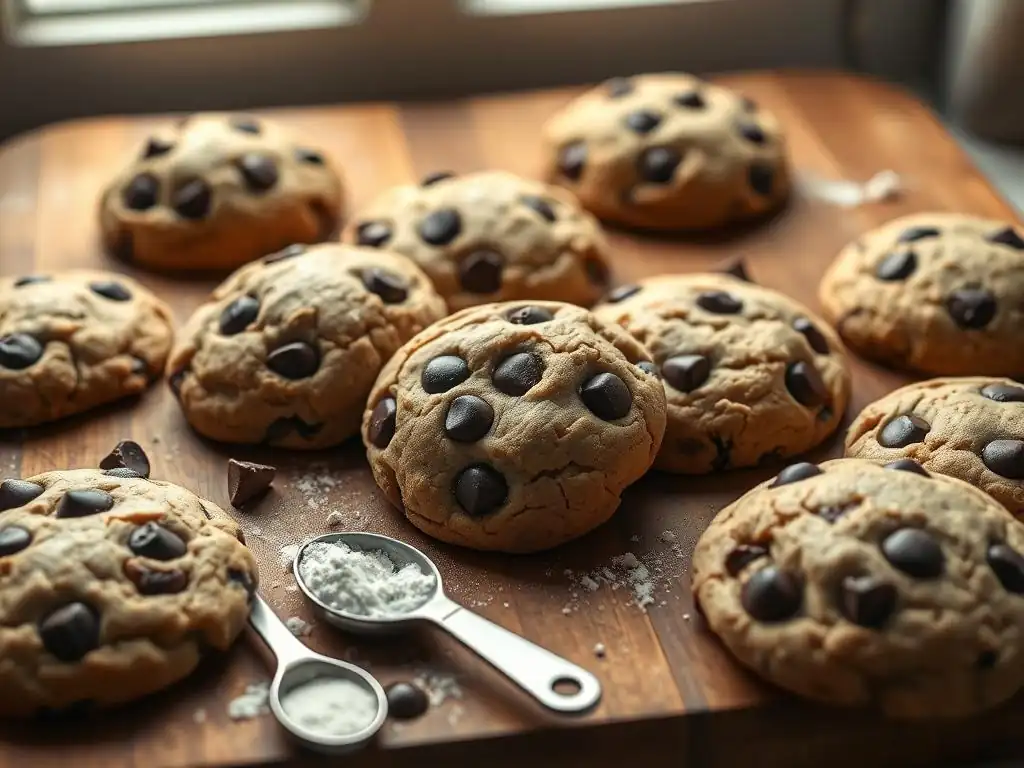
Achieving the desired texture – whether it's chewy, crisp, or soft – requires careful attention to detail when scaling recipes. Texture is a complex outcome of ingredient ratios, mixing methods, and baking conditions. Simply multiplying ingredients isn't enough; the process must also be adapted. Focusing on precise measurements and adjusting techniques are key strategies for preserving that perfect bite.
The way you handle the dough after scaling also impacts texture. Overworking a large batch of dough can develop too much gluten, leading to tough cookies, especially in recipes where a tender crumb is desired. Conversely, not mixing enough can result in uneven distribution of leavening agents or fat, leading to inconsistent textures within the batch. Mastering easy cookie recipe scaling means paying close attention to both the quantities and the handling of the dough.
Accurate Measurement Techniques
Accuracy in measurement is non-negotiable when scaling cookie recipes. While a slight mis-measurement might be forgivable in a small batch, multiplying that error for a large batch can lead to significant deviations in the final product. Using the correct tools and techniques is fundamental.
- Use dry measuring cups for dry ingredients (flour, sugar).
- Use liquid measuring cups for liquids (milk, extracts).
- Level dry ingredients with a straight edge.
- Measure sticky ingredients like honey or syrup carefully.
For example, scooping flour directly from the bag with a measuring cup can pack it, resulting in up to 25% more flour than intended. When scaling, this error is multiplied, potentially adding pounds of extra flour to a large batch, drastically altering the flour-to-liquid ratio and resulting in dry, dense cookies. Proper technique, like spooning flour into the cup and leveling, is crucial for accurate easy cookie recipe scaling.
Weight vs. Volume Measurement
For the highest level of accuracy, especially when scaling, measuring ingredients by weight is strongly recommended over volume. The weight of an ingredient is consistent, regardless of how it's packed or its granularity. A cup of flour can weigh anywhere from 120g to 150g depending on how it's measured, but 150g of flour is always 150g.
| Ingredient Type | Volume Measurement Issues | Weight Measurement Benefits |
|---|---|---|
| Flour | Can be packed, leading to excess | Consistent mass, regardless of packing |
| Sugar (Granulated) | Varies slightly with crystal size | Consistent mass |
| Sugar (Brown) | Must be packed firmly, variability in packing | Consistent mass, removes packing inconsistency |
| Butter | Sticks are pre-portioned by weight (often 113g/half cup) | Most accurate way to measure partial amounts or large quantities |
| Liquids | Surface tension can affect meniscus reading | Highly accurate and consistent |
When performing easy cookie recipe scaling, converting recipes to weight measurements ensures that the ratios remain constant, minimizing the impact of measurement variability across different batch sizes. Many professional recipes and baking resources provide ingredient weights for this very reason.
Baking Time and Temperature Adjustments
Scaling a recipe doesn't mean you simply bake a larger batch for the same amount of time. The increased volume of dough on a baking sheet affects heat distribution. A sheet packed with cookies requires more energy from the oven to heat up, and the cookies in the center may bake slower than those on the edges.
You may need to slightly decrease the oven temperature or increase the baking time, or both. For instance, if a single sheet of cookies bakes at 350°F (175°C) for 10-12 minutes, baking two sheets simultaneously might require rotating the pans halfway through, potentially adding a few extra minutes to the total baking time, or even dropping the temperature to 325°F (160°C) to prevent the edges from burning before the centers are done.
Monitoring the cookies closely and relying on visual cues (golden edges, set centers) rather than strict time is essential when scaling up. Easy cookie recipe scaling involves these crucial final adjustments.
Step-by-Step Scaling Guide
Scaling a cookie recipe systematically can help ensure success. Breaking down the process into manageable steps makes easy cookie recipe scaling less daunting and reduces the chance of errors. Follow these steps to confidently scale your favorite recipes.
1. Determine Desired Batch Size
The first step is to decide exactly how much more or less dough you need. Do you want double the recipe? Half? Ten times? Be specific about your target yield (e.g., "I want to make 100 cookies instead of the original 24").
2. Calculate Scaling Factor
Once you know your desired batch size, calculate the scaling factor. This is the number you will multiply all ingredients by.
- If the original recipe yields 24 cookies and you want 100: Scaling Factor = Desired Yield / Original Yield = 100 / 24 = 4.17 (approx).
- If the original recipe uses 2 cups of flour and you want to double it: Scaling Factor = 2.
- If you want half the recipe: Scaling Factor = 0.5.
Use a calculator and be precise with this number. This is the core of easy cookie recipe scaling.
3. Adjust Ingredient Quantities
Multiply the quantity of each ingredient by the calculated scaling factor. This is where using weight measurements is highly beneficial, as multiplying grams or ounces is straightforward.
For example, if a recipe calls for 1 cup (125g) of flour and your scaling factor is 4.17:
- Volume: 1 cup * 4.17 = 4.17 cups (difficult to measure accurately).
- Weight: 125g * 4.17 = 521.25g (much easier and more accurate to measure).
Original Ingredient | Original Quantity | Scaling Factor | Scaled Quantity
--------------------|-------------------|----------------|----------------
Butter              | 1 cup (227g)      | 4.17           | 4.17 cups (946g)
Granulated Sugar    | 0.5 cup (100g)    | 4.17           | 2.085 cups (417g)
Large Eggs          | 1                 | 4.17           | 4.17 eggs
All-Purpose Flour   | 1.5 cups (188g)   | 4.17           | 6.255 cups (784g)
Baking Soda         | 1 tsp (4.5g)      | 4.17           | 4.17 tsp (18.8g)
Dealing with fractions of eggs can be tricky. For 4.17 eggs, you might use 4 whole eggs and weigh a portion of a fifth egg (a large egg weighs about 50g without the shell, so 0.17 * 50g = 8.5g) or accept the slight variation of using 4 or 5 whole eggs depending on the total batch size. For easy cookie recipe scaling, weigh what you can.
4. Mixing Techniques for Scaled Dough
Scaling up means dealing with a larger volume of dough in your mixer. Be mindful of the mixer's capacity and adjust mixing times. A large batch takes longer to come together and longer to cream properly.
- Use a stand mixer if scaling significantly. A hand mixer likely won't handle the volume.
- Start on low speed to combine dry and wet ingredients, preventing flour clouds.
- Mix only until just combined, especially after adding flour, to avoid overdeveloping gluten.
- Scrape down the bowl frequently to ensure even mixing.
[ ] Select appropriate mixer size for the scaled batch.
[ ] Add ingredients in the specified order.
[ ] Mix on appropriate speeds.
[ ] Scrape down the bowl sides and bottom often.
[ ] Mix only until ingredients are just incorporated.
Over-mixing is a common pitfall when scaling, leading to tough cookies. Pay attention to the look and feel of the dough rather than relying solely on the original recipe's mixing times.
5. Baking Scaled Batches
Baking scaled batches requires adjusting rack placement, using multiple pans, and potentially altering bake time and temperature.
- Use multiple baking sheets, ideally only baking one or two sheets at a time for even heat circulation.
- If baking multiple sheets, rotate them halfway through (top to bottom, front to back).
- Monitor cookies closely for doneness, as bake time may vary. Look for golden edges and a set center.
- Allow pans to cool slightly between batches or use multiple pans to avoid putting dough on a hot sheet.
Putting dough on a hot sheet can cause cookies to spread too quickly before they have a chance to set. Using cool pans is a small but important detail for achieving consistent results with easy cookie recipe scaling.
Troubleshooting Scaling Issues
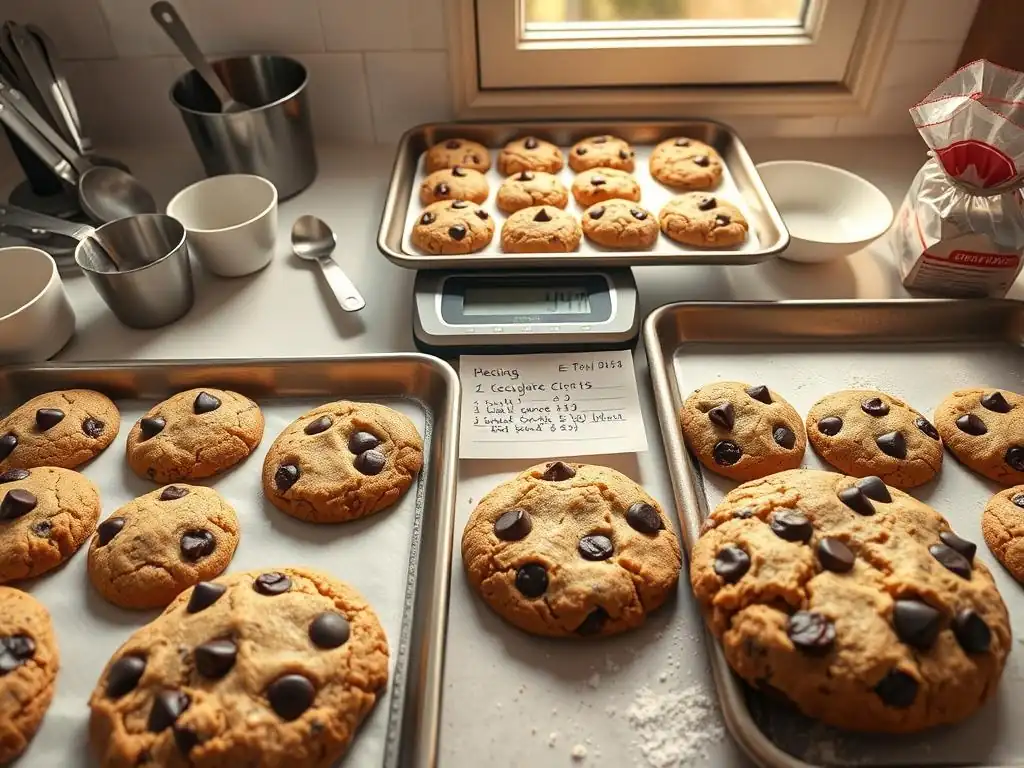
Even with careful calculation, scaling can sometimes lead to unexpected results. Knowing how to identify and fix common problems is part of mastering easy cookie recipe scaling.
Excessive spread is often caused by too much butter (or butter that is too soft), too little flour, or dough that isn't chilled enough. When scaling, it might be due to mis-measurement, the heat generated during large-batch mixing softening the butter, or inadequate chilling time for the increased volume of dough.
If your scaled cookies are spreading excessively:
- Check your measurements, ideally using weight.
- Ensure your butter was at the correct temperature before mixing and wasn't melted during mixing.
- Thoroughly chill the scaled dough. A large batch might need several hours or even overnight in the refrigerator.
- Consider slightly increasing the flour quantity by weight in subsequent batches if other factors are controlled. Start with a small adjustment (e.g., 5-10% increase in flour weight).
Properly chilled dough is your best friend when battling excessive spread, especially with large batches.
Dry, crumbly cookies can result from too much flour, too little fat or liquid (like eggs), or overbaking. When scaling, it might be due to over-measuring flour (common with volume measurements), losing moisture during extended mixing or chilling, or baking too long.
If your scaled cookies are too dry:
- Verify flour measurement accuracy, preferably using weight.
- Ensure eggs or other liquid ingredients were correctly scaled. Remember that scaling egg quantities precisely can be challenging.
- Avoid over-mixing, which can dry out the dough.
- Adjust baking time, pulling cookies out when they are just set in the center, even if the edges aren't deeply golden.
- In future scaled batches, consider reducing the flour slightly (again, by weight, perhaps 5-10%) or adding a touch more liquid (like a tablespoon of milk or an extra partial egg weight) if the issue persists.
Uneven Baking
Uneven baking typically stems from inconsistent dough portioning, improper spacing on the baking sheet, or poor heat distribution in the oven. When scaling and using multiple sheets, oven hot spots and lack of rotation are common culprits.
To combat uneven baking in scaled batches:
- Use a scoop or scale to portion dough for consistent cookie size. A difference of even 5-10 grams can affect bake time.
- Ensure cookies are spaced evenly on the baking sheet, allowing air to circulate.
- If using multiple sheets, bake one sheet at a time if possible.
- If baking multiple sheets simultaneously, rotate their positions (top/bottom rack, front/back) halfway through the baking time.
- Calibrate your oven if you suspect it has significant hot spots.
Consistent dough portioning is a simple step that significantly improves baking uniformity across a large batch, making easy cookie recipe scaling much more reliable.
Ingredient-Specific Scaling Considerations
Some ingredients behave differently when scaled, requiring specific attention. Understanding these nuances is key to successful easy cookie recipe scaling.
Scaling Butter
Butter's state (cold, room temperature, melted) is crucial in cookie recipes, affecting spread and texture. When scaling large quantities, it takes longer for cold butter to soften evenly, and the mechanical action of a mixer can heat it up quickly.
For easy cookie recipe scaling with butter:
- Ensure butter is at the correct temperature specified by the recipe before you start mixing, especially for creaming methods. This might mean cutting cold butter into smaller pieces to help it soften evenly.
- Be mindful of mixing time; stop mixing once the butter and sugar are properly creamed (light and fluffy, about 3-5 minutes for a standard batch, potentially longer but watch for overheating in a large batch).
- If using melted butter, ensure it's cooled slightly before combining with other ingredients, especially eggs, in a large batch, as the residual heat is amplified.
Scaling Sugar
Sugar contributes sweetness, tenderness, and aids in spread and browning. Different types of sugar (granulated, brown, powdered) behave differently. Brown sugar, for instance, adds moisture and chewiness due to molasses content.
When scaling sugar:
- Weighing sugar is the most accurate method, particularly brown sugar which needs to be packed when measured by volume.
- Be aware that scaling up sugar can exacerbate spread issues, especially in recipes already high in sugar. Ensure other ingredients (like flour and leavening) are scaled accurately to balance this.
- The ratio of granulated to brown sugar in a recipe is often key to texture; maintain this ratio precisely when scaling. For example, if a recipe uses a 1:1 ratio of granulated to brown sugar, ensure your scaled quantities maintain this exact proportion by weight.
Scaling Flour
Flour provides structure to cookies. Too much leads to dryness and toughness, too little leads to excessive spread. The type of flour (all-purpose, cake, bread) also matters due to differing protein content.
For easy cookie recipe scaling with flour:
- Always measure flour by weight for scaling. This eliminates the variability of volume measurement.
- Use the type of flour specified in the original recipe. Substituting flour types when scaling can significantly alter the outcome.
- Add flour gradually to the wet ingredients when mixing scaled batches, mixing only until just combined. Over-mixing flour develops gluten, which is amplified in larger dough volumes and results in tough cookies. Stop mixing as soon as no dry streaks are visible.
Scaling Eggs
Eggs provide structure, moisture, and richness, and act as a binding agent. Scaling egg quantities can be challenging when the scaling factor isn't a whole number.
For scaling eggs in cookie recipes:
- Use large eggs unless the recipe specifies otherwise.
- If the scaling factor results in a fraction of an egg (e.g., 2.5 eggs), the most accurate method is to weigh the required portion of a whole egg (a large egg without the shell is typically 50-55g). For 0.5 egg, use about 25-28g.
- Alternatively, for small fractional amounts (like 0.25 or 0.75), you might choose to round up or down to the nearest whole egg, understanding this introduces a slight variable. For larger scaling factors, weighing the egg portion is recommended for precision in easy cookie recipe scaling.
- Ensure eggs are at room temperature if specified by the recipe, as this aids in emulsification, which is especially important in large batches.
Expert Scaling Tips
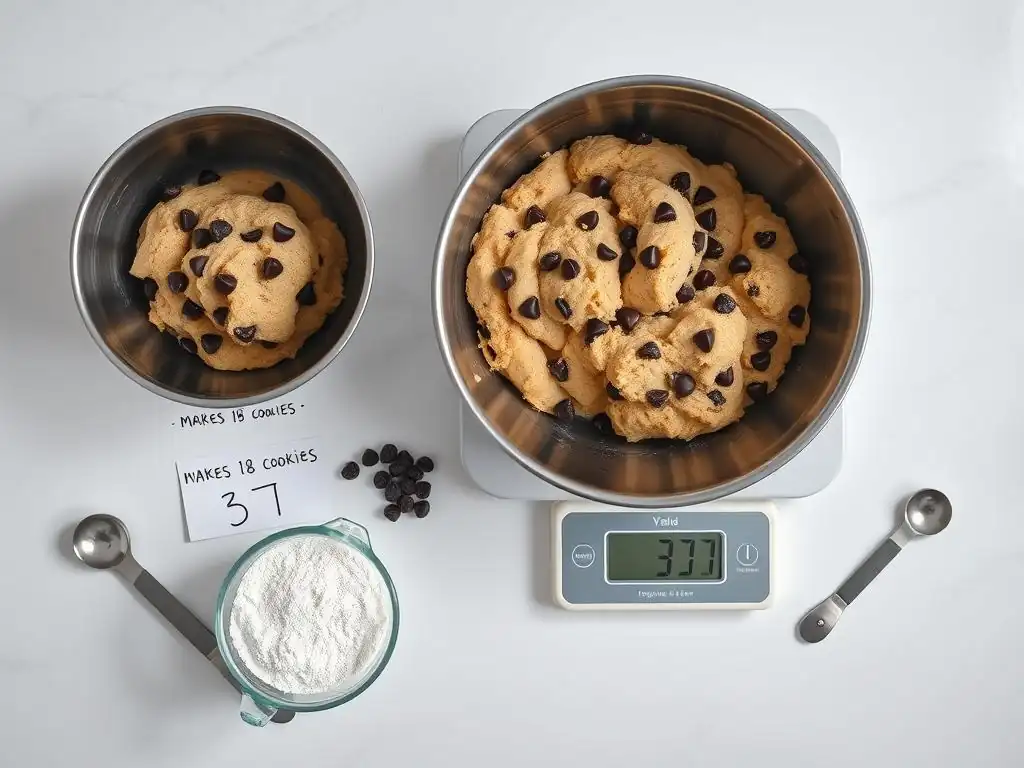
Beyond the basic steps, a few expert tips can make your easy cookie recipe scaling efforts even more successful and consistent.
Using a Baking Calculator
Online baking calculators or spreadsheet tools can take the guesswork out of multiplying ingredient quantities, especially when dealing with fractional scaling factors or converting between volume and weight.
- Input the original ingredient list and quantities (ideally by weight).
- Enter your desired scaling factor or target yield.
- The calculator provides the scaled quantities for each ingredient.
While a calculator helps with the math, it's still up to you to measure accurately and adjust techniques. But for the calculation step of easy cookie recipe scaling, these tools are invaluable.
Documenting Adjustments
Keep a baking journal or notes on your scaled attempts. Record the original recipe, the scaling factor used, the scaled quantities (especially if you made minor adjustments like adding an extra gram of flour), and the outcome (spread, texture, bake time).
Example Journal Entry:
Recipe: Classic Choc Chip (Original yield: 24)
Scaling Factor: 3x (Desired yield: 72)
Adjustments Made:
- Used 3 large eggs (instead of 3 * 1 = 3, no fraction needed this time!)
- Added 15g extra flour (approx. 1 tbsp) due to past spread issues.
- Reduced oven temp to 340°F (170°C).
- Baked 2 sheets at a time, rotated pans after 8 mins. Total bake time: 14 mins/batch.
Outcome: Excellent! Spread was controlled, texture chewy. Bake time adjustment was key.
This documentation is crucial for refining your easy cookie recipe scaling process. If a scaled batch isn't perfect, your notes help you pinpoint what might have gone wrong and inform adjustments for the next attempt.
Testing Small Batches
Before committing a large quantity of expensive ingredients to a massive scaled batch, perform a small test batch using the scaled-down quantities.
- Calculate the scaled quantities for a manageable amount, perhaps just enough for 6-12 cookies.
- Mix and bake this small test batch using your scaled process (adjusting mixing time slightly for the smaller volume, baking on one sheet).
- Evaluate the cookies for texture, spread, and flavor.
- Based on the test batch results, make any necessary adjustments to your scaled recipe before making the full large batch.
Testing is a safety net that saves ingredients and frustration, ensuring your easy cookie recipe scaling leads to the desired outcome.
Advanced Scaling Techniques
For those looking to push their easy cookie recipe scaling skills further, consider these advanced techniques.
Scaling Multi-Component Recipes
Some cookies involve multiple distinct components, like separate doughs, fillings, or frostings. Scaling these requires careful consideration of each component individually and how they interact.
For instance, a cookie with a shortbread base and a caramel filling. You need to scale the shortbread dough, the caramel filling, and potentially a crumble topping. Ensure the scaled quantities of each component remain in proportion to the others. If doubling, you need double the dough, double the filling, and double the topping. However, the baking time for a thicker layer of filling in a scaled-up bar cookie might need significant adjustment compared to the original. Think about how the increased volume of each part affects the overall structure and baking process.
Adapting for Different Oven Types
Scaling large batches often means using multiple oven racks or even different ovens (e.g., a home oven vs. a convection oven). Different ovens bake differently. Convection ovens, for example, circulate air, which can lead to faster baking and more even results, but may require a temperature reduction (often by 25°F or 15°C) compared to a conventional oven.
When performing easy cookie recipe scaling for a large quantity:
- If using multiple conventional ovens, be aware that they may bake slightly differently.
- If using a convection oven, research recommended temperature and time adjustments for cookies. A common starting point is reducing temperature by 25°F and checking for doneness sooner.
- Practice with test batches in the specific oven(s) you'll be using for the large batch to understand their quirks.
Understanding your equipment is as important as understanding the recipe when scaling for consistent results.
Scaling cookie recipes doesn't have to be a source of frustration. By understanding the underlying principles of baking, paying close attention to accurate measurement (especially by weight), and being willing to adjust mixing and baking techniques, you can confidently tackle any batch size. From calculating scaling factors to troubleshooting common issues like spread or dryness, each step contributes to your success.
Remember to document your efforts and consider testing small batches before committing to a large production run. With practice and attention to detail, easy cookie recipe scaling will become a natural part of your baking routine, allowing you to share your delicious creations with more people or simply enjoy a cozy few without excess. Happy scaling!
Frequently Asked Questions
Scaling cookie recipes successfully relies on maintaining ingredient ratios. Use a calculator or spreadsheet to ensure accurate proportional adjustments for each ingredient.
One common mistake is not adjusting baking time appropriately. Another is failing to properly convert measurements when scaling significantly up or down. Also, neglecting the impact on dough chilling time can also be a factor.
Yes, scaling can impact baking time. Larger batches may require slightly longer baking times, while smaller batches need less. Temperature often remains the same, but oven calibration is crucial.
A kitchen scale is invaluable for precise measurements. Online recipe scaling calculators and conversion charts can also assist in ensuring accurate ingredient ratios.
Scaling can affect the dough's consistency and chilling time. Larger batches may require longer chilling, while smaller batches might need less. Ensure the dough remains workable and doesn't become too dry or wet during the scaling process.
Final Reflection: The Sweet Science of Scaling Success
Mastering the art of scaling cookie recipes isn't just about making more cookies; it's about preserving the perfect texture and taste that makes them irresistible. This article explored the often-overlooked science behind scaling baking recipes, highlighting the crucial role of ratios and ingredient interactions. From understanding the function of each ingredient to adapting baking times and temperatures, we've uncovered the secrets to consistently delicious, perfectly scaled batches, no matter the size.
The impact of easily scalable recipes extends far beyond the kitchen. It empowers home bakers to confidently tackle larger orders for parties, holidays, or even small businesses. It fosters a sense of culinary accomplishment and encourages experimentation with different flavors and variations. The joy of sharing perfectly baked cookies, made in larger quantities without compromise, is a powerful experience. Baking is at once child's play and adult joy. And cooking is all about caring.
- Alma Flor Ada. This quote perfectly encapsulates the satisfaction derived from mastering the art of scaling recipes and sharing the delicious results.
Now, it's your turn to embrace the sweet science of scaling. Don't be intimidated by larger batches; instead, use the knowledge gained here to confidently experiment, adapt, and create your own perfectly scaled cookie masterpieces. Imagine the possibilities: a mountain of perfectly chewy chocolate chip cookies for a holiday gathering, or a delightful assortment of miniature cookies for a bake sale. The only limit is your imagination – and perhaps, the size of your oven!
Thanks for joining us on this delicious journey into scaling cookie recipes! You now have the knowledge to bake bigger batches without compromising on those perfectly textured cookies. Ready to put your new skills to the test?
- Bake a double batch of your favorite cookies using the adjusted recipe you created, and savor the extra sweetness. This is your chance to truly master the art of scaling!
- Share your baking triumphs (and maybe even your epic fails!) with us in the comments below. Let’s build a supportive baking community together!
- Experiment with scaling other recipes – try a triple batch of your go-to brownies! See how far you can take these techniques.
What incredible cookie creations will you bake next, now that you’ve mastered scaling?