
Understanding Gluten Development in Puff Pastry Dough

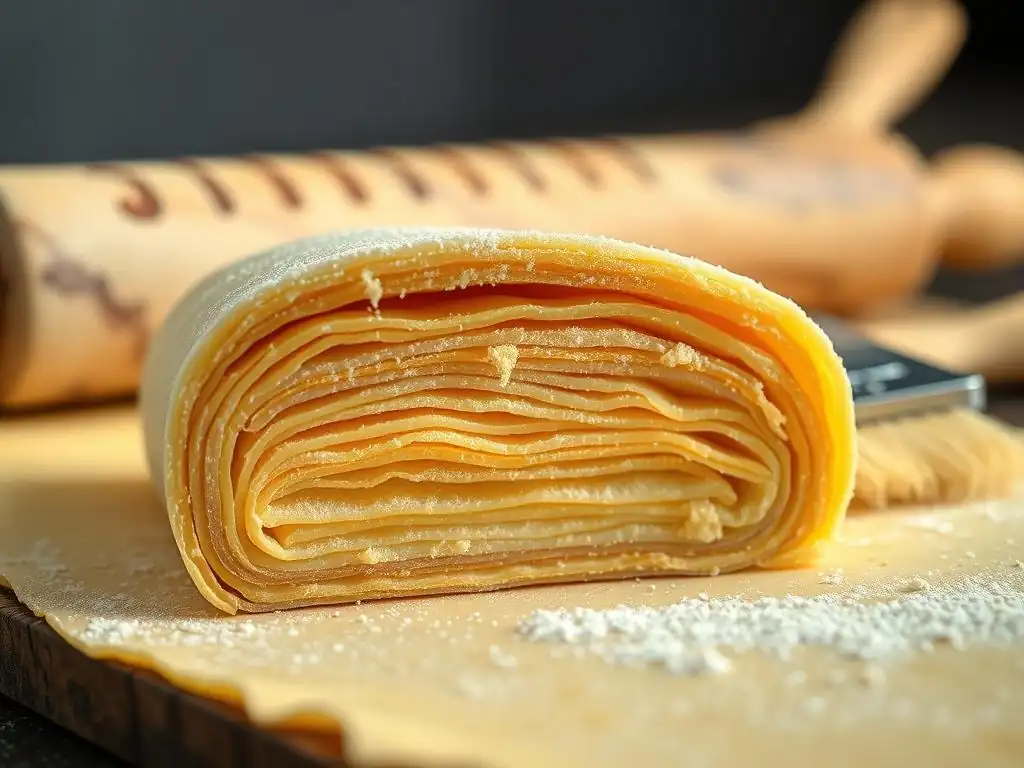
Welcome to BakeWithEase, your guide to confident baking! Ever wondered how those delicate, flaky layers in puff pastry are achieved? This article dives deep into the secret ingredient: gluten development puff pastry dough. Prepare to unlock the science behind this culinary masterpiece and elevate your baking skills. Let's explore the techniques that transform simple ingredients into something truly extraordinary... are you ready to create some magic?
- Understanding Gluten Development in Puff Pastry for Optimal Flakiness
- Introduction to Gluten and Puff Pastry
- Gluten Development in Puff Pastry Dough: The Science
- Mixing Techniques for Gluten Control
- Lamination and Gluten Alignment
- Resting and Refrigeration: Gluten Relaxation
- Troubleshooting Gluten-Related Issues
- Advanced Techniques for Gluten Control
- Baking and Gluten: The Final Transformation
- Conclusion: Mastering Puff Pastry Through Gluten Control
-
Frequently Asked Questions
- What is gluten development and why is it important in puff pastry dough?
- How does the mixing process affect gluten development in puff pastry dough?
- What role does fat play in controlling gluten development in puff pastry?
- How can I avoid overworking the dough and prevent excessive gluten development?
- What are the signs of underdeveloped or overdeveloped gluten in puff pastry dough?
- Final Reflection: The Intricate Dance of Gluten in Puff Pastry
- Unleash Your Inner Pastry Chef!
Understanding Gluten Development in Puff Pastry for Optimal Flakiness
Introduction to Gluten and Puff Pastry
Mastering puff pastry is a rewarding baking achievement, and at the heart of its signature flakiness lies a fascinating interaction: gluten development. Unlike many bread doughs where robust gluten is desired for structure and chew, puff pastry requires a delicate balance. Understanding how gluten behaves in this specific dough is key to achieving those light, airy layers.
What is Gluten and Its Importance in Baking?
Gluten is a complex network formed when two proteins, glutenin and gliadin, found in wheat flour, combine with water and are worked (mixed or kneaded). Glutenin provides elasticity and strength, while gliadin contributes extensibility and stretchiness. Together, they create a viscoelastic dough that can hold shape and trap gasses.
In baking, gluten is crucial for structure. In yeasted breads, it forms a framework that captures carbon dioxide produced by yeast, allowing the bread to rise. In cakes and pastries, gluten development is often minimized to ensure tenderness. For puff pastry, the controlled development of gluten is essential, but its structure must be aligned and relaxed to allow for the distinct layers to form during baking.
The Role of Gluten in Puff Pastry Structure
Puff pastry's unique structure is defined by countless thin layers of dough separated by layers of fat. When baked, the water in the dough turns to steam, forcing these layers apart and creating the characteristic rise and flakiness. The gluten network within the dough layers provides the necessary strength and elasticity to stretch without breaking as the steam expands.
However, excessive or uncontrolled gluten development in puff pastry dough can lead to a tough, dense, and less flaky result. The gluten strands must be strong enough to hold the layers but also extensible enough to stretch thinly during lamination and baking. The careful management of gluten development puff pastry dough is paramount to achieving the desired light texture.
Gluten Development in Puff Pastry Dough: The Science
The science behind gluten formation in puff pastry involves the interaction of ingredients and mechanical action. It's a delicate balance aimed at creating a dough that is both strong enough to handle repeated rolling and folding, yet tender enough to bake into crisp, separated layers. Understanding these factors helps bakers control the process.
Key Ingredients Impacting Gluten Formation
Several ingredients directly influence the formation and behavior of the gluten network in puff pastry dough. Flour type, specifically its protein content, is the primary driver. Water is essential for initiating the gluten bonding process. Salt strengthens the gluten network, while fat, particularly when layered as in puff pastry, acts as a barrier, inhibiting extensive gluten connection between layers.
The ratio of these ingredients is carefully balanced in puff pastry recipes. Typically, the dough (often called the détrempe) contains flour, water, a small amount of salt, and sometimes a little butter or shortening within the dough itself, distinct from the large block of fat used for lamination. This initial mix begins the gluten development puff pastry dough requires.
Flour Selection: Protein Content and Gluten Strength
The choice of flour is perhaps the most critical factor influencing gluten development in puff pastry. Flours vary significantly in protein content, typically ranging from around 8% for cake flour to 14% for bread flour. A higher protein content means more glutenin and gliadin are available to form gluten.
For puff pastry, a medium-protein flour, such as all-purpose flour (typically 10-12.5% protein), is often recommended. This provides enough protein for a strong yet extensible gluten network capable of stretching into thin layers. Using a low-protein flour might result in a dough too weak to hold its structure during lamination, while a high-protein flour could lead to excessive gluten development, resulting in tough pastry. Some bakers prefer pastry flour (8-10% protein) for a more tender result, accepting a slightly more delicate dough.
Water's Role: Hydration and Dough Consistency
Water is indispensable for gluten development; it hydrates the proteins, allowing them to bond and form the network. The amount of water in the dough, or its hydration level, significantly impacts the dough's consistency and the rate of gluten formation. Puff pastry dough typically has a relatively low hydration compared to bread doughs, often using water at around 50-60% of the flour weight for the détrempe.
This lower hydration helps control gluten development, preventing it from becoming too strong too quickly. The consistency of the dough should be firm yet pliable, allowing it to be rolled thinly without tearing. Water temperature also plays a role; using cold water helps keep the dough cool, which is crucial for managing both gluten development and keeping the fat solid during mixing and initial handling.
Mixing Techniques for Gluten Control
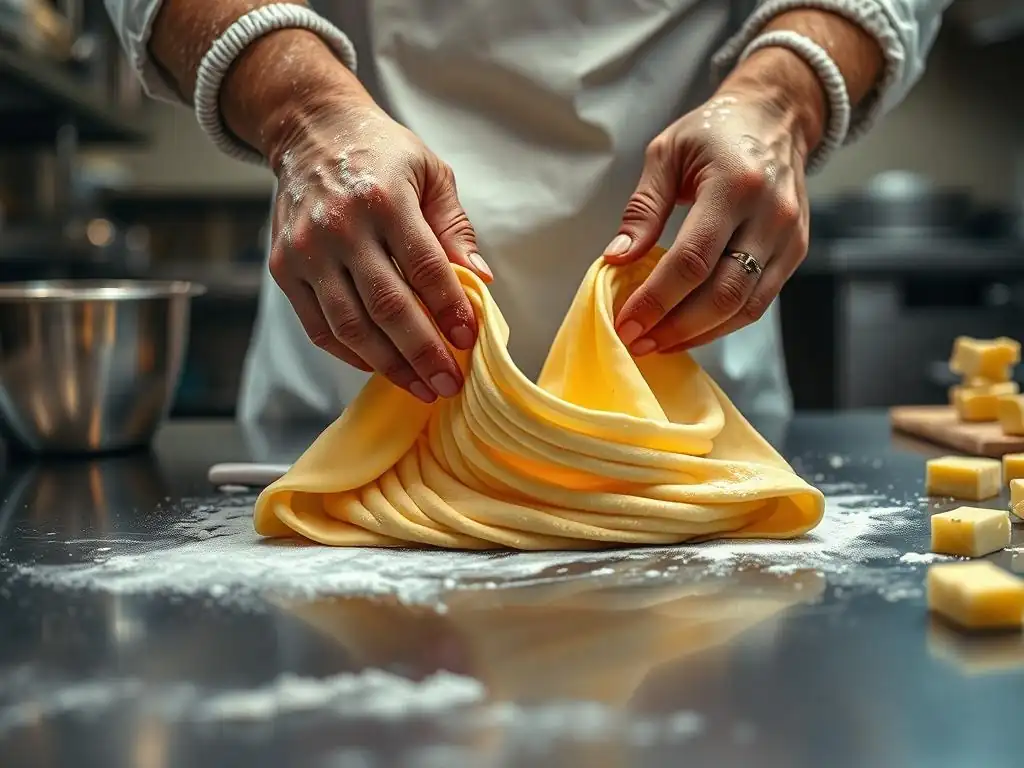
The way the ingredients are combined and worked plays a vital role in controlling the gluten development puff pastry dough undergoes. The goal is to develop just enough gluten for structure without overworking it, which would lead to toughness. Gentle mixing techniques are often preferred over vigorous kneading.
Mixing Time: Achieving Optimal Dough Development
Unlike bread doughs that might be kneaded for 10-15 minutes to develop strong gluten, puff pastry dough requires much less mixing. The initial mixing of the détrempe ingredients is primarily focused on combining them into a cohesive mass. Over-mixing at this stage can lead to premature and excessive gluten development.
Typically, the dough is mixed until it just comes together, perhaps for only 2-3 minutes in a stand mixer on low speed or a similar short duration by hand. Further gluten development will occur during the rolling and folding process (lamination). The limited initial mixing ensures the gluten network is present but not overly tight, allowing the dough to be easily rolled out later.
Assessing Dough Readiness: The Stretch Test
While full gluten development isn't the goal initially, bakers can perform a simple test to get a sense of the dough's state. The "windowpane test," commonly used for bread dough, can be adapted. After the initial mixing and perhaps a short rest, take a small piece of dough and gently stretch it between your fingers.
For puff pastry dough, you're not looking for a translucent windowpane like in bread. Instead, you want the dough to stretch a little without immediately tearing. It should show some elasticity and cohesion, indicating a basic gluten network has formed but is still relatively weak and extensible. If it snaps back immediately or tears very easily, it might need a very short additional mix or rest. If it feels tight and resistant, it may have been slightly overmixed initially, emphasizing the importance of careful gluten development puff pastry dough relies upon.
Lamination and Gluten Alignment
Lamination is the signature technique of puff pastry, involving enclosing a block of fat within the dough and repeatedly folding and rolling the dough. This process is not only about creating layers of fat and dough but also significantly impacts the gluten structure.
Fat Incorporation: Impact on Gluten Layers
The large block of cold butter or other fat is the key to puff pastry's flakiness. When this fat is enclosed within the détrempe and the dough is rolled and folded, the fat spreads into thin layers between the dough layers. These fat layers serve a crucial purpose: they act as a barrier.
These fat barriers physically separate the layers of dough. This separation prevents the gluten networks in adjacent dough layers from bonding together during rolling and resting. Instead of forming one large, continuous gluten network throughout the entire mass, the gluten development puff pastry dough experiences is confined within each individual, thin dough layer. This compartmentalization is essential for allowing the layers to separate and puff during baking.
Folding Techniques: Creating Flaky Layers
The repeated folding and rolling steps, often called "turns," are where the magic of lamination happens. Common folding techniques include the single fold (folding the dough into thirds) and the book fold (folding both ends to the center, then folding in half, creating four layers). Each turn multiplies the number of fat and dough layers.
As the dough is rolled, the existing gluten network within each layer is stretched and aligned. The resting periods between turns are critical for allowing the gluten to relax, reducing its elasticity and making the dough easier to roll without tearing. This stretching and relaxing process, combined with the separating action of the fat layers, refines the gluten structure within the individual dough sheets, preparing them to puff dramatically in the oven.
Resting and Refrigeration: Gluten Relaxation
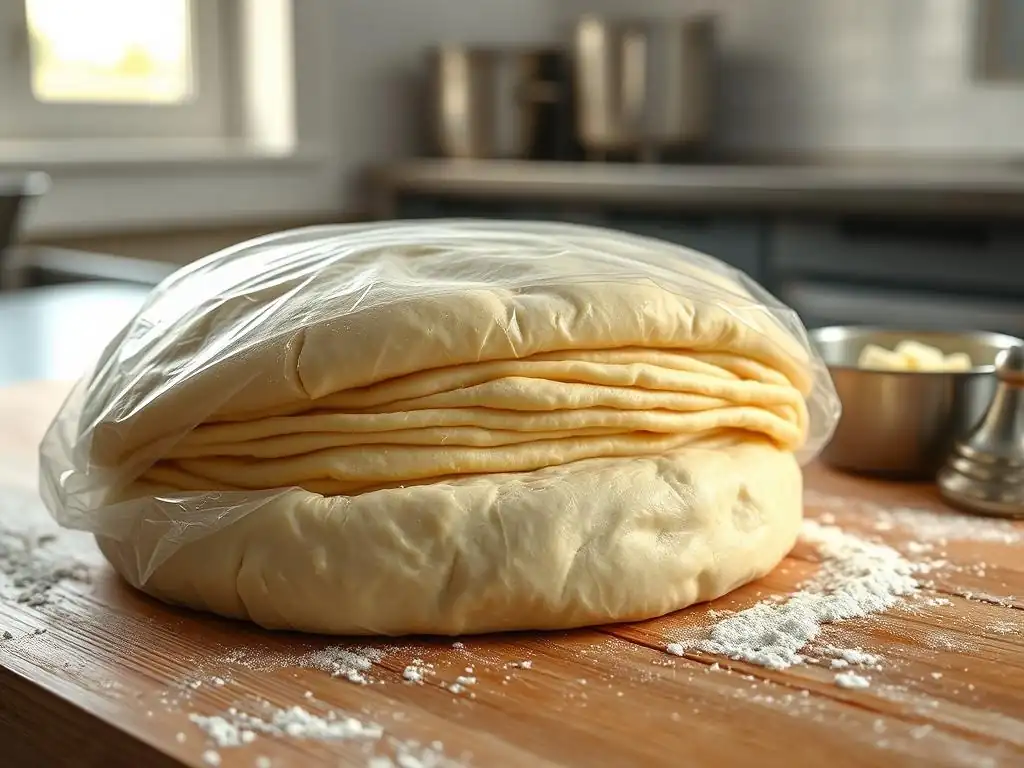
Resting the dough between turns and for a longer period before baking is absolutely vital for successful puff pastry. This isn't just about keeping the fat cold; it's also crucial for managing the gluten development puff pastry dough undergoes.
Temperature's Impact: Maintaining Fat Integrity
Keeping the dough cold, typically refrigerated between 35°F and 40°F (around 2°C to 4°C), is essential. At these temperatures, the fat remains solid and distinct from the dough. If the dough warms up, the fat can melt and be absorbed into the dough layers, destroying the separation needed for flakiness.
Cold temperatures also slow down gluten development and enzyme activity. While some gluten development continues slowly in the cold, the primary benefit of chilling is allowing the gluten network that was stretched during rolling to relax. A relaxed gluten network is less elastic and resistant, making the dough easier to roll out thinly in subsequent turns without shrinking back excessively.
Resting Time: Dough Elasticity and Extensibility
Sufficient resting time, both between folds (usually 30-60 minutes) and for the final dough before baking (often several hours or even overnight), is critical for gluten relaxation. After rolling and folding, the gluten network is tight and elastic, causing the dough to resist stretching and try to spring back.
Allowing the dough to rest gives the gluten proteins time to rearrange and relax. This relaxation reduces the dough's elasticity and increases its extensibility – its ability to be stretched thinly without tearing. A well-rested dough will roll out smoothly and evenly, creating uniform layers that are essential for an even rise and optimal flakiness during baking. Insufficient resting leads to a dough that is difficult to work with and results in uneven layers and less puff.
Even with careful technique, gluten development can sometimes go awry in puff pastry. Recognizing the signs of over- or under-developed gluten and knowing how to address them is part of mastering this pastry.
Tough Dough: Overdeveloped Gluten Solutions
A tough, rubbery dough that is difficult to roll and springs back excessively is usually a sign of overdeveloped gluten. This can happen if the initial mixing was too long, if the dough wasn't rested sufficiently between turns, or if a flour with too high protein content was used. The gluten network has become too strong and tight.
- Solution: If the dough feels tough after a turn, give it a longer rest in the refrigerator, perhaps 60-90 minutes instead of 30. This allows more time for gluten relaxation. Ensure your initial mixing is minimal. Consider using a slightly lower protein flour for future attempts. Unfortunately, once gluten is significantly overdeveloped, it's hard to fully reverse, but sufficient resting is the best approach to improve its extensibility.
Weak Dough: Insufficient Gluten Development Solutions
A dough that is sticky, tears easily during rolling, and lacks structure might indicate insufficient gluten development. This could be due to using a very low-protein flour, not mixing the initial détrempe enough to form a basic network, or potentially using ingredients that inhibit gluten formation (though less common in standard puff pastry).
- Solution: If the initial dough feels too weak, a very brief additional mix (15-30 seconds) might help, but be cautious. Ensure you are using at least an all-purpose flour. Sometimes, simply proceeding with the lamination process and allowing the rolling action to contribute to development, combined with adequate resting, will build sufficient structure. The gluten development puff pastry dough gains during rolling is significant.
Advanced Techniques for Gluten Control
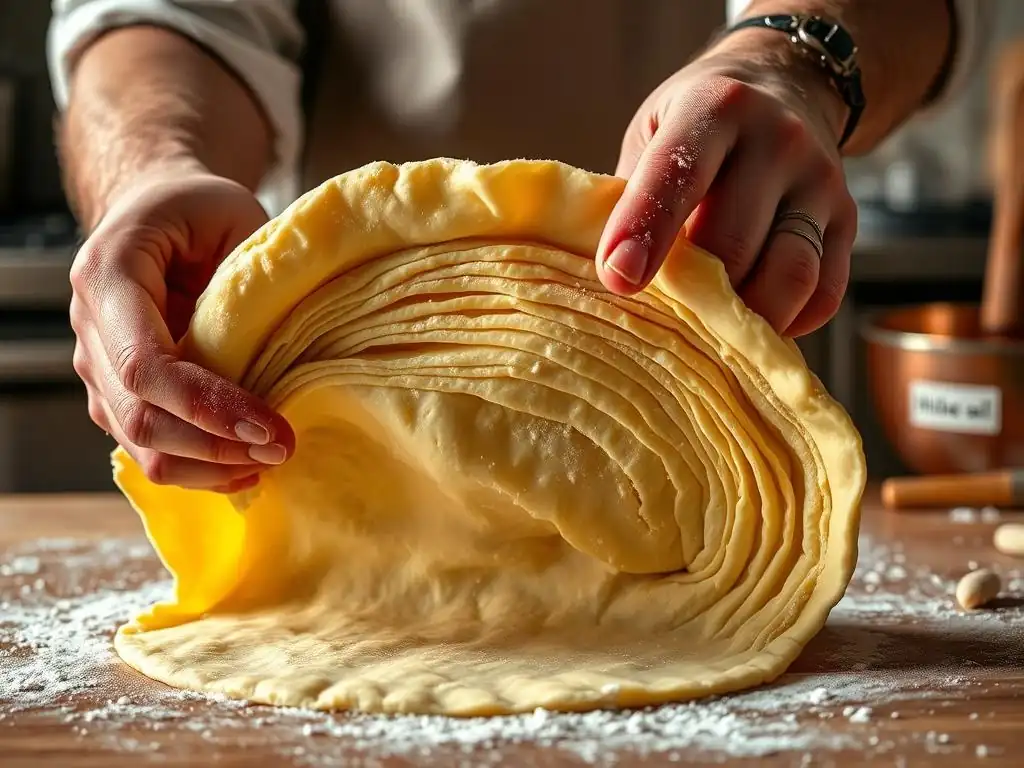
Beyond the basic ingredients and techniques, some advanced approaches can further refine gluten control in puff pastry, allowing for variations or accommodating dietary needs.
Acidic Ingredients: Tenderizing Gluten
Adding a small amount of acidic ingredients, such as a splash of lemon juice or vinegar, to the détrempe water is a traditional technique sometimes used in pastry making. Acids can slightly inhibit gluten development and help tenderize the gluten network that does form.
The acidity interferes with the bonding of gluten proteins, resulting in a more relaxed network. While this effect is subtle, particularly in the context of puff pastry where gluten is already controlled, it can contribute to a slightly more tender final product. A common addition is about 1-2 teaspoons of vinegar or lemon juice per cup of water used in the dough. This technique helps manage the gluten development puff pastry dough achieves, leaning towards tenderness.
Alternative Flours: Gluten-Free Puff Pastry
Creating gluten-free puff pastry requires a completely different approach, as the structure cannot rely on the wheat gluten network. Instead, bakers use blends of gluten-free flours (like rice, tapioca, potato, or almond flour) combined with binders such as xanthan gum or psyllium husk to mimic some of the properties of gluten.
These binders provide elasticity and structure to the dough, allowing it to be rolled and folded. While the mechanism of layering fat is the same, the dough's behavior is different. Gluten-free puff pastry can achieve impressive flakiness, but the texture may differ slightly from traditional versions due to the absence of the unique properties of the wheat gluten network. Mastering gluten development puff pastry dough applies only to wheat-based versions; gluten-free relies on alternative structural components.
Baking and Gluten: The Final Transformation
The baking process is where the carefully managed gluten development puff pastry dough finally pays off. The heat of the oven triggers the rapid expansion of steam and sets the delicate layered structure.
Baking Temperatures: Setting the Gluten Structure
Puff pastry is typically baked at a relatively high temperature, often starting around 400-425°F (200-220°C). This initial high heat is crucial for two reasons: it rapidly melts the fat, creating steam, and it quickly sets the gluten structure within the dough layers.
As the steam expands, it forces the layers apart. The gluten network, having been stretched and relaxed during lamination and resting, provides just enough elasticity to allow the layers to balloon upwards without collapsing. The heat then denatures the gluten proteins, solidifying the framework of each layer. Sometimes, the temperature is reduced slightly after the initial rise to allow the pastry to bake through and brown evenly without burning.
Achieving Optimal Rise and Flakiness
Optimal rise and flakiness in puff pastry are direct results of successful lamination and controlled gluten development puff pastry dough. The hundreds or thousands of alternating thin layers of dough and fat, combined with a gluten structure that is strong enough to stretch but relaxed enough not to resist, are the keys.
During baking, the steam trapped between the dough layers lifts them dramatically. The melted fat also fries the thin dough layers, contributing to their crisp, flaky texture. A pastry with well-managed gluten will rise high and evenly, separating into distinct, airy layers that shatter when bitten into. Conversely, overdeveloped gluten can restrict the rise, resulting in a dense, tough pastry, while underdeveloped gluten might lead to layers that collapse or meld together.
Conclusion: Mastering Puff Pastry Through Gluten Control
Achieving perfect puff pastry is a journey that involves understanding and controlling several factors, with gluten development being a central element. It's a balance between creating a strong enough framework for the layers and ensuring that framework is extensible and relaxed enough to stretch and separate during baking.
Key Takeaways for Perfect Puff Pastry
- Flour Choice Matters: Use a medium-protein flour (like all-purpose) for the right balance of strength and extensibility.
- Minimal Initial Mixing: Avoid overworking the détrempe to prevent excessive early gluten development.
- Cold is Your Friend: Keep dough and fat cold throughout the process to maintain distinct layers and control gluten activity.
- Resting is Non-Negotiable: Allow ample rest time between turns and before baking for gluten relaxation.
- Lamination Builds Structure: The rolling and folding process develops and aligns the gluten within individual layers.
- Hot Oven for Puff: High initial heat creates steam and sets the structure, leveraging the gluten network you've built.
By paying close attention to these factors and understanding how they influence gluten development puff pastry dough, you can significantly improve your results and consistently achieve that coveted light, airy flakiness.
Further Resources for Puff Pastry Baking
Mastering puff pastry takes practice. Explore different recipes, experiment with slight variations in flour or technique, and pay close attention to how the dough feels at each stage. Many detailed guides and videos are available that visually demonstrate the lamination process, which can be incredibly helpful. Reading about the science, as we have here regarding gluten development puff pastry dough, combined with hands-on practice, is the best path to success. Don't be discouraged by initial attempts; each batch is a learning opportunity on your baking journey.
Frequently Asked Questions
What is gluten development and why is it important in puff pastry dough?
Gluten development refers to the formation of gluten proteins when flour is hydrated and mixed. In puff pastry, it's crucial for creating the dough's structure and elasticity, allowing it to trap steam and create flaky layers.
How does the mixing process affect gluten development in puff pastry dough?
Overmixing leads to excessive gluten development, resulting in a tough, less flaky pastry. Gentle mixing, just until the dough comes together, is key for achieving the desired texture.
What role does fat play in controlling gluten development in puff pastry?
Fat, especially butter, acts as a barrier, preventing gluten from forming strong bonds. This inhibition is essential for creating the distinctive flaky layers of puff pastry.
How can I avoid overworking the dough and prevent excessive gluten development?
Use cold ingredients, mix minimally, and rest the dough frequently in the refrigerator. These techniques help relax the gluten and prevent it from becoming overly developed.
What are the signs of underdeveloped or overdeveloped gluten in puff pastry dough?
Underdeveloped gluten results in a weak dough that tears easily. Overdeveloped gluten leads to a tough, dense pastry. Aim for a smooth, elastic dough that holds its shape without being overly sticky or resistant.
Final Reflection: The Intricate Dance of Gluten in Puff Pastry
Understanding gluten development in puff pastry dough is not merely a technical exercise; it's the key to unlocking the airy, flaky perfection that defines this beloved pastry. The precise control of gluten formation, as detailed throughout this article, directly impacts the final product's texture and overall quality, a fact that remains critically important for both professional bakers and enthusiastic home cooks alike. Mastering this process elevates puff pastry from a challenging endeavor to a rewarding culinary art.
The delicate balance between gluten strength and the need for a tender, layered structure has fascinated me throughout my research. The seemingly contradictory requirements – a strong enough gluten network to hold the layers together yet weak enough to allow for expansion – highlight the subtle artistry involved. The proof of the pudding is in the eating,
as the saying goes, and in the case of puff pastry, the proof lies in the exquisite lightness and crispness of each delicate layer. This pursuit of perfection, this understanding of the fundamental interplay of ingredients, is what makes baking such a compelling and endlessly fascinating field.
Now, consider your own baking journey. Perhaps you've experienced the frustration of a tough, dense puff pastry, or the elation of achieving that perfect, ethereal flakiness. Take what you've learned here – the importance of hydration, mixing techniques, and resting times – and apply it to your next attempt. Experiment, refine your technique, and savor the journey of mastering this intricate culinary dance. The reward? A puff pastry so exquisite, it will transport you to a realm of pure baking bliss.
Unleash Your Inner Pastry Chef!
Thanks for diving into the world of gluten development in puff pastry! You've now got the knowledge to create truly flaky masterpieces. Ready to put your new skills to the test?
- Bake a batch of puff pastry from scratch: Use what you've learned to create your own perfect puff pastry. This is your chance to experiment and refine your technique!
- Share your baking journey: Post a picture of your creation on social media and tag #BakeWithEase – let's see those golden, layered results!
- Explore advanced puff pastry techniques: Dive deeper into different fillings, shapes, and even gluten-free adaptations.
What innovative puff pastry creation will you bake next?