
Baking Gear Organization Hacks: Maximize Your Kitchen Space

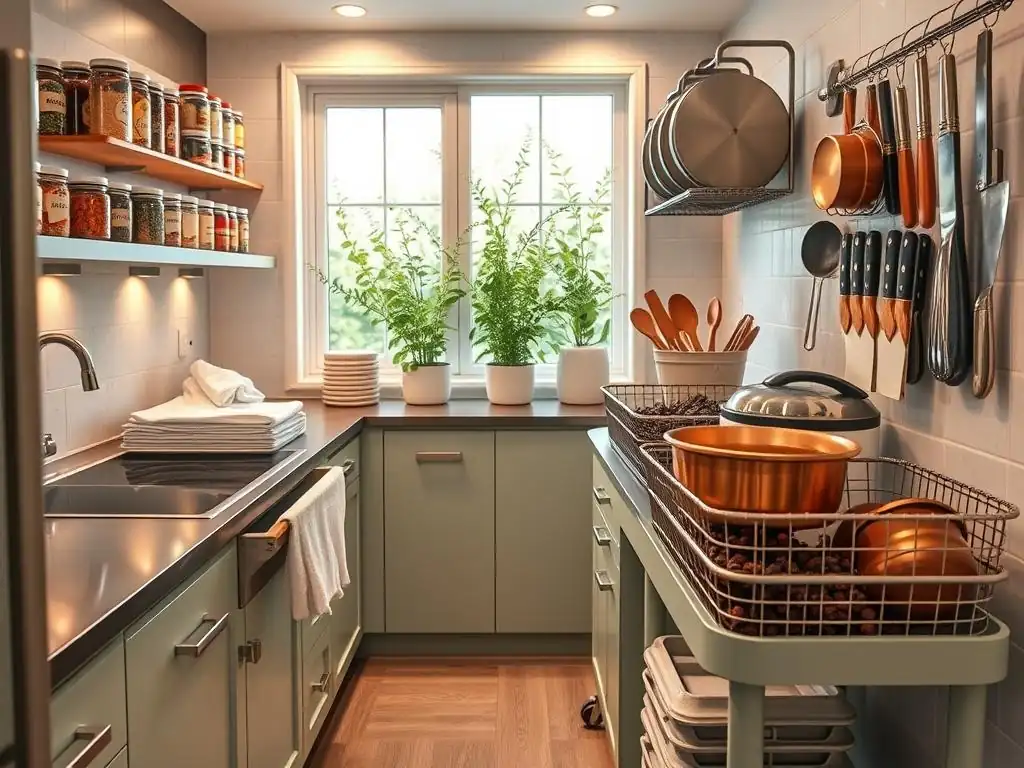
Welcome to BakeWithEase, where baking dreams become delicious realities! Tired of kitchen clutter cramping your baking style? Discover how to maximize every inch of your space with our guide to the Small Kitchen Baking Organizer. We're about to unlock secrets to a tidy and efficient baking haven, but first, let's explore how a well-organized space can transform your baking game...
- Introduction: Conquer Kitchen Clutter with Smart Baking Organization
- Identifying Your Baking Organization Needs: A Personalized Approach
- Small Kitchen Baking Organizer Ideas: Maximizing Every Inch
- DIY Baking Organizer Projects: Creative Storage Solutions
- Smart Storage Strategies for Specific Baking Gear
- Maintaining Your Baking Organizer System: Tips for Long-Term Success
- Conclusion: Enjoy Baking in Your Organized Kitchen
-
Frequently Asked Questions
- How can I effectively organize baking sheets and pans in a small kitchen?
- What are some space-saving solutions for storing measuring cups and spoons?
- How can I best store dry baking ingredients like flour and sugar in a limited space?
- What are some creative ways to store baking tools like spatulas and whisks?
- How do I prevent my baking gadgets from cluttering my countertops in a small kitchen?
- Final Reflection: Embracing Efficiency in Small Kitchen Baking
- Unleash Your Inner Baking Pro: Organize & Conquer!
Introduction: Conquer Kitchen Clutter with Smart Baking Organization
Why a Well-Organized Baking Space Matters for Efficient Baking
Baking is a science and an art, requiring precision, focus, and often, a dash of creativity. When your kitchen space is cluttered, finding the right measuring spoon, locating that specific piping tip, or simply having enough counter space to roll out dough becomes a frustrating chore. A well-organized baking area streamlines your process, reduces stress, and saves precious time.
Imagine needing a whisk and knowing exactly which drawer it's in, or grabbing a baking sheet without causing an avalanche of pans. This efficiency allows you to concentrate on the joy of baking itself, leading to better results and a more enjoyable experience.
Beyond just saving time, a tidy baking station minimizes errors. Misplacing ingredients or using the wrong tool because the right one is buried under clutter can derail a recipe. Studies suggest that disorganized workspaces can decrease productivity by up to 20%. For bakers, this translates to potentially wasted ingredients, failed batches, and a higher likelihood of giving up on a recipe before it even begins. Investing a little time in setting up a small kitchen baking organizer system pays dividends in both efficiency and baking success.
The Challenge: Limited Space and Extensive Baking Supplies
Many passionate bakers face a common dilemma: a growing collection of baking gear squeezed into a limited kitchen footprint. From bulky stand mixers and multiple sets of mixing bowls to an ever-expanding array of cookie cutters, piping bags, and various flours and sugars, the sheer volume of supplies can quickly overwhelm a standard kitchen, especially in apartments or older homes. Finding effective storage solutions that don't sacrifice precious counter or cabinet space is a significant hurdle.
The typical small kitchen offers perhaps 15-20 square feet of usable counter space and a handful of cabinets and drawers. A dedicated baker might easily accumulate dozens of items: 5-10 different baking pans, 3-4 mixing bowls, a dozen spatulas and whisks, 50+ cookie cutters, multiple bags of flour, sugar, leaveners, extracts, and decorating supplies. Fitting all of this into a small kitchen baking organizer system requires clever planning and utilization of vertical space and often overlooked areas. It's about making every inch work hard for you.
Identifying Your Baking Organization Needs: A Personalized Approach
Assess Your Current Baking Equipment Inventory
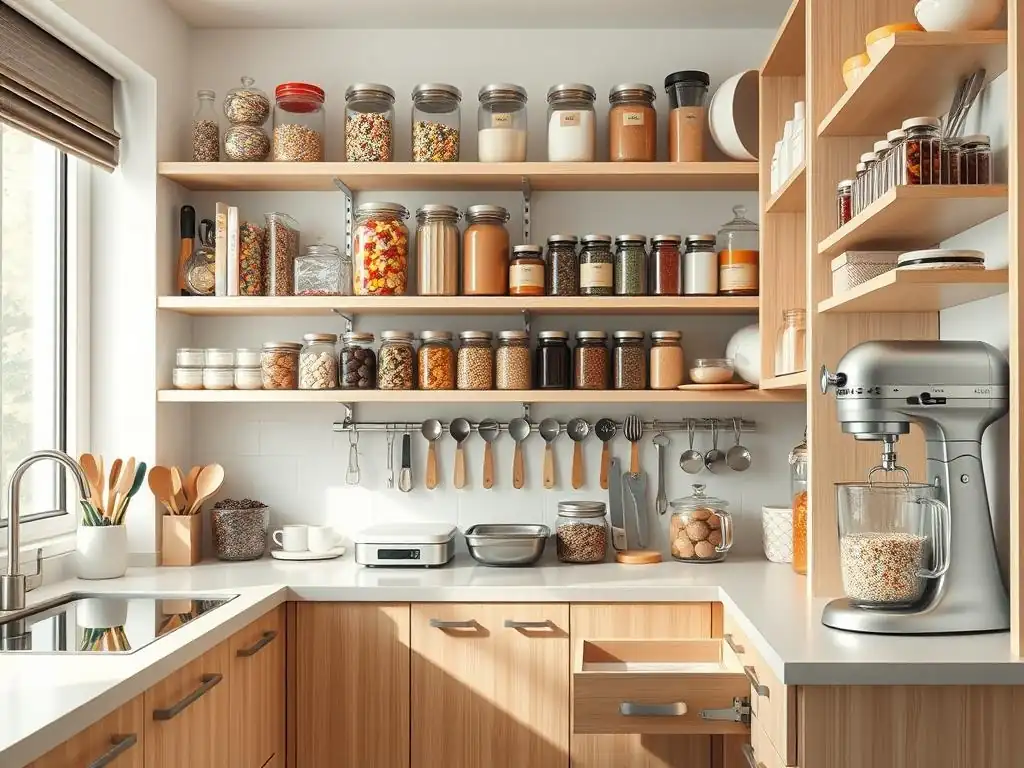
Before you can organize, you need to know exactly what you have. Start by gathering all your baking-related items from every corner of your kitchen – cabinets, drawers, pantry, even that box in the garage. Lay them out on a large surface, like a dining table or kitchen floor. Group similar items together: all your spatulas, all your measuring cups, all your cake pans, all your sprinkles, etc. This visual inventory can be surprising; many bakers discover duplicate items or tools they forgot they owned.
This assessment phase isn't just about counting; it's also about evaluating. Handle each item and ask yourself: When was the last time I used this? Is it essential for the types of baking I do most often? Is it in good condition?
Be honest about items that are rarely used or broken. A typical inventory might reveal 5 different sizes of spatulas, but you only regularly use 2. Or perhaps you have a novelty cake pan used only once in five years. Identifying these items is crucial for deciding what truly needs a spot in your small kitchen baking organizer setup.
Prioritize Essential Baking Tools for Easy Access
Once you know what you have, determine which tools you use most frequently. These are your essentials – the items you reach for in almost every baking session. This might include your primary mixing bowls, a few key spatulas and whisks, measuring cups and spoons, baking powder, baking soda, vanilla extract, and your most-used baking pans (like a standard 9x13 inch or a set of cake rounds). These items should be stored in the most accessible locations within your kitchen.
Think about the workflow of baking. What do you need first? Ingredients and measuring tools. What do you need next? Mixing bowls and spatulas/whisks. What do you need for baking? Pans. What about decorating? Piping bags and tips. Prioritizing means assigning the prime real estate in your small kitchen baking organizer – the front of cabinets, top drawers, or easily reachable shelves – to these high-use items. Less frequently used items, like holiday-specific cookie cutters or specialty pans, can be stored in slightly less convenient spots.
Analyze Your Kitchen Space: Cabinets, Drawers, and Countertops
Understanding the storage potential and limitations of your specific kitchen is key to effective organization. Measure the height, width, and depth of your cabinets and drawers. Note where your outlets are (important for mixers), how much usable counter space you have, and any awkward corners or unused vertical areas. Take photos if it helps visualize the space. This analysis will inform the types of small kitchen baking organizer solutions that will work best for you.
Consider the different zones in your kitchen. Do you have a dedicated "baking corner" or are your supplies spread out? Can you consolidate items? Look for opportunities to utilize the back of doors, the sides of cabinets, or even wall space for hanging items. A small kitchen might have only three drawers suitable for utensils, each perhaps 18 inches deep and 12 inches wide, or just two cabinets that are 30 inches high. Knowing these dimensions allows you to select organizers that fit perfectly, maximizing every square inch without wasting space on ill-fitting solutions.
Small Kitchen Baking Organizer Ideas: Maximizing Every Inch
Vertical Storage Solutions for Baking Supplies
In a small kitchen, going vertical is often the best strategy to create space where there seems to be none. Utilizing the height of your cabinets and walls can significantly increase your storage capacity for baking gear. This involves using shelves, racks, and hanging systems to stack items or get them off horizontal surfaces.
Vertical storage not only saves horizontal space but also makes items easier to see and access. Instead of digging through a pile, you can simply slide out a pan or grab a hanging measuring cup. This approach is particularly effective for flat items like baking sheets and cutting boards, as well as smaller tools that can be hung.
Tiered Shelves and Racks for Baking Pans
Baking pans and sheets are notorious for taking up valuable cabinet space when stacked horizontally. They often get scratched and are difficult to retrieve from the bottom of a pile. Tiered shelves and vertical racks are simple, inexpensive solutions that can drastically improve organization. A single vertical rack, often just 10-12 inches wide, can hold 5-7 baking sheets, cutting boards, or muffin tins upright within a cabinet.
Alternatively, tiered shelves, like expandable wire shelves, can double or triple the usable height in a cabinet. A standard 15-inch tall cabinet shelf might only fit one layer of cake pans stacked, but a two-tiered shelf allows you to store six or more pans in the same vertical space. This vertical approach is a cornerstone of any effective small kitchen baking organizer system for bulky items.
Hanging Organizers for Measuring Cups and Spoons
Measuring cups and spoons are essential but can easily get lost in drawers or take up valuable space. Hanging them inside cabinet doors or on a kitchen wall is a brilliant space-saving hack. Simple adhesive hooks or small screw-in hooks can be installed on the inside of a cabinet door. Attach the measuring tools via a ring or a small hole in the handle.
This method keeps your full set of measuring tools together and immediately visible, saving you time searching. It also frees up drawer space that can be used for other items. A typical set of measuring cups and spoons takes up perhaps 30-40 cubic inches jumbled in a drawer, but hanging them flat against a door uses negligible depth, repurposing often-unused vertical space.
Drawer Dividers and Inserts for Baking Utensils
Drawers are prime real estate for baking utensils, but without organization, they quickly become a jumbled mess of spatulas, whisks, and spoons. Drawer dividers and inserts are fundamental tools for creating order and maximizing drawer capacity. These can range from simple adjustable dividers to custom-fit trays with specific compartments.
Dividing drawers allows you to group similar items, preventing tangles and making it easy to find what you need. You can dedicate one section to silicone spatulas, another to metal whisks, and a third to mixing spoons. This not only improves efficiency but also protects your tools from damage.
Customizable Drawer Organizers for Spatulas and Whisks
Spatulas and whisks, with their varying sizes and shapes, can be particularly challenging to store neatly. Customizable drawer organizers, which often consist of movable dividers or modular trays, allow you to create compartments specifically sized for your tools. You can adjust the sections to fit long spatulas alongside shorter whisks or pastry brushes.
Using these organizers can increase a drawer's effective storage capacity by preventing items from overlapping and creating wasted space. For example, a standard kitchen drawer might hold 15-20 utensils haphazardly, but with dividers, you could neatly fit 25-30 items, each in its designated spot, making it a highly effective small kitchen baking organizer element.
Maximizing Drawer Space for Cookie Cutters and Decorating Tools
Cookie cutters, piping tips, couplers, and other small decorating tools can quickly multiply and are easily lost. Drawer inserts with small compartments are ideal for these items. Shallow drawers work best for flat cookie cutters, which can be stored on their sides or stacked neatly in compartments. Piping tips can be organized by size in small divided trays.
Another effective method for cookie cutters is to store them in small tins or containers within the drawer, separated by type or holiday. This prevents them from migrating and getting mixed up. Utilizing drawer space effectively for these numerous small items is crucial for a tidy small kitchen baking organizer setup, preventing them from spilling onto counters or taking up valuable cabinet space.
Countertop Baking Organizer Solutions: Keeping Essentials Within Reach
While the goal in a small kitchen is often to clear countertops, some essential baking items are best kept within easy reach. These are the ingredients and tools you use almost every single time you bake. Smart countertop organizers keep these items tidy and accessible without creating visual clutter.
The key is to be selective about what lives on your counter. Only the absolute essentials should earn a spot. This approach balances the need for accessibility with the limited surface area available in a small kitchen, ensuring your countertops remain functional for tasks like kneading dough or decorating.
Canisters and Jars for Flour, Sugar, and Baking Powder
Staple baking ingredients like flour, sugar, and baking powder are frequently used and benefit from being stored in airtight containers on the counter or a nearby open shelf. Attractive canisters or clear jars not only keep ingredients fresh but also make them easily identifiable and accessible. Using uniform containers adds to a clean, organized look.
Storing these bulky items in canisters saves cabinet space and streamlines the measuring process. A standard 5-pound bag of flour takes up significant cupboard volume, but transferring it to a stackable, airtight canister allows for better utilization of vertical space on a counter or pantry shelf. Keeping frequently used items like baking powder or soda in small, labeled jars near your workspace prevents rummaging through a pantry.
Utensil Holders for Spatulas, Whisks, and Mixing Spoons
For the spatulas, whisks, and mixing spoons you use most often, a countertop utensil holder is a convenient solution. Choose a holder that is sturdy and appropriately sized for the number of tools you want to keep out. Ceramic crocks, stainless steel cylinders, or even repurposed large jars can serve this purpose.
Keeping 5-7 go-to utensils in a holder on the counter means they are always at hand during mixing and prep, saving you from opening and closing drawers repeatedly. This is particularly useful if your drawers are already packed. While it uses a small footprint on the counter, the time saved and ease of access make it a worthwhile component of a small kitchen baking organizer strategy for high-frequency tools.
DIY Baking Organizer Projects: Creative Storage Solutions
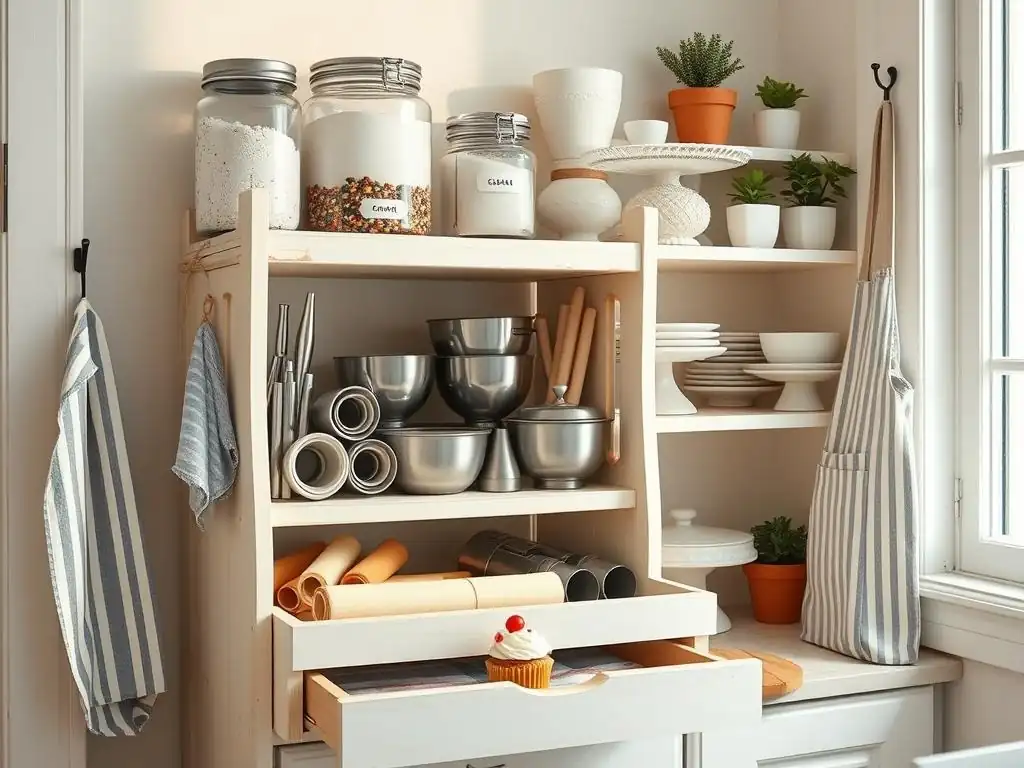
Sometimes, the perfect small kitchen baking organizer doesn't exist in a store, or your budget calls for a more creative approach. Do-it-yourself projects allow you to tailor storage solutions precisely to your space and needs, often using inexpensive or recycled materials.
DIY projects can be simple yet highly effective, turning unused spaces into functional storage or giving new life to old items. They offer a personalized touch to your kitchen organization and can be incredibly satisfying to complete.
Repurposing Everyday Items for Baking Storage
Look around your home for items that can be given a second life as baking storage. This is an eco-friendly and budget-conscious way to create a small kitchen baking organizer system tailored to your specific collection of gear. Get creative with items that might otherwise be discarded.
Repurposing is about seeing potential in ordinary objects. An old CD rack could become a lid organizer for your mixing bowls, or a magnetic knife strip could hold metal measuring spoons and small offset spatulas on a wall. The possibilities are often limited only by your imagination and the items you have on hand.
Using Mason Jars for Sprinkles and Food Coloring
Mason jars, or any clean glass jars with tight-fitting lids, are excellent for organizing small baking ingredients like sprinkles, food coloring bottles, extracts, and nuts. Their transparency allows you to see the contents easily, and their uniform size makes them stackable or easy to line up neatly on a shelf.
A collection of 10-15 small jars filled with colorful sprinkles and extracts takes up far less space and looks much tidier than multiple small plastic bags or irregularly shaped bottles jumbled together. Storing them in a shallow drawer or on a narrow shelf prevents them from getting lost and adds a visually appealing element to your small kitchen baking organizer setup.
Transforming Old Crates into Baking Supply Shelves
Wooden crates, whether vintage finds or inexpensive craft store versions, can be easily transformed into rustic and functional baking supply shelves. They can be stacked, mounted on walls, or placed on countertops to create instant storage for ingredients, cookbooks, or even small appliances.
Simply clean the crates, perhaps give them a quick sanding or coat of paint, and arrange them to fit your space. A couple of stacked crates could hold your stand mixer on top with flours and sugars stored inside, or they could be mounted on a wall to create vertical storage for less frequently used items, adding character while providing valuable storage in a small kitchen baking organizer plan.
Building Custom Baking Shelves for Small Spaces
If you have an awkward nook or a specific vertical space that standard organizers don't fit, building custom shelves might be the answer. Simple floating shelves or basic bracketed shelves can be installed to maximize storage in otherwise unused areas, such as above a doorway, in a narrow pantry, or on a blank wall space.
Custom shelves ensure that every inch of available space is utilized. You can build them to the exact dimensions needed to hold specific items, like a stack of cake carriers or a collection of specialty flours. Even a shallow shelf, just 4-6 inches deep, can be perfect for storing rows of spices, extracts, and small jars of decorating supplies, creating a highly efficient small kitchen baking organizer where none existed before.
Smart Storage Strategies for Specific Baking Gear
Different types of baking gear require different storage approaches. Understanding the best ways to store specific items like pans, cookie cutters, and measuring tools ensures they are protected, easily accessible, and take up minimal space in your small kitchen baking organizer system.
Tailoring your storage methods to the items themselves is key to maximizing efficiency and preventing damage. Storing delicate piping tips differently from sturdy mixing bowls requires specific considerations for each category.
Organizing Baking Pans and Sheets Efficiently
Baking pans and sheets are bulky and can quickly consume cabinet space. Storing them efficiently is crucial for maintaining an organized baking area, especially in a small kitchen. The goal is to make each pan easily accessible without having to move a stack of others.
Preventing scratches and dings is another benefit of proper pan storage. When pans are stacked haphazardly, their surfaces can be damaged, affecting their performance and lifespan.
Storing Baking Pans Vertically to Save Space
As mentioned earlier, vertical storage is a game-changer for pans. Using vertical dividers or racks within a cabinet allows you to store baking sheets, muffin tins, cake pans, and cutting boards upright, like files in a filing cabinet. This method makes it incredibly easy to slide out the exact pan you need without disturbing others.
A standard kitchen cabinet shelf might comfortably fit 3-4 baking sheets stacked flat. Using a vertical organizer in the same space, you can often fit 7-10 sheets or a mix of sheets and other flat pans. This represents a space saving of 50% or more compared to horizontal stacking, making vertical storage a must-have small kitchen baking organizer element.
Using Lid Organizers for Baking Sheet Sets
Some baking sheet sets come with lids, which can be awkward to store. Repurposing lid organizers, typically used for pot lids, can provide a neat solution for storing baking sheet lids vertically alongside their corresponding sheets. These organizers can be placed inside cabinets or pantry doors.
A lid organizer mounted on the inside of a cabinet door, perhaps 12-15 inches tall, can hold 4-6 baking sheet lids, keeping them with their sheets and off the shelves. This simple hack keeps sets together and prevents lids from cluttering drawers or shelves, contributing to a more streamlined small kitchen baking organizer setup.
The collection of cookie cutters and decorating supplies can grow exponentially, especially for enthusiastic bakers. Keeping these numerous small items organized is essential to avoid frustration and ensure you can find the specific shape or tip you need.
These items are often small and easily misplaced, making dedicated storage solutions particularly important. Preventing damage to delicate piping tips and keeping similar cookie cutter shapes together saves time and maintains their condition.
Binder Organization for Cookie Cutters
For smaller or less frequently used cookie cutters, organizing them in a binder can be surprisingly effective. Sort cutters by theme or size and place them in clear plastic pouches or attach them to sheets of cardstock using adhesive. These sheets can then be stored in a binder.
A standard 3-ring binder, about 12 inches tall and 10 inches wide, can hold dozens, sometimes over 100, small to medium-sized cookie cutters organized by category (e.g., holidays, animals, shapes). This system keeps them contained, visible, and takes up relatively little space on a shelf compared to multiple scattered boxes, making it a clever small kitchen baking organizer hack.
Dedicated Decorating Supply Box
Consolidate all your decorating essentials – piping bags, tips, couplers, food coloring, sprinkles, edible glitter, small spatulas – into one dedicated box or container. Using smaller boxes or dividers within the main container can help keep items sorted by type.
A clear plastic container with a lid, perhaps 10 inches by 14 inches and 6 inches deep, can house the majority of a baker's decorating supplies. Using small internal boxes for piping tips or sprinkles prevents them from mixing. This "grab-and-go" box can be stored on a shelf or in a cabinet and pulled out whenever you're ready to decorate, keeping these numerous small items neatly corralled within your small kitchen baking organizer system.
Storing Measuring Cups and Spoons for Easy Access
Accurate measuring is fundamental to baking success, so having your measuring tools readily accessible is vital. While hanging them is one method, other strategies can also keep them organized and easy to find.
Ensuring measuring cups and spoons stay together as sets and are not separated is key. This prevents the frustration of searching for a missing 1/4 cup or 1/2 teaspoon mid-recipe.
Magnetic Strips for Metal Measuring Spoons
Metal measuring spoons can be easily stored on a magnetic strip mounted on a kitchen wall or the inside of a cabinet door. This keeps them together, visible, and frees up drawer space. Choose a strip strong enough to hold the weight of your spoons.
A magnetic strip just 6-8 inches long can typically hold a full set of 6-8 metal measuring spoons, keeping them conveniently located near your ingredient station. This simple addition is a highly effective small kitchen baking organizer solution for these small, often-used tools, preventing them from getting buried in utensil drawers.
Hanging Measuring Cups on Hooks
Similar to spoons, measuring cups can be hung on hooks. This works well for both plastic and metal sets. Install hooks on the inside of a cabinet door or on a wall near your pantry or ingredient storage area. Ensure the hooks are sturdy enough to hold the full set.
Hanging a set of 4-6 measuring cups on hooks inside a cabinet door uses minimal space – perhaps just the depth of the cups themselves, around 3-4 inches. This keeps them together and accessible, eliminating the need to rummage through drawers and serving as a practical small kitchen baking organizer tip for these essential tools.
Maintaining Your Baking Organizer System: Tips for Long-Term Success
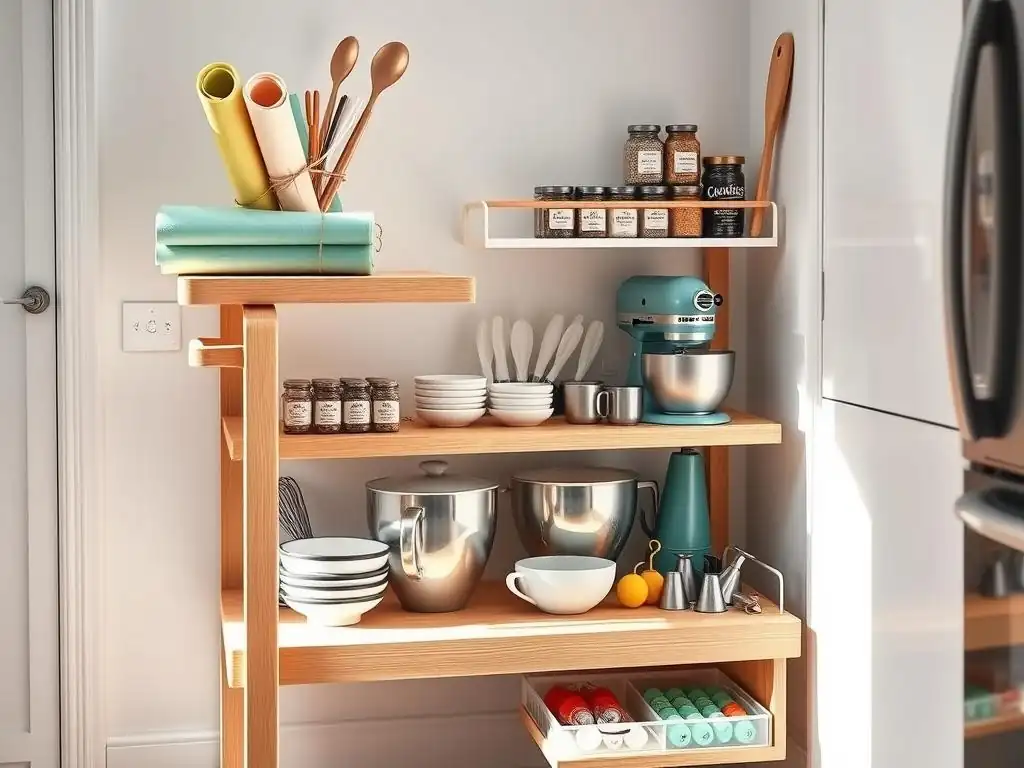
Creating a small kitchen baking organizer system is a great first step, but maintaining it is key to long-term success. Without regular upkeep, even the best organization can quickly devolve back into clutter.
Think of organization as an ongoing process, not a one-time event. A few simple habits can keep your baking space functional and tidy over time.
Declutter Regularly: Purge Unused Baking Items
Schedule regular decluttering sessions for your baking supplies, perhaps every 3-6 months. Go through your inventory again and evaluate what you've used and what you haven't. Dispose of expired ingredients (baking powder, baking soda, and yeast lose potency), donate tools you no longer need, and get rid of broken items.
Purging unused items is essential for maintaining space in a small kitchen baking organizer. Holding onto items you rarely or never use takes up valuable real estate that could be used for tools you reach for regularly. A typical baker might find they can discard or donate 5-10 items during a quick 30-minute decluttering session, instantly freeing up space.
Label Everything: Ensuring Easy Identification
Labeling containers and shelves makes it easy to find what you need and, just as importantly, put things back in the correct place. Label canisters with ingredient names (and perhaps purchase dates), label boxes of cookie cutters by theme, and label shelves or drawers to indicate their contents.
Clear labeling saves time searching and helps everyone in the household understand the organization system. Instead of opening multiple containers to find the powdered sugar, a clear label on a canister instantly tells you where it is. This simple step reinforces your small kitchen baking organizer structure and makes cleanup faster.
Re-evaluate Your System Periodically: Adapting to Your Baking Needs
Your baking habits and collection of gear may change over time. As you try new recipes or techniques, you might acquire new tools or realize certain items are used more or less frequently than before. Periodically re-evaluate your organization system to ensure it still meets your needs.
Perhaps you've started making sourdough and need more space for proofing baskets and specialty flours, or maybe you've simplified your baking and no longer need dozens of piping tips. Adjust your small kitchen baking organizer setup as needed – move items to more convenient locations, repurpose storage solutions, or add new ones if necessary. A system that evolves with you is a system that stays effective.
Conclusion: Enjoy Baking in Your Organized Kitchen
The Benefits of an Organized Baking Space
Implementing a small kitchen baking organizer system offers numerous tangible benefits. It saves you time by making ingredients and tools easy to find. It reduces stress and frustration, allowing you to enjoy the creative process of baking. It minimizes waste by helping you keep track of ingredients and preventing duplicates. It protects your valuable baking gear from damage.
Ultimately, an organized baking space transforms your kitchen from a source of clutter-induced anxiety into a functional, enjoyable environment. You'll be more likely to bake spontaneously, try new recipes, and feel a sense of calm and control in your kitchen. The time invested in organizing pays off in a more efficient, pleasant, and productive baking experience.
Final Thoughts: Embrace the Joy of Baking, Clutter-Free
Don't let a small kitchen deter you from pursuing your passion for baking. With smart planning, creative small kitchen baking organizer solutions, and a commitment to maintaining your system, you can create a functional and inspiring baking corner, no matter the size of your kitchen. Start small, tackle one area at a time, and celebrate each little victory in your organization journey. Embrace the joy of baking, free from the frustration of clutter, and find everything you need precisely when you need it.
Frequently Asked Questions
How can I effectively organize baking sheets and pans in a small kitchen?
Utilize vertical storage solutions like pan racks or cabinet dividers to maximize space. Store similar items together for easy access and to maintain order.
What are some space-saving solutions for storing measuring cups and spoons?
Consider magnetic strips mounted on the inside of cabinets or stackable sets. Using drawer organizers can also keep them tidy and easily accessible.
How can I best store dry baking ingredients like flour and sugar in a limited space?
Opt for airtight containers that can be stacked or stored in designated pantry organizers. Label everything clearly to avoid confusion and keep ingredients fresh.
What are some creative ways to store baking tools like spatulas and whisks?
Utilize wall-mounted utensil holders or a rotating countertop organizer. Consider hanging them from hooks inside cabinet doors to keep them out of the way.
How do I prevent my baking gadgets from cluttering my countertops in a small kitchen?
Designate a specific storage area, such as a drawer or cabinet, for all your gadgets. Use organizers to keep everything in its place and prevent countertop clutter.
Final Reflection: Embracing Efficiency in Small Kitchen Baking
In today's fast-paced world, the importance of an organized kitchen cannot be overstated. The ability to maximize space while baking not only enhances our culinary experiences but also fosters a sense of calm and control in our lives. As we continue to navigate smaller living spaces, the need for innovative solutions like the small kitchen baking organizer becomes increasingly relevant. A well-organized kitchen is not just a luxury; it is a necessity for creativity and joy in baking.
The way we approach our kitchen organization reflects our values and priorities, shaping our daily routines and interactions. The hacks discussed in this article serve as a reminder that even the smallest spaces can be transformed into efficient, inspiring environments. Organization is not about perfection; it’s about efficiency, reducing stress, and clutter, and saving time and money.
This ongoing influence of organization in our kitchens encourages us to rethink how we utilize our space, making room for creativity and connection with our culinary passions.
As you reflect on your own kitchen space, consider how these organization hacks can inspire you to create a more functional and enjoyable baking environment. Take a moment to envision your ideal kitchen setup and implement one or two of these strategies today. By embracing efficiency and organization, you not only enhance your baking experience but also cultivate a space that nurtures your creativity and passion for cooking. Let this be a call to action: transform your kitchen into a haven of inspiration, where every baking session becomes a joyful adventure.
Unleash Your Inner Baking Pro: Organize & Conquer!
Thanks for taking the time to explore these baking gear organization hacks! We hope you've gained some valuable insights to transform your kitchen space. Now it's time to put your new knowledge into action. Let's get baking!
- Prioritize your most-used tools: Take 15 minutes today to rearrange your baking supplies, putting your favorite spatulas and mixing bowls front and center. You'll be amazed at how much easier baking becomes!
- Share your favorite hack: Snap a picture of your newly organized baking station and share it on social media using #BakeWithEase. Let's inspire others to conquer kitchen chaos!
- Dive deeper into our recipe collection: Explore our website for even more baking inspiration and delicious recipes perfectly tailored to your new, organized space.
Ready to bake something amazing? What's the first recipe you'll tackle with your newly organized baking corner?