
Understanding the Absorption Rates of GlutenFree Flours for Better Swaps

Welcome to BakeWithEase, your ultimate guide to effortless baking! Are you ready to unlock the secrets to baking success with gluten-free flours? This article dives deep into understanding the absorption rates of gluten-free flours – a crucial element for achieving that perfect texture and taste. Discover how mastering this knowledge can revolutionize your gluten-free swaps and elevate your baking. Curious to know how different flours interact with liquids and impact your recipes? Let's explore!
- Mastering Gluten-Free Baking: Understanding Flour Absorption
- Introduction to Gluten-Free Flour Hydration
- The Science of Gluten-Free Flour Absorption
-
Gluten-Free Flour Profiles: Absorption and Usage
- Tapioca Starch: Absorption and Best Baking Applications
- White Rice Flour: Hydration Needs and Baking Applications
- Almond Flour: Fat Content and Liquid Uptake in Baking
- Coconut Flour: High Absorption and Baking Strategies
- Sorghum Flour: Absorption Qualities and Baking Tips
- Potato Starch: Absorption Rate and Baking Uses
- Cornstarch: Absorption Rate and Baking Uses
- Oat Flour (Certified Gluten-Free): Hydration Needs and Baking Applications
- Measuring and Adjusting Hydration in Gluten-Free Baking
- Practical Tips for Gluten-Free Baking
- Gluten-Free Flour Blends: Hydration Considerations
- Troubleshooting Hydration-Related Issues in Gluten-Free Baking
- Achieving Baking Excellence Through Flour Selection and Hydration
-
Frequently Asked Questions
- What does "absorption rate" mean in the context of gluten-free baking?
- Why is understanding absorption rates important when using gluten-free flours?
- How do absorption rates vary between different types of gluten-free flours?
- Where can I find information about the specific absorption rate of a particular gluten-free flour?
- What are some common signs that I need to adjust the liquid in a gluten-free recipe due to absorption rate differences?
- Final Reflection: Unlocking the Potential of Gluten-Free Baking
- Unlock Your Gluten-Free Baking Potential!
Mastering Gluten-Free Baking: Understanding Flour Absorption
Introduction to Gluten-Free Flour Hydration
Why Hydration Matters in Gluten-Free Baking
Hydration is the cornerstone of successful baking, and it's especially critical when working with gluten-free flours. Unlike wheat flour, which develops a strong gluten network when hydrated and kneaded, gluten-free flours lack this structure-building protein. This means that the way liquids interact with the starches and proteins present in gluten-free flours dictates the texture, structure, and overall quality of your baked goods.
Understanding the unique glutenfree flour absorption rates is paramount because it directly impacts how much liquid a recipe needs to achieve the correct consistency, whether it's a pliable dough or a pourable batter. Too little liquid, and your result will be dry and crumbly; too much, and it can become gummy or dense.
The difference in hydration requirements between various gluten-free flours is significant. For example, coconut flour can absorb up to four times its weight in liquid, while white rice flour absorbs much less, perhaps closer to 1.5 times its weight depending on the grind. This vast difference means a direct swap of flours without adjusting the liquid can lead to drastically different outcomes.
Mastering hydration helps prevent common gluten-free baking issues like dryness, crumbliness, or excessive gumminess. It's about finding the right balance for each specific flour or blend to create a moist crumb, a tender texture, and a pleasant mouthfeel, ultimately leading to better baking results.
Achieving Optimal Texture: A Guide to Gluten-Free Flour Hydration
Achieving optimal texture in gluten-free baking hinges on correctly managing the hydration levels of your flours. The goal is to fully hydrate the starches and proteins in the flour without oversaturating them. When starches absorb water, they swell and gelatinize during baking, contributing to structure and tenderness. Proteins also absorb water and can contribute to structure, though not in the same network-forming way as gluten. The specific glutenfree flour absorption rates dictate how quickly and how much water each flour type will take up.
Proper hydration ensures that baked goods aren't dry and crumbly, which is a common pitfall in gluten-free baking. It allows batters to set correctly and doughs to hold their shape without cracking excessively. For instance, a properly hydrated gluten-free bread dough might feel stickier than a wheat dough but should still be manageable.
A cake batter should pour smoothly but not be watery. Paying close attention to the visual and tactile cues of your dough or batter as you add liquid, and understanding the inherent absorption properties of the flours you're using, are key skills for consistently producing moist, well-structured gluten-free treats.
The Science of Gluten-Free Flour Absorption
Gluten's Role in Water Absorption in Traditional Baking
In traditional wheat baking, gluten plays a crucial dual role: it absorbs water and forms a viscoelastic network. When wheat flour is mixed with liquid, two proteins, gliadin and glutenin, absorb water and begin to bond, creating gluten. This network traps gases produced by leavening agents like yeast or baking soda, allowing the dough or batter to rise and hold its shape. Wheat flour typically absorbs roughly 50-60% of its weight in water, depending on the protein content and grind. This absorption contributes significantly to the overall structure and moisture retention of the baked good.
Beyond just absorbing water, the gluten network allows dough to be kneaded, stretched, and shaped without tearing. This elasticity and extensibility are unique properties directly linked to gluten's interaction with water. As the dough bakes, the gluten network sets, providing the internal structure for bread, pastries, and other baked goods. Understanding this fundamental process in wheat baking highlights why simply substituting gluten-free flours cup-for-cup without adjusting liquid is rarely successful; they lack this key structural protein and therefore handle hydration very differently.
Unique Properties of Gluten-Free Flours and Their Hydration Impact
Gluten-free flours are derived from a variety of sources, including grains (like rice, corn, sorghum, oats), legumes (like chickpea, fava bean), nuts (like almond), seeds (like flax, chia), roots/tubers (like tapioca, potato), and fruits (like coconut). Each of these sources brings a unique composition of starches, proteins, fats, and fibers, which drastically affects their glutenfree flour absorption rates. For example, starches like tapioca or potato starch absorb water and gelatinize readily, contributing to a soft texture, but they don't provide the structural support of gluten.
Flours high in fiber, such as coconut flour or psyllium husk, tend to absorb significantly more liquid than starchy flours. Nut flours, like almond flour, contain fats that repel water to some extent, leading to lower overall absorption compared to starchy or high-fiber options.
The protein content also varies; flours like sorghum or oat flour have moderate protein, which can absorb some water, but again, they don't form a network. These diverse compositions mean that a blend of gluten-free flours is often needed to mimic the properties of wheat flour, and managing the combined glutenfree flour absorption rates of these blends is essential for achieving desired textures and structure.
Factors Affecting Water Absorption in Gluten-Free Flours
Several factors influence the glutenfree flour absorption rates beyond the inherent type of flour itself. The grind size is significant; finely ground flours generally absorb liquid more quickly than coarsely ground flours because they have a larger surface area exposed to the water. Processing methods can also play a role; for instance, pre-gelatinized starches absorb cold water instantly, unlike native starches which require heat.
The temperature of the liquid used can also impact absorption. Warmer liquids are often absorbed more quickly than cold liquids, though this can vary by starch type. The presence of other ingredients in the recipe also matters. Fats (like butter or oil) can coat flour particles and inhibit absorption, while sugar competes with flour for water, potentially reducing the flour's hydration. Acids (like lemon juice or vinegar) can also affect how starches and proteins absorb water. Understanding these variables helps bakers troubleshoot and adjust recipes to account for differing glutenfree flour absorption rates and achieve consistent results.
Gluten-Free Flour Profiles: Absorption and Usage
Tapioca Starch: Absorption and Best Baking Applications
Tapioca starch, derived from the cassava root, is a popular gluten-free ingredient known for its fine texture and relatively low protein and fiber content. It has a moderate glutenfree flour absorption rate compared to some other starches, readily absorbing water and swelling when heated. It primarily contributes to chewiness and crispness in baked goods. Unlike some other flours, tapioca starch doesn't absorb massive amounts of water, typically requiring liquid in a ratio of about 1:1 by weight or slightly more for full hydration.
Due to its properties, tapioca starch is excellent for adding chewiness to cookies, contributing to a crisp crust on bread, and thickening sauces or pie fillings. It's often used in blends to lighten the texture of denser flours and provide structure without making baked goods heavy.
For instance, a gluten-free pizza crust recipe might use tapioca starch to achieve a satisfying chew. It's rarely used alone in significant quantities in baked goods like cakes or muffins, as it would result in a gummy or overly chewy texture; its value lies in its ability to enhance texture when combined with other flours.
White Rice Flour: Hydration Needs and Baking Applications
White rice flour is a staple in many gluten-free blends, made from finely ground white rice. It has a relatively low glutenfree flour absorption rate compared to flours like coconut or sorghum, absorbing perhaps around 1.5 times its weight in water, though this can vary based on how finely it's ground. It's primarily composed of starch and contributes to structure and a fine crumb. However, using too much white rice flour or not hydrating it sufficiently can result in a gritty or dry texture.
This flour works well in cookies, shortbreads, and certain cakes, providing structure and a tender crumb. It's often combined with other flours like tapioca starch or potato starch to improve texture and prevent grittiness. In blends for muffins or quick breads, white rice flour provides bulk and structure. For example, a gluten-free sugar cookie recipe often relies heavily on white rice flour for its classic tender-crisp texture. Properly hydrating white rice flour, sometimes with a brief rest period for the liquid to absorb, is key to avoiding a sandy mouthfeel.
Brown rice flour is made from whole brown rice and contains more fiber, protein, and nutrients than white rice flour. This higher fiber and protein content means it generally has a slightly higher glutenfree flour absorption rate than white rice flour, potentially absorbing closer to 1.7-2 times its weight in water, though it still absorbs less than high-fiber flours like coconut. However, it can still result in a somewhat gritty texture if not hydrated well or combined with other flours.
Brown rice flour imparts a slightly nutty flavor and denser texture than white rice flour. It is often used in gluten-free breads, muffins, and pancakes. It provides structure and a heartier feel to baked goods. Because of its potential for grittiness, it benefits from being part of a flour blend and often requires sufficient liquid and sometimes a resting period to allow for proper hydration. For example, a gluten-free pancake mix might use brown rice flour for structure and flavor, balanced with starches to prevent a heavy texture.
Almond Flour: Fat Content and Liquid Uptake in Baking
Almond flour, made from ground blanched almonds, is unique among gluten-free flours due to its high fat content (around 50-60% by weight). This fat significantly impacts its hydration properties; almond flour has a relatively low glutenfree flour absorption rate compared to starchier or high-fiber flours because the fat naturally repels water. It absorbs perhaps around 1-1.5 times its weight in liquid, depending on the fineness of the grind.
Almond flour contributes moisture, richness, and a tender crumb to baked goods. It's excellent in cakes, muffins, cookies, and quick breads, often reducing the need for added fats. Because it doesn't absorb a lot of liquid or provide significant starch structure, it's often combined with other flours like tapioca starch or coconut flour for balance.
For instance, a gluten-free muffin recipe might use a mix of almond flour for moisture and flavor, and rice flour or a blend for structure. Its lower absorption means recipes using a high percentage of almond flour will require less liquid overall compared to recipes based on high-absorption flours.
Coconut Flour: High Absorption and Baking Strategies
Coconut flour, made from dried, defatted coconut meat, is an outlier in the world of gluten-free flours due to its exceptionally high fiber content (around 40-50%) and low starch/fat. This composition gives it a remarkably high glutenfree flour absorption rate; it can absorb liquid equivalent to 3-4 times its weight, sometimes even more. This means you need significantly less coconut flour by volume or weight compared to other flours, and dramatically more liquid.
Because of its extreme absorption, coconut flour is typically used in small quantities in gluten-free recipes and requires a large amount of eggs and liquid to provide structure and moisture. Using too much coconut flour without sufficient liquid results in an incredibly dry, dense, and crumbly product. It works well in recipes designed specifically for it, often yielding moist, tender results when properly hydrated.
For example, a recipe for coconut flour muffins might use only 1/4 cup of flour but require 2-3 eggs and 1/2 cup or more of liquid, a ratio vastly different from other flours. It's rarely a simple substitute in recipes not specifically formulated for its unique properties.
Sorghum Flour: Absorption Qualities and Baking Tips
Sorghum flour, made from the ancient grain sorghum, has a moderate glutenfree flour absorption rate, comparable to or slightly higher than rice flour, perhaps in the range of 1.5-2 times its weight in liquid. It contains a good balance of starch, protein (around 10-12%), and fiber, contributing to a softer texture and a mild, slightly sweet flavor. It's less likely to be gritty than rice flours.
Sorghum flour is versatile and works well in muffins, cakes, cookies, and breads. It provides structure and a tender crumb without being overly dense. It's often used in gluten-free flour blends as a primary component. For example, a gluten-free bread recipe might use sorghum flour as a base, combined with starches for lightness and binders for structure. Its moderate absorption makes it relatively easy to work with, but like most gluten-free flours, it benefits from proper hydration and often the inclusion of binders to improve elasticity.
Potato Starch: Absorption Rate and Baking Uses
Potato starch, extracted from potatoes, is a pure starch with a relatively low protein and fiber content. It has a moderate glutenfree flour absorption rate in cool liquids, but it absorbs significantly more and swells dramatically when heated, acting as a powerful thickener. In baking, it contributes to lightness, tenderness, and a crisp crust. It typically absorbs around 1.5-2 times its weight in water.
Potato starch is often used in gluten-free blends to lighten the texture of denser flours and provide tenderness. It's excellent for creating a delicate crumb in cakes, improving the crispness of cookies, and adding structure to gluten-free pastries. For example, a gluten-free pie crust might use a blend including potato starch for flakiness. It's important not to confuse potato starch with potato flour (which is made from dried whole potatoes and has a much higher absorption rate and different properties). Potato starch's ability to gelatinize readily upon heating makes it valuable for achieving specific textures.
Cornstarch: Absorption Rate and Baking Uses
Cornstarch, like potato starch, is a pure starch extracted from corn. It has a moderate glutenfree flour absorption rate in cool liquids but becomes a very effective thickener when heated, gelatinizing at a higher temperature than potato starch. It contributes to tenderness and provides structure in baked goods. Its absorption rate is similar to potato starch, around 1.5-2 times its weight in water.
Cornstarch is widely used as a thickening agent in sauces and gravies, but in gluten-free baking, it's primarily used in blends to soften the texture and provide a tender crumb, similar to potato starch. It can improve the structure of cakes and muffins and contribute to the crispness of cookies. For example, adding a small amount of cornstarch to a gluten-free cookie recipe can help achieve a more tender interior and crisp edge. It's a common component in many commercial gluten-free flour blends for these textural benefits.
Oat Flour (Certified Gluten-Free): Hydration Needs and Baking Applications
Certified gluten-free oat flour, made from rolled oats processed in a dedicated facility, has a moderate to high glutenfree flour absorption rate compared to rice or corn flours, absorbing perhaps 2-2.5 times its weight in liquid. It contains soluble fiber (beta-glucan) which absorbs water and contributes to moisture and a slightly chewy texture. Oat flour also contains some protein (around 13-15%).
Oat flour imparts a distinct earthy flavor and a slightly denser, yet often moist, texture to baked goods. It works well in muffins, quick breads, cookies, and pancakes. The soluble fiber helps retain moisture, preventing dryness. For example, gluten-free oat flour muffins are known for their moist crumb. Because of its absorption properties, recipes using significant amounts of oat flour will require more liquid than those using primarily rice flour, but less than those using coconut flour. It's important to use certified gluten-free oats to avoid cross-contamination for individuals with celiac disease.
Measuring and Adjusting Hydration in Gluten-Free Baking
Assessing Flour Hydration Levels: Simple Techniques
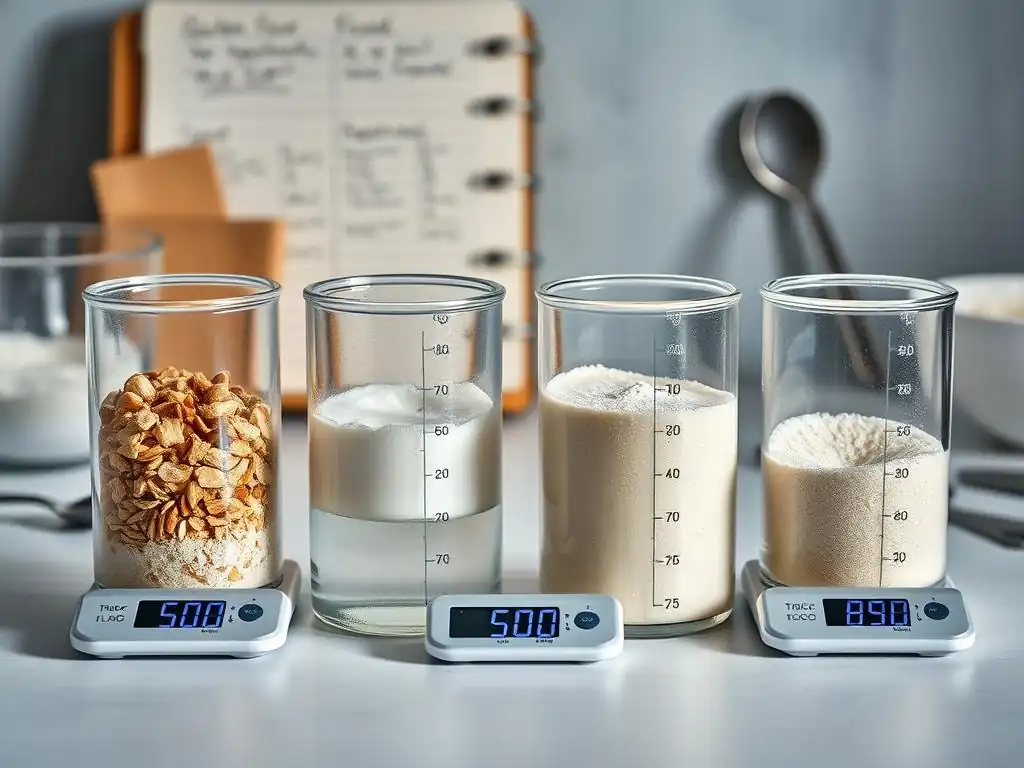
Assessing proper hydration in gluten-free doughs and batters often relies on visual and tactile cues rather than the elasticity you'd look for in wheat dough. Since there's no gluten network to develop, you're looking for the right consistency based on the specific recipe and intended outcome. For cookie dough, you want a consistency that holds its shape but isn't crumbly. For cake batter, it should be smooth and pourable, but not thin like water. Bread dough should be manageable and hold a loose shape, often stickier than wheat dough.
A simple technique is the "feel" test. Take a small amount of the mixture between your fingers. Does it feel excessively dry and fall apart? Is it gummy and sticky? Does it feel just right – moist but not wet, cohesive but not stiff? For batters, observe how it drips from a spoon or spatula.
Does it flow smoothly? For doughs, try shaping a small piece. Does it crack excessively? Does it feel pliable? Comparing your mixture's consistency to known successful outcomes for that type of baked good is crucial. Remember that the combined glutenfree flour absorption rates of a blend will dictate the overall liquid requirement.
Modifying Recipes Based on Flour Absorption Characteristics
Successfully modifying recipes or substituting flours in gluten-free baking requires understanding the glutenfree flour absorption rates of the specific flours being used. If you're substituting a lower-absorption flour (like white rice) with a higher-absorption flour (like sorghum or a blend containing oat flour), you will likely need to increase the liquid slightly. Conversely, replacing a higher-absorption flour with a lower one will require reducing the liquid. This isn't a simple one-to-one swap.
For example, if a recipe calls for 1 cup of a standard gluten-free blend (which often has moderate absorption) and you want to use a blend you made that is heavier on brown rice flour (slightly higher absorption) or includes oat flour, you might start by adding 1-2 tablespoons of extra liquid. If you're substituting a small amount of the flour (say, 1/4 cup) with a very high-absorption flour like coconut flour, you might need to add 2-3 times that amount in liquid (e.g., 1/4 cup coconut flour might require an extra 1/2 to 3/4 cup of liquid, plus possibly an extra egg).
Always add liquid gradually and assess the consistency, as brands and grinds can vary.
Recognizing Over-Hydration and Under-Hydration in Dough/Batter
Recognizing the signs of incorrect hydration is key to fixing issues before baking.
- Under-hydration typically results in a mixture that is dry, crumbly, and difficult to bring together. Doughs might crack excessively when shaped, and batters might look clumpy or stiff. Baked goods made from under-hydrated mixtures will likely be dry, dense, or crumbly.
- Over-hydration results in a mixture that is too wet, sticky, or runny. Doughs will be difficult or impossible to handle and shape without excessive sticking. Batters will be very thin and watery. Baked goods made from over-hydrated mixtures often turn out gummy, dense, or fail to hold their shape properly.
For example, an under-hydrated gluten-free bread dough might resemble coarse sand that won't stick together, while an over-hydrated one might be a sticky, unmanageable mass. A well-hydrated dough will be cohesive but possibly slightly sticky. For batters, an under-hydrated mix might be stiff and require spreading rather than pouring, whereas an over-hydrated batter will pour very quickly and thinly. Learning these visual and tactile cues is vital for adjusting your liquid levels based on the glutenfree flour absorption rates of your specific ingredients.
Practical Tips for Gluten-Free Baking
Pre-Hydrating Flours for Improved Texture
One effective technique to improve the texture of gluten-free baked goods, especially those using coarser flours like brown rice or sorghum, is pre-hydrating the flours. This involves mixing the liquid ingredients (like water, milk, or eggs) with the flours and letting the mixture rest for a period before adding other ingredients like fats, sugar, and leavening. This rest allows the flours, particularly the starches and fibers, more time to fully absorb the liquid, reducing the chance of a gritty or dry texture in the final product.
For example, when making gluten-free muffins or quick bread, you might mix the flours, liquid, and perhaps eggs and let it sit for 10-30 minutes. This allows the varying glutenfree flour absorption rates within your blend to equalize hydration. This step is particularly beneficial when using flours with slower absorption rates or those prone to grittiness. It can lead to a moister, more tender crumb and better overall structure because the starches have had time to swell and gelatinize more effectively during baking.
Rest Time: Enhancing Gluten-Free Dough and Batter
Allowing gluten-free doughs and batters to rest after mixing is a simple yet powerful technique that enhances texture and hydration. Even without pre-hydrating, a rest period (typically 15-30 minutes, or even longer for some bread doughs) gives the flours time to absorb the liquid more fully and evenly. This is crucial because different gluten-free flours have different glutenfree flour absorption rates and speeds of absorption. A rest period allows the slower-absorbing components to catch up.
For cookie dough, a rest in the refrigerator can make it easier to handle and prevent excessive spreading during baking. For bread dough, a rest allows the flours to hydrate more completely, leading to a less crumbly loaf. For batters like muffins or pancakes, a brief rest results in a more tender and less gritty texture. This waiting period allows the starches to begin swelling, which contributes to better structure and moisture retention during the baking process.
Binders: Enhancing Structure with Xanthan Gum and Psyllium Husk
Since gluten-free flours lack gluten's ability to form a cohesive network, binders like xanthan gum or psyllium husk are often added to mimic some of gluten's structural properties. These ingredients absorb significant amounts of water and create a gel-like substance that helps hold the dough or batter together, preventing crumbliness and providing elasticity. The amount needed depends on the recipe and the flours used, but typically ranges from 1/4 to 1 teaspoon per cup of gluten-free flour blend.
Xanthan gum is commonly used in small amounts (e.g., 1/2 teaspoon per cup of flour blend for cakes, 1 teaspoon for bread). Psyllium husk, particularly whole psyllium husk or psyllium husk powder, has a very high glutenfree flour absorption rate and creates a more robust, dough-like structure, often used in gluten-free bread recipes (e.g., 1-2 tablespoons per cup of flour).
These binders work by increasing the viscosity of the liquid phase and helping to trap gas bubbles, thereby improving the volume, texture, and handling properties of gluten-free mixtures. Using the correct amount is important; too little results in crumbly goods, too much can make them gummy or dense.
Gluten-Free Flour Blends: Hydration Considerations
Understanding Pre-Made Blend Absorption
Pre-made gluten-free flour blends are convenient, but their hydration requirements can vary significantly between brands due to different compositions. A blend heavy on rice flour and starches will have a different glutenfree flour absorption rate than one that includes higher-absorption flours like sorghum, oat, or even a small amount of coconut flour. While many blends are designed as cup-for-cup substitutes for wheat flour in standard recipes, this isn't always perfect, and slight adjustments to liquid might be needed.
Checking the ingredient list can give you clues about the blend's likely absorption. A blend listing rice flour, potato starch, and tapioca starch first will likely have moderate absorption. A blend listing sorghum, oat, or brown rice flour higher up, or containing ingredients like fava bean or chickpea flour, might have slightly higher absorption.
The best way to understand a specific blend's hydration is through experimentation. Start with the recipe's recommended liquid amount and be prepared to add a tablespoon or two more if the batter/dough seems dry, or a sprinkle more flour if it's too wet, based on the expected consistency for that type of baked good.
Creating Custom Blends for Optimal Baking
Creating your own gluten-free flour blends allows you to tailor the properties, including the overall glutenfree flour absorption rate, to specific types of baked goods. A good blend typically includes a mix of:
- Whole grain flours: Provide flavor, nutrition, and some structure (e.g., brown rice, sorghum, oat, millet). These often have moderate absorption.
- Starches: Provide lightness, tenderness, and bind when heated (e.g., tapioca, potato, cornstarch). These have moderate absorption but swell significantly with heat.
- Nut or seed flours (optional): Add moisture, richness, and flavor (e.g., almond, sunflower seed). These tend to have lower absorption due to fat content.
- High-fiber flours (used sparingly): Can add nutrition and structure but dramatically increase absorption (e.g., coconut flour, psyllium husk).
For example, a blend for cakes might be 40% whole grain flour, 40% starches, and 20% nut flour, giving it a moderate to slightly lower overall absorption suitable for a tender crumb. A blend for bread might use a higher percentage of whole grain flours and include psyllium husk for structure and higher absorption. By controlling the ratios of flours with different glutenfree flour absorption rates, you can create blends that behave predictably and yield desired textures for various recipes.
Adjusting Liquid Ratios in Flour Blend Combinations
When working with gluten-free flour blends, whether pre-made or custom, the key to success is often careful adjustment of the liquid ratio. Because the combined glutenfree flour absorption rates of the components dictate how much liquid the blend will absorb, and these rates can vary, you need to be flexible. Don't pour all the liquid in at once, especially if you're using a new blend or recipe.
Add about 80-90% of the called-for liquid initially, mix, and then assess the consistency. Gradually add the remaining liquid, a tablespoon at a time, mixing until the desired consistency is reached. For doughs, aim for a texture that is cohesive but possibly stickier than wheat dough.
For batters, look for smooth flow. If you accidentally add too much liquid, you can carefully mix in a little more of your flour blend (a tablespoon or two at a time) until the consistency is corrected. This iterative process of adding liquid and assessing is the most reliable way to nail hydration with varying glutenfree flour absorption rates.
Addressing Dry and Crumbly Baked Goods
Dry and crumbly textures are classic signs of under-hydration in gluten-free baking. This happens when there isn't enough liquid to fully hydrate the starches and fibers in the flours, preventing them from binding together properly during baking. The varying glutenfree flour absorption rates mean some flours might remain partially dry if not enough liquid is present overall.
To address this in future baking:
- Increase the liquid slightly in your recipe (start with 1-2 tablespoons per cup of flour blend).
- Ensure you are measuring your flour correctly (spooning lightly into the cup rather than scooping and packing).
- Consider pre-hydrating your flours with the liquid ingredients before mixing in others.
- Add a binder like xanthan gum or psyllium husk if the recipe doesn't include one, or slightly increase the amount if it does (by 1/4 to 1/2 teaspoon per cup of flour).
- Check your oven temperature; overbaking can also dry out gluten-free goods quickly.
Addressing Gummy or Dense Baked Goods
Gummy or dense textures can result from several issues, including over-hydration or using too much starch without enough binding structure. When there is too much liquid relative to the glutenfree flour absorption rates of the blend, the starches can become overly gelatinous, leading to a gummy texture, especially as the baked good cools.
To address this in future baking:
- Slightly reduce the liquid in your recipe (start by reducing by 1-2 tablespoons per cup of flour blend).
- Ensure you are measuring flour accurately; too little flour for the amount of liquid will cause this.
- Check the amount of binder (xanthan gum or psyllium husk); too much can also lead to gumminess.
- Ensure your leavening is fresh and active; poor rise can contribute to density.
- Consider the composition of your flour blend; too much pure starch relative to whole grain flours can sometimes lead to a gummy texture.
Cake Troubleshooting: Hydration Solutions
Gluten-free cakes that are dry, crumbly, or dense often suffer from incorrect hydration based on the specific glutenfree flour absorption rates of the blend used. A dry cake indicates under-hydration, while a gummy or sunken cake might be over-hydrated.
For dry/crumbly gluten-free cakes:
- Increase the liquid (milk, buttermilk, yogurt, water) by 1-3 tablespoons per cup of flour blend.
- Ensure enough fat is present, as fat contributes moisture and tenderness.
- Consider adding an extra egg yolk for richness and moisture.
- Make sure you are not over-measuring your flour.
For gummy/dense gluten-free cakes:
- Reduce the liquid by 1-2 tablespoons per cup of flour blend.
- Check the amount of xanthan gum; reduce by 1/4 teaspoon per cup if it seems excessive.
- Ensure your leavening (baking powder/soda) is fresh and you're using the correct amount.
- Avoid overmixing the batter once the wet and dry ingredients are combined; this can develop starches too much and lead to toughness or gumminess.
Gluten-free cookies have a wide range of desired textures, but common hydration issues based on glutenfree flour absorption rates include being too crumbly (under-hydrated) or spreading too much and being flat/greasy (often over-hydrated, or too much fat).
For crumbly gluten-free cookies:
- Increase the liquid (milk, eggs, etc.) by 1-2 teaspoons per cup of flour blend until the dough holds together when squeezed.
- Ensure enough fat is in the recipe, as it helps bind and tenderize.
- Chill the dough before baking to help the fats firm up and prevent excessive spreading if hydration is borderline.
For cookies that spread too much/are flat:
- Reduce liquid slightly (1-2 teaspoons per cup of flour blend).
- Ensure you are using the correct amount of flour and measuring accurately.
- Chill the dough thoroughly (30-60 minutes) before baking.
- Check the temperature of your butter if using creamed butter recipes; it should be softened but not melted.
Gluten-free bread is perhaps the most challenging area where understanding glutenfree flour absorption rates is critical. Under-hydrated dough leads to dense, crumbly loaves, while over-hydrated dough can result in loaves that collapse or are gummy and heavy.
For dense/crumbly gluten-free bread:
- Increase the liquid (water, milk) significantly; gluten-free bread dough is often wetter than wheat dough, potentially requiring 80-100% hydration based on flour weight, depending on the blend's absorption. Add liquid until the dough is like a thick batter or very sticky dough that can just about hold a shape.
- Ensure sufficient binder (psyllium husk is excellent for bread structure, typically 1-2 tablespoons per cup of flour blend).
- Allow adequate rest or proofing time for flours to hydrate and yeast to work.
For gummy/heavy gluten-free bread:
- Reduce the liquid; the dough might be too wet to support its structure.
- Check the amount of binder; too much xanthan gum can cause gumminess in bread. Psyllium husk generally gives a better bread texture than xanthan gum in higher amounts.
- Ensure the bread is baked through; underbaking leads to a gummy interior. Use a thermometer (internal temp should be around 200-210°F or 93-99°C).
Achieving Baking Excellence Through Flour Selection and Hydration
Substituting Gluten-Free Flours in Recipes
Substituting one gluten-free flour for another, or a blend for a different blend, requires careful consideration of their respective glutenfree flour absorption rates and how they contribute to texture. A simple cup-for-cup swap without adjusting liquid is rarely successful.
When substituting, consider:
- Absorption: Is the new flour/blend higher or lower in absorption than the original? Adjust liquid accordingly (more liquid for higher absorption, less for lower).
- Function: Does the new flour provide structure (like sorghum or rice), tenderness (like starch or almond), or binding (like oat or psyllium)? Try to match the functional role of the original flour in the blend.
- Flavor/Color: Some flours (like buckwheat or teff) have strong flavors and colors that might not be desirable in all recipes.
For example, if a recipe calls for white rice flour and you want to use brown rice flour, you might need a tiny bit more liquid and accept a slightly denser, nuttier result. Substituting almond flour for a portion of a starchy blend will require less liquid and add richness. Substituting even a small amount of a blend with coconut flour will require a significant increase in liquid and likely eggs.
Experimenting with Flours and Hydration
Becoming a skilled gluten-free baker involves a willingness to experiment and observe. Because of the variability in glutenfree flour absorption rates between types and even brands, recipes often serve as a starting point. Pay attention to the consistency described in the recipe or shown in accompanying photos/videos.
Start by following a recipe closely, but be prepared to make small adjustments to the liquid based on how your specific blend behaves. Keep notes on which flours or blends you used, how much liquid was needed, and the resulting texture. Did the batter seem too thick? Did the dough feel too dry? This feedback loop helps you learn the hydration characteristics of your ingredients. Trying small-batch recipes or half-batches when experimenting with new flour combinations or hydration levels can save ingredients and frustration.
Gluten-Free Flour Substitution Guide
While precise ratios depend on the specific recipe and desired outcome, here's a general guide based on typical glutenfree flour absorption rates and properties:
- White Rice Flour: Moderate absorption, adds structure, can be gritty. Substitute with brown rice flour (slightly higher absorption, nuttier) or sorghum flour (similar absorption, softer texture).
- Brown Rice Flour: Moderate-high absorption, adds structure/nutrients, can be gritty. Substitute with white rice flour (slightly lower absorption, finer texture) or sorghum flour (similar absorption, softer).
- Tapioca Starch: Moderate absorption, adds chewiness/crispness. Substitute with potato starch or cornstarch (similar absorption, different gelatinization temps/textures).
- Potato Starch: Moderate absorption, adds tenderness/lightness. Substitute with tapioca starch or cornstarch.
- Cornstarch: Moderate absorption, adds tenderness/lightness. Substitute with tapioca starch or potato starch.
- Almond Flour: Low absorption (due to fat), adds moisture/richness. Substitute with other nut/seed flours (similar properties but varying absorption/flavor), or replace with a blend of starches and whole grain flours, increasing fat slightly and adding more liquid.
- Coconut Flour: Very high absorption, adds fiber/flavor. Substitute only in recipes specifically designed for coconut flour, or replace with a blend of other flours and significantly reduce liquid and increase eggs/binder. Do not substitute cup-for-cup.
- Sorghum Flour: Moderate-high absorption, adds soft texture/flavor. Substitute with brown rice flour or a blend of white rice flour and oat flour.
- Oat Flour (GF): Moderate-high absorption, adds moisture/flavor. Substitute with sorghum flour or a blend including brown rice flour.
Always remember to adjust liquid and potentially binders when substituting, keeping in mind the glutenfree flour absorption rates of both the original and substitute flours.
Frequently Asked Questions
What does "absorption rate" mean in the context of gluten-free baking?
The absorption rate refers to how much liquid a flour can hold. This is crucial in gluten-free baking because different flours have vastly different liquid holding capacities compared to wheat flour.
Why is understanding absorption rates important when using gluten-free flours?
Understanding absorption rates helps you adjust liquid quantities in recipes. Failing to do so can result in dry, crumbly, or overly sticky baked goods when substituting gluten-free flours.
How do absorption rates vary between different types of gluten-free flours?
Absorption rates vary significantly. For example, rice flour generally absorbs less liquid than tapioca starch or almond flour, requiring careful consideration and potential recipe adjustments.
Where can I find information about the specific absorption rate of a particular gluten-free flour?
While a precise number is difficult to pinpoint, resources like BakeWithEase.com often provide general guidance and tips on how to adjust recipes based on the type of gluten-free flour being used.
What are some common signs that I need to adjust the liquid in a gluten-free recipe due to absorption rate differences?
Look for a batter or dough that is either excessively dry and crumbly, or unusually sticky and difficult to manage. These are indicators you need to adjust the liquid accordingly.
Final Reflection: Unlocking the Potential of Gluten-Free Baking
Understanding gluten-free flour absorption rates is no longer a niche concern; it's the key to unlocking truly delicious and consistently successful gluten-free baking. The ability to predict and control the hydration levels of different gluten-free flour blends directly impacts texture, rise, and overall palatability, moving us beyond the often-disappointing results associated with gluten-free alternatives.
This journey into the world of gluten-free flour absorption has profoundly impacted my own baking, transforming frustration into a sense of empowerment. I've learned that the seemingly simple act of measuring flour accurately and understanding its unique properties is crucial. The difference between good and great baking often lies in the details,
a wise baker once told me, and this couldn't be truer when working with gluten-free flours. The subtle nuances in absorption rates, often overlooked, are the details that elevate a gluten-free creation from acceptable to exceptional.
Now, it's your turn to experiment and explore. Don't be intimidated by the science; embrace it! Take the knowledge gained from this article and apply it to your next gluten-free baking project. Pay close attention to the absorption rates of your chosen flours, adjust your recipes accordingly, and witness the transformation in your baking. The journey to mastering gluten-free baking is a rewarding one, filled with delicious discoveries and the satisfaction of creating truly exceptional treats. Embrace the challenge, and enjoy the delicious results!
Unlock Your Gluten-Free Baking Potential!
Thanks for taking the time to learn about gluten-free flour absorption rates! We hope this knowledge empowers you to create even more delicious and successful gluten-free bakes. Now it's time to put your new understanding into practice.
- Experiment with a new recipe: Try substituting your favorite gluten-filled recipe with the flour(s) best suited for its texture and hydration needs based on what you've learned. This is the best way to truly master gluten-free baking!
- Share your baking triumphs (and challenges!): Let us know in the comments how your experiment goes—we love hearing about your experiences.
- Explore our other resources: Discover more helpful guides and recipes on our site to further enhance your gluten-free baking journey.
Ready to transform your next baking project? What exciting gluten-free creation will you tackle first?