
Batch Baking Bonanza: Optimizing Temperature and Time for LargeScale Cookies

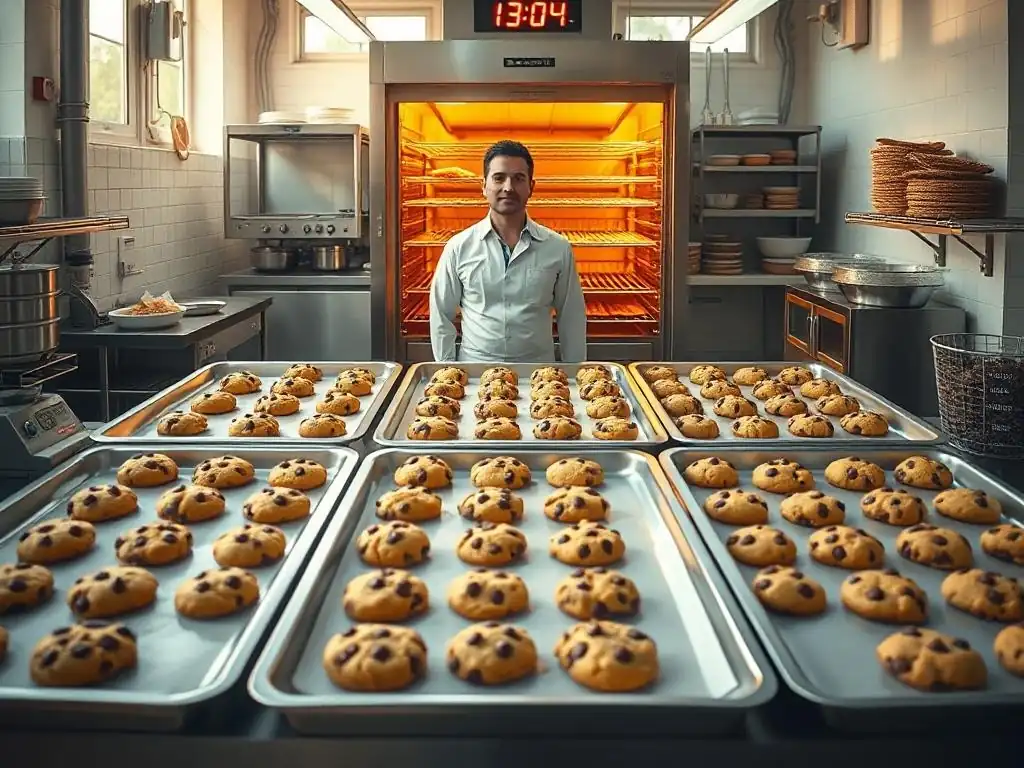
Welcome to BakeWithEase, your secret weapon for conquering the kitchen! Ever wondered how to achieve consistent perfection when tackling large scale cookie baking? We're about to unlock the secrets to perfectly baked batches, every single time. Discover the crucial temperature and timing strategies that will transform your cookie creations from good to amazing, and say goodbye to unevenly baked disasters. Intrigued? Let's get baking!
- Mastering Batch Baking: Temperature & Time for Consistent Cookies
- Introduction to Batch Baking
- Understanding Oven Temperature
- Mastering Baking Time
- Optimizing Cookie Placement
- Factors Affecting Baking Time & Temperature
- Troubleshooting Common Problems
- Advanced Techniques
- Storing Baked Cookies
- Recipe Adaptations
- Conclusion: Achieving Consistent Results
-
Frequently Asked Questions
- How does baking cookies on a large scale differ from baking a single batch?
- What's the ideal oven temperature for baking large batches of cookies?
- How do I prevent my cookies from spreading too thin when baking large batches?
- What's the best way to ensure all my cookies bake evenly when baking a large batch?
- How do I properly store large quantities of baked cookies to maintain freshness?
- Final Reflection: The Sweet Science of Scaling Up
- Unlock Your Cookie Empire: Mastering Batch Baking!
Introduction to Batch Baking
When you're diving into large scale cookie baking, consistency isn't just a nice-to-have, it's essential. Imagine baking dozens, even hundreds, of cookies for a party, bake sale, or just stocking up your pantry. If each batch varies wildly – some burnt, some underdone, some spread too thin, others too thick – you've wasted time, ingredients, and effort.
Precision in every step, from mixing the dough to managing oven temperature and time, ensures that the first cookie out of the oven is just as perfect as the last. This level of control is what elevates successful large-scale cookie baking from a chaotic kitchen experiment to a rewarding and efficient process.
Achieving consistency across multiple batches requires careful attention to detail. Factors like slight variations in dough temperature, how long dough sits between batches, and even how you scoop the cookies can impact the final result. However, the most significant variables often lie in the baking process itself: the oven environment and the duration of heat exposure. Mastering these elements is fundamental to producing uniform cookies, ensuring predictable results batch after batch, which is the hallmark of efficient and delicious large scale cookie baking.
The Role of Oven Temperature in Batch Baking Success
Oven temperature is arguably the single most critical factor in determining how a cookie bakes. Too hot, and the edges might burn before the center is cooked through; too cool, and cookies might spread excessively or remain pale and doughy.
When you're tackling large scale cookie baking, maintaining a stable and accurate oven temperature becomes even more challenging because opening and closing the oven door to swap sheets causes significant temperature fluctuations. Furthermore, different cookie types require different temperature ranges – a delicate shortbread bakes best at a lower temperature around 300-325°F (150-160°C), while many drop cookies thrive at a standard 350-375°F (175-190°C).
Understanding and controlling your oven's temperature is paramount for successful large scale cookie baking. An oven that claims to be preheated to 350°F might actually be 25°F (15°C) higher or lower, leading to unpredictable results. When baking multiple sheets, the sheer volume of dough can also slightly cool the oven cavity. Monitoring the actual temperature inside the oven and making necessary adjustments is key to ensuring that each sheet of cookies experiences the same baking environment, leading to consistent browning, texture, and doneness across your entire batch.
Successfully managing large scale cookie baking involves several interconnected factors. Beyond just temperature and time, consider the uniformity of your cookie dough portions – using a scoop ensures consistent size, which directly impacts baking time. The type and color of your baking sheet also play a role; dark sheets absorb more heat and can lead to faster browning or burning of the bottoms compared to lighter, shiny sheets.
Another critical element is oven capacity and efficiency. Trying to cram too many sheets into a standard home oven disrupts airflow and leads to uneven baking. Most home ovens can effectively bake two sheets at a time, maybe three if carefully staggered and rotated. Planning your baking process, including dough preparation, chilling times, and managing oven space and temperature, is essential for streamlining large scale cookie baking and achieving consistently excellent results with minimal stress.
Understanding Oven Temperature
The ideal oven temperature for cookies isn't a one-size-fits-all number; it varies depending on the cookie's composition and desired outcome. For classic drop cookies like chocolate chip or oatmeal, a temperature between 350°F and 375°F (175°C to 190°C) is common. The higher end of this range often results in crispier edges and softer centers, while the lower end allows for more even baking throughout, especially for thicker cookies.
For delicate cookies like shortbread or meringues, lower temperatures, often in the range of 250°F to 325°F (120°C to 160°C), are preferred. These cookies require a gentler heat to set properly without burning or browning too quickly. Conversely, some recipes for thin, crispy cookies might call for a slightly higher temperature, up to 400°F (200°C), for a shorter duration to achieve that desired snap. Understanding these temperature nuances is fundamental when planning for large scale cookie baking involving different recipes.
Many home ovens are not perfectly calibrated out of the box, and their internal thermostats can become less accurate over time. Studies have shown that oven temperatures can vary by as much as 50°F (30°C) from the set temperature. This inaccuracy can significantly impact the outcome of your cookies, especially when striving for consistency in large scale cookie baking. Calibrating your oven involves checking its true temperature and adjusting it if necessary, or simply knowing how far off it is and setting it accordingly.
To check your oven's calibration, you'll need an oven thermometer (more on that next). Place it in the center of the oven and preheat the oven to a standard temperature, say 350°F (175°C). Let the oven run for at least 20-30 minutes after it indicates it's preheated to allow the temperature to stabilize.
Note the temperature on the thermometer. If it consistently reads higher or lower than the set temperature by a significant margin (e.g., 25°F or more), your oven may need calibration. Consult your oven's manual for instructions on how to adjust the thermostat settings, or simply remember that you need to set the oven X degrees higher or lower than the recipe calls for.
Using Oven Thermometers for Consistent Results
An inexpensive oven thermometer is an indispensable tool for anyone serious about baking, especially when engaging in large scale cookie baking. Relying solely on your oven's built-in display can be misleading, as these sensors often only measure the air temperature near the sensor, which might not reflect the average temperature throughout the cavity or the radiant heat from the elements. A physical thermometer placed in the center of the oven rack provides a more accurate reading of the actual baking environment your cookies are experiencing.
Using an oven thermometer allows you to monitor temperature fluctuations throughout the baking process. You can see how much the temperature drops when you open the door to insert or rotate cookies and how long it takes to recover. For consistent large scale cookie baking, aim to maintain the target temperature as steadily as possible.
If your oven runs cool, you can preheat it to a slightly higher temperature; if it runs hot, preheat to a lower one. Checking the thermometer before putting in each batch ensures that you are starting with the correct temperature, leading to more predictable and uniform results across all your sheets.
Mastering Baking Time
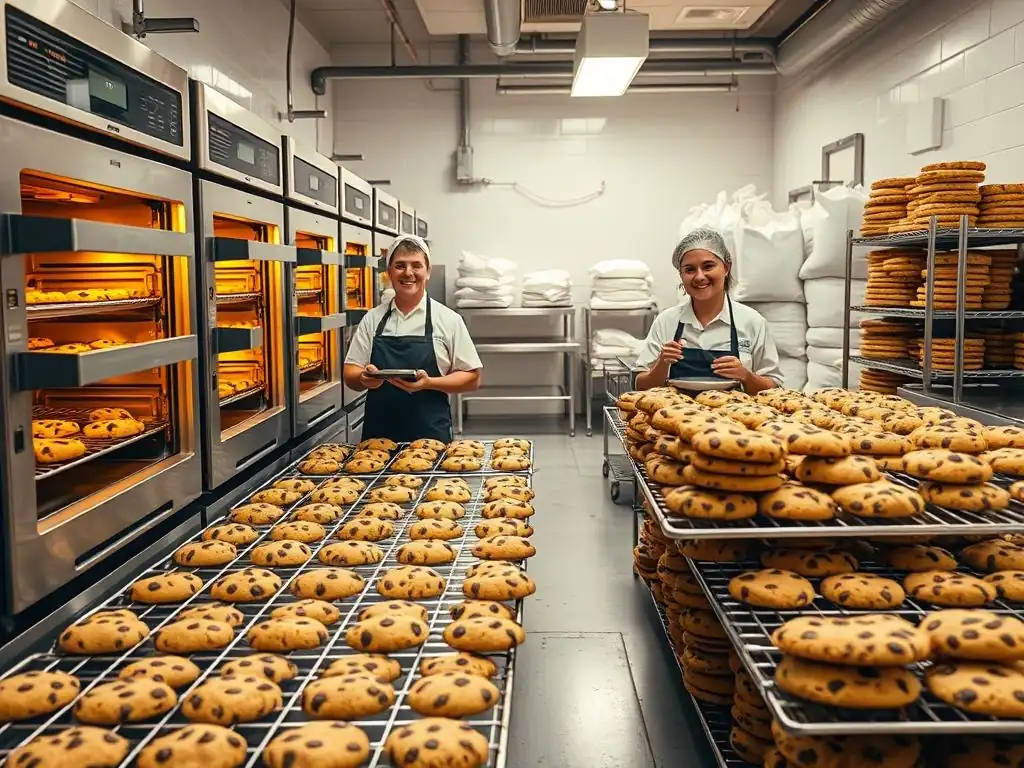
Baking time is just as critical as temperature and is heavily influenced by the type, size, and thickness of your cookies. A thin, crisp sugar cookie might bake in 8-10 minutes at 350°F (175°C), while a thick, chewy chocolate chip cookie of the same diameter could take 12-15 minutes. The denser the dough and the larger the cookie, the longer it will take for heat to penetrate to the center and cook it through. When engaging in large scale cookie baking, recognizing these differences and adjusting time accordingly is crucial.
Standard recipes usually provide a time range (e.g., 10-12 minutes). This range accounts for slight variations in cookie size, oven performance, and desired doneness. For large scale cookie baking, start checking your cookies at the lower end of the recommended time. Look for visual cues (discussed next) rather than relying solely on the clock. Once you identify the perfect baking time for a specific size and type of cookie in your oven, note it down. This information becomes invaluable for subsequent batches, helping you achieve consistent results efficiently.
Learning to read your cookies is a skill that develops with practice and is vital for large scale cookie baking success. One of the most reliable indicators is the color of the edges. For many cookies, the edges will turn a golden brown when they are nearly done. The centers might still look slightly soft or underbaked, but residual heat will continue to cook them after they are removed from the oven.
Another cue is the surface appearance. Some cookies, like crinkles, will develop characteristic cracks. Others will puff up slightly and then settle. For cookies like peanut butter or oatmeal, the surface might look drier or less shiny. The key is to observe these changes consistently. When baking large batches, check cookies on different parts of the sheet, as oven hot spots can cause variations. Once you recognize the signs of a perfectly baked cookie for your specific recipe and desired texture, you can confidently pull subsequent sheets at the right moment.
The size and thickness of your cookie dough portions directly impact how long they need to bake. A standard tablespoon-sized drop cookie might take 10-12 minutes, but a larger, 3-tablespoon "bakery style" cookie could require 14-18 minutes or even longer. Similarly, a thin, rolled-out cookie sheet might bake quickly, while a thicker, cut-out cookie takes more time. When you're doing large scale cookie baking, you'll likely be working with many cookies of potentially varying sizes if not using a consistent scoop.
If you decide to make larger or smaller cookies than a recipe specifies, you'll need to adjust the baking time. For larger cookies, increase the time incrementally, checking frequently until they show the proper visual cues. You might need to add 2-5 minutes or more per batch. For smaller cookies, decrease the time; they could be done in just 6-8 minutes. It's always better to underbake slightly and put them back in for a minute or two than to overbake and end up with dry or burnt cookies, especially when you have many batches waiting.
Best Rack Position for Even Baking
The position of your baking sheet within the oven cavity significantly affects how evenly cookies bake. For most standard home ovens using conventional heat (not convection), the middle rack is generally the best position. This placement allows the cookies to be exposed to heat radiating from both the top and bottom elements relatively equally, promoting even cooking and browning across the sheet.
When engaging in large scale cookie baking, you'll likely need to use more than one rack. If baking on two racks simultaneously, position them in the upper-middle and lower-middle thirds of the oven. Avoid placing sheets too close to the top or bottom elements, as this can lead to burnt bottoms or tops before the rest of the cookie is done. Using only one sheet at a time on the middle rack will always yield the most consistent results, but this isn't practical for large scale cookie baking, necessitating the use of multiple racks and strategic placement.
Even in ovens with excellent temperature calibration, slight variations in heat distribution are common. Some areas might be slightly hotter or cooler, leading to uneven browning across a single cookie sheet, with cookies on one side or in a corner baking faster than others. To counteract this, especially during large scale cookie baking where consistency is key, rotating your cookie sheets halfway through the baking time is a simple yet effective technique.
Rotating involves carefully opening the oven, pulling out the sheet, turning it 180 degrees, and pushing it back in. If you are baking on two racks, you should also swap their positions (move the top sheet to the bottom rack and the bottom sheet to the top rack) when you rotate them. This ensures that all cookies spend an equal amount of time in potentially hotter or cooler zones, promoting uniform doneness and color across the entire batch and subsequent batches.
Strategies for Addressing Oven Hot Spots
Identifying and compensating for your oven's hot spots is crucial for consistent large scale cookie baking. Hot spots are areas within the oven cavity that are consistently hotter than the rest. They can cause cookies in those specific locations to bake faster and potentially burn. While rotating sheets helps, understanding where your hot spots are allows for more targeted strategies.
You can map your oven's hot spots by arranging slices of white bread on a baking sheet, placing it in the oven set to a moderate temperature (like 350°F / 175°C), and observing which slices brown fastest. Once identified, you can adapt your large scale cookie baking approach. If a corner is a hot spot, you might place slightly larger or thicker cookies there, or simply be extra vigilant about rotating and checking those specific cookies.
Some experienced bakers even slightly underfill dough portions in known hot spot areas. While not perfect, recognizing and managing hot spots minimizes their negative impact on your overall cookie consistency.
Factors Affecting Baking Time & Temperature
The Impact of Dough Temperature
The temperature of your cookie dough when it enters the oven has a significant impact on how it bakes, particularly concerning spread. Cold dough, typically chilled in the refrigerator for at least 30 minutes, holds its shape better in the initial stages of baking. This results in cookies that spread less and tend to be thicker with a chewier center. Warm dough, on the other hand, will spread more rapidly when exposed to heat, leading to thinner, crispier cookies. When you're doing large scale cookie baking, managing dough temperature between batches is vital.
Dough left sitting on the counter while batches bake will warm up, leading to the last batches spreading more than the first. For consistent results in large scale cookie baking, keep unbaked dough chilled in the refrigerator between scooping or rolling sessions. Only take out enough dough to fill the sheet you are about to bake. If working with multiple sheets of scooped dough waiting to go into the oven, keep them on trays in the fridge until space is available. This simple step helps ensure uniform spread and thickness across all your cookies.
The material and color of your baking sheets are not merely aesthetic choices; they directly influence how quickly and evenly heat is transferred to your cookies. Shiny, heavy-gauge aluminum sheets are often considered ideal for large scale cookie baking. Their light color reflects heat, preventing the bottoms from browning too quickly, while the thick material ensures even heat distribution across the surface. Cookies baked on these sheets tend to have evenly golden bottoms.
Dark-colored or non-stick sheets absorb more radiant heat. This can cause the bottoms of cookies to brown or even burn faster than the tops are done. If you use dark sheets for large scale cookie baking, you may need to reduce the oven temperature by 10-15°F (5-8°C) or decrease the baking time to prevent over-browning.
Insulated cookie sheets, which consist of two layers of metal with an air pocket in between, slow down heat transfer significantly. While they prevent burnt bottoms effectively, they can also lead to longer baking times and cookies that don't brown much on the bottom, which might not be desirable for all recipes.
Adjusting for Altitude
Baking at high altitudes (typically above 3,000 feet or 900 meters) presents unique challenges due to lower atmospheric pressure and drier air. These conditions cause leavening agents to work more quickly, moisture to evaporate faster, and liquids to boil at lower temperatures. For large scale cookie baking at altitude, these factors can lead to excessive spread, dryness, or cookies that don't set properly.
While cookie recipes are generally less affected by altitude than cakes or breads, adjustments may still be necessary, especially for recipes high in sugar or leavening. Common adjustments for high-altitude large scale cookie baking include slightly increasing the flour (by 1-2 tablespoons per cup) to provide more structure, slightly decreasing the leavening agent (baking soda/powder), slightly decreasing sugar (by 1-2 tablespoons per cup) to reduce spread, and potentially slightly increasing liquid (like milk or egg).
You might also need to increase the oven temperature by 15-25°F (8-14°C) and decrease the baking time to help the cookies set faster before spreading too much. It often requires some experimentation to find the perfect balance for your specific location and recipe.
Troubleshooting Common Problems
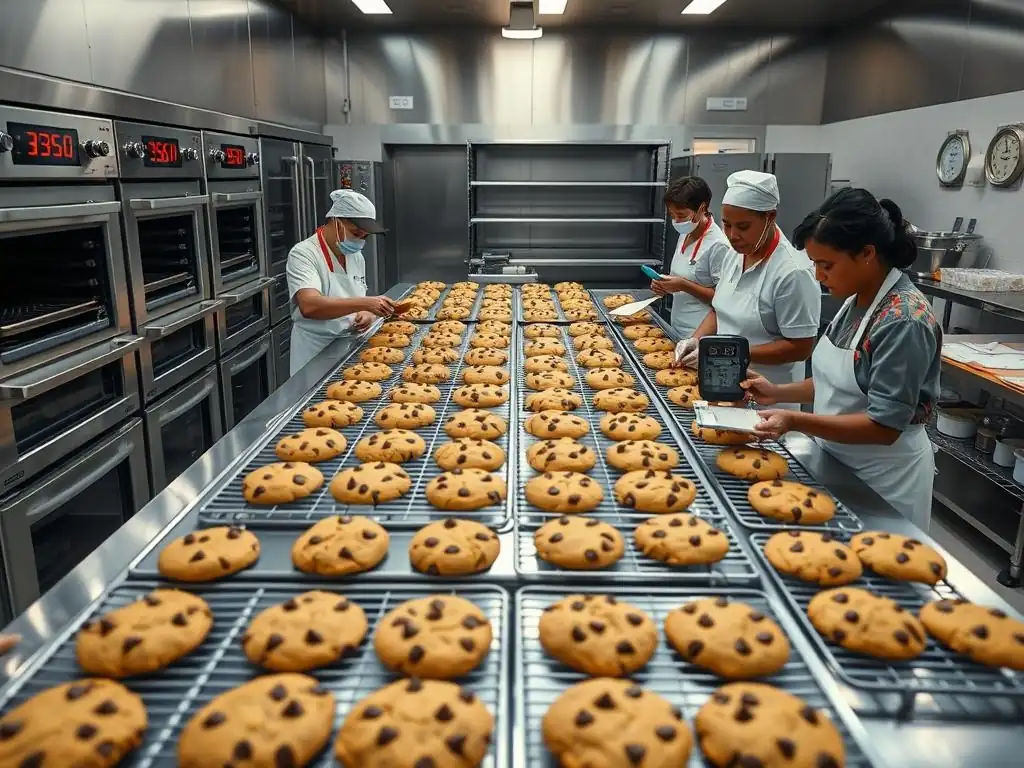
Unevenly baked cookies, where some are perfect while others on the same sheet are underdone or burnt, are a common frustration in large scale cookie baking. This issue is almost always related to inconsistent heat distribution within the oven or failure to manage it. Hot spots, as mentioned earlier, are a prime culprit. Loading too many sheets into the oven at once restricts airflow, preventing heat from circulating properly and leading to uneven baking.
To address uneven baking in your large scale cookie baking efforts, first ensure your oven is calibrated and consider using an oven thermometer. Bake no more than two sheets at a time in a standard oven, positioned on the upper and lower-middle racks. Critically, rotate and swap the positions of your sheets halfway through the baking time. If you still experience unevenness, try baking only one sheet at a time on the middle rack to see if the problem persists with less oven load. Sometimes, simply giving each batch more space and attention makes a significant difference.
Cookies that spread into flat, thin discs instead of maintaining a desirable thickness are often a result of warm dough, too much butter (especially melted butter), not enough flour, or an oven temperature that is too low. When tackling large scale cookie baking, warm dough is a frequent cause because batches might sit out while others bake.
To prevent excessive spread during large scale cookie baking, always start with chilled dough. Ensure your butter is at the correct temperature specified in the recipe (often softened but not melted). Measure your flour accurately; too little flour means less structure to hold the cookie's shape.
If using a recipe prone to spreading, slightly increasing the flour by a tablespoon or two per cup can help. Also, verify your oven temperature with a thermometer; if it's running cool, cookies will spread more before the heat sets their structure. Using parchment paper instead of just greasing the sheet can also slightly help maintain shape.
Preventing Bottom Burning
Burnt cookie bottoms are a tell-tale sign that the heat source beneath the sheet is too intense or the cookie sheet itself is absorbing too much heat. This is particularly frustrating in large scale cookie baking when you have many sheets to get through. Common causes include positioning the sheet too close to the bottom heating element, using dark or thin cookie sheets, or the oven temperature being too high.
To prevent burning the bottoms of your cookies during large scale cookie baking, always use the middle rack position if baking one sheet, or the upper and lower-middle racks if baking two. Avoid the very bottom rack. Switch to shiny, heavy-gauge aluminum cookie sheets if you are currently using dark or thin ones. If you must use dark sheets, consider reducing the oven temperature by 10-15°F (5-8°C). Using parchment paper not only aids in cleanup but also provides a slight insulating layer that can help prevent bottoms from burning.
Advanced Techniques
Using a Convection Oven for Efficient Baking
Convection ovens use a fan to circulate hot air, creating a more even temperature throughout the oven cavity and often reducing baking time. This can be a significant advantage for large scale cookie baking, as it helps mitigate hot spots and allows for more even baking when using multiple racks simultaneously. Because the circulating air transfers heat more efficiently, you can often bake cookies at a slightly lower temperature or for a shorter time compared to a conventional oven.
When using a convection oven for large scale cookie baking, it's generally recommended to reduce the temperature called for in a conventional recipe by 25°F (15°C) and/or decrease the baking time by 25%. For example, if a recipe calls for 10-12 minutes at 350°F (175°C) in a conventional oven, you might bake them at 325°F (160°C) for 8-10 minutes in a convection oven. Always start checking earlier than you would in a conventional oven, as convection can bake things surprisingly quickly. The forced air can also cause some cookies to spread slightly more, so ensure your dough is well-chilled.
The Benefits of Baking Stones
While often associated with bread and pizza, baking stones (or steels) can also benefit large scale cookie baking, particularly for achieving evenly baked bottoms and consistent temperature. A baking stone, placed on a rack in the oven and preheated thoroughly, absorbs and retains heat. When a cookie sheet is placed on or above the preheated stone, the stone radiates consistent, even heat upwards.
Using a baking stone can help prevent burnt bottoms by providing a buffer against direct radiant heat from the lower element, while still delivering steady heat for proper cooking. For large scale cookie baking, you can place the stone on the lowest or second-lowest rack and bake your cookie sheets on the rack directly above it (usually the middle rack). Ensure the stone is fully preheated (allow 30-60 minutes after the oven reaches temperature). This technique helps create a more stable thermal environment, contributing to more consistent results across multiple batches.
Freezing cookie dough is an excellent strategy for large scale cookie baking because it allows you to prepare large quantities in advance and bake fresh cookies whenever needed. This not only saves time on baking day but also ensures that each subsequent batch starts with perfectly chilled dough, contributing to consistent spread and texture.
To freeze cookie dough, portion it out as if you were going to bake it (scoop balls, roll and cut shapes, or form logs). Place the portions on a baking sheet lined with parchment paper and flash-freeze them until solid, typically 1-2 hours. Once frozen, transfer the dough portions to airtight freezer bags or containers. Label clearly with the cookie type and baking temperature.
Frozen dough balls can be baked directly from the freezer; they will likely require an extra 1-3 minutes of baking time. Log-shaped dough can be sliced and baked. This method makes large scale cookie baking feel much more manageable and provides a constant supply of fresh-baked treats.
Maintaining Freshness and Flavor
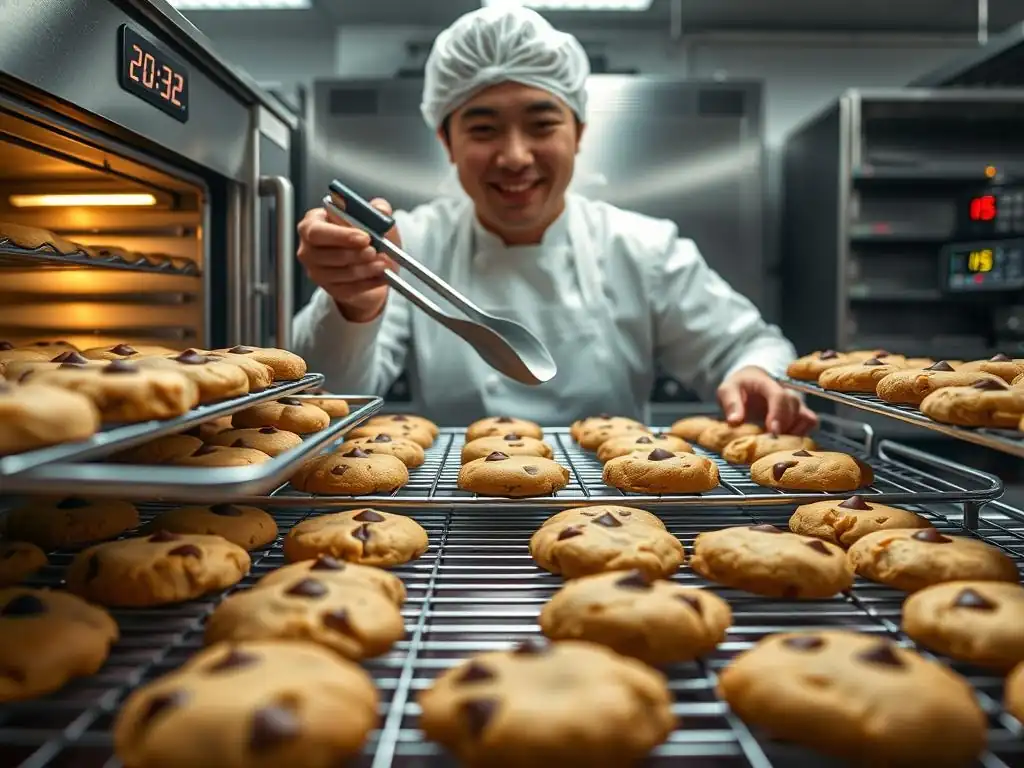
Proper storage is key to preserving the texture and flavor of your hard-earned large scale cookie baking output. The best storage method depends on the cookie type. Crisp cookies, like shortbread or gingersnaps, are best stored in airtight containers at room temperature. Ensure they are completely cooled before storing, as any residual heat will create condensation and make them soft. To maintain crispness, you can even place a piece of parchment paper or a paper towel in the bottom of the container to absorb excess moisture.
Soft or chewy cookies, such as chocolate chip or oatmeal, also need to be stored in airtight containers at room temperature. However, to maintain their softness, you can add a slice of bread or an apple wedge to the container. The cookies will absorb moisture from the bread or apple, staying soft. Just remember to replace the bread or apple every day or two to prevent mold. Separate different cookie types when storing, as strong flavors can transfer.
Best Practices for Freezing
Freezing baked cookies is an excellent way to handle the volume produced by large scale cookie baking and ensures you have treats ready for future events. Most baked cookies freeze exceptionally well, maintaining their quality for several months.
To freeze baked cookies, ensure they are completely cooled first. Place them in a single layer on a baking sheet and flash-freeze until solid (1-2 hours). This prevents them from sticking together. Once frozen, transfer the cookies to airtight freezer-safe containers or heavy-duty freezer bags.
Press out as much air as possible to prevent freezer burn. Label the containers with the type of cookie and the date they were frozen. To thaw, simply take the desired number of cookies out of the freezer and let them sit at room temperature for 30-60 minutes. Avoid thawing in the microwave, which can alter the texture.
Preventing Sticking
Preventing cookies from sticking together during storage is crucial, especially when dealing with the volume from large scale cookie baking. This is particularly important for soft, chewy, or decorated cookies. Sticking often occurs when cookies are stored before they are fully cooled or when they are packed too tightly without separation.
Always allow cookies to cool completely on a wire rack before storing or freezing. For storage in containers, place a piece of parchment paper or wax paper between layers of cookies. This creates a barrier that prevents them from fusing together. If freezing baked cookies, the initial flash-freezing step on a baking sheet is the most effective way to ensure they don't stick together once transferred to a bag or container. You can then pack the flash-frozen cookies more densely, still using parchment paper between layers if desired for extra security.
Recipe Adaptations
Scaling Recipes for Larger Batches
Scaling up a cookie recipe for large scale cookie baking isn't always as simple as just multiplying every ingredient by the same factor. While dry ingredients like flour, sugar, baking soda, and baking powder can often be scaled linearly (e.g., doubling a recipe means doubling these), wet ingredients like eggs and liquids require more careful consideration. For instance, if a recipe uses 1 or 2 eggs, doubling it might work, but tripling or quadrupling it might require slightly less than the direct multiple to maintain the correct dough consistency.
When scaling recipes for large scale cookie baking, it's often safer to scale up incrementally rather than making massive jumps. For example, instead of multiplying a small recipe by 10, try multiplying it by 2 or 3 first. Pay close attention to the dough's texture; you may need to slightly adjust flour or liquid. Use weight measurements for accuracy, especially for larger quantities, as volume measurements can be less precise. Remember that larger batches of dough may also require more chilling time to firm up properly.
Ingredient Adjustments for Optimal Texture and Flavor
Sometimes, scaling a recipe for large scale cookie baking reveals subtle imbalances in ingredients that affect the final texture or flavor. For instance, the flavor of vanilla extract or other potent flavorings might become too strong when simply doubled or tripled. Similarly, the balance of fats (butter, shortening) to flour impacts spread and chewiness, and this balance might need slight tweaking in larger quantities.
When adjusting ingredients for large scale cookie baking, consider the role each plays. More brown sugar increases chewiness and moisture; more white sugar increases spread and crispness. The ratio of butter to flour affects how much a cookie spreads.
For instance, if your large batches are spreading too much, you might slightly increase the flour (a tablespoon or two per cup) or slightly decrease the butter. If flavorings seem too intense, scale them back just slightly relative to the direct multiple. It's often a process of testing a small scaled-up batch and making minor adjustments before committing to the full large scale cookie baking quantity.
Adapting recipes for large scale cookie baking also requires considering the specific characteristics of the cookie type. Drop cookies are generally the easiest to scale. Rolled and cut-out cookies require managing larger quantities of dough that need to be chilled and rolled, which can be more labor-intensive; ensuring the dough stays cold throughout the process is key to maintaining shape. Bar cookies, baked in large pans, are inherently suited to large scale production, though baking times for thick bars in large pans will be longer than for individual cookies.
For delicate cookies like meringues or thin wafers, scaling up can be more challenging as slight inconsistencies in mixing or baking become amplified. The aeration and structure are critical for these types. When attempting large scale cookie baking with more finicky recipes, consider making multiple standard-sized batches rather than one giant batch, or be prepared for extensive testing and adjustments. Focus on maintaining consistent dough temperature, portion size, and oven environment, regardless of the cookie type.
Conclusion: Achieving Consistent Results
Recap of Key Tips
Mastering large scale cookie baking for consistent results hinges on a few core principles: precise oven temperature and time management.
- Always verify your oven's temperature using an oven thermometer; calibrate if necessary or adjust your set temperature accordingly.
- Understand the ideal temperature range for your specific cookie type.
- Use a timer and visual cues to determine the perfect baking time, adjusting for cookie size and thickness.
- Optimize cookie placement in the oven, using the middle racks, and always rotate and swap sheets halfway through baking to ensure evenness.
- Control dough temperature by keeping unbaked portions chilled between batches.
- Choose appropriate baking sheets (shiny aluminum is often preferred) or adjust temperature/time for darker sheets.
- Consider altitude adjustments if baking at higher elevations.
- Troubleshoot common issues like uneven baking, excessive spread, or burnt bottoms by addressing temperature, dough consistency, and sheet placement.
- Explore advanced techniques like convection baking, using baking stones, and freezing dough to streamline your process and improve consistency.
- Properly store baked cookies to maintain freshness and prevent sticking.
- When scaling recipes, make careful adjustments, especially for wet ingredients and flavorings, and test small batches first.
Resources for Further Learning
To deepen your understanding of large scale cookie baking and refine your skills, explore resources like reputable baking websites and blogs that offer detailed guides on oven mechanics and troubleshooting. Many professional baking resources delve into the science behind ingredient interactions and temperature effects, providing a more technical perspective. Cookbooks focused on baking often include sections on scaling recipes and managing high-volume production.
Online baking communities and forums can also be great places to ask specific questions and learn from the experiences of other bakers tackling similar large scale cookie baking projects. Experimentation in your own kitchen, however, combined with diligent observation and note-taking, remains one of the most valuable learning tools.
Enjoy Efficient and Delicious Batch Baking
Armed with a better understanding of how temperature and time interact in your oven, and strategies for managing these factors across multiple sheets, you are well on your way to achieving consistent and delicious results in your large scale cookie baking endeavors. It takes practice and attention to detail, but the reward of perfectly baked cookies, batch after batch, is well worth the effort. So preheat that oven, grab your scoop, and enjoy the satisfying process of producing large quantities of your favorite treats with confidence and precision!
Frequently Asked Questions
Baking large quantities introduces challenges like uneven oven temperatures and the need for consistent cookie size to ensure uniform baking. This requires adjusting temperature and time.
Generally, it's recommended to bake at a slightly lower temperature, around 325-350°F (160-175°C), to prevent over-browning before the centers are fully cooked. This allows for more even heat distribution.
Chill your dough thoroughly. Also, avoid over-creaming the butter and sugar, and ensure accurate measurements of ingredients. Using parchment paper is also helpful.
Rotating your baking sheets halfway through the baking time is crucial. This helps compensate for any hot spots in your oven and promotes even browning.
Allow the cookies to cool completely before storing them in an airtight container at room temperature. Layering with parchment paper can also help prevent sticking.
Final Reflection: The Sweet Science of Scaling Up
The pursuit of the perfect large-scale cookie bake is not merely a culinary challenge; it's a testament to the power of precision and planning. Mastering the art of baking hundreds, even thousands, of cookies consistently requires a deep understanding of temperature control and timing – factors that become exponentially more critical as the scale increases. This article has explored the intricacies of this process, offering practical strategies to achieve consistent results even when dealing with significantly larger batches.
The impact of efficient, large-scale baking extends far beyond the individual baker. From small businesses supplying local markets to large-scale commercial operations, the ability to produce high-quality cookies consistently and efficiently is crucial for success. The difference between ordinary and extraordinary is that little extra.
This quote, though not specifically about baking, perfectly encapsulates the dedication to detail required to elevate large-scale cookie baking from a daunting task to a streamlined, rewarding process. The techniques discussed here – from pre-measuring ingredients to optimizing oven space – are not just about baking more cookies; they're about achieving excellence in quantity and quality.
Now, consider your own baking endeavors. Whether you're a home baker looking to impress a crowd or a budding entrepreneur dreaming of a cookie empire, the principles outlined in this article can be adapted to your specific needs. Don't be intimidated by the scale; embrace the challenge. Experiment with the techniques, refine your methods, and discover the joy of producing consistently delicious cookies, no matter how many you bake. The journey to mastering large-scale cookie baking is a rewarding one, filled with delicious discoveries and the sweet satisfaction of success.
Thanks for joining us on this delicious journey into the world of batch baking! We hope you've gained valuable insights into optimizing your cookie production. Ready to take your baking to the next level?
- Bake a test batch using your newfound knowledge! Experiment with different temperatures and baking times to perfect your recipe. This is the most crucial step to truly mastering batch baking.
- Share your cookie creations on social media using #BakeWithEaseBatchBaking and inspire other bakers! We’d love to see your delicious results.
- Dive deeper into our baking archives for more tips and tricks on large-scale baking success. You might be surprised at what else you can master!
So, what unique cookie flavor will you conquer next? Let's hear about it in the comments below!