
Decoding High Altitude Baking: The Science Behind the Adjustments

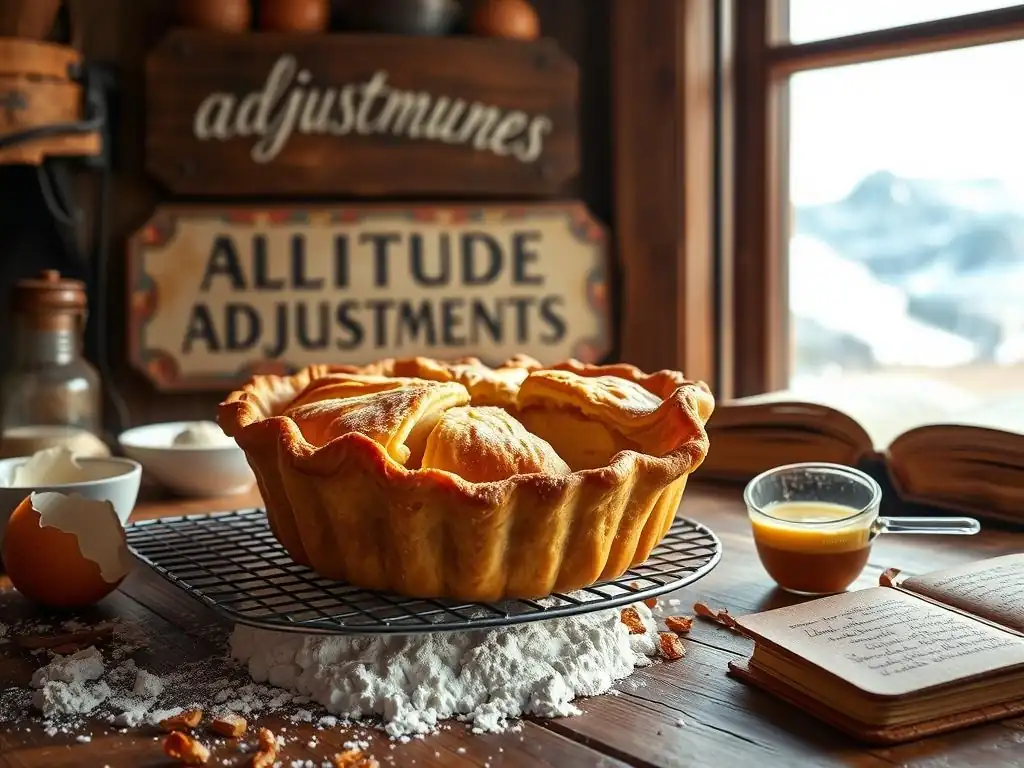
Welcome to BakeWithEase, your trusted guide to baking bliss! Are you ready to unlock the secrets to creating perfect pastries, even when the air is thin? Decoding high altitude baking adjustments can seem daunting, but fear not! Discover the science behind adapting your favorite recipes for higher elevations and banish flat cakes and sunken centers forever. Dive in and elevate your baking game!
Baking is often described as a science, and nowhere is that more apparent than when you move to higher altitudes. The seemingly simple act of combining ingredients and applying heat becomes a complex interplay of atmospheric pressure, temperature, and moisture. Understanding the science behind high altitude baking adjustments is key to achieving delicious results, whether you're whipping up a cake, baking bread, or perfecting cookies.
- Understanding the Challenges of Baking at High Altitude
- Key High Altitude Baking Adjustments for Success
- Adjusting Recipes for Different Altitudes: A Practical Guide
- High Altitude Baking: Ingredients and Their Roles
- Troubleshooting Common High Altitude Baking Problems
- High Altitude Baking: Recipe Type Considerations
- Mastering High Altitude Baking: Advanced Techniques
- Conclusion: Embrace the Science of High Altitude Baking for Perfect Results
-
Frequently Asked Questions
- What exactly is high altitude baking, and why does it require adjustments?
- What are the most common adjustments needed for high altitude baking?
- How does reduced air pressure at high altitude affect the rising of baked goods?
- What happens if I don't make any adjustments when baking at high altitude?
- Where can I find specific adjustment guidelines for different recipes at high altitude?
- Final Reflection: Scaling the Peaks of Perfect Baking
- Unlock Your High-Altitude Baking Secrets!
Understanding the Challenges of Baking at High Altitude
Baking at sea level is the standard for most recipes. When you ascend to higher elevations, the environment changes significantly, impacting how ingredients react and how baked goods structure. These changes necessitate specific high altitude baking adjustments to compensate for the altered conditions.
Why High Altitude Affects Baking
As you gain elevation, the air pressure decreases. This lower pressure has a profound effect on the leavening process and moisture evaporation in your baked goods. At higher altitudes, leavening agents like baking powder and yeast produce gases more readily, causing doughs and batters to rise faster and higher than they would at sea level. This accelerated rise can lead to problems like collapsed centers or coarse textures.
Furthermore, water and other liquids boil at a lower temperature at higher altitudes. At sea level (0 feet), water boils at 212°F (100°C). At 5,000 feet (approx. 1,500 meters), water boils around 203°F (95°C), and at 10,000 feet (approx. 3,000 meters), it boils at about 194°F (90°C). This lower boiling point means moisture evaporates more quickly from your baked goods during the longer baking time required to reach the desired internal temperature.
The Science of Reduced Air Pressure in Baking
Reduced air pressure at high altitude means there is less resistance pushing down on your batter or dough. Leavening gases, primarily carbon dioxide produced by baking powder, baking soda, or yeast, expand more rapidly and to a greater volume under these conditions. Imagine a balloon: it expands more easily in thinner air. This increased expansion can stretch the gluten and protein structure of your baked good too thin before it has a chance to set.
For example, if a cake batter rises too quickly due to unchecked leavening at altitude, the delicate structure may not be strong enough to support the expanded air pockets. As the cake bakes and cools, these large air pockets can collapse, resulting in a sunken center. Effective high altitude baking adjustments are designed to manage this accelerated expansion.
Impact of Lower Boiling Point on Baking at Altitude
The lower boiling point of liquids at high altitude means that moisture evaporates more quickly from your baked goods during the baking process. Because liquids boil at a lower temperature, the internal temperature of the product won't reach the standard 212°F until later in the bake, requiring a longer overall baking time to cook through. This extended exposure to heat, combined with faster evaporation, can lead to dry, crumbly results.
Consider a loaf of bread baking at 7,000 feet (approx. 2,100 meters). The water in the dough starts turning to steam at a temperature several degrees lower than at sea level. This happens earlier in the bake, and the steam escapes more readily due to lower external pressure. By the time the bread is fully cooked, it will have lost significantly more moisture than a loaf baked from the same recipe at sea level, often resulting in a drier crumb. Making precise high altitude baking adjustments to liquid content is vital.
Key High Altitude Baking Adjustments for Success
Mastering high altitude baking adjustments involves counteracting the effects of reduced pressure and lower boiling points. The primary strategies focus on managing leavening, increasing moisture, strengthening structure, and adjusting temperature and sugar levels. These tweaks, often applied in combination, help stabilize the batter or dough and ensure proper setting and moisture retention.
Reducing Leavening Agents: Baking Powder and Yeast
One of the most common high altitude baking adjustments is reducing the amount of chemical leaveners (baking powder, baking soda) and, to a lesser extent, yeast. Since gases expand more readily at lower pressure, less leavening is needed to achieve the desired rise. Too much leavening leads to over-expansion, weak structure, and potential collapse.
A general guideline for chemical leaveners is to reduce the amount by 1/4 teaspoon for every teaspoon called for in the recipe, starting at about 3,000 feet (approx. 900 meters). For yeast, you might reduce the quantity slightly or decrease the fermentation time. For instance, a recipe calling for 2 teaspoons of baking powder might be adjusted to 1.5 or 1.75 teaspoons at 5,000 feet. Experimentation is key, as the exact adjustment depends on the recipe and altitude.
Increasing Liquid Content: Hydration for High Altitude Baking
Because moisture evaporates faster at high altitude, increasing the liquid content in your recipe is a crucial high altitude baking adjustment. This helps prevent dry, dense, or crumbly results. Adding extra liquid compensates for the moisture loss during the extended baking time.
Start by adding 1 to 2 tablespoons of extra liquid (milk, water, buttermilk, etc., depending on the recipe) for every cup of liquid called for at sea level, particularly for altitudes above 3,000 feet. For example, if a muffin recipe calls for 1 cup of milk, you might add 1 cup plus 2 tablespoons at 6,000 feet (approx. 1,800 meters). The goal is to keep the batter or dough adequately hydrated throughout the baking process.
Strengthening Gluten Structure: Flour Considerations
At high altitude, the rapid rise can overstretch the gluten network before it sets, leading to a fragile structure. Strengthening the gluten structure is another important high altitude baking adjustment. This can be achieved by slightly increasing the amount of flour, which provides more protein to build a stronger framework.
Adding 1 to 2 tablespoons of extra all-purpose flour per cup of flour in the original recipe is a common starting point, especially for cakes and quick breads. This extra flour provides more structure to support the increased expansion from leavening. Alternatively, using a flour with a slightly higher protein content can also help. Be careful not to add too much flour, as this can result in a tough or dry product.
Lowering Sugar Content: Balancing Sweetness at Altitude
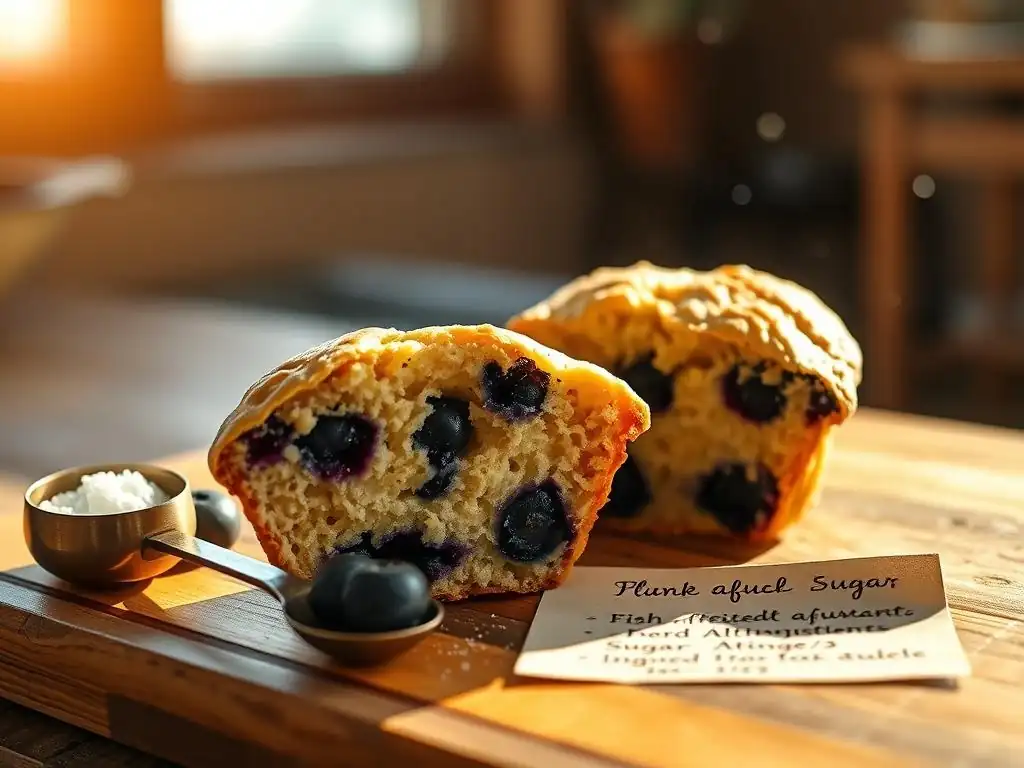
Sugar attracts and retains moisture, contributes to tenderness, and aids in browning. However, at high altitude, the faster evaporation and longer baking time can concentrate the sugar, leading to excessive browning, a gummy texture, and potentially overly sweet results. Reducing sugar is a key high altitude baking adjustment to balance these effects.
A typical recommendation is to reduce the sugar by 1 to 3 tablespoons per cup of sugar in the original recipe, starting at around 3,500 feet (approx. 1,000 meters). The exact reduction depends on the total amount of sugar and the altitude. For a cake recipe calling for 2 cups of sugar, you might reduce it to 1 3/4 cups or 1 2/3 cups at 7,000 feet. This adjustment helps prevent the crust from browning too quickly before the interior is cooked and reduces the likelihood of a gummy layer at the bottom.
Increasing Baking Temperature: Achieving Proper Doneness
While it might seem counterintuitive given the lower boiling point, increasing the oven temperature is a common high altitude baking adjustment. A slightly higher temperature helps to set the structure of the baked good more quickly, counteracting the rapid expansion caused by reduced pressure. This faster setting helps prevent the product from collapsing.
Increase the oven temperature by 15°F to 25°F (about 8°C to 14°C) compared to the sea-level recipe. For example, if a cake recipe calls for baking at 350°F (175°C), you might bake it at 365°F to 375°F (approx. 185°C to 190°C) at altitude. Keep a close eye on baking time, as the slightly higher temperature might lead to a shorter bake, despite the need for longer cooking due to the lower boiling point. This adjustment is typically used in conjunction with others, not in isolation.
Adjusting Recipes for Different Altitudes: A Practical Guide
Applying high altitude baking adjustments isn't a one-size-fits-all process. The necessary modifications vary depending on your specific elevation. Most standard recipes are formulated for altitudes below 3,000 feet. Above this point, noticeable changes occur, requiring adjustments that become more significant as you gain elevation.
Altitude-Specific Adjustment Guidelines
General guidelines exist for high altitude baking adjustments based on elevation ranges:
- 3,000 - 5,000 feet (approx. 900 - 1,500 meters): This is where you usually start noticing issues. Begin with minor adjustments. Reduce leavening slightly (e.g., 1/8 to 1/4 teaspoon per teaspoon). Increase liquid slightly (1-2 tablespoons per cup). Increase flour slightly (1-2 tablespoons per cup). Reduce sugar slightly (1-2 tablespoons per cup). Consider increasing oven temp by 15°F.
- 5,000 - 7,500 feet (approx. 1,500 - 2,300 meters): More significant adjustments are needed. Reduce leavening more (e.g., 1/4 to 1/2 teaspoon per teaspoon). Increase liquid more (2-4 tablespoons per cup). Increase flour more (2-4 tablespoons per cup). Reduce sugar more (2-4 tablespoons per cup). Increase oven temp by 15-25°F.
- Above 7,500 feet (approx. 2,300 meters): These altitudes require substantial adjustments and often experimentation. Leavening might need to be reduced by half or more. Liquid and flour increases may be significant. Sugar reduction is crucial. Increasing oven temperature is standard. Special techniques like using smaller pans or baking in a water bath might also be beneficial.
These are starting points. Every recipe behaves differently, and your specific environment (humidity, oven calibration) also plays a role.
Recognizing Signs of Under-Adjusted or Over-Adjusted Recipes
Learning to read your baked goods is essential when making high altitude baking adjustments. The appearance and texture can tell you if you need to fine-tune your recipe.
Signs of an under-adjusted recipe (not enough high altitude adjustments):
- Cakes or quick breads that dome excessively, crack severely, or sink in the middle.
- Muffins that overflow their cups.
- Cookies that spread too much and are thin.
- Baked goods that are dry or crumbly.
- Excessive browning, especially on the crust.
- Gummy layer at the bottom of cakes.
Signs of an over-adjusted recipe (too many or incorrect high altitude adjustments):
- Cakes or quick breads that are dense, heavy, or have a poor rise.
- Baked goods that are pale and don't brown sufficiently (if sugar was reduced too much).
- Dryness (if flour was increased too much without corresponding liquid increase).
- Tough texture (if flour or mixing was excessive).
Keeping a baking journal to track your adjustments and results is highly recommended for perfecting your high altitude baking adjustments.
High Altitude Baking: Ingredients and Their Roles
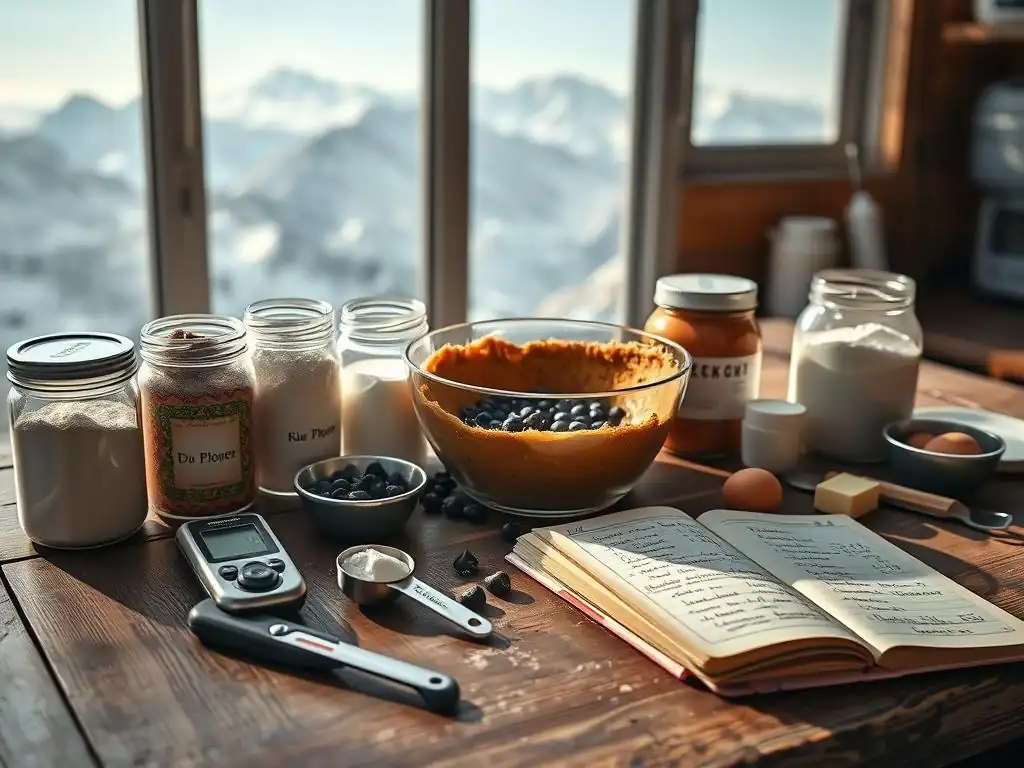
Each ingredient plays a specific role in baking, and understanding how their functions are affected by high altitude conditions is crucial for making appropriate high altitude baking adjustments. The interaction between ingredients changes under reduced pressure and lower boiling points.
The Impact of Flour Types at High Altitude
Flour provides the structural framework for baked goods, primarily through its protein content (gluten). At high altitude, the rapid expansion from leavening puts extra stress on this structure. Using a flour with a slightly higher protein content or adding a bit more flour helps create a stronger network capable of supporting the increased rise.
All-purpose flour works well for most high altitude baking adjustments, but you might need to add that extra tablespoon or two per cup as mentioned earlier. Cake flour, with its lower protein, might make cakes more prone to collapse at high altitude unless other adjustments (like reducing leavening significantly) are also made. Bread flour, with higher protein, is naturally stronger but might need less adjustment in terms of increasing quantity, though liquid adjustments are still vital for yeast breads.
Sugar's Role in High Altitude Baking
Sugar contributes sweetness, tenderness, moisture retention, and browning. At high altitude, its moisture-retaining quality is less effective against rapid evaporation, and its browning action can become too aggressive due to longer bake times and concentrated sugars.
Reducing sugar is a key high altitude baking adjustment not just for sweetness but also to control browning and prevent gummy textures. While you reduce granulated sugar, you might need to be more cautious with liquid sweeteners like honey or syrup, which add moisture but also contribute significantly to browning and tenderness.
Fat's Influence on Texture and Moisture
Fats (butter, oil, shortening) tenderize baked goods by shortening gluten strands and contribute to moisture. At high altitude, where dryness is a concern, fat can help retain moisture and improve texture.
While high altitude baking adjustments don't typically involve drastically changing the amount of fat, ensuring the fat is properly incorporated (e.g., creaming butter and sugar adequately for cakes) is important for creating a stable emulsion that supports the structure. Sometimes, slightly increasing fat can help combat dryness, but this should be done carefully to avoid greasy results.
Liquid Ingredients and Their Importance in High Altitude
Liquid ingredients (milk, water, eggs, yogurt, etc.) hydrate the flour, dissolve sugar and salt, activate leavening agents, and contribute to the final texture and moisture. At high altitude, liquids evaporate faster due to the lower boiling point.
Increasing the liquid content is one of the most direct high altitude baking adjustments to counteract moisture loss. Eggs also act as a liquid and a binder; sometimes adding an extra egg yolk (for richness and moisture) or a whole egg (for structure and moisture) is a useful trick. The type of liquid matters; milk and buttermilk contain proteins and fats that can contribute to structure and tenderness differently than water.
Troubleshooting Common High Altitude Baking Problems
Even with high altitude baking adjustments, you might encounter issues. Recognizing the symptoms and knowing the likely causes is the first step to correcting them. Most problems stem from the core challenges: too much rise, too little moisture, or insufficient structure.
Cakes Sinking in the Middle
- Symptom: The cake rises nicely in the oven but collapses as it cools, leaving a crater.
- Likely Cause: Too much leavening and/or insufficient structure to support the rapid rise. The gases expand too much, and the weakened structure gives way.
- High Altitude Baking Adjustment Fix: Reduce baking powder/soda further. Ensure you increased flour slightly for structure. Bake at a slightly higher temperature to set the structure faster. Avoid opening the oven door early.
Dry and Crumbly Baked Goods
- Symptom: Muffins, cakes, or cookies are dry, dense, or fall apart easily.
- Likely Cause: Excessive moisture loss during baking due to rapid evaporation at lower boiling points.
- High Altitude Baking Adjustment Fix: Increase liquid content (milk, water, eggs, etc.). Ensure sugar reduction wasn't too drastic (sugar helps retain moisture). Consider slightly increasing fat. Do not overbake.
Excessive Doming or Cracking
- Symptom: Quick breads or cakes develop a very high dome with a deep crack down the center.
- Likely Cause: Leavening is too active relative to the setting speed of the crust. The outer crust sets too quickly while the interior is still rising rapidly, forcing the expansion through the top crack.
- High Altitude Baking Adjustment Fix: Reduce leavening agents. Increase liquid slightly to keep the batter moist and flexible longer. Increase oven temperature slightly to help the interior set faster along with the crust.
Dense and Gummy Textures
- Symptom: The crumb is heavy, compact, and potentially sticky or gummy, especially towards the bottom.
- Likely Cause: Too much sugar relative to other ingredients, insufficient baking time/temperature for the altitude, or overmixing.
- High Altitude Baking Adjustment Fix: Reduce sugar content. Ensure oven temperature is slightly increased. Check for proper baking time (use a toothpick test). Avoid overmixing the batter once dry ingredients are added.
High Altitude Baking: Recipe Type Considerations
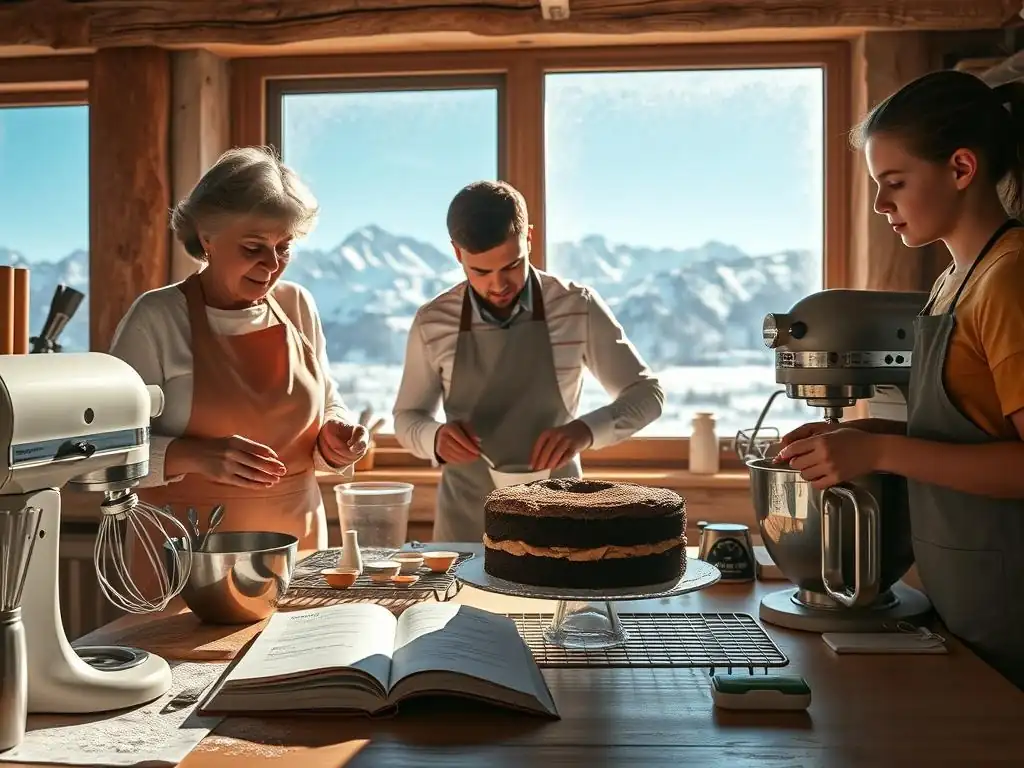
The necessary high altitude baking adjustments vary depending on the type of baked good. Cakes, breads, cookies, and pastries each have different structures and rely on ingredients in unique ways, requiring tailored approaches to altitude modifications.
Adjusting Cake Recipes for High Altitude
Cakes, especially delicate ones like butter cakes and sponge cakes, are particularly sensitive to altitude. They rely heavily on chemical leavening and a tender crumb structure.
- Key high altitude baking adjustments for cakes:
- Significantly reduce baking powder (often the most critical adjustment).
- Increase liquid content.
- Slightly increase flour for structure.
- Reduce sugar to prevent gumminess and over-browning.
- Increase baking temperature slightly.
- Consider using smaller pans or filling pans slightly less full.
Adapting Bread Recipes for High Altitude
Yeast breads are generally more forgiving than cakes, but they still require high altitude baking adjustments, primarily related to yeast activity and moisture.
- Key high altitude baking adjustments for bread:
- Slightly reduce yeast or decrease proofing time (dough rises faster).
- Increase liquid content significantly, as moisture loss during the long bake is substantial.
- Knead slightly longer to build a strong gluten structure.
- Watch fermentation carefully; it will be faster. Punch down dough as needed.
- Increase baking temperature slightly and potentially bake for a shorter time once internal temperature is reached.
Cookies are less affected by altitude than cakes or breads because they are flatter and bake relatively quickly, but they can still spread excessively or become dry.
- Key high altitude baking adjustments for cookies:
- Slightly reduce leavening (especially baking soda, which promotes spread).
- Slightly increase flour if spreading is excessive.
- Slightly increase liquid (like adding an extra egg yolk or a splash of milk) if cookies are too dry or crumbly.
- Slightly reduce sugar if they are browning too fast or are too sweet.
- Chill dough before baking to control spread.
Considerations for Pastries at High Altitude
Pastries like pie crusts, puff pastry, and choux pastry have unique structures. Pie crusts may become dry; puff pastry might not rise as high; choux pastry might collapse.
- High altitude baking adjustments for pastries:
- For pie crusts, increase liquid (water or milk) slightly.
- For puff pastry and choux, rapid expansion can still be an issue. Ensuring sufficient protein (flour) and proper technique is key. Choux might need slightly more egg or bake at a slightly higher initial temperature to set the shell quickly.
- Moisture retention is a common challenge; consider baking in a humid environment or using a water bath for delicate items.
Mastering High Altitude Baking: Advanced Techniques
Beyond the standard ingredient adjustments, experienced high-altitude bakers often employ advanced techniques to further optimize their results. These methods often focus on enhancing moisture retention and stabilizing delicate structures.
Utilizing Different Flour Blends for Optimal Results
Experimenting with flour blends can be a useful high altitude baking adjustment. Some bakers find success mixing flours; for instance, combining all-purpose flour with a small percentage of high-gluten flour for extra structure in cakes, or using a blend of different wheat flours in bread making.
Using a portion of pastry flour (lower protein) might be appropriate in some cookie recipes at altitude to prevent toughness from added all-purpose flour, provided other adjustments manage spread. The specific blend depends heavily on the desired outcome and the base recipe.
Experimenting with Alternative Sweeteners
While reducing granulated sugar is standard, exploring alternative sweeteners can also impact texture and moisture. Liquid sweeteners like honey, maple syrup, or corn syrup contribute more moisture than granulated sugar and can help combat dryness at altitude.
However, they also promote browning and can affect texture differently. Substituting a portion of the granulated sugar with a liquid sweetener (while accounting for the added liquid) can be a useful high altitude baking adjustment for moisture, but requires careful balancing to avoid excessive browning or chewiness.
Incorporating Techniques to Increase Moisture Retention
Several baking techniques can help keep baked goods moist at high altitude. These include:
- Baking in a water bath: Placing the baking pan inside a larger pan filled with hot water creates a humid environment in the oven, reducing surface evaporation. This is particularly effective for cheesecakes, custards, and delicate cakes.
- Using parchment paper or foil: Covering the top of baked goods partway through baking can prevent the top crust from setting and browning too quickly, allowing the interior more time to cook without drying out.
- Adding moisture-rich ingredients: Incorporating ingredients like sour cream, yogurt, applesauce, mashed banana, or pumpkin puree can boost moisture content and tenderness, complementing standard liquid high altitude baking adjustments.
Conclusion: Embrace the Science of High Altitude Baking for Perfect Results
High altitude baking presents unique challenges rooted in atmospheric science, but they are far from insurmountable. By understanding how reduced pressure and lower boiling points affect leavening, moisture, and structure, you can make informed high altitude baking adjustments. Reducing leavening, increasing liquid and flour, reducing sugar, and adjusting oven temperature are the fundamental steps.
Remember that baking at altitude is an iterative process. Start with the general guidelines for your elevation, observe the results, and make further tweaks. Keep notes on what worked and what didn't. With practice and patience, you'll learn to read your batters and doughs and confidently apply the necessary high altitude baking adjustments to achieve consistently perfect cakes, breads, cookies, and more, no matter how high you bake. Happy baking!
Frequently Asked Questions
What exactly is high altitude baking, and why does it require adjustments?
High altitude baking refers to baking at elevations generally above 3,000 feet. Adjustments are needed because lower air pressure causes liquids to evaporate faster and leavening agents to react more vigorously, altering the structure and texture of baked goods.
What are the most common adjustments needed for high altitude baking?
The most frequent adjustments involve reducing the amount of leavening agents (baking powder, baking soda), increasing liquids, and sometimes increasing oven temperature. These changes help to counteract the effects of the lower air pressure.
How does reduced air pressure at high altitude affect the rising of baked goods?
Lower air pressure causes baked goods to rise faster and potentially collapse. Reducing leavening agents helps to control the rise and prevent the structure from weakening before the product has a chance to set.
What happens if I don't make any adjustments when baking at high altitude?
Without adjustments, baked goods can end up dry, dense, or with a sunken center. They may also rise too quickly and then fall, resulting in an undesirable texture and appearance.
Where can I find specific adjustment guidelines for different recipes at high altitude?
While general guidelines exist, it's best to consult recipes specifically designed for high altitude or look for resources that provide detailed adjustment charts. BakeWithEase.com often features these resources to help you achieve baking success at any elevation.
Final Reflection: Scaling the Peaks of Perfect Baking
The science of high-altitude baking isn't just a niche interest; it's a crucial element in ensuring consistent, delicious results at higher elevations. Mastering these adjustments isn't merely about following a recipe; it's about understanding the fundamental principles of how altitude affects baking chemistry, transforming a frustrating challenge into a rewarding skill.
The impact of altitude on baking extends far beyond simply adjusting baking times and ingredient ratios. It speaks to a deeper understanding of the delicate balance between air pressure, moisture evaporation, and the chemical reactions that create the perfect cake, cookie, or bread. It's a testament to human ingenuity, our ability to adapt and overcome the challenges presented by our environment. The highest achievement was to become a better person than we were yesterday.
– Unknown. This quote resonates deeply, as mastering high-altitude baking is a journey of continuous learning and improvement, mirroring personal growth.
Now, consider your own baking experiences. Have you struggled with flat cakes or dense cookies at higher elevations? Armed with the knowledge gained from this article, you can now approach these challenges with confidence. Don't be afraid to experiment, to tweak recipes, and to embrace the unique opportunities that high-altitude baking presents. The journey to perfecting your high-altitude baking is a rewarding one, and the delicious results are well worth the effort. Embrace the challenge, and discover the joy of scaling the peaks of perfect baking.
Unlock Your High-Altitude Baking Secrets!
Thanks for joining us on this journey into the fascinating world of high-altitude baking! You've now got the knowledge to conquer those tricky altitude adjustments and create amazing baked goods, no matter your elevation. Ready to put your newfound skills to the test?
- Bake your dream cake (or cookies, or bread!): Try out one of the recipes mentioned in the article, making the necessary adjustments for your altitude. We're confident you'll be thrilled with the results!
- Share your baking triumphs (or challenges!): Let us know how it went – what worked, what surprised you, or what you’re planning to bake next! Your experiences help others.
- Explore our other high-altitude resources: Dive deeper into related topics like ingredient substitutions or equipment recommendations on BakeWithEase.com.
What delicious high-altitude creation will you tackle first?