
Digital vs. Mechanical Scales: Choosing the Best Tool for Consistent Cookies

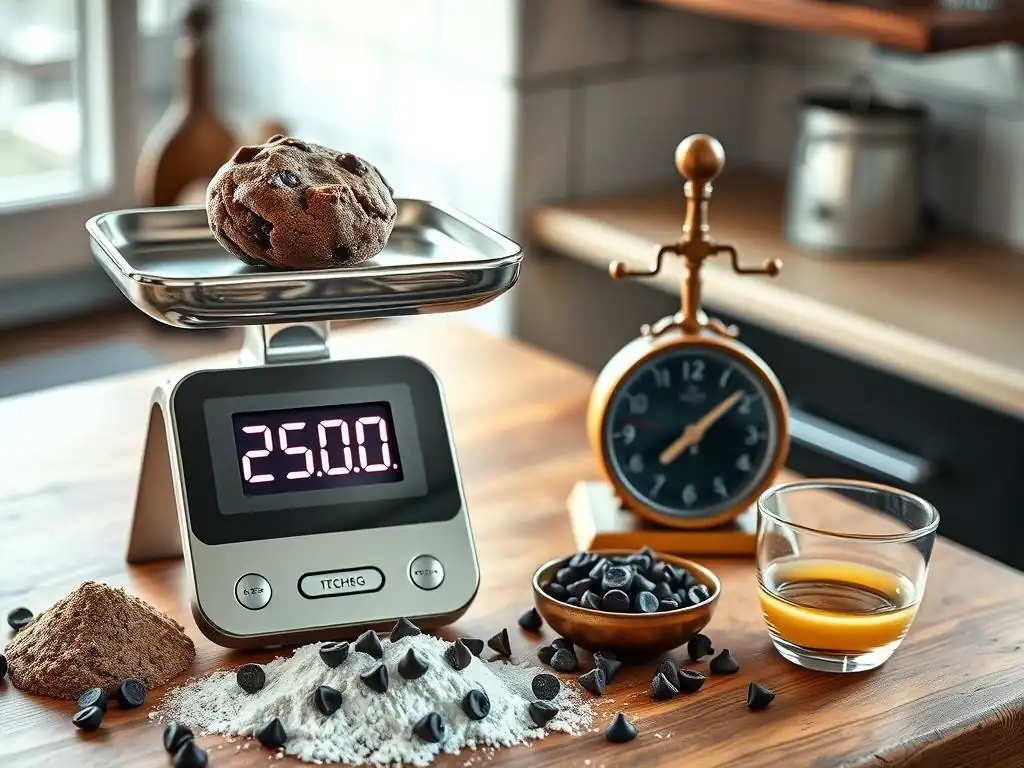
Welcome to BakeWithEase, your haven for mastering the art of baking! Ever wondered if your trusty kitchen scale is really the best for achieving consistently perfect cookies? Our latest article dives deep into the world of digital scales for cookies, comparing them head-to-head with their mechanical counterparts. Discover which tool reigns supreme and unlock the secret to uniform baking, one delicious cookie at a time. Ready to elevate your cookie game?
- Kitchen Scale Showdown: Perfecting Your Cookies at BakeWithEase
- Introduction: Achieving Cookie Perfection with Accurate Measurement
- Understanding the Importance of Precise Measurements in Baking
-
Digital Scales for Cookies: Accuracy and Features
- The Advantages of Using Digital Kitchen Scales for Cookie Recipes
- Key Features to Look for in a Digital Scale for Cookie Making
- Digital Scale Precision: Grams vs. Ounces for Cookie Dough
- Tare Function: A Baker's Best Friend for Measuring Ingredients Directly
- Common Digital Scale Issues and Troubleshooting for Cookie Bakers
- Mechanical Scales for Cookies: A Traditional Approach
- Digital vs. Mechanical Scales for Cookies: A Detailed Comparison
- Which Scale is Best for Your Baking Needs?
- Tips for Using Your Chosen Scale for Perfect Cookies
- Maintaining Your Scale for Long-Term Cookie Success
- Conclusion: Baking the Best Cookies with the Right Scale
-
Frequently Asked Questions
- How important is using a scale, digital or mechanical, when baking cookies?
- What are the main advantages of using a digital scale over a mechanical scale for cookies?
- Can I still achieve consistent cookies using a mechanical scale?
- What features should I look for when choosing a digital scale specifically for baking cookies?
- Are more expensive digital scales necessarily better for baking cookies?
- Final Reflection: The Sweet Science of Precision Baking
- Unlock Your Baking Potential: Perfect Cookies Every Time!
Welcome to BakeWithEase! We're diving deep into a topic that can truly elevate your cookie game: accurate measurement. While scoops and cups are common in many kitchens, serious bakers know that precision is paramount, especially when striving for consistently perfect cookies. The subtle differences in flour density, butter temperature, or sugar granulation can significantly impact the final texture, spread, and flavor of your beloved treats. Getting these measurements right is the first step towards bakery-quality results every time you bake.
This article will explore the world of kitchen scales – specifically digital and mechanical models – and how they can become your secret weapon for achieving cookie perfection. We'll weigh the pros and cons, discuss features, and help you decide which type of scale is the best tool for your baking style and goals. Whether you're a beginner or looking to refine your technique, understanding how to measure accurately with a digital scale for cookies or a mechanical one is fundamental to consistent success.
Understanding the Importance of Precise Measurements in Baking
Why Ingredient Accuracy Matters for Baking Success
Baking is often described as a science, and like any science, precision is key. Unlike cooking, where you can often adjust seasonings or ingredients on the fly, baking relies on specific chemical reactions triggered by the exact ratios of ingredients. Too much flour, for instance, can lead to dry, crumbly cookies that don't spread properly.
Too little sugar might affect not just sweetness but also texture and browning. A discrepancy of just 20-30 grams in flour or butter can mean the difference between a chewy, perfectly spread cookie and one that's flat and greasy or thick and cakey. This is why relying on volume measurements (cups) can be inconsistent; a cup of flour can weigh anywhere from 120 to 150 grams depending on how it's scooped and packed.
Using a scale eliminates the variability inherent in volume measurements. When a recipe calls for 150 grams of flour, it's always 150 grams, regardless of how you scoop it. This consistency is crucial for replicating successful recipes and troubleshooting when things don't go as planned. For delicate recipes like French macarons or intricate sugar cookies where structure is vital, weighing ingredients is non-negotiable. It ensures that the foundational elements of your cookie dough are perfectly balanced, leading to predictable and delicious results every time you bake.
Kitchen scales play a pivotal role in removing the guesswork from ingredient measurement, directly contributing to the consistency of your cookies. Imagine you have a favorite chocolate chip cookie recipe that sometimes turns out wonderfully chewy and other times disappointingly flat. This inconsistency is often due to variations in how ingredients, particularly flour and sugar, are measured by volume. A digital scale for cookies provides a precise weight, ensuring that the hydration level of your dough is consistent batch after batch.
Moreover, using a scale simplifies baking by allowing you to measure multiple ingredients into the same bowl using the tare function (which we'll discuss later). This means less washing up and a more streamlined process. For recipes developed using weight measurements, using a scale isn't just about accuracy; it's about following the recipe as intended by the developer. Many professional bakers and recipe creators use weight exclusively because it's the most reliable method for achieving reproducible results, making a scale an essential tool for anyone serious about consistent cookie baking.
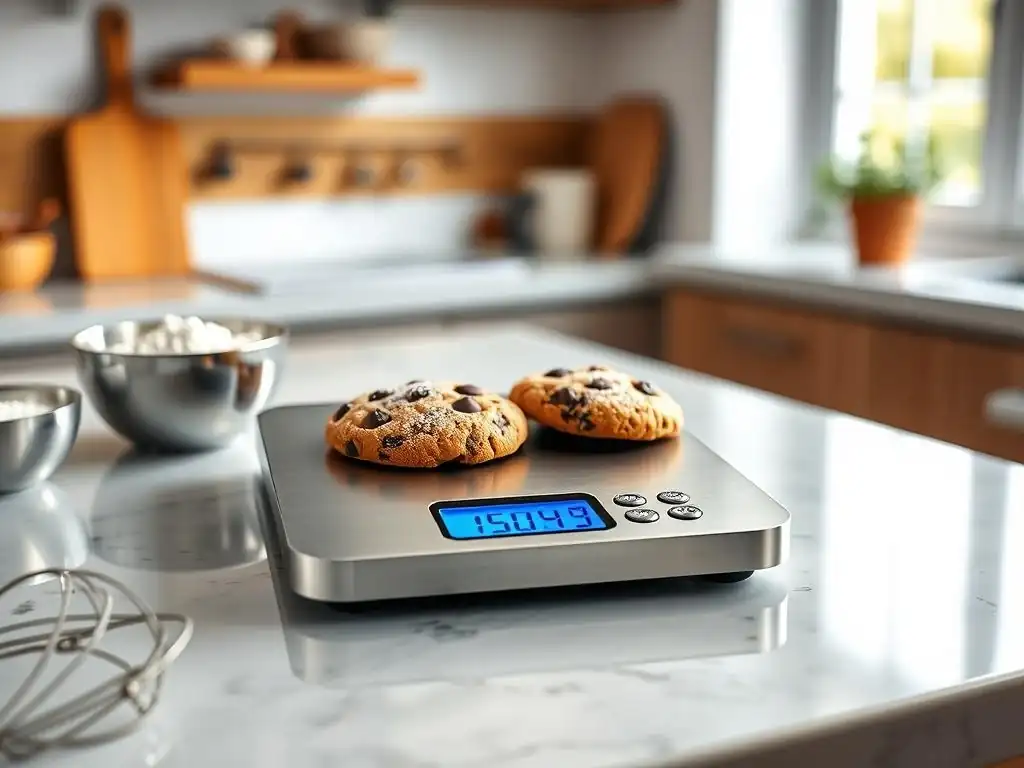
Digital kitchen scales have become incredibly popular among bakers for their ease of use and, most importantly, their precision. These scales typically measure in small increments, often down to 1 gram or 0.05 ounces, providing highly accurate readings essential for finicky cookie recipes. This level of accuracy is particularly beneficial when dealing with ingredients like baking powder or baking soda, where even a slight excess can drastically alter the cookie's texture and rise. Using a digital scale for cookies ensures that these leavening agents are measured correctly, contributing to the desired outcome.
One of the major advantages is their clear, easy-to-read digital display, which eliminates the guesswork sometimes associated with reading the needle on a mechanical scale. Many digital scales offer multiple units of measurement (grams, ounces, pounds, milliliters), making it easy to follow recipes from around the world without needing to convert manually. Their compact design also means they take up less counter and storage space compared to many mechanical models. For bakers who value precision and convenience, a digital scale is often the preferred tool for consistent cookie baking.
When choosing a digital scale for cookies, several features can enhance your baking experience. Look for a scale with a sufficient weight capacity – most kitchen scales handle up to 5-10 kg (around 11-22 lbs), which is more than enough for typical cookie dough batches. The precision is also vital; scales that measure in 1-gram or 0.1-ounce increments are ideal for baking accuracy. A clear, backlit LCD display is helpful, especially in kitchens with varying light conditions.
The tare function is arguably the most indispensable feature. This allows you to zero out the weight of a container or previously added ingredients, letting you measure multiple items into the same bowl sequentially. Auto-shutoff is another convenient feature that saves battery life.
Consider the size of the weighing platform – ensure it's large enough to accommodate your mixing bowls. Some scales also offer a hold function, which keeps the weight displayed after the item is removed, useful for large or awkward containers. Investing in a digital scale for cookies with these features will significantly improve your measuring accuracy and workflow.
Understanding the units of measurement on your digital scale is crucial for accurate cookie baking. While digital scales often measure in both grams and ounces, grams are generally considered the superior unit for baking precision. Grams are a metric unit based on weight, offering finer increments (usually 1 gram) compared to ounces (typically 0.1 or 0.05 ounces, but sometimes larger). This means measuring 10 grams of baking powder is more precise than trying to measure 0.35 ounces, especially when dealing with small quantities.
Many professional and serious home bakers prefer recipes written in grams because it reduces the chance of measurement errors. For instance, a recipe calling for 250 grams of flour is much more consistent than one calling for 2 cups, which can vary by 30 grams or more depending on technique. While ounces are perfectly usable, particularly for larger quantities, switching your digital scale for cookies to grams whenever possible will provide the highest level of accuracy, leading to more reliable and consistent cookie outcomes.
Tare Function: A Baker's Best Friend for Measuring Ingredients Directly
The tare function is a game-changer for efficiency and accuracy in baking, especially when using a digital scale for cookies. This feature allows you to reset the scale to zero after placing a container on it or adding an ingredient. For example, you can place your mixing bowl on the scale, press the tare button, and the display will show 0. Then, add your flour until the desired weight is reached. Press tare again, add your sugar, tare, add butter, and so on.
This multi-ingredient measurement directly into the mixing bowl minimizes the number of measuring cups and bowls you need to wash, streamlining the cleanup process significantly. It also ensures cumulative accuracy – you're measuring the exact weight of each ingredient added to the bowl, rather than dealing with potential inaccuracies from measuring each ingredient separately and then combining them. Mastering the tare function on your digital scale is an essential technique for efficient and precise cookie making.
Even the best digital scale for cookies can encounter issues. One common problem is inconsistent readings, which might be due to the scale not being on a flat, stable surface. Ensure your countertop is level and free from vibrations. Low battery power is another frequent culprit for erratic measurements; replace batteries promptly if the display is dim or readings are jumpy. Overloading the scale beyond its maximum capacity can damage the sensor, leading to permanent inaccuracies. Always check the scale's specifications before weighing heavy items.
Environmental factors like drafts from open windows or vents can also affect sensitive digital scales, causing slight fluctuations in readings, particularly with lighter ingredients. Static electricity, though less common, can sometimes affect readings, especially in dry environments. If your digital scale for cookies is giving questionable readings, first check the battery, ensure it's on a stable surface away from drafts, and try recalibrating it if your model has that feature (consult the manual). If problems persist, the scale might be faulty and require replacement.
The Basics of Mechanical Kitchen Scales
Mechanical kitchen scales, also known as spring scales, are the traditional counterparts to digital models. They operate using a spring mechanism that compresses under the weight of the item placed on the platform. This compression moves a needle on a dial, indicating the weight. They are typically simple in design, often featuring a bowl or platform on top and a dial below. While they lack the digital display and precise readouts of electronic scales, they have been a staple in kitchens for generations.
These scales usually measure in larger increments compared to digital scales, often in 10-gram or half-ounce steps. Their simplicity means they don't require batteries or a power source, making them always ready for use. While they might not offer the pinpoint accuracy required for highly sensitive recipes like macarons, they are reliable for general baking tasks where slight variations in weight are less critical, such as weighing larger quantities of flour or sugar for a big batch of cookie dough.
Advantages of Using Mechanical Scales for Baking
Mechanical scales offer several advantages that appeal to some bakers. Their primary benefit is their reliability; they don't depend on batteries or electricity, meaning they are always operational, regardless of power outages or forgotten battery replacements. Their sturdy construction often makes them quite durable and capable of handling heavier loads than some smaller digital scales.
They are generally straightforward to use – simply place the item on the platform or in the bowl, and read the weight indicated by the needle on the dial. For recipes that don't demand extreme precision, such as rustic drop cookies or shortbread where texture is more forgiving, a mechanical scale can be perfectly adequate. They also often have a classic, vintage aesthetic that some bakers appreciate in their kitchen tools.
Despite their traditional appeal, mechanical scales have significant disadvantages when it comes to precision baking, especially for cookies where ingredient ratios are crucial. Their main drawback is their lower accuracy compared to digital scales. The needle typically moves in larger increments (e.g., 10g or 0.5 oz), making it difficult or impossible to measure small quantities of ingredients like baking powder, salt, or spices with the necessary precision. Estimating between the marks on the dial introduces potential for error.
Calibration can also be an issue; while some mechanical scales have a manual adjustment knob, maintaining consistent accuracy over time can be challenging. The spring mechanism can wear out or become less sensitive. Reading the exact weight can also be subjective, depending on the angle from which you view the dial (parallax error). For recipes requiring precise measurements, a mechanical scale is often not the best tool, potentially leading to inconsistent results in your cookie batches.
Maintaining accuracy is a key challenge with mechanical scales when used for precise tasks like weighing ingredients for cookies. The spring mechanism can lose tension over time, leading to inaccurate readings. While many mechanical scales have a manual adjustment knob to set the needle back to zero, this doesn't guarantee linear accuracy across the scale's entire range. A scale calibrated correctly at zero might be off by a significant amount when weighing 500 grams.
Checking the calibration typically involves weighing an item of known, precise weight (like a calibration weight or a precisely measured quantity of something like water, where 1 ml ≈ 1 g). If the scale doesn't display the correct weight, there's little you can do besides adjusting the zero point, which may not fix inaccuracies at higher weights. This inherent limitation in precision makes mechanical scales less suitable for bakers who prioritize consistency and rely on recipes measured in grams, especially when using a digital scale for cookies is the standard for accuracy.
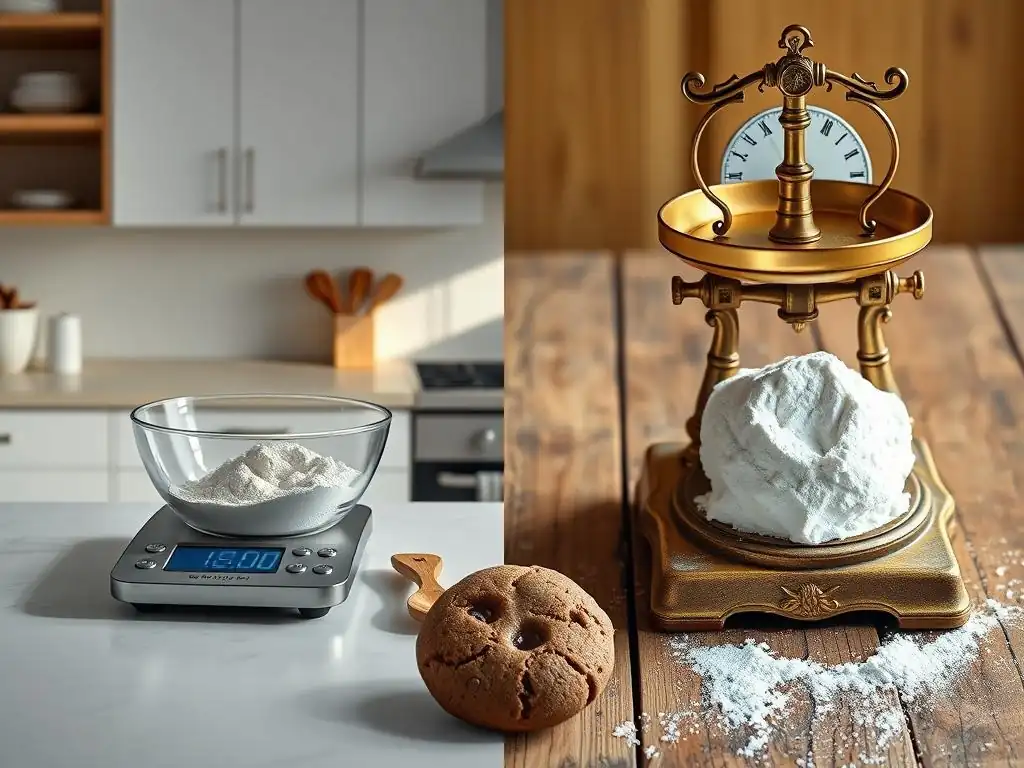
Accuracy Comparison: Which Scale Delivers More Consistent Results?
When it comes to accuracy, digital scales generally outperform mechanical scales, making a digital scale for cookies the preferred choice for consistent results. Digital scales typically measure down to 1 gram or 0.1 ounces, providing granular precision essential for baking. For example, measuring 5 grams of baking soda is easily done on a digital scale, while on a mechanical scale with 10-gram increments, you'd have to guess or eyeball the amount, leading to potential errors.
Mechanical scales, relying on spring tension and a dial, are inherently less precise. Their accuracy can be affected by the scale's position, wear and tear on the spring, and the difficulty in reading exact weights between markings. While they might be fine for rough measurements, the subtle differences in ingredient weights that impact cookie spread, texture, and flavor are best captured by the higher accuracy of a digital scale. If consistency is your top priority in cookie baking, the digital option is the clear winner.
Ease of use is another area where digital scales often have an edge. Their digital display is typically very easy to read, reducing the chance of misinterpreting the weight. The tare function simplifies measuring multiple ingredients into one bowl, saving time and cleanup. Switching between units (grams, ounces, etc.) is usually just a push of a button. Using a digital scale for cookies is often a quick and straightforward process.
Mechanical scales, while simple in concept, can be less user-friendly in practice. Reading the exact weight on the dial can be tricky, especially with smaller increments. The manual zero adjustment can sometimes be finicky. They also don't have a tare function, meaning you either need to subtract the container weight manually or use separate containers for each ingredient, adding steps and dishes to your process. For modern baking workflows, the features of a digital scale often make it more convenient.
Durability can vary depending on the specific model and build quality of both types of scales. Mechanical scales, with fewer electronic components, are often seen as robust and less susceptible to damage from drops or spills, although the spring mechanism can wear out over many years. They require minimal maintenance, primarily just cleaning the platform or bowl.
Digital scales contain sensitive electronic components and sensors that can be damaged by moisture, dust, or impact. While many are designed with wipe-clean surfaces, care must be taken to avoid getting liquids into the internal workings. Battery replacement is a regular maintenance task. However, a well-maintained digital scale for cookies from a reputable brand can last for many years. When considering longevity, look for scales with a solid construction and read reviews regarding their long-term performance. Proper care, regardless of type, is key to ensuring your scale remains accurate.
Cost Considerations: Digital vs. Mechanical Scale Price Points
Generally, basic mechanical kitchen scales tend to be less expensive upfront than digital scales. You can often find simple mechanical scales for under $20. This makes them an attractive option for budget-conscious bakers or those who only need approximate measurements.
Digital scales vary widely in price depending on features, capacity, precision, and brand. Basic digital scales with standard features (tare, multiple units) can be found for $20-$40. More advanced models with higher capacity, greater precision (e.g., 0.1g increments), backlit displays, or more durable construction can cost $50 or more. While the initial investment for a digital scale for cookies might be slightly higher, the added precision and convenience often justify the cost for bakers seeking consistent, high-quality results. Consider your budget and how frequently you'll use the scale when making your decision.
Which Scale is Best for Your Baking Needs?
Deciding between a digital and mechanical scale for cookies depends largely on your baking habits and priorities. Consider the type of baking you do most often. If you primarily bake recipes that require precise ratios (like delicate sugar cookies, shortbread, or recipes using weight measurements), a digital scale is almost essential for consistent results. If you mostly bake more forgiving recipes like drop cookies or muffins and primarily follow volume measurements, a mechanical scale might suffice, though weighing is still more accurate.
Think about your budget and kitchen space. Digital scales are often more compact. Consider ease of use – do you prefer a clear digital readout and tare function, or are you comfortable reading a dial? Finally, think about accuracy needs. If you want to replicate recipes perfectly every time and minimize variables, investing in a quality digital scale for cookies is highly recommended.
For many bakers, especially those aiming for consistent, high-quality cookies, the answer is a resounding yes. A digital scale for cookies removes the significant variability introduced by volume measurements. It allows you to follow recipes written in grams with perfect accuracy, which is how many professional bakers and recipe developers work. This precision directly translates to more reliable results, whether you're trying to achieve that perfect crispy edge, chewy center, or consistent spread.
Considering that a quality digital scale can be purchased for a reasonable price ($20-$40), the improvement in baking consistency and the reduction in failed batches often make the investment well worthwhile. It's a foundational tool that can elevate your baking from good to consistently great.
When a Mechanical Scale Might Suffice for Baking
While less precise, a mechanical scale can still be a useful tool in certain baking scenarios. If you primarily bake rustic breads or large batches where ingredient weights are less critical (e.g., weighing several pounds of flour for multiple loaves) and you're comfortable with approximate measurements, a mechanical scale can work. It's also suitable for non-baking kitchen tasks like weighing produce or meat for portioning.
If your recipes are exclusively in volume measurements and you're not concerned about minor variations in your cookies, or if budget is a major constraint, a mechanical scale could be a starting point. However, for the precision needed for consistent cookie baking, especially when using a digital scale for cookies is the standard for accuracy, a mechanical scale is generally a compromise.
Baking gluten-free cookies often requires even greater precision than traditional baking. Gluten-free flours and starches behave differently than wheat flour, and the balance of ingredients is crucial for achieving the desired texture and structure. Using a scale, particularly a digital scale for cookies, is highly recommended for gluten-free baking.
Gluten-free flour blends can vary significantly in density, making volume measurements particularly unreliable. Weighing ensures you are using the exact amount specified in the recipe, which is critical for the success of delicate gluten-free cookie dough. Many gluten-free recipes are already written with weight measurements for this very reason. A digital scale's ability to measure in small increments (grams) is invaluable when working with binders like xanthan gum or other specialty ingredients often used in gluten-free recipes.
Best Practices for Accurate Measurement with Digital Scales
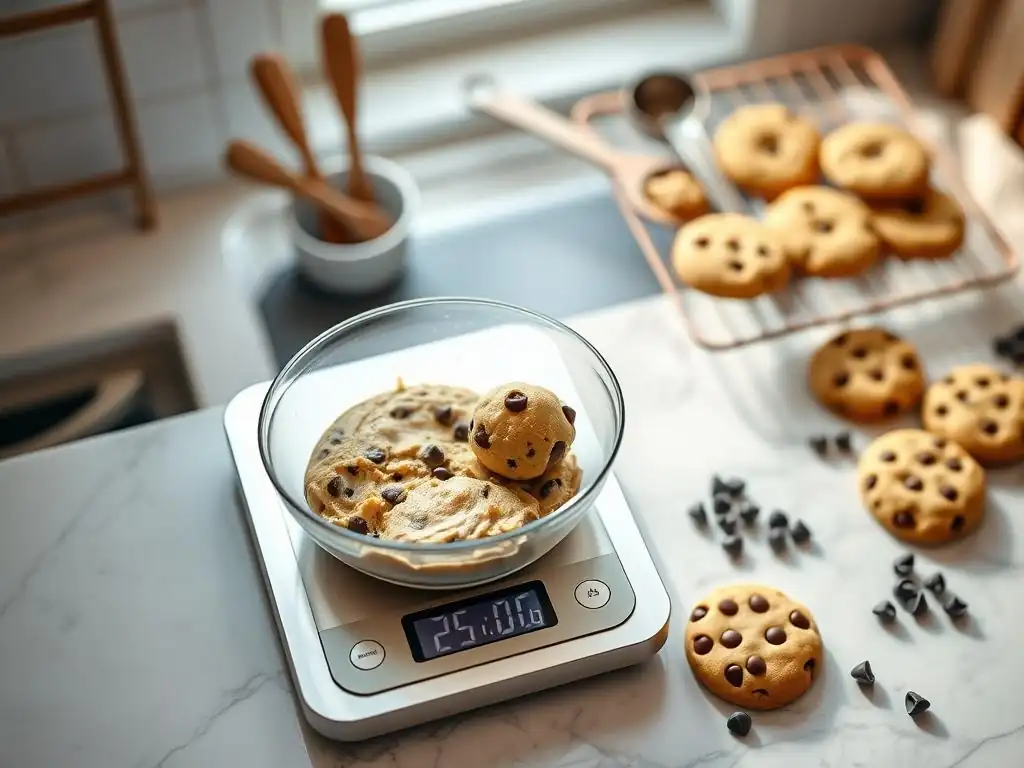
To get the most accurate readings from your digital scale for cookies, always place it on a flat, stable surface away from drafts or vibrations. Turn the scale on before placing any weight on it. Use the tare function to zero out the weight of your container before adding ingredients – this is crucial for measuring multiple ingredients into the same bowl.
When measuring ingredients, add them gradually to avoid overshooting the target weight. If you're slightly over, it's often easier to remove a small amount than to add more precisely. For dry ingredients like flour, spoon it lightly into your container rather than scooping directly from the bag, as scooping can compact the flour and lead to inaccurate weight even on a scale. Read the display at eye level if possible, although most digital displays minimize parallax issues.
Using a mechanical scale requires a bit more care for the best possible accuracy it can provide. Always check that the needle is pointing precisely to zero before adding any weight. If it's not, use the manual adjustment knob to reset it. Place the scale on a stable, level surface.
When adding ingredients, do so slowly and watch the needle carefully. Try to read the weight by looking directly at the dial to avoid parallax error. Remember that the precision is limited by the scale's increments, so aim for the closest marking. For recipes requiring high precision, consider using a digital scale instead. If using a container, weigh the empty container first, note its weight, and then subtract that from the total weight to find the ingredient's weight.
Many older or traditional recipes still use volume measurements (cups, tablespoons). To take advantage of the accuracy of your digital scale for cookies, it's beneficial to convert these recipes to weight. Standard conversion charts exist for common baking ingredients (e.g., 1 cup all-purpose flour ≈ 120-125 grams, 1 cup granulated sugar ≈ 200 grams, 1 cup butter ≈ 227 grams).
However, these are approximations, as density can vary. The best approach is to find a reliable conversion chart online or, ideally, find updated versions of recipes that already include weight measurements. As you bake, you can also weigh the volume measurements from your favorite recipes using your digital scale and note the weights for future reference. This allows you to transition seamlessly to using your digital scale for all your cookie baking, ensuring consistent results.
Scale Placement and Environmental Factors Affecting Accuracy
The location of your scale can impact its accuracy, especially with sensitive digital models. Always place your scale on a hard, flat, and stable surface. Soft or uneven surfaces can cause inaccurate readings. Avoid placing the scale near heat sources (like stoves or ovens) or in direct sunlight, which can affect electronic components.
Drafts from open windows, fans, or air conditioning vents can cause slight fluctuations in readings, particularly when weighing light ingredients like leavening agents or spices. Ensure the scale is in a calm environment during measurement. For the most reliable readings from your digital scale for cookies, use it in a consistent environment, away from extreme temperature changes or air currents. Mechanical scales are less susceptible to these environmental factors but still require a stable surface.
Cleaning and Storage Tips for Digital Scales
Proper cleaning and storage are essential for maintaining the accuracy and longevity of your digital scale for cookies. After each use, wipe down the weighing platform and display with a damp cloth. Avoid using abrasive cleaners or submerging the scale in water, as this can damage the electronics. If you spill dry ingredients like flour or sugar, brush them off carefully. For sticky spills, a slightly damp cloth with a mild detergent can be used, but ensure no liquid seeps into the scale's body.
Store your digital scale in a dry place, away from extreme temperatures. Avoid placing heavy objects on top of it during storage, as this can stress the sensor. Most digital scales are compact and can be stored in a drawer or cupboard, protecting them from dust and potential damage.
Cleaning and Storage Tips for Mechanical Scales
Mechanical scales are generally more robust and easier to clean. If your scale has a removable bowl or platform, wash it with soap and water. For the scale body and dial, wipe them clean with a damp cloth. Avoid getting water into the internal mechanism, especially near the dial or adjustment knob.
Store your mechanical scale in a stable location where it won't be knocked over or have heavy items placed on it. While they are less delicate than digital scales, dropping them can affect the spring mechanism and calibration. Keeping them clean and stored properly ensures they remain functional and reasonably accurate for longer.
Regularly checking the calibration of your scale is crucial for ensuring it continues to provide accurate measurements for your cookies. For digital scales, consult your manual; some models have a specific calibration mode that requires a known weight (often included or specified). If your scale doesn't have a calibration mode, you can check its accuracy by weighing something of known weight, such as a set of calibration weights, a new, unopened bag of sugar (check the labeled weight), or precisely measured water (100 ml of water weighs approximately 100 grams).
For mechanical scales, checking calibration is similar – weigh a known weight. If the reading is off, you can only adjust the zero point if the scale has that feature. If it's consistently off by a significant amount across different weights, the spring may be worn, and the scale might need replacement. Checking your digital scale for cookies periodically helps catch potential issues before they ruin a batch.
Battery Life and Replacement for Digital Scales
Digital scales are powered by batteries, which will need replacement periodically. Most use common AAA, AA, or button cell batteries. Pay attention to the display; a dim or flashing display is often an indicator of low battery power, which can affect accuracy. Replace batteries as soon as you notice these signs.
It's a good practice to keep spare batteries on hand so you're not caught mid-recipe with a dead scale. Some scales also have an auto-shutoff feature to conserve battery life; ensure this feature is working correctly. If you won't be using your scale for an extended period, consider removing the batteries to prevent corrosion. Proper battery management ensures your digital scale for cookies is always ready when you need it for precise measurement.
Selecting the right kitchen scale is a significant step towards mastering consistent cookie baking. While mechanical scales offer simplicity and durability, the precision and convenience of a digital scale for cookies make it the superior choice for most modern bakers aiming for reliable, repeatable results. Understanding your baking needs – the types of recipes you use, your desired level of consistency, and your budget – will guide you to the best tool for your kitchen.
Whether you choose a digital or mechanical scale, incorporating weight measurement into your routine will undoubtedly improve your baking accuracy compared to relying solely on volume measurements. It's a fundamental technique that professionals swear by for a reason.
Ultimately, consistent cookie results come down to controlling variables, and accurate ingredient measurement is one of the most significant variables you can control. By using a scale, particularly a precise digital scale for cookies, you ensure that the foundation of your dough is correct every single time. This precision leads to predictable spread, texture, and flavor batch after batch.
Investing in a good scale and adopting the practice of weighing your ingredients is one of the most effective ways to elevate your baking. It simplifies the process, reduces errors, and empowers you to recreate your favorite recipes perfectly or confidently experiment with new ones. Happy baking, and may your cookies always be consistent and delicious!
Frequently Asked Questions
Using a scale is highly important for consistent results. It ensures accurate measurements of ingredients, which is crucial for cookie texture and flavor.
Digital scales offer greater precision and are easier to read. They also often have a tare function, allowing you to zero out the weight of the bowl.
Yes, you can, but it requires more careful observation and potentially more practice. Ensuring the scale is properly calibrated is also essential.
Look for a scale with gram and ounce measurements, a high weight capacity, and a clear, easy-to-read display. The tare function is also a must-have.
Not necessarily. While high-end scales may offer additional features, a reliable, accurate, and easy-to-use digital scale within your budget is perfectly suitable for baking consistent cookies.
Final Reflection: The Sweet Science of Precision Baking
The quest for the perfect cookie hinges on more than just the recipe; it's about mastering the fundamentals, and precision in measurement is paramount. In today's baking world, the choice between digital and mechanical scales significantly impacts consistency, ultimately determining whether your cookies achieve that coveted "perfect" status. This article explored the nuances of each, highlighting the advantages and disadvantages to help bakers make an informed decision.
The impact of precise measurement extends far beyond the realm of cookies. It speaks to a broader cultural shift towards valuing accuracy and control in our culinary pursuits. We've moved beyond "a pinch of this" and "a dash of that," embracing a more scientific approach to baking. This pursuit of perfection, this desire for repeatable results, reflects a deeper societal yearning for consistency and mastery in a world often characterized by uncertainty. The difference between ordinary and extraordinary is that little extra.
– Jimmy Johnson. This quote, while not directly about baking, perfectly encapsulates the impact of that "little extra" precision a digital scale can offer.
Now, consider your own baking journey. Do you strive for consistent results? Are you ready to elevate your baking game? I encourage you to reflect on your current measuring methods and consider whether investing in a digital scale, as discussed, might be the key to unlocking your baking potential. Embrace the science, embrace the precision, and most importantly, embrace the joy of creating consistently delicious cookies. The perfect cookie awaits.
Thanks for taking the time to explore the world of baking scales with us! We hope you now feel confident in understanding the differences between digital and mechanical scales and how to choose the right one for your baking needs. Ready to take your cookie game to the next level?
- Invest in your perfect scale: Now's the time to find the scale that best suits your baking style and budget. Consider the factors we discussed—accuracy, features, and price—and make your choice!
- Share your scale story: Tell us which scale you chose (and why!) on our BakeWithEase community forum. We'd love to hear about your experience!
- Bake a batch of test cookies: Put your new scale to the test! Try a recipe you know well and see how much more consistent your results are.
What exciting cookie creations will you bake with your new, precision-tuned scale?