
Fixing Bread That's Too Dry (Even After Baking)

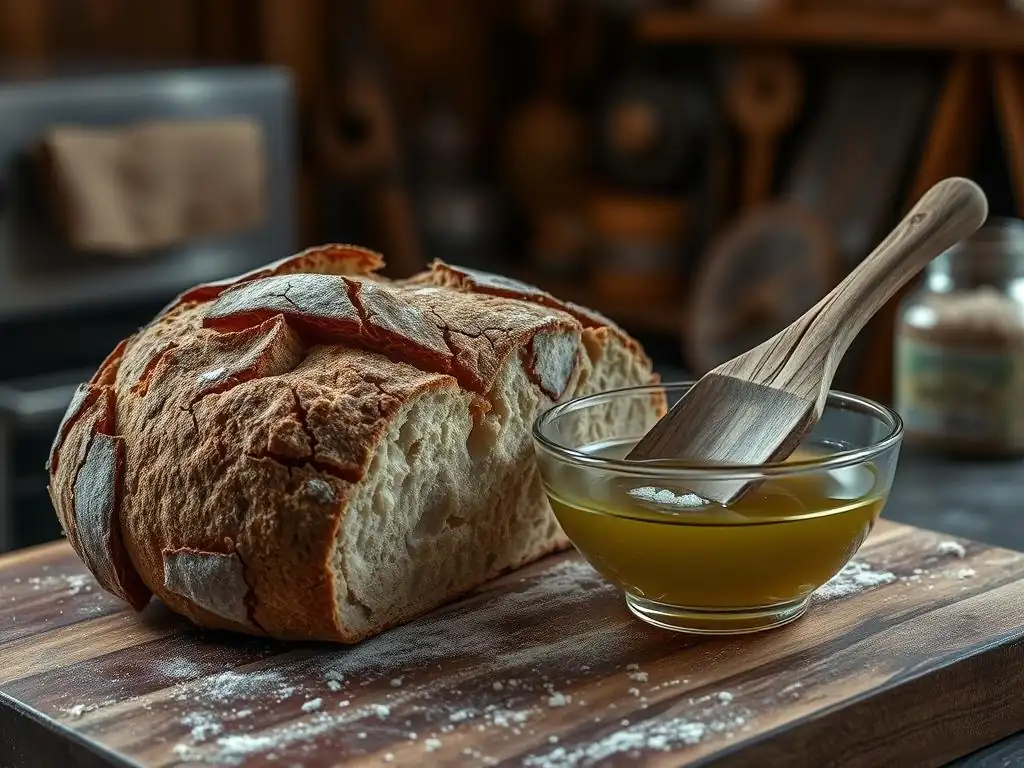
Welcome to BakeWithEase, your kitchen companion for all things baking! Ever wondered why your homemade bread turns out disappointingly dry, even after meticulously following the recipe? We're diving deep into the common culprits and offering practical solutions to salvage your loaves. Discover the secrets to achieving perfectly moist and flavorful bread, starting with how to combat that frustrating dry bread after baking problem. Read on to unlock the tips and tricks that will transform your baking game!
Adjusting Hydration: The Importance of Water Content
Hydration in bread baking refers to the ratio of water to flour by weight, typically expressed as a percentage. This ratio is arguably one of the most critical factors influencing the final texture and moisture content of your loaf, directly impacting whether you end up with delightful, moist bread or disappointing dry bread after baking.
A standard white sandwich loaf might have a hydration level between 60% and 65%, meaning for every 1000 grams of flour, you'd use 600 to 650 grams of water. In contrast, rustic artisan loaves or many sourdoughs often feature much higher hydration, sometimes reaching 75-85% or even above 90%, resulting in a wetter, stickier dough but promising a more open, airy crumb and significantly less chance of encountering dry bread after baking.
Getting this balance right is fundamental because water activates the gluten in the flour and is the primary source of moisture in the baked bread.
The amount of water in your dough profoundly affects gluten development and the resulting crumb structure. Higher hydration allows gluten strands to move and align more freely during kneading and fermentation, leading to a stronger, more elastic network capable of trapping gas produced by the yeast or starter. This results in a more open, irregular crumb structure that is characteristic of many artisan breads and is excellent at retaining moisture, helping to prevent that common issue of dry bread after baking.
Conversely, a lower hydration dough is stiffer and requires more mechanical work (kneading) to develop gluten. While suitable for denser loaves or enriched doughs, insufficient hydration for the flour type or desired outcome can lead to a tight, dense crumb that feels dry and heavy, contributing to the problem of dry bread after baking even if baked correctly.
Different flours also absorb water differently – whole wheat and rye flours, for instance, require more water than white bread flour due to the presence of bran and germ. Adjusting hydration based on flour type and desired texture is a key skill in preventing dry bread after baking.
- What are the most common causes of dry bread even after baking?
- Can adding more fat to the dough help prevent dryness in bread?
- How does oven temperature affect the dryness of baked bread?
- Is there a way to revive bread that's already turned out too dry?
- Does the type of flour I use impact the final moisture content of my bread?
Frequently Asked Questions
What are the most common causes of dry bread even after baking?
The most common culprits are incorrect flour to liquid ratio, over-baking, and insufficient hydration during the proofing process.
Can adding more fat to the dough help prevent dryness in bread?
Yes, adding fats like butter or oil to your dough can help improve its moisture content and result in a softer, less dry bread. These ingredients contribute to a more tender crumb.
How does oven temperature affect the dryness of baked bread?
Baking at a too high temperature can cause the crust to form too quickly, preventing moisture from escaping and leading to a dry interior. It's crucial to monitor oven temperature using an oven thermometer.
Is there a way to revive bread that's already turned out too dry?
You can try steaming the bread by placing it in a preheated oven with a pan of water or wrapping it in a damp towel while reheating. This adds moisture back into the bread.
Does the type of flour I use impact the final moisture content of my bread?
Yes, different flours have varying levels of gluten and absorbency. Whole wheat flour, for example, tends to absorb more water than all-purpose flour, potentially leading to a drier bread if not properly hydrated.
Final Reflection: The Enduring Quest for Perfect Bread
The seemingly simple act of baking bread reveals a profound truth: even with the best intentions, perfection is elusive. Dry bread, a common frustration for home bakers, highlights the delicate balance between ingredients, technique, and the unpredictable nature of the baking process itself. This article has explored various methods to rescue dry bread, proving that even seemingly ruined loaves can find redemption.
The struggle with dry bread transcends mere culinary inconvenience; it speaks to a deeper human desire for mastery and connection. The act of baking, from kneading the dough to the satisfying aroma of freshly baked bread, is deeply ingrained in our cultural heritage. Bread is the staff of life,
a common saying reminds us of its fundamental importance throughout history. This enduring connection underscores the importance of understanding the factors that contribute to dry bread and finding solutions, not just for the sake of a palatable loaf, but for the preservation of a cherished tradition.
So, the next time you encounter a dry slice, remember the lessons learned here. Don't despair! Instead, consider this a challenge, an opportunity to experiment, and a chance to deepen your understanding of the baking process. You have the power to transform a seemingly failed loaf into something delicious and satisfying. Embrace the imperfections, learn from your mistakes, and continue your journey towards baking the perfect—or at least, perfectly enjoyable—loaf.
Rediscover Your Perfectly Moist Bread!
Thanks for joining us on this baking adventure! We hope you now feel empowered to tackle even the driest of loaves. Ready to put your newfound knowledge into practice?
- Try our foolproof hydration hack: Experiment with adding a tablespoon (or two!) of milk or yogurt to your next bread recipe—you'll be amazed at the difference!
- Share your baking triumphs (and challenges!): Let's build a supportive community of bakers—post a picture of your bread on social media using #BakeWithEaseHydration.
- Explore our recipe archive for even more delicious, consistently moist bread options.
What's your go-to trick for keeping bread perfectly moist? Let's hear it in the comments below!