
Fixing Cake Problems *After* It's Baked (Limited Options!)


Welcome to BakeWithEase, your trusted guide in the delightful world of baking! Ever faced a cake that just didn't turn out quite right? Before you reach for the trash can, explore our cake baking troubleshooting tips. Discover the limited, yet effective, options you have to salvage your creation, even after it's come out of the oven. Read on to transform baking mishaps into minor triumphs and unlock secrets to perfect cakes, every time!
- Cake Troubleshooting: Post-Baking Solutions
- Addressing Common Cake Issues After Baking
- Specific Cake Issue Solutions
-
Frequently Asked Questions
- What is the most common reason a cake might sink in the middle after baking?
- Can I actually fix a cake that has already sunk in the middle?
- How can I troubleshoot a cake that is too dry after baking?
- What if my cake has a domed top? Is there anything I can do after it's baked?
- My cake is crumbly. What's the best way to work with it after baking?
- Final Reflection: The Unexpected Resilience of a Baked Cake
- Rediscover Your Baking Confidence: Rescue That Cake!
Cake Troubleshooting: Post-Baking Solutions
Addressing Common Cake Issues After Baking
Let's face it, sometimes despite our best efforts following cake baking troubleshooting tips, a cake doesn't turn out quite as planned once it's out of the oven. While the options for fixing a cake after it's baked are limited compared to preventing issues during mixing and baking, there are still ways to salvage your creation and make it delicious and presentable. These post-baking solutions focus on masking imperfections or repurposing the cake.
Understanding common cake baking troubleshooting tips before you even start can significantly reduce the likelihood of these problems, but having a plan for post-bake issues is also part of a baker's toolkit. These strategies can turn a perceived failure into a success, or at least minimize waste.
Dry Cake Solutions
A dry cake is a common frustration. One of the most effective ways to add moisture back after baking is by applying a simple syrup soak. A basic simple syrup is just equal parts sugar and water heated until the sugar dissolves (e.g., 1 cup sugar, 1 cup water). You can infuse it with flavorings like vanilla extract, citrus zest, or even a liqueur for adult cakes.
Once cooled, gently brush or drizzle the syrup over the cake layers, especially if you've sliced them horizontally. The porous structure of the baked cake will absorb the liquid, adding much-needed moisture. For a standard 8-inch cake layer, you might use anywhere from 1/4 to 1/2 cup of syrup, depending on how dry the cake is and how moist you want it to be.
Another excellent strategy for solving cake problems related to dryness is to pair it with a very moist frosting or filling. Cream cheese frosting, Swiss meringue buttercream, or a rich ganache can provide significant moisture contrast to a dry cake crumb. Consider adding a layer of fruit preserves or a pastry cream between layers. The key is to use a generous amount of the moist element.
If the cake is severely dry, repurposing it into cake pops or trifle layers is often the best approach. For cake pops, the dry cake is crumbled and mixed with frosting, effectively reintroducing moisture and binding the mixture before shaping and dipping. This is a classic troubleshooting cake baking issues method for dry or crumbly results.
Dense Cake Solutions
A dense cake lacks the light, airy texture you might have been aiming for. While you can't make a dense cake fluffy after it's baked, you can make it more enjoyable to eat through careful serving suggestions. Instead of serving it plain, pair it with accompaniments that provide lightness and contrast.
A dollop of freshly whipped cream, a scoop of ice cream, or a fruit compote can significantly improve the eating experience. The creamy texture of whipped cream or ice cream and the often slightly acidic, fresh nature of fruit cut through the richness and density of the cake, balancing the bite.
Think of how a dense pound cake is often served with berries and cream. Apply this principle to your dense creation. A light, tangy lemon curd or a bright raspberry coulis can also work wonders. These pairings don't change the cake's texture, but they alter the overall sensory experience, making the density feel less like a defect and more like a characteristic of a rich dessert. This is a practical approach when faced with troubleshooting cake baking issues that result in a heavy texture.
Cracked Cake Solutions
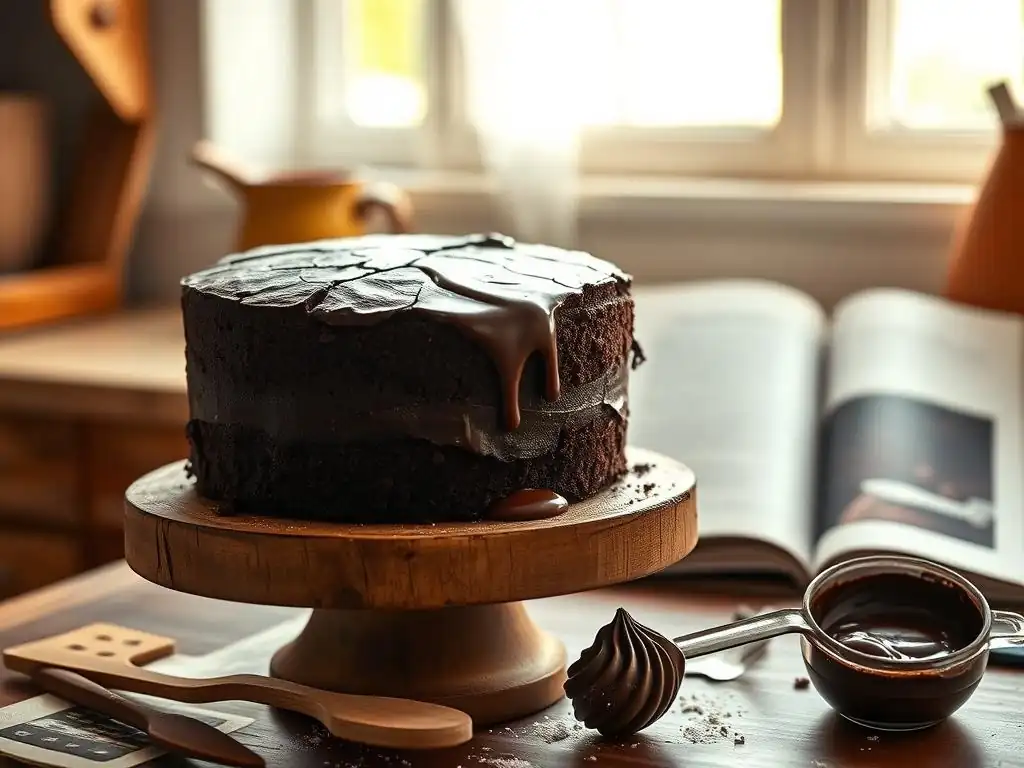
Cracks on the surface of a baked cake are a common cosmetic issue. The simplest and most effective way to deal with a cracked cake is to cover it up with frosting or a decorative topping. A thick layer of buttercream or ganache can easily fill and hide surface cracks. Apply a crumb coat first (a thin layer of frosting to seal crumbs), chill the cake, and then apply your final, thicker layer of frosting, smoothing it over the cracks. This is a standard technique in cake decorating and works perfectly for solving cake problems like surface imperfections.
Alternatively, if frosting the entire cake isn't your plan or the cracks are significant, consider a ganache pour or a crumble topping. A warm, pourable ganache will flow over the surface, naturally filling and obscuring cracks as it sets. For a rustic look, a streusel or cookie crumble topping can be sprinkled generously over the top, covering any imperfections.
For a more elegant solution, strategically placed fresh fruit (like berries or sliced peaches) or edible flowers can draw the eye away from the cracks and add beauty. Imagine a lemon cake with cracks artfully covered by a scattering of fresh raspberries and mint leaves – nobody will notice the cracks! These are effective cake baking troubleshooting tips for visual flaws.
Uneven Cake Solutions
An uneven cake, whether domed or sloped, presents a challenge for stacking and decorating. The primary solution here is cake leveling using a serrated knife or a specialized cake leveler. Place the cake on a flat surface and carefully slice off the raised portion horizontally to create a flat top. This trimmed piece can then be used for other purposes, preventing waste. Aim for a steady hand to ensure a clean, even cut. This process is fundamental in professional cake decorating for creating stable, level layers.
The cut-off pieces from leveling are perfect for making cake pops, incorporating into trifle layers, or even crumbling finely to use as a decorative border around the base of the frosted cake. Don't discard them! Using these pieces is a smart way to minimize waste when troubleshooting cake baking issues related to shape. Once the cake is leveled, you have a stable, flat surface, which is crucial for applying frosting smoothly and stacking multiple layers securely. A level base prevents leaning towers of cake and ensures your final decorated product looks professional and is structurally sound.
Specific Cake Issue Solutions
Beyond the general issues, some problems are more localized or specific to certain areas of the cake. These require targeted post-baking solutions. While prevention through careful execution of cake baking troubleshooting tips is always best, these fixes can be lifesavers.
Sunken Cake Top Solutions
A sunken cake top, often resulting in a crater in the center, is disappointing but not insurmountable. The most common solution is to fill the depression with frosting, ganache, or another filling. If the dip is shallow, simply applying a standard layer of frosting might be enough to fill it and create a level surface for decoration. For a deeper crater, you might need to pipe frosting into the well first before covering the entire top. Using a contrasting color or texture for the filling can even turn the sunken area into a decorative feature.
Alternatively, a decorative topping can effectively hide a sunken top. A generous mound of whipped cream, a pile of fresh berries, a sprinkle of confectioners' sugar, or a drizzle of glaze can all camouflage the dip. Consider using a stencil and cocoa powder or powdered sugar to create a design that distracts from the sunken area. For instance, a chocolate cake with a sunken center could be filled with chocolate ganache and then topped with a swirl of whipped cream and chocolate shavings. These simple post-baking cake fixes focus on visual appeal.
Burnt Cake Solutions
A cake with slightly burnt edges or bottom can sometimes be salvaged, depending on the severity. If only the very edges or a thin bottom layer are burnt, you can carefully trim away the burnt parts using a serrated knife. Slice off the dark, hard portions until you reach the tender, unburnt cake crumb.
This might reduce the size of your cake layer, but it removes the unpleasant bitter flavor of the burnt section. Be precise with your cuts to minimize waste of the good cake. This is a direct application of troubleshooting cake baking issues where the heat was too high or the baking time too long.
Once the burnt parts are trimmed, the remaining cake can be used. If there's a slight residual burnt flavor, pairing the cake with strong, complementary flavors in the frosting or filling can help mask it. A coffee-flavored buttercream, a rich chocolate ganache, or a tangy cream cheese frosting can often overpower minor off-flavors.
If a significant portion of the cake is burnt, or the burnt flavor permeates the entire cake, it might be beyond saving. In such cases, salvaging the unburnt portions for cake pops or crumbs for decoration is the best course of action, acknowledging that some cake problems after baking have limited solutions.
Frequently Asked Questions
What is the most common reason a cake might sink in the middle after baking?
The most common reason is underbaking. This means the internal structure of the cake hasn't fully set, causing it to collapse.
Can I actually fix a cake that has already sunk in the middle?
While you can't fully "fix" it to its original state, you can salvage it. You can cut out the sunken part and fill the hole with frosting, fruit, or other toppings.
How can I troubleshoot a cake that is too dry after baking?
A dry cake might be due to overbaking or using too much flour. You can try brushing it with simple syrup or serving it with a moist sauce or glaze.
What if my cake has a domed top? Is there anything I can do after it's baked?
A domed top is usually caused by uneven heat. Lightly trim the top with a serrated knife to create a level surface for frosting.
My cake is crumbly. What's the best way to work with it after baking?
A crumbly cake can be difficult to work with. Consider using it for a trifle, cake pops, or bread pudding where the crumbly texture is less of an issue.
Final Reflection: The Unexpected Resilience of a Baked Cake
The seemingly minor imperfections of a baked cake—a sunken center, a cracked top, a slightly dry crumb—often lead to immediate disappointment. But as this article has explored, even after the cake is out of the oven, there are surprisingly effective ways to salvage and even enhance the final product. This isn't just about fixing a culinary mishap; it's about embracing resourcefulness and finding creative solutions in the face of unexpected challenges, a skill applicable far beyond the kitchen.
The process of troubleshooting a baked cake mirrors life's own unpredictable nature. We meticulously follow recipes, yet sometimes the results fall short of expectations. This isn't a failure, but an opportunity to learn and adapt. The only true wisdom is in knowing you know nothing.
- Socrates. This quote, while seemingly unrelated to cake baking, perfectly encapsulates the spirit of embracing imperfection and the continuous learning process involved in both baking and life. The solutions presented in this article highlight the importance of observation, problem-solving, and a willingness to experiment, even when faced with a seemingly irreversible outcome.
Consider the next time you face a setback, whether in baking or in life. Don't let initial disappointment dictate the final result. Instead, channel your inner baker, assess the situation, and explore the possibilities for improvement. You might be surprised at what you can achieve by embracing the unexpected and finding creative solutions to seemingly insurmountable problems. Remember the resilience of a cake, and apply that same spirit to your own endeavors. You might just discover a sweeter outcome than you ever anticipated.
Rediscover Your Baking Confidence: Rescue That Cake!
Thanks for diving into the world of cake rescue! We hope you now feel empowered to tackle those baking mishaps with confidence. Ready to put your newfound skills to the test?
- Try one of the fixing techniques from the article on your next (or even this!) cake. Think of it as a baking challenge – can you master that sunken center or dry crumb?
- Share your cake rescue story – did you try a new technique? What was the outcome? Let's learn from each other! Join the conversation in the comments below.
- Explore more of our baking guides on BakeWithEase to prevent future cake catastrophes. We have tons of tips and tricks for all skill levels.
So, what unexpected cake challenge are you ready to conquer next?