
Weight vs. Volume: The Right Way to Measure GF Flour Substitutes

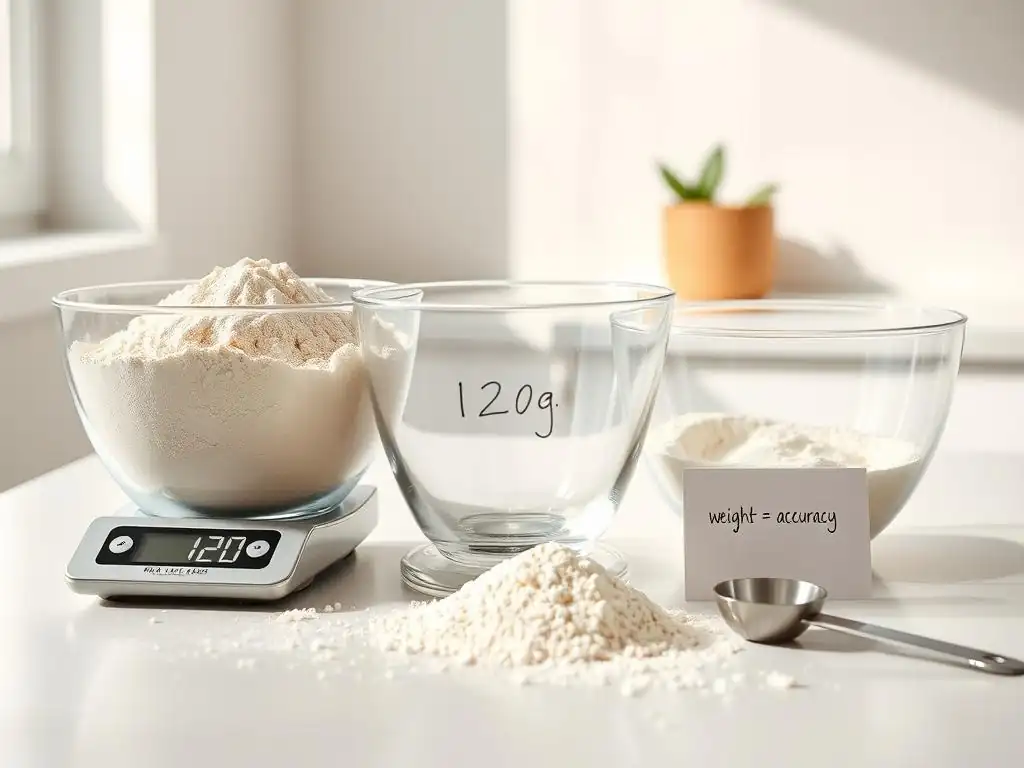
Welcome to BakeWithEase, your trusted guide to baking bliss! Are you tired of inconsistent results when baking gluten-free? Get ready to unlock the secrets to perfectly measured gluten-free flour! This article dives deep into the often-debated topic of weight vs. volume and reveals the definitive guide to achieving consistent and delicious results with GF flour volume measurements. Curious to learn how a simple change in technique can revolutionize your gluten-free baking? Read on to discover the right way to measure and transform your baking experience!
- Why Accurate Gluten-Free Flour Measurement Matters in Baking
- Understanding Gluten-Free Flour Density Variations
- The Superiority of Weight Measurement for Gluten-Free Flours
- A Step-by-Step Guide to Weighing Gluten-Free Flour
- Common Mistakes to Avoid When Measuring Gluten-Free Flour
- Converting Gluten-Free Recipes: Volume to Weight Chart
- Mastering the Art of Gluten-Free Baking Through Precise Measurement
-
Frequently Asked Questions
- What is the main problem with using volume measurements for gluten-free flour?
- Why is weight a more reliable method for measuring gluten-free flour?
- How do I convert a recipe that uses volume measurements for gluten-free flour to weight?
- What type of kitchen scale is best for measuring gluten-free flour?
- Where can I find reliable information on the correct weight measurements for different gluten-free flour blends?
- Final Reflection: Rethinking Gluten-Free Baking: It's Not Just About the Volume
- Unlock Your Gluten-Free Baking Potential!
Why Accurate Gluten-Free Flour Measurement Matters in Baking
Achieving consistent and delicious results in gluten-free baking often hinges on precise ingredient measurement. Unlike traditional wheat flour, which has a relatively uniform density due to its gluten structure, gluten-free (GF) flours are a diverse group, each with unique characteristics. This inherent variability makes accurate measurement not just important, but critical for preventing disappointing outcomes like dense cakes or crumbly cookies. Mastering how to measure GF flour is the first step toward baking success.
The challenges of GF baking are amplified when measurements are imprecise. Small errors can significantly alter the delicate balance required in gluten-free recipes, where starches, gums, and various flours work together to mimic the properties of gluten. Understanding why accuracy is paramount lays the foundation for adopting better measurement practices and consistently producing baked goods that are light, airy, and structurally sound, rather than heavy or falling apart.
The Inconsistency of GF Flour Volume Measurements
Relying on volume measurements, such as standard measuring cups, is a major source of inconsistency when working with gluten-free flours. The way GF flour is scooped or packed into a cup drastically affects the actual amount of flour being measured. For example, lightly spooning rice flour into a cup versus scooping directly from the bag can result in weight differences of 20% or more for the same 'cup' measurement. This variability makes GF flour volume measurements inherently unreliable for achieving predictable results.
Furthermore, different types of gluten-free flours settle differently. A finely ground flour like tapioca starch might pack more densely than a coarser flour like almond meal when measured by volume. This means that even if you use the same scooping technique, the weight of a cup of tapioca starch will likely be significantly different from the weight of a cup of almond flour. This fundamental issue with GF flour volume measurements highlights the need for a more accurate method, especially when substituting flours or developing new recipes.
Impact of Inaccurate Measurements on Gluten-Free Baking Results: Texture and Rise
Inaccurate GF flour volume measurements directly impact the final texture and rise of baked goods. Too much flour, often a result of over-scooping when using volume, can lead to a dry, dense, or heavy product. The excess flour absorbs too much liquid, preventing proper hydration of starches and gums, which are crucial for structure and moisture in GF baking. Imagine a muffin that comes out like a brick – that's often a sign of too much flour.
Conversely, using too little flour due to under-scooping or incorrect leveling can result in a baked good that lacks structure, is crumbly, or doesn't rise properly. A cookie that spreads too much or a cake that sinks in the middle might indicate insufficient flour. The delicate balance of flour, liquid, fat, and leavening agents is easily disrupted by imprecise GF flour volume measurements, making the difference between a perfectly risen loaf and a flat, disappointing one. Consistent measurement is key to achieving that desired light and airy texture in gluten-free baking.
Understanding Gluten-Free Flour Density Variations
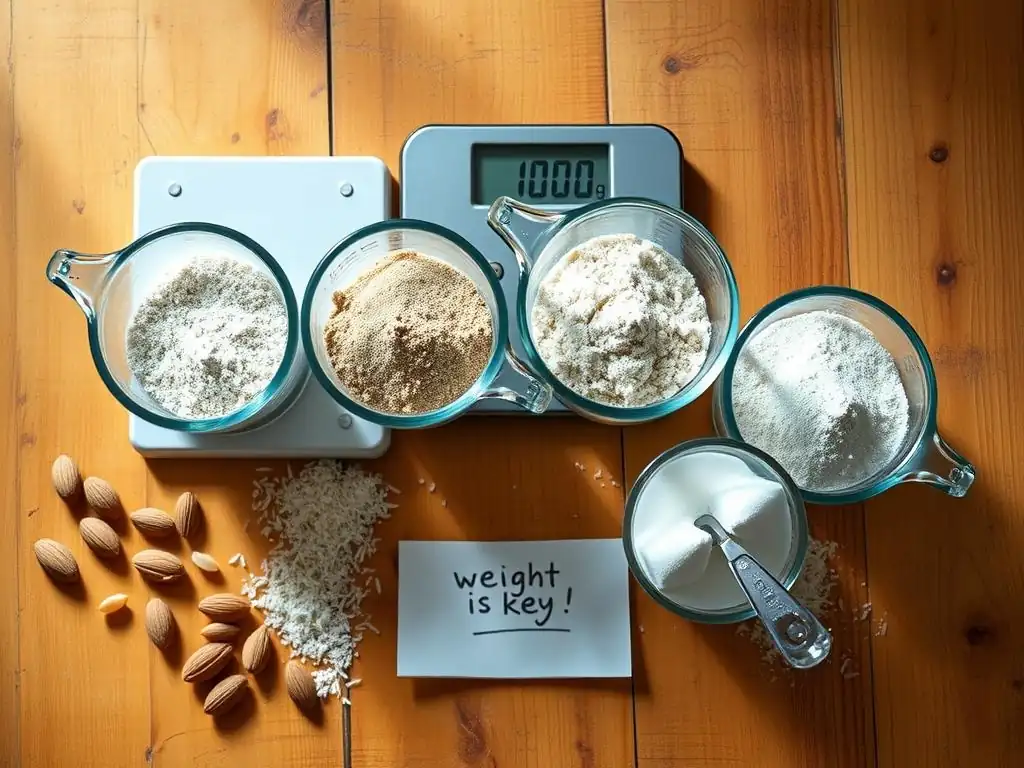
The world of gluten-free flours is incredibly diverse, encompassing everything from fine starches to coarse meals derived from grains, nuts, seeds, and roots. This variety is fantastic for creating unique flavors and textures, but it also means there's a significant difference in how much a given volume of each flour type weighs. Density, defined as mass per unit volume (like grams per cup), varies widely across GF flours, making a 'cup' a very inconsistent unit of measurement from one flour to the next.
Understanding these density differences is crucial for successful gluten-free baking, particularly when substituting flours or working with recipes that only provide volume measurements. A standard conversion like "1 cup of GF flour blend equals X grams" is often insufficient because the density of the blend itself can vary depending on the ratio of its component flours. Recognizing that a cup of almond flour behaves differently than a cup of sorghum flour is the first step away from relying solely on GF flour volume measurements.
How Different GF Flours Behave: A Density Comparison
The density of gluten-free flours can vary dramatically. For instance, starches like cornstarch or tapioca starch are relatively dense; a cup of tapioca starch might weigh around 120 grams.
On the other hand, nut flours like almond flour or coconut flour are typically much lighter by volume; a cup of almond flour often weighs only about 96 grams, and a cup of coconut flour can be as low as 60-80 grams depending on its dryness and grind. This significant difference demonstrates why using equivalent GF flour volume measurements for different types of flour will lead to vastly different amounts of flour by weight.
Consider a recipe calling for 2 cups of "GF all-purpose blend." If that blend is primarily composed of lighter flours, the total weight will be less than if it's made up of denser flours. If you then try to substitute with a different blend or a single flour based purely on GF flour volume measurements, you could easily add too much or too little flour by weight, throwing off the entire recipe balance. This highlights the importance of understanding the inherent density variations when dealing with GF flour volume measurements.
Examples of GF Flours with Different Densities: Almond Flour, Brown Rice Flour, Tapioca Starch
Let's look at specific examples to illustrate the density differences that make GF flour volume measurements problematic.
- Almond Flour: Typically made from ground almonds, this flour is relatively light and fluffy. A standard cup (240ml volume) of spooned and leveled almond flour weighs approximately 96 grams (about 3.4 ounces).
- Brown Rice Flour: This flour, made from ground brown rice, is generally denser than almond flour. A cup of spooned and leveled brown rice flour can weigh anywhere from 120 to 135 grams (about 4.2 to 4.8 ounces), depending on the grind and brand.
- Tapioca Starch (or Flour): A fine, powdery starch extracted from the cassava root, tapioca starch is quite dense. A cup of spooned and leveled tapioca starch often weighs around 120 grams (about 4.2 ounces), similar to brown rice flour, but its texture is very different.
These examples clearly show that using GF flour volume measurements alone is unreliable. A recipe calling for "1 cup flour" could mean anywhere from ~96g to ~135g or more depending on the specific GF flour being used or how it's measured. This variability is why weight measurement is the superior method for consistent gluten-free baking.
The Superiority of Weight Measurement for Gluten-Free Flours
When it comes to baking, especially gluten-free baking, precision is paramount. Using a kitchen scale to measure ingredients by weight (grams or ounces) eliminates the inconsistencies inherent in volume measurements (cups or milliliters). A gram of flour is always a gram of flour, regardless of whether it's almond flour, rice flour, or tapioca starch, and regardless of how tightly it's packed. This fundamental consistency makes weight measurement the gold standard for reliable baking results.
Switching from GF flour volume measurements to weight measurements is one of the most impactful changes a gluten-free baker can make. It removes the guesswork associated with how much flour is actually going into the mix, leading to recipes that perform consistently every time. While it might require a small initial adjustment in habit, the benefits in terms of baking success are significant and immediately noticeable.
Why Weighing GF Flour is More Precise Than Using Volume
Weighing gluten-free flour on a scale provides an exact measurement of its mass. Unlike GF flour volume measurements, which can vary based on scooping technique, settling, humidity, and the flour's specific density, weight is absolute. One hundred grams of brown rice flour is the same amount every single time you weigh it, regardless of how fluffy or compacted it is in the bag.
This precision is crucial in gluten-free baking because the ratio of flour to other ingredients, particularly liquids, is very sensitive. Adding just 20-30 grams too much or too little flour (an amount that could easily be the difference between a correctly measured cup and an incorrectly measured cup of certain GF flours) can dramatically alter the batter or dough consistency and the final baked product. By eliminating the variables associated with GF flour volume measurements, weighing ensures you're working with the exact quantities intended by the recipe developer.
Benefits of Using a Kitchen Scale for Gluten-Free Baking
Adopting a kitchen scale offers numerous benefits for gluten-free bakers:
- Consistency: Achieve reproducible results every time you bake a recipe.
- Accuracy: Get the precise amount of flour needed, minimizing errors.
- Reliability: Recipes developed using weight measurements are inherently more reliable.
- Easier Scaling: Doubling or halving recipes is straightforward with weights.
- Less Cleanup: Often, you can weigh ingredients directly into your mixing bowl, reducing the number of measuring cups to wash.
- Better Understanding: Develop a better intuition for ingredient ratios by seeing their weights.
Moving away from GF flour volume measurements to weight measurement is an investment in your baking success, leading to less wasted ingredients and more delicious outcomes.
How to Convert Recipes to Grams for Gluten-Free Flour
Many recipes, especially older ones or those not specifically written for GF baking, might still provide GF flour volume measurements in cups. To convert these to grams, you'll need a reliable conversion chart or source. However, remember that even charts provide approximations based on average densities. It's helpful to know the approximate weight per cup for common GF flours you use frequently.
To convert a recipe:
- Identify the type of GF flour or blend specified.
- Look up the approximate weight in grams for 1 cup of that specific flour (or blend).
- Multiply the number of cups called for by the weight per cup. For example, if a recipe calls for 2 cups of brown rice flour and your chart says 1 cup is ~125g, you'll need 250g of brown rice flour.
- Important: Recognize that conversion charts for GF flour volume measurements are estimates. The best approach is to find recipes that already list ingredients by weight, or use a chart as a starting point and make small adjustments based on the dough/batter consistency described in the recipe or your previous experience.
A Step-by-Step Guide to Weighing Gluten-Free Flour
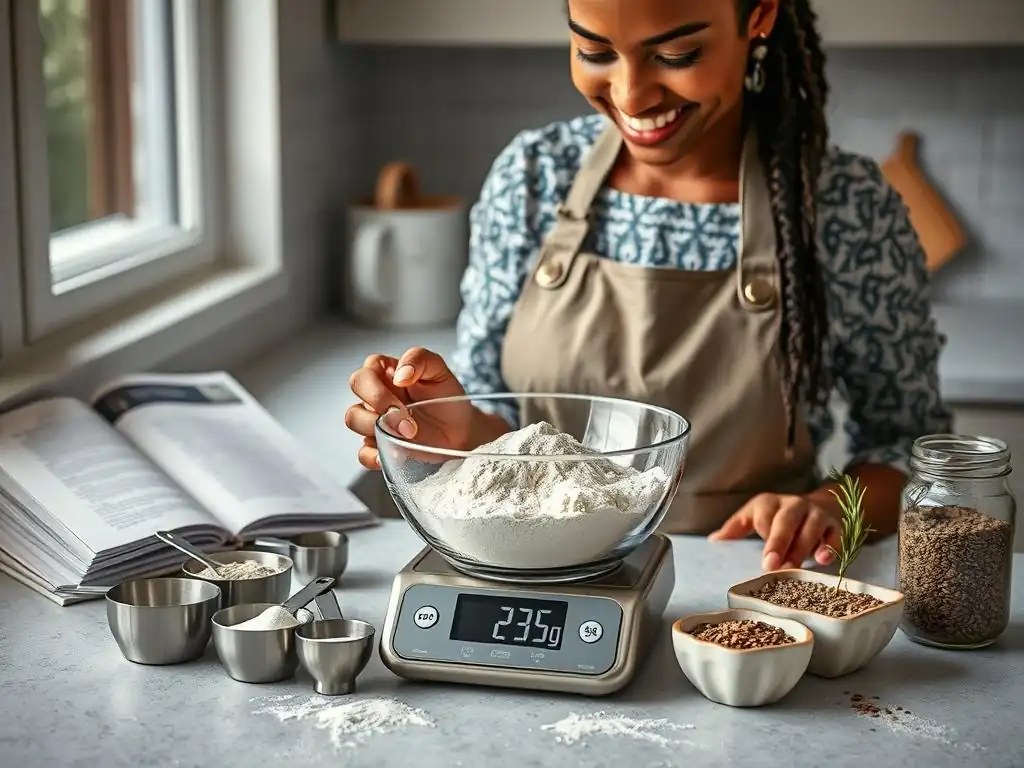
Making the switch from GF flour volume measurements to weight is simple once you have a kitchen scale. This process ensures you get the right amount of flour every time, leading to more predictable and successful gluten-free baked goods. Follow these steps for accurate measurement.
Setting Up Your Kitchen Scale for Accurate Measurements
Before you start weighing your gluten-free flour, ensure your kitchen scale is set up correctly.
- Place the scale on a flat, stable surface. An uneven surface can affect the reading.
- Make sure the scale is clean and free of debris that could interfere with the measurement.
- Turn the scale on.
- Select the desired unit of measurement, which will typically be grams (
g) for baking precision, although ounces (oz) can also be used if the recipe specifies. Grams are generally preferred for their smaller increments and greater accuracy.
Having your scale ready and set to the correct unit is the first crucial step in moving beyond inconsistent GF flour volume measurements.
Zeroing the Scale: Ensuring Precise Readings
The 'tare' function (or zeroing the scale) is essential for measuring ingredients accurately, especially when weighing into a container.
- Place your empty mixing bowl or the container you will weigh the flour into directly onto the scale's platform.
- Wait for the scale to register the weight of the empty container.
- Press the 'Tare' or 'Zero' button. The scale display should now read
0g. This tells the scale to ignore the weight of the container. - You are now ready to add your gluten-free flour directly into the container.
Zeroing the scale ensures that you are only measuring the weight of the flour itself, eliminating the container's weight and ensuring your measurement is precise, unlike potentially variable GF flour volume measurements.
Weighing Different Types of Gluten-Free Flours: Best Practices
Weighing is largely the same regardless of the type of GF flour, but here are some best practices:
- Place your tared container on the scale.
- Slowly add the gluten-free flour to the container. A scoop or spoon works well for this.
- Watch the scale display as you add the flour, stopping when you reach the target weight specified in the recipe.
- For very small amounts (like starches or gums), add them carefully to avoid overshooting.
- There's no need to sift before weighing unless the recipe specifically instructs you to sift after weighing for aeration purposes. Weighing unsifted flour is perfectly accurate.
- Task List for Weighing Flour:
- [ ] Place scale on flat surface.
- [ ] Turn scale on and select
grams. - [ ] Place empty bowl on scale.
- [ ] Press 'Tare'/'Zero' button.
- [ ] Slowly add flour to bowl until target weight is reached.
- [ ] Use the weighed flour in your recipe.
By following these simple steps, you bypass the inaccuracies associated with GF flour volume measurements and ensure you are using the correct amount of flour every single time.
Common Mistakes to Avoid When Measuring Gluten-Free Flour
Even when trying to be precise, certain habits can undermine accurate GF flour measurement. Being aware of these common pitfalls, whether you're attempting GF flour volume measurements or transitioning to weight, can significantly improve your baking consistency. Avoiding these mistakes is almost as important as adopting the correct method itself.
Understanding where errors can creep in allows you to be more mindful during the measurement process. This attention to detail is what separates inconsistent baking results from reliably delicious outcomes, especially in the nuanced world of gluten-free recipes where ingredient ratios are so critical.
Incorrect Scooping Techniques and Their Impact
One of the biggest culprits behind inaccurate GF flour volume measurements is the scooping technique. The common method of plunging a measuring cup directly into a bag of flour packs the flour tightly into the cup, resulting in significantly more flour by weight than intended. This is often referred to as the "scoop and sweep" method.
The recommended technique for volume measurement (if you must use it, though weight is better) is the "spoon and level" method: gently spoon the flour into the measuring cup until it overflows, then level off the excess with a straight edge without tapping or shaking the cup. The difference in weight between flour measured by "scoop and sweep" versus "spoon and level" can be substantial – easily 30-40 grams for a cup of brown rice flour.
This difference directly impacts the flour-to-liquid ratio, leading to dry, heavy baked goods when too much flour is inadvertently used via the incorrect scooping method, highlighting the fundamental problem with relying on GF flour volume measurements.
Using Standard Measuring Cups vs. Leveling
Standard dry measuring cups are designed to be filled and then leveled off. However, even with the "spoon and level" method, variations occur due to how densely the flour settles as it's spooned in. Simply scooping and not leveling, or leveling unevenly, further exacerbates the inaccuracy of GF flour volume measurements.
Moreover, liquid measuring cups (with a spout and markings on the side) should never be used for measuring dry ingredients like flour, even in volume. They are designed to be filled to a line when placed on a flat surface and are not calibrated for scooping and leveling dry goods. This further emphasizes that when dealing with GF flour volume measurements, the tool itself, and how it's used, introduces significant potential for error compared to the certainty of weighing.
Ignoring Humidity and Its Effect on GF Flour Density
Environmental factors like humidity can also affect the density of gluten-free flours and thus impact the accuracy of GF flour volume measurements. Flour absorbs moisture from the air, which adds weight. In humid conditions, a cup of flour might weigh slightly more than in dry conditions. While this effect is usually less dramatic than scooping technique, it's another variable that contributes to the unreliability of volume measurements.
Weight measurement, on the other hand, accounts for the actual mass of the flour, including any absorbed moisture. If the recipe was developed using weight, the proportion of flour to other ingredients remains correct regardless of the humidity level. This is another subtle but important reason why moving away from GF flour volume measurements to weight provides greater consistency, especially in different climates or seasons.
Converting Gluten-Free Recipes: Volume to Weight Chart
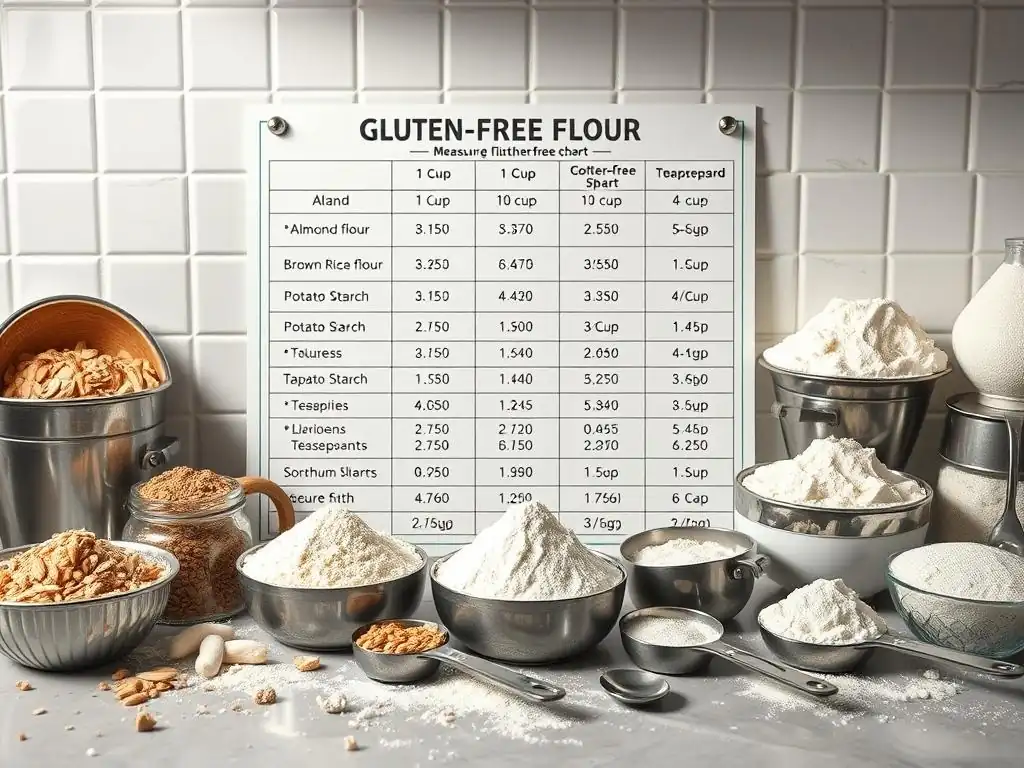
While weight is the superior method, you will inevitably encounter recipes that use GF flour volume measurements. Having a reliable conversion chart can be a helpful starting point. However, it's crucial to remember that these charts provide average approximations. The actual weight per cup can vary based on the brand of flour, its grind size, and how it was milled.
Using a conversion chart for GF flour volume measurements should be seen as a guideline, not a definitive rule. The best practice is to look for recipes that already provide weights or to use a chart and be prepared to make minor adjustments based on the dough or batter consistency you are aiming for, ideally comparing it to photos or descriptions in the recipe.
Volume to Weight Conversions for Popular Gluten-Free Flours
Here are approximate volume-to-weight conversions for some common gluten-free flours, assuming the "spoon and level" method for volume measurement. Use these values as a reference when converting GF flour volume measurements.
| GF Flour Type | Approximate Weight per 1 Cup (grams) |
|---|---|
| Almond Flour | 96 - 100 g |
| Brown Rice Flour | 120 - 135 g |
| White Rice Flour | 120 - 130 g |
| Sorghum Flour | 115 - 125 g |
| Oat Flour (GF) | 90 - 100 g |
| Tapioca Starch | 115 - 125 g |
| Cornstarch | 120 - 128 g |
| Potato Starch | 150 - 160 g |
| Coconut Flour | 60 - 80 g |
| Buckwheat Flour | 115 - 125 g |
| All-Purpose GF Blend | 120 - 140 g (Highly variable!) |
Note: These are approximate values. Weights can vary by brand and how the flour is handled.
Resources for Finding Reliable Gluten-Free Flour Conversion Charts
Many reputable baking websites, cookbook authors, and flour manufacturers provide their own conversion charts. When looking for a chart to help with GF flour volume measurements conversion:
- Check the website of the specific brand of GF flour you are using, as they may have tested conversions for their products.
- Consult well-regarded gluten-free baking blogs or cookbooks, as they often provide conversions based on their recipe testing.
- Look for charts that specify the method used for volume measurement (e.g., spooned and leveled).
While charts for GF flour volume measurements conversion are useful tools, remember their limitations. The most reliable approach is always to use recipes that provide weights or to start developing your own recipes based on weight measurements from the beginning.
Mastering the Art of Gluten-Free Baking Through Precise Measurement
Ultimately, mastering gluten-free baking is an ongoing journey of learning and practice. One of the most significant steps you can take to elevate your skills and achieve consistent, delicious results is to embrace precise ingredient measurement, particularly by weight, moving away from the inherent variability of GF flour volume measurements. This fundamental shift in how you measure your flour can unlock new levels of baking success.
Precise measurement provides a level playing field for your ingredients, ensuring the ratios in the recipe are respected. This allows you to troubleshoot more effectively when things don't go as planned, as you can rule out measurement error as a primary cause. It empowers you to experiment more confidently, knowing your base measurements are sound.
Consistent Results Through Accurate GF Flour Weight
Using a kitchen scale to weigh your gluten-free flour is the single best way to ensure consistent results every time you bake a particular recipe. When a recipe calls for 150 grams of brown rice flour, you can be confident you are adding precisely 150 grams, regardless of humidity, how the flour settled in the bag, or your scooping technique. This eliminates a major variable that plagues bakers relying on GF flour volume measurements.
This consistency is especially valuable in gluten-free baking, where the interaction between different flours, starches, and binders is so delicate. Accurate weighing ensures that these components are present in the correct proportions, leading to reliable texture, structure, and rise in everything from bread to cookies. Say goodbye to the frustration of a recipe working perfectly one day and failing the next due to subtle differences in GF flour volume measurements.
Improving Your Gluten-Free Baking Techniques
Adopting weight measurement for GF flour not only improves consistency but also helps you become a better baker overall. It encourages a more scientific and precise approach to baking, where understanding ingredient ratios is key. As you become accustomed to working with weights, you'll develop a better intuition for dough and batter consistencies relative to precise measurements.
This improved understanding, built upon the foundation of accurate measurement, makes it easier to adapt recipes, substitute ingredients (while still using weight! ), and even create your own gluten-free baking masterpieces. Moving beyond the uncertainty of GF flour volume measurements allows you to focus on honing other crucial techniques like mixing, leavening, and baking times, leading to continuous improvement in your skills.
Achieving Consistent Gluten-Free Recipes
For recipe developers or those who like to tweak and perfect recipes, using weight for gluten-free flours is non-negotiable. It allows you to document your recipes precisely, ensuring that anyone else following your recipe (or you yourself on a future date) can replicate your results exactly. Sharing recipes with weights eliminates the ambiguity associated with GF flour volume measurements and makes your creations reliably reproducible.
By consistently using weight, you build a library of dependable gluten-free recipes that you can return to again and again with confidence. This shift in measurement practice is perhaps the most powerful tool in a gluten-free baker's arsenal for achieving consistently delicious results and truly mastering the art. Let go of the guesswork from GF flour volume measurements and embrace the precision of weight!
Frequently Asked Questions
What is the main problem with using volume measurements for gluten-free flour?
Volume measurements for gluten-free flour are inaccurate because GF flour blends can vary in density and composition. This leads to inconsistent baking results.
Why is weight a more reliable method for measuring gluten-free flour?
Weight provides a consistent and precise measurement, regardless of the flour blend's density. This ensures reproducible results in your gluten-free baking.
How do I convert a recipe that uses volume measurements for gluten-free flour to weight?
Use a reliable online conversion chart or a kitchen scale. Search for the specific GF flour blend listed in the recipe for the most accurate conversion.
What type of kitchen scale is best for measuring gluten-free flour?
A digital kitchen scale with gram and ounce measurements is ideal. Ensure it can handle the weight range needed for your recipes.
Where can I find reliable information on the correct weight measurements for different gluten-free flour blends?
BakeWithEase.com offers a comprehensive guide with weight and volume comparisons for various GF flour substitutes. Also, check the manufacturer's website for specifications.
Final Reflection: Rethinking Gluten-Free Baking: It's Not Just About the Volume
The quest for the perfect gluten-free bake often hinges on understanding the nuances of flour substitution, and volume measurements are only part of the equation. Ignoring the weight of your gluten-free flour blend can lead to inconsistent results, frustrating even the most experienced bakers. This article has highlighted the critical importance of weighing ingredients, not just relying on imprecise volume measurements, for consistent gluten-free baking success.
The shift towards precise baking, away from the traditional "cup-based" methods, reflects a broader cultural movement towards more scientific and accurate approaches to cooking. This isn't just about gluten-free baking; it's about embracing precision in the kitchen to achieve predictable and delicious results. The difference between nearly right and exactly right is everything.
– almost any baker could attest to the truth of this sentiment when it comes to achieving the desired texture and taste in gluten-free baking. This pursuit of perfection, however, shouldn't feel daunting; rather, it should empower us to understand the science behind our recipes and unlock a world of culinary possibilities.
Now, consider your own baking experiences. Have you struggled with inconsistent results using volume measurements alone? I encourage you to try weighing your gluten-free flours in your next baking project. Embrace the precision, experiment with different blends, and witness the transformative power of accurate measurements. The journey to mastering gluten-free baking is a rewarding one, and understanding the weight versus volume debate is a crucial step along the way. Don't just bake; bake with intention.
Unlock Your Gluten-Free Baking Potential!
Thanks for diving into the world of gluten-free flour substitutions! We hope you now feel more confident in choosing the right type of flour for your next baking masterpiece. Ready to put your newfound knowledge into practice?
- Experiment with a new recipe: Choose a favorite recipe and try substituting the flour based on what you've learned. Document your results – you might discover your new go-to blend!
- Share your baking journey: Tell us about your experiences on social media – we’d love to see your creations and hear about your successes (and even your learning curves! ).
- Explore advanced techniques: Dive deeper into the science of gluten-free baking by researching the protein content and functionality of different flour types.
What unexpected flour combination are you most excited to try in your next bake?