
Achieving a Light and Airy Crumb in Your Enriched Breads

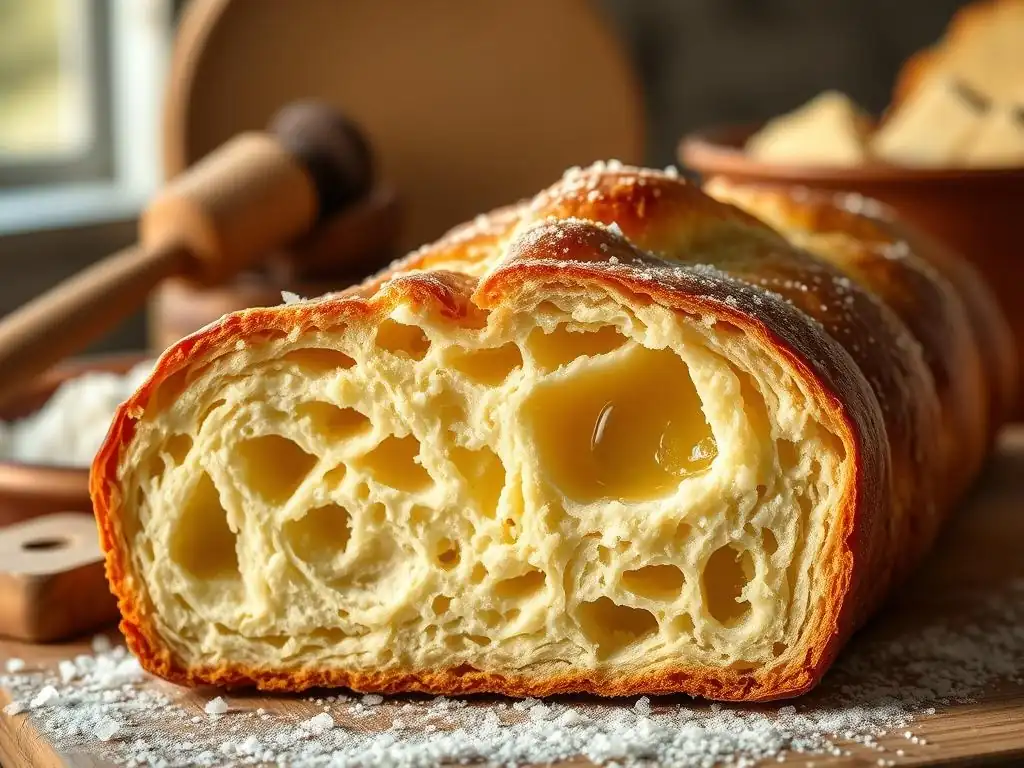
Welcome to BakeWithEase, your trusted companion on your baking journey! Ever wondered how to achieve that elusive, perfectly light and airy bread crumb in your enriched breads? Unlocking this secret is easier than you think! Dive into our step-by-step guide designed for intermediate bakers and discover the techniques and tips to transform your loaves from ordinary to extraordinary. Let's bake something amazing!
- Understanding Enriched Doughs and Their Impact on Crumb
-
Frequently Asked Questions
- What is the most important factor in achieving a light and airy bread crumb?
- How does using enriched ingredients affect the crumb of my bread?
- What role does proofing play in the final crumb structure?
- Can the type of flour I use impact the airiness of my bread?
- What temperature should I bake my enriched bread at to achieve the best crumb?
- Final Reflection: The Pursuit of the Perfect Crumb
- Unlock the Secret to Light & Airy Bread!
Understanding Enriched Doughs and Their Impact on Crumb
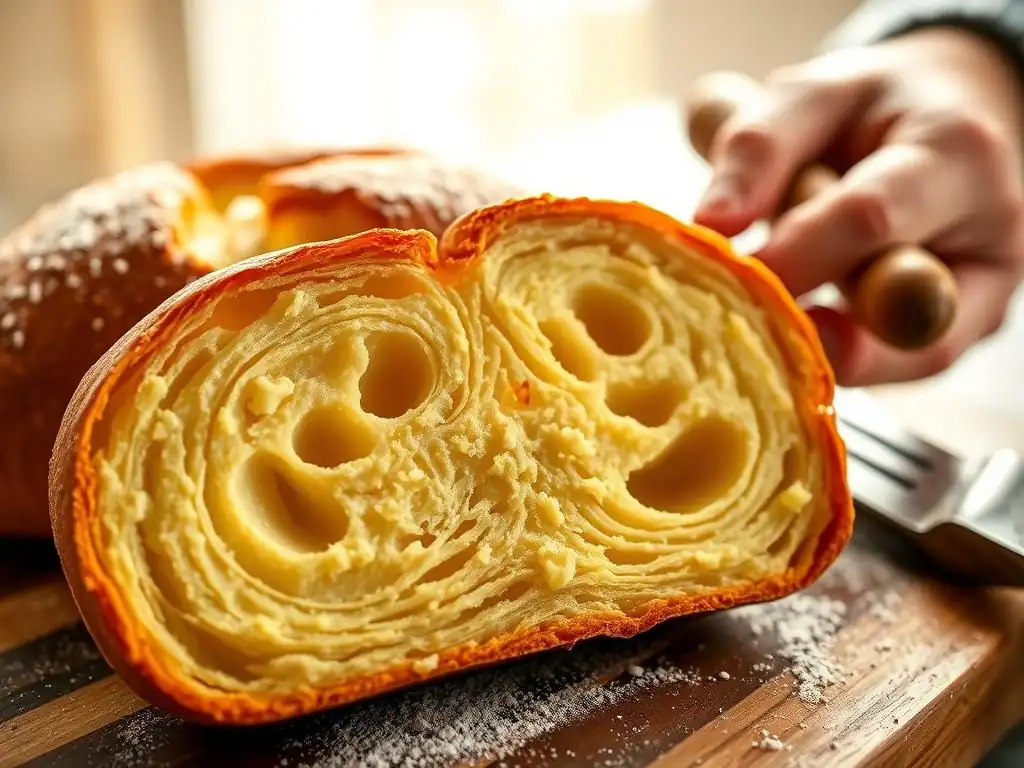
What are Enriched Doughs? Defining the Characteristics
Enriched doughs stand apart from lean doughs (like those used for a simple baguette) primarily due to the addition of fats, sugars, and often eggs and dairy. While a basic lean dough might contain just flour, water, salt, and yeast, an enriched dough incorporates ingredients like butter, sugar, milk, and eggs. These additions significantly alter the dough's handling properties and the final product's texture and flavor.
The term "enriched" refers to this process of adding ingredients beyond the basic four, resulting in a richer, softer, and often sweeter dough. A classic brioche, for example, is heavily enriched, sometimes containing butter that amounts to 50% or more of the flour weight, along with significant amounts of sugar and eggs.
These added ingredients interfere with gluten development, which is a key factor in achieving a light and airy bread crumb. Fats coat gluten strands, making the dough softer and less elastic initially. Sugar competes with yeast for water and can slow fermentation if in very high concentrations, but it also tenderizes the crumb and provides food for the yeast.
Eggs contribute fat, protein, and liquid, adding richness, aiding emulsification, and contributing to a moist, tender texture. The interplay of these enriching ingredients with the flour and yeast is what gives enriched breads their characteristic soft crumb, golden color, and delightful flavor, setting them apart from the chewier, open crumb of lean breads.
The Role of Butter, Sugar, and Eggs in Crumb Structure
Butter is arguably the most defining ingredient in many enriched doughs, particularly brioche. Added after initial gluten development, butter coats the gluten network, inhibiting its elasticity and making the dough incredibly soft and extensible. As the bread bakes, the water in the butter turns to steam, contributing to oven spring, while the fat itself melts and coats the starch molecules, resulting in a tender, almost cake-like crumb structure rather than a chewy one.
A high-quality butter with a higher fat content, like many European-style butters (often 82% fat compared to 80% in many American varieties), can contribute significantly to a more tender and moist light and airy bread crumb. Using cold, cubed butter incorporated gradually helps manage dough temperature during mixing and allows for better distribution.
Sugar serves multiple purposes. It provides readily available food for the yeast, boosting fermentation, especially in sweet doughs where other sugars might be less accessible. However, in high concentrations (typically above 5-10% of flour weight), sugar becomes hygroscopic, meaning it attracts and holds onto water, competing with the flour and yeast and potentially slowing fermentation.
Beyond its role in fermentation, sugar tenderizes the crumb by interfering with gluten development and starch gelatinization. It also contributes to browning through caramelization and the Maillard reaction during baking, enhancing both color and flavor. The sugar content directly impacts the perceived sweetness and the softness of the final light and airy bread crumb.
Eggs are another powerhouse ingredient in enriched doughs. They contribute liquid, fat, and protein. The protein, particularly from the yolks, adds richness and helps emulsify the fats, leading to a more stable dough structure and a finer crumb. The fat in the yolks tenderizes the dough, similar to butter, while the protein contributes to the overall structure and rise.
Eggs also add a beautiful golden hue to the crumb and crust. A recipe calling for a high ratio of eggs, such as one using 3-4 large eggs per 500g of flour, will yield a much richer, softer, and more cake-like light and airy bread crumb compared to one using only 1-2 eggs. The lecithin in egg yolks acts as a natural emulsifier, helping to create a smooth, cohesive dough despite the high fat content.
How Gluten Development Affects Lightness and Airiness
Gluten, the protein network formed when gliadin and glutenin in flour combine with water and are developed through mixing or kneading, provides the essential structure that allows dough to trap gases produced by yeast. This trapped gas is what creates the airy pockets characteristic of a light and airy bread crumb. In lean doughs, extensive gluten development is desired to create a strong, elastic network that can support a large, open crumb structure. Think of the large, irregular holes in a sourdough baguette – that's the result of significant gluten development and high hydration.
However, in enriched doughs, the presence of fats, sugars, and eggs interferes with this gluten development. The fats coat the gluten strands, reducing their ability to form strong bonds and making the dough softer and less elastic. While this interference means enriched doughs require careful handling and specific mixing techniques (like adding fat gradually after initial development), sufficient gluten must still be developed.
Without a moderately developed gluten network, the dough wouldn't have the strength to hold the gases produced during fermentation and proofing, resulting in a dense, heavy crumb. The goal in enriched doughs is to develop enough gluten for structure, but not so much that it makes the dough tough, balancing strength with the tenderizing effects of the enrichments to achieve that desired soft, light and airy bread crumb.
Frequently Asked Questions
What is the most important factor in achieving a light and airy bread crumb?
The most important factor is gluten development. Proper kneading ensures strong gluten strands which trap gases, leading to a lighter texture. Don't over-knead, though!
How does using enriched ingredients affect the crumb of my bread?
Enriched ingredients like butter and eggs can make the crumb softer and more tender. They also inhibit gluten development, so careful balancing is needed.
What role does proofing play in the final crumb structure?
Proofing allows the yeast to produce carbon dioxide, which creates air pockets within the dough. An adequate proofing time is essential for a light and open crumb.
Can the type of flour I use impact the airiness of my bread?
Yes, using a higher protein flour, like bread flour, is generally recommended. It provides more gluten, resulting in a stronger structure capable of holding air.
What temperature should I bake my enriched bread at to achieve the best crumb?
Baking at the correct temperature (usually around 350-375°F) is crucial. Too high, and the crust sets before the interior is cooked, resulting in a dense crumb.
Final Reflection: The Pursuit of the Perfect Crumb
The quest for a light and airy bread crumb isn't merely a culinary pursuit; it's a testament to the enduring power of simple ingredients transformed by careful technique. The seemingly small details—the precise hydration, the gentle kneading, the controlled fermentation—culminate in a texture that elevates a loaf from good to extraordinary. This journey into the heart of enriched bread baking reveals that even the most basic recipes hold the potential for surprising depth and complexity.
The pursuit of the perfect crumb has resonated throughout history, a reflection of our desire to create something beautiful and nourishing from humble beginnings. Bread is the staff of life,
a simple phrase, yet it encapsulates the profound significance of this staple food. The lightness and airiness we strive for aren't just about texture; they represent a connection to tradition, a dedication to craftsmanship, and a celebration of the transformative power of baking. It's a reminder that even in the seemingly mundane act of making bread, there's an opportunity for artistry and self-expression.
Now, consider your own baking journey. What techniques have you mastered? What challenges have you overcome? Don't be afraid to experiment, to push your boundaries, and to find your own unique approach to achieving that elusive, perfect crumb. Each loaf is a learning experience, a chance to refine your skills and to savor the rewarding process of transforming flour, water, and yeast into something truly special. Embrace the journey, and may your next loaf be your most airy and delightful yet.
Unlock the Secret to Light & Airy Bread!
Thanks for taking the time to explore the art of creating light and airy enriched breads! We hope you gained valuable insights into achieving that perfect crumb. Now it's time to put your newfound knowledge into practice.
- Bake your dream loaf: Try the recipe variations mentioned in the article, focusing on one technique at a time (like adjusting hydration or kneading time) to see what works best for you. This is your chance to experiment and perfect your technique!
- Share your success (or your struggles!): Post a picture of your creation on social media using #BakeWithEaseLightCrumb—we'd love to see it!
- Explore our other baking guides: Dive deeper into the world of bread making with our collection of tutorials and recipes on BakeWithEase.com.
Ready to unleash your inner baker and create that perfect, airy loaf? What small adjustment are you most excited to try first?