
Best Butter for Lamination: Why It Matters for Viennoiseries

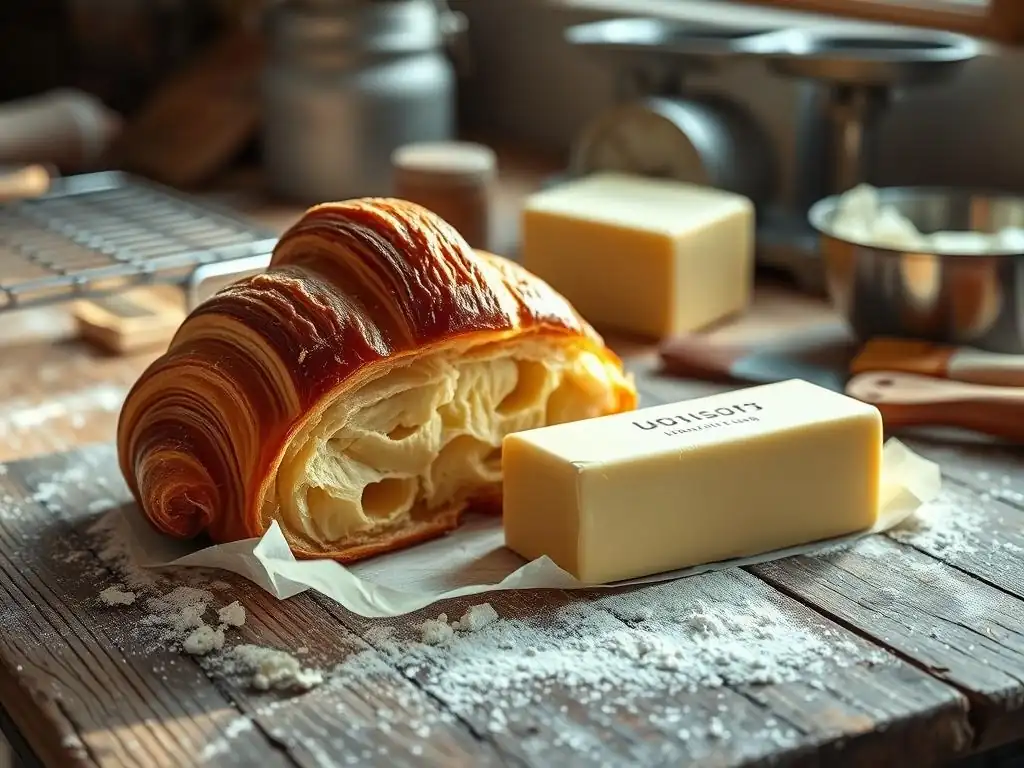
Welcome to BakeWithEase, where baking becomes a joy, not a chore! Ever wondered what truly separates a good croissant from a great croissant? The secret often lies in the details, and today, we're diving deep into one crucial element: butter for viennoiseries lamination. Discover why choosing the right butter is paramount to achieving those perfectly flaky layers and that irresistible buttery flavor. Intrigued? Let's unlock the secrets to truly exceptional viennoiseries!
- Understanding the Importance of Butter in Viennoiseries Lamination
- Key Characteristics of Ideal Butter for Viennoiseries
- Comparing Different Types of Butter for Lamination
- Best Butter Brands for Viennoiseries Lamination: Recommendations for Bakers
- Techniques for Working with Butter in Lamination
- Troubleshooting Common Lamination Issues Related to Butter
- Recipes Using Specific Butters for Lamination
- Elevate Your Viennoiseries with the Right Butter Choice
-
Frequently Asked Questions
- What exactly is lamination in the context of viennoiseries, and why is butter so important?
- Why can't I just use any butter I have on hand for lamination?
- What characteristics should I look for when choosing butter specifically for lamination?
- What are some common mistakes people make when laminating dough with butter?
- Where can I find high-quality butter suitable for viennoiseries lamination?
- Final Reflection: The Golden Ratio of Viennoiserie Success
- Unleash Your Inner Pastry Chef: Master the Art of Lamination
Understanding the Importance of Butter in Viennoiseries Lamination
Viennoiseries, like croissants and pain au chocolat, are renowned for their delicate, flaky layers. This exquisite texture is primarily achieved through a technique called lamination, which involves repeatedly folding butter into dough. The quality and characteristics of the butter used are not just important; they are absolutely critical to the success of this intricate process and the final product's signature lightness and crispness. Using the best butter for viennoiseries lamination is the foundation of achieving that perfect honeycomb structure inside and golden, shatteringly crisp exterior.
The choice of butter for viennoiseries lamination directly impacts how the dough behaves during rolling and folding, how it rises in the oven, and ultimately, its texture and flavor. Butter acts as a leavening agent in laminated doughs. As the pastry bakes, the water in the butter turns to steam, forcing the layers of dough apart.
Simultaneously, the fat melts and coats the thin layers of dough, preventing them from sticking together and forming a solid mass. Without the right butter, this separation and puffing process is compromised, resulting in dense, heavy pastries rather than the desired airy, multi-layered treats.
What is Viennoiseries Lamination and Why is Butter Crucial?
Viennoiseries lamination is a technique where a block of cold butter is enclosed within a dough, and this composite is then rolled out and folded multiple times (typically three or four "turns"). Each turn creates more layers of dough separated by thin sheets of butter. A standard three-turn lamination results in hundreds of alternating layers of dough and butter – specifically, (Dough+Butter)^3 turns = Dough * (Butter * Dough)^3 layers.
After three single turns, you would theoretically have 2^3 * 2 = 16 dough layers and 16 butter layers. With more typical folding patterns, like a single (fold in thirds) and a double (fold in quarters), the number of layers increases dramatically. For example, a common sequence of one single and two double turns yields (3 * 4 * 4) = 48 layers of dough and 48 layers of butter before the final shaping, leading to the characteristic flakiness.
Butter is crucial because it provides the necessary fat barrier between these many layers of dough. When the pastry bakes, the high heat causes the water in the butter to flash into steam, which lifts and separates the delicate dough layers. The melting fat then lubricates these layers, preventing them from fusing together and allowing them to set as distinct, crisp strata.
The specific properties of the butter used for viennoiseries lamination, such as its melting point, plasticity, and water content, directly influence how effectively this process occurs. Using a butter with too low a melting point, for instance, can lead to the butter melting out of the dough before it has a chance to create steam and lift the layers, resulting in a greasy, flat pastry.
The Role of Butter Fat Content in Lamination Success
The fat content of butter is perhaps the single most critical factor for successful lamination. Standard American butter typically contains around 80% butterfat and up to 18% water, while European-style butters often boast a higher fat content, ranging from 82% to 86% butterfat, with a correspondingly lower water content, sometimes as low as 14%. This seemingly small difference in fat percentage has a profound impact on lamination.
Higher fat content means less water. Less water means less steam is generated during baking, but more importantly, it means less water is available to interact with the flour's gluten proteins. Excess water can lead to excessive gluten development, resulting in a tough dough that resists rolling and folding, and ultimately produces a dense, chewy pastry rather than a light, flaky one.
Furthermore, butter with a higher fat content tends to be more pliable yet firmer at typical working temperatures (around 50-60°F or 10-15°C). This ideal consistency is crucial for creating thin, continuous sheets of butter between the dough layers without the butter cracking or becoming too soft and melting into the dough during the rolling and folding process.
A butter that is too soft will simply squeeze out of the layers, while a butter that is too hard will break and create uneven distribution. The butter fat content for lamination directly influences this workability, making higher-fat butters the preferred choice for achieving the distinct, airy structure characteristic of professional-quality viennoiseries.
Key Characteristics of Ideal Butter for Viennoiseries
Achieving perfect lamination for viennoiseries hinges on selecting butter with specific characteristics. It's not just about picking any butter; it's about understanding what makes a butter perform optimally under the stress of rolling and folding and high oven heat. The ideal butter for viennoiseries lamination possesses a combination of high fat content, low water content, specific plasticity, and a desirable flavor profile. Ignoring any of these characteristics can compromise the texture, rise, and overall quality of your croissants, pain au chocolat, and other laminated pastries.
Consider the process: you are meticulously creating hundreds of paper-thin layers. The butter's job is to stay in distinct layers during rolling and folding, then melt precisely during baking to create steam and separate those layers. This delicate balance requires butter that is both stable and transformative. The properties we discuss below are what enable the butter to perform this crucial role effectively, leading to the signature flaky, airy interior and crisp exterior that defines exceptional viennoiseries.
High Fat Content: The Cornerstone of Flaky Pastries
As previously touched upon, high fat content is paramount when choosing butter for viennoiseries lamination. Butterfat is the key component that creates the necessary barrier between dough layers. Butters with higher fat percentages, typically 82% or more, contain less water and milk solids compared to standard butters (around 80% fat). This higher proportion of fat means you have more of the essential ingredient responsible for lubrication and layer separation during baking. With less water, there's reduced risk of the butter melting prematurely or the excess moisture interfering with gluten development, which could make the dough tough.
For instance, using a butter with 83% fat instead of 80% means that for every pound of butter (approximately 454g), you have about 13g more pure butterfat and 13g less water and milk solids. This extra fat contributes significantly to the richness and tenderness of the final pastry. It also allows the butter layers to remain more distinct during the rolling and folding process, even as the butter warms slightly from handling and the friction of the rolling pin. This stability is crucial for maintaining the structural integrity of the laminated dough before it hits the oven.
Low Water Content: Preventing Gluten Development
Following directly from high fat content, low water content in butter is essential for controlling gluten development in the dough. Flour contains proteins, gliadin and glutenin, which combine with water during mixing to form gluten. While some gluten development is necessary for the dough's structure and elasticity, too much can make laminated dough tough and resistant to rolling, causing it to spring back excessively. Standard American butter, with its higher water content (up to 18%), introduces more moisture into the dough system compared to European-style butters (often 14-16% water).
This lower water percentage in high-fat butters minimizes the amount of free water available to activate gluten. This results in a dough that is easier to roll thinly without excessive resistance or tearing. It also helps ensure that the butter layers remain sharp and distinct, rather than the water from the butter dispersing into the dough and softening it prematurely. A butter with low water content for lamination contributes to a dough that is more extensible, allowing for the creation of numerous thin layers necessary for the characteristic flaky texture of viennoiseries.
Plasticity and Workability: Achieving Even Layers
Plasticity refers to the butter's ability to be molded or shaped without breaking or becoming greasy. For successful lamination, the butter needs to have a specific range of plasticity at the temperature it is worked (typically 50-60°F or 10-15°C). It should be firm enough to roll out into a thin sheet alongside the dough without melting or squeezing out, yet pliable enough to bend and fold without cracking or breaking into pieces.
If the butter is too cold or hard, it will shatter when rolled, creating uneven layers. If it's too warm or soft, it will melt into the dough, destroying the distinct layers needed for puff.
This ideal plasticity is influenced by the type of fat crystals in the butter and how the butter was processed. Many high-quality European butters are churned longer, which affects their crystalline structure and results in butter that is more pliable over a wider temperature range compared to standard butters. Achieving proper butter plasticity for lamination is a skill that comes with practice, but starting with butter that has good inherent workability makes the process significantly easier and increases the likelihood of creating uniform, continuous butter layers throughout the dough.
Flavor Profile: Enhancing the Taste of Your Viennoiseries
While structure and texture are primary goals of lamination, the butter's flavor profile also plays a significant role in the final taste of viennoiseries. Butter contributes a rich, creamy flavor that is fundamental to the enjoyment of croissants and pain au chocolat. High-quality butters, particularly those cultured or slow-churned, often develop more complex, nutty, or tangy notes that enhance the overall sensory experience. European-style butters, due to their often longer churning process and sometimes the inclusion of cultures, tend to have a more pronounced and desirable flavor compared to standard butters.
The flavor of butter for lamination is locked within those fat layers. As the pastry bakes and the butter melts, its flavor permeates the surrounding dough layers. Using a butter with a superior flavor profile will result in pastries that are not only texturally perfect but also taste richer and more delicious. While lamination technique focuses on the physical properties of butter, choosing a butter that tastes good is equally important for creating viennoiseries that are truly exceptional from start to finish.
Comparing Different Types of Butter for Lamination
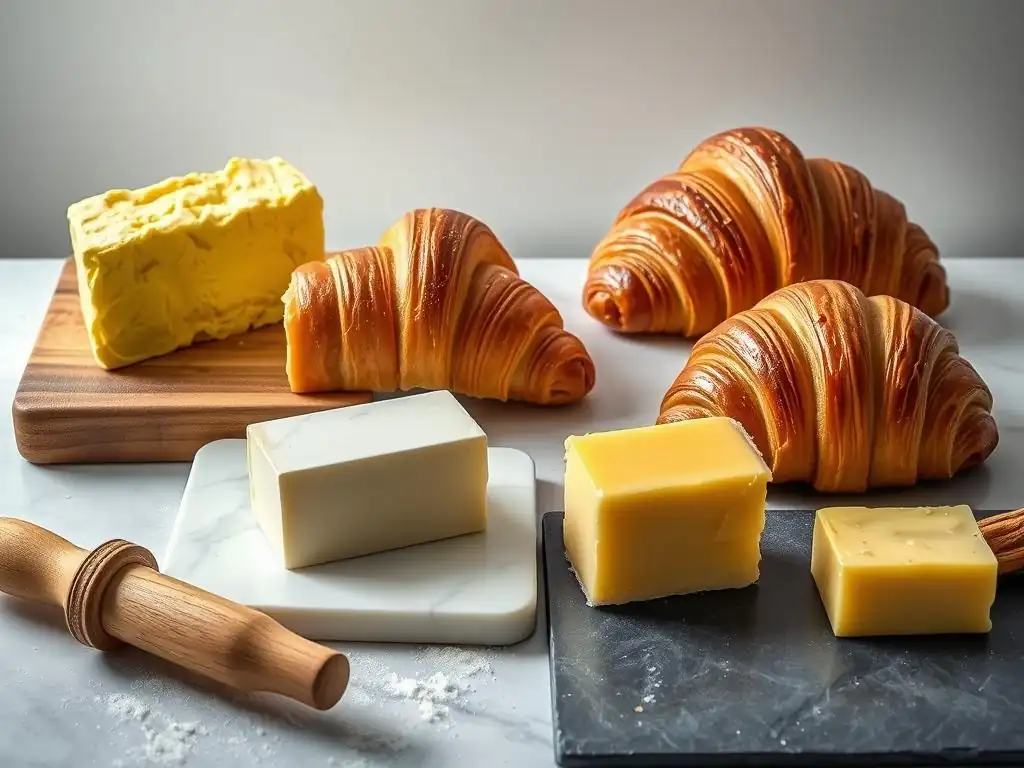
When selecting butter for viennoiseries lamination, bakers encounter various types, each with its own characteristics that can impact the outcome. Understanding the differences between these types, particularly regarding fat and water content, is crucial for making the best choice for your baking goals. While some butters are naturally better suited to the demands of lamination, others can be used successfully with slight adjustments to the recipe or technique.
This comparison helps demystify why certain butters are favored by professional bakers for laminated doughs and what you can expect when using different options. It's about finding the right balance between performance, availability, and cost, while still aiming for the optimal characteristics needed for flaky layers.
European-Style Butter: The Gold Standard for Lamination
European-style butter is widely considered the gold standard for creating high-quality laminated pastries like croissants and pain au chocolat. The primary reason for this distinction lies in its higher butterfat content, typically ranging from 82% to 86%, compared to the 80% found in most standard American butters. This higher fat percentage means lower water content, which is crucial for successful lamination. Less water leads to less steam during baking (though still enough to lift layers) and, more importantly, reduces the risk of excess moisture interfering with gluten development, resulting in a more tender and flaky crumb.
Beyond fat content, European butters are often churned longer, which affects their texture and plasticity. This results in a butter that is generally more pliable and workable at cooler temperatures, making it easier to roll into thin, even sheets alongside the dough without cracking or becoming greasy. The superior plasticity helps maintain distinct butter layers throughout the extensive rolling and folding process required for viennoiseries.
Many European butters are also cultured, meaning bacterial cultures are added to the cream before churning, which develops a slightly tangy, complex flavor that enhances the richness of the final pastry. These combined factors make European-style butter the preferred butter type for viennoiseries lamination by many professional bakers.
High Butterfat Content in European Butter Explained
The high butterfat content in European butter directly translates to superior performance in lamination because fat is the component that creates the physical barrier between dough layers. Imagine trying to separate sheets of paper with water versus with a thin layer of oil. The oil provides a more effective, lasting barrier. Similarly, the higher proportion of fat in European butter (82%+ vs. 80%) ensures that the butter layers remain more solid and distinct during the rolling and folding process at cool temperatures. This allows for the creation of very thin, continuous sheets of butter.
When the pastry bakes, this higher fat content contributes to a richer flavor and a more tender texture. The fat melts and coats the interior dough layers, preventing them from fusing and creating the characteristic open, airy crumb structure. While water turning to steam is essential for lift, the fat is crucial for defining and lubricating those layers. A high butterfat butter for lamination simply provides more of the key ingredient needed for that signature flaky separation, making the process more forgiving and the results more consistent and superior in texture.
American Butter: Considerations for Lamination
Standard American butter, typically containing around 80% butterfat and up to 18% water, can be used for viennoiseries lamination, but it presents certain challenges compared to its European counterpart. The higher water content means there is more moisture available to potentially toughen the dough through gluten development and a greater risk of the butter melting prematurely during rolling and folding if not kept very cold. The texture can also be less pliable, sometimes cracking when rolled out if not handled carefully.
Despite these challenges, it is absolutely possible to make good laminated pastries with American butter. Many home bakers successfully use it. The key is to be mindful of its characteristics and make adjustments to your technique.
You might need to work faster, ensure your workspace and dough are kept colder, and potentially allow for extra chilling time between turns to prevent the butter from melting out. While it might not achieve the absolute peak flakiness or richness of pastries made with high-fat European butter, American butter is a readily available option that can still yield delicious results with careful handling.
Adjusting Recipes for American Butter
When using standard American butter (around 80% fat) for recipes designed for high-fat European butter (82%+ fat), some adjustments may be beneficial. One common approach is to slightly reduce the amount of liquid (like milk or water) in the dough recipe to account for the higher water content in the butter. This helps maintain the desired dough hydration level and prevents excessive gluten development. However, this adjustment should be made cautiously, perhaps reducing the liquid by just 1-2% of the flour weight, as too little liquid can make the dough difficult to work with.
Another important consideration is temperature control. Because American butter tends to soften faster due to its composition, it's even more critical to keep everything very cold. This means ensuring your dough is well-chilled, your butter block is at the correct pliable temperature (around 50-55°F), and chilling the dough thoroughly between each roll and fold (turns). Some bakers even chill their rolling pin and workspace. While you can't change the butter's composition, these techniques help manage its properties for more successful lamination using American butter.
Clarified Butter (Ghee): An Alternative for Flaky Layers?
Clarified butter, or ghee, is butter that has been heated to remove the water and milk solids, leaving behind nearly pure butterfat (often 99%+). Given that high fat content is desirable for lamination, one might wonder if clarified butter could be an alternative. However, using pure clarified butter for traditional lamination is generally not recommended for viennoiseries. The process relies on the water in the butter turning to steam to create the lift and separation between layers. Without water, this crucial leavening mechanism is lost.
While clarified butter or ghee provides excellent richness and can contribute to tenderness, it lacks the steam-generating property necessary for creating the numerous airy pockets in laminated dough. Pastries made with pure clarified butter between layers would likely be dense and greasy rather than light and flaky. Therefore, while clarified butter has its place in other culinary applications (like sautéing or making sauces), it is not suitable as the primary fat for viennoiseries lamination where steam leavening is key.
Plant-Based Butters: Considerations for Vegan Lamination
As plant-based baking becomes more popular, bakers often seek plant-based alternatives for lamination. The success of vegan butter for viennoiseries lamination depends heavily on the specific product's formulation. Many plant-based butters are designed to mimic dairy butter and some are specifically formulated for baking and lamination. Look for products that are described as having a high fat content (often from oils like shea, coconut, or cashew) and a texture that is firm but pliable when cold, similar to dairy butter.
Vegan butter alternatives vary widely in composition and performance. Some melt too quickly, while others are too hard and crack. Finding a plant-based butter that has the right balance of fat, moisture (often from water or plant-based milk), and emulsifiers is crucial. Successful vegan lamination requires selecting a high-quality plant-based butter designed for this purpose and potentially adjusting techniques, such as ensuring everything is kept very cold and handling the dough gently, as some plant-based fats can be more brittle than dairy butter. Researching and testing different brands is often necessary to find the best plant-based butter for lamination.
Best Butter Brands for Viennoiseries Lamination: Recommendations for Bakers
Choosing the right brand of butter can make a significant difference in the success of your viennoiseries. While "best" can be subjective and depend on availability and budget, certain brands are consistently recommended by professional bakers and experienced home bakers for their quality and performance in lamination. These recommendations are based on factors like consistent high fat content, desirable plasticity, and excellent flavor.
It's important to remember that brand availability varies by region. The key is to look for butters that meet the characteristics discussed earlier: high fat, low water, and good workability. Checking the nutrition label for fat percentage is a simple way to start evaluating a butter's suitability for lamination butter for viennoiseries.
Top European Butter Brands for Lamination
Several European butter brands are highly regarded for their suitability for viennoiseries lamination due to their high butterfat content (typically 82% or more) and excellent plasticity. Brands like Isigny Sainte-Mère (French, often 82% fat), President (French, often 82% fat), Kerrygold (Irish, typically 82% fat), and Plugrá (American-made, but marketed as European-style with 82% fat) are popular choices. These butters are known for their rich flavor and consistent performance during the demanding lamination process.
For example, Kerrygold's grass-fed butter is praised not only for its 82% fat content but also for its vibrant color and rich flavor imparted by the cows' diet. Isigny Sainte-Mère butter, produced in a specific region of Normandy, is celebrated for its unique terroir-driven flavor and exceptional texture. While these brands may be more expensive and less widely available than standard butters, many bakers find the investment worthwhile for the superior results they yield in terms of flakiness, flavor, and ease of working with the butter block for lamination.
Recommended American Butter Brands for Lamination
While standard American butters typically contain 80% fat, some brands offer higher-fat options marketed as "European-style" or simply having a higher percentage listed on the label. As mentioned, Plugrá is a widely available American brand specifically made with 82% fat and designed for baking applications like lamination. Other brands may occasionally release special higher-fat versions, or certain regional dairies might produce butters with slightly higher fat content than the national average.
If you can't find higher-fat American butters, you can still use standard 80% fat butter. The key is to be meticulously careful with temperature control, ensuring your dough and butter are kept very cold (around 40°F or 4°C for the dough, and the butter pliable but cool, around 50-55°F or 10-13°C) and allowing ample chilling time between turns. While the final texture might be slightly less airy or rich compared to using 82%+ fat butter, careful technique is paramount when using American butter for lamination.
Where to Buy High-Quality Butter for Viennoiseries
High-quality, high-fat butters suitable for viennoiseries lamination can be found in various places depending on your location. Specialty grocery stores, gourmet food shops, and stores with extensive dairy sections are good starting points. Many larger supermarkets now carry at least one brand of European-style or high-fat American butter. Checking the dairy aisle of stores like Whole Foods Market, Trader Joe's, or upscale local grocers is often fruitful.
Additionally, restaurant supply stores or wholesale food distributors may sell larger blocks of high-fat butter (sometimes referred to as "butter sheets" or "butter slabs") specifically designed for professional lamination. While these might require buying in bulk, they are often the ideal format and quality. Online retailers specializing in baking supplies might also carry imported or specific high-quality butters. When shopping, always check the packaging for the butterfat percentage to ensure you are getting a high-fat butter for lamination that meets your needs.
Techniques for Working with Butter in Lamination
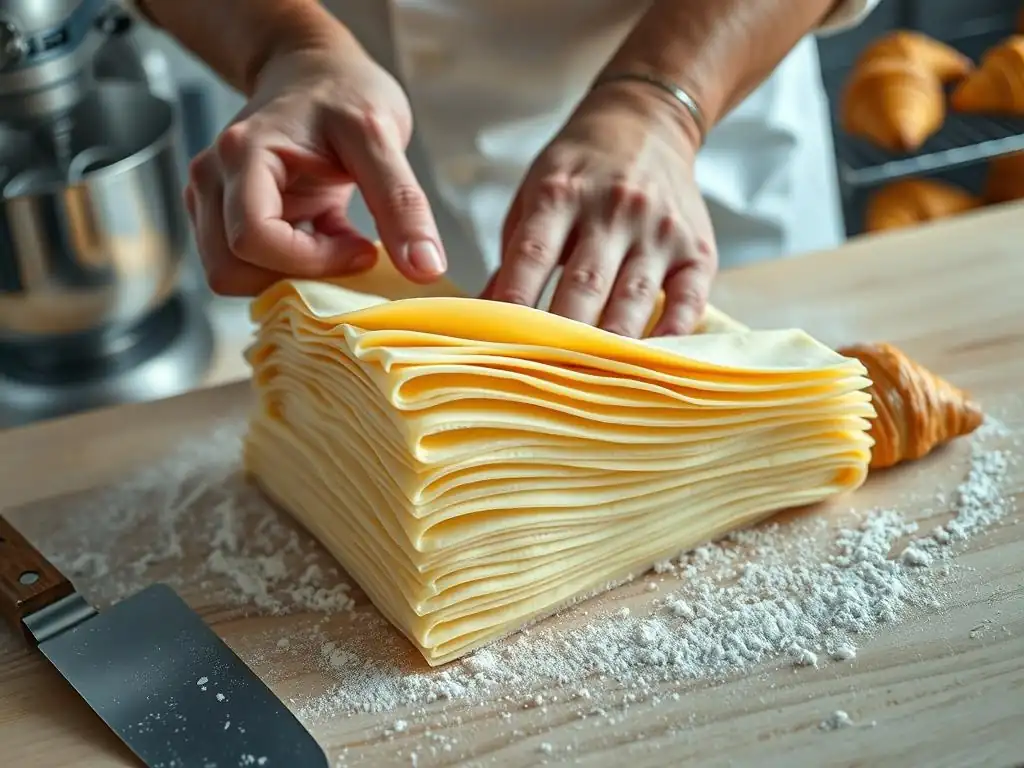
Even with the best butter for viennoiseries lamination, proper technique is essential. Lamination is a delicate dance between dough, butter, temperature, and handling. How you prepare the butter and integrate it into the dough directly impacts the creation of those hundreds of thin, distinct layers that define a perfect croissant or pain au chocolat. Mastering these techniques helps ensure the butter remains a separate, pliable layer throughout the rolling and folding process, rather than melting into the dough or breaking apart.
Consider the butter block: it needs to be firm enough to handle but pliable enough to roll evenly without cracking. The temperature needs to be just right, and it needs to be distributed uniformly within the dough. These steps, while seemingly simple, require precision and attention to detail to maximize the potential of your chosen lamination butter.
Butter Temperature and Its Impact on Lamination
Butter temperature is arguably the most critical factor in successful lamination, second only to the butter's quality itself. The ideal temperature for the butter when it is enclosed in the dough and rolled is typically between 50°F and 60°F (10°C and 15°C). At this temperature range, butter is pliable – it can bend and roll without breaking – but it is still firm enough to remain a distinct layer separate from the dough.
If the butter is too cold (below 50°F/10°C), it will be hard and brittle, causing it to crack and break into pieces when rolled. This leads to uneven butter distribution and areas with no butter layer, resulting in dense spots in the finished pastry. If the butter is too warm (above 60°F/15°C), it becomes too soft and greasy.
It will melt into the dough during rolling and folding, or squeeze out the sides, destroying the layers and leading to a greasy, heavy product with poor rise. Maintaining the correct butter temperature for lamination is crucial for achieving thin, continuous, and uniform butter layers.
How to Properly Prepare Butter for Lamination
Proper preparation of the butter block is key before it even meets the dough. Start with cold butter, straight from the refrigerator. For a standard batch using 1 pound (about 454g) of butter, you'll typically shape it into a flat rectangle, roughly 6x8 inches or 7x9 inches, depending on the dough dimensions.
The goal is to create a block that is about 1/4 to 1/2 inch thick. The best way to achieve this is to place the cold butter between two sheets of parchment paper and gently pound it with a rolling pin or a heavy object (like a block of wood or a heavy pan) to soften it slightly and flatten it.
Once it's somewhat flattened, use the rolling pin to roll it evenly within the parchment paper into the desired rectangular shape. This process not only shapes the butter but also makes it more pliable. If the butter becomes too soft during this process, pop it back in the refrigerator for a few minutes until it reaches the ideal pliable consistency (around 50-60°F). The prepared butter block for lamination should be uniform in thickness, with relatively sharp corners, to ensure even distribution when enclosed in the dough.
Achieving Even Butter Distribution During Lamination
Even distribution of the butter throughout the dough layers is vital for a consistent, flaky texture in the final product. This is achieved through careful rolling and folding during the lamination process. After enclosing the prepared butter block in the dough envelope, the dough is rolled out into a long rectangle. The goal is to roll evenly, applying consistent pressure across the entire surface, to ensure the butter layer spreads uniformly within the dough. Avoid pressing down too hard in one spot, which could squeeze the butter out.
After rolling, the dough is folded (e.g., in thirds or quarters) to create multiple layers. This process is repeated several times (typically 3-4 turns). Between each turn, the dough must be thoroughly chilled in the refrigerator (for 20-40 minutes, depending on the ambient temperature and the dough's warmth) to allow the butter to firm up again. This chilling prevents the butter from melting or becoming too soft for the next roll and fold, ensuring the layers remain distinct. Maintaining the butter layers for lamination requires patience, precision in rolling, and strict temperature control throughout the entire process.
Even experienced bakers can encounter issues during the lamination process, and many of these problems are directly related to the butter or how it's handled. Recognizing the signs of butter-related issues and knowing how to address them is key to salvaging your dough and achieving the best possible outcome. Common problems include butter melting out, dough tearing, and uneven layers, all of which can compromise the structure and texture of your viennoiseries.
Understanding the root cause of these issues, whether it's temperature, technique, or the butter's properties, allows you to take corrective action. Troubleshooting effectively helps prevent wasted ingredients and leads to more consistent success in your laminated baking endeavors, even when using the best butter for viennoiseries lamination.
Butter Melting During Lamination: Causes and Solutions
One of the most frequent and frustrating issues is the butter melting out of the dough during rolling or folding. This typically manifests as soft, greasy spots on the surface of the dough or butter squeezing out the edges. The primary cause is the butter getting too warm, either from ambient temperature, warm hands, or excessive friction from rolling. This indicates the butter has exceeded its ideal working temperature range (above 60°F/15°C).
Solutions:
- Increase chilling time: Ensure the dough and butter are thoroughly chilled (to around 40°F/4°C for the dough, and the butter block pliable but cool, around 50-55°F) before starting each turn. Chill for at least 20-30 minutes between turns, or longer if needed.
- Work in a cool environment: If possible, work in a cool kitchen. If not, open windows or use a fan directed away from your workspace.
- Work quickly and gently: Roll and fold efficiently to minimize handling time and friction. Use smooth, even pressure with the rolling pin.
- Chill your tools: Consider chilling your rolling pin or even your work surface (if it's stone or metal) if your kitchen is warm.
- Use a higher-fat butter: As discussed, higher-fat butters (82%+) tend to be more stable at slightly warmer temperatures than 80% butters.
If the butter has started to melt significantly, the best course of action is often to fold the dough, wrap it tightly, and give it an extended rest in the refrigerator (30-60 minutes) to allow the butter to firm up again before attempting the next turn. This addresses the issue of butter melting during lamination.
Dough tearing or breaking during rolling can sometimes be related to the butter's condition. If the butter block is too cold and hard (below 50°F/10°C), it can become brittle and crack or shatter when rolled. These hard pieces of butter can then tear through the relatively softer dough as it is rolled thinly. Dough can also tear if it's been overworked (excessive gluten development, sometimes exacerbated by high water content in butter) or if it hasn't rested sufficiently between turns, making it too elastic and resistant to rolling.
Solutions:
- Ensure butter is pliable: Make sure the butter block is conditioned to the correct temperature (50-60°F/10-15°C) before enclosing it and before each subsequent roll. It should bend without breaking. If it's too cold, gently pound it with a rolling pin or let it sit at room temperature for a few minutes until pliable.
- Rest the dough: Allow adequate chilling time between turns. This not only firms up the butter but also allows the dough's gluten to relax, making it easier to roll without tearing. A 20-40 minute rest in the refrigerator is usually sufficient.
- Roll gently and evenly: Use smooth, consistent pressure when rolling. If you encounter resistance, stop, let the dough rest for a few minutes, and then continue. Avoid forcing the dough.
- Check dough hydration: If using an 80% fat butter, ensure the dough recipe isn't too wet, which could lead to excessive gluten strength.
Addressing the correct temperature for lamination butter and ensuring the dough is relaxed are key to preventing tears caused by butter-related rigidity or dough resistance.
Uneven Layers: Correcting Butter Distribution Issues
Uneven layers in the final pastry can stem from several issues related to butter distribution. This can happen if the initial butter block was not uniform in thickness, if the butter cracked and broke during rolling (due to being too cold), if the butter melted and squeezed out in certain areas (due to being too warm), or if the rolling pressure was inconsistent. Uneven layers result in some areas being dense and doughy while others might be overly greasy or lacking structure.
Solutions:
- Prepare a uniform butter block: Ensure the initial butter block is rolled to an even thickness with relatively square corners. Use parchment paper and a rolling pin to achieve this precision.
- Maintain correct butter temperature: As discussed, butter that is too cold or too warm will not spread evenly. Keep the butter within the 50-60°F (10-15°C) range for rolling.
- Roll evenly: Apply consistent pressure across the entire surface of the dough as you roll it out. Focus on lengthening the dough evenly, rather than just widening it or pushing from the center outwards.
- Fold precisely: Ensure the dough is folded neatly and squarely during each turn. Misaligned folds can create thicker sections.
- Chill properly between turns: Adequate chilling helps the layers set and prevents butter from migrating or squeezing out unevenly during the next roll.
Achieving uniform layers with lamination butter is a result of careful preparation, precise temperature control, and consistent rolling and folding technique throughout the entire process.
Recipes Using Specific Butters for Lamination
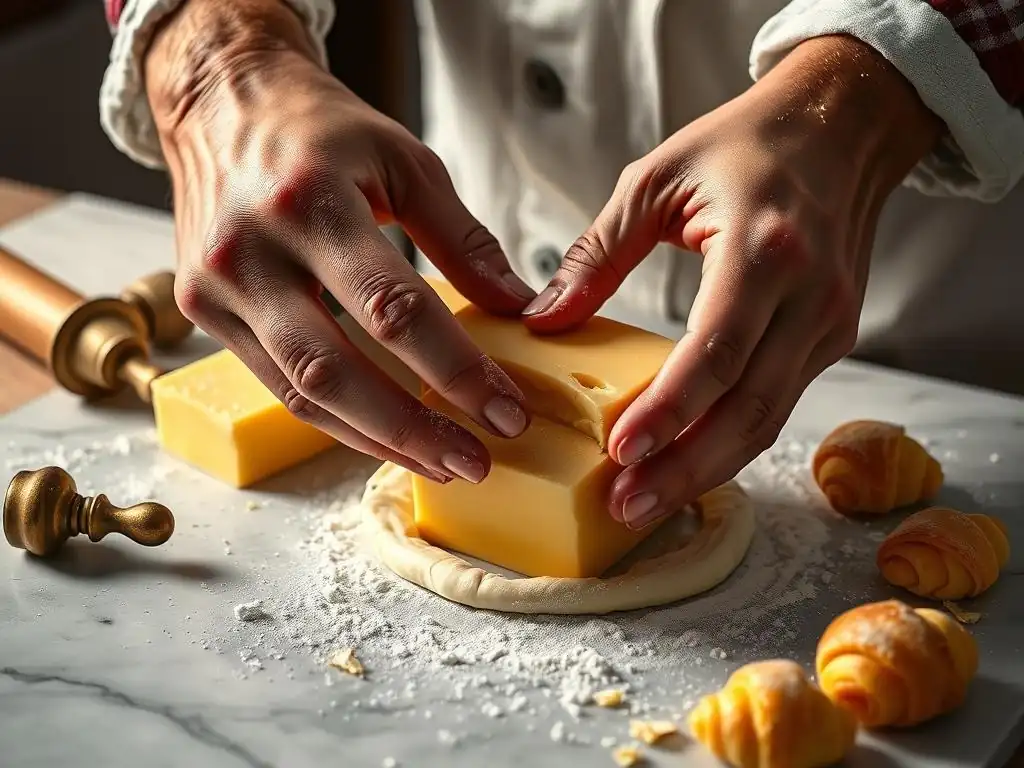
The type of butter you choose can slightly influence how you approach a recipe, particularly when substituting a standard 80% fat butter for a higher-fat European-style one. While the fundamental lamination technique remains the same, minor adjustments or considerations might be helpful to optimize results based on the butter's properties. These examples illustrate how the butter choice plays a role in classic viennoiseries recipes.
It's important to note that while these sections mention recipes, they will not provide full, step-by-step recipe instructions, but rather focus on the impact of butter choice within the context of making these pastries. The goal is to highlight how the best butter for viennoiseries lamination integrates into the process for specific items.
Pain au Chocolat Recipe with European-Style Butter
When making pain au chocolat with European-style butter (82%+ fat), you are leveraging the butter's superior plasticity and lower water content for optimal lamination. The dough recipe itself might be standard, but the process is more forgiving with this type of butter. The butter block, made from the high-fat butter and conditioned to the correct temperature (around 55°F/13°C), will roll out smoothly alongside the dough without cracking or melting easily.
The lower water content means less concern about excessive gluten development during mixing and folding. This allows the dough to be more extensible, making it easier to roll thinly for the necessary turns. The rich flavor of the European butter also significantly contributes to the final taste of the pain au chocolat.
Because this butter is more stable, you might find you need slightly less chilling time between turns compared to using 80% fat butter, although chilling is still essential to relax the dough and firm the butter layers. Using European butter for pain au chocolat lamination sets the stage for a reliably flaky and flavorful pastry.
Croissant Recipe Using American Butter: Tips and Modifications
Using standard American butter (80% fat) for a croissant recipe requires extra attention to temperature control and technique. While the basic recipe ingredients for the dough might be similar, the strategy for handling the butter changes. The butter block needs to be kept very cold (closer to 50-55°F/10-13°C) and worked quickly during rolling to prevent it from softening too much due to its higher water content and potentially lower melting point compared to high-fat butters.
Tips for success include ensuring your dough is well-chilled (around 40°F/4°C) before enclosing the butter and before each turn. You will likely need longer chilling times between turns (at least 30-40 minutes) to re-firm the butter layers. Working in a cool kitchen is highly beneficial.
Some bakers also gently flour their rolling pin and surface to reduce friction. While you might not achieve the exact same level of airy flakiness as with 82%+ butter, focusing on meticulous temperature management and careful, even rolling will maximize the potential of American butter for lamination in your croissant recipe, yielding delicious results nonetheless.
Elevate Your Viennoiseries with the Right Butter Choice
Choosing the best butter for viennoiseries lamination is a fundamental step towards mastering these classic pastries. While technique is undeniably crucial, starting with butter that possesses the ideal characteristics – high fat content, low water content, and excellent plasticity – simplifies the process and significantly increases your chances of achieving that coveted flaky, airy texture and rich flavor. The difference between a standard butter and a high-quality, high-fat butter can be the margin between a good croissant and a truly exceptional one.
Investing in a high-fat European-style butter, or a quality American butter specifically formulated for lamination, is an investment in the success of your baking project. It provides a more forgiving medium to work with, allowing you to focus on honing your rolling and folding techniques without constantly battling melting butter or tearing dough. Ultimately, the right butter choice lays the foundation for pastries that are not just visually appealing but also deliver on the promise of delicate layers and deep, buttery flavor that defines the art of viennoiseries.
Mastering the Art of Lamination: The Key to Perfect Viennoiseries
Mastering the art of lamination is a journey that involves practice, patience, and attention to detail. While the butter for viennoiseries lamination is a critical ingredient, it is the interplay between the butter, the dough, and the baker's technique that creates the magic. Learning to feel the dough and butter as you roll, understanding how temperature impacts their behavior, and executing precise folds consistently are skills developed over time.
Success in lamination isn't just about following a recipe; it's about understanding the science behind the layers and adapting your approach based on your ingredients and environment. By starting with high-quality butter suited for the task, you give yourself the best possible chance to practice and refine your technique. Each batch is a learning opportunity, bringing you closer to creating those perfect, ethereal layers that are the hallmark of expertly made viennoiseries. Continue experimenting, paying close attention to how your lamination butter performs, and enjoy the rewarding process of creating these beautiful pastries.
Frequently Asked Questions
What exactly is lamination in the context of viennoiseries, and why is butter so important?
Lamination involves creating alternating layers of dough and butter, critical for the flaky texture of viennoiseries. The butter, when heated, releases steam that separates the dough layers. The quality of the butter is very important.
Why can't I just use any butter I have on hand for lamination?
While any butter can be used, the fat content is crucial. Butters with higher fat content lead to better lamination because they create more steam, resulting in flakier and more flavorful viennoiseries.
What characteristics should I look for when choosing butter specifically for lamination?
Look for butter with a high butterfat content (ideally 82% or higher), low water content, and a good flavor profile. European-style butters are often preferred for this reason.
What are some common mistakes people make when laminating dough with butter?
Common mistakes include using butter that is too soft or too hard, not keeping the dough cold enough, and overworking the dough. Maintaining the correct temperature is crucial.
Where can I find high-quality butter suitable for viennoiseries lamination?
High-quality butter can often be found at specialty grocery stores, bakeries, or online retailers specializing in baking supplies. Look for European-style butters or those specifically labeled for pastry making.
Final Reflection: The Golden Ratio of Viennoiserie Success
The choice of butter isn't merely a culinary detail; it's the cornerstone of achieving truly exceptional viennoiseries. A seemingly small ingredient holds the key to unlocking flaky, tender layers that define the very essence of croissants, pain au chocolat, and other beloved pastries. The right butter, with its precise fat content and plasticity, directly impacts the final product's texture and overall quality, elevating a simple pastry to a work of art.
The pursuit of the perfect butter for lamination has profoundly shaped the world of baking, driving innovation and a deeper appreciation for the intricate science behind pastry-making. This journey into the heart of butter's role in viennoiseries has underscored the importance of understanding not just the ingredients, but the precise interplay between them. The proof of the pudding is in the eating,
as the saying goes, and the proof of a great viennoiserie is undeniably in the delicate, melt-in-your-mouth layers achieved through careful butter selection and technique.
Now, consider your own baking journey. What have you learned about the importance of selecting the right ingredients? Don't be afraid to experiment, to test different butters and techniques, and to refine your process. The quest for the perfect viennoiserie is an ongoing one, a journey of discovery and refinement that will reward you with the satisfaction of creating truly exceptional pastries. Embrace the challenge, and let the golden ratio of butter and technique guide you to baking success.
Unleash Your Inner Pastry Chef: Master the Art of Lamination
Thanks for joining us on this buttery journey into the world of viennoiseries! We hope you gained valuable insights into choosing the perfect butter for flaky, melt-in-your-mouth results. Ready to put your newfound knowledge into practice?
- Bake a show-stopping croissant: This is your chance to experience the difference the right butter makes. Imagine the layers, the crispness, the pure buttery bliss!
- Share your baking journey: Post a picture of your creation on social media and tag us – we'd love to see your delicious results! Use #BakeWithEaseButterMagic.
- Experiment with different butters: Try out a few varieties to see which butter yields your favorite texture and flavor. You might just discover your new go-to!
What incredible viennoiserie will you create with your newly acquired butter expertise?