
The Best Flour for Laminated Doughs: An Intermediate Guide

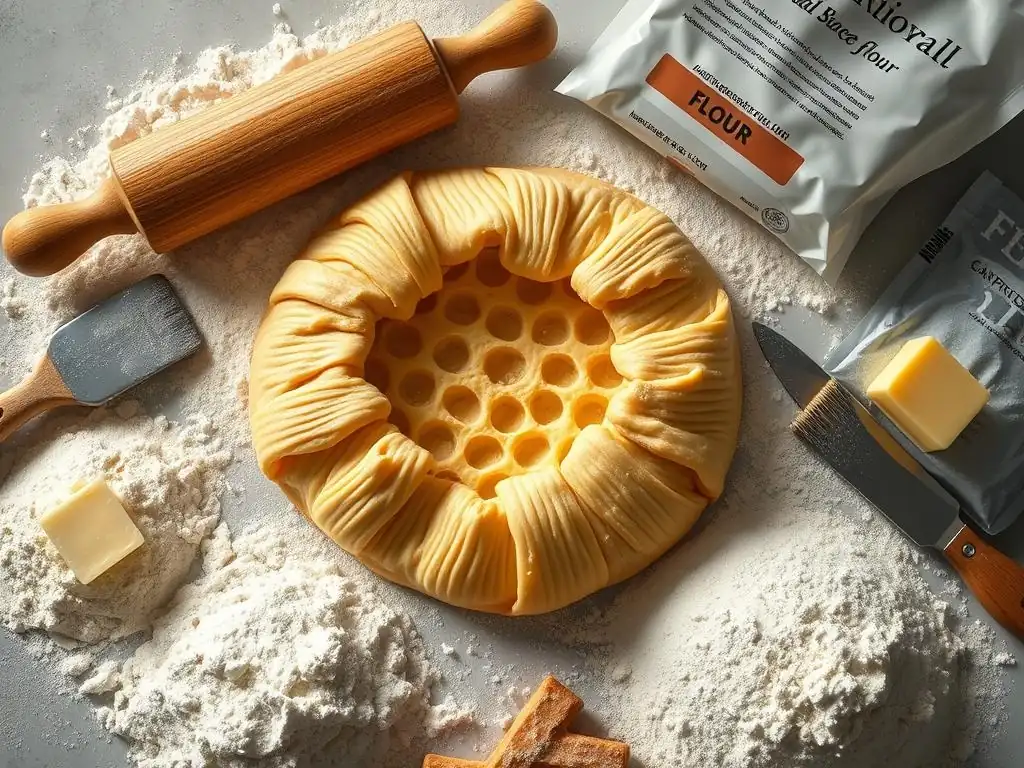
Welcome to BakeWithEase, your trusted guide to baking brilliance! Ever wondered about the secret ingredient to creating those perfectly flaky croissants? This week, we're diving deep into the crucial role of flour for croissant dough, exploring the nuances that separate a good croissant from a truly exceptional one. Get ready to elevate your laminated dough game and discover the best flour choices for achieving that coveted, melt-in-your-mouth texture. Intrigued? Let's get baking!
- Understanding Flour's Role in Laminated Dough
- Choosing the Right Flour for Croissant Dough: A Detailed Comparison
- Deep Dive: Flour Characteristics and Their Impact on Laminated Dough
- Best Practices: Working with Your Chosen Flour for Laminated Dough
- Troubleshooting: Common Issues and Flour-Related Solutions
- Recommended Flour Brands for Laminated Dough
- Advanced Techniques: Blending Flours for Custom Results
- Conclusion: Mastering the Art of Laminated Dough Through Flour Selection
-
Frequently Asked Questions
- What type of flour is generally recommended for croissant dough?
- Why is gluten development so important when making croissant dough?
- Can I use all-purpose flour if I don't have bread flour on hand?
- Does the type of wheat used to make the flour matter for croissant dough?
- How does the protein content of the flour affect the lamination process?
- Final Reflection: Mastering the Art of the Flaky Layer
- Unleash Your Inner Pastry Chef: Master Laminated Doughs!
Understanding Flour's Role in Laminated Dough
Making beautiful, flaky laminated dough like croissants or puff pastry is a true baking achievement, and the type of flour you choose plays a starring role. It's not just an ingredient; it's the structural backbone of your dough, dictating how it handles, how it proofs, and ultimately, how those delicate layers separate and crisp up in the oven. Understanding flour's fundamental properties is the first step towards mastering these complex pastries.
The characteristics of flour, particularly its protein content and how that protein develops into gluten, are paramount in laminated dough production. Unlike a tender cake where minimal gluten is desired, laminated dough relies heavily on a strong, elastic gluten network to withstand the rigorous rolling, folding, and chilling process. Without the right flour, achieving those distinct, airy layers becomes significantly more challenging, often resulting in tough or dense pastries.
What is Laminated Dough and Why Does Flour Matter?
Laminated dough is created by repeatedly folding a layer of butter into a simple dough base, creating alternating layers of dough and fat. When baked, the water in the butter turns to steam, pushing the dough layers apart and creating the characteristic flaky structure. Think of a classic croissant: its light, airy interior and crisp exterior are direct results of successful lamination and the proper development of the dough's structure.
Flour is critical because it provides the protein (glutenin and gliadin) that forms gluten when hydrated and mixed. This gluten network needs to be strong enough to be rolled thin without tearing, yet elastic enough to expand during proofing and baking. The specific type and amount of protein in your flour directly impacts the dough's strength, elasticity, and ability to hold its shape under the pressure of the expanding butter layers during baking. Using the wrong flour can lead to butter leaking, layers fusing, or a lack of rise.
Gluten Development: The Key to Successful Lamination
Gluten development is the process where the proteins in flour, primarily glutenin and gliadin, link together to form an elastic network when combined with liquid and worked (kneaded or mixed). This network traps gas produced by yeast (in croissants) or air (in puff pastry), causing the dough to rise and creating structure. For laminated doughs, this network needs to be robust enough to withstand extensive mechanical handling – the repeated rolling and folding – without breaking down.
Insufficient gluten development results in a weak dough that tears easily during lamination, making it difficult to achieve even layers. Conversely, excessive or improperly managed gluten development can lead to a tough, rubbery texture in the final product. The goal is to develop a strong, extensible gluten network that can stretch thinly and evenly around the butter layers, providing the necessary structure for expansion while remaining tender after baking. The type of flour, mixing technique, and resting periods all play a crucial role in managing this delicate balance.
Protein Content: A Crucial Factor in Flour Selection
The most significant factor when choosing flour for laminated dough, especially flour for croissant dough, is its protein content. Protein levels vary significantly between different types of flour, typically ranging from about 8% in soft pastry flour to 14% or more in hard bread flour. Higher protein content generally means the potential for stronger gluten development.
For laminated doughs like croissants, a flour with a relatively high protein content, typically between 11.5% and 13.5%, is often recommended. This range provides the necessary strength and elasticity to handle the lamination process and support the final structure. Using a flour with too low protein will result in a weak dough that tears and doesn't hold its shape, while an extremely high-protein flour might create a dough that is difficult to roll thin and can lead to a tough texture if not handled correctly.
Choosing the Right Flour for Croissant Dough: A Detailed Comparison
Selecting the optimal flour for croissant dough is paramount for achieving that signature light, flaky texture and rich flavor. While many types of flour exist, only a few are truly suited for the demands of creating perfect croissants. The ideal flour provides the necessary strength to withstand the lamination process while allowing for tender layers.
The choice often comes down to balancing gluten strength with extensibility. A flour that is too strong might be difficult to roll thin, while one that is too weak won't support the layers during baking. Understanding the properties of common flour types will guide your decision and improve your results when working with this classic laminated dough.
The Importance of High-Protein Flour for Croissants
High-protein flour is essential for successful croissant dough because it provides the structural integrity needed to create and maintain dozens of thin layers of dough separated by butter. During the process of rolling and folding (often involving three or four "turns"), the dough is subjected to significant stress. A flour with insufficient protein (say, below 11%) would likely tear, causing butter leaks and preventing proper layer separation.
A protein content typically ranging from 12% to 13.5% is often cited as ideal for flour for croissant dough. This range ensures that the gluten network is strong enough to allow the dough to be rolled very thin – down to a few millimeters thick – without breaking. This strength is critical for trapping the steam released from the butter during baking, which is what pushes the layers apart and creates the airy interior and crispy exterior.
Strong Bread Flour: The Go-To Choice for Croissants
Strong bread flour is widely considered the standard choice for making excellent croissant dough. With a typical protein content ranging from 12% to 14%, it provides the robust gluten structure necessary for the demanding lamination process. This high protein level ensures the dough can be rolled thin repeatedly without tearing, holding its shape through chilling, proofing, and baking.
Using strong bread flour results in a dough that is elastic and resilient. While it requires proper handling to avoid toughness, its inherent strength is an advantage when creating the numerous delicate layers characteristic of croissants. Many professional bakers rely on high-quality bread flour for consistent results, appreciating its ability to develop a strong, extensible gluten network capable of supporting the significant rise and separation of layers during baking.
All-Purpose Flour: When is it Suitable for Laminated Dough?
All-purpose flour, typically having a protein content between 10% and 12%, can sometimes be used for laminated dough, but it comes with limitations, especially for demanding pastries like croissants. Its lower protein level compared to bread flour means it develops a weaker gluten network. This can make the dough more prone to tearing during lamination, particularly if the butter is not perfectly incorporated or if the dough is rolled too thin too quickly.
While some recipes for simpler laminated doughs or those aiming for a slightly more tender crumb might call for all-purpose flour, it is generally not the optimal flour for croissant dough where maximum flakiness and structure are desired. If using all-purpose flour, you may need to handle the dough more gently, perhaps reducing the number of folds or ensuring very precise temperature control to prevent issues. It's often a compromise, offering convenience but potentially sacrificing some of the ideal textural qualities achievable with a higher-protein flour.
Specialty Flours: Exploring Alternatives for Unique Textures
Beyond standard bread and all-purpose flours, several specialty flours can be explored for laminated doughs, each offering unique characteristics that impact texture, flavor, and handling. While not always the primary choice for traditional croissants, they can be used in blends or for specific types of viennoiseries or puff pastry to achieve desired outcomes. Experimentation with these flours can lead to interesting variations in your laminated creations.
These alternative flours often require adjustments to hydration, mixing time, and resting periods due to differences in protein quality, absorption, and particle size. Understanding their specific properties is key to successfully incorporating them into your laminated dough recipes. They offer bakers the opportunity to customize their results beyond the standard, whether seeking extra crispiness, a specific crumb structure, or unique flavor notes.
Using Pastry Flour in Laminated Dough: Benefits and Limitations
Pastry flour, with its low protein content (typically 8-10%) and fine texture, is generally not recommended as the primary flour for demanding laminated doughs like croissants. Its weak gluten-forming potential means the dough will lack the necessary strength and elasticity to withstand repeated rolling and folding without tearing. Attempting to make classic croissants solely with pastry flour would likely result in a fragile dough that leaks butter and fails to develop distinct, airy layers.
However, pastry flour can be useful in specific scenarios or blends. Some bakers might include a small percentage of pastry flour in a blend with strong bread flour to slightly reduce the overall gluten strength, aiming for a more tender crumb while still maintaining sufficient structure. It is more commonly used in puff pastry or laminated Danish doughs where a slightly different texture profile might be desired, or in recipes where the lamination process is less intensive than for traditional croissants. Its primary benefit is tenderness, but this comes at the cost of structural integrity.
Manitoba Flour: A Powerful Option for Extra-Crispy Layers
Manitoba flour, often labeled as "0" or "00" type flour depending on the milling process, is a very strong bread flour originating from Canada (hence the name). It boasts an exceptionally high protein content, often ranging from 14% to 15% or even higher. This makes it one of the strongest flours available, capable of developing a highly elastic and resilient gluten network.
For laminated doughs, especially flour for croissant dough, Manitoba flour can be a powerful tool. Its high protein content allows for aggressive rolling and folding without the dough tearing, and it provides excellent structure to support significant oven spring. This can lead to exceptionally light, airy, and crispy layers. However, its strength also means it can be more challenging to work with, potentially requiring longer resting times to relax the gluten and careful handling to avoid toughness. It's often favored by professional bakers seeking maximum structure and crispness.
Deep Dive: Flour Characteristics and Their Impact on Laminated Dough
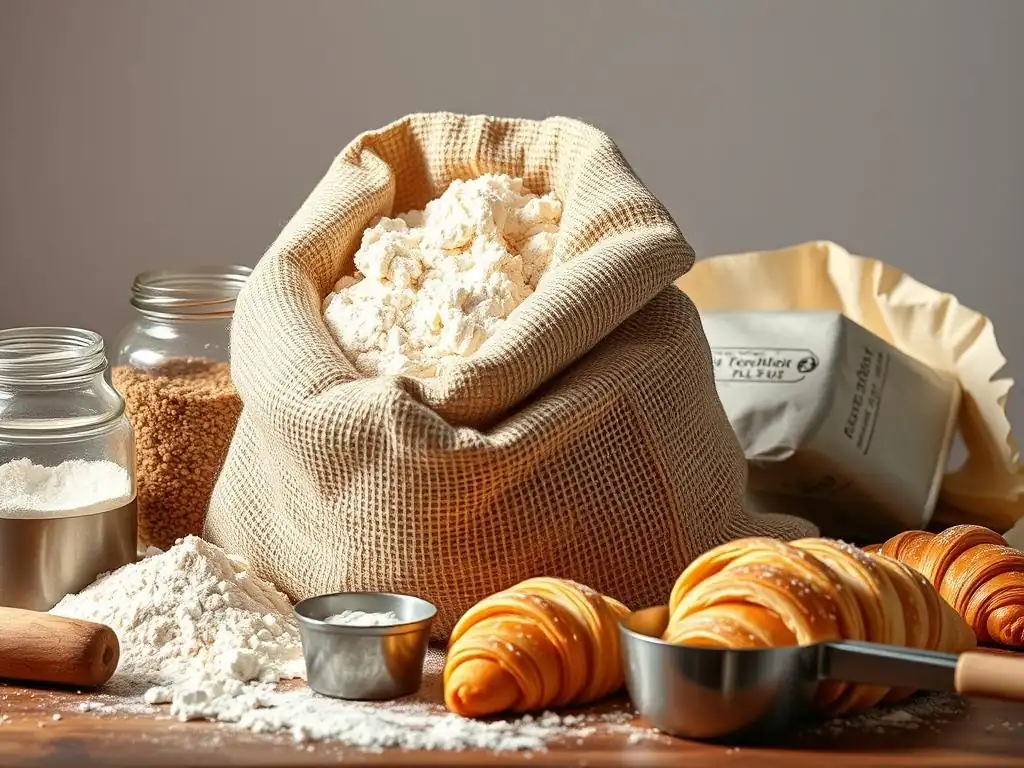
Beyond protein content, several other characteristics of flour significantly influence its performance in laminated doughs. Understanding these properties helps bakers anticipate how a specific flour will behave and make necessary adjustments to their process. These factors interact with each other and with the other ingredients, particularly water and butter, to determine the final texture and appearance of your baked goods.
Considering these characteristics goes beyond simply picking a high-protein flour; it involves understanding the nuances that differentiate flours even within the same protein range. Factors like how much water a flour absorbs, the quality of its gluten, and even minor components like ash content all play a role in the complex chemistry and physics of creating flaky layers.
Water Absorption: How Different Flours Affect Dough Hydration
Water absorption refers to how much water a given weight of flour can absorb and hold to form a dough of a specific consistency. This property varies significantly between flours and is influenced by protein content, starch damage during milling, and other factors. High-protein flours, like those suitable as flour for croissant dough, generally have higher water absorption rates than lower-protein flours.
A flour's absorption rate dictates the amount of water needed in the recipe to achieve the desired dough consistency. Using too little water for a high-absorption flour will result in a stiff, difficult-to-work dough, while too much water with a low-absorption flour will yield a sticky, unmanageable dough. Proper hydration is crucial for gluten development and for creating a dough with the right balance of strength and extensibility for lamination. Experienced bakers often adjust water based on the specific flour they are using, sometimes holding back a small amount of liquid initially and adding it only if needed.
Gluten Strength: Achieving the Perfect Balance
Gluten strength refers to the combination of elasticity (the ability to stretch without breaking) and extensibility (the ability to be stretched thinly). While high protein content provides the potential for strong gluten, the quality of that protein and how it's developed through mixing determines the actual gluten strength. For laminated dough, achieving the perfect balance is key.
Too much gluten strength (e.g., from over-mixing a very high-protein flour) can result in a dough that is tough and resistant to rolling, causing layers to be uneven or thick. Too little strength (e.g., from using a low-protein flour or under-mixing) leads to a weak dough that tears easily, preventing proper layer formation and expansion. The ideal flour for croissant dough allows for the development of a strong yet extensible gluten network that can be rolled out repeatedly into thin sheets without tearing, ensuring beautiful, separated layers in the final bake.
Ash Content: Understanding its Influence on Flavor and Color
Ash content in flour refers to the mineral content left after a flour sample is incinerated. It is primarily located in the bran and germ of the wheat kernel. White flours, which have most of the bran and germ removed, have lower ash content (typically below 0.6%), while whole wheat flours have significantly higher ash content (often 1.5% or more). The ash content is sometimes used as an indicator of how "white" or "whole" a flour is.
For laminated doughs, particularly delicate pastries like croissants, lower ash content is generally preferred. Flours with higher ash content tend to absorb more water and can make the dough slightly stickier. More importantly, the minerals and residual bran particles can interfere with gluten development and the formation of very fine, delicate layers. High ash content also imparts a slightly darker color and a more pronounced, sometimes bitter, flavor compared to low-ash white flours, which might not be desired in classic croissants.
Best Practices: Working with Your Chosen Flour for Laminated Dough
Choosing the right flour for croissant dough is only the first step; how you handle that flour throughout the dough-making process is equally critical for success. Proper storage, effective mixing techniques, and sufficient resting periods are essential to developing the gluten network optimally and ensuring the dough performs correctly during lamination. These best practices help unlock the full potential of your chosen flour.
Ignoring these steps, even with the best flour, can lead to suboptimal results – a dough that is difficult to work with, layers that don't separate properly, or a final product that lacks the desired texture. Mastering these techniques allows you to control gluten development and dough consistency, setting you up for success before you even begin the lamination process.
Flour Storage: Keeping Your Flour Fresh for Optimal Results
Proper flour storage is crucial for maintaining its quality and performance, especially when using flour for delicate laminated doughs. Flour can absorb moisture and odors from its environment, and its proteins can degrade over time, affecting gluten development. Storing flour incorrectly can lead to inconsistent results, a lack of rise, or off-flavors in your baked goods.
Always store flour in a cool, dry, and dark place, away from direct sunlight and heat. An airtight container is ideal to protect it from moisture, pests, and odors. While white flours have a longer shelf life (typically 6-12 months), whole wheat or high-extraction flours with higher ash content are more perishable due to the presence of oils in the germ and should ideally be used within a few months or stored in the refrigerator or freezer for longer periods. Using fresh, properly stored flour ensures its protein is intact and ready to form a strong, elastic gluten network.
Mixing Techniques: How to Develop Gluten Effectively
The mixing technique used for laminated dough is designed to develop the gluten network without overworking it. Unlike a rustic bread dough that might benefit from extensive kneading, the initial mixing for laminated dough is often focused on just bringing the ingredients together to form a cohesive mass, followed by resting periods to allow gluten development to occur more gently through hydration (autolyse).
Many recipes start with a relatively short mixing time, just enough to combine the flour and liquid and begin gluten formation. This is often followed by one or more resting periods (autolyse or bulk fermentation) where the dough sits, allowing the water to fully hydrate the flour proteins and the gluten network to develop naturally without mechanical stress. This approach helps create a dough that is strong yet extensible, less prone to tearing during the subsequent rolling and folding steps.
Resting and Proofing: Allowing Gluten to Relax and Strengthen
Resting and proofing are indispensable steps in the laminated dough process, serving distinct but equally important functions related to gluten. Resting periods, typically done in the refrigerator between folds and after mixing, allow the gluten network to relax. Rolling and folding create tension in the dough; resting alleviates this tension, making the dough pliable and easy to roll thin in the next step without snapping back or tearing.
Proofing, usually the final rise before baking, involves allowing the yeast (in croissants and other viennoiseries) to produce gas, causing the dough to expand. During this warm, humid phase, the gluten network stretches and strengthens, forming the delicate structure that will support the final bake. Proper proofing is crucial for achieving a light, airy interior. Under-proofed dough won't rise sufficiently, while over-proofed dough can collapse in the oven. Both resting and proofing are periods where the gluten structure matures and prepares the dough for its transformation in the oven.
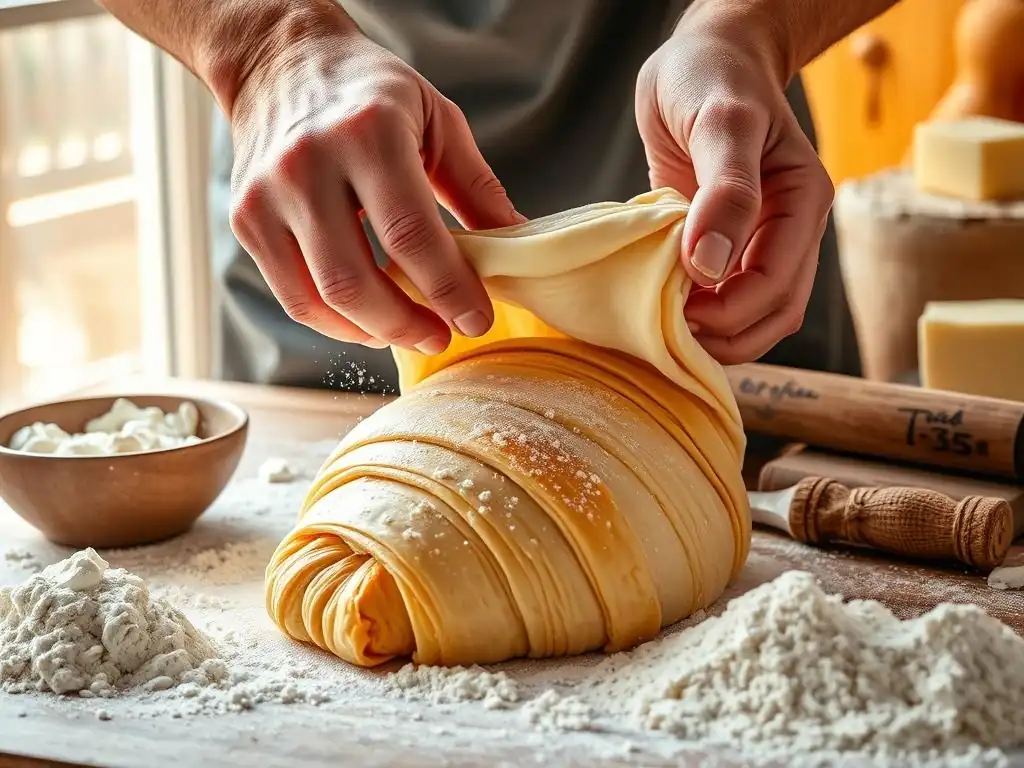
Even with the right flour for croissant dough and careful technique, issues can arise when working with laminated dough. Many common problems, such as tough dough, weak layers, or stickiness, can often be traced back, at least in part, to the flour itself or how it was handled. Understanding these potential issues and their flour-related causes can help you diagnose problems and improve your results.
Troubleshooting involves observing the dough's behavior at each stage – mixing, resting, rolling, and proofing – and identifying deviations from the desired consistency or handling properties. By isolating the potential role of the flour or the way it was treated, you can make informed adjustments to your process or ingredient choices for future batches, leading to more consistent success with laminated doughs.
Tough Dough: Is Your Flour to Blame?
If your laminated dough feels tough, rubbery, and resistant to rolling, the flour or its handling is often the culprit. A primary cause is over-developing the gluten network, making it too tight and inextensible. This can happen if you use a flour with excessively high protein (like a very strong bread flour or Manitoba flour) and mix it too aggressively or for too long initially.
Alternatively, insufficient resting periods between folds can prevent the gluten from relaxing, leading to accumulated tension and a tough dough that snaps back when rolled. While the flour type sets the potential for gluten strength, managing that potential through gentle mixing and adequate rest is key. If consistently getting tough dough with a strong flour, consider reducing mixing time, increasing rest periods, or slightly blending with a lower-protein flour in future attempts.
Weak Gluten: Identifying the Cause and Finding a Fix
Weak gluten manifests as a dough that tears easily during rolling, lacks elasticity, struggles to hold its shape during proofing, and results in baked goods with poor structure and minimal layer separation. This issue is most often caused by using a flour with insufficient protein content – for example, attempting to make croissants primarily with all-purpose or pastry flour when a stronger flour is needed.
Other causes of weak gluten can include using old or improperly stored flour where proteins have degraded, or insufficient mixing to develop the gluten network initially. If your dough is consistently weak, verify that you are using a strong bread flour (protein 12-13.5%) or a suitable high-protein alternative like Manitoba. Ensure your flour is fresh and stored correctly. Also, review your mixing process to confirm you are developing the gluten sufficiently before the first rest period.
Dough Too Sticky: Adjusting Hydration and Mixing Time
A dough that is excessively sticky can be frustrating to work with, making rolling and folding difficult and potentially leading to butter incorporation issues. While humidity and butter temperature can play a role, flour characteristics are often a key factor. Some flours, particularly those with higher ash content or certain types of starch damage, can be more hygroscopic (absorb more water) or release moisture more readily.
The most common flour-related cause of sticky dough is incorrect hydration for the specific flour used. If the recipe calls for a certain amount of water but your flour absorbs less than average, the dough will be too wet. Conversely, if your flour absorbs more, the dough might feel dry initially but become sticky later as hydration equalizes. Adjusting hydration based on your specific flour's behavior is crucial. Sometimes, slightly increasing mixing time can also help the flour absorb more water and reduce stickiness, but be cautious not to overwork the gluten.
Layers Not Separating Properly: Fat Content and Temperature Control
While flour type significantly impacts the potential for layer separation by providing structure, the actual separation during baking relies heavily on the butter layers. If your baked laminated dough lacks distinct, airy layers and appears dense or fused, issues with butter quality, quantity, or temperature control during lamination are primary suspects. The butter must remain solid and distinct between the dough layers until it melts in the oven, creating steam.
If the butter melts or becomes too soft during rolling and folding (due to warm dough or ambient temperature), it can get absorbed into the dough rather than remaining in distinct layers. This prevents steam from forming effectively between layers during baking. Ensure your butter block is the correct consistency (flexible but not soft), and keep the dough well-chilled between folds. While flour provides the framework, the butter's behavior is paramount for successful layer separation.
Recommended Flour Brands for Laminated Dough
Choosing a reputable brand known for quality and consistency can make a significant difference when working with sensitive doughs like croissants. While many excellent flours are available, some brands are widely recognized and trusted by bakers for their performance in laminated doughs. These brands often provide flours with reliable protein content and consistent milling quality, which are crucial for predictable results.
Exploring flours from established producers allows you to work with products that have a track record of performing well under the specific demands of lamination. While availability varies by region, these examples represent types of flour that are well-suited for creating flaky, airy laminated pastries and are often recommended as excellent flour for croissant dough.
King Arthur Baking Company: Bread Flour
King Arthur Baking Company's Bread Flour is a popular and reliable choice for laminated doughs, including croissants. It typically has a protein content around 12.7%, which falls squarely within the recommended range for strong, extensible gluten development necessary for handling the rigorous rolling and folding process. This flour is known for its consistency and ability to produce well-structured doughs.
Bakers often find that King Arthur Bread Flour provides a good balance of strength and elasticity, making the dough manageable to roll thin without excessive snap-back. It allows for the formation of a strong gluten network that supports significant rise and layer separation during baking, contributing to a light and flaky final texture. Its widespread availability and consistent quality make it a go-to flour for many intermediate and advanced bakers tackling laminated doughs.
Bob's Red Mill: All-Purpose Flour
While All-Purpose flour is not the absolute ideal for classic croissants seeking maximum flakiness (as discussed earlier), Bob's Red Mill's Unbleached All-Purpose White Flour is a high-quality option if you are experimenting or aiming for a slightly more tender result in less demanding laminated doughs. Its protein content typically ranges from 10-11%, higher than some other AP flours, offering a bit more structure potential.
If using Bob's Red Mill AP flour for laminated dough, be aware that the dough may be slightly more delicate and require more gentle handling during lamination compared to using a dedicated bread flour. It might be better suited for recipes that call specifically for AP flour or for bakers who prefer a slightly less chewy crumb. For optimal flour for croissant dough, their higher-protein bread flour would be a more standard recommendation, but their AP is a quality product within its category.
Caputo: Manitoba Oro Flour
Caputo, an Italian mill renowned for its high-quality flours, offers Manitoba Oro, a strong bread flour specifically known for its very high protein content (often 14% or higher) and excellent gluten quality. This flour is a favorite among professional bakers for viennoiseries and other applications requiring significant dough strength and extensibility, making it an excellent flour for croissant dough, particularly for achieving maximum crispness and structure.
Manitoba Oro's strength allows the dough to withstand intensive lamination and provides exceptional oven spring, resulting in very airy and well-separated layers. While it requires careful handling and sufficient resting periods due to its high gluten potential, it is capable of producing outstanding results in experienced hands. Its ability to absorb relatively high amounts of water while maintaining structure also contributes to a manageable dough during the lamination process.
Advanced Techniques: Blending Flours for Custom Results
Once you are comfortable working with a single type of flour for laminated dough, you can explore the advanced technique of blending different flours. Flour blending allows you to fine-tune the protein content and other characteristics of your flour mix, creating custom results that might not be achievable with a single flour type. This approach opens up a world of possibilities for altering texture, flavor, and handling properties.
Blending requires an understanding of how different flours interact and how their combined properties will affect the dough. It's an iterative process involving experimentation and careful observation. By strategically combining flours, you can tailor your dough to specific recipes, desired outcomes, or even compensate for variations in a single flour type, elevating your laminated dough game.
Experimenting with Flour Combinations for Unique Textures
Blending flours allows you to manipulate the balance of strength and tenderness in your laminated dough. For instance, combining a strong bread flour (like King Arthur Bread Flour or Caputo Manitoba Oro) with a weaker flour (like pastry flour or a lower-protein all-purpose flour) can yield a dough that is strong enough for lamination but produces a more tender crumb than using the strong flour alone. A common starting point might be a blend of 80% bread flour and 20% pastry flour, but the ideal ratio depends on the specific flours and the desired outcome.
Beyond protein, blending can also affect water absorption, extensibility, and even flavor. Combining flours with different absorption rates requires careful hydration adjustments. Blending a strong, elastic flour with a more extensible one can create a dough that is easier to roll thin without tearing. This experimentation allows you to move beyond standard recipes and develop your signature laminated pastries with unique textural profiles.
Combining Bread Flour with Whole Wheat Flour
While classic laminated doughs typically use white flour for maximum flakiness and light color, blending a small percentage of whole wheat flour with bread flour can add nutritional value, flavor complexity, and a slightly different texture. Whole wheat flour has higher protein content than white flour, but the presence of bran and germ can interfere with gluten development and potentially tear the delicate gluten network during lamination.
A typical blend might involve substituting only 10-20% of the white bread flour with whole wheat flour. This small percentage adds noticeable flavor and color without significantly compromising the dough's structure or ease of lamination. The resulting laminated dough will likely be slightly less airy and have a denser crumb compared to pure white flour versions, but it offers a more rustic character and nutty undertones that can be particularly appealing in certain contexts, like savory pastries or specific types of viennoiseries.
Adding Rye Flour for Flavor Complexity
Adding a small percentage of rye flour to a bread flour base is another way to introduce unique flavor complexity to laminated dough. Rye flour contains less gluten-forming protein than wheat flour, and its pentosans (gummy polysaccharides) can interfere with wheat gluten development and absorb a lot of water. Therefore, rye is typically used in very limited quantities in laminated doughs to avoid making the dough sticky, difficult to handle, or too dense.
A common starting point for a blend might be substituting just 5-10% of the bread flour with medium or dark rye flour. This amount is often sufficient to impart a noticeable tangy or earthy flavor characteristic of rye without significantly compromising the delicate layering required for croissants or puff pastry. The resulting laminated dough will have a slightly different handling property and a unique flavor profile that pairs well with certain fillings or toppings, offering a sophisticated twist on traditional recipes.
Conclusion: Mastering the Art of Laminated Dough Through Flour Selection
Mastering laminated dough is a rewarding journey, and selecting the right flour for croissant dough and other flaky pastries is a fundamental step. We've explored how flour's protein content, gluten development potential, water absorption, and even ash content all play critical roles in determining the success of your lamination efforts. Understanding these characteristics allows you to make informed choices and troubleshoot common issues.
From the reliable strength of bread flour and the power of Manitoba Oro to the careful consideration needed for all-purpose or specialty flours, the flour you choose sets the stage for your dough's performance. Coupled with best practices in mixing, resting, and temperature control, selecting the appropriate flour empowers you to create beautiful, airy, and delicious laminated pastries. As you gain experience, consider experimenting with flour blends to fine-tune textures and flavors, further elevating your baking skills. Happy baking!
Frequently Asked Questions
What type of flour is generally recommended for croissant dough?
The best flour is usually a strong bread flour with a high protein content (around 12-14%). This helps develop the gluten structure necessary for the layers.
Why is gluten development so important when making croissant dough?
Gluten provides the elasticity and strength needed to trap the steam and butter during baking. Without sufficient gluten, the dough will not rise properly and will result in a dense, flat croissant.
Can I use all-purpose flour if I don't have bread flour on hand?
While possible, it's not ideal. All-purpose flour has a lower protein content. If you use all-purpose, consider adding vital wheat gluten to increase the protein level and improve the final texture.
Does the type of wheat used to make the flour matter for croissant dough?
Yes, the type of wheat can influence the flavor and texture. Hard wheat varieties are generally preferred for their higher gluten-forming potential.
How does the protein content of the flour affect the lamination process?
A higher protein content allows for a stronger dough that can withstand the repeated rolling and folding during lamination. This creates the distinct layers of butter and dough that define a croissant.
Final Reflection: Mastering the Art of the Flaky Layer
The pursuit of the perfect croissant, with its ethereal layers and buttery richness, hinges on a single, often overlooked ingredient: flour. Choosing the right flour isn't just about achieving the desired texture; it's about unlocking the full potential of this iconic pastry, a testament to the power of precision in baking. The seemingly simple act of selecting flour becomes a crucial step in transforming humble dough into a masterpiece.
This exploration into the world of flours for laminated doughs has underscored the profound impact seemingly minor details can have on the final product. The subtle differences in protein content, starch structure, and even the milling process dramatically alter the dough's behavior, influencing everything from gluten development to the final flakiness. As I delved deeper into the research and experimentation, I was reminded of the words of renowned pastry chef, Dominique Ansel: Baking is a science, but it's also an art. It's about understanding the ingredients and trusting your instincts.
This journey reinforced the importance of both scientific understanding and intuitive feel in the baking process.
Now, it's your turn to embark on your own flour-based adventure. Don't be afraid to experiment, to try different types of flour, and to observe the subtle nuances in your dough's response. Each batch is a learning opportunity, a chance to refine your technique and deepen your understanding of this fundamental ingredient. The path to croissant perfection is paved with flour – choose wisely, and the rewards will be undeniably delicious.
Unleash Your Inner Pastry Chef: Master Laminated Doughs!
Thanks for taking the time to explore the world of laminated doughs! We hope you gained valuable insights into choosing the perfect flour for those flaky, buttery masterpieces. Now it's time to put your knowledge to the test!
- Bake your dream pastries: Try a recipe using the flour you've learned is best suited for your needs. Challenge yourself – the results will be delicious!
- Share your creations: Post a picture of your baked goods on social media and tag us—we'd love to see what you create! Use #BakeWithEaseLaminated.
- Explore new techniques: Dive deeper into the science of baking by researching different types of laminated doughs – croissants, pain au chocolat, and more!
What unique twist will you add to your next laminated dough creation?