
Using a Bench Scraper for Smooth Sides

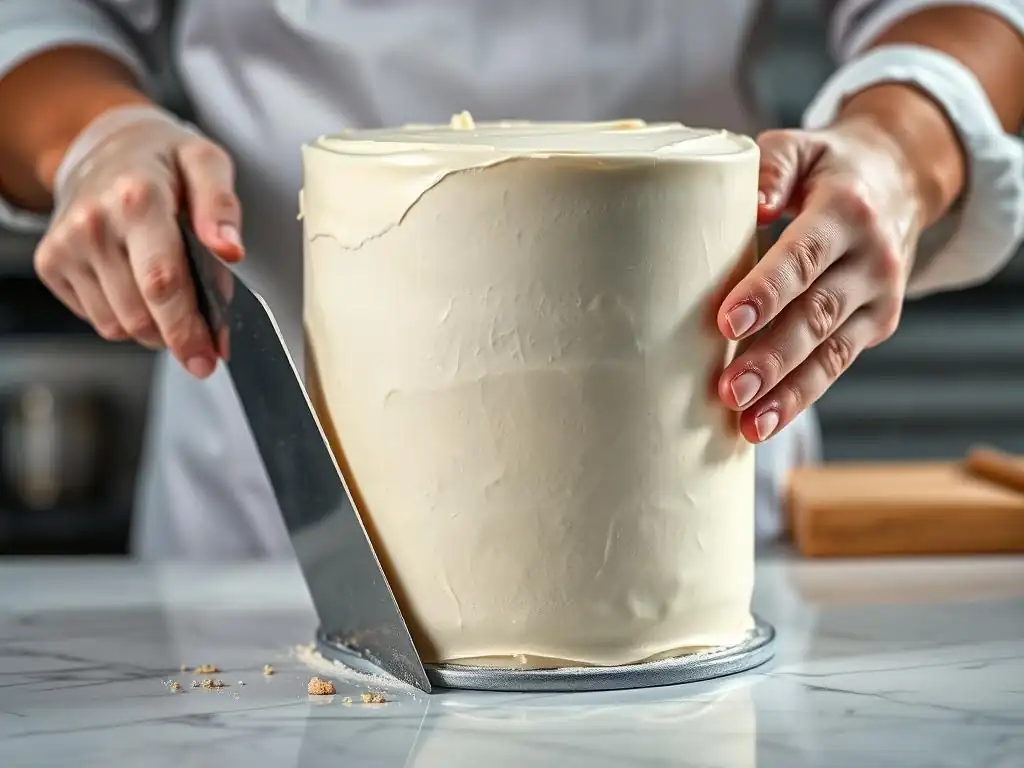
Welcome to BakeWithEase, your companion in the delightful world of baking! Have you ever dreamt of achieving perfectly smooth, professional-looking frosting on your cakes? It's easier than you think! This article dives deep into one essential tool that can transform your baking game: the bench scraper. Discover how to leverage this simple yet powerful tool to achieve flawlessly smooth frosting sides. But, is it really that simple? Read on and find out!
- Achieving Professional Cake Finishes: A Guide to Using Bench Scrapers
- Introduction: Mastering Smooth Cake Sides
- Understanding Bench Scrapers: Types and Selection
- Step-by-Step Guide: Creating Smooth Frosting with a Bench Scraper
- Troubleshooting Common Issues
- Advanced Techniques: Beyond Basic Smoothing
- Cleaning and Maintenance
- Practice and Refinement
- Conclusion: Elevate Your Cake Decorating Skills
-
Frequently Asked Questions
- How can a bench scraper help me achieve smooth frosting sides?
- What size and material of bench scraper is best for smoothing frosting?
- Besides smoothing frosting, what other baking tasks can a bench scraper be used for?
- How do I properly clean my bench scraper after using it with frosting?
- What is the best technique for holding and using a bench scraper to smooth frosting?
- Final Reflection: The Unsung Hero of Flawless Frosting
- Unlock Perfectly Smooth Cake Sides: Your Next Baking Adventure Awaits!
Achieving Professional Cake Finishes: A Guide to Using Bench Scrapers
Introduction: Mastering Smooth Cake Sides
Achieving perfectly smooth cake sides is often the hallmark of a professional-looking cake. While it might seem daunting at first, mastering this technique is well within reach for bakers of all levels. It transforms a simple frosted cake into a canvas ready for intricate decoration or a stunning minimalist statement. The right tools and a bit of practice are key to unlocking this skill.
This guide will walk you through the essential role of a bench scraper in creating those coveted smooth frosting sides. We'll cover everything from choosing the right tool to the step-by-step process of achieving a flawless finish. By the end, you'll feel confident using a bench scraper to elevate your cake decorating and impress everyone with your beautifully finished creations.
Why Smooth Sides Matter in Cake Decorating
Smooth cake sides provide a clean, professional appearance that significantly enhances the overall aesthetic appeal of your baked goods. A cake with a perfectly smooth finish looks polished and deliberate, setting it apart from one with uneven or messy frosting. This smooth surface is also crucial as a base for many advanced decorating techniques, such as applying ganache drips, stenciling patterns, or creating sharp, crisp edges.
Beyond aesthetics, smooth sides reflect precision and attention to detail in the baking process. While subjective, many perceive a cake with perfectly smooth frosting sides as being of higher quality, suggesting care was taken at every step. For those selling cakes, achieving a consistent, smooth finish is vital for maintaining a professional brand image and meeting client expectations, often directly impacting repeat business and recommendations.
Key Benefits of Using a Bench Scraper
Using a bench scraper offers numerous advantages over trying to smooth frosting with just an offset spatula. Primarily, it provides a consistent, flat surface that efficiently removes excess frosting and fills in gaps simultaneously. This leads to significantly smoother and more even sides with less effort and in less time than manual spatula work alone, drastically improving the quality of your bench scraper smooth frosting sides.
Furthermore, a bench scraper helps achieve straight sides and sharp corners, which are difficult to replicate consistently with a flexible spatula. It allows you to work quickly and efficiently around the cake, scraping away imperfections in sweeping motions. This not only saves time but also often results in using less frosting overall, as you're not constantly adding and removing layers trying to smooth small sections. It's truly an indispensable tool for achieving a professional finish.
Understanding Bench Scrapers: Types and Selection
Before you can master achieving bench scraper smooth frosting sides, you need to understand the tool itself. Bench scrapers, also sometimes called dough scrapers or cake scrapers, come in various forms, each with slightly different applications, but the basic principle of a flat, rigid edge remains the same. Choosing the right one for your specific cake decorating needs is the first step towards success.
While bench scrapers have multiple uses in baking, such as dividing dough or cleaning work surfaces, their design makes them exceptionally effective for smoothing frosting. The key is the straight, unyielding edge which allows you to level the frosting surface against the side of the cake as you rotate it. Understanding the differences in materials and sizes will help you make an informed choice that best suits the types of cakes you typically decorate.
Types of Bench Scrapers: Metal vs. Plastic
Bench scrapers are most commonly made from metal or plastic. Metal scrapers, typically stainless steel, are durable and offer a sharp, clean edge that is excellent for scraping and smoothing. They maintain their rigidity well, which is beneficial for achieving straight sides and sharp angles, and they can be slightly warmed to help smooth stubborn frosting or remove small air bubbles.
Plastic bench scrapers, on the other hand, are often more flexible than their metal counterparts. This flexibility can be advantageous for certain tasks or personal preference, and they are generally lighter and less expensive. However, they may not provide the same level of rigidity needed for perfectly straight sides on very tall cakes compared to a sturdy metal scraper, and their edges can sometimes wear down over time.
Choosing the Right Size and Shape for Your Needs
Bench scrapers come in a variety of sizes, with heights typically ranging from 4 inches up to 10 inches or more. For smoothing cake sides, you'll want a scraper that is at least as tall as the cake you are frosting, preferably an inch or two taller. This allows you to scrape the entire height of the cake in one smooth motion, which is crucial for achieving consistent bench scraper smooth frosting sides. For instance, if you are frequently decorating tiered cakes where individual layers might be 6 inches tall, a 7 or 8-inch tall scraper would be ideal.
The shape is usually a simple rectangle or trapezoid with one straight edge. Some scrapers have a handle on the opposite edge, while others are just a flat piece of material. The key feature is the perfectly straight working edge. Consider the types of cakes you bake; if you often make very tall cakes (e.g., 8-10 inches), invest in a taller scraper. If you primarily work with standard height cakes (around 4-6 inches), a shorter scraper will suffice and might be easier to handle.
Step-by-Step Guide: Creating Smooth Frosting with a Bench Scraper
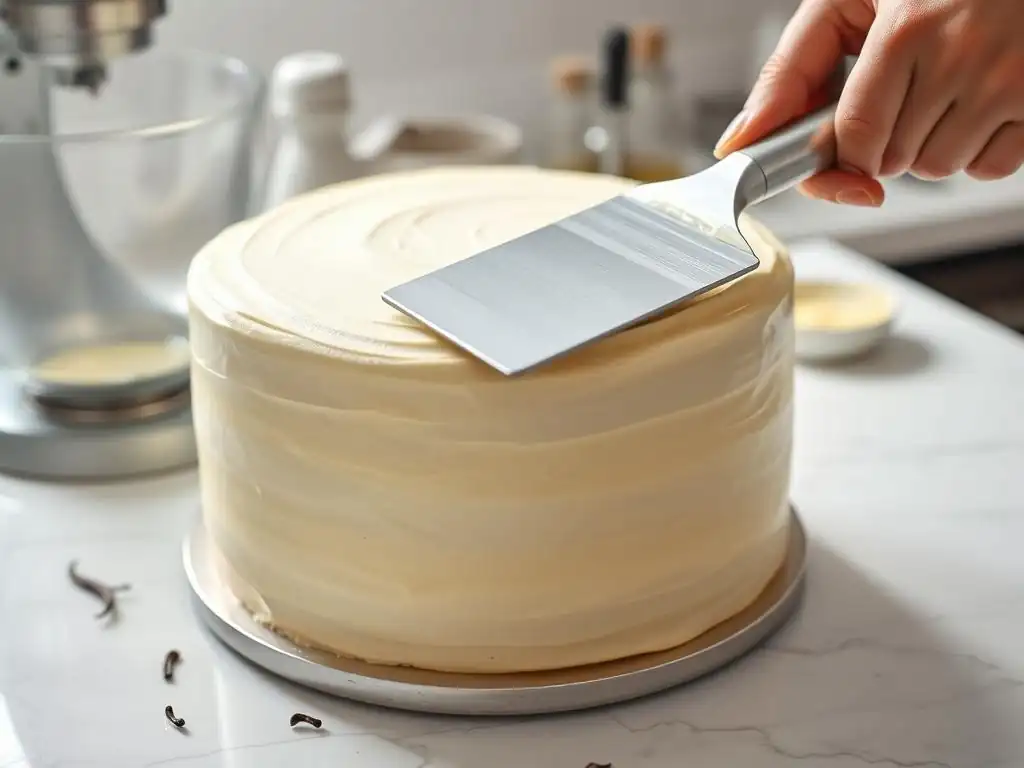
Achieving beautifully bench scraper smooth frosting sides is a technique that requires practice, but the fundamental steps are straightforward. Once your cake is baked, cooled, and ready, you'll follow a process of layering frosting and using the scraper to refine the surface. Patience and attention to detail at each stage will yield the best results.
This section breaks down the process into manageable steps, from preparing your cake to the actual scraping technique. By understanding the purpose of each stage and executing the steps carefully, you'll be well on your way to mastering smooth frosting and creating professional-looking cakes. Remember that consistent technique is key.
Preparing Your Cake: Leveling and Chilling
Before you apply any frosting, ensure your cake layers are completely cooled and level. Using a cake leveler or a serrated knife, carefully trim any domes from the top of your cake layers so they sit flat. Uneven layers will make it much harder to achieve straight, smooth sides later on. Once leveled and stacked (with filling in between), it's highly recommended to chill the cake.
Chilling the stacked cake in the refrigerator for at least 20-30 minutes, or even freezing it for 15 minutes, firms up the cake layers and the filling. This makes the cake more stable and less prone to shifting or tearing when you apply and smooth the frosting. A firm, cold cake provides a solid foundation for achieving perfectly bench scraper smooth frosting sides without the cake crumbling or leaning.
Applying the Crumb Coat: Sealing in Crumbs
The crumb coat is a thin layer of frosting applied to the entire cake – top and sides. Its primary purpose is to trap any loose crumbs from the cake layers, preventing them from getting into your final, visible layer of frosting. Apply a relatively thin, even layer using an offset spatula, covering the cake completely but not worrying about perfection at this stage.
Once the crumb coat is applied, chill the cake again. This second chilling step, typically for 30-60 minutes in the refrigerator until the crumb coat is firm to the touch, is crucial. A firm crumb coat creates a stable, smooth base that you will apply your final layer of frosting over. Trying to achieve bench scraper smooth frosting sides without a firm crumb coat will result in crumbs dragging through your final layer.
The Bench Scraper Technique: Achieving a Flawless Finish
With your crumb-coated cake chilled and firm, apply a generous, even layer of your final frosting to the top and sides. Don't be shy with the frosting; it's easier to smooth when you have enough to work with. Use an offset spatula to get a relatively even coating, ensuring there are no large gaps. Now, it's time to use your bench scraper to create those smooth sides.
Hold the bench scraper firmly but not rigidly. Position it against the side of the cake, ensuring the bottom edge is flat against the cake board or turntable. The angle at which you hold the scraper is critical. You want it held nearly perpendicular (90 degrees) to the side of the cake, with just a slight tilt (perhaps 5-10 degrees) towards the cake. This slight angle helps the scraper glide smoothly and collect excess frosting.
Holding the Scraper at the Correct Angle
As mentioned, the ideal angle for your bench scraper is almost perpendicular to the cake's side, with a very slight lean towards the cake. Imagine you are trying to shave off excess frosting while leaving a perfectly flat surface. Holding it too far away from the cake will leave too much frosting, while holding it too close or angled away will remove too much and potentially dig into the cake.
Practice holding the scraper against the side of a practice cake or even an empty container to get a feel for this angle. The goal is to have the entire height of the scraper's edge in contact with the frosting as you move it. This consistent angle is what allows the scraper to effectively level the frosting and achieve those desired bench scraper smooth frosting sides.
Rotating the Cake Smoothly
The key to achieving a seamless finish when using a bench scraper is smooth, continuous rotation of the cake. Place your chilled, frosted cake on a turntable. Hold the bench scraper stationary against the side of the cake with one hand (maintaining the correct angle), and use your other hand to rotate the turntable steadily and smoothly.
As you rotate, the bench scraper will scrape away excess frosting, leaving a smooth surface behind. Keep rotating until you've gone around the entire cake. You may need to repeat this process several times. After each pass, wipe the excess frosting off your bench scraper with an offset spatula or paper towel before making another pass. This prevents dragging excess frosting back onto the cake and ensures you are consistently refining the surface.
Maintaining Consistent Pressure
Applying consistent pressure with the bench scraper as you rotate the cake is vital for uniform results. Too much pressure will remove too much frosting and potentially expose the cake beneath or create uneven depressions. Too little pressure won't effectively smooth the frosting or remove excess, leaving you with a bumpy surface.
Find a pressure that allows the scraper to glide smoothly against the frosting, leaving a clean, flat surface. It's a delicate balance that comes with practice. Focus on keeping your hand steady and the scraper's edge in full contact with the cake's side throughout the rotation. This consistent pressure, combined with the correct angle and smooth rotation, is the core technique for achieving perfectly bench scraper smooth frosting sides.
Troubleshooting Common Issues
Even with the correct technique, you might encounter a few common issues when aiming for bench scraper smooth frosting sides. Don't get discouraged; these are usually easy to fix with a little adjustment. Recognizing the problem is the first step to correcting it and continuing towards your perfect finish.
Addressing these issues promptly will save you time and frustration. Often, a minor tweak to your technique or a quick chill of the cake is all that's needed to get back on track. Learning to troubleshoot is part of mastering any baking skill, and smoothing frosting with a bench scraper is no exception.
Removing Air Bubbles Effectively
Air bubbles trapped in the frosting can create frustrating little pockmarks on your otherwise smooth surface. These often occur when whipping the frosting or during application. If you see small bubbles after your first pass with the bench scraper, you can usually address them.
One effective method is to warm your metal bench scraper slightly by holding it under warm water or wiping it with a warm, damp cloth (and drying it immediately). The gentle warmth helps the frosting soften just enough for the scraper to smooth over the bubbles. Alternatively, you can use a small offset spatula to fill the bubble holes with a tiny bit more frosting and then re-scrape that section or the entire side.
Addressing Unevenness and Imperfections
If, after scraping, you notice uneven spots, dips, or areas where the cake shows through, it means you need to add more frosting to those specific areas. Use an offset spatula to apply a bit more frosting to the imperfections, building up the surface slightly higher than the surrounding smooth area.
Once the additional frosting is applied, go back and re-scrape the side of the cake, maintaining your consistent angle and pressure. The bench scraper will remove the excess frosting you just added and blend the patched area into the smooth surface. You may need to repeat this process a couple of times until the side is uniformly smooth and straight.
Preventing Frosting from Sticking
Sometimes, frosting can build up excessively on the bench scraper or stick, causing drag marks on the cake. This often happens if the cake isn't cold enough, if the frosting is too soft, or if the scraper isn't being wiped clean frequently enough between passes.
Ensure your crumb-coated cake is well chilled before applying the final layer and smoothing. If your kitchen is warm, the frosting might be softening too quickly; chilling the cake again briefly can help. Most importantly, wipe your bench scraper clean after every pass around the cake (or even more frequently if needed). A clean scraper glides more smoothly and prevents dragging frosting onto the clean surface you've just created, ensuring beautiful bench scraper smooth frosting sides.
Advanced Techniques: Beyond Basic Smoothing
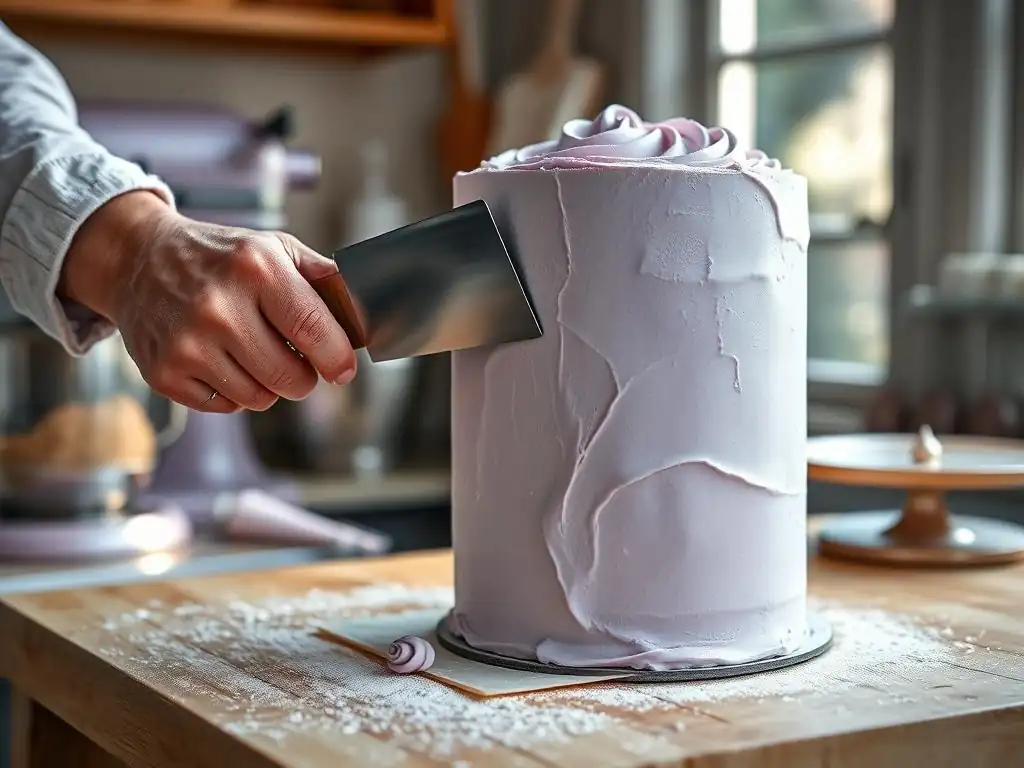
Once you've mastered the basic technique of using a bench scraper for smooth frosting sides, you can explore more advanced applications. The bench scraper isn't just for flat surfaces; it can be used to create sharp edges, subtle textures, and can be combined with other tools for more complex designs.
Pushing beyond simple smoothing opens up a world of decorating possibilities. These techniques build upon the foundational skill of using the scraper consistently and accurately. Experimenting with different angles, pressures, and tools alongside your bench scraper will allow you to achieve a wider range of professional finishes.
Achieving Sharp Edges
Creating a crisp, sharp edge on the top of your cake is a highly sought-after finish. After smoothing the sides with your bench scraper, you'll have a slight "lip" of frosting sitting above the top edge of the cake. To create the sharp edge, use a small offset spatula or a smaller, clean bench scraper held parallel to the top surface of the cake.
Starting from the outer edge, gently pull the excess frosting from the lip inwards towards the center of the cake. Wipe your spatula clean after each swipe. Work your way around the entire top edge, pulling the excess frosting inwards until the edge is clean and sharp. You may need to go back and smooth the sides again slightly if this process affects them, then refine the top edge once more.
Creating Subtle Textures
Bench scrapers aren't only for perfectly smooth finishes; some variations can create textures. Many commercial cake scrapers come with patterned edges (like waves, ridges, or zigzags) specifically designed for creating textured frosting sides. You can also use a plain bench scraper to create simple vertical lines or other subtle patterns by holding it at a slightly different angle or applying varying pressure.
To create a simple textured look with a straight bench scraper, hold the scraper against the side of the cake as usual, but instead of rotating the cake smoothly, make deliberate vertical passes, slightly overlapping each one. Or, hold the scraper at an angle to create diagonal lines as you rotate. Experiment on a practice cake or buttercream to see the effects different movements and scraper types can achieve, adding a decorative element to your bench scraper smooth frosting sides.
Combining with Other Decorating Tools
The bench scraper works beautifully in conjunction with other cake decorating tools. For instance, after achieving smooth sides, you might use piping bags fitted with various tips to add borders, swirls, or other details on top or around the base. An offset spatula is essential for applying the initial frosting and cleaning your bench scraper.
For very tall cakes, using a tall bench scraper alongside a smaller offset spatula for filling in gaps can be highly efficient. Similarly, after smoothing with the scraper, you might use a smaller detail spatula or knife to clean up the very bottom edge where the cake meets the board. Integrating the bench scraper into a workflow with other tools enhances your ability to create complex and refined cake designs.
Cleaning and Maintenance
Proper cleaning and maintenance of your bench scraper are essential to ensure its longevity and performance. A clean, well-maintained scraper will always yield better results when you're trying to achieve bench scraper smooth frosting sides. Neglecting your tools can lead to rust (for metal), dull edges, or hygienic issues.
Taking a few moments to clean and store your bench scraper correctly after each use will keep it in top condition for years of cake decorating projects. This simple step is just as important as mastering the technique itself.
Proper Cleaning Procedures
Clean your bench scraper immediately after use. Leftover frosting can harden and become difficult to remove. Scrape off as much excess frosting as possible using an offset spatula or a paper towel. Then, wash the scraper thoroughly with warm, soapy water. Use a sponge or brush to remove all traces of frosting.
For metal scrapers, pay special attention to drying them completely after washing to prevent rust. A quick towel dry followed by air drying in a dish rack is usually sufficient. Plastic scrapers are less prone to rust but should also be washed thoroughly. Avoid putting metal scrapers in the dishwasher if the detergent could potentially dull the edge or cause spotting; handwashing is often preferred.
Storage for Longevity
Proper storage protects your bench scraper's edge and prevents damage. Store it in a way that the working edge is not in contact with other metal objects or sharp tools that could nick or scratch it.
Many bakers store their bench scrapers vertically in a utensil holder or drawer organizer that keeps the edges separated. If storing flat in a drawer, ensure it's not piled under heavy items. Protecting the straight edge is key to maintaining its effectiveness for creating perfectly bench scraper smooth frosting sides over time.
Practice and Refinement
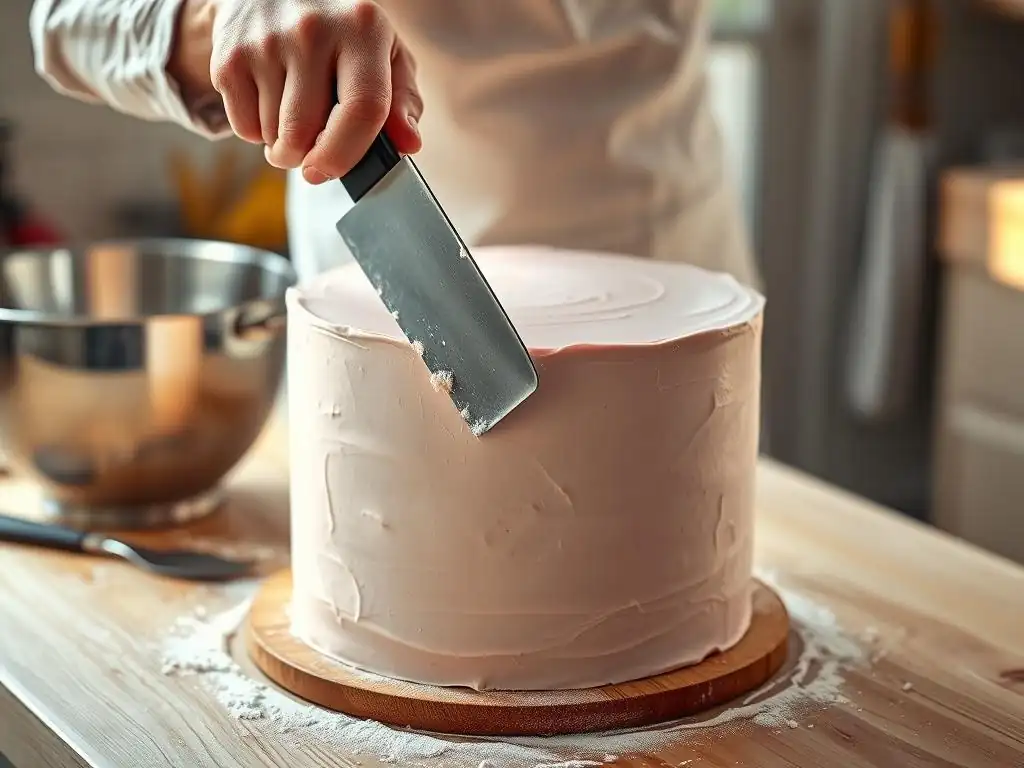
Like any skill, mastering the use of a bench scraper for smooth frosting sides requires practice. Your first few attempts might not be perfect, and that's completely normal. Don't be discouraged by imperfections; view them as learning opportunities. Each cake you frost is a chance to refine your technique.
Dedicate time to practicing specifically the smoothing step. You can even practice on a dummy cake or a container covered in buttercream that you can scrape and reapply. Focusing on the feel of the scraper against the frosting and the motion of the turntable will build muscle memory and improve your consistency.
Tips for Improving Your Technique
- Start with a well-chilled cake and a firm crumb coat – this provides the best foundation.
- Ensure your final frosting is the right consistency – not too stiff, not too soft. If it's too stiff, it's hard to smooth; if too soft, it won't hold its shape.
- Apply plenty of frosting initially; it's easier to remove excess than to add more to fill gaps during the scraping process.
- Hold the scraper steady and let the turntable do the work of moving the cake.
- Wipe your scraper clean frequently between passes – this is perhaps the most crucial tip for a smooth finish.
- Be patient. You might need multiple passes with the scraper to achieve the desired level of smoothness.
- Experiment with different types of frosting (buttercream, ganache) as they behave differently when scraped.
Conclusion: Elevate Your Cake Decorating Skills
Mastering the art of using a bench scraper to achieve bench scraper smooth frosting sides is a significant step forward in your cake decorating journey. This simple tool, when used correctly, can transform your cakes from homemade to professional-looking with minimal effort. It provides consistency, efficiency, and the ability to create a flawless canvas for further decoration.
By understanding the types of scrapers, preparing your cake properly, applying the correct technique, and practicing regularly, you will build the confidence and skill needed to achieve beautifully smooth frosting sides every time. So grab your bench scraper, prepare your frosting, and enjoy the process of elevating your cakes to a whole new level of elegance and polish.
Frequently Asked Questions
How can a bench scraper help me achieve smooth frosting sides?
A bench scraper provides a flat, even surface to remove excess frosting and create a smooth, professional finish. It's more effective than a spatula for achieving consistent results.
What size and material of bench scraper is best for smoothing frosting?
Stainless steel bench scrapers are generally preferred due to their durability and ease of cleaning. A size of 6-8 inches is a good starting point for most cakes.
Besides smoothing frosting, what other baking tasks can a bench scraper be used for?
Bench scrapers are incredibly versatile! They can be used for dividing dough, lifting ingredients, and cleaning your work surface.
How do I properly clean my bench scraper after using it with frosting?
Wash your bench scraper with warm, soapy water immediately after use. Dry it thoroughly to prevent rusting. Some are dishwasher safe.
What is the best technique for holding and using a bench scraper to smooth frosting?
Hold the bench scraper at a 45-degree angle against the cake. Rotate the cake stand while applying gentle pressure to remove excess frosting in smooth, even strokes.
Final Reflection: The Unsung Hero of Flawless Frosting
The humble bench scraper, often overlooked in the baker's arsenal, is the key to achieving flawlessly smooth sides on cakes and other frosted treats. Its simple design belies its transformative power, elevating amateur creations to professional-level perfection. This seemingly small tool offers a significant impact on the final presentation of baked goods, impacting both the aesthetic appeal and the overall impression on the recipient.
The influence of the bench scraper extends beyond mere functionality; it represents a commitment to detail and a pursuit of excellence in baking. It's a testament to the idea that even the smallest tools can yield extraordinary results with the right technique. The details are not the details. They make the design.
– Charles Eames. This quote perfectly encapsulates the importance of mastering the bench scraper technique in achieving truly stunning results. The smooth, clean sides it creates aren't just visually pleasing; they communicate a level of care and precision that elevates the entire baking experience.
Now, consider your own baking journey. Think about the times you've struggled with uneven frosting, the frustration of imperfections marring an otherwise delicious creation. I encourage you to pick up a bench scraper, practice the techniques outlined in this article, and experience the transformative power of this simple tool firsthand. Embrace the details, strive for perfection, and watch as your baking transforms from good to truly exceptional. The journey to mastering the bench scraper is a journey to mastering the art of presentation, and the rewards are well worth the effort.
Unlock Perfectly Smooth Cake Sides: Your Next Baking Adventure Awaits!
Thanks for taking the time to learn about the magic of the bench scraper! We hope you now feel confident in achieving those flawlessly smooth cake sides you've always dreamed of. Ready to put your new skills to the test?
- Bake your dream cake: Challenge yourself to create that show-stopping layer cake you've been pinning, using your bench scraper for perfectly straight edges.
- Share your success: Post a picture of your creation on social media – let's see those smooth sides! Use #BakeWithEaseBenchScraper to join our community.
- Explore new techniques: Dive deeper into cake decorating by researching different frosting styles and decorating tips that pair perfectly with your newfound scraping expertise.
What incredible cake creation will you tackle first?