
Discover the Unique Benefits of Baking with Honey

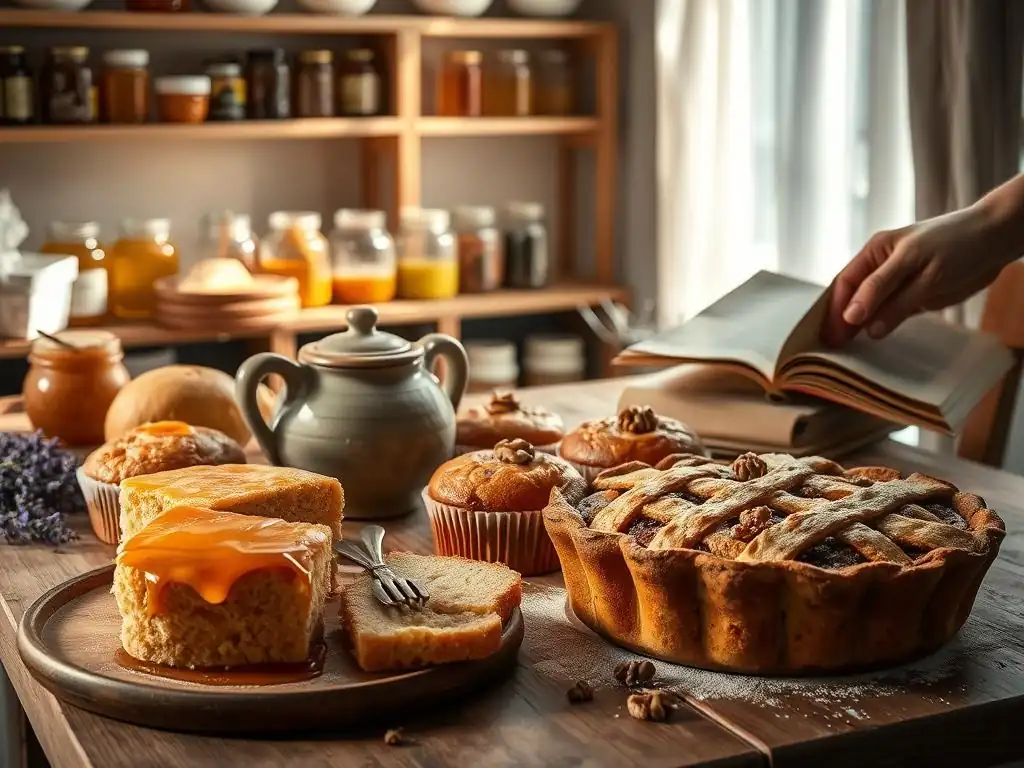
Welcome to BakeWithEase, your kitchen companion for unlocking the secrets of perfect baking! Ever wondered how honey can transform your baked goods from good to extraordinary? This week, we're diving into the golden world of honey baking tips recipes, revealing how this natural sweetener can add moisture, depth of flavor, and a touch of magic to your favorite treats. Discover the unique benefits and elevate your baking game – the sweet journey starts now!
- Discover the Unique Benefits of Baking with Honey: Honey Baking Tips & Recipes from BakeWithEase
- Mastering Honey Baking: Essential Tips and Techniques for BakeWithEase Bakers
- Honey Baking Recipes: BakeWithEase's Favorite Sweet Treats
- Essential Baking Tools for Honey-Infused Creations
- Conclusion: Embrace the Sweetness and Health Benefits of Baking with Honey
-
Frequently Asked Questions
- What are some of the key benefits of using honey in baking, according to BakeWithEase?
- How does honey affect the texture of baked goods compared to using granulated sugar, as explained on BakeWithEase.com?
- Does BakeWithEase provide specific recipe recommendations for using honey in baking, or just general Honey Baking Tips Recipes?
- Can honey be substituted directly for sugar in any baking recipe based on the information on BakeWithEase?
- What types of baked goods are most suited for using honey according to the Honey Baking Tips Recipes featured on BakeWithEase?
- Final Reflection: The Sweetness of Honey, Beyond the Recipe
- Unlock the Golden Goodness: Sweeten Your Baking Journey!
Discover the Unique Benefits of Baking with Honey: Honey Baking Tips & Recipes from BakeWithEase
Unlock the Flavor Potential: Introduction to Baking with Honey
Choosing to bake with honey opens up a world of nuanced flavors and textures far beyond simple sweetness. Unlike refined sugar, which primarily provides sweetness, honey offers a complex profile influenced by the nectar source the bees visited. This means incorporating honey into your recipes can introduce floral notes, earthy undertones, or even hints of spice, transforming familiar baked goods like cakes, cookies, and breads into something truly special. It's a way to add depth and character that granulated sugar simply cannot replicate, making your bakes more memorable and delicious.
Beyond its diverse flavor, honey brings unique physical properties to baking. It's a natural humectant, meaning it attracts and retains moisture exceptionally well. This quality is a game-changer for baked goods, resulting in cakes that stay moist longer, cookies with a delightful chewiness, and breads with a tender crumb. While sugar also contributes to moisture retention, honey's ability is often superior. Understanding these characteristics is key to successful honey baking and allows bakers to leverage honey not just for sweetness, but as a functional ingredient that enhances texture and extends shelf life.
Honey and granulated sugar behave differently in recipes, and recognizing these differences is crucial for successful substitution. Gram for gram, honey is typically sweeter than sugar, so you'll generally use less of it. However, honey also contains more liquid than sugar – around 17-20% moisture compared to sugar's negligible amount. This added liquid necessitates adjustments to other wet ingredients in a recipe.
Furthermore, honey is slightly acidic, which can interact with leavening agents like baking soda, requiring careful balancing. While sugar melts and caramelizes predictably, honey browns more quickly due to its fructose content, often requiring lower oven temperatures. Navigating these differences allows bakers to harness the unique benefits of honey while achieving desired results.
Mastering Honey Baking: Essential Tips and Techniques for BakeWithEase Bakers
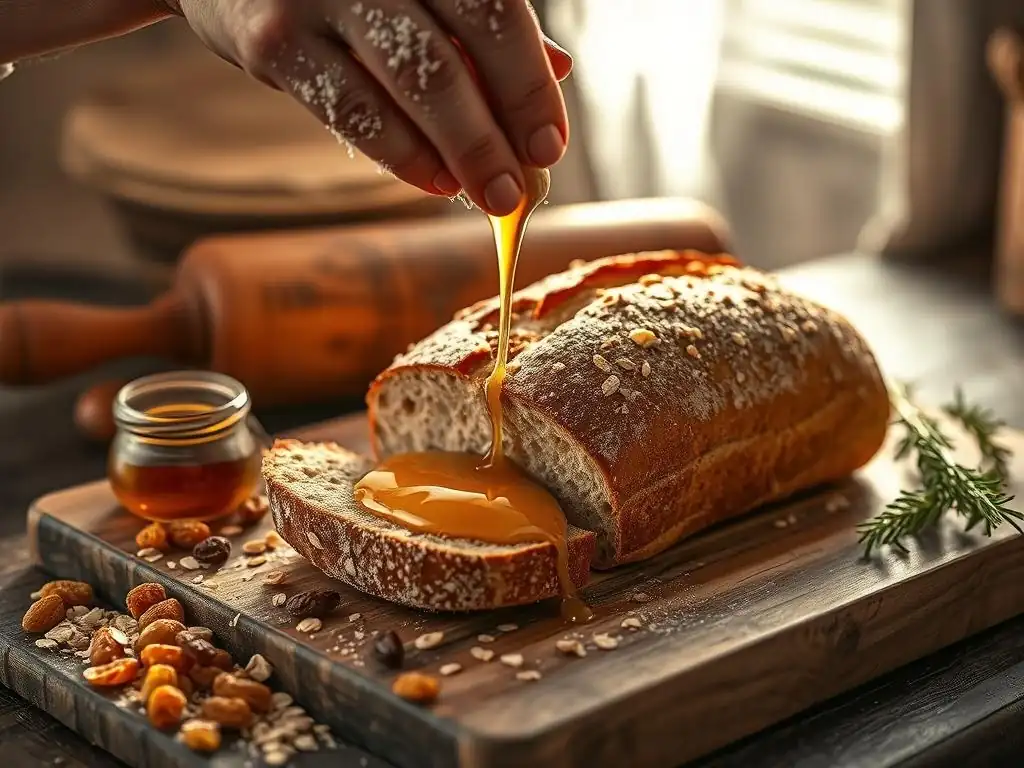
Tip 1: Choosing the Right Honey for Your Recipe
The type of honey you select can dramatically impact the final flavor of your baked goods, much like choosing a specific type of chocolate or spice. For instance, a dark, robust honey like buckwheat offers a strong, molasses-like flavor that stands up well in hearty bakes such as gingerbread or dense spice cakes. Its intense profile can dominate lighter flavors, so it's best paired with other bold ingredients.
Conversely, a light, fragrant honey like orange blossom honey, harvested from orange groves, imparts a delicate floral and citrusy aroma. This makes it an excellent choice for subtly flavored treats like shortbread, madeleines, or light sponges where you want a gentle hint of honey without overwhelming other ingredients.
Some unique honeys, like Manuka honey from New Zealand, offer distinct flavors and textures. While often prized for other properties, its strong, sometimes slightly medicinal or earthy flavor can add an intriguing note to certain bakes, particularly rustic breads or health-conscious recipes. However, its premium cost means it's not always the most economical choice for large-batch baking.
The key is to consider the flavor intensity and profile of the honey and match it to the overall flavor goals of your baked good. A general rule is that lighter honeys pair well with delicate flavors, while darker honeys complement richer, spicier, or more robust ingredients. Experimentation is encouraged to discover your favorite pairings in your honey baking recipes.
Tip 2: Adjusting Liquid Ratios When Using Honey
One of the most important honey baking tips recipes call for when substituting sugar is to account for honey's higher moisture content. Honey typically contains between 17% and 20% water, whereas granulated sugar contains virtually none. If you simply swap honey cup-for-cup with sugar without adjusting other liquids, your dough or batter will likely be too wet, leading to poor structure, excessive spreading, and potentially gummy results.
This is particularly critical in recipes where precise moisture balance is essential, such as cookies, certain cakes, or yeast breads. Failing to make this adjustment is a common pitfall for those new to baking with honey.
To compensate for the extra liquid honey introduces, you generally need to reduce the amount of other liquids in the recipe. A common guideline is to reduce the total liquid (like milk, water, yogurt, or juice) by about 1/4 cup for every cup of honey used. So, if a recipe calls for 1 cup of sugar and 1 cup of milk, and you decide to use 1 cup of honey instead of the sugar, you would likely reduce the milk to about 3/4 cup.
This adjustment helps maintain the intended consistency of the batter or dough, ensuring proper gluten development, leavening, and overall texture in your finished honey bakes. Always observe the batter consistency and make slight tweaks as needed, as different honeys can have slightly varying moisture levels.
Tip 3: Lowering Oven Temperature for Honey-Based Treats
Honey's chemical composition, specifically its higher fructose content compared to granulated sugar (which is sucrose), means it browns and caramelizes more quickly when exposed to heat. While this can be desirable for achieving a lovely golden crust, it also increases the risk of burning or over-darkening the edges or surface of your baked goods before the interior is fully cooked. This rapid browning is due to accelerated Maillard reactions and caramelization processes at lower temperatures than those required for sugar. To prevent this, a simple but crucial adjustment is necessary when using honey in your baking.
A standard recommendation for honey baking tips recipes is to reduce the oven temperature by about 25°F (approximately 15°C) from what the original sugar-based recipe calls for. For example, if a conventional recipe instructs you to bake cookies at 350°F (175°C), you would lower the temperature to 325°F (160°C) when using honey. This lower temperature allows the interior of the bake to cook through evenly without the exterior browning excessively fast.
You may also find that honey-baked goods require a slightly longer baking time at this lower temperature. Always keep a close eye on your bakes, especially towards the end of the suggested baking time, as ovens vary. This temperature adjustment is key to achieving a perfectly cooked interior and a beautifully golden, not burnt, exterior crust on your honey bakes.
Tip 4: Storing Honey-Baked Goods for Maximum Freshness
One of the significant advantages of baking with honey is its natural ability to keep baked goods moist and fresh for longer periods. Honey is a powerful humectant, meaning it readily absorbs moisture from the air and prevents water within the food from evaporating. This property counteracts the common problem of baked goods drying out and becoming stale quickly.
Cakes made with honey often remain soft and tender for several days, and honey cookies retain a pleasant chewiness, sometimes even becoming more moist over time as the honey continues to attract ambient moisture. This makes honey an excellent ingredient for bakes you plan to keep and enjoy over several days.
To best leverage honey's humectant properties and extend the freshness of your honey-baked goods, proper storage is essential. Always store cooled baked items in an airtight container. This prevents them from absorbing too much moisture from a humid environment (which can make them sticky) and, more importantly, prevents them from losing moisture and drying out in a dry environment.
Plastic containers with tight-fitting lids, or cookie tins with secure covers, are ideal. For cakes or loaves, wrapping them tightly in plastic wrap before placing them in a container adds an extra layer of protection against moisture loss. Storing honey bakes correctly ensures you can enjoy their superior texture and flavor for as long as possible.
Honey Baking Recipes: BakeWithEase's Favorite Sweet Treats
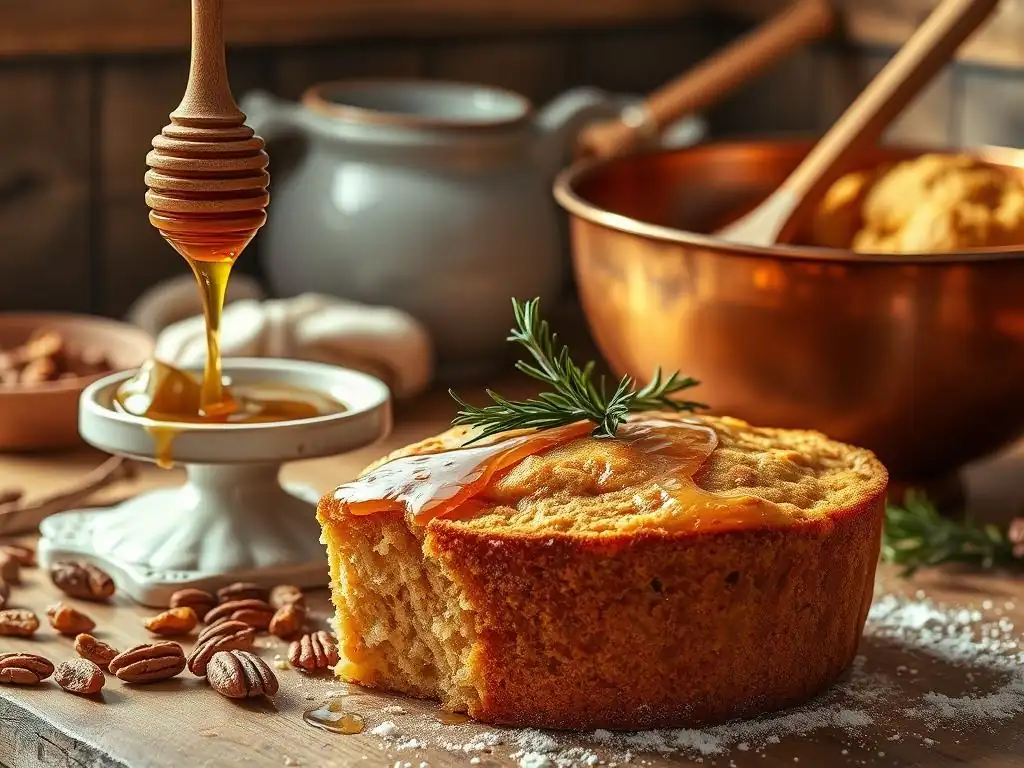
Recipe 1: Classic Honey Cake Recipe
This classic honey cake is a moist and flavorful bake, perfect for celebrations or simply enjoying with a cup of tea. The honey imparts a beautiful golden hue and keeps the cake wonderfully tender.
- Ingredients:
- 2 cups all-purpose flour
- 1 teaspoon baking soda
- 1/2 teaspoon baking powder
- 1/4 teaspoon salt
- 1 teaspoon ground cinnamon
- 1/2 teaspoon ground ginger
- 1/4 teaspoon ground cloves
- 1/2 cup unsalted butter, softened
- 1 cup honey
- 2 large eggs
- 1 teaspoon vanilla extract
- 1/2 cup strong brewed coffee or black tea, cooled
- 1/4 cup milk
To make this delightful honey cake, begin by preheating your oven to 325°F (160°C), remembering our tip about lowering the temperature for honey bakes. Grease and flour a 9-inch round cake pan. In a medium bowl, whisk together the dry ingredients: flour, baking soda, baking powder, salt, cinnamon, ginger, and cloves. In a large bowl, cream the softened butter until light and fluffy, about 2-3 minutes.
Gradually beat in the honey until well combined. Add the eggs one at a time, beating well after each addition, then stir in the vanilla extract. In a separate small bowl, whisk together the cooled coffee or tea and the milk.
With the mixer on low speed, alternately add the dry ingredients mixture and the liquid mixture to the wet ingredients, beginning and ending with the dry ingredients. Mix just until combined; do not overmix. Pour the batter into the prepared cake pan and smooth the top.
Bake for 45-55 minutes, or until a wooden skewer inserted into the center comes out clean. Let the cake cool in the pan for 10 minutes before inverting it onto a wire rack to cool completely. For an extra layer of warmth and aroma, consider adding a pinch of ground cardamom to the dry ingredients mixture – about 1/4 teaspoon is often enough to introduce a subtle, fragrant note that complements the honey beautifully in this honey baking tips recipes favorite.
These chewy honey cookies are a delightful twist on a classic, offering a soft texture and a subtle sweetness from the honey. The honey not only sweetens but also contributes to their wonderfully chewy consistency.
- Ingredients:
- 1/2 cup unsalted butter, softened
- 1/4 cup granulated sugar
- 1/2 cup packed light brown sugar
- 1/3 cup honey
- 1 large egg
- 1 teaspoon vanilla extract
- 1 3/4 cups all-purpose flour
- 1/2 teaspoon baking soda
- 1/4 teaspoon salt
- 1 cup chocolate chips (semi-sweet works well)
To create these irresistible chewy honey cookies, start by preheating your oven to 325°F (160°C) and lining baking sheets with parchment paper. In a large bowl, cream together the softened butter, granulated sugar, and light brown sugar until light and fluffy, about 2-3 minutes. Beat in the honey until fully incorporated. Add the egg and vanilla extract, mixing until just combined. In a separate medium bowl, whisk together the flour, baking soda, and salt. Gradually add the dry ingredients to the wet ingredients, mixing on low speed until a dough forms. Stir in the chocolate chips.
Drop rounded tablespoons of dough onto the prepared baking sheets, leaving about 2 inches between cookies. Since honey causes faster browning, baking time and temperature are key here. Bake for 9-12 minutes, or until the edges are lightly golden and the centers still look slightly soft. The cookies will continue to set as they cool.
Let them cool on the baking sheets for a few minutes before transferring them to a wire rack to cool completely. For a delicious variation that adds texture and nutty flavor, try folding in 1/2 cup of finely chopped walnuts along with the chocolate chips. This adds a pleasant crunch that pairs wonderfully with the chewy texture and sweet honey flavor in these honey baking tips recipes cookies.
Recipe 3: Honey Glazed Bread Recipe
This honey glazed bread is a soft, slightly sweet loaf with a beautiful golden crust, made even more appealing by a simple honey glaze. The honey contributes to the dough's tenderness and the glaze's lovely sheen.
- Ingredients:
- 3 1/2 to 4 cups all-purpose flour
- 2 1/4 teaspoons active dry yeast
- 1 teaspoon salt
- 1 cup warm milk (105-115°F)
- 1/4 cup warm water (105-115°F)
- 1/4 cup honey
- 2 tablespoons unsalted butter, melted
- For the Glaze: 2 tablespoons honey, 1 tablespoon warm water
To bake this delicious honey glazed bread, begin by combining 2 cups of the flour, the active dry yeast, and salt in a large mixing bowl. In a separate bowl, whisk together the warm milk, warm water, and the 1/4 cup of honey and melted butter. Pour the liquid mixture into the dry ingredients and mix with a spoon or stand mixer fitted with a dough hook until just combined.
Gradually add the remaining flour, about 1/2 cup at a time, mixing until the dough comes together and pulls away from the sides of the bowl. You may not need all the flour; the dough should be slightly sticky but manageable.
Turn the dough out onto a lightly floured surface and knead for 6-8 minutes, or until smooth and elastic. Alternatively, knead with a stand mixer on medium speed for 5-7 minutes. Place the dough in a lightly greased bowl, turning to coat. Cover with plastic wrap and let it rise in a warm place for 1 to 1 1/2 hours, or until doubled in size.
This is the first proof. Punch down the dough, shape it into a loaf, and place it in a greased 9x5-inch loaf pan. Cover and let it rise again for 30-45 minutes, or until nearly doubled. This is the second proof.
Preheat your oven to 350°F (175°C). Bake the bread for 30-35 minutes, or until golden brown and the internal temperature reaches 190-200°F (88-93°C). While the bread is still warm, whisk together the glaze ingredients and brush evenly over the top crust using a pastry brush for the BakeWithEase secret touch to ensure full, even coverage and a beautiful shine on your honey baking tips recipes bread.
Essential Baking Tools for Honey-Infused Creations
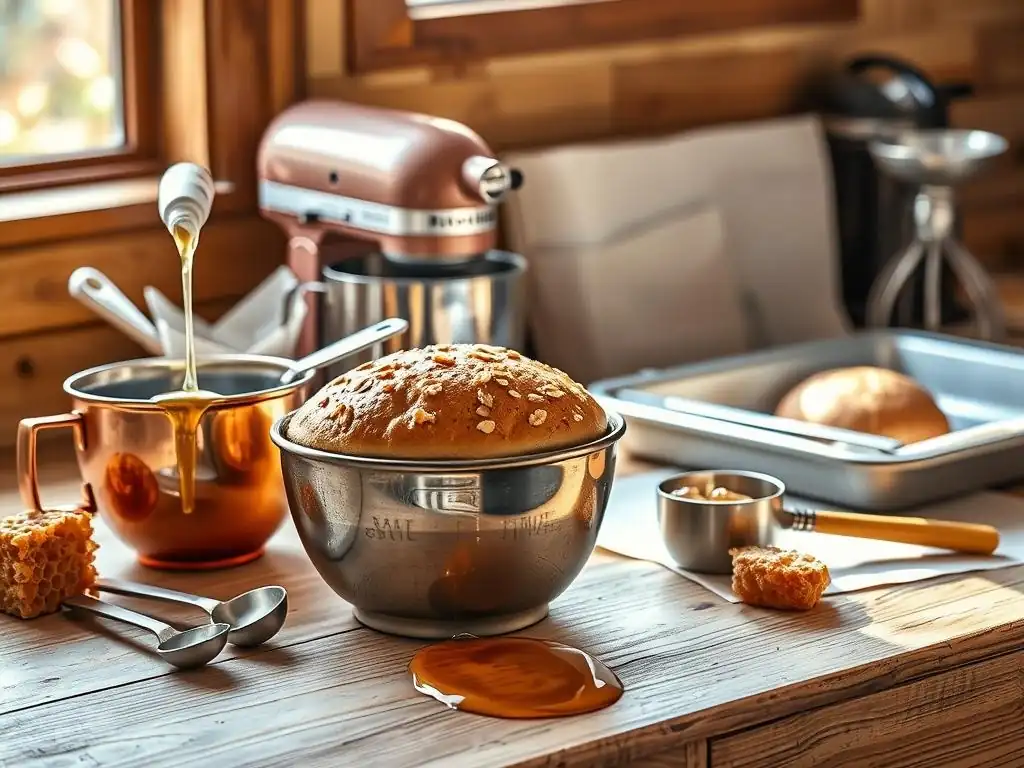
A reliable stand mixer can be an invaluable asset when tackling honey-based doughs and batters, especially those that are sticky or require significant mixing or kneading. The powerful motor and dough hook attachment of a stand mixer handle the often-dense consistency of doughs enriched with honey much more efficiently than hand-mixing or a hand mixer. This ensures proper gluten development for breads and an even distribution of ingredients in batters, leading to consistent and predictable results in your honey bakes. It saves time and effort, allowing you to focus on perfecting your honey baking tips recipes.
For sticky honey cakes, cookies, or even bread dough, a quality baking mat can make a significant difference. Mats made from silicone provide a non-stick surface that ensures your baked goods release cleanly without the need for excessive greasing or flouring. This is particularly helpful with honey, which can make items prone to sticking.
Using a baking mat also promotes even heat distribution, contributing to consistent baking results and preventing burnt bottoms. Cleanup is typically much easier compared to parchment paper or directly on a baking sheet; a quick wipe-down is often all that's needed after baking your honey treats.
Achieving perfect results in honey baking often hinges on precise temperature control, both of your ingredients and your oven. An accurate oven thermometer is crucial because many oven thermostats can be off by as much as 50°F (about 28°C), and as we've discussed, honey bakes are sensitive to temperature for browning.
A reliable thermometer placed inside your oven provides the true temperature reading, allowing you to make necessary adjustments and ensure you are baking at the optimal lower temperature recommended for honey recipes. Monitoring internal temperatures of breads or cakes with a probe thermometer also helps confirm they are fully cooked without being overbaked, preventing dry results and ensuring the perfect texture in your honey baking tips recipes.
Conclusion: Embrace the Sweetness and Health Benefits of Baking with Honey
Throughout this guide, we've explored the unique advantages of incorporating honey into your baking, from its diverse flavor profiles provided by different floral sources to its remarkable ability to retain moisture, keeping your baked goods tender and fresh. We've covered essential honey baking tips recipes call for, such as selecting the right type of honey, adjusting liquid ratios to compensate for its moisture, lowering oven temperatures to prevent over-browning, and storing your honey creations properly to maintain their quality. These tips provide a solid foundation for successfully substituting honey for sugar and unlocking its full potential in your kitchen.
Now that you are equipped with these honey baking tips and a few favorite BakeWithEase recipes, we encourage you to experiment further. Don't hesitate to try substituting honey in some of your other go-to BakeWithEase recipes, perhaps starting with a portion of the sugar before attempting a full substitution. Notice how the flavor changes, how the texture differs, and how long the baked goods stay moist.
Baking with honey is a rewarding experience that adds complexity and natural goodness to your treats. We invite you to explore the sweet possibilities and share your successes and discoveries with the BakeWithEase community!
Frequently Asked Questions
What are some of the key benefits of using honey in baking, according to BakeWithEase?
Honey adds moisture and a unique flavor to baked goods. It also acts as a natural preservative and can enhance the browning process.
How does honey affect the texture of baked goods compared to using granulated sugar, as explained on BakeWithEase.com?
Honey tends to create a softer and chewier texture due to its hygroscopic properties. This is different from granulated sugar, which can sometimes lead to a crisper result.
Does BakeWithEase provide specific recipe recommendations for using honey in baking, or just general Honey Baking Tips Recipes?
Yes, BakeWithEase offers specific recipes that incorporate honey. These recipes are designed to maximize the flavor and texture benefits of honey.
Can honey be substituted directly for sugar in any baking recipe based on the information on BakeWithEase?
While honey can often be substituted, it's not always a 1:1 ratio. BakeWithEase advises adjusting the liquid content as honey adds extra moisture.
What types of baked goods are most suited for using honey according to the Honey Baking Tips Recipes featured on BakeWithEase?
Honey works well in breads, muffins, cookies, and cakes, especially those where a moist and slightly sweet flavor is desired. It also compliments nutty or spiced flavors.
Final Reflection: The Sweetness of Honey, Beyond the Recipe
The enduring appeal of honey in baking isn't just about taste; it's about unlocking a world of unique flavors and textures, benefits that resonate deeply with today's health-conscious and adventurous cooks. From its natural sweetness to its remarkable ability to enhance moisture and create a golden-brown crust, honey offers a culinary experience far beyond simple sugar substitutes. This is more than just a trend; it's a rediscovery of a time-honored ingredient with a wealth of untapped potential.
The shift towards natural sweeteners and the growing interest in artisanal baking have propelled honey to the forefront of culinary innovation. It's not just about following recipes; it's about understanding the nuances of each honey variety and how its unique floral notes can transform a simple cake into a masterpiece. As the renowned chef Alice Waters once said, Good food is good mood.
And with honey, that good mood is amplified by the knowledge that you're using a wholesome, versatile ingredient with a rich history and a bright future.
Consider the possibilities: experimenting with different honey types, exploring new flavor combinations, and sharing your creations with loved ones. This isn't just about following recipes; it's about embracing the creative process, understanding the science behind the sweetness, and ultimately, enjoying the fruits (or should we say, the honey cakes?) of your labor. So, pick up a jar of honey, explore the recipes in this article, and embark on your own honey-sweetened baking adventure. The possibilities are as limitless as your imagination.
Unlock the Golden Goodness: Sweeten Your Baking Journey!
Thanks for exploring the sweet world of honey baking with us! You've learned about the amazing flavor and health benefits honey brings to your creations. Now it's time to put your newfound knowledge into action.
- Try a honey-based recipe today! Experiment with substituting honey for sugar in your favorite recipe – you might be surprised by the results. Start small, and have fun exploring the subtle flavor differences.
- Share your honey baking adventures! Post photos of your creations on social media and tag us – we’d love to see what deliciousness you whip up.
- Discover more honey baking inspiration by exploring our extensive recipe archive. You might just find your new favorite treat!
Ready to embark on your own honey-sweet baking journey? What unique honey-infused recipe will you try first?