
Master the Science of Caramelization: Temperature Tips for Glossy Caramel Sauces

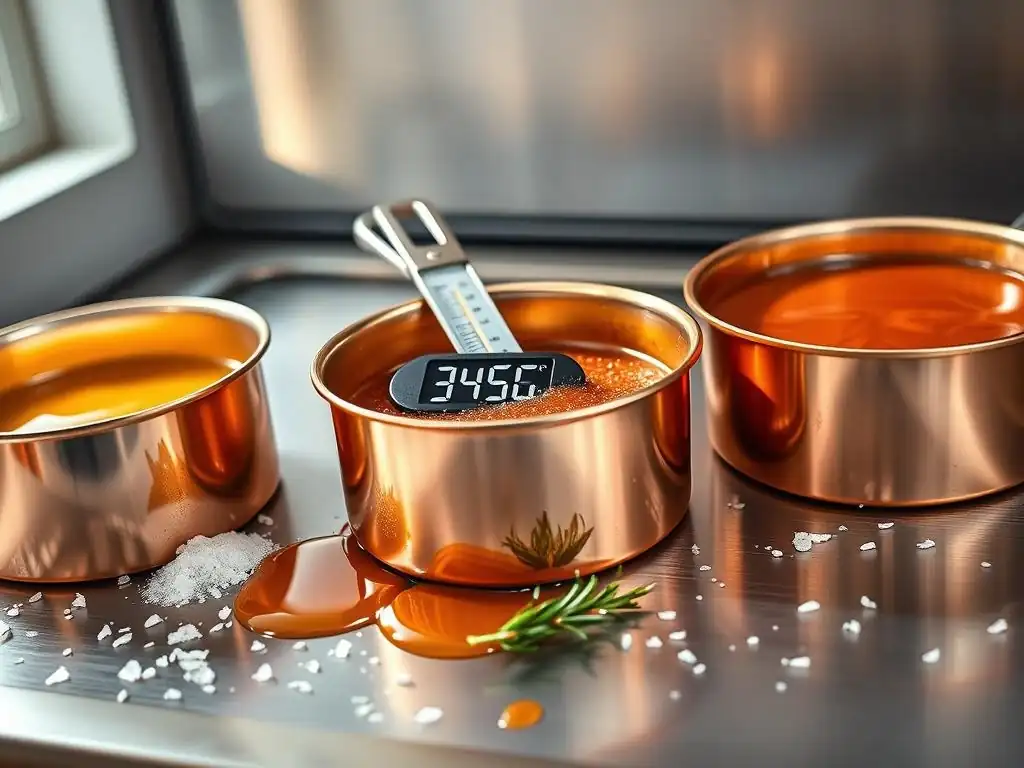
Welcome to BakeWithEase, your trusted guide to baking bliss! Ever wondered why your caramel sauce isn't quite as glossy or smooth as you envision? Unlocking the secrets lies in mastering the science of caramelization. Dive in and discover crucial caramel sauce temperature tips that will transform your baking, ensuring perfectly decadent results every time. Ready to elevate your desserts? Let's get started!
- Understanding Caramelization: The Key to Perfect Caramel Sauce
- Caramel Sauce Temperature Tips: Achieving Glossy Perfection
- Common Caramel Sauce Mistakes and How Temperature Can Prevent Them
- Advanced Caramel Sauce Techniques: Temperature and Flavor Combinations
- Temperature Guide for Different Caramel Sauce Recipes
- Troubleshooting Caramel Sauce: Temperature-Related Issues and Solutions
- Storing Caramel Sauce: Maintaining Quality and Preventing Crystallization
- Mastering Caramel Sauce: Practice and Temperature Observation
- Frequently Asked Questions
- Final Reflection: The Sweet Science of Perfect Caramel
- Unlock Your Inner Caramel Master!
Understanding Caramelization: The Key to Perfect Caramel Sauce
What is Caramelization?
Caramelization is a complex chemical process that occurs when sugars are heated to high temperatures. It's not just about melting sugar; it involves a series of decomposition reactions, oxidation, and polymerization that break down the sugar molecules and create hundreds of new flavor compounds. These compounds are responsible for the rich, nutty, slightly bitter, and deeply sweet flavors we associate with caramel, as well as its characteristic brown color. The specific temperature and how long the sugar is held at that temperature significantly impact which flavor compounds are formed, dictating the final taste profile of your caramel sauce.
This transformation begins when sugars reach temperatures above their melting point, typically starting around 320°F (160°C) for sucrose (common granulated sugar). As the temperature increases, the reactions accelerate, leading to darker colors and more intense flavors. Controlling the heat precisely is paramount because the difference between a perfectly golden, flavorful caramel and a burnt, bitter mess can be as little as 10-20°F. Mastery of this process requires careful observation and, crucially, accurate temperature monitoring to achieve that sought-after glossy texture and rich taste in your caramel sauce.
The Role of Temperature in Caramelization: Achieving the Ideal Color and Flavor
Temperature is the absolute dictator of the caramelization process. It determines the rate at which sugar molecules break down and reform into new compounds. At lower caramelization temperatures, around 320-330°F (160-165°C), the sugar just begins to melt and develop a very pale golden hue with a mild, sweet flavor. As the temperature climbs towards 340-350°F (170-175°C), the reactions intensify, yielding a richer amber color and more complex, nutty notes. Pushing the temperature higher, to 355-360°F (179-182°C), results in a deep mahogany color and a more pronounced, slightly bitter caramel flavor, often desired for intense sauces or confections.
Beyond just color and flavor, temperature also influences the viscosity and final texture of your caramel sauce. Higher temperatures lead to more water evaporating from the sugar mixture (if water is used), resulting in a thicker, more viscous syrup once cooled. Conversely, stopping the process at a slightly lower temperature will yield a thinner sauce.
The key to achieving a glossy caramel sauce lies in hitting the sweet spot within the caramelization temperature range and then carefully incorporating other ingredients like cream or butter while maintaining control over the heat to prevent seizing or scorching. Precision in monitoring the caramel sauce temperature tips the scales from good to truly exceptional.
Caramel Sauce Temperature Tips: Achieving Glossy Perfection
Choosing the Right Pan for Even Caramelization
Selecting the appropriate pan is one of the foundational caramel sauce temperature tips. A heavy-bottomed, light-colored saucepan is highly recommended. The heavy bottom ensures even heat distribution, preventing hot spots that can cause some parts of the sugar to burn while others are still melting. This even heating is crucial for consistent caramelization and achieving a uniform color and flavor throughout your sauce. A pan that conducts heat poorly or has a thin bottom will likely result in uneven cooking, making it difficult to control the caramel temperature effectively.
Furthermore, a light-colored pan allows you to accurately judge the color of the caramel as it develops. Caramel changes color rapidly at high temperatures, and being able to clearly see the progression from clear syrup to pale gold, amber, and finally mahogany is vital for stopping the process at the desired stage.
Darker pans can obscure the true color, leading you to potentially overcook the caramel. Using a pan that is large enough to accommodate the sugar comfortably, with plenty of room for the caramel to bubble up when other ingredients are added, is also important for safety and preventing boil-overs.
Measuring Temperature Accurately: Essential Tools for Caramel Makers
Accurate temperature measurement is non-negotiable when making caramel sauce. Relying solely on visual cues can be risky, especially for beginners, as color changes can happen very quickly at high heats. A reliable thermometer is one of the most important caramel sauce temperature tips. There are several types suitable for this task, including candy thermometers (which clip onto the side of the pan) and digital instant-read thermometers. Both can be effective, but they must be calibrated and used correctly.
- Candy Thermometers: These are designed specifically for high-temperature applications like candy and caramel making. They typically have a long stem and a clip to secure them to the pan, allowing you to continuously monitor the temperature without holding it. Ensure the bulb or sensor is fully submerged in the sugar mixture but not touching the bottom of the pan, as this can give a falsely high reading.
- Digital Instant-Read Thermometers: While not specifically candy thermometers, a good quality instant-read thermometer can also be used. You'll need to dip it into the caramel periodically to check the temperature. Be extremely cautious when doing this, as hot caramel can cause severe burns. It's crucial that the thermometer is accurate at high temperatures.
The Importance of a Reliable Thermometer for Caramel Sauce
A reliable thermometer provides objective data, taking the guesswork out of knowing exactly what stage your caramelization is at. Without one, you're judging solely on color and bubble size, which can be misleading, especially under different lighting conditions. Knowing the precise caramel temperature allows you to consistently replicate successful batches of glossy caramel sauce and avoid common pitfalls like burning or undercooking.
Consider this scenario: you're aiming for a medium amber caramel, which typically occurs around 345-350°F (174-177°C). If your thermometer is off by just 10 degrees, you might pull the caramel off at 335°F (168°C), resulting in a paler, less flavorful sauce, or worse, you might reach 355°F (179°C) or higher, risking a bitter, burnt taste. Investing in and properly using an accurate thermometer is perhaps the single most impactful of all caramel sauce temperature tips for achieving consistent, perfect results every time.
The Ideal Temperature Range for Caramel Sauce: A Step-by-Step Guide
Mastering the ideal temperature range for caramel sauce is crucial. The process involves distinct stages, each corresponding to a specific temperature range and resulting in different characteristics. While exact temperatures can vary slightly based on sugar type and altitude, the general ranges provide an excellent guide. Following these caramel sauce temperature tips stage by stage ensures you develop rich flavor without burning the sugar.
Here’s a breakdown of the key temperature stages:
Stage 1: Sugar Melting and Initial Caramelization (320°F - 340°F / 160°C - 170°C)
In this initial stage, the sugar first melts into a clear liquid. If using the wet method (sugar and water), the water will boil off during this phase. As the temperature rises above 320°F (160°C), the sugar molecules begin to break down, and the very first signs of caramelization appear. The liquid sugar will start to turn a very pale straw yellow around the edges, gradually moving towards the center.
This stage is critical for ensuring all sugar crystals are dissolved and melting evenly. It's often recommended not to stir the sugar once it starts melting to prevent crystallization, although swirling the pan gently is usually acceptable. The temperature will rise relatively slowly through this range as water evaporates (if used) and the initial chemical reactions occur.
Stage 2: Developing Color and Flavor (340°F - 350°F / 170°C - 177°C)
This is where the magic happens for classic caramel flavor. As the caramel temperature climbs into this range, the color deepens noticeably from pale yellow to a rich golden amber. The distinct nutty and complex flavors of caramel become more prominent. The rate of caramelization accelerates significantly here, meaning the color can change from perfect amber to too dark very quickly.
Staying within this range allows you to control the intensity of the caramel flavor. A lower temperature within this range (around 340-345°F) will yield a lighter, sweeter caramel, while temperatures closer to 350°F will result in a deeper, more robust flavor. This stage requires close attention and readiness to move quickly to the next step, which usually involves adding cream or butter.
Stage 3: Achieving the Perfect Glossy Texture (350°F - 360°F / 177°C - 182°C)
While the primary caramelization reactions mostly occur in Stage 2, pushing the temperature slightly higher in this range can contribute to a darker color and more intense flavor, often desired for a deeply rich caramel sauce. However, this range is also where the risk of burning becomes very high. Reaching the upper end of this range (355-360°F) results in a dark mahogany color and a more pronounced, slightly bitter note, which can be desirable for balancing sweetness but is very close to the point of no return.
Achieving the glossy texture also depends on what happens after reaching the desired caramel temperature. Once the sugar hits the target temperature (say, 345-355°F, depending on desired flavor), you typically remove it from the heat and carefully whisk in warm cream and butter. The intense heat of the caramel causes these ingredients to bubble violently and emulsify, creating that smooth, glossy finish. The initial caramel temperature dictates the base flavor and consistency before these additions.
Common Caramel Sauce Mistakes and How Temperature Can Prevent Them
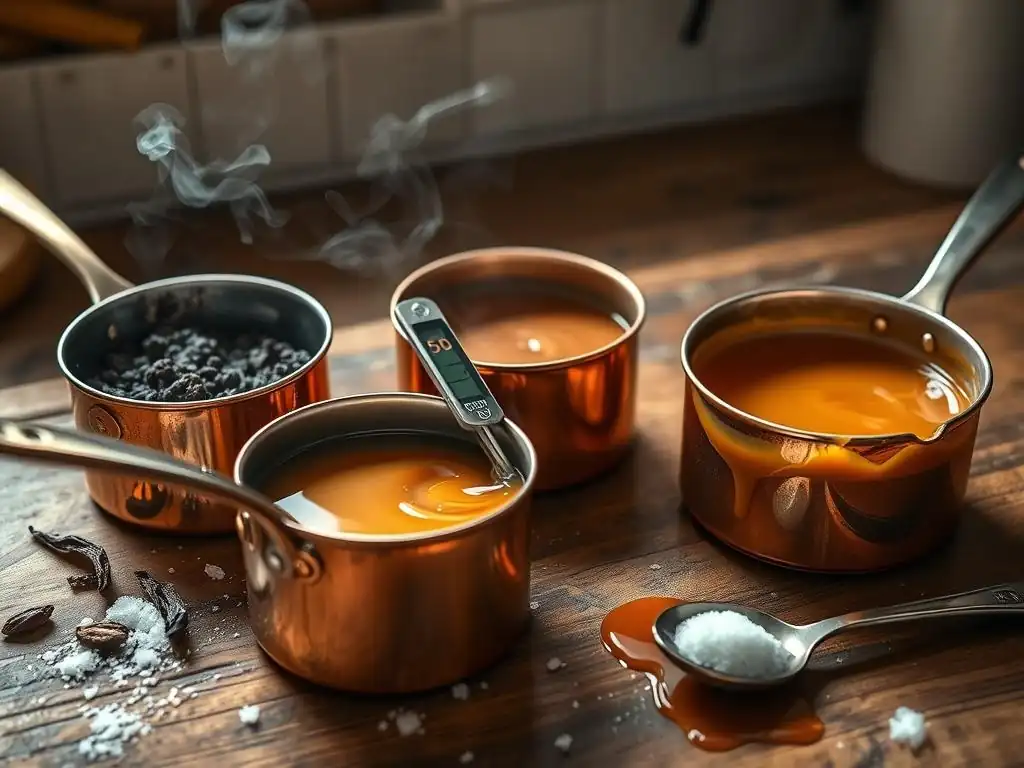
Many common issues encountered when making caramel sauce can be directly attributed to temperature control. Understanding these pitfalls and applying the right caramel sauce temperature tips can save you from frustration and wasted ingredients.
Avoiding Burnt Caramel: Temperature Control is Crucial
Burning is perhaps the most feared outcome when making caramel. Burnt sugar is irreversibly bitter and acrid, rendering your sauce unusable. This happens when the sugar is heated too high or for too long, exceeding the optimal caramelization temperature range and entering the burning phase. For sucrose, burning typically starts to occur rapidly above 360°F (182°C), and becomes very likely above 370°F (188°C).
The best way to avoid burnt caramel is vigilant temperature monitoring. Use a reliable thermometer and pull the sugar off the heat immediately once it reaches your target temperature (e.g., 345-355°F). Remember that the sugar will continue to cook for a few seconds even after being removed from the heat due to residual heat in the pan. Having your cream and butter warmed and ready to add as soon as you pull the caramel off the heat helps cool it down quickly and stop the caramelization process before it goes too far.
Preventing Grainy Caramel: The Temperature Factor
Grainy caramel is another common issue, caused by sugar crystals reforming in the sauce. This can happen if sugar crystals splash onto the sides of the pan during the melting process and don't dissolve, or if the mixture cools and crystals start to form. While technique (like not stirring initially or washing down the sides of the pan with a wet pastry brush) is important, temperature also plays a role.
Ensuring the sugar reaches a sufficiently high temperature (above its melting point and into the caramelization range, generally above 320°F / 160°C) helps ensure all sugar crystals are fully dissolved. Rapidly cooling the caramel sauce after adding cream and butter can also help prevent crystallization. If your caramel does become grainy, sometimes gently reheating it to a high enough temperature (around 230-240°F / 110-115°C, the soft-ball stage) and stirring very gently can re-dissolve the crystals, although this isn't always successful. Maintaining consistent caramel sauce temperature tips the scale towards smooth results.
Achieving the Right Consistency: Temperature Adjustments for Thickness
The final consistency of your caramel sauce is significantly influenced by the temperature reached during caramelization and how much liquid is added afterward. Higher caramelization temperatures (within the acceptable range) mean more water has evaporated from the initial sugar or sugar/water mixture, resulting in a thicker caramel base. When you add cream or butter, the amount and temperature of these additions also play a role.
If your finished caramel sauce is too thick after cooling, it likely means you either cooked the sugar to too high a temperature initially or didn't add enough liquid (cream, milk, etc.). To thin it out, you can gently reheat the sauce over low heat and whisk in a tablespoon or two of warm milk or cream until the desired consistency is reached. Conversely, if your sauce is too thin, it might mean the sugar didn't reach a high enough caramelization temperature, or too much liquid was added.
To thicken a thin sauce, gently simmer it over low heat, stirring constantly, allowing some liquid to evaporate and concentrate the sauce. Monitor the temperature – simmering around 212°F (100°C) will reduce it slowly.
Advanced Caramel Sauce Techniques: Temperature and Flavor Combinations
Once you've mastered the basics of caramel sauce temperature tips, you can explore more advanced techniques to elevate your caramel. Temperature control remains vital when adding flavors or working with different sugar types.
Infusing Flavors at Specific Temperatures: Experimenting with Extracts and Spices
Adding flavorings to caramel sauce requires careful consideration of temperature. Delicate extracts like vanilla should typically be added after the caramelization process is complete and the cream/butter has been incorporated, usually when the sauce has cooled slightly below boiling (around 200°F / 93°C or lower). Adding them to very hot caramel can cause the volatile flavor compounds to evaporate quickly, diminishing their impact.
Spices, on the other hand, can often benefit from being gently heated to release their aromatic oils. Whole spices like star anise or cinnamon sticks can be warmed in the cream before adding it to the caramel, then strained out. Ground spices can be whisked into the cream or butter just before adding to the caramel.
Alternatively, some recipes call for adding spices directly to the sugar as it melts, but this requires careful temperature management to ensure the spices don't burn before the sugar caramelizes. Experimenting with adding spices at different temperatures and stages is part of refining your caramel sauce temperature tips for unique flavor profiles.
Controlling Caramelization for Different Sugar Types: Adjusting Temperatures Accordingly
Different types of sugar caramelize at slightly different temperatures and rates. While sucrose (granulated sugar) is the standard, using sugars like brown sugar, maple sugar, or even alternative sweeteners changes the process. Brown sugar, for instance, contains molasses, which affects its melting point and adds flavor compounds that caramelize differently. It tends to melt and color faster than white sugar due to the presence of these impurities and moisture.
When working with brown sugar for caramel or butterscotch, you might aim for a slightly lower final temperature compared to pure white sugar to achieve a similar color and flavor intensity, perhaps stopping around 340-345°F (170-174°C) for a lighter sauce. Alternative sweeteners behave very differently and often don't truly caramelize in the same way sucrose does; they may just melt and burn. Understanding the specific properties of the sugar you're using is key to adjusting your target caramel sauce temperature tips appropriately.
Achieving Different Caramel Textures: Hard Crack vs. Soft Ball Stages
While this article focuses on caramel sauce, which typically corresponds to temperatures below the hard crack stage, understanding the different candy stages defined by temperature can help you troubleshoot consistency or adapt recipes. These stages are based on the concentration of sugar in water and the temperature reached:
- Thread Stage: 230-235°F (110-113°C) - Forms fine threads in cold water.
- Soft Ball Stage: 235-240°F (113-115°C) - Forms a soft, pliable ball in cold water.
- Firm Ball Stage: 245-250°F (118-121°C) - Forms a firm ball in cold water.
- Hard Ball Stage: 250-265°F (121-129°C) - Forms a hard ball in cold water.
- Soft Crack Stage: 270-295°F (132-146°C) - Forms threads that are pliable but break when bent.
- Hard Crack Stage: 300-310°F (149-154°C) - Forms brittle threads that break easily.
True caramelization begins above the hard crack stage, typically starting around 320°F (160°C). However, if your caramel sauce is too thick, it might have approached the soft crack stage after cooking and cooling. If it's too thin, it might be closer to the soft ball or firm ball stage (if made with significant liquid). Recognizing these stages helps you understand how temperature relates to sugar concentration and texture, refining your caramel sauce temperature tips for desired results.
Temperature Guide for Different Caramel Sauce Recipes
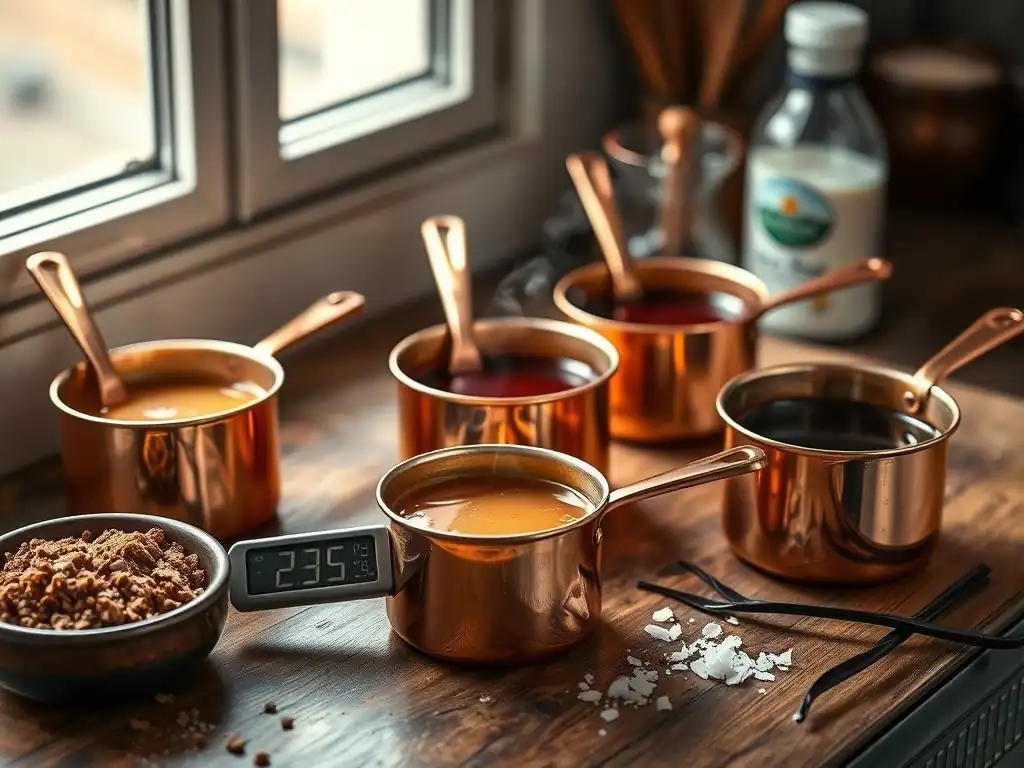
While the core caramelization temperatures remain consistent, variations in ingredients like salt, butter, or alternative liquids necessitate slight adjustments in technique and temperature observation. Applying specific caramel sauce temperature tips for different recipes ensures success.
Salted Caramel Sauce: Optimal Temperature for Salt Incorporation
Making salted caramel sauce involves adding salt to a standard caramel base. The best time to add salt is typically after the caramel has reached its desired temperature and the cream and butter have been incorporated. Adding salt directly to the hot sugar can cause it to seize or clump.
Once you have a smooth caramel sauce (made by adding warm cream/butter to caramelized sugar), let it cool slightly off the direct heat for a moment (perhaps to around 200-210°F / 93-99°C). Then, whisk in the salt. Adding it when the sauce is still quite warm ensures the salt dissolves properly without causing the sauce to seize. Heating the finished salted caramel sauce gently to around 180-190°F (82-88°C) while stirring can also help ensure the salt is fully dissolved and evenly distributed, contributing to the perfect balance of sweet and salty.
Butterscotch Sauce: Temperature Considerations for Butter Infusion
Butterscotch sauce is distinct from caramel sauce, although the processes are similar. Traditionally, butterscotch is made with brown sugar and butter cooked together before adding cream. The presence of butter and brown sugar means the mixture behaves differently than pure white sugar. The butter melts and emulsifies with the sugar as it heats.
When making butterscotch, you typically cook the brown sugar and butter until they reach a specific temperature, often in the soft ball to firm ball range (around 240-250°F / 115-121°C), before significant caramelization of the sugar itself occurs. The Maillard reaction (browning of proteins and sugars, enhanced by the butter solids and molasses in brown sugar) plays a larger role at these lower temperatures, contributing to butterscotch's unique flavor. Monitoring the caramel temperature tips for butterscotch involves aiming for these lower ranges to achieve the characteristic flavor profile before adding the cream.
Coconut Milk Caramel Sauce: Temperature and Alternative Sugars
Creating caramel sauce with alternative liquids like coconut milk or using alternative sugars presents unique temperature challenges. Coconut milk contains fats and proteins that react differently to heat than dairy cream. Alternative sugars (like maple syrup, agave, or corn syrup as the base) don't caramelize like sucrose or require much higher/lower temperatures.
When using coconut milk, the goal is usually to caramelize sucrose (white sugar) first to the desired temperature (345-355°F), then carefully whisk in warmed coconut milk. The high-fat content of coconut milk can sometimes cause the sauce to separate if not emulsified properly; ensuring both the caramel and the coconut milk are at appropriate temperatures (hot caramel, warm coconut milk) and whisking vigorously helps prevent this.
If using alternative sugars as the primary sweetener, achieving a true caramel flavor and texture through temperature alone is often impossible; these recipes usually rely on reduction and added flavorings rather than pure caramelization. Understanding the limitations and properties of your ingredients is a key caramel sauce temperature tip here.
Even with the best caramel sauce temperature tips, things can sometimes go wrong. Many common problems are directly linked to temperature control during the process.
Caramel Sauce is Too Thick: Adjusting Temperature to Thin It Out
If your caramel sauce cools and is thicker than desired, the most likely culprit is that the sugar was cooked to too high a temperature during the initial caramelization phase, or not enough liquid (cream, milk, etc.) was added relative to the amount of sugar. The higher the temperature the sugar reaches, the more concentrated it becomes after liquids are added and it cools.
To thin out overly thick caramel sauce, gently reheat it in a saucepan over low heat. Once it's warm and fluid (around 180-200°F / 82-93°C), gradually whisk in small amounts (a tablespoon at a time) of warm milk, cream, or even water, stirring constantly until the desired consistency is reached. Do not boil the mixture vigorously while thinning, as this can further concentrate the sugar or affect the texture.
Caramel Sauce is Too Thin: Raising Temperature for Reduction
Conversely, if your caramel sauce is too thin, it may be because the sugar didn't reach a high enough caramelization temperature, or too much liquid was added relative to the sugar. A lower initial temperature means less water evaporated, resulting in a thinner base.
To thicken a thin caramel sauce, gently simmer it over low to medium heat. Stir constantly to prevent scorching. The goal is to evaporate some of the excess liquid, which will concentrate the sugar and thicken the sauce. Monitor the temperature; simmering typically occurs around 212°F (100°C). Let it simmer gently until it reaches the desired consistency when a small amount is cooled. Be patient; this can take some time, and overheating can lead to burning. This is one of the caramel sauce temperature tips focused on post-creation adjustment.
Caramel Sauce Crystalized: Recovery Techniques and Temperature Tips
Crystallization, resulting in a grainy or solid mass, is a frustrating issue. It happens when dissolved sugar molecules start to link back together, often triggered by stray sugar crystals or stirring at the wrong time. While preventing crystallization involves technique (clean pan, not stirring too early, washing down sides), temperature can sometimes help recovery.
If your caramel sauce has crystalized, you can attempt to fix it by adding a small amount of water (start with a few tablespoons per cup of solidified caramel) and gently heating the mixture over very low heat, stirring constantly. The goal is to dissolve the sugar crystals again. You might need to heat it to a high temperature, perhaps around 230-240°F (110-115°C - soft ball stage), to ensure all crystals dissolve.
Once dissolved and smooth, you can continue heating it back up towards the caramelization temperatures if needed, being extra careful not to introduce any new crystals. This recovery isn't always successful, but maintaining a high enough temperature to keep sugar dissolved is key.
Storing Caramel Sauce: Maintaining Quality and Preventing Crystallization
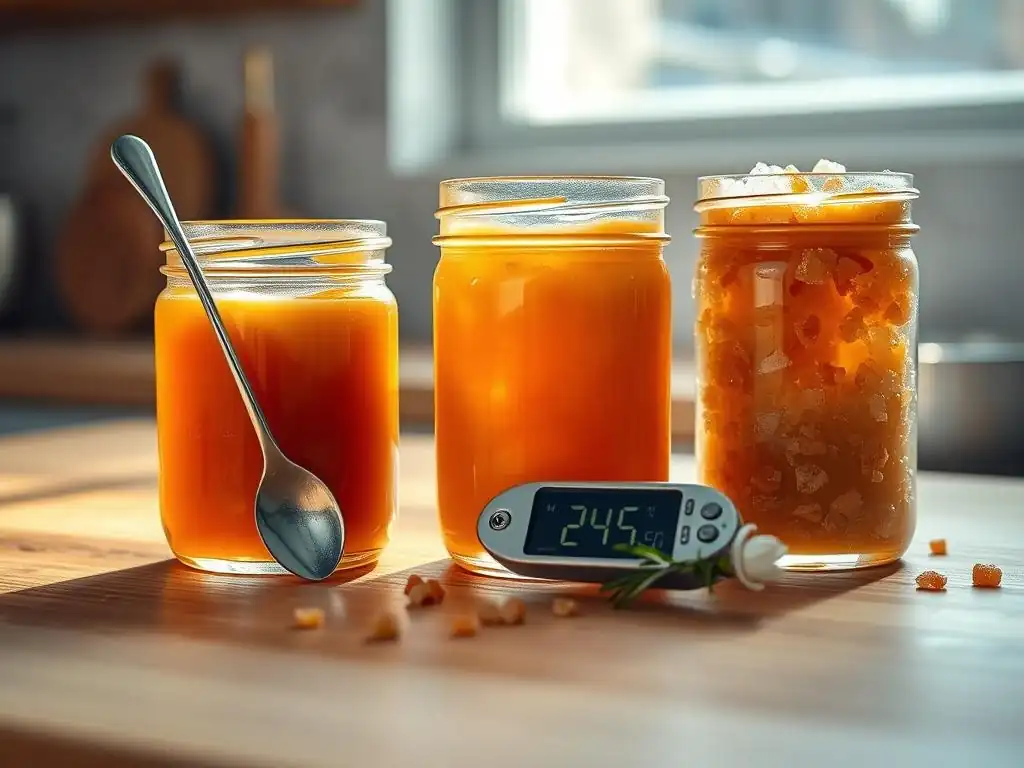
Proper storage is essential to keep your homemade caramel sauce smooth, glossy, and free from crystallization. Temperature plays a role even after the sauce is made.
Cooling Caramel Sauce Properly: Temperature and Storage Containers
After making your caramel sauce, allow it to cool slightly in the pan before transferring it to a storage container. Allowing it to cool for 10-15 minutes helps it thicken slightly and reduces the risk of burns when transferring. However, don't let it cool completely in the pan, especially if the pan is large, as this can sometimes encourage crystallization on the sides.
Transfer the warm (not hot) caramel sauce to a clean, airtight container. Glass jars are excellent for storage. Once in the container, allow the sauce to cool completely to room temperature before sealing it tightly and refrigerating. Rapid cooling is generally preferred to prevent crystallization; some people even place the container in an ice bath to speed up the process. Storing it in the refrigerator at a consistently cool temperature (around 35-40°F / 2-4°C) is best for inhibiting microbial growth and preventing sugar crystals from forming over time.
Reheating Caramel Sauce: Gentle Temperature Control for Smoothness
When you're ready to use your refrigerated caramel sauce, it will likely be quite thick. Gentle reheating is required to return it to a pourable or spoonable consistency while maintaining its smooth texture. Avoid overheating, which can cause the sauce to seize or develop an unpleasant texture.
The best way to reheat caramel sauce is gently over low heat on the stovetop, stirring frequently. Heat it just until it is warm and fluid, typically around 100-120°F (38-49°C). Alternatively, you can microwave it in short bursts (15-30 seconds), stirring in between, until it reaches the desired consistency. Avoid bringing it to a boil when reheating. Consistent low temperature application is key here, extending your caramel sauce temperature tips to storage and use.
Mastering Caramel Sauce: Practice and Temperature Observation
Becoming a master of caramel sauce, especially achieving consistent glossiness and flavor, comes down to practice and careful observation. The more you make it, the more intuitive the process becomes, but relying on temperature remains the most reliable way to ensure success.
Documenting Your Caramel Sauce Temperature Experiments
To truly master caramel sauce temperature tips, consider keeping notes. Document the exact temperature you stopped the caramelization process, the color of the caramel at that point, the temperature and amount of cream/butter added, and the resulting flavor and consistency after cooling.
- Task: Make Caramel Sauce
- Date: 2023-10-27
- Sugar Type: Granulated White
- Method: Wet (1 cup sugar, 1/4 cup water)
- Target Caramelization Temp: 348°F (176°C)
- Observed Color at Target Temp: Rich Amber
- Cream Added: 1/2 cup, warmed to approx 100°F
- Butter Added: 2 tbsp, room temp
- Resulting Sauce Consistency: Slightly thick when warm, perfect pourable consistency when cooled.
- Flavor Notes: Deep, nutty caramel flavor, not bitter.
Over time, these notes will help you understand how slight variations in temperature affect the final outcome, allowing you to fine-tune your technique and confidently reproduce your favorite caramel sauce recipes.
Fine-Tuning Your Caramel Sauce Recipes Based on Temperature Readings
Use your temperature readings and observations to adjust recipes. If your caramel sauce is consistently too dark and slightly bitter, aim for a slightly lower caramelization temperature next time (e.g., 345°F instead of 350°F). If it's too pale and lacks depth of flavor, try going a few degrees higher (e.g., 352°F instead of 348°F).
Recognizing the relationship between the temperature reached during the initial caramelization phase and the final consistency and flavor is the ultimate caramel sauce temperature tip. By paying close attention to the thermometer and noting the results, you'll develop the intuition needed to create perfect, glossy caramel sauce tailored exactly to your liking every single time.
Frequently Asked Questions
What is the ideal temperature range for making caramel sauce?
The ideal temperature range for making caramel sauce is typically between 320°F (160°C) and 350°F (177°C). This range ensures proper caramelization without burning the sugar.
Why is temperature so important when making caramel sauce?
Temperature is critical because it dictates the rate of caramelization. Too low, and it will take too long; too high, and the sugar will burn, resulting in a bitter taste.
What is the best way to monitor the temperature of my caramel sauce?
Using a candy thermometer is the most reliable method. Clip it to the side of your pan, ensuring the bulb is submerged in the sugar mixture, but not touching the bottom.
What happens if my caramel sauce gets too hot?
If the caramel sauce gets too hot, it will burn and become bitter. Unfortunately, there's no saving it; you'll need to discard it and start over.
What if my caramel sauce isn't getting dark enough?
If your caramel sauce isn't darkening, your heat may be too low. Gradually increase the heat while closely monitoring the temperature to avoid burning.
Final Reflection: The Sweet Science of Perfect Caramel
Mastering the art of caramelization isn't just about achieving a glossy, delicious caramel sauce; it's about understanding the precise dance between heat and sugar that transforms ordinary ingredients into culinary magic. This understanding, as we've explored, is crucial for consistent results, whether you're a seasoned pastry chef or a home cook venturing into the world of caramel for the first time. The seemingly simple act of melting sugar reveals a complex chemistry that, once understood, unlocks a world of culinary possibilities.
The impact of understanding caramel's temperature thresholds extends far beyond the kitchen. It's a testament to the power of precision and patience in achieving excellence, a lesson applicable to many aspects of life. The delicate balance required to create perfect caramel mirrors the careful attention needed in other endeavors. As the renowned chef Julia Child once said, Find something you're passionate about and keep tremendously interested in it.
This dedication to understanding the process, the nuances of temperature control, and the patience to allow the transformation to unfold is what truly elevates the creation of caramel – and indeed, any pursuit – from good to exceptional.
Now, consider your own pursuits. What seemingly simple tasks require a similar level of precision and attention to detail? Where in your life can you apply the principles of careful observation and controlled execution to achieve better results? I encourage you to take the lessons learned from mastering caramel and apply them to your own passions, embracing the process, celebrating the successes, and learning from any imperfections along the way. The sweet reward, much like a perfectly glossy caramel sauce, will be well worth the effort.
Unlock Your Inner Caramel Master!
Thanks for taking the time to explore the fascinating world of caramelization! You’ve learned valuable tips for crafting glossy, delicious caramel sauces – now it’s time to put your new knowledge into practice.
Here’s how you can take your caramel game to the next level:
- Craft your signature caramel: Try making a small batch of caramel using your favorite recipe, paying close attention to the temperature changes outlined in the article. Experiment with different sugars or add-ins!
- Share your caramel creations: Post a picture of your stunning caramel sauce on social media and tag us @BakeWithEase! We’d love to see your results.
- Challenge yourself with a new recipe: Use your newfound temperature mastery to tackle a more complex caramel dessert, like caramel custard or crème brûlée.
What unique flavor will you infuse into your next batch of perfect caramel?