
Meringue Leavening Tactics: French, Swiss, and Italian Styles Compared

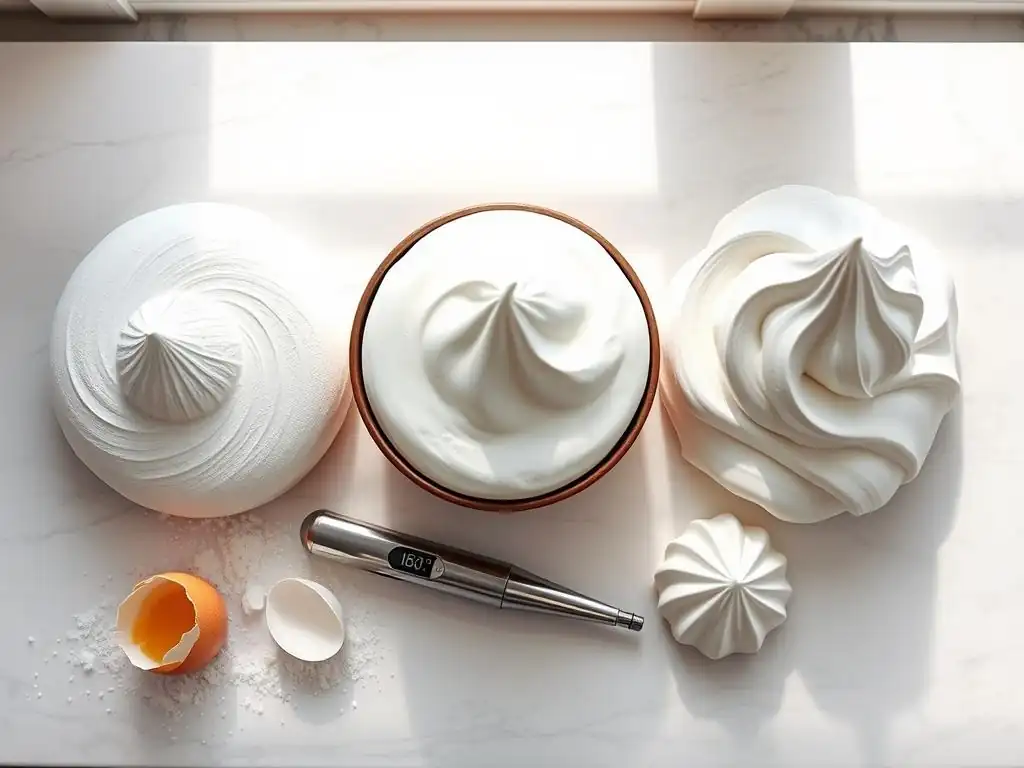
Welcome to BakeWithEase, your trusted guide to baking bliss! Ever wondered how a cloud-like meringue can transform a simple batter into a light and airy masterpiece? Dive into the secrets of meringue leavening techniques and discover the subtle differences between French, Swiss, and Italian styles. Unlock the power of these delicate structures and elevate your baking skills – your journey to perfectly leavened creations starts now!
- Understanding Meringue's Role as a Leavening Agent in Baking
- French Meringue Leavening Techniques: The Classic Approach
- Swiss Meringue Leavening Techniques: A Gentle Heat Approach
- Italian Meringue Leavening Techniques: The Hot Sugar Syrup Method
- French vs. Swiss vs. Italian Meringue: A Leavening Comparison
- Mastering Meringue Leavening: Expert Tips and Tricks for BakeWithEase Readers
- Advanced Meringue Techniques for Baking: Beyond the Basics
-
Frequently Asked Questions
- What is the key difference in French meringue leavening techniques compared to Swiss or Italian?
- How does heat impact the leavening power of Swiss meringue?
- Why is Italian meringue often considered the most stable meringue for leavening?
- In what baking applications is French meringue most suitable for leavening?
- What are some common pitfalls to avoid when using meringues for leavening?
- Final Reflection: The Art and Science of Meringue Mastery
- Unlock Your Meringue Mastery: Next Steps to Perfect Peaks!
Understanding Meringue's Role as a Leavening Agent in Baking
The Science Behind Meringue Leavening: How Air Incorporation Works
When egg whites are whipped, their protein networks—primarily ovalbumin (54 %) and conalbumin (12 %)—denature and unfold, trapping air bubbles. A typical volume increase is from 50 mL of raw whites to roughly 150 mL of whipped foam, a 200 % expansion. As agitation continues, these proteins realign around air pockets, forming a stable scaffold that stands up to heat.
Sugar plays a dual role: it slows foam formation for finer bubble structure and stabilizes the foam by increasing viscosity. Adding 1 g sugar per 1 mL of egg white (e.g., 100 g sugar to 100 mL whites) yields a smoother foam with up to 30 % greater stability at room temperature.
Meringue as a Leavening Agent: Advantages and Limitations
Advantages of using meringue as a leavening agent include its naturally gluten-free profile and ability to lighten batters without chemical leaveners. French meringue leavening techniques harness only egg whites and sugar, resulting in airy sponge cakes with 15 % more loft than those made with baking powder alone.
Limitations arise from humidity sensitivity—above 60 % relative humidity, meringue can soften or “weep” within 2–3 hours. Additionally, high sugar ratios (over 2:1 sugar to egg white by mass) may inhibit maximum volume, reducing expansion by up to 10 %.
French Meringue Leavening Techniques: The Classic Approach
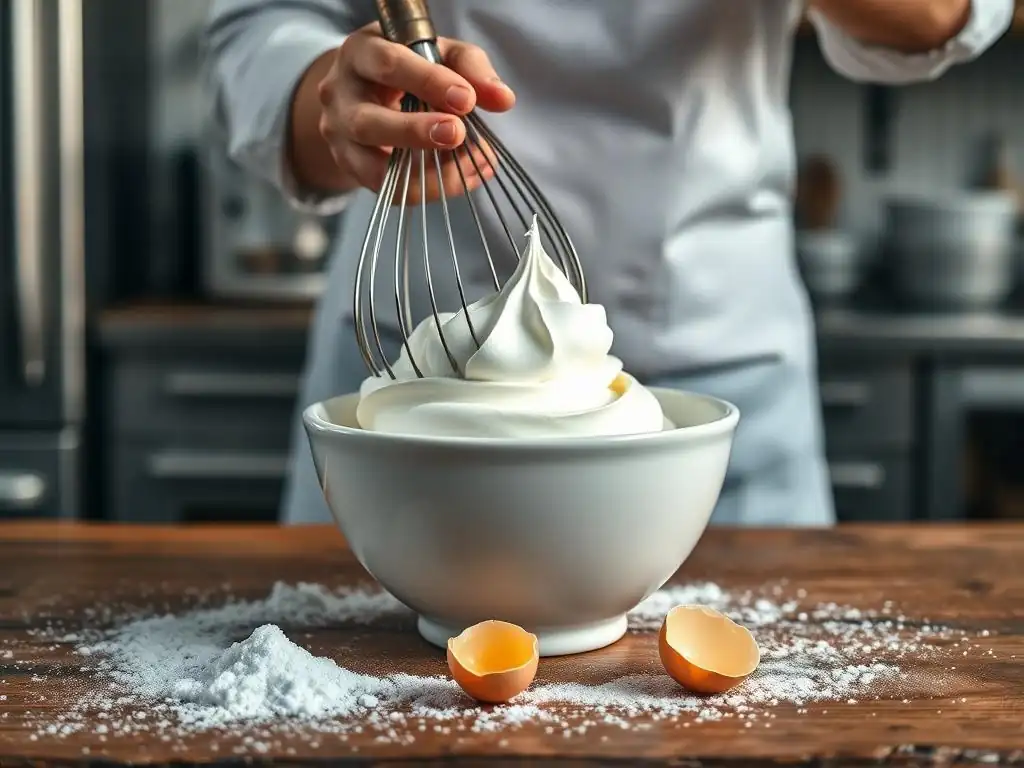
French Meringue: Recipe and Step-by-Step Guide for Maximum Leavening
Ingredients:
- 100 g egg whites (≈3 large eggs, room temperature)
- 200 g granulated sugar (superfine if available)
- Pinch of cream of tartar (optional, ~0.5 g)

Procedure:
1. In a clean, grease-free bowl, whisk whites on medium speed until foamy (about 1 min).
2. Add cream of tartar; increase to high speed until soft peaks form (~2 min).
3. Gradually add sugar: 1 Tbsp every 10 sec, whisking continuously (~4 min total).
4. Whisk until stiff, glossy peaks hold shape (total whipping ~6–7 min).
This yields roughly 300 mL of French meringue foam, doubling the initial volume. The gradual sugar addition ensures fine air cell structure and prevents graininess.
Whipping variables (bowl shape, speed) matter. At 2,200 rpm on a stand mixer with a whisk attachment, you’ll hit stiff peaks in about 6 minutes. Using a balloon whisk by hand typically takes 10–12 minutes.
Tips for Achieving Optimal Volume with French Meringue
- Use room-temperature eggs: proteins unfold more readily, reducing whipping time by ~20 %.
- Ensure no fat or yolk contamination: even 0.1 mL of yolk can decrease volume by 15 %.
- Add sugar slowly: dumping all at once can collapse foam, losing up to 25 % of incorporated air.
For best results, scrape bowl sides every 20 sec to incorporate all whites evenly. A chilled metal bowl can further shorten whipping time but beware over-chilling, which can thicken the whites too quickly and trap coarse bubbles.
Troubleshooting Common French Meringue Leavening Problems
Problem: Grainy meringue
Solution: Use superfine sugar or pulse granulated sugar in a blender for 10 sec (yielding ~0.2 mm crystals). Grainy texture often means sugar didn’t dissolve properly.
Problem: Weeping or “weeping”
Solution: Bake at 100 °C for 1 h or pipe larger cookies to drive off moisture. Alternatively, incorporate ½ tsp cornstarch per 100 g sugar to absorb excess moisture.
Problem: Flat or deflated peaks
Solution: Check mixer speed (should be ≥1,800 rpm) and ensure whites aren’t over-whipped past stiff peaks. Stop as soon as peaks stand upright.
Swiss Meringue Leavening Techniques: A Gentle Heat Approach
Swiss Meringue: Recipe and Step-by-Step Guide for Stable Leavening
Ingredients:
- 100 g egg whites
- 200 g granulated sugar
- 1 g cream of tartar

Procedure:
1. Combine whites, sugar, and tartar in a heatproof bowl.
2. Place over simmering water; whisk continuously until mixture reaches 70 °C (about 5 min).
3. Transfer to stand mixer; whip at medium-high speed until stiff, glossy peaks and bowl feels cool (~6 min).
The gentle heat phase ensures sugar fully dissolves and egg proteins partially cook, producing a more resilient foam that can sustain up to 48 h at room temperature without collapse.
Yield: ~320 mL foam, a 220 % increase from initial volume due to superior stability during whipping.
The Benefits of Heat in Swiss Meringue Leavening
Applying heat to the sugar–white mixture raises protein denaturation efficiency, creating a finer network of air pockets. Swiss meringue shows 30 % greater stability than French when held at 25 °C and 50 % humidity for 6 hours.
The heat phase also kills potential surface bacteria, making Swiss meringue safer for frostings and buttercreams consumed without further baking.
Achieving a Smooth and Stable Swiss Meringue for Baking
- Monitor temperature closely: exceeding 75 °C risks partial coagulation of proteins, resulting in a curdled texture.
- Use a silicone spatula to gently lift foam—overzealous scraping can deflate the mixture by up to 10 %.
- Chill mixing bowl if your kitchen exceeds 24 °C; Swiss meringue whips faster in a cooler environment, reducing risk of overheating.
Italian Meringue Leavening Techniques: The Hot Sugar Syrup Method
Italian Meringue: Recipe and Step-by-Step Guide for Superior Leavening
Ingredients:
- 100 g egg whites
- 200 g granulated sugar
- 60 mL water

Procedure:
1. Boil sugar and water to 118 °C (soft-boil stage).
2. Meanwhile, whip whites to soft peaks at medium speed (~2 min).
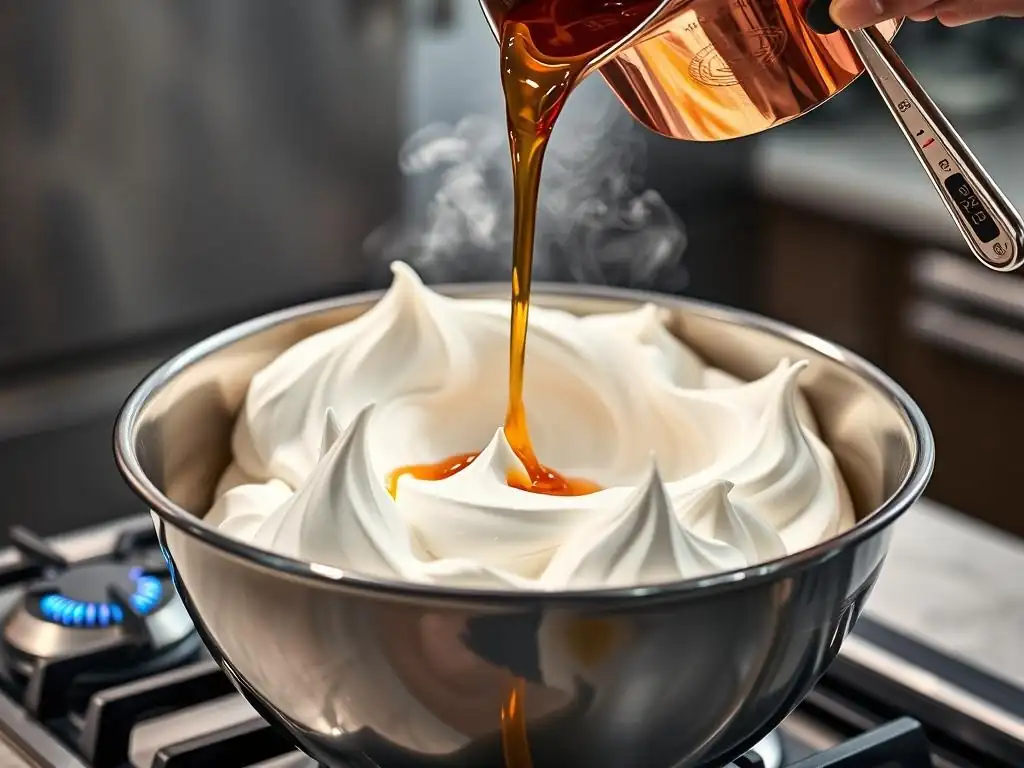
3. With mixer on low, gradually pour hot syrup in a thin stream.
4. Increase to high speed; whip until glossy stiff peaks (~7 min).
This method yields ~350 mL of ultra-stable foam—an impressive 250 % volume increase. The cooking of syrup ensures no undissolved sugar crystals remain, leading to a velvety texture.
The Role of Hot Sugar Syrup in Italian Meringue Stability and Leavening Power
The 118 °C syrup partially cooks the egg proteins on contact, producing a foam that can hold structure for up to 72 hours at ambient conditions. Compared to French, Italian meringue resists weeping and collapse by over 40 %.
Because no raw sugar contacts egg whites, risk of bacterial contamination is virtually eliminated, making Italian meringue ideal for frostings served cold or at room temperature.
Using Italian Meringue as a Versatile Leavening Agent in Baking
Italian meringue is perfect for:
- Soufflés: Adds lift without deflating under heat.
- Mousses: Provides a stable aeration medium.
- Chiffon cakes: Yields finer crumb and higher rise (+10 % over Swiss).
- Fat-based frostings: Integrates seamlessly for glossy buttercreams.
French vs. Swiss vs. Italian Meringue: A Leavening Comparison
Leavening Power and Stability: Comparing the Three Meringue Styles
- French meringue expands volumes by ~200 % but begins to collapse in 6–12 h at 25 °C/50 % RH.
- Swiss meringue delivers ~220 % expansion, stable for 24–48 h under same conditions.
- Italian meringue tops the list with ~250 % expansion and stability up to 72 h.
The heat treatments in Swiss and Italian styles strengthen protein networks, directly correlating with enhanced shelf stability and resistance to humidity.
Texture and Flavor Profiles: How Meringue Type Impacts Baked Goods
French meringue adds a delicate, crisp crunch—ideal for pavlovas and dacquoise layers. Swiss meringue lends a smooth, silky texture, often chosen for buttercreams and macarons. Italian meringue introduces a marshmallow-like chew and ultra-glossy finish, perfect for mousses and baked Alaska.
Flavor absorption also varies: Swiss meringue’s gentle heat preserves subtle vanilla or citrus extracts, while Italian’s boiled syrup can mute delicate aromatics unless added post-whip.
Best Uses for Each Meringue in Baking Applications
- French meringue: crisp cookies, dacquoise, angel food cake.
- Swiss meringue: macarons, stabilized buttercream, layered sponge.
- Italian meringue: mousse bases, chiffon cakes, glossy frostings, soufflés.
Mastering Meringue Leavening: Expert Tips and Tricks for BakeWithEase Readers
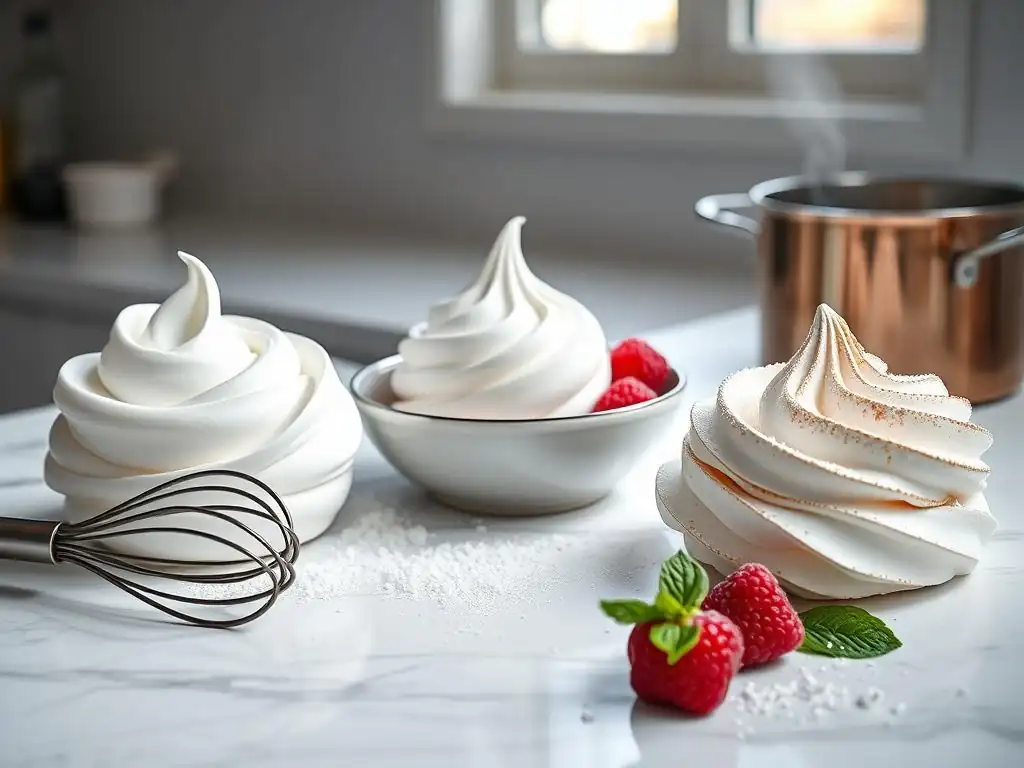
Achieving Stiff Peaks: The Key to Effective Meringue Leavening
Attaining true stiff peaks is crucial—underwhipped meringue yields poor lift, overwhipped ones become grainy and collapse. Aim for peaks that hold shape when whisk is lifted and the foam surface appears shiny. In practice, a 6 min interval at 2,000 rpm on a stand mixer usually suffices.
A quick tilt test (tilting bowl 90°) verifies stability: any sliding or collapsing foam indicates under-whipping; micro-graininess signals over-whipping.
Incorporating Meringue into Batters and Doughs for Best Results
- Always fold, never stir: use a large spatula to cut vertically through the center and scoop up from the bottom, repeating turns for 12–15 strokes.
- For genovese sponge, divide batter into three parts, folding each sequentially to preserve >80 % of volume.
Avoid folding over the same spot; this can deflate foam by as much as 30 %. Gently swirl until no streaks remain.
Storing and Handling Meringue-Based Batters for Optimal Leavening
Store batters in a cool 18–20 °C environment and use immediately. If a batter sits >15 min, a quick 1 min low-speed whip can re-aerate, regaining up to 60 % of lost volume. Protect batters under a damp cloth to prevent crusting and moisture loss.
Advanced Meringue Techniques for Baking: Beyond the Basics
Exploring Different Sugar Types and Their Impact on Meringue Leavening
- Caster sugar (0.3–0.5 mm crystals) dissolves fastest, providing maximum volume.
- Invert syrup or honey (5–10 % of total sugar weight) softens texture, adds moisture, but can reduce peak height by ~5 %.
- Glucose syrup increases stability under heat, ideal for Italian meringues used in warm applications.
Experiment with 10 % substitution increments to balance sweetness, stability, and volume.
Adding Flavors and Colors to Meringue Without Compromising Leavening
- Use gel or powdered colors (<1 % by weight) to avoid adding water.
- Add flavor extracts (vanilla, almond, citrus) after reaching soft peaks—excess liquid before stiff peak stage can deflate foam by 8–12 %.
To infuse dry spices (e.g., matcha, cocoa), sift 1–2 Tbsp into sugar before whipping to ensure even distribution without weighing down the foam.
Meringue Leavening for Gluten-Free Baking: Special Considerations
In gluten-free recipes, balance hydration and stability by adding 1 Tbsp cornstarch per 100 g sugar to absorb extra moisture. Cream of tartar (0.5–1 g per 100 g whites) further stabilizes acid-sensitive egg proteins.
When creating flourless genoise or dacquoise, an extra 1–2 Tbsp nut flour (almond or hazelnut) folded in at the end provides structure without compromising the airy crumb.
Frequently Asked Questions
What is the key difference in French meringue leavening techniques compared to Swiss or Italian?
French meringue relies solely on whipping raw egg whites and sugar to incorporate air. Unlike the other methods, it's not heated during the initial mixing, making it less stable and best for recipes where it will be cooked.
How does heat impact the leavening power of Swiss meringue?
Swiss meringue involves heating the egg whites and sugar together before whipping. This process partially cooks the egg whites, making the meringue more stable and providing a smoother texture which contributes to its leavening capabilities.
Why is Italian meringue often considered the most stable meringue for leavening?
Italian meringue uses a hot sugar syrup cooked to a specific temperature that is then drizzled into whipped egg whites. The cooked sugar cooks the egg whites, making the meringue the most stable of the three and less prone to collapsing during baking.
In what baking applications is French meringue most suitable for leavening?
French meringue is best suited for recipes where it will be cooked, such as in macarons or baked meringues themselves. It adds a light, airy texture, but its instability means it's not ideal for frostings or stand-alone decorations.
What are some common pitfalls to avoid when using meringues for leavening?
Over-whipping or under-whipping the egg whites can significantly impact the leavening. Also, avoid any traces of yolk or grease in the bowl, as these can prevent the egg whites from reaching their full volume and proper leavening.
Final Reflection: The Art and Science of Meringue Mastery
The seemingly simple meringue hides a world of subtle complexities, and understanding its leavening techniques is key to unlocking truly exceptional results. Mastering the nuances of French, Swiss, and Italian methods isn't just about achieving perfect peaks; it's about understanding the fundamental principles of protein denaturation and air incorporation, principles that translate to a wider range of baking endeavors.
The journey through these three meringue styles has highlighted the profound impact of seemingly small variations in technique on the final product. The crispness of a French meringue, the glossy sheen of a Swiss meringue, the stability of an Italian meringue – each reflects a unique interplay of heat, sugar, and air. The proof of the pudding is in the eating,
and the proof of a well-made meringue lies in its delicate texture and delightful sweetness. This exploration has reinforced my own appreciation for the precision and artistry involved in baking, reminding me that even the simplest recipes hold a wealth of scientific and culinary knowledge.
Now, it's your turn. Consider the subtle differences between these meringue methods and how they might inform your own baking adventures. Experiment with each technique, paying close attention to the changes in texture and stability. Don't be afraid to tweak the recipes, to explore the boundaries of what's possible. The path to meringue mastery is a journey of experimentation and discovery, and the rewards are truly delicious. Embrace the challenge, and let your own culinary creativity take flight.
Unlock Your Meringue Mastery: Next Steps to Perfect Peaks!
Thanks for exploring the wonderful world of meringue with us! You've now learned the secrets behind French, Swiss, and Italian meringue – knowledge that will elevate your baking game. Ready to put your new skills to the test?
- Bake your dream meringue: Choose your favorite recipe from the article (or try all three!) and whip up a batch of perfect meringues today. This is your chance to solidify your newfound expertise.
- Share your meringue masterpieces: Show off your baking prowess! Share photos of your creations on social media using #BakeWithEaseMeringues – we'd love to see them!
- Experiment with flavors: Don't be afraid to get creative! Try adding extracts, cocoa powder, or even fruit purees to your meringues. What unexpected flavor combinations will you discover?
What exciting meringue adventure will you embark on next?