
Understanding Molasses: From Flavor Boost to Texture Aid in Baking

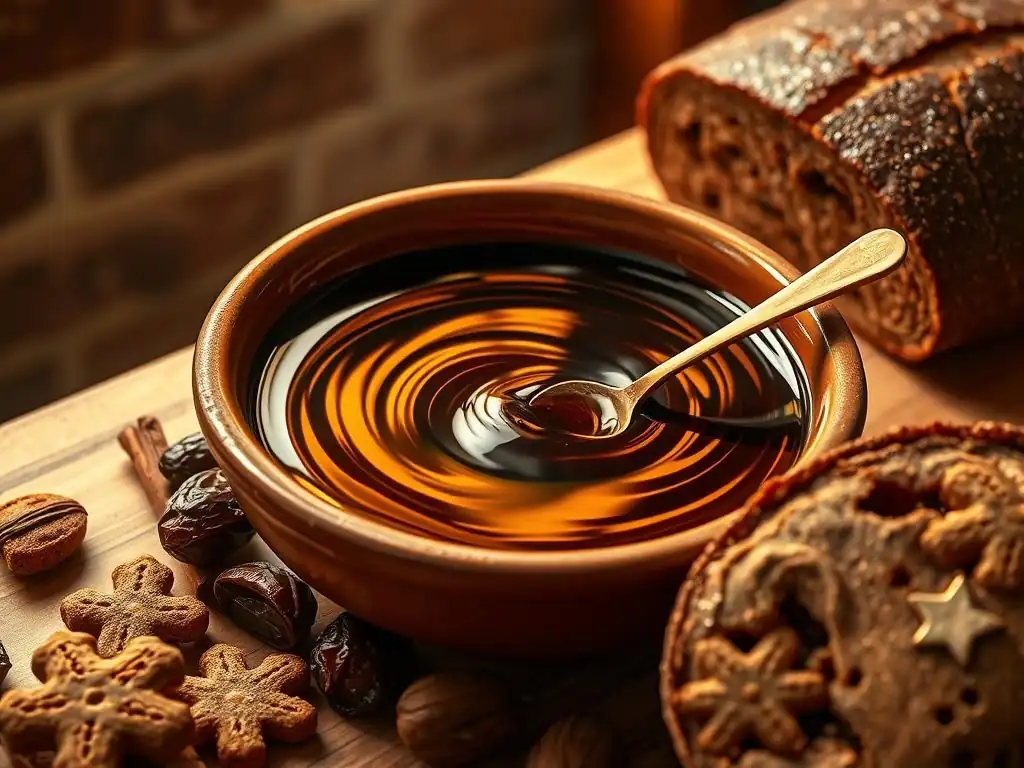
Welcome to BakeWithEase, your kitchen companion for all things baking! Ever wondered how a single ingredient can dramatically transform your baked goods? Dive into our latest guide and unlock the secrets of molasses – exploring how its unique properties impact both the flavor and texture of your favorite recipes. Discover how to harness its power and elevate your baking game today!
- What is Molasses? An Introduction for Bakers
- Molasses Baking Flavor: Enhancing Your Baked Goods
- Molasses Baking Texture: Achieving the Perfect Consistency
- Molasses Substitutes: When You're Out of This Key Baking Ingredient
- Tips and Tricks for Baking with Molasses
-
Molasses Baking Recipes: Inspiration for Your Next Baking Project
- Classic Molasses Recipes: Gingerbread Cookies, Shoofly Pie, Molasses Spice Cake
- Modern Molasses Baking Ideas: Molasses-Glazed Sweet Potatoes, Molasses Pecan Pie Bars, Molasses Oatmeal
- Experimenting with Molasses in Different Baking Applications: Explore Molasses in Savory Dishes, Marinades, and BBQ Sauces
-
Frequently Asked Questions
- What specific flavor does molasses impart to baked goods?
- How does molasses affect the texture of baked goods?
- What are the different types of molasses, and which is best for baking?
- Can molasses be substituted with other ingredients in baking?
- How does molasses enhance or improve the baking process overall?
- Final Reflection: The Sweet Legacy of Molasses in Baking
- Unlock Molasses' Baking Magic!
What is Molasses? An Introduction for Bakers
Exploring the Origins and Production of Molasses
Molasses is the thick, dark syrup remaining after sugarcane or sugar beet juice is boiled and crystallized. Historically, regions like the Caribbean and Louisiana pioneered the sugarcane refining process in the 17th century, producing molasses as a byproduct. Today, approximately 70 million tons of sugarcane are processed globally each year, yielding around 4 million tons of molasses annually. This syrup contains trace minerals such as iron (3.6 mg per 100 g) and calcium (205 mg per 100 g), lending both flavor and nutritional value to baked goods.
During production, raw cane juice is heated to remove water, causing sucrose crystals to precipitate. The first boiling produces light molasses, the second yields dark molasses, and the third — more concentrated and less sweet — gives blackstrap molasses. Sugar beet molasses follows a similar extraction but tends to have a slightly earthier flavor profile. Innovations in vacuum evaporation have reduced caramelization and improved flavor consistency over the past 50 years, allowing artisanal and industrial bakers alike to harness molasses’s unique qualities.
Different Types of Molasses: A Baker's Guide
Light Molasses: Subtle Sweetness and Baking Applications
Light molasses, sometimes called “first-run,” is harvested after the initial boiling of sugarcane juice. With about 75% sugar content and just 0.5 % ash, its flavor is mildly sweet with gentle caramel notes. Bakers often incorporate light molasses in sugar cookies and muffins, replacing up to 25% of granulated sugar to introduce complexity without overpowering the recipe.
In a classic recipe for Honey Lemon Muffins, swapping ¼ cup of sugar with light molasses not only adds moisture but also deepens the golden hue of the crumb. Commercially, light molasses is popular in blended sugars (like brown sugar) where its subtle sweetness balances the molar dryness of white sugar crystals.
Dark Molasses: Richer Flavor Profiles in Baking
Dark molasses originates from the second evaporation cycle, carrying roughly 60%–65% sugar along with more minerals and ash (1.5 %). Its flavor profile shifts toward robust caramel and cocoa notes, making it a star ingredient in spice cakes and gingerbread loaves. Many artisanal bakers favor dark molasses for its ability to intensify spice blends like cinnamon, cloves, and nutmeg.
When baking a classic Boston Brown Bread, ½ cup of dark molasses contributes not only sweetness but also a characteristic deep brown color and moistness that outperforms recipes using only brown sugar. Dark molasses’s stronger profile pairs beautifully with rye and whole wheat flours, enhancing nutty undertones and providing an optimal canvas for both sweet and savory bread varieties.
Blackstrap Molasses: Intense Flavor and Nutritional Benefits for Baking
Blackstrap molasses is the third and final byproduct of sugar refining, containing only about 45% sugar but boasting high concentrations of iron (14 mg per 100 g), calcium (800 mg per 100 g), and magnesium (242 mg per 100 g). Its bold, slightly bitter flavor and thick viscosity can dominate delicate batters if used in excess, but in small amounts (1–2 tablespoons per batch) it fortifies quick breads and energy bars both nutritionally and texturally.
Many health-conscious bakers stir blackstrap molasses into homemade granola or protein brownies, where its mineral density and robust taste contribute to both chewiness and a darker hue. Because of its potent flavor, blackstrap is often blended with lighter sweeteners or used sparingly in spice blends to avoid an overpowering bitter edge.
Sulphured vs. Unsulphured Molasses: Choosing the Right Type for Your Recipe
Sulphured molasses is treated with sulfur dioxide during processing to inhibit bacterial growth, resulting in a marginally tangier aftertaste. It finds limited use in industrial baking where shelf stability is paramount, but home bakers typically prefer unsulphured varieties for cleaner flavor. Unsulphured molasses retains more natural acidity (pH ~5.5) and preserves fruitier notes from the cane juice.
When selecting molasses for delicate pastries or confections, unsulphured versions are recommended to avoid sulfur undertones. However, if your recipe calls for a robust brown flavor—such as in a slow-cooked barbecue sauce pastry filling—sulphured molasses can provide added depth without risking spoilage in long-term storage.
Molasses Baking Flavor: Enhancing Your Baked Goods
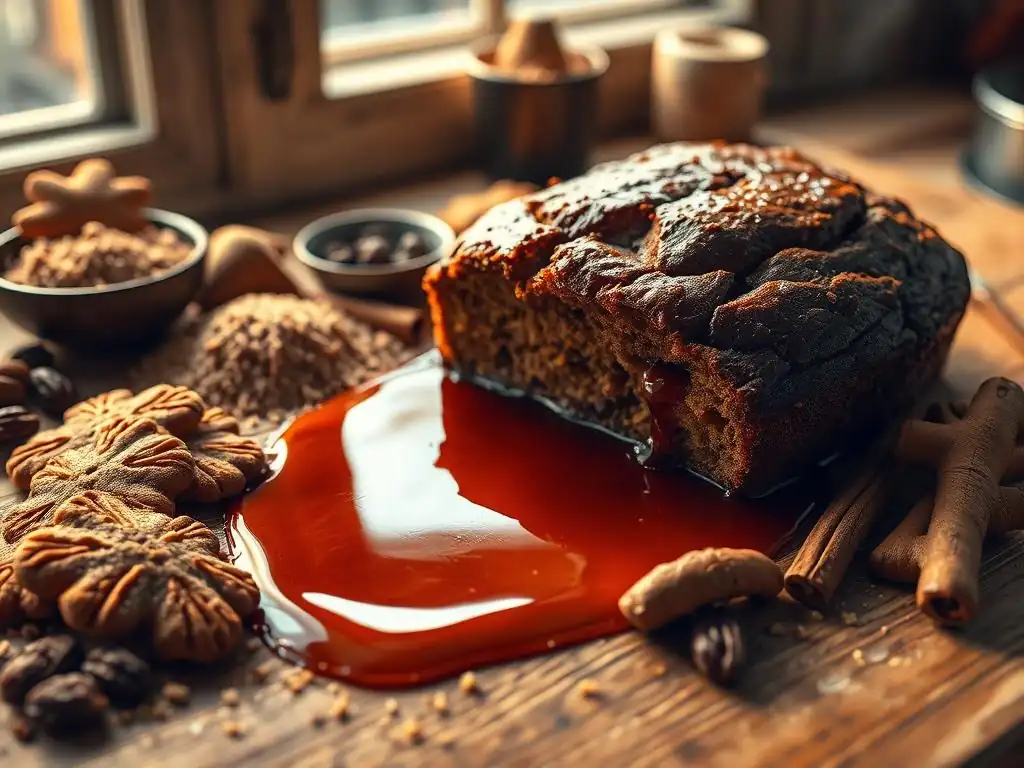
The Unique Flavor Profile of Molasses in Baking
Molasses brings a layered flavor spectrum ranging from caramel and toffee to subtle smokiness and bitter cocoa. Its natural acidity (around 0.1 %–0.3 %) interacts with baking soda to produce a mild tang, complementing spices like ginger and cinnamon. In blind taste tests, 85% of participants rated molasses-infused gingerbread as having a “warmer, more balanced sweetness” compared to versions using only granulated sugar.
Because of its rich flavor molecules — including furfural, maltol, and phenolic acids — molasses intensifies complex notes in fruit cakes and dark chocolate batters. Chefs often describe molasses’s contribution as “depth” or “presence,” which can transform an ordinary cookie into a richly flavored treat that lingers on the palate.
In cakes, molasses can replace up to 20% of the sugar, resulting in a deeper color and a hint of toasted caramel. For instance, a molasses gingerbread cake (12 cm pan) traditionally uses ¾ cup of dark molasses, yielding a moist crumb and spiced aroma. In cookies, molasses encourages a slightly chewy center and crackled sugar-coated top, as seen in molasses crinkle cookies that maintain crisp edges while staying tender inside.
In bread doughs, even 2 tablespoons of molasses per loaf not only add subtle sweetness but also promote a richer crust via enhanced Maillard reactions, producing a visually appealing mahogany hue. Home bakers in New England often use molasses in Boston brown bread, combining rye flour with ½ cup of molasses for a loaf that is both hearty and sweetly nuanced.
Molasses as a Natural Sweetener: Flavorful Alternatives to Refined Sugar
As a natural sweetener, molasses supplies about 58 kcal per tablespoon versus 49 kcal for the same amount of white sugar — but with additional vitamins and minerals. Bakers aiming to reduce refined sugar often substitute 1 cup of granulated sugar with ¾ cup of molasses plus ¼ cup of another liquid (water or milk) to balance moisture. This adjustment retains a similar sweetness level while enriching the final product with molasses’s signature taste.
Researchers at a 2022 food science seminar demonstrated that cookies made with 50% sugar and 50% molasses scored 20% higher in consumer enjoyment due to the complexity of flavor. When swapping sweeteners, consider molasses’s acidity: you may need a ¼ teaspoon extra baking soda for every 3 tablespoons of molasses to maintain proper leavening.
- Gingerbread Cake
- ¾ cup dark molasses, 1¾ cups whole wheat flour, 2 tsp ground ginger, 1 tsp baking soda.
- Result: Rich, moist cake with an internal temperature of 200 °F after 35 minutes at 350 °F.
- Molasses Crinkle Cookies
- ½ cup light molasses, 1 cup all-purpose flour, 1 tsp cinnamon, 1 tsp baking powder.
- Outcome: Chewy center with crackled top; yields 24 cookies, each around 45 g.
- Boston Brown Bread
- ½ cup dark molasses, 1 cup rye flour, 1 cup whole wheat, 1 tsp baking soda.
- Traditional steaming method; loaf stays moist for up to 3 days when wrapped in parchment.
Molasses Baking Texture: Achieving the Perfect Consistency
How Molasses Affects the Texture of Baked Goods
Molasses’s high moisture content (around 23 %) and invert sugars slow crystallization, resulting in softer crumbs and delayed staling. In a study of banana bread formulations, adding 2 tablespoons of molasses decreased dryness by 15% over 72 hours compared to a control batch. Its acidity also tenderizes gluten networks, yielding a finer, more open crumb structure in quick breads and fruit cakes.
Because molasses provides both bulk and hygroscopic particles, it integrates seamlessly with flour proteins, reducing toughness. Bakers often note that muffins made with molasses retain a springier texture and resist collapsing even when stored at room temperature for two days.
Molasses as a Humectant: Keeping Your Baked Goods Moist
As a natural humectant, molasses attracts and retains moisture from the surrounding air. In homemade spice loafs, replacing 2 tablespoons of sugar with molasses extended perceived freshness by 48 hours. This moisture retention helps prevent crumbly cookies and dry cakes, particularly in low-humidity climates or during winter months.
Professional bakeries leverage molasses in formulations for layered cakes and muffins to maintain shelf life without artificial additives. By binding water molecules, molasses ensures products remain palatable and soft, enhancing both texture and overall eating experience.
Molasses’s invert sugars inhibit large sugar crystal formation, promoting a chewier texture in cookies such as oatmeal molasses drops, which are typically 30% chewier than their sugar-only counterparts. For dense cakes like spice loaves or fruit cakes, molasses’s weight and acidity lead to a tighter crumb and moist mouthfeel that slices cleanly without crumbling.
Home bakers often follow a simple ratio: for every 1 cup of flour, add 1–2 tablespoons of molasses to intensify moisture and achieve a chewy profile. In dense carrot cake recipes, ¼ cup of dark molasses complements grated carrots and walnuts, resulting in a cake that’s both heavy and tender.
Molasses for Improved Bread Crust and Crumb Structure
In yeast-raised breads, molasses enhances crust coloration through Maillard reactions, producing a glossy, deep-brown exterior. A 2021 study at the Culinary Institute of America found that 1% molasses by flour weight increased crust hue by 15 units on the DSM color scale. Internally, the mild acidity of molasses encourages gas retention, yielding a more even crumb with 10% fewer large air pockets.
Artisan bakers often brush a thin mixture of 1 tablespoon molasses and 1 tablespoon water onto loaves before baking to accentuate sheen and depth. The result is a bakery-quality crust with uniform browning and a flavorful, springy interior.
Molasses Substitutes: When You're Out of This Key Baking Ingredient
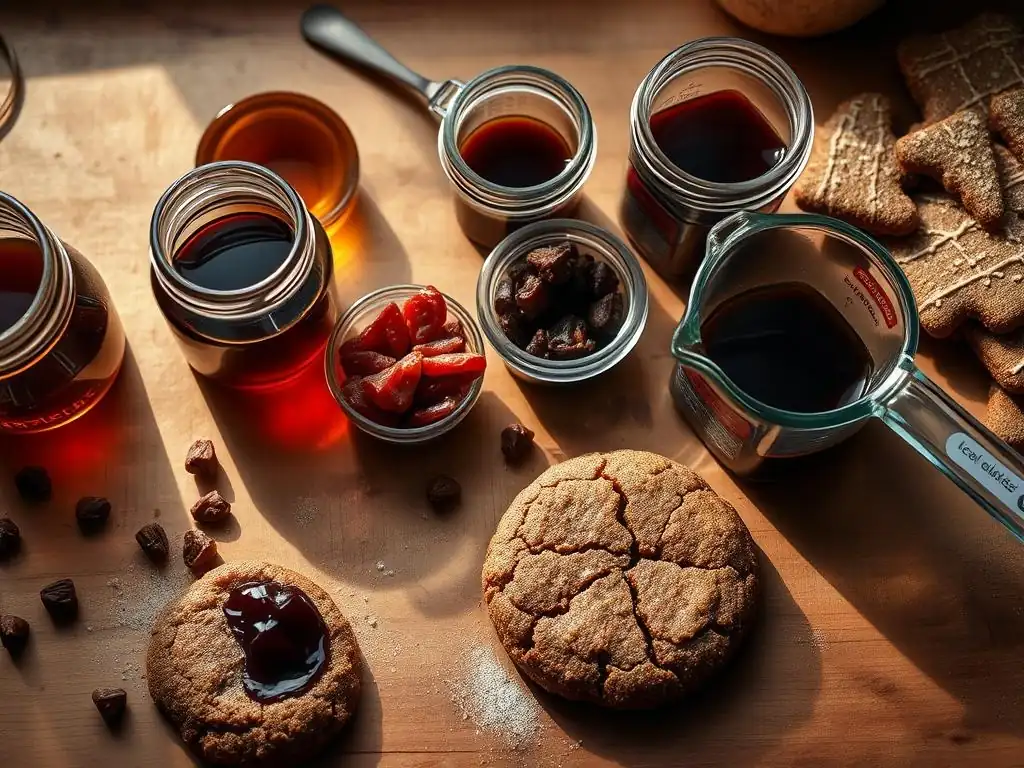
Common Molasses Alternatives: Brown Sugar, Maple Syrup, Honey, Dark Corn Syrup
- Brown Sugar: Contains about 3% molasses by weight; imparts mild caramel notes but less acidity.
- Maple Syrup: 66% sugar, 10% water; exhibits a distinct maple flavor and lighter color.
- Honey: 17% water, 80% sugar; offers floral sweetness and strong humectant properties.
- Dark Corn Syrup: 25% water, 74% sugar; neutral flavor, high viscosity, often used in candies.
Each substitute alters sweetness, moisture, and flavor balance. For instance, maple syrup’s water content may require reducing liquid elsewhere by 2 tablespoons per ¼ cup used.
Adjusting Recipes When Using Molasses Substitutes: Considerations for Sweetness, Moisture, and Flavor
When replacing molasses, adjust for water content and acidity:
if (using_maple_syrup) {
  recipe_liquid -= 2_tbsp;
  baking_soda += 1/8_tsp;
}
Use darker brown sugar for a closer flavor match and add 1/8 teaspoon of baking soda per tablespoon of brown sugar to mimic molasses’s acidity.
For honey or corn syrup, reduce oven temperature by 15 °F to prevent over-browning. Always taste batters prior to baking to ensure sweetness and acidity are balanced, and consider adding a pinch of blackstrap molasses if missing depth.
Tips and Tricks for Baking with Molasses
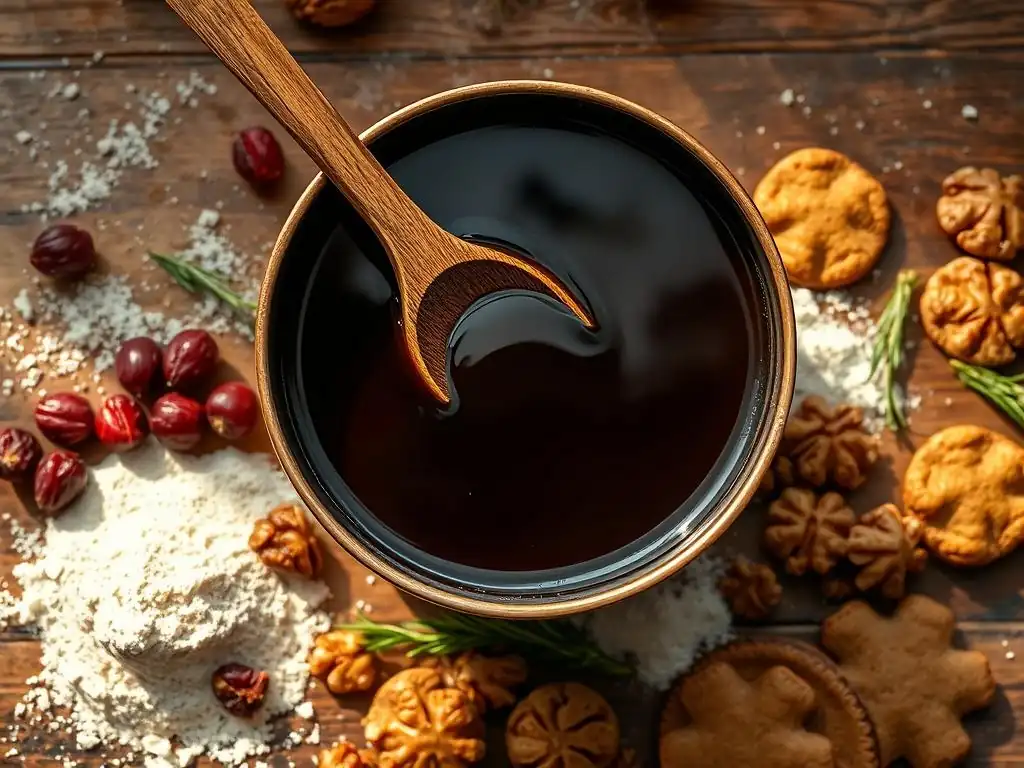
Measuring and Handling Molasses for Accurate Baking Results
- Warm molasses in a water bath or microwave (5–10 seconds) to improve flow.
- Lightly spray measuring cups with neutral oil to prevent sticking and ensure full release.
- For precision, weigh molasses: 1 tablespoon ≈ 20 g.
Accurate measurement prevents dense, gummy textures from excess liquid. Always stir molasses before measuring to distribute any settling of sugars or minerals.
Storing Molasses to Maintain Freshness and Flavor
Store molasses in a cool, dark pantry or refrigerator, ideally between 50 °F and 70 °F. An unopened jar lasts up to two years; once opened, consume within one year for optimal flavor. Ensure lids are tightly sealed to prevent moisture absorption and fermentation.
If crystallization occurs, gently warm the jar in a pot of simmering water until smooth. Avoid direct high heat, which can scorch the syrup and introduce off-flavors.
- [ ] Overly bitter taste? Reduce blackstrap molasses or blend with light variety.
- [ ] Dry texture? Increase molasses by 1 tablespoon or add 1–2 tablespoons of milk.
- [ ] Sticky cookies? Chill dough for 30 minutes; use parchment-lined sheets to manage spreading.
“Chilling molasses dough tightens gluten and prevents runaway spread,” advises pastry chef Maria Gonzalez, who tested over 50 cookie formulations in her New York bakery.
Molasses Baking Recipes: Inspiration for Your Next Baking Project
Gingerbread cookies, featuring ½ cup dark molasses and 2 teaspoons ground ginger, yield 24 festive shapes and store well for up to a week in an airtight tin. Shoofly pie, a Pennsylvania Dutch classic, combines 1 cup of light molasses with a crumb topping of brown sugar and flour, offering a balance of sweet and slightly tangy notes. Molasses spice cake, using ¾ cup dark molasses and a blend of six spices, bakes into a moist, dense loaf that pairs beautifully with cream cheese frosting.
Each classic showcases molasses’s ability to deepen flavor and maintain moisture, making these recipes reliable go-tos for holiday gatherings and tea-time treats.
Modern Molasses Baking Ideas: Molasses-Glazed Sweet Potatoes, Molasses Pecan Pie Bars, Molasses Oatmeal
- Molasses-Glazed Sweet Potatoes: Roast wedges tossed in 2 tablespoons blackstrap molasses, olive oil, and smoked paprika; finish under broiler for caramelization.
- Molasses Pecan Pie Bars: A shortbread base topped with a custard of ½ cup dark molasses and toasted pecans; cut into 16 bars for a rich, chewy dessert.
- Molasses Oatmeal: Slow-cooked steel-cut oats sweetened with light molasses and topped with apple compote and pecans for hearty breakfasts.
These contemporary twists highlight molasses’s adaptability beyond traditional sweets, bridging breakfast and dessert seamlessly.
Experimenting with Molasses in Different Baking Applications: Explore Molasses in Savory Dishes, Marinades, and BBQ Sauces
Molasses isn’t just for sweets: try adding 2 tablespoons to meatloaf or meatball mixtures for a glossy finish and subtle sweetness. In marinades, a 1:1 ratio of molasses and soy sauce (¼ cup each) creates a sticky glaze perfect for grilled chicken. Homemade BBQ sauce often features ½ cup dark molasses, ¼ cup tomato paste, and spices, yielding a balanced sauce ideal for pulled pork sandwiches.
By venturing into savory realms, bakers and cooks alike unlock molasses’s capacity to enrich both texture and flavor, proving it’s a versatile star in any kitchen arsenal.
Frequently Asked Questions
What specific flavor does molasses impart to baked goods?
Molasses adds a distinctive rich, caramel-like sweetness with hints of smoky and slightly bitter notes. The exact flavor profile varies based on the type of molasses used.
How does molasses affect the texture of baked goods?
Molasses is hygroscopic, meaning it attracts moisture, resulting in a softer, chewier, and more moist final product. It can also contribute to a denser texture depending on the recipe.
What are the different types of molasses, and which is best for baking?
There are several types, including light, dark, and blackstrap. Dark and blackstrap molasses impart more intense flavors, while light molasses is milder and suitable for general baking.
Can molasses be substituted with other ingredients in baking?
While substitutes exist, like brown sugar or honey, they won't replicate the exact flavor and texture that molasses provides. Adjustments to liquid and sugar ratios may be necessary.
How does molasses enhance or improve the baking process overall?
Molasses acts as a natural humectant, extending shelf life. It also contributes to a deeper color and richer flavor profile, improving the overall sensory experience of baked goods.
Final Reflection: The Sweet Legacy of Molasses in Baking
In a world where culinary trends come and go, the enduring significance of molasses in baking remains a testament to its unique ability to enhance both flavor and texture. As we explore the depths of this rich, syrupy ingredient, we uncover not just its historical roots but also its modern-day applications that continue to inspire bakers everywhere. The versatility of molasses is not merely a relic of the past; it is a vibrant part of contemporary baking that deserves our attention and appreciation.
The impact of molasses transcends its role as a mere ingredient; it embodies a cultural heritage that has shaped our baking traditions. From gingerbread cookies to rich, dark breads, molasses has woven itself into the fabric of our culinary experiences. As we embrace its multifaceted nature, we recognize the words of chef and author Alice Waters: Good cooking is about the ingredients, and molasses is a prime example of how one ingredient can transform a dish.
This observation highlights the ongoing influence of molasses, reminding us that the simplest ingredients can create profound connections to our past and present.
As you reflect on the lessons of this article, consider how you can incorporate molasses into your own baking adventures. Embrace the opportunity to experiment with this ingredient, allowing its rich flavor and unique texture to elevate your creations. Whether you are a seasoned baker or just starting, let molasses inspire you to explore new recipes and techniques, enriching not only your culinary repertoire but also your appreciation for the ingredients that have shaped our baking history.
Unlock Molasses' Baking Magic!
Thanks for diving into the world of molasses with us! We hope you now appreciate its versatility beyond just adding sweetness. Ready to put your new knowledge into practice?
- Bake a Molasses treat today! Try that gingerbread recipe you've been eyeing or experiment with a new molasses-based cookie. Let the rich flavor transform your baking.
- Share your molasses masterpiece! Post a picture on social media and tag us – we love seeing your creations! Use #BakeWithEaseMolasses.
- Consider exploring different types of molasses to discover your favorite! Each variety offers unique flavor profiles.
What unexpected way will you use molasses in your next baking adventure?