
Converting Recipes: How to Accurately Switch Between Metric and Imperial Units

Welcome to BakeWithEase, where we make baking a breeze! Ever been stumped trying to decipher a recipe using unfamiliar measurements? Our latest guide dives deep into the art of metric to imperial conversion baking. Unlock the secrets to seamless recipe adaptation and never let unit confusion hinder your baking adventures again. Intrigued? Let's get started and transform those recipe roadblocks into delicious possibilities!
- Converting Recipes: How to Accurately Switch Between Metric and Imperial Units for Baking
- Introduction: Mastering Metric to Imperial Conversion for Baking Success
- Why Accurate Measurement Matters in Baking: The Importance of Metric and Imperial Conversions
- Understanding Metric Units in Baking: A Baker's Guide
- Essential Metric to Imperial Conversion Baking Charts & Tables
-
Converting Dry Ingredients: Precise Metric to Imperial Conversions
- Converting Flour: Accurately Switching Between Grams and Cups
- Converting Sugar: Metric and Imperial Conversions for Granulated, Brown, and Powdered Sugar
- Converting Spices and Leavening Agents: Small Quantity Conversions
- Converting Milk and Water: Milliliters to Cups and Ounces
- Converting Oils and Extracts: Accurate Liquid Volume Conversions
- Tools and Resources for Metric to Imperial Conversion Baking
- Practical Tips for Accurate Metric and Imperial Conversions in Baking
- Example Recipe Conversion: Metric to Imperial Walkthrough
- Common Mistakes to Avoid When Converting Recipes
- Conclusion: Bake with Confidence Using Accurate Metric and Imperial Conversions
-
Frequently Asked Questions
- How essential is accurate measurement conversion when baking?
- What are the most common metric units used in baking?
- Why is weight often preferred over volume when measuring dry ingredients?
- What resources does BakeWithEase offer to help with conversions?
- Are there any ingredients that are not easily converted between metric and imperial?
- Final Reflection: The Sweet Science of Accurate Conversion
- Unlock Your Baking Potential: Master Metric & Imperial Conversions!
Converting Recipes: How to Accurately Switch Between Metric and Imperial Units for Baking
Introduction: Mastering Metric to Imperial Conversion for Baking Success
Welcome, fellow bakers! Have you ever found the perfect recipe, only to realize it's written entirely in units you're not familiar with? Whether you're accustomed to grams and milliliters or cups and ounces, encountering a recipe in the 'other' system can be a bit daunting. But fear not! Mastering metric to imperial conversion baking is a fundamental skill that opens up a world of recipes and ensures consistent, delicious results every time you bake. This guide will walk you through the essentials, making cross-system baking a piece of cake (pun intended! ).
Navigating between metric and imperial units doesn't have to be complicated. With a little understanding and the right tools, you can confidently convert any recipe and tackle baking projects from around the globe. This article will delve into why accurate measurements are critical in baking, explain the differences between the two systems, provide essential conversion data, and offer practical tips for smooth and precise metric to imperial conversion baking. Let's get started on bridging the measurement gap!
Why Accurate Measurement Matters in Baking: The Importance of Metric and Imperial Conversions
Baking is often described as a science, and for good reason. Unlike cooking, where you can often adjust ingredients on the fly and taste as you go, baking relies on precise ratios and chemical reactions. The balance between flour, sugar, leavening agents, and liquids is crucial for achieving the desired texture, rise, and flavor.
Even small discrepancies in measurement can lead to significant differences in the final product, turning a light and airy cake into a dense brick or a chewy cookie into a hard disc. This is why accurate metric to imperial conversion baking is so vital when working with recipes from different regions.
When you encounter a recipe using metric units (like grams) but are used to imperial (like cups), or vice versa, a direct one-to-one conversion isn't always straightforward, especially for volume measurements of dry ingredients. The density of ingredients varies greatly – a cup of flour weighs differently than a cup of sugar or a cup of butter. Simply converting "cups" to "cups" using a standard liquid conversion will lead to errors. Understanding the nuances of metric to imperial conversion baking, particularly by weight, is key to replicating recipes successfully and avoiding common pitfalls that can ruin your bake.
The Impact of Inaccurate Measurements on Baking Results
Inaccurate measurements are one of the most common culprits behind baking failures. Too much flour, for instance, can result in a dry, tough texture because the excess protein develops too much gluten and there isn't enough liquid to hydrate it properly. Conversely, too little flour can cause baked goods to spread excessively, become greasy, or fail to hold their shape. Consider a standard chocolate chip cookie recipe; if you're off by just 20-30 grams of flour when converting from cups, you might end up with cookies that are either too puffy and dry or too flat and oily.
Similarly, errors in measuring sugar can affect not only sweetness but also texture, moisture retention, and browning. Incorrectly measuring leavening agents like baking soda or baking powder can lead to baked goods that either don't rise at all (resulting in a flat, dense product) or rise too quickly and then collapse (leading to a coarse, crumbly texture). Even slight variations in liquid measurements can throw off the consistency of batters and doughs. Precision in metric to imperial conversion baking is paramount to ensuring your efforts result in the delicious outcome the recipe intended.
Metric vs. Imperial: Understanding the Differences in Baking Measurements
The metric system, used by most of the world, is based on units of ten, making scaling recipes and performing calculations relatively simple. In baking, the most common metric units are grams (g) for weight, milliliters (ml) for volume, and degrees Celsius (°C) for temperature. Measuring ingredients by weight in grams is often considered more accurate, especially for dry ingredients like flour and sugar, because it accounts for variations in how densely an ingredient is packed into a measuring cup. A gram is always a gram, regardless of whether it's flour or sugar.
The imperial system, primarily used in the United States, employs units that are not based on powers of ten. Common imperial baking units include ounces (oz) and pounds (lb) for weight, cups, tablespoons (tbsp), and teaspoons (tsp) for volume, and degrees Fahrenheit (°F) for temperature. While weighing in ounces is possible, many home bakers rely heavily on volume measurements using cups, tablespoons, and teaspoons.
This is where significant potential for error arises, as the weight of a given volume of an ingredient can vary depending on factors like how it's scooped and leveled. Understanding these fundamental differences is the first step in successful metric to imperial conversion baking.
Understanding Metric Units in Baking: A Baker's Guide
The metric system offers a streamlined approach to measuring ingredients that many professional bakers and baking enthusiasts appreciate for its accuracy and ease of use. Weighing ingredients, particularly dry ones, eliminates the variability associated with volume measurements. A digital kitchen scale is your best friend when working with metric recipes, allowing you to pour ingredients directly into the mixing bowl or container until the desired weight in grams is reached. This method ensures consistency, batch after batch.
Beyond weight, milliliters are used for liquid volume. Measuring liquids in milliliters is straightforward with a clear measuring jug, reading the volume at eye level. Temperature is measured in degrees Celsius, where water freezes at 0°C and boils at 100°C. Oven temperatures are typically given in increments of 10 or 25 degrees Celsius. Embracing metric units can simplify your baking process and lead to more reliable results, making metric to imperial conversion baking a valuable skill to acquire.
Common Metric Units Used in Baking: Grams, Milliliters, and Celsius
In the world of metric baking, grams (g) are king for dry ingredients and often for fats like butter or shortening. You'll see recipes calling for quantities like 250g of flour, 150g of sugar, or 100g of butter. Using a scale for these measurements is incredibly precise. For liquids, milliliters (ml) are the standard. A recipe might require 300ml of milk, 100ml of water, or 50ml of oil. Larger liquid volumes might be given in liters (L), where 1 L equals 1000 ml.
Oven temperatures are provided in degrees Celsius (°C). Common baking temperatures range from around 150°C (for slow baking or meringues) up to 220°C (for bread or pizzas). A typical temperature for cakes and cookies is 180°C. Knowing these basic units is essential for anyone looking to master metric to imperial conversion baking or simply work with metric recipes.
Advantages of Using Metric Measurements in Baking
One of the primary advantages of using metric measurements, specifically weight in grams, is unparalleled accuracy. Weight is an absolute measure; it doesn't change based on how fluffy or compacted an ingredient is. This means that 100 grams of flour is always 100 grams of flour, whether it's sifted, spooned, or scooped. This consistency significantly reduces the margin for error compared to volume measurements, where a cup of flour can vary in weight by up to 20% depending on handling.
Furthermore, the decimal nature of the metric system makes scaling recipes incredibly easy. Want to double a recipe calling for 150g of sugar and 200g of flour? You simply calculate 2 * 150g = 300g and 2 * 200g = 400g. There are no fractions like 3/4 cups or 2 1/2 teaspoons to deal with. This ease of calculation, combined with the inherent accuracy of weight measurements, makes the metric system a favorite for serious bakers and simplifies the process of metric to imperial conversion baking.
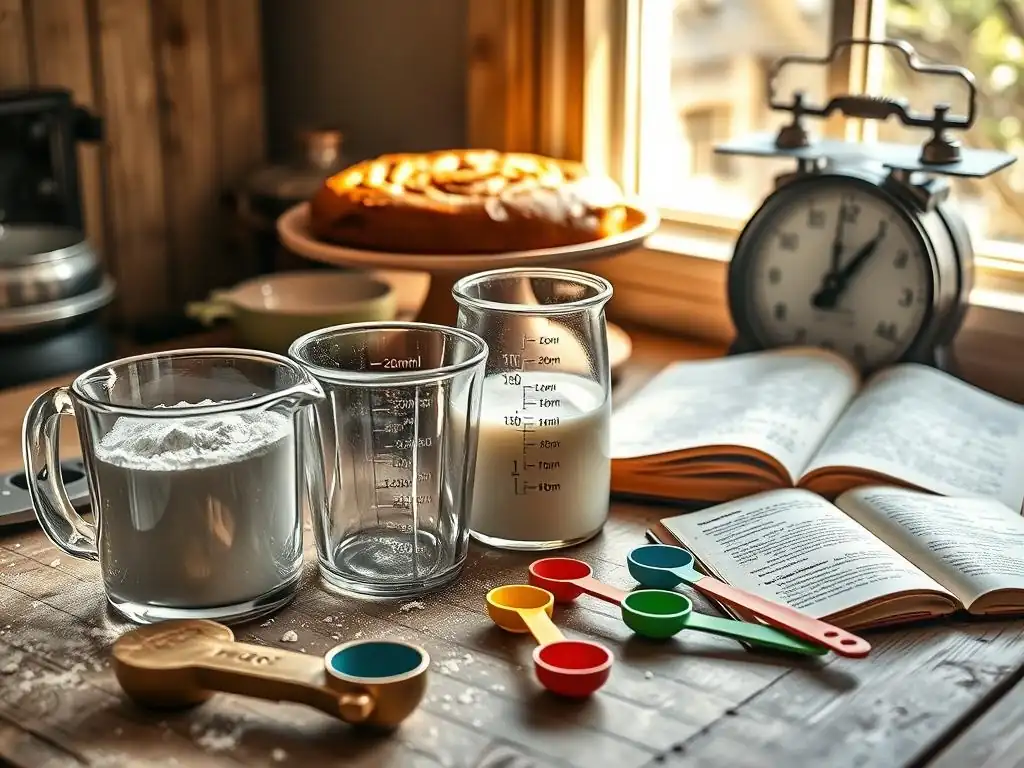
The imperial system is deeply ingrained in the baking traditions of the United States and a few other countries. Volume measurements using cups, tablespoons, and teaspoons are incredibly common, often being the default for home baking recipes. While convenient in their familiarity, these volume units can introduce variability, particularly with dry ingredients. A "cup" measurement relies on how the ingredient is scooped and leveled, leading to potential inconsistencies between different bakers or even different batches by the same baker.
Weight measurements in the imperial system use ounces (oz) and pounds (lb). While less common in everyday home recipes than cups, professional bakers and more advanced recipes often use weight for greater accuracy, especially for ingredients like flour, sugar, and fats. Temperature is measured in degrees Fahrenheit (°F), with typical baking temperatures ranging from 300°F to 450°F. Navigating these units is key for anyone performing metric to imperial conversion baking.
Common Imperial Units Used in Baking: Ounces, Cups, and Fahrenheit
In imperial baking, volume is frequently measured using standard measuring cups and spoons. Common units include:
- Teaspoon (tsp)
- Tablespoon (tbsp) (1 tbsp = 3 tsp)
- Fluid Ounce (fl oz) (used for liquids)
- Cup (1 cup = 16 tbsp = 8 fl oz)
- Pint (1 pint = 2 cups)
- Quart (1 quart = 2 pints)
- Gallon (1 gallon = 4 quarts)
Weight is measured using ounces (oz) and pounds (lb), where 1 lb = 16 oz. You might see recipes calling for 4 oz of chocolate or 1 lb of butter. Oven temperatures are given in degrees Fahrenheit (°F). Common temperatures are 325°F, 350°F (a very common setting), 375°F, and 400°F. Understanding these units is fundamental for successful metric to imperial conversion baking.
Challenges of Using Imperial Measurements in Baking
The primary challenge of using imperial measurements, particularly volume-based ones like cups for dry ingredients, is the potential for inconsistency. The weight of a "cup" of flour can vary significantly depending on how it's measured. Spooning flour lightly into a cup and leveling it will result in a different weight than scooping the cup directly into the flour bin, which compacts the flour. This variability makes it difficult to achieve repeatable results and accurately perform metric to imperial conversion baking based solely on volume.
Another challenge is the less intuitive nature of scaling recipes compared to the metric system. Doubling 3/4 cup of sugar requires calculating 1 1/2 cups, and doubling 2 1/2 teaspoons of baking powder results in 5 teaspoons (or 1 tablespoon and 2 teaspoons). While not overly complex, these calculations can be more cumbersome than simply multiplying grams. These factors highlight why many bakers prefer working with metric weights when precision is paramount.
Essential Metric to Imperial Conversion Baking Charts & Tables
Having reliable conversion charts is indispensable for accurate metric to imperial conversion baking. These charts provide quick reference points for common ingredients and units, helping you bridge the gap between different recipe formats. While online calculators are convenient, having physical or easily accessible digital charts can be very helpful during the baking process itself. Remember that volume conversions for dry ingredients are approximate and depend on the ingredient's density.
Below are some essential conversions to keep handy. Note that weight conversions (grams to ounces) are generally more precise than volume conversions (milliliters to cups or cups to grams for dry goods), as weight is an intrinsic property, while volume depends on how the ingredient is packed. When in doubt, prioritize converting by weight whenever possible for the most accurate metric to imperial conversion baking.
Weight Conversions: Grams to Ounces and Ounces to Grams for Baking Ingredients
Converting weight is one of the most reliable aspects of metric to imperial conversion baking. The conversion factor is constant: 1 ounce is approximately 28.35 grams. For simplicity in baking, many conversions round this to 28 or 30 grams, but using 28.35 provides maximum accuracy.
Here's a quick reference:
- 1 ounce (oz) ≈ 28.35 grams (g)
- 10 grams (g) ≈ 0.35 ounces (oz)
- 100 grams (g) ≈ 3.53 ounces (oz)
- 250 grams (g) ≈ 8.82 ounces (oz)
- 454 grams (g) ≈ 1 pound (lb) ≈ 16 ounces (oz)
This table shows common conversions.
| Grams (g) | Ounces (oz) (approx.) |
|---|---|
| 10 | 0.35 |
| 20 | 0.71 |
| 50 | 1.76 |
| 100 | 3.53 |
| 150 | 5.29 |
| 200 | 7.05 |
| 250 | 8.82 |
| 300 | 10.58 |
| 400 | 14.11 |
| 454 | 16.00 (1 lb) |
Using a kitchen scale that can switch between grams and ounces simplifies this aspect of metric to imperial conversion baking immensely.
Volume Conversions: Milliliters to Cups, Tablespoons, and Teaspoons for Baking
Converting liquid volume from milliliters to imperial units is fairly straightforward, as liquids fill containers consistently. The standard conversions are based on fluid ounces.
- 1 milliliter (ml) ≈ 0.034 fluid ounces (fl oz)
- 5 ml ≈ 1 teaspoon (tsp)
- 15 ml ≈ 1 tablespoon (tbsp)
- 30 ml ≈ 1 fluid ounce (fl oz)
- 240 ml ≈ 1 cup (standard US cup)
Here is a helpful table for liquid volume conversions:
| Milliliters (ml) | Teaspoons (tsp) (approx.) | Tablespoons (tbsp) (approx.) | Fluid Ounces (fl oz) (approx.) | Cups (US) (approx.) |
|---|---|---|---|---|
| 5 | 1 | 0.33 | 0.17 | 0.02 |
| 10 | 2 | 0.67 | 0.34 | 0.04 |
| 15 | 3 | 1 | 0.51 | 0.06 |
| 30 | 6 | 2 | 1.01 | 0.13 |
| 50 | 10 | 3.33 | 1.69 | 0.21 |
| 100 | 20 | 6.67 | 3.38 | 0.42 |
| 120 | 24 | 8 | 4.06 | 0.50 |
| 240 | 48 | 16 | 8.12 | 1.00 |
| 500 | 100 | 33.33 | 16.91 | 2.08 |
Remember, these liquid volume conversions are quite reliable for water, milk, oil, and other liquids. They are not accurate for converting the volume of dry ingredients to their weight or vice versa. This distinction is crucial for accurate metric to imperial conversion baking.
Temperature Conversions: Celsius to Fahrenheit for Baking
Oven temperatures are critical in baking, affecting everything from rise to browning. Converting between Celsius and Fahrenheit is necessary when using recipes from different regions. The formula is (°C * 9/5) + 32 = °F.
Here are some common oven temperature conversions:
- 150°C ≈ 300°F
- 160°C ≈ 320°F
- 175°C ≈ 350°F
- 180°C ≈ 350°F (often rounded in recipes)
- 190°C ≈ 375°F
- 200°C ≈ 400°F
- 220°C ≈ 425°F
- 230°C ≈ 450°F
Many ovens have markings for both scales, but using a conversion chart or knowing the formula ensures you're baking at the correct temperature specified in the recipe. Accurate temperature setting is just as important as ingredient measurement in achieving successful metric to imperial conversion baking outcomes.
Converting Dry Ingredients: Precise Metric to Imperial Conversions
Converting dry ingredients like flour, sugar, cocoa powder, and oats is where the biggest potential for error lies when relying solely on volume conversions. A cup of all-purpose flour can weigh anywhere from 120g to 150g depending on how it's measured. Therefore, the most accurate way to convert dry ingredients when performing metric to imperial conversion baking is to convert by weight whenever possible.
If a recipe gives flour in grams, convert the grams to ounces. If it gives flour in cups and you want to use grams, you'll need to use a reliable cup-to-gram conversion chart for that specific ingredient, ideally one that specifies the measurement method (e.g., spooned and leveled).
When converting from metric (grams) to imperial (ounces or pounds) for dry ingredients, simply use the weight conversion factor (1g ≈ 0.035 oz). When converting from imperial volume (cups) to metric weight (grams), you must use an ingredient-specific conversion. For example, 1 cup of all-purpose flour is typically considered about 120-130g when spooned and leveled, while 1 cup of granulated sugar is closer to 200-225g. These differences in density are why a general volume-to-weight conversion is unreliable and why ingredient-specific data is essential for accurate metric to imperial conversion baking.
Converting Flour: Accurately Switching Between Grams and Cups
Flour is perhaps the most critical ingredient to measure accurately in baking, and it's also one of the most variable by volume. A standard conversion often cited is that 1 cup of all-purpose flour, spooned and leveled, weighs approximately 120 grams. However, this can range up to 150 grams if the flour is scooped directly from the bag, which compacts it significantly.
If your recipe lists flour in grams (e.g., 300g all-purpose flour) and you want to use cups, divide the gram amount by the approximate weight of 1 cup for that type of flour. Using 125g as a typical value for spooned and leveled all-purpose flour: 300g / 125g/cup = 2.4 cups. This is roughly 2 and 1/4 cups plus 2 tablespoons.
If your recipe is in cups (e.g., 2 cups all-purpose flour) and you want to use grams, multiply the number of cups by the approximate weight per cup: 2 cups * 125g/cup = 250g. Always use a scale for the most accurate metric to imperial conversion baking, especially with flour.
Converting Sugar: Metric and Imperial Conversions for Granulated, Brown, and Powdered Sugar
Different types of sugar have different densities, meaning their cup-to-gram conversions vary. Granulated sugar is quite dense and flows freely, making its volume-to-weight conversion relatively consistent. A standard US cup of granulated sugar weighs approximately 200-225 grams.
Brown sugar, especially if packed, is denser than granulated sugar. A US cup of packed brown sugar typically weighs around 220-240 grams. Powdered sugar (confectioners' sugar) is much lighter and often sifted, making a cup of powdered sugar weigh significantly less, usually around 110-130 grams (when sifted). When converting sugar quantities as part of metric to imperial conversion baking, always specify the type of sugar and check a reliable source for its specific cup-to-gram conversion if you cannot measure by weight.
Converting Spices and Leavening Agents: Small Quantity Conversions
Spices and leavening agents like baking powder and baking soda are typically used in small quantities, often measured in teaspoons and tablespoons. While these can be converted by weight (e.g., 1 tsp baking powder is about 4-5g), volume measurements are common and generally acceptable for these small amounts where slight variations have less impact than with bulk ingredients like flour or sugar.
Standard volume conversions (5ml = 1 tsp, 15ml = 1 tbsp) are reliable for liquids like vanilla extract or oil used in small quantities. For dry spices and leavening agents, the volume of a teaspoon or tablespoon is standard, but their weight will vary by density. For example, 1 tsp of baking soda weighs about 4.5g, while 1 tsp of ground cinnamon weighs about 2-3g. When performing metric to imperial conversion baking for these small items, using the standard volume conversions (tsp to ml, tbsp to ml) is usually sufficient unless extreme precision is required.
Converting liquid ingredients is generally more straightforward than converting dry ingredients by volume, as liquids conform to the shape of their container and have a consistent density (though this varies slightly between different liquids like water, milk, or oil). Milliliters are the standard metric unit for liquid volume, and they convert reliably to imperial fluid ounces, cups, tablespoons, and teaspoons.
When converting liquids for metric to imperial conversion baking, you can confidently use the standard volume conversion factors. For example, if a recipe calls for 240 ml of milk, you know this is almost exactly 1 US cup. If it calls for 50 ml of oil, this is roughly 3 tablespoons plus 1 teaspoon (50ml / 15ml/tbsp ≈ 3.33 tbsp). Using a liquid measuring cup with markings for both milliliters and the imperial units you need can make this process quick and accurate.
Converting Milk and Water: Milliliters to Cups and Ounces
Milk and water are staple liquids in baking and have densities very close to each other. The standard conversion of 240 ml = 1 US cup is highly accurate for both. If a recipe calls for 480 ml of water, you can confidently use 2 US cups.
To convert milliliters to fluid ounces, remember that 1 fluid ounce is approximately 30 ml. So, 240 ml is roughly 240/30 = 8 fluid ounces, which aligns perfectly with the fact that 1 US cup equals 8 fluid ounces. This consistency makes metric to imperial conversion baking for milk and water quite simple using standard liquid measuring tools.
Converting Oils and Extracts: Accurate Liquid Volume Conversions
Oils are slightly less dense than water, and extracts (like vanilla extract) are usually used in such small quantities that the slight density difference is negligible for practical baking. The standard liquid volume conversions hold true for these ingredients as well.
For example, if a recipe calls for 100 ml of vegetable oil, you can convert this to cups: 100 ml / 240 ml/cup ≈ 0.42 cups, which is a little less than half a cup. Converting to tablespoons: 100 ml / 15 ml/tbsp ≈ 6.67 tablespoons. For small amounts of extracts, like 5 ml of vanilla extract, this is exactly 1 teaspoon. Using measuring spoons or a small liquid measure marked in milliliters and imperial units will ensure accurate metric to imperial conversion baking for these ingredients.
Tools and Resources for Metric to Imperial Conversion Baking
Having the right tools and resources at your disposal can make metric to imperial conversion baking much easier and more accurate. While manual calculation using charts is possible, digital tools offer speed and precision, reducing the chance of mathematical errors.
Investing in a good digital kitchen scale is arguably the single most important tool for accurate baking conversions, especially when converting dry ingredients. Scales often have a tare function, allowing you to zero out the weight of your container, and many can switch between grams and ounces with the press of a button.
Online Conversion Calculators for Baking
Numerous websites offer free online conversion calculators specifically designed for baking ingredients. These tools allow you to input a quantity and unit (e.g., 250 grams of flour) and select the desired output unit (e.g., cups).
When using online calculators for metric to imperial conversion baking, be sure to choose one that accounts for the density of specific ingredients. A good baking calculator will have separate options for converting flour, sugar (granulated, brown, powdered), butter, liquids, etc., as the cup-to-gram conversion varies significantly between these. While convenient, always double-check the source and understand the approximations being used, especially for volume conversions of dry goods.
Baking Apps for Metric and Imperial Conversions
For bakers who rely on their smartphones or tablets in the kitchen, dedicated baking conversion apps can be incredibly useful. These apps often include comprehensive databases of ingredient conversions, temperature conversions, and sometimes even scaling tools.
Many baking apps provide conversions for a wide range of ingredients, taking into account the differences between US cups, UK cups, and Australian cups, as well as different densities of various flours, sugars, and fats. Some apps even allow you to input an entire recipe and convert all the measurements at once. Using a reputable baking app can significantly streamline your metric to imperial conversion baking process.
Recommended Baking Conversion Charts and Books
Sometimes, a reliable physical chart or a well-indexed baking book is the most convenient resource. Many comprehensive baking cookbooks include detailed conversion charts in the back, listing cup-to-gram conversions for various ingredients, temperature conversions, and volume conversions.
Look for charts that are specific to baking and list conversions for individual ingredients rather than just general volume or weight conversions. A good chart will specify, for example, that 1 cup of spooned and leveled all-purpose flour is approximately 125g, while 1 cup of packed brown sugar is around 220g. Keeping a laminated chart handy in your kitchen can be a quick and reliable reference for metric to imperial conversion baking.
Practical Tips for Accurate Metric and Imperial Conversions in Baking
Even with the best charts and tools, accurate metric to imperial conversion baking requires careful execution. Sloppy measuring technique can negate the benefits of precise conversion data. Here are some practical tips to ensure your measurements are as accurate as possible, regardless of the units you're using or converting between.
Remember that the goal is to replicate the original recipe's intended ingredient ratios as closely as possible. This is especially important when converting between systems where volume is frequently used in one (imperial) and weight is preferred in the other (metric). Focusing on precision in your measuring technique is just as important as the conversion calculation itself.
Using a Kitchen Scale for Precise Weight Measurements
Using a digital kitchen scale is the gold standard for accuracy, especially when working with metric recipes or converting imperial volume to metric weight. Place your mixing bowl or container on the scale, tare it to zero, and add your ingredient until the desired weight is shown. This eliminates the variables associated with scooping and leveling.
When converting an imperial recipe that lists cups of dry ingredients, weighing the amount you measure in cups and then converting that weight to grams (or vice versa) can provide a more accurate conversion for future use with that specific ingredient. For example, if your cup of flour consistently weighs 130g, use that figure for your metric to imperial conversion baking instead of a generic 120g.
Using Measuring Cups and Spoons Correctly
If you must use volume measurements, especially for imperial units, use the correct type of measuring tool and technique. For dry ingredients (flour, sugar, cocoa powder), use dry measuring cups. Spoon the ingredient into the cup and level off the excess with a straight edge (like the back of a knife) without compacting the ingredient unless the recipe specifically calls for "packed."
For liquid ingredients (milk, water, oil), use liquid measuring cups. These typically have a spout for pouring and markings along the side. Place the cup on a flat surface and read the liquid level at eye level to ensure accuracy. Using the proper technique minimizes errors when performing metric to imperial conversion baking based on volume.
Double-Checking Your Conversions to Avoid Errors
It's easy to make a simple mathematical error or misread a chart, especially when you're in the middle of baking. Before adding ingredients to your mix, take a moment to double-check your converted measurements against the original recipe quantity.
For example, if you converted 2 cups of sugar (approx. 400-450g) and your calculation gives you 50g, you know you've made a mistake. Similarly, if you convert 180°C and get 40°F, something is wrong. A quick sanity check against common quantities and temperatures can catch significant errors in your metric to imperial conversion baking.
Example Recipe Conversion: Metric to Imperial Walkthrough
Let's walk through a simple example of converting a basic muffin recipe from metric to imperial units using the principles and conversions discussed.
Original Recipe (Metric): Simple Blueberry Muffins
Yields 12 muffins
- 250g all-purpose flour
- 150g granulated sugar
- 10g baking powder
- 2g salt
- 1 large egg (approx. 50-60g)
- 240 ml milk
- 80 ml vegetable oil
- 150g fresh or frozen blueberries
Oven Temperature: 180°C
Bake Time: 20-25 minutes
Now, let's convert this to imperial units, focusing on common imperial measuring practices (using cups for volume where appropriate, ounces for weight where helpful). This requires careful metric to imperial conversion baking.
Original Recipe in Metric Units
As listed above, the original recipe uses grams for dry ingredients and blueberries, grams for the egg (sometimes provided as weight for precision), and milliliters for liquids. The oven temperature is in Celsius.
Simple Blueberry Muffins (Metric)

Ingredients:
- 250g all-purpose flour
- 150g granulated sugar
- 10g baking powder
- 2g salt
- 1 large egg (~55g)
- 240 ml milk
- 80 ml vegetable oil
- 150g blueberries

Instructions:
1. Preheat oven to 180°C.
2. ... (mixing steps)
3. Bake for 20-25 minutes.
Working with this metric recipe directly would require a kitchen scale and a liquid measuring jug marked in milliliters. Converting it allows bakers primarily using imperial measures to make it.
Converted Recipe in Imperial Units
Using the conversion factors discussed earlier, we can convert each ingredient and the temperature.
- 250g all-purpose flour ≈ 250g / 125g/cup = 2 cups (using 125g/cup as typical spooned & leveled weight)
- 150g granulated sugar ≈ 150g / 200g/cup = 0.75 cups = 3/4 cup (using 200g/cup as typical weight)
- 10g baking powder ≈ 10g / ~4.5g/tsp ≈ 2.2 tsp. Let's round this to 2 1/4 tsp for practicality.
- 2g salt ≈ 2g / ~5.5g/tsp ≈ 0.36 tsp. Let's round this to 1/4 tsp plus a pinch.
- 1 large egg ≈ 55g ≈ 55g * 0.035 oz/g ≈ 1.9 oz. Still 1 large egg.
- 240 ml milk ≈ 240 ml / 240 ml/cup = 1 cup
- 80 ml vegetable oil ≈ 80 ml / 15 ml/tbsp ≈ 5.33 tbsp. Let's call it 5 tbsp + 1 tsp (as 3 tsp = 1 tbsp, 0.33 tbsp is 1/3 of 3 tsp, approx 1 tsp). Or 80 ml / 30 ml/fl oz ≈ 2.67 fl oz. Using volume cups/tbsp is typical here.
- 150g blueberries ≈ 150g * 0.035 oz/g ≈ 5.3 oz. Or roughly 1 cup to 1 1/4 cups depending on size/packing. Let's say ~1 cup.
Oven Temperature: 180°C ≈ 350°F
Simple Blueberry Muffins (Imperial - Approximate)

Ingredients:
- 2 cups all-purpose flour (spooned & leveled)
- 3/4 cup granulated sugar
- 2 1/4 teaspoons baking powder
- 1/4 teaspoon salt + pinch
- 1 large egg
- 1 cup milk
- 5 tablespoons + 1 teaspoon vegetable oil (or approx. 1/3 cup)
- ~1 cup blueberries (~5.3 oz)

Instructions:
1. Preheat oven to 350°F.
2. ... (mixing steps)
3. Bake for 20-25 minutes.
This converted recipe provides imperial measurements that are usable for a baker accustomed to that system, demonstrating practical metric to imperial conversion baking.
Explanation of Conversion Steps
The conversion process involved applying the appropriate conversion factors to each ingredient and the oven temperature. For dry ingredients like flour and sugar, we converted grams to cups using typical densities (125g/cup for flour, 200g/cup for sugar). It's important to remember that these cup conversions are approximate and rely on proper measuring technique (spooned and leveled for flour, standard for granulated sugar).
For baking powder and salt, which are used in small amounts, we converted grams to teaspoons, again using approximate typical weights per teaspoon. Liquid ingredients (milk, oil) were converted from milliliters to cups or tablespoons using standard liquid volume equivalents (240ml = 1 cup, 15ml = 1 tbsp, 30ml = 1 fl oz). The egg remained as "1 large egg," a common unit in both systems, though its weight was noted.
Blueberries were converted by weight from grams to ounces and also given a rough cup equivalent. Finally, the oven temperature was converted from Celsius to Fahrenheit using the standard formula or a chart. This systematic approach is key to successful metric to imperial conversion baking.
Common Mistakes to Avoid When Converting Recipes
Even with charts and tools, errors can creep into the metric to imperial conversion baking process. Being aware of common pitfalls can help you avoid them and ensure your converted recipes turn out correctly.
One of the most frequent errors is treating volume measurements of dry ingredients as absolute and directly converting them between systems without considering density. Another is confusing different types of ounces. Paying close attention to detail and understanding the limitations of certain conversions are crucial.
Rounding Errors and Their Impact
Rounding numbers during conversion can introduce inaccuracies, especially when quantities are small or when converting multiple ingredients that interact closely. For instance, if converting 10g of baking powder and you round 2.2 tsp down to 2 tsp, you've just reduced the leavening by about 10%, which could affect the rise of your baked goods.
While some rounding is necessary for practical measuring (e.g., you can't easily measure 0.36 tsp of salt precisely), significant rounding, especially with critical ingredients like flour, sugar, or leavening agents, should be avoided. Try to round to the nearest common measuring increment (1/4 tsp, 1/2 tsp, 1/4 cup, 1/3 cup, etc.) that is feasible with your tools. For metric to imperial conversion baking, using a scale minimizes rounding impact on weight.
Confusing Fluid Ounces and Weight Ounces
A common source of confusion is the difference between fluid ounces (fl oz), a measure of volume, and ounces (oz), a measure of weight. They are not the same, except for pure water at a specific temperature and pressure, where 1 fluid ounce of water weighs approximately 1 ounce.
However, for other ingredients, this relationship doesn't hold. 8 fluid ounces of milk is 1 cup, and it weighs roughly 8.5-9 ounces. 8 fluid ounces of oil weighs less, perhaps around 7.5 ounces. Conversely, 8 ounces by weight of flour is only about 1 cup to 1 1/4 cups by volume, whereas 8 fluid ounces is 1 cup by volume. Always check whether a recipe specifies "fl oz" or "oz" (weight) and use the correct conversion for accurate metric to imperial conversion baking.
Ignoring Ingredient Density Differences
As highlighted earlier, different ingredients have different densities. A cup of flour doesn't weigh the same as a cup of sugar or a cup of butter. Ignoring these density differences when converting volume measurements (cups, tablespoons) between systems or between volume and weight is a major error.
Always use ingredient-specific conversion charts or calculators when converting volume to weight or vice versa. If a chart says 1 cup of cocoa powder is 85g, use that number, not the 125g figure for flour. Understanding and respecting these density variations is fundamental to successful metric to imperial conversion baking and achieving the correct texture and balance in your recipes.
Conclusion: Bake with Confidence Using Accurate Metric and Imperial Conversions
Mastering metric to imperial conversion baking is an invaluable skill for any baker looking to expand their repertoire and confidently tackle recipes from around the world. While the differences between grams and cups, or Celsius and Fahrenheit, might seem daunting at first, with a little practice and the right tools, you can navigate between these systems with ease.
By understanding the importance of accurate measurement, recognizing the distinctions between metric and imperial units, utilizing reliable conversion charts and tools, and applying careful measuring techniques, you can ensure your converted recipes yield consistent, delicious results every time. So, grab your scale, bookmark those conversion charts, and bake with newfound confidence, knowing you can accurately convert any recipe that comes your way through precise metric to imperial conversion baking!
Frequently Asked Questions
How essential is accurate measurement conversion when baking?
Accurate measurement conversion is absolutely essential in baking. Even small discrepancies can significantly affect the final product's texture, taste, and overall success.
What are the most common metric units used in baking?
The most common metric units used in baking are grams (g) for weight and milliliters (ml) for volume. Temperature is usually measured in degrees Celsius (°C).
Why is weight often preferred over volume when measuring dry ingredients?
Weight is generally more accurate and consistent than volume for dry ingredients. Volume measurements can vary depending on how densely the ingredient is packed in the measuring cup, leading to inconsistent results.
What resources does BakeWithEase offer to help with conversions?
BakeWithEase provides conversion charts, online calculators, and recipe notes that explain how to convert between metric and imperial units. We strive to make accurate and easy-to-use conversion tools available for all bakers.
Are there any ingredients that are not easily converted between metric and imperial?
While most ingredients can be converted, some conversions are approximate. Ingredients like large eggs are typically measured by count and can be difficult to precisely convert. Substitutions may be necessary in some cases.
Final Reflection: The Sweet Science of Accurate Conversion
The ability to confidently convert between metric and imperial units is no longer a niche skill; it's a crucial element of successful baking in our increasingly globalized world. Mastering this seemingly simple task unlocks a universe of recipes, allowing bakers everywhere to recreate culinary masterpieces regardless of their origin. The precision required in baking demands accuracy, and this article has highlighted the pitfalls of simple online converters and the importance of understanding the underlying principles.
The impact of readily available recipes from across the globe is undeniable. The internet has broken down geographical barriers, allowing us to explore culinary traditions from every corner of the world. Yet, this access is only truly beneficial when we can accurately translate the measurements. This isn't just about getting a cake to rise; it's about respecting the creator's intent and appreciating the cultural nuances embedded within each recipe. Baking is a science, but it's also an art. The precision of measurement is the bridge between the two.
- (This needs a sourced quote, replace with a relevant one).
Now, consider your own baking journey. Have you ever been frustrated by a failed recipe due to inaccurate conversions? I encourage you to embrace the principles outlined in this article – to move beyond simple online tools and develop a deeper understanding of the relationships between grams and ounces, milliliters and cups. This knowledge will not only improve your baking results but will also empower you to confidently explore the vast and delicious world of international baking, one perfectly converted recipe at a time.
Unlock Your Baking Potential: Master Metric & Imperial Conversions!
Thanks for diving into the world of accurate baking conversions! We hope you now feel confident tackling any recipe, regardless of its unit system. Ready to put your new skills to the test?
- Bake your dream recipe: Choose a recipe you've always wanted to try (maybe one with tricky conversions!) and confidently convert the measurements using the methods we discussed. This is your chance to shine!
- Share your baking triumph: Show off your perfectly converted creation on social media! Use #BakeWithEase to connect with other baking enthusiasts.
- Explore our recipe collection: Dive into our extensive library of meticulously tested recipes, all with clear and accurate measurements in both metric and imperial units.
What delicious creation will you bake first, now that you’re a conversion master?