
Weighing Ingredients: Why Accuracy Prevents Cake Problems

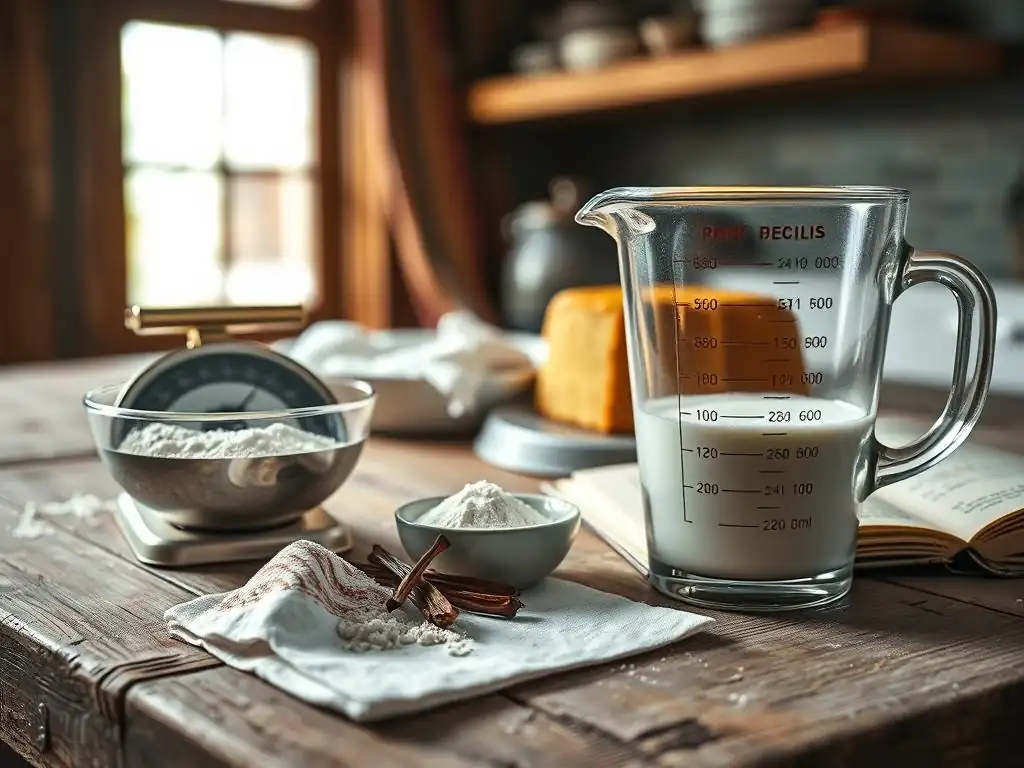
Welcome to BakeWithEase, your guide to stress-free baking! Ever wondered why your cakes sometimes fall flat, or your cookies spread too thin? It often comes down to one crucial factor: accuracy. Dive into our latest article, "Weighing Ingredients: Why Accuracy Prevents Cake Problems," to unlock the secrets to perfect bakes. Learn why precise measurements are essential, especially when aiming for that dream cake, and discover simple techniques to elevate your baking game. Are you ready to say goodbye to baking mishaps and hello to consistent, delicious results?
- Weighing Ingredients: Why Accuracy Prevents Baking Disasters
- Introduction: Achieving Baking Success Through Accurate Ingredient Measurements
- The Problem: Baking Issues Stemming from Inaccurate Measurements
- The Solution: Mastering Accurate Ingredient Weighing for Perfect Baked Goods
- Step-by-Step Guide to Weighing Ingredients for Baking
- The Benefits of Accurate Ingredient Measurements in Baking
- Troubleshooting: Addressing Common Weighing Mistakes
- Advanced Techniques: Fine-Tuning Your Ingredient Ratios
- Conclusion: Bake With Confidence by Prioritizing Accurate Ingredient Measurements
-
Frequently Asked Questions
- Why is using accurate ingredient measurements so important when baking cakes?
- What's the best way to ensure accurate ingredient measurements for cakes?
- What are some common problems that can arise from inaccurate ingredient measurements in cake baking?
- How does weighing ingredients specifically help with achieving a perfect cake texture?
- Are there any ingredients where accuracy is especially important when baking cakes?
- Final Reflection: The Sweet Science of Precision Baking
- Unleash Your Inner Baking Genius!
Weighing Ingredients: Why Accuracy Prevents Baking Disasters
Introduction: Achieving Baking Success Through Accurate Ingredient Measurements
Why Accurate Ingredient Measurements Matter for Baking
Baking is often described as a science, and like any scientific endeavor, precision is paramount. Unlike cooking, where a pinch of this or a dash of that can often be adjusted on the fly, baking relies on specific chemical reactions and structural balances. The proportions of flour, sugar, fat, liquid, and leavening agents must interact in a predictable way to achieve the desired texture, rise, and flavor.
Even slight deviations in these amounts can significantly alter the outcome, turning a potentially light and fluffy cake into a dense or dry disappointment. This is why accurate ingredient measurements for cake recipes are not just a suggestion, but a fundamental requirement for consistent success.
Consider a standard cake recipe that calls for 200 grams of all-purpose flour. If you measure by volume using cups and pack the flour down even slightly, you could easily end up with 220-240 grams – an increase of 10-20%. This seemingly small difference introduces excess dry ingredient into the batter, leading to a tougher texture, reduced rise, and a drier crumb.
Conversely, if you don't add enough flour, the cake might collapse or be too moist and gummy. Mastering accurate ingredient measurements for cake ensures that the delicate balance intended by the recipe developer is maintained, leading to reliable and delicious results every time you bake.
The BakeWithEase Approach to Precise Baking
At BakeWithEase, we believe that successful baking should be accessible and enjoyable for everyone, regardless of skill level. A key component of achieving this is empowering bakers with the knowledge and techniques for precise execution, starting with accurate ingredient measurements for cake and other baked goods. We understand that measurement errors are a frequent source of frustration, leading to unexpected results that can discourage even enthusiastic bakers. Our approach focuses on demystifying the process, highlighting why precision matters, and providing simple, actionable guidance.
We advocate for methods that minimize variability, primarily recommending weighing ingredients whenever possible, especially for dry components like flour, sugar, and cocoa powder. Our recipes often include both volume and weight measurements, but we strongly encourage using a digital scale for better accuracy. Through clear tutorials and explanations, we aim to build your confidence in getting measurements right from the start, transforming potential baking disasters into consistent triumphs. Embracing accurate ingredient measurements for cake is the first step towards unlocking your full baking potential and creating delicious treats with ease.
The Problem: Baking Issues Stemming from Inaccurate Measurements
Common Baking Problems Caused by Measurement Errors
Inaccurate ingredient measurements are a leading cause of common baking woes. While many factors influence the final product, getting the quantities wrong throws off the fundamental chemistry and structure of your batter or dough. Understanding the specific ways measurement errors manifest in your baked goods can help you identify the root cause of a problem and improve your technique. From cakes that sink in the middle to cookies that spread too much, many issues can be traced back to inconsistencies in how ingredients were measured.
Here are some of the most frequent problems encountered by bakers, often directly linked to a lack of accurate ingredient measurements for cake and other recipes:
Dry Baked Goods: The Result of Too Much Flour
One of the most common outcomes of inaccurate measuring is a dry, crumbly cake or muffin. This almost always stems from adding too much flour. When measuring by volume (cups), it's incredibly easy to compact the flour, especially if scooping directly from a bag. A cup of all-purpose flour can vary in weight from about 100 grams if spooned lightly into the cup and leveled, to over 150 grams if packed tightly. If a recipe expects 120 grams per cup and you consistently add 140 grams due to packing, you're introducing a significant excess of dry starch and protein.
This excess flour absorbs more liquid from the recipe than intended, leaving less moisture available to create a tender, hydrated crumb. The gluten development might also be affected, potentially leading to a tougher texture alongside the dryness. Achieving accurate ingredient measurements for cake, particularly flour, is crucial for ensuring adequate moisture and a pleasant mouthfeel. Using a scale to measure flour ensures you add the exact weight specified, eliminating the variability inherent in volume measuring.
Dense Baked Goods: The Impact of Incorrect Flour to Liquid Ratio
Dense baked goods, whether it's a cake that feels heavy or bread that lacks air pockets, often result from an incorrect balance between dry and wet ingredients. While too much flour (as discussed above) contributes to dryness, it also increases the overall 'bulk' of the batter without proportional liquid to create steam and lift during baking. Conversely, too little liquid can also lead to a dense product because there isn't enough moisture to properly hydrate the flour and allow leavening agents (like baking powder or soda) to react effectively.
Getting accurate ingredient measurements for cake is vital for maintaining the precise flour-to-liquid ratio specified by the recipe creator. If a recipe calls for 200g flour and 150g liquid, and you add 220g flour but still only 150g liquid (due to inaccurate flour measurement), the ratio is off. This imbalance affects gluten development, leavening activation, and the overall structure, resulting in a batter that's too stiff and a baked good that lacks the desired lightness and open crumb structure. Precision ensures the ingredients interact as intended.
Flat Baked Goods: The Consequence of Inaccurate Leavening Agent Measurement
Flat cakes, sunken centers, or cookies that don't spread properly can often be traced back to issues with leavening agents like baking powder, baking soda, or yeast. These ingredients are responsible for creating the gas that makes baked goods rise. Their effectiveness is highly dependent on precise quantities and proper activation through interaction with other ingredients (like acids or liquids) and heat. Mismeasuring these powerful ingredients, even slightly, can have dramatic effects on the final height and structure.
For example, adding too little baking powder to a cake recipe might result in a batter that doesn't produce enough carbon dioxide gas to overcome its own weight and rise sufficiently, leading to a flat cake. Conversely, adding too much can cause rapid, excessive rising followed by a collapse as the structure can't support the volume, or leave an unpleasant metallic taste.
Since leavening agents are typically used in small quantities (often teaspoons or tablespoons), accurate ingredient measurements for cake involving these components require careful attention, sometimes even using a small, precise scale if available, or at least ensuring level scoops when using measuring spoons.
Uneven Texture: How Poor Mixing and Ingredient Imbalance Cause Problems
Beyond just dense or dry, baked goods can suffer from uneven texture, exhibiting pockets of dry flour, tunnels, or inconsistent crumb structure. While over- or under-mixing is a significant contributor, ingredient imbalance stemming from inaccurate measurements can exacerbate these issues. If ingredients aren't measured accurately, the batter's consistency will be off, making proper mixing more difficult. For instance, a batter with too much flour might become tough quickly with minimal mixing, leading to tunneling (long, narrow holes).
Furthermore, uneven distribution of ingredients due to poor mixing combined with inaccurate measurements creates localized problems. Imagine a cake batter where the sugar wasn't fully dissolved or evenly distributed because the liquid measurement was slightly off, affecting solubility. This can lead to pockets of sweetness or areas where the sugar hasn't performed its role in tenderizing the crumb. Achieving accurate ingredient measurements for cake recipes provides the foundation for a batter with the correct consistency, making it easier to mix properly and ensuring all components are evenly incorporated for a uniform, desirable texture.
The Solution: Mastering Accurate Ingredient Weighing for Perfect Baked Goods
Why Weighing Ingredients is Superior to Volume Measurement
For centuries, bakers relied on volume measurements using cups and spoons, and delicious baked goods were certainly made. However, volume measurement is inherently prone to variability. The amount of an ingredient that fits into a cup can change based on how densely it's packed, its particle size, humidity levels, and even the specific design of the measuring cup. Consider flour again: scooped and leveled versus spooned into the cup can result in a 20% or more weight difference. This inconsistency makes it difficult to replicate results reliably, even when using the same recipe.
Weighing ingredients, on the other hand, provides a precise and consistent measure of mass. 100 grams of flour is always 100 grams of flour, regardless of how fluffy or packed it is. This eliminates the guesswork and variability associated with volume.
Using accurate ingredient measurements for cake by weight ensures you are adding the exact quantity intended by the recipe developer, leading to more predictable outcomes. It simplifies scaling recipes up or down and makes troubleshooting much easier, as you can rule out measurement errors as the source of a problem. Many professional bakers and serious home bakers exclusively use scales for this reason.
Essential Baking Tools for Accurate Ingredient Weighing
To embrace the power of accurate ingredient measurements for cake and other baking projects, you'll need a few key tools. While volume measures have their place for very small quantities, a scale is indispensable for achieving true precision, especially with dry ingredients.
Digital Kitchen Scale: Your Key to Precise Baking
A digital kitchen scale is the single most important tool for accurate ingredient measurements for cake baking. These scales measure in grams (g) and often ounces (oz), providing a far more precise reading than volume cups. Look for a scale with a capacity of at least 5 kg (about 11 lbs) and a precision of 1 gram.
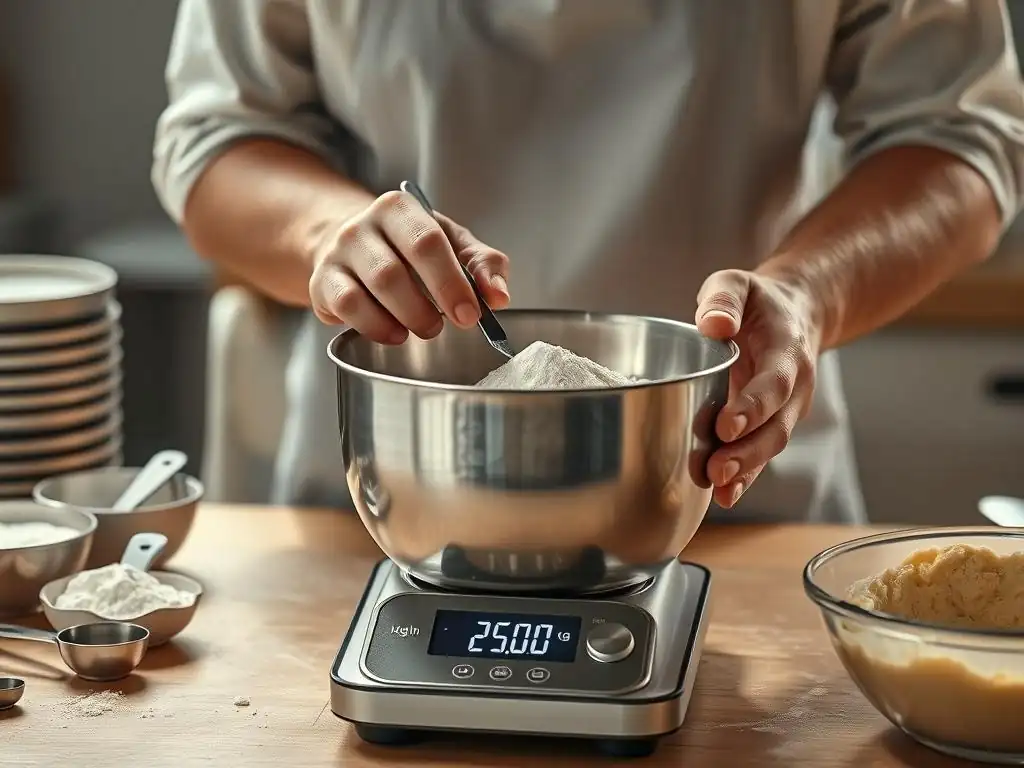
Many affordable and reliable models are available. Using a scale is straightforward: place your mixing bowl or container on the scale, press the "tare" or "zero" button to reset the weight to zero, and then add your ingredient until the display shows the desired weight. This method is quick, clean, and eliminates the variability of scooping and leveling.
Investing in a quality digital scale will dramatically improve the consistency and quality of your baked goods. It makes following recipes with weight measurements simple and allows you to verify the accuracy of volume-based recipes by weighing the amounts called for. For aspiring bakers focused on achieving reliable results, a digital scale is a non-negotiable item in your kitchen arsenal. It's the foundation for truly accurate ingredient measurements for cake and beyond.
Measuring Cups and Spoons: When to Use and How to Use Them Accurately [Specific cases only, e.g., measuring small amounts of spices]
While weighing is preferred for most main ingredients, measuring cups and spoons still have a role, particularly for small quantities where a gram scale might not be precise enough, or for liquids when weight isn't specified. For example, measuring tiny amounts of spices (like 1/4 teaspoon of cinnamon) or extracts (like 1 teaspoon of vanilla) is perfectly acceptable and often easier with standard measuring spoons. A standard kitchen scale might not register weights below 1-2 grams accurately, making spoons necessary for these micro-quantities.
When using measuring cups for liquids, place the cup on a flat surface and bend down to check the liquid level at eye level to ensure it aligns with the measurement mark. For dry ingredients when absolutely necessary (like brown sugar which is often packed), use the appropriate cup size, fill it, and level it off with a straight edge like a knife or spatula without shaking or packing unless the recipe specifically instructs you to pack it (like for brown sugar).
However, for critical ingredients like flour, sugar, and fats, prioritizing accurate ingredient measurements for cake means defaulting to your digital scale whenever weight is provided.
Step-by-Step Guide to Weighing Ingredients for Baking
Mastering accurate ingredient measurements for cake is simple with a digital scale. Here's a basic workflow:
Step 1: Zeroing Your Kitchen Scale for Accurate Readings
This is the crucial first step. Place the empty bowl or container you will be using to hold the ingredient directly onto your digital kitchen scale. Once the weight of the empty container is displayed, press the "Tare" or "Zero" button. The scale display should now read "0g" (or "0oz"). This tells the scale to ignore the weight of the container, so it only measures the weight of the ingredients you add. Failing to tare the scale will result in inaccurate measurements, as the weight of the bowl will be included in the ingredient's measurement.
Ensuring the scale is properly zeroed before adding each ingredient is fundamental to achieving accurate ingredient measurements for cake. If you are adding multiple ingredients to the same bowl (common in baking), you will tare the scale after adding each ingredient before adding the next one. For instance, add flour and tare, then add sugar and tare, then add cocoa powder and tare, and so on.
Step 2: Weighing Dry Ingredients: Flour, Sugar, and More
With your scale tared, carefully add your dry ingredient to the container. If weighing flour, gently spoon it into the bowl rather than scooping directly from the bag, which can compact it. Pour sugar, cocoa powder, or other dry ingredients directly into the tared bowl. Watch the scale display as you add the ingredient, stopping when you reach the desired weight specified in the recipe.
For instance, if the recipe calls for 300 grams of flour, slowly add flour until the scale reads 300g. If you accidentally add too much, simply spoon a small amount back out until the correct weight is displayed. This method is far more precise than trying to level off a cup of flour and hoping it's the right weight. Using accurate ingredient measurements for cake, especially for dry components, is where weighing makes the biggest impact on texture and consistency.
Step 3: Weighing Liquid Ingredients: Milk, Oil, and Water
Many recipes provide weight measurements for liquids like milk, water, or oil, and weighing these is also more accurate than using volume cups, as liquids can cling to the sides of cups affecting the true volume dispensed. Place your container on the scale, tare it to zero, and carefully pour the liquid until the scale reaches the target weight. For example, if a recipe calls for 240 grams of milk (which is roughly equivalent to 240 ml or 1 cup, but more precise), pour milk into the tared bowl until the scale reads 240g.
This method is particularly useful for ingredients like honey, syrup, or molasses, which are thick and difficult to measure accurately by volume as they stick to measuring cups. Weighing these sticky liquids ensures you get the exact amount needed without the mess or inaccuracy of trying to scrape them out of a cup. Accurate ingredient measurements for cake batters often involve precise liquid amounts, and weighing simplifies this process significantly.
Step 4: Double-Checking Your Measurements for Optimal Results
Once you have weighed all your ingredients, take a moment to review your process. Did you tare the scale before adding each ingredient (if adding multiple to one bowl)? Did you reach the exact weight specified in the recipe for each component? Making a quick mental check or even a written list as you go can help prevent errors.
Consider creating a simple checklist as you work:
- [ ] Scale zeroed before adding Ingredient A?
- [ ] Ingredient A weighed to exact amount?
- [ ] Scale zeroed before adding Ingredient B?
- [ ] Ingredient B weighed to exact amount?
... and so on.
This simple step adds an extra layer of confidence to your accurate ingredient measurements for cake. It's much easier to catch a mistake before you've mixed everything together and put it in the oven! Taking an extra minute for verification can save you from potential baking failures and wasted ingredients.
The Benefits of Accurate Ingredient Measurements in Baking
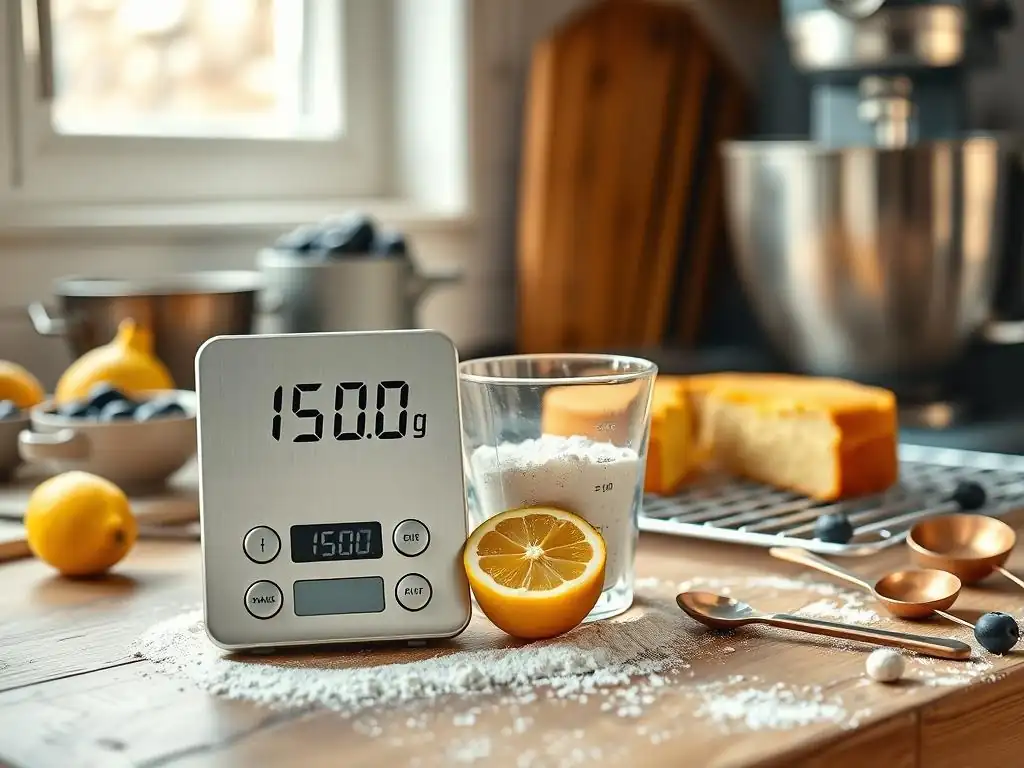
Embracing accurate ingredient measurements for cake and other baked goods offers a multitude of benefits that elevate your baking from hit-or-miss to consistently spectacular.
Consistent Results: Replicating Your Best Recipes Every Time
The most significant advantage of using accurate ingredient measurements for cake is the ability to achieve consistent results. When you measure by weight, the variability in ingredient quantity is virtually eliminated. This means that every time you bake a specific recipe using the same precise measurements, you can expect the same texture, rise, and flavor profile. No more wondering why your favorite cake turned out perfectly one time but was dense and dry the next – assuming your technique remains consistent, the measurements are reliable.
This consistency builds confidence and allows you to trust your recipes. It's invaluable when you find a recipe you love and want to make it repeatedly for family, friends, or special occasions. Accurate ingredient measurements for cake provide the foundation for reliable outcomes, turning cherished recipes into repeatable successes. You can bake with the assurance that your efforts will yield the expected delicious result.
Improved Texture: Achieving the Perfect Crumb and Mouthfeel
Texture is a critical component of a great cake. Whether you're aiming for a light, airy sponge, a moist and tender crumb, or a rich, fudgy density, accurate ingredient measurements for cake are essential for achieving the desired texture. The ratios of flour, sugar, fat, and liquid directly impact gluten development, moisture content, and the distribution of air pockets.
For example, precise flour measurements prevent toughness and dryness, while accurate sugar measurements contribute to tenderness and moisture retention. Correct fat measurements ensure richness and a soft crumb. By weighing your ingredients, you ensure these ratios are spot-on, leading to the intended crumb structure and mouthfeel. This level of control over texture is difficult to achieve with the inherent inaccuracies of volume measuring, making accurate ingredient measurements for cake a key factor in baking excellence.
Enhanced Flavor: Balancing Sweetness and Other Flavors
While texture is important, flavor is ultimately what makes a baked good enjoyable. Accurate ingredient measurements play a crucial role in ensuring the flavors in your cake are balanced and harmonious. Ingredients like sugar, salt, cocoa powder, spices, and even fats contribute significantly to the overall taste profile. Mismeasuring any of these can throw the flavor balance out of whack.
Adding too much sugar can make a cake cloyingly sweet, masking other subtle flavors. Too little salt can leave it tasting bland. Incorrect amounts of cocoa powder or spices can result in a weak or overpowering flavor. Even liquids like milk or buttermilk contribute to flavor complexity. Using accurate ingredient measurements for cake ensures that each flavor component is present in the correct proportion, allowing the intended taste profile to shine through. This precision guarantees that your carefully selected ingredients combine to create a truly delicious experience.
Reduced Waste: Minimizing Baking Failures and Ingredient Spoilage
Let's be honest, baking failures are disappointing and costly. A sunken cake, a tough loaf of bread, or cookies that spread into a single sheet mean wasted time, effort, and ingredients. Inaccurate ingredient measurements are a primary culprit behind many of these failures. By adopting precise weighing techniques, you significantly reduce the likelihood of these common problems.
When you consistently use accurate ingredient measurements for cake, your success rate increases dramatically. This means fewer batches ending up in the bin and less frustration in the kitchen. Over time, this translates into reduced waste of expensive ingredients like flour, sugar, butter, and eggs. Investing a little time in learning proper weighing techniques and using a scale pays dividends in both successful bakes and a more efficient, less wasteful baking process.
Troubleshooting: Addressing Common Weighing Mistakes
Even when you start weighing, small errors can occur. Being aware of common pitfalls can help you avoid them and ensure your accurate ingredient measurements for cake are truly precise.
Common Weighing Errors and How to Avoid Them
While weighing is more accurate than volume, it's not entirely foolproof. Simple mistakes can still lead to incorrect measurements.
Overfilling Measuring Cups: The Importance of Leveling
This error primarily applies when you must use volume measurements, particularly for ingredients like flour or powdered sugar. Scooping directly from the bag or tapping the cup on the counter can compact the ingredient, leading to significantly more weight than intended. Even when using cups, the instruction "level off" is crucial.
To avoid overfilling when using volume cups for dry ingredients:
- Use the "spoon and level" method for flour: Gently spoon the flour into the measuring cup until it overflows, then use a straight edge (like the back of a knife or a bench scraper) to sweep off the excess flour across the top of the cup. Do not tap the cup or pack the flour down.
- For powdered sugar, which can also compact, gently spoon into the cup and level. Sifting it first can also help achieve a more consistent measure.
- For brown sugar, recipes usually specify "packed" brown sugar, which is the exception where you firmly press the sugar into the cup.
While aiming for accurate ingredient measurements for cake, remember that if a recipe provides weights, use them! But if only volume is given, understanding proper leveling technique minimizes error.
Using the Wrong Scale: Choosing the Right Scale for Baking
Not all scales are created equal. A scale designed for weighing suitcases isn't suitable for measuring grams of flour. Ensure you are using a kitchen scale specifically designed for food, with a capacity appropriate for your baking needs (at least 5kg) and, crucially, the ability to measure in grams with a precision of at least 1 gram. Some recipes, particularly for very small amounts of potent ingredients like yeast or powerful spices, might benefit from a jeweler's or pocket scale capable of measuring in milligrams or tenths of a gram, though this is less common for standard cake recipes.
Using a scale that isn't sensitive enough or doesn't measure in the required units (grams are standard in most modern baking recipes) will hinder your ability to achieve accurate ingredient measurements for cake. Always check the scale's specifications before relying on it for precise baking.
Ignoring Unit Conversions: Understanding Grams, Ounces, and Milliliters
Recipes can use grams, ounces, milliliters, or volume cups/spoons. Switching between units without proper conversion is a recipe for disaster. While grams measure mass and milliliters measure volume, for water and many liquids at room temperature, 1 gram is approximately equal to 1 milliliter. However, this is not true for dry ingredients or fats. 100 grams of flour is not 100 milliliters (which would be a tiny amount!). Similarly, 100 grams of sugar is a different volume than 100 grams of butter.
Always follow the units specified in the recipe. If a recipe calls for 250g of flour and you only have a scale that measures in ounces, you need to accurately convert grams to ounces (1 ounce ≈ 28.35 grams). Do not assume volume and weight are interchangeable for different ingredients. Reliable online converters or baking conversion charts can help, but ideally, use a scale that measures in the units provided by the recipe to ensure accurate ingredient measurements for cake.
Advanced Techniques: Fine-Tuning Your Ingredient Ratios
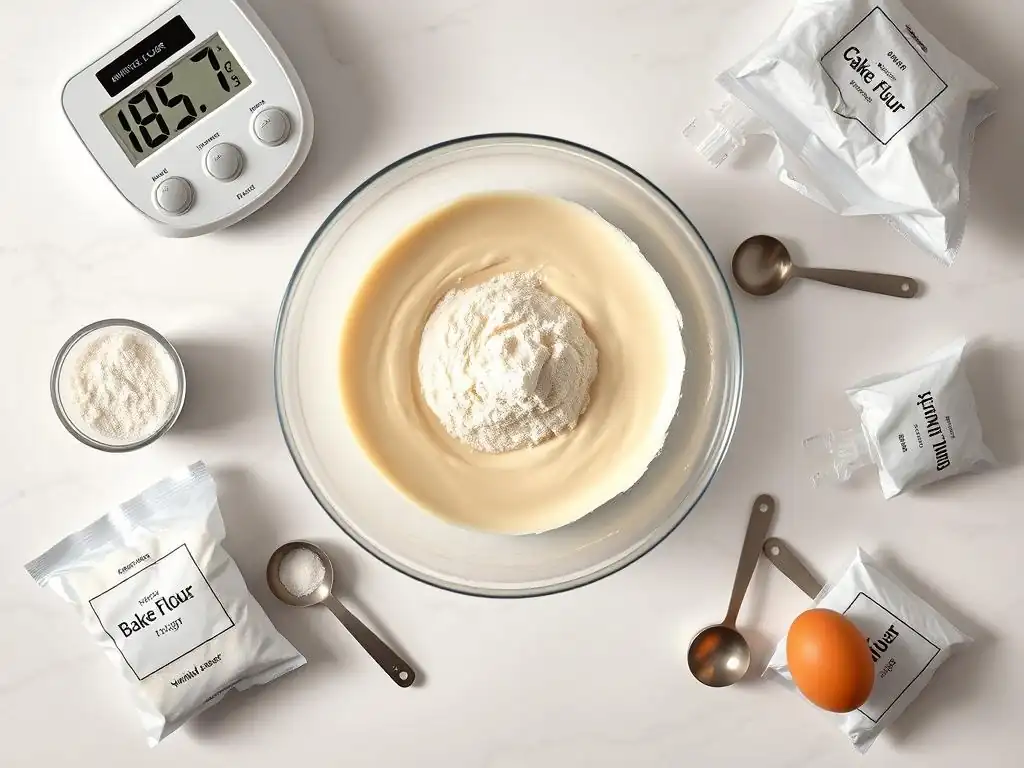
Once you've mastered basic weighing for accurate ingredient measurements for cake, you might explore more advanced concepts that further refine your control over the baking process.
Adjusting Recipes Based on Altitude and Humidity [Specific examples with adjustments]
Environmental factors like altitude and humidity significantly impact baking, particularly for cakes. At higher altitudes, atmospheric pressure is lower. This causes leavening gases to expand more rapidly and liquids to evaporate faster, potentially leading to cakes that rise too much and then collapse, or turn out dry. High humidity can add unwanted moisture to dry ingredients like flour and sugar, altering the intended ratio.
For example, baking a cake at 5,000 feet (approx. 1,500 meters) might require adjustments to a recipe designed for sea level. Typical high-altitude adjustments often include:
- Reducing leavening: Decrease baking powder/soda by 10-25%. For instance, if a recipe calls for 2 tsp baking powder, try 1.5 tsp.
- Increasing liquid: Add 1-2 tablespoons of extra liquid (milk, water, etc.) per cup of flour.
- Slightly increasing flour: Add 1-2 tablespoons of extra flour per cup to strengthen the structure.
- Reducing sugar: Decrease sugar by 1-2 tablespoons per cup to prevent excessive spread and strengthen the crumb.
While these are general guidelines, finding the perfect balance for accurate ingredient measurements for cake at altitude often requires experimentation. Humidity adjustments are less precise but generally involve slightly reducing liquid in the recipe on very humid days, as your flour and sugar may already contain more moisture. Paying attention to these environmental factors, in addition to precise weighing, allows for truly optimized baking.
Understanding Baker's Percentage and Its Role in Accuracy
Baker's percentage is a system used by professional bakers that expresses the weight of each ingredient as a percentage of the total weight of the flour, which is always set at 100%. For example, a simple cake recipe might have 100% flour, 80% sugar, 60% eggs, 50% butter, and 40% milk.
This system makes it incredibly easy to scale recipes up or down while maintaining the exact ratios. If you want to make a larger cake using 500g of flour instead of 200g, you simply multiply the percentages by 500g: 500g flour (100%), 400g sugar (80%), 300g eggs (60%), 250g butter (50%), and 200g milk (40%).
Using baker's percentage, combined with accurate ingredient measurements for cake by weight, provides the ultimate control over recipe formulation and scaling. It highlights the relationship between ingredients in a clear, consistent way. While perhaps an advanced concept for beginners, understanding baker's percentage demonstrates the power of weight-based measurements in achieving precise and scalable baking results.
Conclusion: Bake With Confidence by Prioritizing Accurate Ingredient Measurements
Recap: The Importance of Precision in Baking
We've explored how accurate ingredient measurements for cake are not just a recommendation but a cornerstone of successful baking. From preventing dry and dense textures caused by too much flour to ensuring proper rise with precise leavening, getting your measurements right by weighing ingredients eliminates much of the guesswork and variability inherent in volume measuring. Using a digital scale provides the precision needed for consistent results, improved texture, balanced flavor, and reduced waste. While volume measures have limited uses, especially for small quantities, weighing is the superior method for critical ingredients like flour, sugar, and fats.
Embracing accurate ingredient measurements for cake empowers you to bake with greater confidence. You can trust your recipes and troubleshoot issues more effectively when you know your foundation – the ingredient quantities – is solid. Precision in measurement is the first step towards mastering baking and consistently producing delicious, picture-perfect cakes and other treats.
Further Resources: Expand Your Baking Knowledge with BakeWithEase
Ready to take your baking accuracy to the next level? BakeWithEase.com offers a wealth of resources to help you master accurate ingredient measurements for cake and improve your overall baking skills.
Explore our collection of recipes that include both volume and weight measurements, encouraging you to practice weighing ingredients. Read our detailed guides on specific ingredients and how they function in baking. Learn more about the science behind baking to understand why accurate measurements are so crucial.
Whether you're a beginner just starting out or looking to refine your technique, BakeWithEase is here to support your baking journey. By prioritizing accurate ingredient measurements for cake and other bakes, you're setting yourself up for delicious success every time you turn on your oven. Happy baking!
Frequently Asked Questions
Why is using accurate ingredient measurements so important when baking cakes?
Accuracy is crucial because cake recipes rely on specific ratios of ingredients. Even small variations can disrupt the chemical reactions needed for proper rise, texture, and flavor, leading to cake failures.
What's the best way to ensure accurate ingredient measurements for cakes?
Using a kitchen scale to weigh ingredients is generally the most accurate method. Volume measurements (cups, spoons) can be inconsistent due to varying packing densities and different measuring cup sizes.
What are some common problems that can arise from inaccurate ingredient measurements in cake baking?
Inaccurate measurements can result in cakes that are too dry, too dense, too flat, or have an uneven texture. It can also cause issues with rising and browning.
How does weighing ingredients specifically help with achieving a perfect cake texture?
Weighing ensures the correct proportion of wet and dry ingredients. This balance is critical for developing the desired cake crumb and overall texture, preventing it from being too tough or too crumbly.
Are there any ingredients where accuracy is especially important when baking cakes?
Yes, ingredients like flour, sugar, and leavening agents (baking powder, baking soda) require precise measurements. Small variations in these can significantly impact the cake's structure and rise.
Final Reflection: The Sweet Science of Precision Baking
The pursuit of the perfect cake isn't just about following a recipe; it's about understanding the delicate balance of ingredients that transforms simple components into a culinary masterpiece. A seemingly minor discrepancy in measurement can lead to a disastrous outcome, highlighting the crucial role of accuracy in baking success. This isn't just about avoiding a collapsed cake; it's about mastering a fundamental principle applicable far beyond the kitchen.
The impact of precise measurement extends beyond the individual cake. It speaks to a broader cultural appreciation for detail and the understanding that even seemingly insignificant actions can have profound consequences. The difference between ordinary and extraordinary is that little extra.
This quote, while often attributed to Jimmy Johnson, perfectly encapsulates the essence of accurate ingredient measurement in baking – that little extra effort yields extraordinary results. The meticulous approach required fosters a deeper connection to the process, transforming baking from a simple task into a mindful practice.
Consider the impact of your own actions. Are you approaching your tasks with the same level of precision and attention to detail that a successful baker employs? I challenge you to apply this principle of accuracy to other areas of your life. Whether it's in your work, relationships, or personal goals, striving for precision and mindful execution will undoubtedly lead to richer, more fulfilling outcomes. Embrace the sweet science of accuracy, and watch your successes rise to new heights.
Unleash Your Inner Baking Genius!
Thanks for taking the time to explore the secrets of perfect cake-baking! We hope you gained valuable insights into the importance of precise ingredient measurements. Now it's time to put your new knowledge into practice.
- Bake your dream cake: Grab your favorite recipe (or try a new one!) and focus on meticulously measuring each ingredient. Notice the difference in texture and taste!
- Share your baking triumph: Post a picture of your perfectly measured masterpiece on social media and tag us @BakeWithEase – we’d love to see it!
- Challenge yourself: Try a recipe that's known for being tricky – you'll be amazed by what accurate measuring can do!
Ready to experience the joy of baking flawlessly? What’s the first recipe you’re going to conquer with your newfound precision?