
NonStick Clash: Silicone Baking Mats vs Parchment Paper Explained

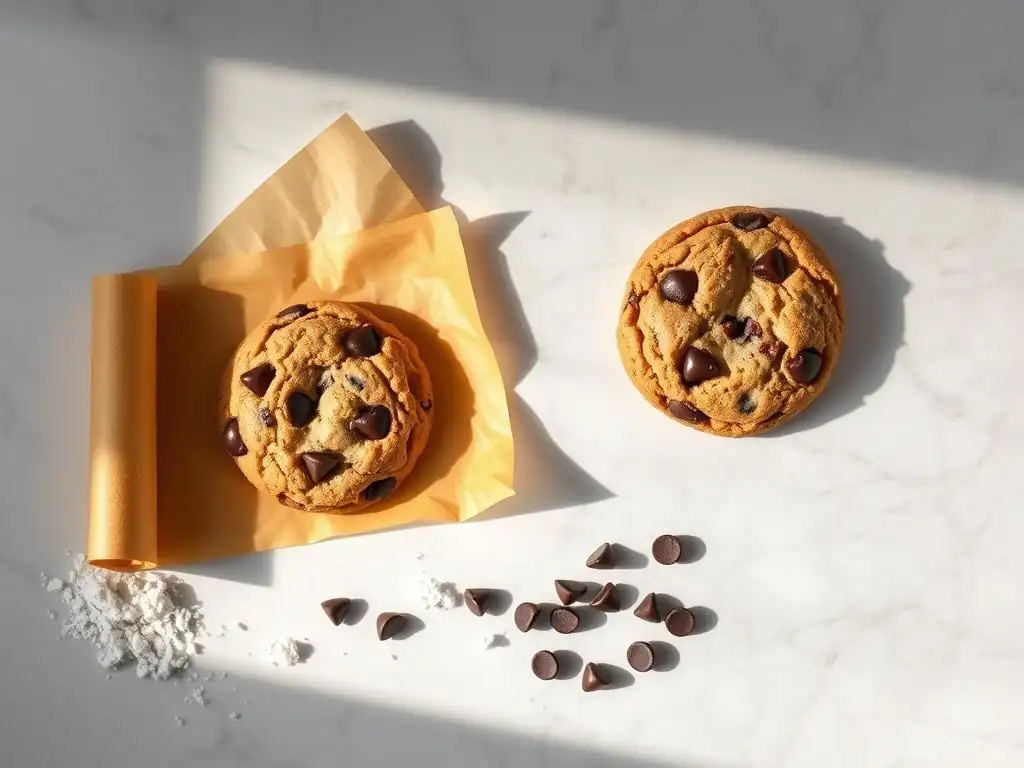
Welcome to BakeWithEase, your trusted guide to effortless baking! Ever wondered which is the superior surface for your culinary creations? Dive in as we unravel the non-stick mystery in "Silicone Baking Mat vs Parchment Paper Explained." Discover the pros and cons of each, arming you with the knowledge to elevate your baking game, one delicious treat at a time. Curious to know which reigns supreme? Keep reading!
- The Ultimate Guide to Choosing Between Silicone Baking Mats and Parchment Paper
- Understanding Your Options: Silicone Baking Mats and Parchment Paper
- Silicone Baking Mats vs Parchment Paper: A Detailed Comparison
- Best Uses for Silicone Baking Mats
- Best Uses for Parchment Paper
- Choosing the Right Option for Your Baking Needs
- Tips for Using Silicone Baking Mats and Parchment Paper
- Alternative Non-Stick Baking Solutions
- Conclusion: Mastering Non-Stick Baking
-
Frequently Asked Questions
- What are the primary benefits of using a silicone baking mat instead of parchment paper?
- How does the cost compare between using silicone baking mats and parchment paper in the long run?
- What types of baked goods are best suited for silicone baking mats versus parchment paper?
- Are silicone baking mats and parchment paper oven-safe, and what temperature limitations should I be aware of?
- How do I properly clean and care for silicone baking mats to maximize their lifespan?
- Final Reflection: Choosing Your Baking Champion: Silicone or Parchment?
- Unleash Your Inner Baker: Level Up Your Baking Game!
The Ultimate Guide to Choosing Between Silicone Baking Mats and Parchment Paper
Understanding Your Options: Silicone Baking Mats and Parchment Paper
When you're aiming for perfect cookies that slide right off the pan or a cake that doesn't cling to the bottom, a non-stick surface is your best friend. Two popular options stand out in the baking world: silicone baking mats and parchment paper. Both offer excellent non-stick properties, but they differ significantly in material, reusability, and ideal applications. Understanding these differences is key to selecting the right tool for your specific baking project.
Making the right choice between a silicone baking mat vs parchment paper can truly elevate your baking results, ensuring easy cleanup and consistent performance. Let's dive into the specifics of each option to better understand their unique benefits and limitations in the kitchen.
Silicone Baking Mats: Reusable and Heat-Resistant
Silicone baking mats are typically made from food-grade silicone and often reinforced with fiberglass mesh for durability and even heat distribution. Their primary appeal lies in their reusability; a single quality mat can last for hundreds, if not thousands, of baking cycles with proper care. This makes them a cost-effective and environmentally friendlier option over time compared to disposable alternatives.
These mats are known for their exceptional non-stick surface, which requires little to no grease for most applications. They are highly heat-resistant, generally safe for oven temperatures up to around 450°F (approximately 230°C), though specific limits can vary by manufacturer. This high heat tolerance makes them suitable for a wide range of tasks, from baking delicate meringues to roasting vegetables at higher temperatures without warping or degrading.
Parchment Paper: Disposable and Versatile
Parchment paper is a cellulose-based paper that has been treated, often with silicone, to give it non-stick and grease-resistant properties. Unlike silicone mats, parchment paper is designed for single use, although it can sometimes be reused for multiple batches of the same item if it hasn't become soiled or brittle. Its main advantage is its convenience and flexibility.
Available in rolls or pre-cut sheets, parchment paper is easy to cut or fold to fit any pan size or shape. It's also effective at preventing sticking and is commonly used for lining cake pans, baking sheets, and even for creating pouches for en papillote cooking. Most standard parchment papers can withstand temperatures up to 400-425°F (around 200-220°C), though some heavy-duty versions may handle slightly higher heat. Its disposability makes cleanup incredibly fast – simply lift the paper out of the pan and discard.
Silicone Baking Mats vs Parchment Paper: A Detailed Comparison
Deciding whether to use a silicone baking mat vs parchment paper often comes down to a direct comparison of their features across several key areas. While both serve the purpose of providing a non-stick surface, their performance, cost, and environmental impact differ significantly. Let's break down these differences to help you make an informed choice for your next baking adventure.
Understanding the nuances of silicone baking mats and parchment paper is crucial for optimizing your baking results and managing your kitchen resources effectively. From how well they release sticky doughs to their long-term value, each option presents a distinct set of pros and cons that are worth considering before you start preheating your oven.
Non-Stick Performance: Release and Texture
Both silicone baking mats and parchment paper offer excellent non-stick capabilities, dramatically reducing the need for added fats and making cleanup easier. However, there can be subtle differences in how they perform, particularly with very delicate or sticky items. Silicone mats typically provide an incredibly smooth surface, resulting in baked goods like cookies spreading slightly more evenly and having a very smooth bottom texture. For instance, macarons baked on silicone often achieve a perfectly smooth 'foot'.
Parchment paper also prevents sticking effectively but can sometimes impart a very slight texture to the bottom of baked goods, depending on the paper's finish. It's particularly useful when you want to transfer delicate items easily; you can often slide the entire sheet of parchment with the baked goods off the hot pan.
For instance, lifting a fragile cookie or pastry off parchment is often easier than peeling it directly off a silicone mat if the item is still warm and very soft. The debate of silicone baking mat vs parchment often starts with this fundamental difference in how they interact with doughs and batters.
Heat Resistance: Temperature Limits and Safety
Heat resistance is a critical factor when comparing a silicone baking mat vs parchment paper. Standard silicone baking mats are generally rated for higher temperatures than most parchment papers, typically up to 450°F (230°C) or even 500°F (260°C) for some brands. This makes them a reliable choice for high-temperature roasting or baking applications where parchment might become brittle, darken excessively, or even pose a slight fire risk if used above its recommended limit, especially near heating elements.
Standard parchment paper is usually rated for temperatures up to 400-425°F (200-220°C). While sufficient for most cookie, cake, and bread recipes, using it for very high-heat roasting or broiling is generally not recommended. Exceeding the temperature limit can cause the paper to become dry, brittle, and potentially brown or smoke. Always check the manufacturer's specifications for the exact temperature limits of both your silicone mat and parchment paper to ensure safe usage.
Reusability and Cost-Effectiveness: Long-Term Value
One of the most significant differences between a silicone baking mat vs parchment paper is reusability. Silicone baking mats are designed to be washed and reused hundreds or even thousands of times. While the initial cost of a good quality silicone mat might be higher than a roll of parchment paper (a single mat might cost $10-$20, compared to a $5-$10 roll of parchment), its long lifespan makes it significantly more cost-effective over time for frequent bakers.
Parchment paper is primarily a single-use product. Although you might get two or three uses out of a sheet for baking cookies if it remains clean, it's typically discarded after one batch, especially when dealing with greasier items or batters that leave residue. For someone who bakes occasionally, the lower upfront cost of parchment paper might seem more appealing. However, for someone who bakes weekly or even daily, the savings from using a reusable silicone baking mat quickly add up, demonstrating its superior long-term value in the silicone baking mat vs parchment paper comparison.
Environmental Impact: Sustainability and Disposal
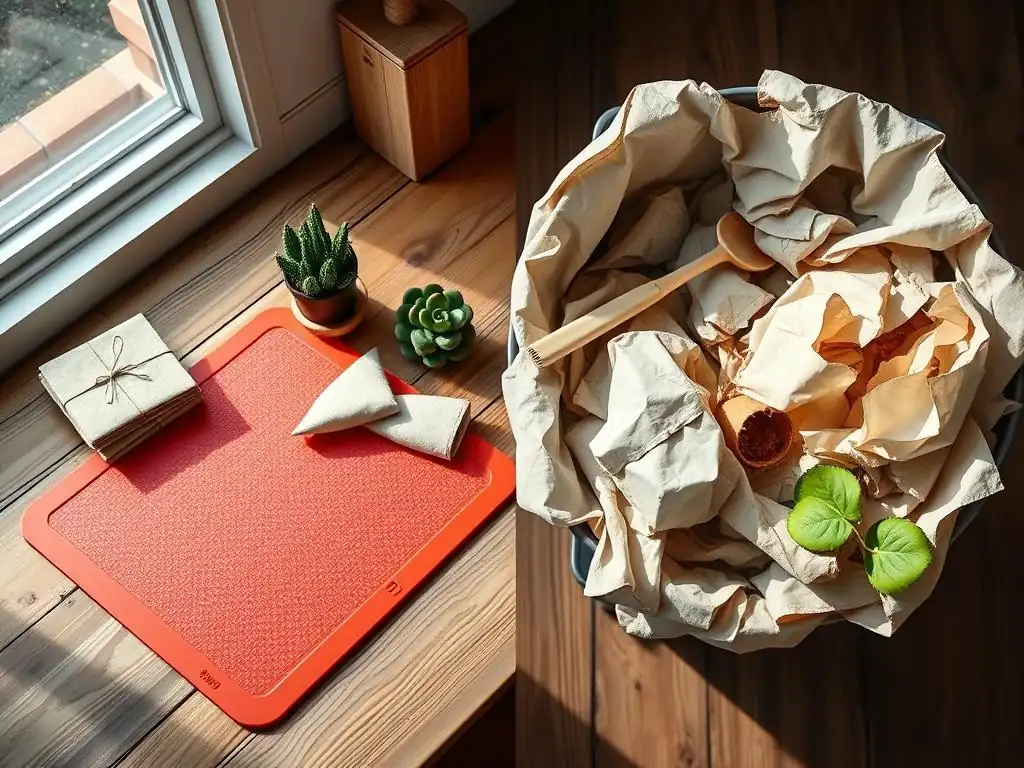
The environmental impact is another key consideration when choosing between a silicone baking mat vs parchment paper. Silicone baking mats, being reusable for many years, generate significantly less waste compared to using and discarding sheets of parchment paper after each baking session. Over its lifespan, one silicone mat can replace hundreds or even thousands of sheets of parchment paper, drastically reducing the volume of trash sent to landfills.
Parchment paper, although made primarily from wood pulp (a renewable resource), is often treated with silicone or other non-stick coatings, which can make it non-recyclable in many areas. While some brands offer compostable options, standard parchment paper typically ends up in the trash. Considering the cumulative waste generated by frequent baking, the reusability of silicone mats offers a much more sustainable alternative in the ongoing debate of silicone baking mat vs parchment paper from an environmental perspective.
Cleaning and Maintenance: Ease of Use
Cleaning is a factor where the preference between a silicone baking mat vs parchment paper can vary. Parchment paper offers the ultimate ease of cleanup: simply lift the paper and discard it, leaving the baking sheet virtually clean. This convenience is a major draw for many bakers, especially when dealing with sticky or messy recipes.
Silicone baking mats require washing after use. While they are non-stick, they can still accumulate grease or residue from baking. They typically need to be washed with warm, soapy water and sometimes require scrubbing to remove stubborn baked-on bits. While many are dishwasher safe, hand washing is often recommended to extend their lifespan. Some users also report that silicone mats can retain odors over time if not cleaned thoroughly. So, while parchment paper eliminates cleaning the liner entirely, silicone mats add a step to your post-baking routine.
Best Uses for Silicone Baking Mats
Silicone baking mats truly shine in specific baking and cooking applications where their unique properties offer distinct advantages. Their consistent, completely smooth non-stick surface and durability make them ideal for tasks that benefit from precision and repeated use. When considering a silicone baking mat vs parchment paper, understanding these prime use cases can help justify investing in a mat.
From delicate pastries to high-temperature roasting, silicone mats provide a reliable base that ensures even cooking and easy release. Let's look at some of the scenarios where a silicone baking mat is often the preferred choice over parchment paper.
Silicone baking mats are exceptionally good for baking cookies, especially those that tend to spread or stick. The smooth, non-porous surface ensures that cookies release cleanly without breaking, and it promotes even browning on the bottom. For instance, recipes for delicate shortbread or chewy chocolate chip cookies often yield perfect results on a silicone mat, with consistent shape and texture batch after batch.
They are also the go-to surface for delicate pastries like macarons, meringues, and éclairs. The precise, non-stick surface allows these items to maintain their shape beautifully during baking and lift off effortlessly once cooled. Many silicone mats even come with printed guides for spacing macarons or cookies, adding an extra layer of convenience and consistency that parchment paper cannot offer.
Roasting Vegetables
Beyond baking sweets, silicone mats are excellent for roasting vegetables. Their high heat resistance means they can handle the temperatures needed for proper caramelization without degrading or smoking, unlike some parchment papers. Vegetables like broccoli, Brussels sprouts, or root vegetables roast evenly on a silicone mat, and the non-stick surface prevents smaller pieces from sticking stubbornly to the pan.
Using a silicone mat for roasting also means less oil or grease is needed compared to roasting directly on a metal pan, contributing to healthier cooking. The mat catches drips and prevents baked-on residue, making the roasting pan significantly easier to clean afterwards. This versatility for both sweet and savory, high-heat applications highlights the robust utility of a silicone baking mat vs parchment paper.
Best Uses for Parchment Paper
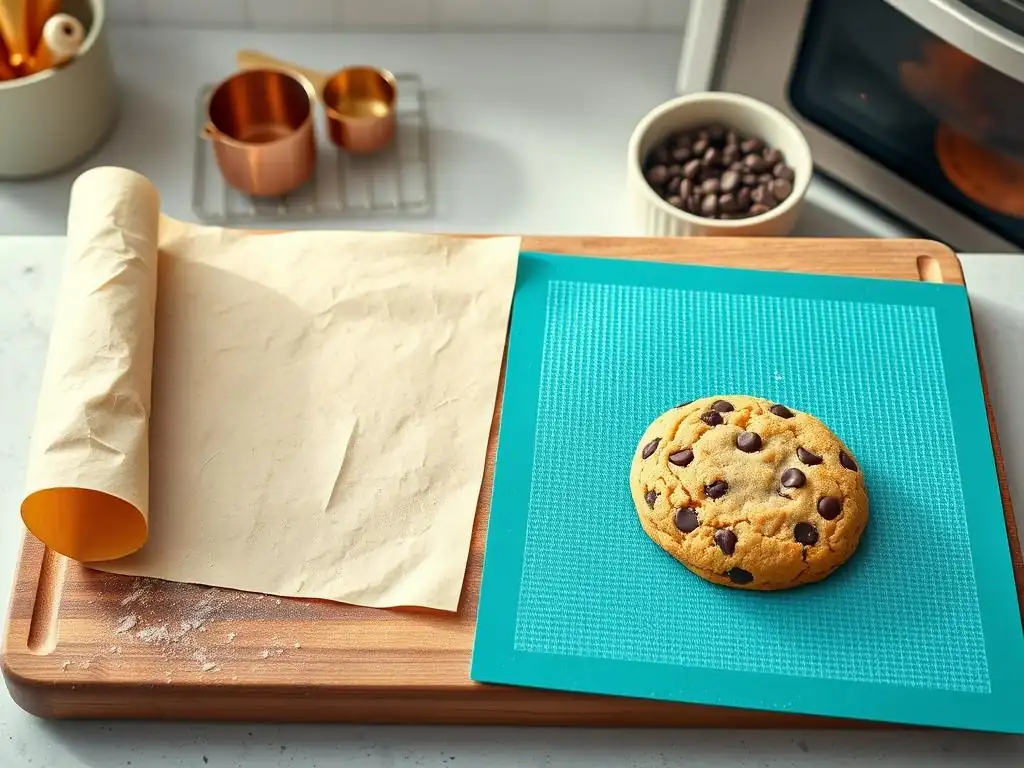
While silicone mats have their strengths, parchment paper remains an indispensable tool in the kitchen due to its versatility, flexibility, and convenience. There are many baking tasks where parchment paper is either the preferred option or simply more practical than a silicone mat. The disposable nature and ability to easily cut and shape make it suitable for a wide range of uses.
Understanding when to reach for parchment paper rather than a silicone baking mat vs parchment paper helps optimize your baking process and ensures you get the best results for specific types of baked goods and preparations.
Cakes and Bread
Parchment paper is ideal for lining cake pans. You can easily cut a circle for the bottom of a round pan or shape it to fit square or rectangular pans. This ensures that cakes release cleanly without sticking to the bottom or sides, resulting in perfectly intact layers every time. For example, lining the bottom of a delicate sponge cake pan with parchment guarantees it won't stick when inverted.
Similarly, parchment paper is excellent for baking bread, particularly in Dutch ovens or on baking stones. You can proof dough on a piece of parchment and then easily lift and lower the dough into a hot Dutch oven without burning your hands. The paper can withstand the initial high heat and helps prevent the bottom of the loaf from sticking. While a silicone baking mat vs parchment might work for some bread types, parchment's flexibility and ability to be folded or crumpled make it superior for lining specific bread-baking vessels.
Lining Baking Pans
Beyond cakes and bread, parchment paper is incredibly useful for generally lining baking pans for a variety of items. Its flexibility allows it to be pressed into the corners of pans, providing complete coverage. This is especially helpful for recipes that might bubble over or create sticky residues, like fruit cobblers, casseroles, or baked goods with sugary glazes.
Lining pans with parchment paper makes cleanup incredibly fast and easy. Instead of scrubbing baked-on messes from the pan itself, you simply lift out the parchment paper and discard it. This saves significant time and effort, particularly after baking items known for leaving sticky residues. The convenience of easy pan lining and cleanup is a major advantage of parchment paper in the silicone baking mat vs parchment paper comparison.
Choosing the Right Option for Your Baking Needs
Deciding between a silicone baking mat vs parchment paper ultimately depends on your specific baking habits, the recipes you're making, your budget, and your priorities regarding convenience and environmental impact. There's no single "better" option; rather, the best choice is the one that aligns most closely with the task at hand and your personal preferences.
Often, the optimal approach for a passionate home baker is to have both options available, leveraging the strengths of each for different situations. Understanding the key factors will guide you in making the right choice for any given baking project.
Recipe, Budget, and Environmental Considerations
When selecting between a silicone baking mat vs parchment paper, first consider the recipe. For delicate items like macarons or high-heat roasting, silicone mats are often superior due to their smooth surface and higher temperature tolerance. For lining cake pans, baking bread in a Dutch oven, or simply prioritizing quick cleanup, parchment paper is usually more convenient.
Budget plays a role; while parchment has a lower upfront cost, silicone mats offer significant savings over time for frequent bakers. If you bake several times a week, the initial investment in a few good silicone mats will pay for itself relatively quickly. Finally, consider the environmental impact. If reducing waste is a priority, the reusability of silicone mats makes them a much more sustainable choice in the silicone baking mat vs parchment paper debate.
Summary Table: Silicone Baking Mats vs. Parchment Paper
| Feature | Silicone Baking Mats | Parchment Paper |
|---|---|---|
| Reusability | High (Hundreds/Thousands of uses) | Low (Single-use, sometimes 2-3 uses) |
| Non-Stick | Excellent, very smooth release | Excellent, easy cleanup |
| Heat Limit | Generally 450°F - 500°F (230°C - 260°C) | Generally 400°F - 425°F (200°C - 220°C) |
| Cost | Higher upfront, lower long-term | Lower upfront, higher long-term |
| Environmental | Low waste (reusable) | Higher waste (disposable) |
| Cleaning | Requires washing | Disposable, leaves pan clean |
| Flexibility | Rigid, fits standard sheet pans | Flexible, can be cut/shaped |
| Best For | Cookies, macarons, roasting, sticky items | Cakes, bread, pan lining, quick cleanup |
Tips for Using Silicone Baking Mats and Parchment Paper
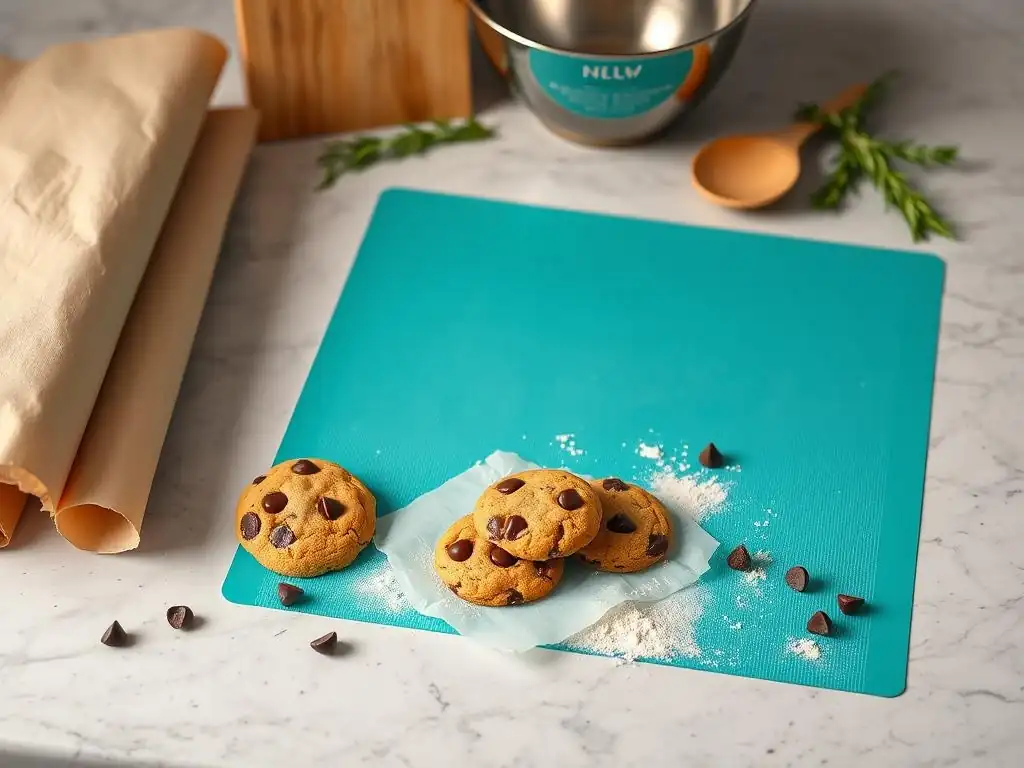
Whether you choose a silicone baking mat vs parchment paper for a particular task, knowing how to use and care for them properly will ensure you get the best possible results and maximize their lifespan or effectiveness. A few simple tips can make a big difference in your baking experience and the longevity of your tools.
Proper handling and storage of both silicone mats and parchment paper are essential for maintaining their non-stick properties and usability over time. Let's look at some practical advice for getting the most out of these essential baking liners.
Extending the Lifespan of Your Silicone Mat
To ensure your silicone baking mat lasts for many years, proper care is crucial. Always wash your mat after each use with warm, soapy water, even if it doesn't look visibly dirty, as oils can build up over time. Avoid using sharp knives or cutting directly on the mat, as this can damage the fiberglass mesh and the silicone surface, compromising its non-stick properties.
Store mats flat or rolled loosely rather than folded tightly, as sharp creases can weaken the material. While many are dishwasher safe, hand washing is often gentler. Avoid harsh abrasive cleaners or scouring pads. With proper care, a quality silicone baking mat can easily last for 10 years or more, proving its value in the silicone baking mat vs parchment paper comparison over the long haul.
Preventing Parchment Paper from Curling
One common frustration with parchment paper is its tendency to curl, especially when trying to lay it flat in a pan. To prevent this, particularly with paper from a roll, you can lightly crumple the paper into a ball first and then flatten it out. This breaks down the paper's "memory" from being rolled and makes it much easier to lay flat in the pan.
Another trick, especially when lining cake pans, is to dab a tiny bit of butter or oil in the corners or bottom of the pan before placing the paper. This helps the paper adhere to the pan and stay in place while you pour in the batter. For baking sheets, placing a few dollops of dough (like cookie dough) on the corners of the paper before filling the sheet can help weigh it down and prevent curling during transfer to the oven.
Alternative Non-Stick Baking Solutions
While silicone baking mats and parchment paper are arguably the most popular non-stick liners, they are not the only options available. Understanding alternative methods can provide flexibility, especially if you find yourself without a mat or parchment paper for a specific recipe. These traditional methods have been used by bakers for generations with great success.
Exploring other ways to achieve a non-stick surface expands your baking toolkit and ensures you're never completely stuck if your preferred liner isn't available.
Baking Sprays and Greasing Pans
Before the widespread use of silicone mats and parchment paper, bakers relied on greasing and flouring or using baking sprays to create a non-stick surface. This method involves coating the baking pan with a fat, such as butter, shortening, or oil, and then often dusting it with flour (for cakes and bread) or cocoa powder (for chocolate cakes). The fat creates a barrier, and the flour/cocoa provides a dry layer that prevents sticking.
Baking sprays, which are typically an aerosol mix of oil and flour, offer a convenient alternative to manual greasing and flouring. While effective, they can sometimes leave a sticky residue on pans over time that is difficult to remove. Using sprays or greasing pans manually can be perfectly adequate for many recipes, particularly for simple cakes, muffins, or roasting, though they may not offer the same level of consistent non-stick performance as a silicone baking mat vs parchment paper, especially for very delicate items.
Conclusion: Mastering Non-Stick Baking
Choosing between a silicone baking mat vs parchment paper doesn't have to be a rigid decision. Both are invaluable tools in the baker's arsenal, each with distinct advantages that make them better suited for different tasks. Silicone mats offer long-term value, environmental benefits, and exceptional performance for delicate items and high-heat applications due to their reusability and durability.
Parchment paper, on the other hand, provides unmatched convenience, flexibility, and ease of cleanup, making it perfect for lining pans, baking bread, and quick, disposable use. By understanding the strengths of each and considering the specific needs of your recipe, budget, and environmental preferences, you can effectively decide which liner to use. Often, having both a silicone baking mat and parchment paper available allows you to tackle any baking challenge with confidence, ensuring perfect, non-stick results every time. Mastering the use of these tools is key to successful and enjoyable baking.
Frequently Asked Questions
What are the primary benefits of using a silicone baking mat instead of parchment paper?
Silicone baking mats are reusable and offer superior non-stick properties, reducing the need for oils or sprays. They also provide consistent heat distribution for even baking.
How does the cost compare between using silicone baking mats and parchment paper in the long run?
While silicone baking mats have a higher initial cost, their reusability makes them more cost-effective than repeatedly buying parchment paper. Parchment paper is a recurring expense.
What types of baked goods are best suited for silicone baking mats versus parchment paper?
Silicone mats are ideal for cookies, pastries, and delicate items that require easy release. Parchment paper is better for sticky batters like cakes or when transferring baked goods is needed.
Are silicone baking mats and parchment paper oven-safe, and what temperature limitations should I be aware of?
Both are oven-safe, but silicone mats typically have a higher heat tolerance (usually up to 480°F or more). Always check the manufacturer's instructions for both to avoid damage.
How do I properly clean and care for silicone baking mats to maximize their lifespan?
Wash silicone mats with warm, soapy water and avoid abrasive cleaners. Ensure they are completely dry before storing them flat or rolled to prevent damage and maintain their non-stick properties.
Final Reflection: Choosing Your Baking Champion: Silicone or Parchment?
The debate between silicone baking mats and parchment paper rages on, and its relevance extends far beyond the kitchen counter. The choice, seemingly simple, actually reflects a broader conversation about sustainability, convenience, and the pursuit of baking perfection. Ultimately, understanding the nuances of each option empowers us to make informed decisions, leading to better baking experiences.
This exploration into the world of baking surfaces has highlighted for me the subtle yet significant impact seemingly small choices can have. The environmental considerations alone – the reusability of silicone versus the disposability of parchment – underscore the importance of mindful consumption. The best things in life are simple,
a phrase often associated with baking, takes on a new meaning when considering the lasting impact of our kitchen choices. The ongoing evolution of both products, driven by consumer demand and technological advancements, further emphasizes the dynamic nature of this seemingly simple decision.
Now, consider your own baking habits. Do you prioritize convenience and ease of cleanup, or is sustainability a primary concern? Perhaps you value the crispness parchment provides, or the even heat distribution of a silicone mat. This article isn't about declaring a definitive winner, but rather about empowering you to choose the baking champion that best suits your needs and values. So, the next time you reach for your baking supplies, take a moment to reflect on this choice – and let the delicious results speak for themselves.
Unleash Your Inner Baker: Level Up Your Baking Game!
Thanks for taking the time to explore the world of nonstick baking with us! We hope you now feel confident in choosing the perfect surface for your next culinary creation. Ready to put this knowledge into action?
- Embrace the Mat (or Paper!): Based on your baking style and needs, select the best nonstick option – silicone baking mat or parchment paper – for your next recipe. Try it out and see the difference!
- Share Your Baking Triumphs: Show us your perfectly baked goods! Share photos of your creations on social media using #BakeWithEase and tag us – we’d love to see what you whip up.
- Join the BakeWithEase Community: Dive deeper into the world of baking! Check out our other articles for more tips, tricks, and recipes to elevate your baking skills.
What's your favorite baking surface and why? Let us know in the comments below!