
Your Ultimate Guide to Replacing Eggs in Vegan Baking

Welcome to BakeWithEase, your haven for all things baking! Ever wondered how to achieve that perfect rise and texture without eggs? This guide cracks the code to vegan baking egg substitutes, revealing the secrets to delicious, plant-based treats. Discover innovative techniques and readily available ingredients that will revolutionize your baking. Ready to unlock a world of egg-free possibilities? Let's get started!
- Vegan Baking: Mastering Egg Substitutes
- Understanding Vegan Egg Substitutes
- Why Replace Eggs?
- Top Vegan Egg Substitutes
- Choosing the Right Substitute
- Tips for Success
- Vegan Recipes Using Egg Substitutes
- Troubleshooting
- Conclusion
- Frequently Asked Questions
- Final Reflection: The Bountiful World of Vegan Baking
- Unlock the Secrets of Eggless Baking!
Vegan Baking: Mastering Egg Substitutes
Understanding Vegan Egg Substitutes
Navigating the world of vegan baking opens up exciting possibilities and challenges, especially when it comes to replacing one of baking's most fundamental ingredients: the egg. Eggs play multiple critical roles in traditional recipes, acting as binders, leaveners, moisteners, and contributors to structure and richness. When transitioning to vegan baking, finding effective vegan baking egg substitutes is key to achieving delicious results that stand up to their non-vegan counterparts.
Fortunately, the landscape of vegan baking egg substitutes is rich and varied. From simple pantry staples like applesauce and flaxseed meal to more specialized ingredients like aquafaba and commercial replacers, there's a solution for almost every baking need. Understanding the unique properties of each substitute is the first step in mastering vegan baking and successfully adapting your favorite recipes.
Why Replace Eggs?
Eggs' Role in Baking
Eggs perform a complex dance in baking, contributing significantly to the final texture, structure, and appearance of baked goods. A typical large egg, weighing roughly 50-60 grams, is composed of both yolk and white, each with distinct functions. The proteins in egg whites coagulate when heated, providing structure and helping baked goods set. This is particularly evident in recipes like meringues or soufflés, where whipped egg whites create lift and stability. Egg yolks, rich in fat and lecithin, contribute moisture, richness, and emulsification, helping to bind ingredients together and prevent separation.
Beyond structure and binding, eggs also aid in leavening, especially when whipped, trapping air that expands during baking. They contribute to browning (Maillard reaction) and flavor, adding a subtle richness that is often missed if not adequately replaced. For instance, in a classic pound cake, eggs are central to both the structure and the moist, tender crumb, making their substitution a nuanced task requiring an understanding of these combined roles. Successfully using vegan baking egg substitutes means finding ingredients that can replicate one or more of these essential functions.
Ethical & Environmental Reasons
The decision to use vegan baking egg substitutes often stems from ethical and environmental considerations. Ethically, many people choose to avoid eggs due to concerns about the treatment of laying hens in industrial farming. While regulations vary globally, common practices can include confining hens to small cages (battery cages, though banned in some regions, are still prevalent elsewhere), limited space, and a shortened lifespan compared to natural hen life cycles. Opting for vegan alternatives aligns with a desire to avoid contributing to systems perceived as causing animal suffering.
Environmentally, egg production, like other forms of animal agriculture, has an impact. Factors include land use for feed production, water consumption, and greenhouse gas emissions (primarily methane and nitrous oxide) from manure. While the environmental footprint of eggs is generally lower than that of meat production, it is still significantly higher than that of plant-based alternatives.
For example, producing one kilogram of eggs can generate emissions roughly equivalent to driving a car several miles, consume significant amounts of water, and require substantial land. Choosing vegan baking egg substitutes can be a way to reduce one's personal environmental impact and support more sustainable food systems.
Top Vegan Egg Substitutes

Applesauce
Applesauce is a popular and accessible vegan baking egg substitute, particularly effective in moist cakes, muffins, and quick breads. Plain, unsweetened applesauce works best to avoid altering the flavor profile of your baked goods significantly. It primarily functions as a binder and adds moisture, replacing some of the liquid and binding properties of eggs. A common ratio is to use about 1/4 cup (roughly 60 grams) of applesauce per egg replaced.
Best Uses
Applesauce shines in recipes where moisture is desired and a slightly denser texture is acceptable. Think of classic baked goods like:
- Muffins (blueberry, chocolate chip)
- Quick breads (banana bread, zucchini bread)
- Some types of cakes (spice cake, carrot cake)
It works particularly well in recipes that already contain spices or flavors that complement applesauce, such as cinnamon or nutmeg. Using applesauce for up to two eggs in a recipe is usually successful; replacing more can sometimes lead to a gummy or overly moist result.
Drawbacks
While convenient, applesauce isn't a perfect substitute for every application. Its primary drawback is its lack of leavening power. It adds weight and moisture but doesn't help the batter rise. Using too much can result in baked goods that are quite dense or even gummy in the center. For recipes relying heavily on eggs for structure and lift, like sponge cakes or meringues, applesauce is not an appropriate vegan baking egg substitute. It also adds a subtle sweetness and apple flavor, which might not be desirable in all recipes.
Flaxseed Meal
Flaxseed meal, or ground flaxseed, is another widely used vegan baking egg substitute, often referred to as a "flax egg." When combined with water, the ground seeds form a gelatinous mixture that effectively mimics the binding properties of eggs. It's rich in omega-3 fatty acids and fiber, adding a nutritional boost to your baked goods.
Preparing Flax Eggs
Creating a flax egg is simple:
- Combine 1 tablespoon of flaxseed meal with 3 tablespoons of water.
- Stir well.
- Let the mixture sit for 5-10 minutes until it thickens to a gelatinous consistency similar to a raw egg.
This mixture replaces one large egg in recipes. It's important to use ground flaxseed, as whole seeds will not create the necessary gel. Both golden and brown flaxseed meal work, though golden flaxseed is less noticeable in lighter baked goods.
Applications
Flax eggs are excellent binders and work well in recipes where the binding function of the egg is paramount. They add a slightly nutty flavor and can contribute to a denser, chewier texture. Ideal uses include:
- Cookies
- Brownies
- Muffins
- Pancakes
- Waffles
- As a binder in veggie burgers or meatless loaves
They are less effective in recipes requiring significant leavening or a very light, airy texture. Using flax eggs is a reliable method for many basic vegan baking egg substitutes needs.
Silken Tofu
Silken tofu, a soft, unpressed variety of tofu, can serve as an interesting vegan baking egg substitute, particularly for adding moisture and richness. Its high water content and smooth texture make it blend seamlessly into batters. It acts primarily as a binder and adds richness, similar to the role of egg yolks.
When to Use
Silken tofu is best used in dense, moist baked goods where its texture won't be disruptive and where its subtle flavor is masked by other ingredients. It works well in recipes that call for multiple eggs and benefit from added moisture.
Applications
Consider using pureed silken tofu in:
- Cheesecakes (vegan versions)
- Quiches (as part of the base)
- Rich, dense chocolate cakes
- Brownies
About 1/4 cup (roughly 60-70 grams) of pureed silken tofu can replace one egg. Blend the tofu until completely smooth before incorporating it into your batter. Ensure you use silken tofu, as firmer varieties will not yield the correct texture.
Commercial Egg Replacers
For convenience and consistency, commercial vegan baking egg substitutes are readily available. These products are typically made from a blend of starches (like potato or tapioca) and leavening agents (like baking soda or cream of tartar). They are specifically formulated to mimic the multiple functions of eggs, providing binding, some leavening, and structure.
Popular Brands
Several reputable brands offer effective commercial egg replacers. Some well-known options include:
- Bob's Red Mill Egg Replacer
- Ener-G Egg Replacer
- Follow Your Heart Vegan Egg
These products usually come in powder form with specific instructions on how much to mix with water to replace one egg. For instance, one brand might instruct mixing 1.5 teaspoons of powder with 2 tablespoons of water per egg. Always follow the package directions for best results.
Best Uses
Commercial egg replacers are versatile and can be used in a wide range of baked goods where eggs serve multiple functions. They are often reliable for:
- Cakes
- Muffins
- Cookies
- Brownies
- Pancakes
They generally provide better lift than simple binders like applesauce or flax eggs and are less likely to affect the flavor. However, they are typically not suitable for recipes where the egg is the primary structural component, such as meringues or choux pastry.
Aquafaba
Aquafaba, the liquid drained from canned chickpeas or other legumes, is a surprisingly effective vegan baking egg substitute, particularly for mimicking egg whites. Its unique protein and starch composition allows it to be whipped into a foam similar to meringue. Roughly 3 tablespoons of aquafaba can replace one large egg, and 2 tablespoons can replace one egg white.
Whipping Aquafaba
Whipping aquafaba requires a stand mixer or hand mixer and some patience.
- Drain the liquid from a can of unsalted chickpeas.
- Pour the liquid into a clean, grease-free bowl.
- Whip on medium-high speed.
- It will first become frothy, then gradually form soft peaks, and eventually stiff, glossy peaks, much like egg whites. This process can take anywhere from 5 to 15 minutes, depending on the mixer and the aquafaba concentration.
Adding a pinch of cream of tartar (about 1/8 teaspoon per 1/4 cup aquafaba) can help stabilize the foam.
Applications
Aquafaba is revolutionary for vegan versions of recipes that rely on whipped egg whites for structure and lightness:
- Meringues (baked or soft)
- Macarons
- Mousses
- Marshmallows
- Certain light and airy cakes
It can also be used, unwhipped, as a binder in some recipes, replacing whole eggs, though its primary strength lies in its whipping capabilities. Aquafaba is one of the most versatile vegan baking egg substitutes for advanced techniques.
Nut Butters
Nut butters, such as peanut butter, almond butter, or cashew butter, can function as vegan baking egg substitutes in certain contexts due to their binding and richness. They add moisture and density, similar to applesauce or pureed fruit, but also contribute significant flavor and fat.
Options
Creamy, smooth nut butters work best as they blend more easily into batters.
- Peanut butter (adds a distinct flavor)
- Almond butter (milder flavor)
- Cashew butter (creamy and relatively neutral)
- Sunflower seed butter (nut-free alternative)
Use about 3 tablespoons (roughly 45 grams) of smooth nut butter per egg.
Best Uses
Nut butters are most suitable for recipes where their flavor profile is complementary and a denser, chewier texture is desired.
- Cookies (especially peanut butter cookies)
- Brownies
- Certain muffins or quick breads
They are not suitable for recipes requiring lift or a light texture. When using nut butter as a vegan baking egg substitute, be mindful of the overall fat content in your recipe, as nut butters are quite rich.
Pumpkin Puree
Similar to applesauce, pumpkin puree (or other cooked, mashed squashes or sweet potatoes) can serve as a moistening and binding vegan baking egg substitute. It adds moisture, helps hold ingredients together, and contributes a subtle earthy flavor and vibrant color. Use plain, unsweetened pumpkin puree, not pumpkin pie filling.
Uses
Pumpkin puree works well in:
- Muffins
- Quick breads
- Spice cakes
- Some types of cookies
Use about 1/4 cup (roughly 60 grams) of pumpkin puree per egg. It's particularly effective in recipes where pumpkin flavor is already present or welcome, such as pumpkin muffins or bread.
Recipes
Examples include using pumpkin puree in a classic pumpkin bread recipe or adding it to spice muffins. Its density means it's best in recipes that don't rely on eggs for significant lift. It's a great way to add moisture and a touch of nutrition when seeking vegan baking egg substitutes.
Choosing the Right Substitute
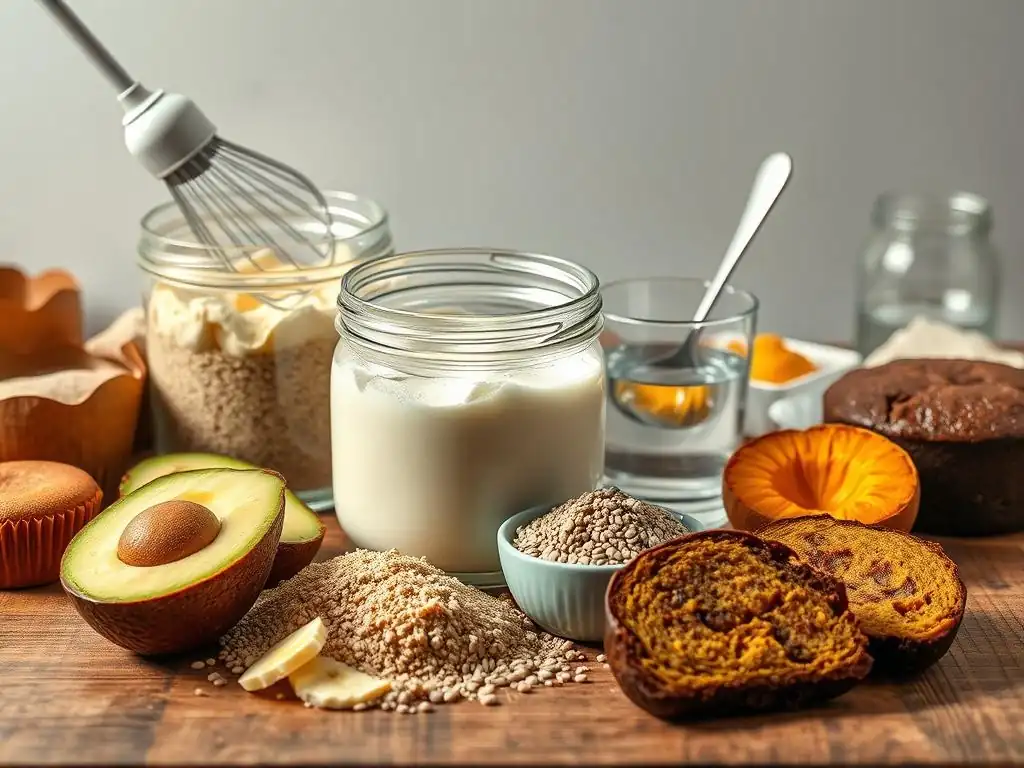
Selecting the best vegan baking egg substitute depends heavily on the specific role the egg plays in the original recipe and the desired outcome for your baked good. There is no single "one-size-fits-all" replacement. A recipe for light and fluffy pancakes will require a different substitute than one for dense, chewy brownies or a delicate meringue.
Consider what function the egg is primarily performing: binding, leavening, moisture, richness, or a combination? If it's mainly binding, flax eggs or commercial replacers often work well. If it's for moisture and richness, applesauce, pumpkin puree, or pureed tofu might be better. If it's for leavening and structure in something like a meringue, aquafaba is the clear choice. Understanding these roles is crucial for successful vegan baking egg substitutes.
Matching Replacers to Recipes
Successful substitution involves matching the properties of the replacer to the needs of the recipe.
- For binding in cookies or brownies: Flax egg, chia egg, commercial replacer, nut butter.
- For moisture in muffins or quick breads: Applesauce, pumpkin puree, mashed banana (adds strong flavor).
- For richness and binding in dense cakes or cheesecakes: Pureed silken tofu, commercial replacer.
- For leavening and structure in light cakes or pancakes (partially): Commercial replacer, sometimes a combination of baking soda/powder with an acid (like vinegar or lemon juice) alongside a binder.
- For meringues or light foams: Aquafaba.
It's often helpful to start by replacing just one or two eggs in a recipe if you're unsure. Many recipes call for multiple eggs, and a combination of substitutes might be needed, or a single substitute might handle multiple roles adequately.
Texture, Flavor, and Binding
Each vegan baking egg substitute impacts the final texture and flavor of the baked good differently.
- Texture: Applesauce, pumpkin, and banana add moisture but can lead to density. Flax/chia eggs add chewiness. Silken tofu adds creaminess and density. Commercial replacers aim for a neutral texture but might sometimes result in a slightly different crumb. Aquafaba creates lightness and crispness (when baked into meringue). Nut butters add density and chewiness.
- Flavor: Mashed banana and nut butters impart noticeable flavors. Applesauce and pumpkin add subtle sweetness and flavor. Flax/chia eggs have a slightly nutty taste. Silken tofu and commercial replacers are generally neutral. Aquafaba from chickpeas can sometimes have a faint beany smell when raw, but this usually disappears during baking.
- Binding: This is a primary function for most substitutes. Flax/chia eggs, commercial replacers, pureed fruits/vegetables, and nut butters all help hold ingredients together.
Choosing the right vegan baking egg substitute is a balance of achieving the desired binding while managing the impact on texture and flavor.
Tips for Success
Embarking on your journey with vegan baking egg substitutes can be incredibly rewarding. Here are some tips to help you achieve consistently great results:
Adjusting Liquids
Many vegan baking egg substitutes add moisture to the batter. Applesauce, pumpkin puree, mashed banana, and pureed tofu all contain significant water. Flax and chia eggs also incorporate water.
When using these substitutes, you may need to slightly reduce the amount of other liquids in the recipe (like milk or water) to prevent the batter from becoming too wet or the final product from being gummy or dense. Start by reducing the liquid by 1-2 tablespoons per egg replaced and adjust in future attempts based on your results. Commercial replacers usually account for this in their instructions, but it's something to keep in mind, especially when experimenting with whole-food substitutes.
Avoiding Mistakes
Common pitfalls when using vegan baking egg substitutes include using the wrong substitute for the recipe's needs (e.g., applesauce in a meringue), using too much of a substitute (leading to density or gumminess), or not preparing the substitute correctly (e.g., not letting flax eggs gel sufficiently).
- Research: Understand what role the egg plays in the original recipe.
- Start Small: If possible, try substituting just one or two eggs first.
- Follow Ratios: Stick to recommended substitution ratios (e.g., 1/4 cup applesauce or 1 flax egg per egg).
- Be Patient: Allow flax/chia eggs time to gel. Whip aquafaba sufficiently.
- Consider Combinations: Some recipes benefit from using two different substitutes (e.g., a binder plus a leavener).
Learning from mistakes is part of the process! Don't be discouraged if your first attempt isn't perfect.
Mastering Techniques
Successful vegan baking egg substitutes also involves mastering general vegan baking techniques. This includes understanding the balance of leavening agents (baking soda and baking powder, often used more generously in vegan recipes), the role of fats for tenderness, and proper mixing techniques. Overmixing can develop gluten too much, leading to tough baked goods, especially when using binders like flax that contribute to structure. Undermixing might leave ingredients unevenly distributed. Pay attention to the recipe's instructions regarding mixing, and remember that vegan batters often look different from their egg-inclusive counterparts.
Vegan Recipes Using Egg Substitutes

Experiencing how different vegan baking egg substitutes perform in real recipes is the best way to learn. Here are examples of how common substitutes are used:
Vegan Chocolate Cake with Applesauce
In a rich vegan chocolate cake, applesauce works wonderfully as a binder and provides moisture. A typical recipe might use 1/2 cup of applesauce to replace two eggs. The applesauce helps create a tender, moist crumb that complements the dense chocolate flavor. The cocoa powder and other ingredients effectively mask the subtle apple taste. This is a classic example where applesauce proves to be an effective vegan baking egg substitute.
Vegan Banana Bread with Flaxseed
Banana bread is forgiving, and a flax egg is a perfect vegan baking egg substitute here. The mashed bananas provide moisture and flavor, while the flax egg acts as a reliable binder, holding the loaf together. A recipe might call for 1-2 flax eggs. The slight chewiness contributed by the flaxseed meal pairs nicely with the soft texture of the banana bread.
Vegan Lemon Bars with Aquafaba
Recreating the luscious, slightly chewy filling of lemon bars traditionally relies on egg yolks, while the meringue topping uses egg whites. Aquafaba is essential for the meringue topping in a vegan version. Whipped aquafaba with sugar and cream of tartar can be baked into a stable, sweet meringue. While the lemon filling requires different substitutes (often cornstarch or agar-agar for thickening), aquafaba is the star vegan baking egg substitute for achieving that classic meringue finish.
Troubleshooting
Even with the best intentions and the right vegan baking egg substitutes, sometimes things don't go exactly as planned. Here are some common issues and how to address them.
Dense Texture
If your baked goods turn out too dense, it's often due to using too much of a heavy binder (like applesauce, pumpkin puree, or flax egg) or not having enough leavening.
- Reduce Binder: Try using slightly less of the moist/dense substitute next time.
- Increase Leavening: Add a bit more baking powder or baking soda (ensure there's an acid present if using baking soda).
- Aeration: Ensure you're not overmixing the batter, which can prevent proper air incorporation. If the recipe involves creaming butter and sugar, make sure they are well-aerated, as this traps air crucial for lift.
- Consider Substitute: For recipes needing more lift, a commercial egg replacer or a combination of substitutes might be better than a single heavy binder.
Poor Binding
If your cookies crumble too easily or your muffins fall apart, the vegan baking egg substitute didn't provide enough binding power.
- Check Ratios: Ensure you used the correct amount of your chosen substitute per egg.
- Prepare Correctly: If using flax or chia eggs, make sure they gelled sufficiently.
- Choose Stronger Binder: For recipes requiring strong binding, flax eggs, chia eggs, or commercial replacers are usually more effective than pureed fruits/vegetables alone.
- Add Another Binder: Consider adding a tablespoon of a different binder, like psyllium husk powder (needs extra liquid), or a bit more flour if the batter seems too wet.
Flavor Issues
Sometimes vegan baking egg substitutes can impart unwanted flavors.
- Nutty Flavor: Flax and chia eggs add a slight nutty taste. Use golden flaxseed meal for a milder flavor, or opt for a commercial replacer in delicate recipes.
- Beany Flavor: While rare, aquafaba can sometimes have a faint smell. Ensure you're using unsalted chickpeas. Adding vanilla or other flavorings usually masks any trace flavor in the final baked good.
- Fruity Flavor: Mashed banana or applesauce will impact flavor. Use these in recipes where their taste is complementary. Plain, unsweetened varieties are best.
Experimentation with different vegan baking egg substitutes will help you find which ones work best for your palate and specific recipes.
Conclusion
Mastering the art of vegan baking egg substitutes is a journey of exploration and experimentation. While eggs perform multiple functions, the diverse world of plant-based ingredients offers effective ways to replicate these roles. From the simple binding of flax eggs to the magical whipping power of aquafaba, there's a substitute for nearly every baking need.
Experimentation
Don't be afraid to experiment! Start with reliable substitutions in forgiving recipes like muffins or cookies. Try different vegan baking egg substitutes in the same recipe to see how they impact the outcome. Keep notes on what works and what doesn't. Baking is a science, but also an art, and practice makes perfect. Your kitchen is your laboratory to discover your favorite ways to replace eggs.
Continuing Your Journey
As you become more comfortable with vegan baking egg substitutes, you'll find yourself confidently adapting more complex recipes. The world of vegan baking is constantly evolving, with new ingredients and techniques emerging. Continue learning, trying new recipes, and sharing your successes. With a little knowledge and practice, you can create delicious vegan baked goods that everyone will love, proving that you don't need eggs to bake something amazing.
Frequently Asked Questions
How can I replace eggs in vegan baking?
You can replace eggs with various vegan egg substitutes like applesauce, flaxseed meal, or mashed banana. The best choice depends on the recipe and the desired texture and binding properties.
What are some common vegan egg substitutes for cakes?
For cakes, applesauce and mashed banana often work well as they provide moisture and binding. You can also use commercial egg replacers specifically designed for baking.
Can I use aquafaba as a vegan egg substitute?
Yes, aquafaba (the liquid from canned chickpeas) is an excellent vegan egg white substitute, especially for meringues and recipes requiring whipped egg whites.
Does the type of recipe affect which vegan egg substitute I should use?
Absolutely. Denser recipes may benefit from flaxseed meal or chia seeds for binding, while lighter recipes may prefer applesauce or aquafaba for a lighter texture.
How much of a vegan egg substitute should I use per egg in a recipe?
Generally, 1/4 cup of applesauce, mashed banana, or aquafaba can replace one egg. For flaxseed or chia seeds, use 1 tablespoon of ground seeds mixed with 3 tablespoons of water to replace one egg's binding power.
Final Reflection: The Bountiful World of Vegan Baking
The accessibility and creativity unlocked by mastering vegan egg substitutes are transforming the culinary landscape, proving that delicious, ethical baking is not only possible but incredibly rewarding. No longer are vegans limited to a small selection of store-bought treats; the ability to replicate classic recipes with plant-based alternatives empowers home bakers to create a world of flavour and texture previously thought unattainable.
This exploration into the diverse world of vegan egg substitutes has been a journey of discovery, highlighting not only the practical applications of each ingredient but also the rich history and cultural significance woven into many of them. Food is symbolic of love when words are inadequate.
- Alan D. Wolfelt. This quote resonates deeply, as the act of baking, whether vegan or not, often represents care, connection, and the sharing of something special. The ability to recreate those cherished moments using ethical and sustainable ingredients adds another layer of meaning and satisfaction.
Now, it's your turn. Consider the recipes and techniques explored within this guide, and experiment! Don't be afraid to try a new substitute, adjust measurements, and discover your own signature vegan baking style. The journey of culinary exploration is a personal one, and the possibilities are as limitless as your imagination. Embrace the challenge, celebrate the successes, and most importantly, enjoy the delicious results of your vegan baking adventures.
Unlock the Secrets of Eggless Baking!
Thanks for diving into the world of vegan baking with us! You've now got the knowledge to create delicious, egg-free treats. Ready to put your new skills to the test?
- Master your first egg-free recipe: Choose your favorite from the article and get baking! It's easier than you think.
- Share your creation: Show off your eggless masterpiece on social media using #BakeWithEaseEggless. Let's inspire others!
- Explore more vegan baking adventures: Browse our website for more fantastic recipes and tips to expand your plant-based baking journey.
What incredible egg-free delight will you create first?