
The Chemistry of SelfRising Flour vs. DIY Leavening Mixes

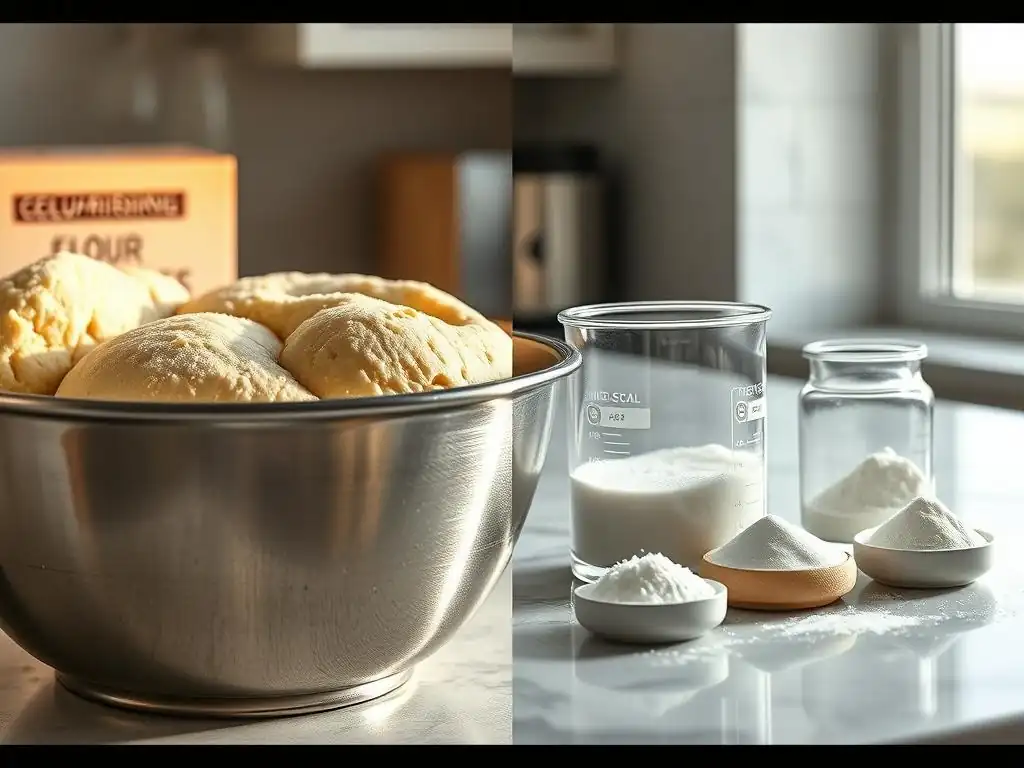
Welcome to BakeWithEase, where we unlock the secrets to baking success! Ever wondered about the magic behind perfectly risen cakes and fluffy biscuits? This article delves into the intriguing world of Selfrising flour leavening chemistry. Discover how it works its magic, and whether your DIY leavening mixes truly measure up. Intrigued? Let's get baking!
- The Chemistry of Self-Rising Flour vs. DIY Leavening Mixes: Bake With Ease
- Understanding Self-Rising Flour and Leavening in Baking
- Self-Rising Flour: A Deep Dive into its Chemical Composition
- DIY Leavening Mixes: Crafting Your Own Baking Power
- Self-Rising Flour vs. DIY Leavening: A Chemical Comparison
- Applications in Baking: When to Use Self-Rising Flour or DIY Mixes
- Troubleshooting Leavening Problems: Common Issues and Solutions
- Exploring Advanced Leavening Techniques
- Conclusion: Mastering Leavening for Baking Success
- Frequently Asked Questions
- Final Reflection: The Unexpected Wonders of a Simple Rise
- Unlock Baking Mastery: Elevate Your Creations!
The Chemistry of Self-Rising Flour vs. DIY Leavening Mixes: Bake With Ease
Understanding Self-Rising Flour and Leavening in Baking
What is Self-Rising Flour? A Baker's Essential Ingredient
Self-rising flour is a pre-mixed convenience product that simplifies baking by combining all-purpose flour with a leavening agent and salt. This blend eliminates the need for bakers to measure out baking powder and salt separately for certain recipes, particularly those for quick breads, biscuits, pancakes, and some cakes. The precise ratio of leavening and salt to flour is carefully controlled during manufacturing, aiming for consistent results every time.
Typically, one cup of self-rising flour contains approximately 1 ½ teaspoons of baking powder and ¼ teaspoon of salt mixed into about one cup of bleached, low-protein flour, often derived from soft wheat varieties. This specific composition is tailored to provide the necessary lift and seasoning for recipes designed to use it.
The appeal of self-rising flour lies in its simplicity and reliability. For busy bakers or those new to the craft, it removes a couple of steps and reduces the chance of error in measuring crucial ingredients. Its consistent blend ensures that the self-rising flour leavening chemistry is predictable, leading to reliable volume and texture in baked goods.
While it's a staple in some regional cuisines, particularly in the Southern United States for biscuits, its convenience makes it a popular choice globally for a variety of quick baking projects. Understanding its components is key to appreciating how it works and when it's the right ingredient for your baking needs.
The Role of Leavening Agents in Baked Goods
Leavening agents are fundamental to achieving the desired texture and volume in most baked goods. Their primary function is to introduce gas bubbles into the dough or batter, causing it to expand and rise during baking. Without leavening, cakes would be dense bricks, bread would be flat hardtack, and biscuits would lack their characteristic fluffiness. These agents can be biological, like yeast, which produces carbon dioxide through fermentation, or chemical, like baking powder and baking soda, which produce carbon dioxide through acid-base reactions.
The specific type and amount of leavening agent used significantly impact the final product's crumb structure, tenderness, and height. Chemical leaveners, such as those found in self-rising flour or used in DIY mixes, provide a rapid rise suitable for recipes that don't require long fermentation times, like muffins or scones. The process of leavening is essentially a controlled production and expansion of gas, which gets trapped within the gluten network or starch structure of the dough or batter.
As the baked good heats, the gas expands further, and the structure sets, preserving the airy texture created by the leavening action. Mastering the use of leavening agents is a crucial step in elevating your baking skills and understanding the chemistry of self-rising flour leavening.
Self-Rising Flour: A Deep Dive into its Chemical Composition
Key Components of Self-Rising Flour: Flour, Baking Powder, and Salt
Self-rising flour is a pre-mixed blend typically consisting of three primary ingredients: bleached all-purpose wheat flour, a chemical leavening agent (usually baking powder), and salt. The flour used is often a soft wheat variety, which has a lower protein content compared to hard wheat flour used for bread. This lower protein level results in less gluten development, leading to a tender crumb, which is desirable in many recipes that call for self-rising flour, such as biscuits and pancakes. The bleaching process can also slightly alter the flour's structure, affecting how it interacts with liquids and leavening.
The inclusion of baking powder is central to the self-rising flour leavening chemistry. Baking powder is itself a mixture, containing a bicarbonate (like sodium bicarbonate, which is baking soda) and one or more solid acids, along with a filler like cornstarch to keep the components dry and prevent premature reaction.
The salt added to self-rising flour not only enhances flavor but also plays a minor role in controlling yeast activity if other leaveners are present (though not typically the case when self-rising flour is the sole leavener) and can influence gluten development to some extent. The precise ratio of these components is factory-set, providing a consistent leavening power that is the hallmark of self-rising flour.
The Chemical Reaction: How Self-Rising Flour Leavens
The leavening action in self-rising flour primarily relies on the chemical reaction within the integrated baking powder. When liquid is added to self-rising flour, the acid and the bicarbonate components of the baking powder dissolve and react. This reaction produces carbon dioxide ( CO₂) gas bubbles. A common reaction involves sodium bicarbonate ( NaHCO₃) reacting with an acid (represented generically as HA), yielding a salt, water ( H₂O), and carbon dioxide ( CO₂):
HA + NaHCO₃ → NaA + H₂O + CO₂
Many commercial baking powders, and thus the ones likely used in self-rising flour, are "double-acting." This means they contain at least two different acids: one that reacts with the baking soda when mixed with liquid at room temperature (the initial rapid rise), and another that reacts when heated in the oven (providing additional lift during baking). For example, a common double-acting baking powder might contain monocalcium phosphate (reacts with liquid) and sodium aluminum sulfate or sodium acid pyrophosphate (reacts with heat). This double-acting nature provides a more sustained and powerful leavening effect compared to single-acting leaveners. The CO₂ gas produced gets trapped within the batter or dough structure, causing it to expand and giving baked goods their light and airy texture. This is the core of the self-rising flour leavening chemistry.
Shelf Life and Storage Considerations for Self-Rising Flour
Like all baking ingredients, self-rising flour has a limited shelf life, and its leavening power diminishes over time. The primary factor affecting its longevity is the stability of the baking powder component. Exposure to moisture and air can trigger premature reactions between the acid and base in the baking powder, releasing the carbon dioxide before it's needed for baking. This results in weakened leavening ability, leading to flat or poorly risen baked goods. While the flour and salt themselves are relatively stable when kept dry, the integrated leavener dictates the effective shelf life of the blend.
Proper storage is crucial to maintain the efficacy of self-rising flour. It should be stored in a cool, dry place, away from direct sunlight and humidity. An airtight container is highly recommended to prevent moisture absorption and exposure to air. While a bag clipped shut might suffice for short-term use, transferring the flour to a sealed plastic or glass container is best for longer storage.
Properly stored, self-rising flour typically retains its leavening power for 6 to 12 months. You can test if your self-rising flour is still active by mixing a few tablespoons with a little hot water; if it bubbles vigorously, it's still good to use. If the reaction is weak or absent, the leavening has likely expired, impacting the self-rising flour leavening chemistry negatively.
DIY Leavening Mixes: Crafting Your Own Baking Power
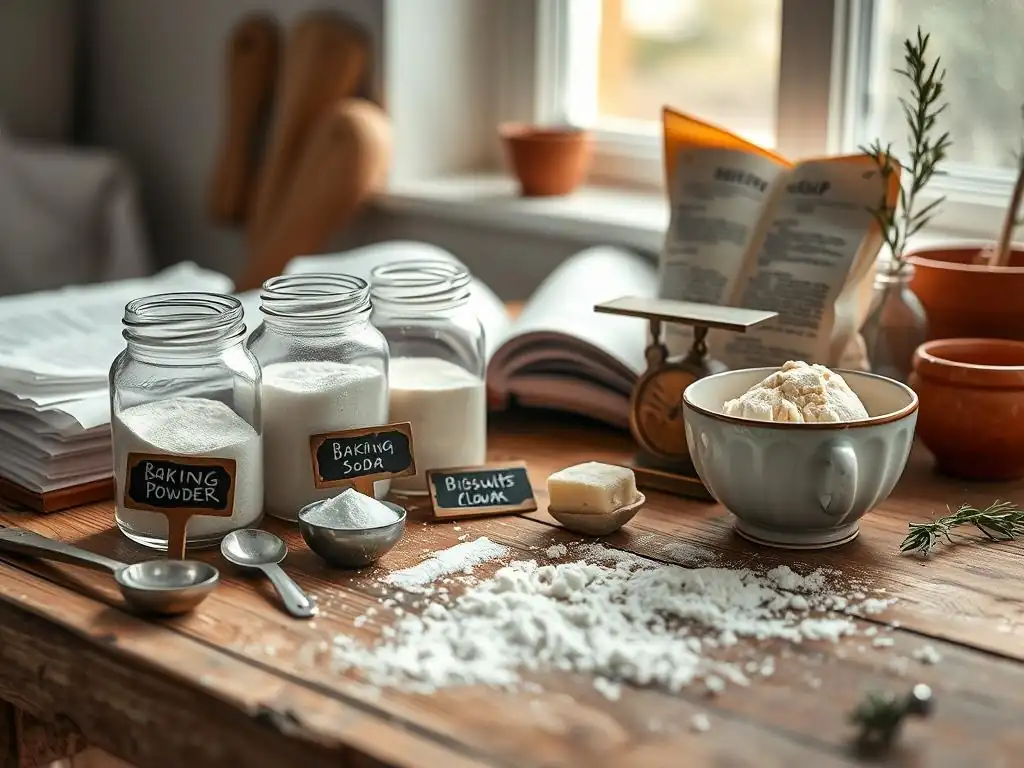
Creating a Homemade Baking Powder Substitute
For bakers who don't keep self-rising flour on hand or need a quick substitute, creating a homemade leavening mix is a simple and effective solution. This typically involves combining baking soda with a dry acid and often a starch to stabilize the mixture. The goal is to replicate the function of commercial baking powder, providing carbon dioxide gas for leavening when introduced to liquid and/or heat. While not an exact chemical match for every commercial baking powder formulation, a well-proportioned homemade mix can perform admirably in many recipes.
A common and reliable formula for a homemade single-acting baking powder substitute uses baking soda (sodium bicarbonate) and cream of tartar (potassium bitartrate). Cream of tartar is a solid acid that reacts readily with baking soda in the presence of moisture.
A standard ratio is 1 part baking soda to 2 parts cream of tartar. For example, mixing 1 teaspoon of baking soda with 2 teaspoons of cream of tartar yields a leavening mix roughly equivalent in strength to 3 teaspoons of single-acting baking powder.
Adding a starch, like cornstarch, at a 1:1 ratio with the baking soda (e.g., 1 part baking soda, 2 parts cream of tartar, 1 part cornstarch) helps prevent clumping and premature reaction, mimicking the composition of some commercial baking powders and improving its shelf stability slightly, though homemade mixes are generally best used immediately or stored briefly. This DIY approach allows bakers flexibility when self-rising flour or commercial baking powder isn't available.
Ingredients for DIY Leavening: Baking Soda and an Acid
The core chemical components required for a DIY leavening mix are baking soda (sodium bicarbonate) and a source of dry acid. Baking soda is an alkaline compound that requires an acid to produce carbon dioxide gas quickly. Without an acid, it would only react significantly in the presence of very high heat, which is not sufficient for most quick baking recipes.
Common dry acids used in homemade leavening mixes include:
- Cream of Tartar (Potassium Bitartrate): A byproduct of winemaking, this is the most common acid for simple homemade baking powder. It reacts rapidly with baking soda when wet.
- Citric Acid (Powdered): A stronger acid, used in smaller quantities. Reacts quickly with moisture.
- Tartaric Acid: Similar to cream of tartar, also reacts upon wetting.
The choice of acid influences the reaction speed and potential flavor profile. Cream of tartar is the most common and widely available for home use. When combining baking soda with one of these dry acids, you create a mixture that, upon hydration, initiates the acid-base reaction necessary for leavening. For instance, using 1 teaspoon of baking soda with 2 teaspoons of cream of tartar provides the necessary acid-base pairing for significant CO₂ production when liquid is added to your batter or dough. This forms the basis of your DIY leavening chemistry.
Understanding the Ratios: Achieving the Right Leavening Power
Getting the ratio right is critical when creating DIY leavening mixes to ensure adequate lift in your baked goods. The standard ratio for a homemade baking powder substitute using baking soda and cream of tartar is typically 1 part baking soda to 2 parts cream of tartar.
This specific proportion provides enough acid to react with the baking soda and release a sufficient amount of carbon dioxide gas for leavening purposes in many recipes. For example, if a recipe calls for 1 tablespoon of baking powder, you would substitute it with 1 teaspoon of baking soda mixed with 2 teaspoons of cream of tartar.
Adding a filler like cornstarch is optional but recommended, often at a ratio of 1 part cornstarch to 1 part baking soda (so the full mix becomes 1 part baking soda, 2 parts cream of tartar, 1 part cornstarch). The cornstarch doesn't participate in the chemical reaction; its role is to absorb moisture and prevent the acid and base from reacting prematurely while the mixture is stored.
While homemade mixes using cream of tartar are generally single-acting (reacting mostly when wet), understanding this basic ratio is key to approximating the leavening power needed for recipes that call for commercial baking powder or to understand the equivalent leavening present in self-rising flour. Incorrect ratios can lead to too little leavening (resulting in dense baked goods) or too much (causing rapid, unstable rising, potential collapse, or a soapy flavor from excess baking soda).
Self-Rising Flour vs. DIY Leavening: A Chemical Comparison
Leavening Consistency: Self-Rising Flour vs. Homemade Mixes
Consistency is a key difference when comparing the leavening performance of commercial self-rising flour and homemade leavening mixes. Self-rising flour is manufactured under controlled conditions, ensuring a precise and uniform distribution of baking powder and salt throughout the flour. This factory-set ratio and thorough mixing mean that every cup of self-rising flour contains the same amount of leavening agent, leading to highly predictable results when used in recipes designed for it. The type of baking powder used in commercial self-rising flour is almost always double-acting, providing a consistent lift both upon mixing and during baking.
Homemade leavening mixes, while functional, can vary in consistency depending on the accuracy of measurements and the thoroughness of mixing by the home baker. Using kitchen spoons rather than precise measuring tools can lead to slight variations in the baking soda-to-acid ratio. Furthermore, a simple homemade mix using baking soda and cream of tartar is typically single-acting, meaning most of the leavening reaction occurs as soon as liquids are added.
This requires quick handling of the dough or batter to get it into the oven before the gas escapes. Commercial double-acting baking powder (and thus self-rising flour) offers a more sustained lift, which can be more forgiving for the baker. Therefore, self-rising flour generally offers greater leavening consistency due to its standardized composition and the double-acting nature of its leavener.
Flavor Profile: Does the Leavening Source Impact Taste?
Yes, the source and type of leavening agent can subtly but noticeably impact the flavor profile of baked goods. Self-rising flour contains commercial baking powder, which is formulated to be relatively neutral in flavor. The acids used in commercial baking powders (like monocalcium phosphate or sodium aluminum sulfate) are chosen for their reactive properties and minimal residual taste, especially when used in the correct proportions that fully react with the baking soda.
In contrast, homemade leavening mixes, particularly those using cream of tartar, can impart a slight tangy or metallic flavor if the ratio of acid to baking soda is off, or if too much leavener is used. Cream of tartar, being an acid, has a distinct taste. While it generally reacts fully with baking soda, any unreacted components can contribute off-flavors. Similarly, using straight baking soda without sufficient acid will leave residual sodium bicarbonate, which has a distinctly unpleasant soapy or bitter taste. The salt content in self-rising flour also contributes to the overall flavor balance, which needs to be accounted for when using plain flour with a DIY mix. Understanding the self-rising flour leavening chemistry and how it compares to DIY approaches highlights that while both produce CO₂, the accompanying substances can affect the final taste.
The Science Behind the Bubbles: CO2 Production in Both Methods
At the heart of both self-rising flour leavening chemistry and DIY leavening lies the production of carbon dioxide ( CO₂) gas. This gas is created through an acid-base reaction when the dry leavening components (baking soda and an acid) are dissolved in a liquid. Baking soda ( NaHCO₃) is the universal base in these systems. The difference lies primarily in the acid source and its reaction speed and triggers.
In self-rising flour, the integrated baking powder contains one or more dry acids. When liquid is added, the first acid (e.g., monocalcium phosphate) dissolves and reacts with the baking soda, producing CO₂ immediately. As the dough or batter heats in the oven, a second acid (e.g., sodium aluminum sulfate) dissolves and reacts, producing an additional burst of CO₂. This "double-acting" mechanism provides leavening both at room temperature and at baking temperature, contributing to a steady and reliable rise. In a simple homemade mix using baking soda and cream of tartar, the cream of tartar acts as the acid. This reaction is predominantly single-acting, occurring quickly once liquid is introduced. While both methods generate the same gas ( CO₂), the timing and duration of the gas production differ due to the specific acids used, influencing the final texture and volume of the baked goods. The fundamental self-rising flour leavening chemistry revolves around this controlled release of gas.
Applications in Baking: When to Use Self-Rising Flour or DIY Mixes
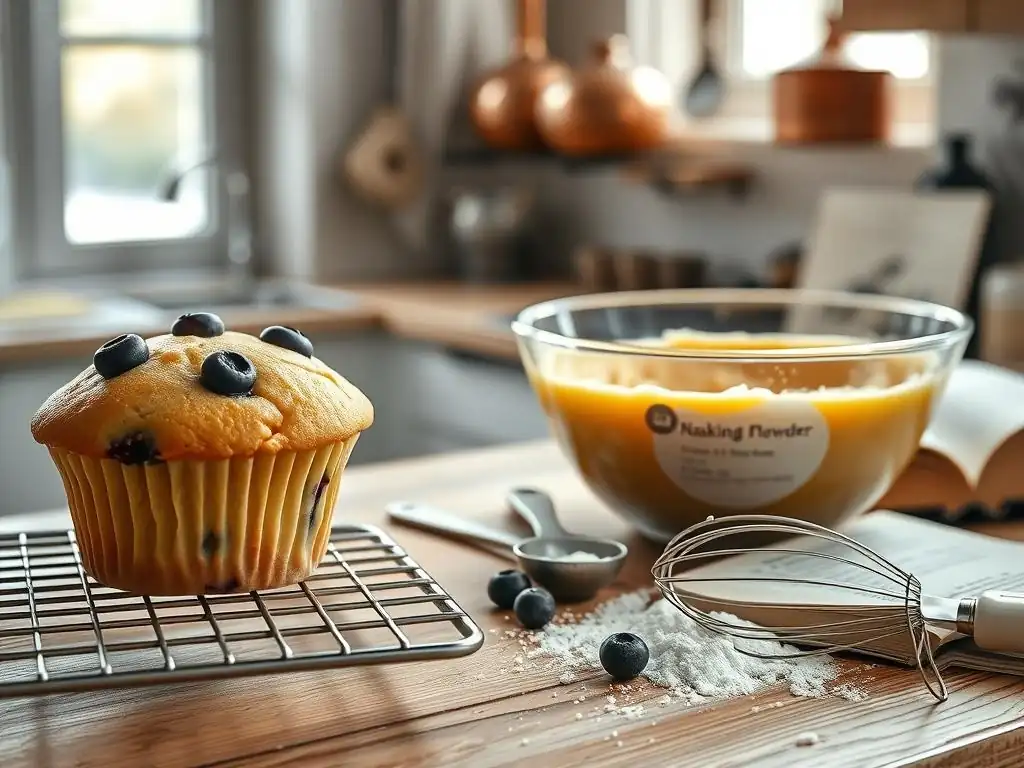
Best Uses for Self-Rising Flour in Baking Recipes
Self-rising flour is particularly well-suited for quick baking recipes where a tender crumb and relatively fast rise are desired, and where the slight variations in flour protein and added salt/leavener are beneficial or negligible. It is a traditional ingredient in many Southern American recipes, most notably for fluffy biscuits. The specific blend of low-protein flour, leavening, and salt is ideal for creating that signature tender texture and height.
Other excellent applications for self-rising flour include:
- Pancakes: Provides consistent fluffiness without measuring multiple ingredients.
- Muffins and Scones: Contributes to a tender crumb and good dome.
- Some simple cakes (like pound cake or sponge cake variations): Where a fine, tender texture is desired.
- Quick breads: Recipes like soda bread often use self-rising flour or require added baking soda/powder.
Using self-rising flour simplifies these recipes significantly, making them quicker and less prone to errors in measuring leavening agents. The consistent self-rising flour leavening chemistry ensures reliable results, making it a go-to for these specific baking applications. However, it's generally not recommended for recipes that require significant gluten development (like yeast breads) or those that rely on precise control over leavening and salt levels (like delicate pastries or complex cake formulations).
When DIY Leavening Mixes are the Preferred Choice
Homemade leavening mixes, or using separate baking soda and acid, are often preferred or necessary in several baking scenarios. One primary reason is flexibility and control. When you use plain flour and add baking soda and an acid separately (like cream of tartar, buttermilk, yogurt, or lemon juice), you have precise control over the amount of leavening and salt in your recipe. This is crucial for recipes where the balance of ingredients is key to texture and flavor, or when adapting recipes.
DIY leavening is also essential when a recipe specifically calls for baking soda and an acidic ingredient that is already part of the recipe's flavor profile, such as buttermilk, molasses, brown sugar, or cocoa powder (natural, unsweetened). In these cases, the baking soda reacts with the acid inherent in the recipe ingredient, providing leavening and neutralizing the acid, which can improve flavor and color (especially with cocoa).
Using a separate acid source allows the baker to fine-tune the leavening power based on the recipe's specific acidic components. Furthermore, if you've run out of commercial baking powder or self-rising flour, knowing how to create a DIY substitute using baking soda and cream of tartar is an invaluable baking hack, demonstrating a practical understanding of leavening chemistry.
Adapting Recipes: Converting Between Self-Rising Flour and Plain Flour with Leavening Agents
Converting recipes between self-rising flour and plain flour with added leavening is a common task for bakers. Since self-rising flour typically contains about 1 ½ teaspoons of baking powder and ¼ teaspoon of salt per cup of flour, you can replicate this blend by adding these amounts to one cup of all-purpose flour. So, to substitute 1 cup of self-rising flour, you would use 1 cup of plain all-purpose flour + 1 ½ tsp baking powder + ¼ tsp salt.
When adapting a recipe that calls for plain flour and a specific amount of baking powder and salt to use self-rising flour, the process is reversed. You would substitute the plain flour with an equal amount of self-rising flour, and then omit the baking powder and salt listed in the original recipe. For example, if a recipe calls for 2 cups of plain flour, 3 teaspoons of baking powder, and ½ teaspoon of salt, you would use 2 cups of self-rising flour and no additional baking powder or salt.
It's important to note that self-rising flour is made with low-protein flour, which affects texture. While the leavening chemistry is similar, the final result might differ slightly from using plain all-purpose flour, especially in recipes where gluten development is a factor.
Troubleshooting Leavening Problems: Common Issues and Solutions
Dealing with Flat Baked Goods: Identifying Leavening Failures
One of the most frustrating baking mishaps is ending up with flat, dense baked goods when they should be light and airy. This is almost always a sign of leavening failure. Several factors can contribute to this issue. The most common culprits include expired leavening agents (baking powder or self-rising flour that has lost its potency), incorrect measurement of leavening agents, or substituting ingredients improperly (e.g., using baking soda without sufficient acid).
To diagnose the problem:
- Check Expiration Dates: Verify the freshness of your baking powder, baking soda, or self-rising flour. As mentioned, you can test baking powder/self-rising flour with hot water or baking soda with vinegar – look for vigorous bubbling.
- Review Measurements: Ensure you used the correct type and amount of leavener specified in the recipe. Using a tablespoon instead of a teaspoon, for example, will drastically alter the outcome.
- Ingredient Substitutions: If you substituted self-rising flour for plain flour + leavening, or vice versa, double-check your conversion ratios. Ensure that if using baking soda, there is also an acidic ingredient present in the recipe (like buttermilk, yogurt, lemon juice, or molasses).
- Overmixing: Overmixing can develop too much gluten, creating a tough structure that prevents leavening gases from expanding properly. It can also cause the leavening reaction to happen too quickly and escape before baking.
Identifying which of these factors is at play is the first step to achieving better rise in your future baking endeavors, ensuring the self-rising flour leavening chemistry (or your DIY mix) performs correctly.
Adjusting Leavening for Different Altitude Baking
Baking at high altitudes presents unique challenges due to lower atmospheric pressure. At higher elevations, the air pressure is lower, which means gases expand more easily and liquids evaporate more quickly. This significantly impacts the self-rising flour leavening chemistry and the performance of other leavening agents. The gases produced by leavening agents expand more rapidly and to a greater extent, potentially causing baked goods to over-rise and then collapse, resulting in a coarse or crumbly texture. Increased evaporation can also lead to drier results.
To counteract these effects at high altitudes (typically above 3,000 feet or about 900 meters):
- Reduce Leavening: Slightly decrease the amount of baking powder or self-rising flour used. A common guideline is to reduce baking powder by 10-15% at 3,000 feet, and by 20-25% at 5,000 feet or higher.
- Increase Liquid: Add a little extra liquid to compensate for increased evaporation.
- Increase Oven Temperature: A slightly higher oven temperature (by about 15-25°F or 8-15°C) helps the structure set faster before the gases expand too much.
- Reduce Sugar: High sugar levels can weaken the structure; slightly reducing sugar can help.
Adjusting leavening requires some experimentation based on your specific altitude and recipe. Start with small adjustments and fine-tune from there to achieve the desired rise and texture. Understanding how altitude affects the expansion of CO₂ gas is key to mastering leavening at elevation.
Ensuring Proper Mixing: Achieving Even Leavening Distribution
Proper mixing is crucial for ensuring that the leavening agents, whether from self-rising flour or a DIY mix, are evenly distributed throughout the dough or batter. Uneven distribution means some parts of your baked good will have plenty of leavening and rise well, while others will have little and remain dense. This results in an inconsistent texture and potentially a lopsided bake.
When using self-rising flour, the leavening and salt are already integrated, but proper mixing with wet ingredients is still necessary to activate the leavening evenly. For recipes using separate baking powder or a homemade mix, it's often recommended to whisk the dry ingredients (flour, baking powder/mix, salt, sugar) together thoroughly before adding the wet ingredients. This preliminary step ensures that the leavening agent is uniformly dispersed within the flour mixture. Once wet ingredients are added, mix just until combined.
Overmixing develops gluten and can cause the leavening reaction to start prematurely and the gases to escape. The goal is to hydrate the ingredients and activate the leavening without overworking the batter. Gentle folding or mixing on low speed for just long enough is key to achieving an even rise and tender crumb, allowing the self-rising flour leavening chemistry or DIY mix to work effectively.
Exploring Advanced Leavening Techniques
Double-Acting vs. Single-Acting Baking Powder: A Deeper Dive
Understanding the difference between single-acting and double-acting baking powder is key to mastering leavening chemistry in baking.
- Single-Acting Baking Powder: Contains only one acid salt that reacts with baking soda. This reaction occurs primarily when the powder is moistened. Once liquid is added to the batter, the bulk of the
CO₂gas is produced relatively quickly. This means batters or doughs made with single-acting baking powder need to be baked immediately after mixing to capture the gas before it dissipates. Cream of tartar is a common acid used in single-acting formulations or homemade substitutes. - Double-Acting Baking Powder: Contains two different acid salts. One acid reacts with baking soda upon contact with liquid at room temperature, providing an initial lift. A second acid is heat-activated, meaning it reacts with the remaining baking soda only when the batter or dough reaches a certain temperature in the oven. This produces a second burst of
CO₂gas, providing additional lift during the baking process. This double action offers a more sustained rise and is more forgiving if there's a delay between mixing and baking. Most commercial baking powders available today in North America are double-acting, including the type typically found in self-rising flour.
The choice between single and double-acting leavening affects the timing of the rise and can influence the final texture. Recipes developed for double-acting powder might fall flat if single-acting is used and there's a delay before baking.
The Impact of Temperature on Leavening Reactions
Temperature plays a significant role in the self-rising flour leavening chemistry and the reactions of other chemical leaveners. For single-acting leaveners activated by moisture (like baking soda reacting with cream of tartar or liquid acids), the reaction begins as soon as wet and dry ingredients combine at room temperature. The rate of this initial reaction is influenced by the temperature of the ingredients; warmer liquids can speed up the initial reaction.
For double-acting baking powder, temperature has a dual impact. The first reaction occurs upon wetting at ambient temperature. The second, heat-activated reaction requires the batter or dough to reach a specific internal temperature in the oven, often around 100-140°F (approx. 38-60°C), depending on the specific acid used. This second stage of CO₂ production provides crucial lift as the structure of the baked good is setting. The oven temperature setting is also critical; if the oven is too cool, the structure may not set quickly enough to support the expanding gases, leading to collapse. If it's too hot, a crust might form too early, preventing optimal expansion. Controlling ingredient temperature and oven temperature is therefore vital for maximizing leavening efficiency and achieving the desired texture.
Experimenting with Different Acids for DIY Leavening
While cream of tartar is the most common acid for homemade baking powder, experimenting with other food-grade acids can alter the reaction speed and potentially the flavor profile of your DIY leavening mix. The key is to find an acid that is dry (for storage with baking soda) or stable enough to react predictably when mixed with liquids and baking soda.
Possible acids to consider (with caution and proper research into ratios and food safety):
- Powdered Citric Acid: A much stronger acid than cream of tartar. Requires significantly less quantity to react with baking soda. Using too much can impart a very sour flavor. Ratios need careful adjustment (e.g., much less than 2 parts citric acid to 1 part baking soda).
- Fumaric Acid: Another strong food-grade acid. Often used in powdered drink mixes. Similar considerations apply as with citric acid regarding quantity and flavor.
- Sodium Acid Pyrophosphate (SAPP): This is a common acid salt used in commercial double-acting baking powders. It's heat-activated. While available commercially for food use, it's not a typical household ingredient for DIY mixes but is a key component in the chemistry of self-rising flour's leavening.
Experimenting with different acids requires precise measurement and testing, as the required ratio of acid to baking soda to achieve complete reaction and neutral flavor varies significantly depending on the acid's strength. Always start with small batches when experimenting with alternative acids in your DIY leavening attempts.
Conclusion: Mastering Leavening for Baking Success
Choosing the Right Leavening Method for Your Baking Needs
Selecting the appropriate leavening method is a fundamental decision that impacts the success of your baked goods. For convenience and consistency in specific recipes like biscuits, pancakes, and certain quick breads, self-rising flour is an excellent choice. Its pre-mixed, standardized composition simplifies the process and reliably delivers the necessary lift and seasoning. Understanding the self-rising flour leavening chemistry assures you of its consistent performance.
However, for recipes requiring precise control over salt content, relying on acidic ingredients already in the recipe (like buttermilk or molasses), or when you simply don't have self-rising flour or commercial baking powder on hand, mastering DIY leavening with baking soda and an acid is invaluable. This approach offers flexibility and a deeper understanding of how leavening works. Ultimately, the "right" method depends on the specific recipe requirements, your desired level of control, and the ingredients you have available. Both methods, when used correctly, can produce beautifully risen, tender baked goods.
The Future of Leavening: Innovations and Trends
While the core chemistry of self-rising flour leavening and chemical leavening agents has remained relatively stable for decades, innovation continues, driven by consumer demand for specific product attributes and dietary needs. Trends include the development of leavening systems optimized for gluten-free flours, which behave differently than wheat flour and require adjusted leavening approaches to achieve comparable texture and volume.
There's also ongoing research into encapsulated leavening agents, where the acid or base is coated to control the timing of the reaction even more precisely. This can lead to more stable doughs and batters, longer shelf life for mixes, and potentially better-controlled rise during baking. Furthermore, as interest in natural ingredients grows, there's exploration into novel natural acids or combinations that can function effectively as leavening agents. While self-rising flour and traditional baking powders remain staples, the future of leavening chemistry promises even more specialized and precise tools for bakers to create perfect results, continuing to build upon the foundational science of producing those essential CO₂ bubbles.
Frequently Asked Questions
How does self-rising flour differ from all-purpose flour?
Self-rising flour contains added leavening agents (baking powder) and salt, while all-purpose flour is just plain flour. This means self-rising flour eliminates the need to add these ingredients separately in certain recipes.
What leavening agents are typically found in self-rising flour?
The primary leavening agent in self-rising flour is baking powder, a combination of baking soda and an acid. Salt is also included for flavor and to control the leavening process.
Can I make my own self-rising flour at home?
Yes, you can! A common recipe involves adding baking powder and salt to all-purpose flour. The typical ratio is 1 teaspoon baking powder and 1/4 teaspoon salt per cup of all-purpose flour.
How does the chemistry of self-rising flour work to make baked goods rise?
When self-rising flour is mixed with liquid, the baking powder reacts. This reaction produces carbon dioxide gas, which creates air bubbles, causing the dough or batter to rise.
Are there any disadvantages to using self-rising flour?
Yes, freshness is a key consideration. The leavening power of baking powder in self-rising flour decreases over time, potentially affecting the rise of your baked goods.
Final Reflection: The Unexpected Wonders of a Simple Rise
The seemingly simple act of baking with self-rising flour reveals a complex interplay of chemical reactions, a hidden world of leavening agents that directly impacts the texture and taste of our baked goods. Understanding this chemistry, as explored throughout this article, isn't just about achieving the perfect biscuit; it's about appreciating the scientific precision behind everyday culinary practices. This knowledge empowers us to troubleshoot baking mishaps and even to creatively adapt recipes to our specific needs and preferences.
The journey into the chemistry of self-rising flour has been a fascinating exploration of how seemingly simple ingredients can create such diverse results. It highlights the importance of understanding the precise balance of acids and bases in creating a successful leavening reaction. This understanding extends beyond baking, reminding us that even the most mundane activities can hold a wealth of scientific wonder. As the renowned chef Julia Child once said, Find something you're passionate about and keep tremendously interested in it.
For me, that passion lies in understanding the science behind the seemingly simple act of baking.
Now, consider your own baking experiences. Have you ever wondered why a recipe failed, or how a slight adjustment in ingredients dramatically altered the outcome? Armed with the knowledge gained from this exploration of self-rising flour and its leavening agents, I encourage you to approach your next baking project with a newfound curiosity and appreciation for the chemistry involved. Experiment, adapt, and most importantly, enjoy the process of discovery—the perfect rise awaits!
Unlock Baking Mastery: Elevate Your Creations!
Thanks for diving into the fascinating world of leavening agents! You now have the knowledge to create perfectly risen treats every time. Ready to put your new expertise to the test?
- Bake a batch of your favorite recipe, substituting your newly-understood leavening mix for store-bought self-rising flour. Notice the difference!
- Share your baking triumph (or even your baking mishaps!) with our community on social media using #BakeWithEase. We’d love to see what you create!
- Experiment with different flour types and leavening ratios to discover your perfect baking formula. What exciting discoveries await?
What unique flavor profile will you create with your newfound leavening knowledge?