
CrowdPleasing Cupcakes: Synchronized Oven Settings for Even Baking

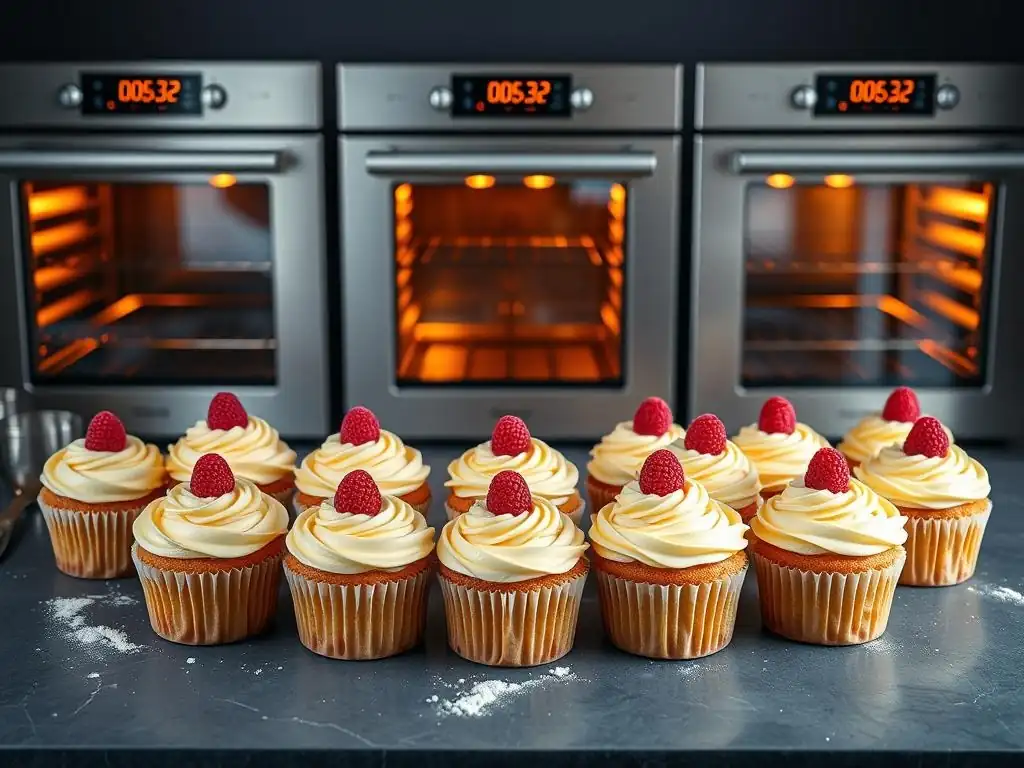
Welcome to BakeWithEase, where we unlock the secrets to effortless baking! Ever wondered how to achieve perfectly even baking for a batch of cupcakes? Discover the answer in our latest article, "CrowdPleasing Cupcakes: Synchronized Oven Settings for Even Baking," where we reveal simple yet effective techniques to ensure every single cupcake rises beautifully and bakes uniformly. Are you ready to say goodbye to unevenly baked cupcakes forever? Let's get started!
- Achieving Even Baking in Cupcakes: The BakeWithEase Guide
- Understanding Oven Temperature for Uniform Cupcake Baking
- Key Factors Affecting Even Cupcake Baking
- Synchronizing Cupcake Baking: Techniques for Even Results
- Troubleshooting Uneven Cupcake Baking
- Perfecting Your Cupcake Recipe for Even Results
- Advanced Techniques for Consistent Cupcake Baking
- Final Thoughts: Mastering Even Cupcake Baking with BakeWithEase
-
Frequently Asked Questions
- How do I ensure my cupcakes bake evenly in a standard oven?
- What oven settings are generally recommended for baking cupcakes evenly?
- Are there specific techniques to avoid "doming" on my cupcakes?
- What if my cupcakes are browning too quickly on top but still undercooked inside?
- How important is using a good quality cupcake tin for even baking?
- Final Reflection: The Sweet Science of Synchronized Baking
- Unlock Perfectly Even Cupcakes: Bake Like a Pro Today!
Achieving Even Baking in Cupcakes: The BakeWithEase Guide
Baking beautiful, uniform cupcakes can sometimes feel like a challenge. One batch might have perfectly domed tops, while the next is uneven, cracked, or sunken. The secret often lies not just in the batter, but in mastering your oven and its settings. Achieving truly even baking, especially when you're aiming for synchronized results across multiple pans, requires understanding how heat behaves and how to manage it effectively. At BakeWithEase, we believe everyone can bake gorgeous cupcakes, and it starts with creating the ideal environment inside your oven.
This guide will walk you through understanding your oven's quirks, optimizing its performance, and employing techniques to ensure every cupcake in your batch bakes uniformly. We'll delve into the science behind heat distribution and practical tips to achieve those coveted, consistently baked treats. Mastering even baking synchronized cupcakes means saying goodbye to wasted batches and hello to picture-perfect results every time.
Understanding Oven Temperature for Uniform Cupcake Baking
The Importance of Accurate Oven Calibration for Cupcake Success
Accurate oven temperature is paramount for consistent cupcake baking. A temperature that is even slightly off can dramatically affect rise, texture, and browning. Many home ovens, even newer models, can vary by as much as 25-50°F (approximately 14-28°C) from the set temperature. This discrepancy often leads to uneven baking, where cupcakes on one side of the pan or rack bake faster than others.
Using an inexpensive oven thermometer placed inside your oven is a critical first step. Check the temperature after the oven has fully preheated for at least 20 minutes. If your oven consistently reads higher or lower than the set temperature, you'll need to adjust your baking accordingly. For instance, if your oven reads 350°F (175°C) when set to 375°F (190°C), you'll know to set it higher next time to achieve the desired temperature for optimal cupcake baking. This simple calibration check is fundamental to achieving reliable and even baking synchronized cupcakes.
Identifying Hot Spots in Your Oven: A Baker's Diagnostic
Beyond simple temperature accuracy, ovens often have "hot spots"—areas where the temperature is significantly higher or lower than the rest of the cavity. These hot spots are a major culprit behind unevenly baked goods. You might notice cupcakes closer to the back wall browning much faster, or those near the door baking slower. Identifying these zones is key to mitigating their impact on your baking.
A common method to identify hot spots is the "toast test." Arrange slices of plain white bread evenly across a baking sheet and place it on a rack in your preheated oven. Bake for about 5-10 minutes, or until the bread begins to toast. The areas that brown fastest indicate hot spots. Knowing where these hot spots are allows you to plan your rack placement or consider rotating your pans during baking to compensate, moving toward even baking synchronized cupcakes across your entire batch.
Calibrating Your Oven for Perfectly Baked Cupcakes
Once you've identified how far off your oven's thermostat is and where its hot spots are, you can take steps to calibrate your baking process. While some ovens have digital calibration settings you can adjust manually (often found in the owner's manual, allowing adjustments typically in 5-10°F increments up to ±35°F), the most practical approach for many bakers is manual adjustment and strategic placement.
If your oven consistently runs 25°F hot, set it 25°F lower than the recipe calls for. If it's 15°F cool, set it 15°F higher. Combine this temperature adjustment with awareness of hot spots. For example, if the back of your oven is a hot spot, avoid placing a pan directly against the back wall. By understanding and manually compensating for your oven's specific temperature profile and hot spots, you significantly improve your chances of achieving beautiful, even baking synchronized cupcakes.
Key Factors Affecting Even Cupcake Baking
The Role of Rack Placement in Cupcake Baking
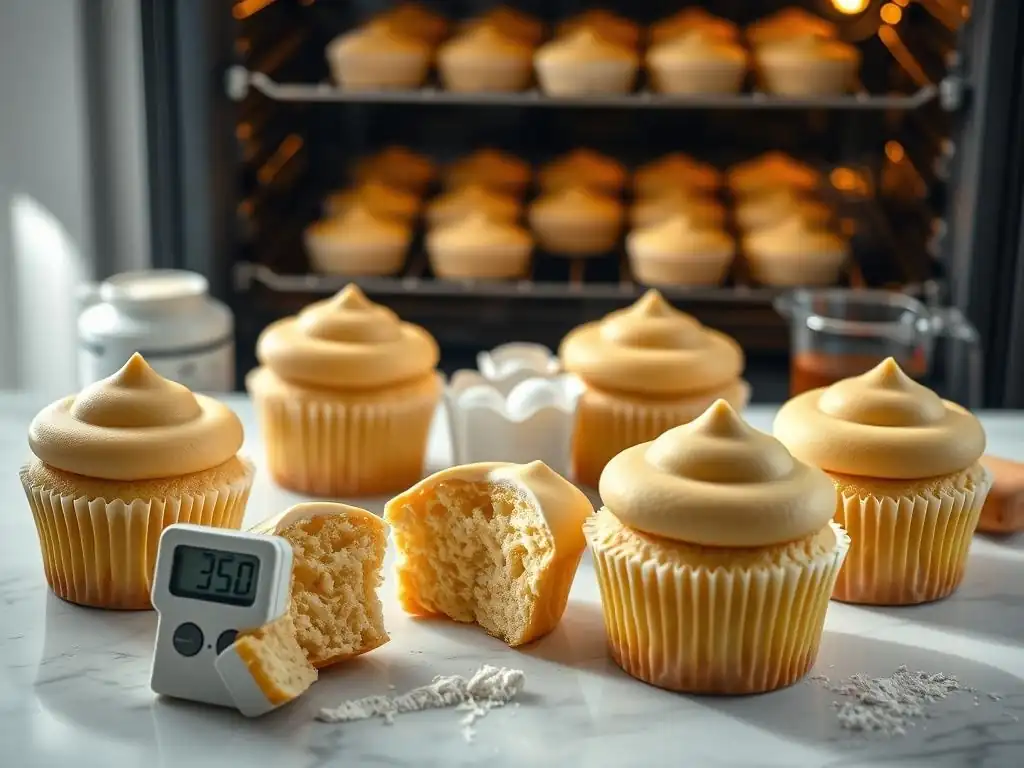
Where you place your cupcake pan within the oven cavity has a significant impact on how evenly they bake. The most common recommendation for baking single batches of cupcakes is the center rack. This position typically provides the most consistent heat circulation, away from the direct heat elements on the bottom and the broiler on the top.
Placing pans too close to the top element can cause tops to brown too quickly or crack, while placing them too low can result in burnt bottoms before the centers are fully cooked. When baking multiple pans, try to place them on racks positioned to maximize air flow around each pan, ideally not directly above or below another pan. This careful consideration of rack placement is fundamental to achieving even baking synchronized cupcakes, ensuring each one receives consistent heat exposure.
Understanding Convection vs. Conventional Oven Settings for Cupcakes
Most modern ovens offer both conventional and convection baking settings. Conventional baking relies on radiant heat from the elements, which can create temperature stratification and hot spots. Convection baking, however, uses a fan to circulate hot air throughout the oven cavity, theoretically providing more even heat distribution.
For cupcakes, convection can often reduce baking time by 15-25% and lower the required temperature by about 25°F (14°C) because the circulating air transfers heat more efficiently. While convection can promote more even baking by minimizing hot spots, the increased air movement can also cause cupcakes to dome unevenly or dry out if not monitored closely. Experimenting with your specific oven is key. Many bakers find conventional heat on the center rack provides reliable even baking for cupcakes, while others prefer the speed and potential uniformity of convection, adjusting time and temperature accordingly to achieve even baking synchronized cupcakes.
Cupcake Pan Material and Its Impact on Baking Uniformity
The material your cupcake pan is made from significantly affects heat conduction and, consequently, baking uniformity. Dark metal pans absorb and transfer heat quickly, which can lead to faster browning, especially on the bottoms and edges of cupcakes. This requires careful monitoring or potentially a lower baking temperature.
Light-colored metal pans, particularly those made from aluminum, reflect heat more effectively. This results in slower, more even heat transfer, which is often preferred for delicate baked goods like cupcakes as it promotes a more gradual rise and uniform browning. Silicone pans offer flexibility and easy release but can sometimes result in less consistent browning compared to metal. Using light-colored metal pans is a simple way to promote even baking synchronized cupcakes from the start.
Synchronizing Cupcake Baking: Techniques for Even Results
The Rotating Rack Method: Ensuring Even Heat Distribution
Even with careful temperature management and rack placement, slight variations in oven temperature can still occur. A simple yet effective technique to combat this, especially when baking multiple pans or a large batch, is the rotating rack method. This involves rotating the pans midway through the baking time.
For example, if you are baking two pans on separate racks, swap their positions (move the top pan to the bottom rack and vice versa). If baking a single pan, simply rotate it 180 degrees. This ensures that all cupcakes spend equal time in different areas of the oven, compensating for any minor hot spots or temperature gradients. Rotating pans halfway through the estimated baking time (e.g., after 10-12 minutes if the total time is 20-24 minutes) is a great strategy for achieving even baking synchronized cupcakes.
Using Baking Strips for Level Cupcakes
Baking strips are moist fabric bands designed to wrap around the outside of cake pans. They work by insulating the sides of the pan, slowing down the rate at which the edges of the batter heat up and set. This allows the center of the cupcake to rise more evenly with the edges, preventing the common problem of a peaked or cracked top.
While typically used for cakes, smaller versions or improvised strips (like damp towel strips secured with safety pins) can be used on cupcake pans. By keeping the edges cooler, baking strips encourage the entire surface of the cupcake to bake at a more uniform rate, leading to flatter, more even tops. This technique is particularly helpful for achieving level tops, which contributes significantly to the overall goal of even baking synchronized cupcakes.
The Double Panning Technique for Gentle Cupcake Baking
Double panning involves placing your cupcake pan inside a larger baking sheet before putting it in the oven. This creates an insulating layer of air between the two pans, reducing the direct heat reaching the bottom and sides of the cupcake pan.
This technique is especially useful when using darker metal pans or if your oven tends to brown the bottoms of baked goods too quickly. The air pocket acts as a buffer, slowing down heat transfer and promoting gentler, more even baking from the bottom up. Double panning helps prevent burnt bottoms and encourages the cupcakes to rise more evenly, contributing to excellent even baking synchronized cupcakes.
Troubleshooting Uneven Cupcake Baking
Common Causes of Uneven Cupcake Baking
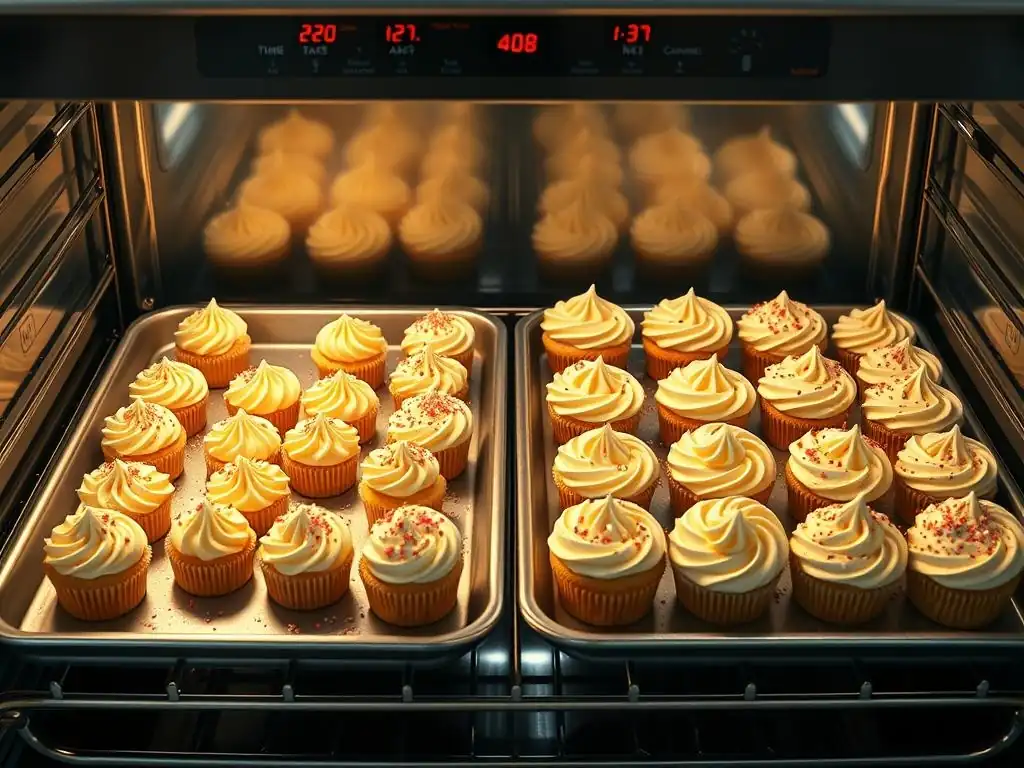
Uneven baking in cupcakes can stem from several factors beyond just the oven. These include:
- Inconsistent Batter Portioning: Uneven amounts of batter in each cavity will lead to different baking times and results.
- Over or Under-Mixing Batter: Over-mixing develops too much gluten, leading to tough, uneven textures; under-mixing leaves pockets of unmixed ingredients.
- Incorrect Ingredient Temperature: Using ingredients that are too cold (like eggs or butter straight from the fridge) can affect emulsification and batter consistency.
- Opening the Oven Door Too Often: Each time the oven door is opened, the internal temperature can drop significantly (potentially 50-100°F or 28-56°C), disrupting the baking process and causing unevenness or collapse.
Addressing these common issues in conjunction with oven management is crucial for achieving reliable even baking synchronized cupcakes.
Addressing Over-Browning and Under-Baking in Cupcakes
Finding the balance between perfectly golden tops and fully cooked centers is a common challenge. If cupcakes are over-browning on top but still under-baked inside, your oven temperature might be too high, or the pan is too close to the top element. Try reducing the temperature slightly (e.g., from 350°F to 325°F) and increasing the baking time, or moving the rack lower.
Conversely, if the tops are pale but the bottoms are burnt, your pan might be too low, or your oven's bottom element is too strong. Try moving the rack up or using the double panning technique. Sometimes, simply covering the pan loosely with foil for the last few minutes of baking can prevent over-browning tops while allowing the centers to finish cooking. These adjustments are key to achieving the desired even baking synchronized cupcakes.
Correcting Sunken Cupcakes: Tips and Tricks
Sunken cupcakes are often a sign that something went wrong during the delicate phase of setting and rising. Common culprits include:
- Opening the oven door too early: Resist the urge to check on them until at least 75% of the estimated baking time has passed.
- Under-baking: Cupcakes removed from the oven before they are fully set will often collapse as they cool.
- Using too much leavening: Excessive baking powder or soda can cause an initial rapid rise that the structure can't support, leading to collapse.
- Changes in altitude: High altitude requires recipe adjustments (less leavening, more liquid, higher baking temperature).
Ensure your oven temperature is accurate, bake until a toothpick inserted into the center comes out clean (or with a few moist crumbs, not wet batter), and measure your leavening agents precisely. Patience and proper baking time are critical for preventing sunken centers and ensuring consistent even baking synchronized cupcakes.
Perfecting Your Cupcake Recipe for Even Results
The Importance of Precise Measurements in Cupcake Baking
Baking is a science, and precision is paramount, especially when aiming for consistent, even results like those desired for even baking synchronized cupcakes. Using accurate measurements ensures the correct balance of ingredients, which directly impacts batter consistency, rise, texture, and baking time.
Using a kitchen scale to weigh ingredients, particularly flour, sugar, and fats, is far more accurate than using volume measures (cups). A cup of flour can vary in weight by as much as 20% depending on how it's scooped and leveled. Precise measurements ensure each batch of batter is identical, leading to predictable and even baking across all cupcakes. For example, using exactly 125 grams of all-purpose flour per cup specified in a recipe, rather than scooping, helps guarantee consistency.
Mixing Techniques for Consistent Cupcake Batter
The way you mix your cupcake batter affects its structure and how it bakes. The goal is usually to combine ingredients just until they are incorporated, avoiding over-mixing which develops gluten and can lead to tough, uneven cupcakes. The standard method often involves creaming butter and sugar until light and fluffy, adding eggs one at a time, then alternating dry and wet ingredients.
When adding dry and wet ingredients, mix on low speed or by hand just until no dry streaks remain. Over-mixing can create tunnels within the cupcake and cause the tops to peak unevenly during baking. Proper mixing ensures a homogenous batter that will rise and bake uniformly in the oven, contributing significantly to achieving even baking synchronized cupcakes.
Vanilla Bean Cupcakes: A Recipe Optimized for Even Baking
Let's consider a classic Vanilla Bean Cupcake recipe designed with even baking in mind.
- Ingredients: 1.5 cups (188g) cake flour, 1.5 tsp baking powder, 0.25 tsp salt, 0.75 cup (170g) unsalted butter (softened), 1.25 cups (250g) granulated sugar, 2 large eggs + 1 egg yolk (room temp), 1 tsp vanilla extract, seeds from 1 vanilla bean, 0.5 cup (120ml) milk (room temp).
- Method: Cream butter and sugar until pale and fluffy (approx. 3-5 minutes). Add eggs and yolk one at a time, mixing well after each. Stir in vanilla extract and vanilla bean seeds. In a separate bowl, whisk together flour, baking powder, and salt. In a small bowl, whisk milk. Add dry ingredients to wet in three additions, alternating with milk in two additions, beginning and ending with dry. Mix on low speed just until combined.
This recipe uses cake flour for a tender crumb, room-temperature ingredients for better emulsification, and a specific mixing method to prevent over-development of gluten. Portioning batter evenly (around 1/4 cup per cavity for standard tins) into a light-colored metal pan, baking on the center rack at 350°F (175°C) for 18-22 minutes (checking for doneness with a toothpick), and rotating the pan halfway through are key steps to ensure these vanilla bean treats bake into perfect, even baking synchronized cupcakes.
Advanced Techniques for Consistent Cupcake Baking
Using a Baking Stone for Even Heat Distribution in Cupcakes
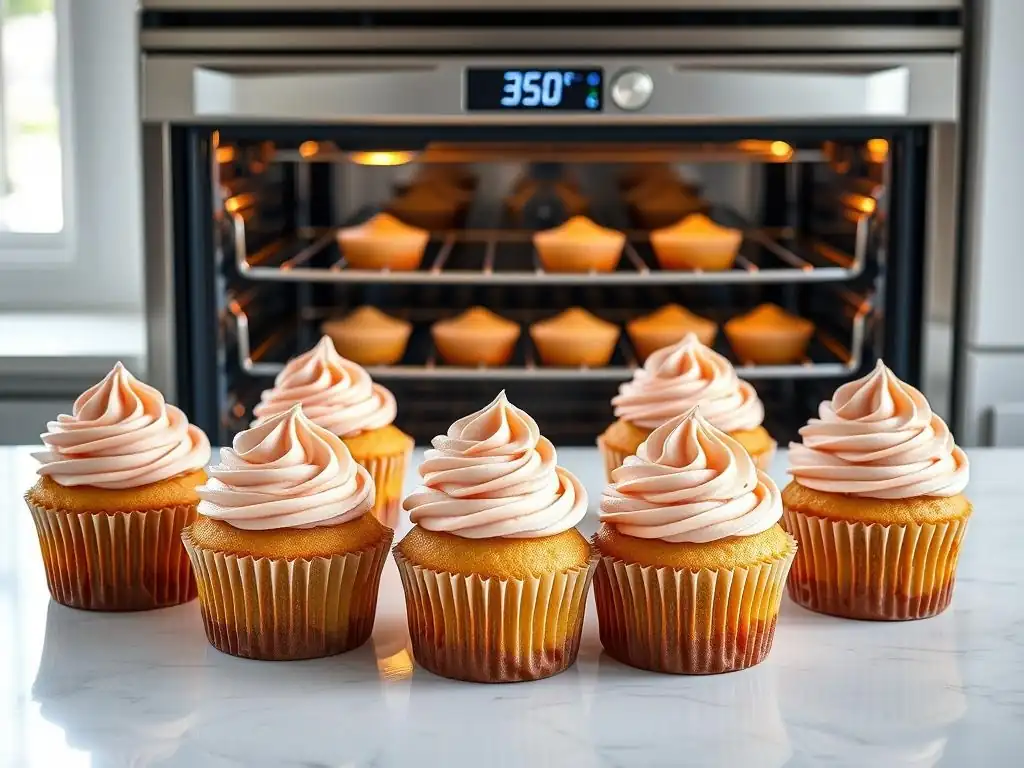
A baking stone or steel is a thick slab of ceramic or metal placed on an oven rack (usually the bottom or middle). It absorbs and retains heat very efficiently. Once the oven is fully preheated and the stone is hot (this can take 30-60 minutes), it acts as a radiant heat source, helping to stabilize the oven temperature and distribute heat more evenly.
Placing your cupcake pan directly on the hot baking stone (or on a rack just above it) provides consistent heat from below, which can help promote a more even rise and prevent under-baked bottoms. The stone also helps the oven recover temperature faster after the door is opened. Using a preheated baking stone is an advanced step that can significantly improve the consistency and even baking synchronized cupcakes.
Water Bath Baking for Moist and Evenly Baked Cupcakes
While more commonly associated with cheesecakes and delicate custards, a water bath (or bain-marie) can sometimes be adapted for cupcakes, particularly those with a very tender or delicate crumb. A water bath provides a moist, even heat environment that prevents the edges from setting too quickly and promotes a very gentle, uniform bake.
For cupcakes, this might involve placing the cupcake pan inside a larger pan or roasting tin, then filling the outer pan with hot water up to about halfway up the sides of the cupcake pan. The water temperature remains relatively stable at 212°F (100°C), providing a consistent, moist heat. This technique can help prevent cracking and doming, leading to exceptionally even baking synchronized cupcakes, though it's less common for standard recipes.
Adjusting Baking Time Based on Cupcake Size and Recipe
Baking times provided in recipes are always estimates. The actual time required will vary based on your specific oven, the type of pan used, the amount of batter in each cavity, and even environmental factors like humidity. A standard cupcake (using about 1/4 cup batter) typically bakes in 18-22 minutes at 350°F (175°C).
Larger or smaller cupcakes, or recipes with different fat or sugar content, will require adjustments. Mini cupcakes might bake in as little as 10-15 minutes, while jumbo cupcakes could take 25-30 minutes. Always start checking for doneness at the lower end of the suggested time range using the toothpick test. Adjusting time based on observation is crucial for ensuring each individual cupcake achieves perfect, even baking synchronized cupcakes within the batch.
Final Thoughts: Mastering Even Cupcake Baking with BakeWithEase
Mastering even baking synchronized cupcakes is a journey that involves understanding your equipment, refining your technique, and paying close attention to detail. From calibrating your oven and identifying hot spots to choosing the right pan and employing methods like rotating racks or double panning, each step contributes to a more consistent bake.
Remember that practice makes perfect. Don't be discouraged by less-than-perfect batches. Analyze what might have gone wrong, perhaps using the troubleshooting tips provided, and make small adjustments for your next attempt. By focusing on these principles of synchronized oven settings and careful execution, you'll be well on your way to baking crowd-pleasing cupcakes that are not only delicious but also beautifully and evenly baked every single time, truly achieving even baking synchronized cupcakes.
Frequently Asked Questions
How do I ensure my cupcakes bake evenly in a standard oven?
To achieve even baking, rotate your cupcake tin halfway through the baking process. Make sure your oven rack is positioned in the center of the oven.
What oven settings are generally recommended for baking cupcakes evenly?
Generally, a temperature of 350°F (175°C) is recommended. Preheating your oven is crucial for consistent results.
Are there specific techniques to avoid "doming" on my cupcakes?
Avoid overfilling the cupcake liners. Also, ensure your ingredients are at room temperature for proper emulsion and a flatter cupcake top.
What if my cupcakes are browning too quickly on top but still undercooked inside?
Lower the oven temperature by 25°F (15°C) and loosely tent the cupcake tin with aluminum foil to prevent excessive browning. This allows the inside to cook through.
How important is using a good quality cupcake tin for even baking?
Using a good quality cupcake tin with even heat distribution is very important. Avoid thin, flimsy tins that can cause uneven baking and burning.
Final Reflection: The Sweet Science of Synchronized Baking
The quest for perfectly even cupcakes transcends mere culinary ambition; it's a testament to the power of precision and the pursuit of consistent quality. Achieving that flawlessly golden-brown crust and moist, tender crumb in every single cupcake, simultaneously, is a challenge that speaks to a deeper desire for control and predictability in a world often characterized by chaos. This article explored the science behind even baking, highlighting the importance of synchronized oven settings and consistent batter preparation.
The impact of achieving consistently perfect baked goods extends far beyond the individual cupcake. It's a microcosm of larger principles – the importance of meticulous preparation, the understanding of underlying processes, and the satisfaction derived from mastering a skill. The details are not the details. They make the design.
- Charles Eames. This quote perfectly encapsulates the essence of even baking: the seemingly minor adjustments in temperature and timing are what ultimately elevate the ordinary to the extraordinary. The pursuit of this perfection reflects a broader human desire for excellence and control in all aspects of life.
Now, consider your own baking endeavors, or even your approach to any project requiring precision and attention to detail. What adjustments can you make to synchronize your own "oven settings," so to speak? What seemingly small details, when carefully considered and implemented, can lead to a more consistent and satisfying outcome? I encourage you to reflect on the principles outlined in this article and apply them to your own life, striving for that same level of evenness and perfection, not just in your baking, but in all your pursuits.
Unlock Perfectly Even Cupcakes: Bake Like a Pro Today!
Thanks for diving into the world of perfectly even cupcakes! We hope you’ve gained valuable insights into achieving consistent baking results. Now it's time to put your new knowledge into action.
- Master your oven's quirks: Experiment with the synchronized settings we discussed, noting the optimal temperature and baking time for your specific oven. This will become your secret weapon for consistently delicious cupcakes.
- Share your baking triumph!: Post a picture of your perfectly even cupcakes on social media and tag #BakeWithEase – let's inspire other bakers!
- Dive deeper into our baking resources: Explore more articles on our website dedicated to achieving consistent baking results with various recipes and techniques.
Ready to create your most impressive batch of cupcakes yet? What unique baking challenges will you tackle next?