
Elevate Your Vegan Bakes with Smart Ingredient Swaps

Welcome to BakeWithEase, your haven for all things baking! Curious about unlocking the secrets to delicious vegan treats? You've landed in the right place. Dive into our latest guide, where we reveal the art of vegan baking ingredient substitutions, transforming your kitchen into a plant-based paradise. Discover how simple swaps can elevate your recipes, creating mouthwatering delights that are both ethical and irresistible. Ready to bake with ease and ingenuity? Let's get started!
- Introduction to Vegan Baking Ingredient Substitutions
- Mastering Common Vegan Baking Ingredient Substitutes
- Advanced Vegan Baking Techniques and Ingredient Choices
- Troubleshooting Common Vegan Baking Problems
- Vegan Baking Ingredient Substitution Chart: A Quick Reference Guide
- Conclusion: Unlock the Potential of Vegan Baking with Smart Swaps
-
Frequently Asked Questions
- What are the most common vegan baking ingredient substitutions?
- Can I substitute any ingredient with a vegan alternative on a 1:1 ratio?
- Where can I find reliable information on vegan baking ingredient substitutions?
- Are vegan baking ingredient substitutions readily available in most supermarkets?
- How do vegan baking ingredient substitutions affect the taste and texture of baked goods?
- Final Reflection: Baking a Brighter Future, One Swap at a Time
- Unlock Your Vegan Baking Potential!
Introduction to Vegan Baking Ingredient Substitutions
Why Embrace Vegan Baking? Ethical, Health, and Environmental Benefits
Choosing to bake vegan isn't just a trend; it's a conscious decision with significant positive impacts. From an ethical standpoint, it aligns with compassion for animals, avoiding ingredients derived from animal exploitation. This resonates deeply with many bakers seeking to create delicious treats without contributing to animal agriculture. Furthermore, many find that exploring vegan baking ingredient substitutions opens up a world of new flavors and textures, challenging traditional baking norms in exciting ways.
Beyond ethics, there are compelling health and environmental reasons. Vegan baking often relies on plant-based ingredients which can introduce more fiber and nutrients into baked goods. While not automatically "healthy," vegan treats can be crafted with health in mind, utilizing whole grains, natural sweeteners, and beneficial fats. Environmentally, plant-based food production typically requires less land, water, and energy compared to animal agriculture, resulting in a smaller carbon footprint. Embracing vegan baking ingredient substitutions is a delicious step towards a more sustainable kitchen.
The Key to Successful Vegan Baking: Understanding Ingredient Functions
Mastering vegan baking ingredient substitutions hinges on understanding what each traditional ingredient does in a recipe. Eggs, for instance, provide binding, leavening, moisture, and richness. Simply swapping one ingredient for another without considering its function can lead to disappointing results, like a cake that crumbles or doesn't rise. Successful substitution requires identifying the primary role of the ingredient you're replacing and choosing a vegan alternative that performs that specific task, or perhaps a combination of substitutes for multiple functions.
This foundational knowledge is crucial when navigating the world of vegan baking ingredient substitutions. For example, while applesauce adds moisture and some binding, it won't replicate the leavening power of whipped egg whites. Aquafaba, on the other hand, excels at mimicking egg white's ability to trap air. Understanding these nuances allows you to make informed choices, ensuring your vegan bakes have the desired texture, structure, and flavor, transforming potential failures into consistent successes.
Mastering Common Vegan Baking Ingredient Substitutes
Replacing Eggs in Vegan Baking: The Ultimate Guide
Eggs are perhaps the most challenging ingredient to replace in vegan baking due to their multifaceted roles: binding, leavening, adding moisture, and contributing to richness and structure. No single vegan ingredient substitute can perform all these functions perfectly in every recipe. The best approach involves selecting the substitute that addresses the primary need of the specific bake, whether it's holding cookies together, making a cake light and airy, or emulsifying ingredients.
Effective vegan baking ingredient substitutions for eggs vary based on the recipe type. For dense items like muffins or quick breads, a simple binder might suffice. For lighter cakes or meringues, a substitute that provides leavening or can be whipped is necessary. Experimentation is key, but understanding the strengths of common egg alternatives is the first step to successful vegan baking without eggs.
Flaxseed Meal: The Go-To Egg Substitute for Vegan Cakes and Muffins
Flaxseed meal mixed with water, often called a "flax egg," is one of the most popular and reliable vegan baking ingredient substitutions for binding. Typically, 1 tablespoon of flaxseed meal whisked with 3 tablespoons of water and allowed to sit for 5-10 minutes creates a gelatinous mixture roughly equivalent to one large egg. This substitute works exceptionally well in recipes where the egg's main function is to bind ingredients together and add moisture, such as in muffins, cookies, pancakes, and dense cakes.
While excellent for binding, a flax egg doesn't provide significant leavening. Using too many flax eggs in a recipe designed for multiple chicken eggs can result in a slightly denser or gummier texture. It also imparts a subtle nutty flavor and visible flecks, which are usually fine in rustic bakes but might be noticeable in delicate white cakes. It's a foundational technique for anyone learning about vegan baking ingredient substitutions.
Applesauce: A Sweet and Simple Egg Replacement for Vegan Baking
Unsweetened applesauce is a fantastic vegan baking ingredient substitution primarily used for adding moisture and some binding. It works best in recipes like muffins, quick breads, and some cakes where moisture is a key factor and a slight fruity sweetness is welcome. Generally, about 1/4 cup of applesauce can replace one egg. Using applesauce can also help reduce the amount of oil or fat needed in a recipe, contributing to a lighter result.
However, applesauce provides very little leavening, so it's not suitable for recipes where the egg is crucial for rise, like airy sponge cakes. Using too much can also make baked goods overly dense or gummy. It's a simple and accessible option when exploring vegan baking ingredient substitutions for moisture and mild binding.
Aquafaba: The Magic of Chickpea Brine in Vegan Meringues and Macarons
Aquafaba, the liquid drained from canned chickpeas (or other white legumes), is a truly remarkable vegan baking ingredient substitution, especially for mimicking egg whites. When whipped vigorously, it can create stable peaks similar to meringue, making it indispensable for vegan macarons, pavlovas, and light mousses. Approximately 3 tablespoons of aquafaba is equivalent to one large egg, while about 2 tablespoons can substitute for one egg white.
The key to successful aquafaba use is patience and often a little cream of tartar or acid to help stabilize the foam. It takes longer to whip than egg whites, sometimes up to 10-15 minutes to reach stiff peaks. Despite its origin, properly whipped aquafaba has a neutral flavor, making it ideal for delicate desserts where other substitutes might impart unwanted tastes. It's one of the most exciting discoveries in the world of vegan baking ingredient substitutions.
Silken Tofu: Unexpected Vegan Baking Secret for Creamy Textures
Silken tofu, particularly the soft or extra-soft varieties, is an excellent vegan baking ingredient substitution for creating rich, creamy textures. Blended until smooth, it can replace eggs or dairy in cheesecakes, quiches, custards, and even some moist cakes where richness and structure are needed. About 1/4 cup of pureed silken tofu can often replace one egg, adding moisture and a dense, pudding-like quality.
While silken tofu provides structure and creaminess, it offers no leavening. It's essential to use silken tofu, as firm or extra-firm varieties will result in a grainy texture. Ensure it's blended completely smooth for the best results. Its neutral flavor makes it versatile, though always check the expiration date and store it properly. It's a great secret weapon in your arsenal of vegan baking ingredient substitutions for creamy desserts.
Dairy-Free Alternatives for Vegan Baking: Creamy, Rich, and Delicious
Replacing dairy in vegan baking is often more straightforward than replacing eggs, thanks to the wide variety of plant-based milks, butters, and creams available today. The goal is typically to replicate the moisture, richness, and fat content that dairy provides, which contributes to tenderness, flavor, and structure in baked goods. Choosing the right dairy alternative depends largely on the desired outcome and flavor profile of your recipe.
Successful vegan baking ingredient substitutions for dairy involve considering fat content and flavor. A low-fat almond milk might be fine in a light cake, but a richer soy or oat milk might be better for cookies or scones that require more tenderness. Vegan butters vary significantly in how they perform, particularly in tasks like creaming or creating flaky pastry. Understanding the properties of each option is key to delicious dairy-free results.
Plant-Based Milks: Soy, Almond, Oat, and More - Choosing the Right One
Plant-based milks are fundamental vegan baking ingredient substitutions for dairy milk. The most common options include soy, almond, oat, rice, and cashew milk, each with its own characteristics. Soy milk is often recommended for its protein content and richness, which can mimic dairy milk quite closely in many recipes, from cakes to bread. Unsweetened versions are best for baking to control sugar levels.
Oat milk has become incredibly popular for its creamy texture and neutral-to-slightly-sweet flavor, working well in most baking applications, including lattes used in coffee-flavored bakes. Almond milk is lighter and less creamy; while suitable for adding liquid, it might not provide the same richness as soy or oat milk. Rice milk is often the least allergenic but also the thinnest. When making vegan baking ingredient substitutions with plant milk, generally a 1:1 ratio works, but consider the fat content needed for the recipe's structure and tenderness.
Vegan Butter: Finding the Best Dairy-Free Butter for Your Bakes
Vegan butter is a crucial vegan baking ingredient substitution for traditional butter, providing fat, flavor, and structure. These products are typically made from a blend of plant oils (like palm, soy, or coconut) and often contain emulsifiers and flavorings. The quality and composition of vegan butters vary significantly, impacting how they perform in different baking methods like creaming, chilling for pastry, or melting.
For creaming with sugar to create light cakes and cookies, look for vegan butters specifically formulated for baking that contain a good amount of solid fat. For flaky pastries like pie crusts or biscuits, a stick-style vegan butter that is firm when cold and has a higher fat content is essential for creating layers. Melted vegan butter can replace melted dairy butter in quick breads or brownies on a 1:1 basis. Experimenting with different brands is often necessary to find your favorite for specific vegan baking ingredient substitutions.
Coconut Cream: Adding Richness and Moisture to Vegan Desserts
Coconut cream, the thick layer that solidifies at the top of a can of full-fat coconut milk after chilling, is a luxurious vegan baking ingredient substitution for heavy cream or a portion of butter in certain recipes. It adds significant richness and moisture to desserts like tarts, puddings, ganaches, and frostings. Whipped coconut cream, made by chilling the cream and whipping the solid part, is a popular topping for vegan pies and cakes.
While fantastic for richness, coconut cream does impart a noticeable coconut flavor, which may or may not be desired depending on the recipe. It's also very high in saturated fat, so use it judiciously. When using it as a substitute for liquid cream or milk, you'll typically use a smaller amount due to its thickness. It's a powerful tool for elevating the texture and flavor profile when making vegan baking ingredient substitutions.
Gluten-Free Vegan Baking: Combining Substitutions for Success
Combining vegan baking ingredient substitutions with gluten-free requirements adds another layer of complexity, but it's entirely achievable with the right approach. Gluten provides structure and elasticity in traditional baking. When you remove gluten (by using flours like rice, almond, oat, or a blend) and remove eggs (which also contribute structure and binding), you need alternative binders and structural components to prevent crumbly or dense results.
Success in gluten-free vegan baking often relies on a combination of binders like flax eggs, chia seeds, psyllium husk, or commercial egg replacers, alongside carefully chosen gluten-free flour blends that mimic the properties of wheat flour. Ingredients like xanthan gum or guar gum are frequently added to gluten-free flour blends to help provide some of the elasticity that gluten offers. Mastering these combinations is key to creating delicious, well-structured bakes when navigating both vegan and gluten-free restrictions.
Advanced Vegan Baking Techniques and Ingredient Choices
The Science Behind Vegan Baking: Understanding Chemical Reactions
Understanding the basic science behind baking is crucial for successful vegan baking ingredient substitutions, especially when deviating from established recipes. Traditional baking relies on chemical reactions involving leavening agents (baking soda, baking powder), fats, sugars, proteins (from eggs and dairy), and starches. These interactions create the desired rise, texture, browning, and flavor. Removing animal products means these reactions must be achieved through different means using plant-based ingredients.
For example, leavening in vegan baking often relies on the reaction between an acid (like vinegar, lemon juice, or buttermilk alternative) and baking soda, or the double-acting properties of baking powder. Fats like vegan butter or oil interact with flours and sugars differently than dairy butter. Proteins from ingredients like soy milk or aquafaba coagulate and provide structure in unique ways. Getting consistent results with vegan baking ingredient substitutions means anticipating these reactions and balancing ingredients accordingly.
Unique Vegan Baking Ingredients: Exploring Less Common Options
Beyond the standard replacements, several less common vegan baking ingredient substitutions can significantly enhance texture and structure, particularly in gluten-free applications or when seeking specific results. These ingredients often act as powerful binders or texturizers that are difficult to replicate with more basic swaps. Incorporating them can take your vegan baking to the next level.
Exploring ingredients like tapioca starch, psyllium husk, or even blackstrap molasses adds new dimensions to your vegan baking ingredient substitutions toolkit. While not everyday pantry staples for everyone, understanding their specific functions allows you to tackle more complex recipes and achieve results that closely mimic traditional baked goods, expanding the possibilities of what you can create.
Tapioca Starch: Adding Chewiness and Structure to Vegan Bakes
Tapioca starch (or flour) is a starchy white powder extracted from the cassava root. In vegan baking, it's often used as a thickening agent in fillings and sauces, but it also plays a valuable role in gluten-free vegan baked goods. Added to flour blends, it contributes to a chewy texture and helps create a slightly crisp crust, particularly in cookies and breads. It can also improve the binding in recipes using vegan baking ingredient substitutions.
Using too much tapioca starch can result in a gummy texture, so it's typically used in combination with other flours. A small amount (perhaps 1-2 tablespoons per cup of flour blend) is usually sufficient to achieve the desired effect. It's a versatile ingredient that can noticeably improve the structure and mouthfeel when working with vegan baking ingredient substitutions in gluten-free recipes.
Psyllium Husk: Improving Texture in Gluten-Free Vegan Breads
Psyllium husk, derived from the seeds of the Plantago ovata plant, is a potent binder and source of soluble fiber. In gluten-free vegan baking, it's particularly useful in bread recipes where it helps provide structure and elasticity that gluten would normally offer. When mixed with liquid, it forms a gel-like substance that traps air and moisture, leading to a lighter, less crumbly loaf.
Using psyllium husk requires careful measurement, usually just a few tablespoons for a whole loaf of bread. It needs sufficient liquid to hydrate properly, so recipes often need slightly increased liquid content. It's essential to use pure psyllium husk (either whole or powder) and not flavored varieties. Incorporating psyllium husk is an advanced technique for truly excellent gluten-free vegan baking ingredient substitutions in bread making.
Blackstrap Molasses: Adding Depth of Flavor and Moisture
Blackstrap molasses is a byproduct of sugar refining and is less sweet than regular molasses, with a strong, slightly bitter flavor and dark color. In vegan baking, it's not typically used as a primary sweetener but rather for its unique flavor profile and ability to add deep color and considerable moisture. It's a traditional ingredient in gingerbread, pumpernickel bread, and some hearty cookies.
Beyond flavor and color, blackstrap molasses contains minerals like iron and calcium, making it a slightly more nutrient-dense sweetener option, although it should still be used in moderation due to its sugar content. Its thick, viscous texture also contributes to moisture retention in baked goods. Using blackstrap molasses is a way to add complexity and richness when exploring vegan baking ingredient substitutions for flavor and moisture.
Vegan Baking Without Refined Sugar: Natural Sweeteners for Healthier Treats
While sugar is vegan, many bakers prefer to use less refined or natural sweeteners in their vegan bakes for perceived health benefits or different flavor profiles. Replacing granulated or brown sugar involves considering not just sweetness level but also moisture content, acidity, and how the sweetener interacts with other ingredients, especially leavening agents.
Natural sweeteners like maple syrup, dates, or coconut sugar offer alternatives to refined sugar when making vegan baking ingredient substitutions. Each brings its own unique characteristics – liquid vs. solid, different glycemic impacts, and distinct flavors. Successfully swapping refined sugar requires adjusting liquid amounts in the recipe and understanding how the new sweetener will affect texture and overall outcome.
Maple Syrup: A Versatile Natural Sweetener for Vegan Baking
Pure maple syrup is a popular liquid sweetener in vegan baking, prized for its distinct flavor and relatively lower glycemic index compared to refined sugar. It's versatile and can be used in cakes, muffins, cookies, and as a glaze or topping. When replacing granulated sugar with maple syrup, you typically use less maple syrup (as it's sweeter) and reduce the amount of other liquids in the recipe to maintain the proper wet-to-dry ingredient ratio.
A general rule of thumb is to use about 3/4 cup of maple syrup for every cup of granulated sugar, and reduce the liquid elsewhere in the recipe by 2-4 tablespoons. The flavor of maple syrup is prominent, so ensure it complements the other ingredients. It also contributes to moisture and can affect browning. It's a go-to option for many when exploring liquid vegan baking ingredient substitutions for sweeteners.
Dates: Creating Sweetness and Binding in Vegan Desserts
Dates, especially soft varieties like Medjool dates, are an excellent whole-food vegan baking ingredient substitution for refined sugar, particularly in no-bake treats, energy bars, and dense baked goods. When blended into a paste (date paste) or finely chopped, they provide natural sweetness, moisture, and binding thanks to their fibrous texture. Date paste can often replace sugar volume-for-volume in recipes like brownies or cookies, though adjustments may be needed.
Using dates adds fiber and nutrients that refined sugar lacks, contributing to a slightly healthier profile. They impart a rich, caramel-like flavor and dark color. For best results, soak harder dates before blending. While they add sweetness and moisture, they don't interact with leavening agents in the same way as granulated sugar, so they are best used in recipes where sugar's role is primarily sweetness and moisture.
Coconut Sugar: A Lower-Glycemic Option for Vegan Bakers
Coconut sugar, made from the sap of the coconut palm, has become a popular granular vegan baking ingredient substitution. It has a caramel-like flavor, similar to brown sugar, and is often promoted for its slightly lower glycemic index compared to cane sugar. It can often be swapped 1:1 with brown sugar or granulated sugar in many recipes, especially those where the caramel notes are welcome, like cookies, muffins, and crumbles.
While it can be used as a direct substitute for granulated sugar in terms of volume, its properties aren't identical. It can sometimes make baked goods spread more or result in a slightly different texture. Like any sugar, it should be used in moderation. Coconut sugar is a convenient granular option for those seeking alternatives to refined cane sugar when making vegan baking ingredient substitutions.
Troubleshooting Common Vegan Baking Problems

Dry and Crumbly Vegan Bakes: Solutions for Moisture and Binding
One of the most common issues encountered when navigating vegan baking ingredient substitutions is ending up with dry or crumbly results. This usually stems from insufficient moisture or a lack of adequate binding. Traditional eggs provide both, and if the chosen substitute (like applesauce or banana) doesn't provide enough of either, or if the recipe wasn't balanced for the swap, dryness can occur.
To combat dry vegan bakes, ensure you are using a binder appropriate for the recipe's needs – flax eggs, chia eggs, or commercial egg replacers are good options. Increase moisture by using richer plant milks (like soy or oat), adding a bit more oil or melted vegan butter, or incorporating moist ingredients like applesauce, pumpkin puree, or mashed banana (if the flavor works). Sometimes, simply slightly reducing the baking time can also help retain moisture. Proper vegan baking ingredient substitutions are key.
Dense and Heavy Vegan Bakes: Achieving Lightness and Airiness
Another frequent challenge in vegan baking is achieving a light, airy texture instead of a dense, heavy one. This often happens when the leavening isn't effective enough without eggs or dairy, or when the batter is overmixed, developing tough gluten (if using wheat flour) or making binders gummy. Recipes relying heavily on dense binders like nut butters or large amounts of pureed fruit can also turn out heavy.
To create lighter vegan bakes, ensure your leavening agents (baking soda and baking powder) are fresh. Use an acid (like apple cider vinegar or lemon juice) in combination with baking soda to boost leavening. Avoid overmixing the batter once wet and dry ingredients are combined. For cakes requiring significant lift, consider using a combination of substitutes – perhaps aquafaba for some lift and flax for binding. Selecting appropriate vegan baking ingredient substitutions for leavening is crucial.
Flavorless Vegan Bakes: Enhancing Taste and Aroma
Sometimes, despite achieving the right texture with vegan baking ingredient substitutions, the final product can taste a bit bland or lack the depth of flavor found in traditional bakes. This can be due to the neutral nature of some substitutes or the absence of the rich flavor contributed by dairy fat and egg yolks. Simply swapping ingredients isn't always enough; sometimes, flavor needs to be actively built.
Enhance flavor in vegan bakes by using high-quality vegan butter, which often contains flavorings designed to mimic dairy butter. Don't shy away from extracts like vanilla, almond, or citrus zest. Adding a pinch of salt is crucial for bringing out sweetness and other flavors. Spices like cinnamon, nutmeg, or cardamom, cocoa powder, coffee, or even a small amount of blackstrap molasses can add complexity and richness, ensuring your vegan baking ingredient substitutions result in delicious, flavorful treats.
Vegan Baking Ingredient Substitution Chart: A Quick Reference Guide
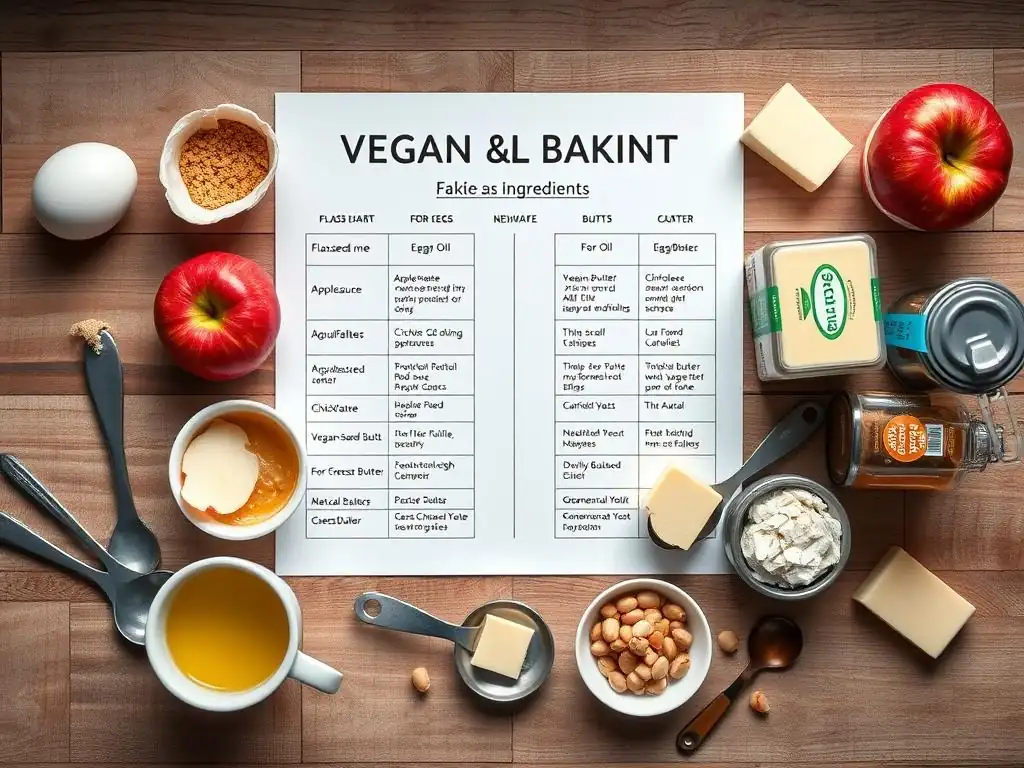
Having a quick reference guide for common vegan baking ingredient substitutions can be incredibly helpful when adapting recipes or troubleshooting. While the best substitute often depends on the specific recipe and the function of the ingredient being replaced, a chart provides a starting point for common swaps and their typical uses.
Think of this section as a handy cheat sheet to keep nearby as you experiment with vegan baking ingredient substitutions. It condenses the information on common replacements into an easy-to-read format, helping you quickly identify potential swaps for eggs, dairy, and sweeteners.
Egg Replacements: [Chart of Egg Substitutes and Their Best Uses]
[This chart would typically list common egg substitutes (e.g., Flax Egg, Applesauce, Mashed Banana, Silken Tofu, Aquafaba, Commercial Egg Replacer) in one column. The next column would indicate the typical quantity needed to replace one large egg (e.g., 1 tbsp flax meal + 3 tbsp water, 1/4 cup, 1/4 cup, 1/4 cup pureed, 3 tbsp, per package directions). A third column would list the best uses for each substitute (e.g., Muffins, cookies, quick breads; Muffins, quick breads; Muffins, breads; Cheesecakes, custards; Meringues, macarons; Cakes, muffins, cookies).]
Dairy Replacements: [Chart of Dairy Substitutes and Their Best Uses]
[This chart would typically list common dairy substitutes (e.g., Plant Milk (Soy, Oat, Almond), Vegan Butter, Coconut Oil, Applesauce/Pureed Fruit, Coconut Cream) in one column. The next column would indicate the typical quantity needed (e.g., 1:1 for milk, 1:1 for butter, 1:1 for butter/oil, 1:1 for oil/butter, adjust as needed for cream). A third column would list the best uses (e.g., General liquid replacement; Replacing butter in most uses; Replacing melted butter/oil; Reducing fat/adding moisture; Replacing heavy cream/adding richness).]
Sweetener Replacements: [Chart of Sweetener Substitutes and Their Best Uses]
[This chart would typically list common sweetener substitutes (e.g., Maple Syrup, Agave Nectar, Date Paste, Coconut Sugar, Brown Rice Syrup) in one column. The next column would indicate the typical quantity needed to replace 1 cup of granulated sugar (e.g., ~3/4 cup (reduce liquid), ~2/3 cup (reduce liquid), ~1 cup (adjust liquid), 1:1 swap, ~2/3 cup (reduce liquid)). A third column would list the best uses (e.g., Liquid sweetener in various bakes; Mild liquid sweetener; Whole-food binding/sweetness; Granular swap for sugar; Binding/less sweet liquid sweetener).]
Conclusion: Unlock the Potential of Vegan Baking with Smart Swaps
Elevating your bakes with smart vegan baking ingredient substitutions is a rewarding journey. It's about more than just avoiding animal products; it's an opportunity to learn new techniques, explore diverse ingredients, and create delicious, compassionate treats. By understanding the function of traditional ingredients and the properties of their plant-based counterparts, you gain the power to adapt almost any recipe.
Don't be discouraged by early experiments that don't turn out perfectly. Every attempt is a learning experience that builds your intuition for successful vegan baking ingredient substitutions. With a little knowledge, practice, and creativity, you can confidently bake everything from flaky scones to airy cakes, proving that vegan baking is not about limitation, but about expanding your culinary horizons.
Embrace Experimentation and Creativity in Your Vegan Baking Journey
The world of vegan baking ingredient substitutions is constantly evolving, with new products and techniques emerging regularly. The best way to truly master it is through hands-on experimentation. Don't be afraid to try swapping ingredients in your favorite non-vegan recipes, starting with simple ones like cookies or muffins. Keep notes on what works and what doesn't, and learn from each bake.
Embracing creativity means seeing a recipe as a guideline, not a rigid rulebook. Perhaps a standard egg swap doesn't work perfectly – try combining two different substitutes! Maybe you want to reduce sugar – explore different natural sweeteners. Vegan baking ingredient substitutions invite you to become an active participant in the recipe development process, leading to unique and personalized baked goods that you'll be proud to share.
Resources for Vegan Baking Recipes and Inspiration.
Finding reliable resources is key when starting or deepening your understanding of vegan baking ingredient substitutions. Numerous websites, cookbooks, and online communities are dedicated to vegan baking, offering tested recipes and valuable tips. Look for sources that explain why certain substitutions are used, not just what to swap.
Exploring diverse recipes provides inspiration and practical examples of how different vegan baking ingredient substitutions are used in various contexts. Many talented vegan bakers share their knowledge freely online, offering tutorials and troubleshooting advice. Building a collection of trusted resources will support your journey and help you confidently tackle new challenges in vegan baking.
Frequently Asked Questions
What are the most common vegan baking ingredient substitutions?
The most common substitutions involve replacing dairy and eggs. Think of using applesauce for eggs, plant-based milk for dairy milk, and coconut oil for butter.
Can I substitute any ingredient with a vegan alternative on a 1:1 ratio?
Not always! While some substitutions like plant-based milk for dairy milk are often 1:1, others like egg replacements may require adjustments to maintain the correct texture and moisture. Experimentation is key!
Where can I find reliable information on vegan baking ingredient substitutions?
Websites like BakeWithEase.com offer valuable resources. Also, look for vegan baking cookbooks and trusted online communities that share tips and tricks.
Are vegan baking ingredient substitutions readily available in most supermarkets?
Yes, the availability of plant-based alternatives has significantly increased. Most supermarkets now carry a range of products like almond milk, soy milk, and vegan butter.
How do vegan baking ingredient substitutions affect the taste and texture of baked goods?
Substitutions can alter the taste and texture. For example, using flaxseed meal as an egg replacement can add a nutty flavor and slightly denser texture, while aquafaba can provide a lighter, airier result.
Final Reflection: Baking a Brighter Future, One Swap at a Time
The accessibility and deliciousness of vegan baking are no longer niche concepts; they're a vibrant, growing movement. This article explored the power of smart ingredient swaps, demonstrating how simple substitutions can transform traditional recipes into plant-based delights without compromising taste or texture. The demand for ethical and sustainable food choices continues to rise, and vegan baking, with its inherent commitment to compassion and environmental responsibility, is at the forefront of this exciting culinary evolution.
The journey of discovering and mastering these substitutions has been a personal revelation, highlighting the creativity and ingenuity within the vegan baking community. It's a testament to the power of resourcefulness and a shared passion for delicious, ethical food. The best things in life are unexpected,
and that certainly holds true for the surprising delights uncovered through experimenting with vegan baking ingredients. This constant evolution, driven by innovation and a desire for improvement, ensures that vegan baking remains exciting and accessible to all.
Now, it's your turn. Consider the recipes you love and the ingredients you use. What small changes can you make to incorporate more plant-based options? Don't be afraid to experiment, to embrace the unexpected, and to discover the joy of creating delicious and compassionate treats. Each swap you make is a step towards a more sustainable and ethical future, one delicious bite at a time.
Unlock Your Vegan Baking Potential!
Thanks for joining us on this delicious journey into the world of vegan baking! We hope you've discovered some amazing ingredient swaps to elevate your creations. Now it's time to put your newfound knowledge into practice.
- Bake your masterpiece: Choose your favorite recipe (or try a new one!) and experiment with the ingredient swaps we've discussed. Let your creativity shine!
- Share your success: Post a picture of your vegan bake on social media and tag us – we'd love to see your delicious results!
- Join the conversation: What are your go-to vegan baking swaps? Share your tips and tricks in the comments below!
What exciting vegan creation will you bake first?