
High Altitude Baking: Why Oven Temp is More Important Than Ever

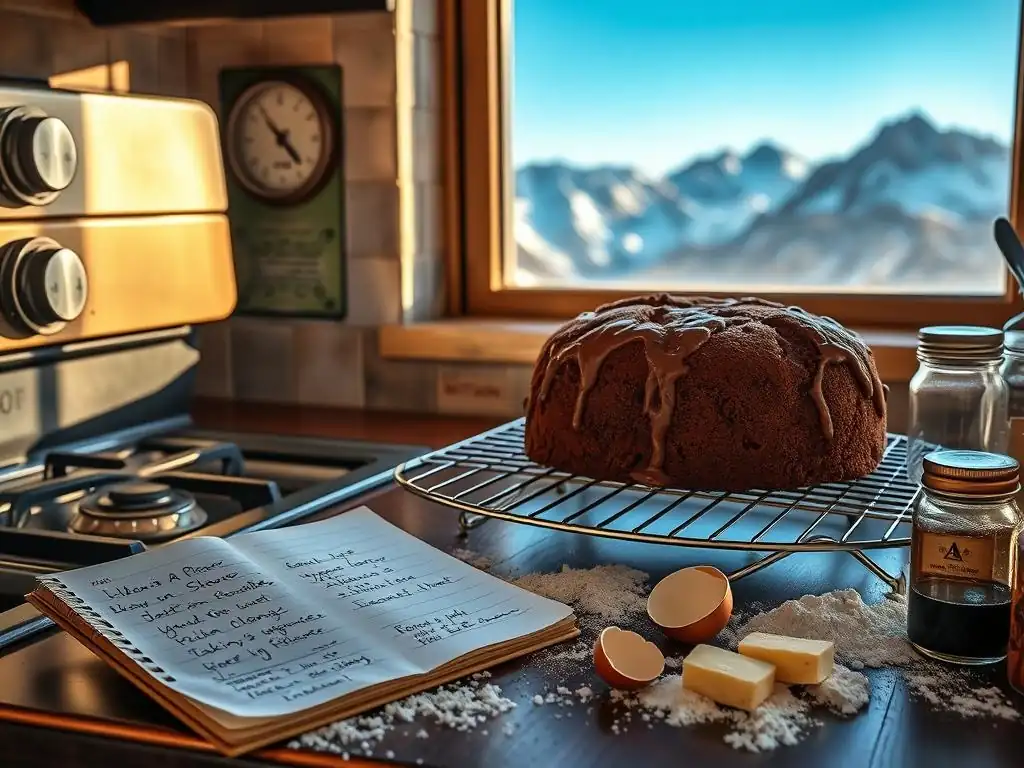
Welcome to BakeWithEase, where baking becomes a joy, not a chore! Ever wondered why your carefully crafted cake collapses at altitude? In this article, we're diving deep into the often-overlooked secret weapon of successful high-altitude baking: oven temperature. Unlock the key to perfectly risen cakes and flawlessly baked breads, even when the air gets thin. Discover why adjusting your oven temperature might be even more crucial than other common high-altitude baking adjustments. Ready to elevate your baking game? Let's get started!
- High Altitude Baking: Mastering Oven Temperature
- Understanding High Altitude Baking Challenges
- The Critical Role of Oven Temperature in High Altitude Baking
- Adjusting Oven Temperature for High Altitude Baking Success
- Beyond Temperature: Other Essential High Altitude Baking Adjustments
- Mastering Oven Calibration for High Altitude Baking
- Troubleshooting Common High Altitude Baking Issues
- High Altitude Baking Temperature: Practical Examples and Recipes
- Tips for Consistent High Altitude Baking Results
- Conclusion: Achieving Baking Perfection at Any Altitude
-
Frequently Asked Questions
- What are the main challenges of baking at high altitude?
- Why is oven temperature so crucial in high altitude baking?
- How much should I typically adjust the oven temperature when baking at high altitude?
- Besides temperature, what other adjustments might be necessary for high altitude baking?
- Where can I find reliable high altitude baking recipes or conversion charts?
- Final Reflection: The Rising Importance of Altitude in Baking
- Unlock Your Baking Potential at Altitude!
High Altitude Baking: Mastering Oven Temperature
Understanding High Altitude Baking Challenges
The Science Behind Baking at Higher Altitudes
Baking at higher elevations presents unique challenges primarily due to differences in atmospheric pressure and humidity. As altitude increases, atmospheric pressure decreases. For instance, at sea level, the atmospheric pressure is around 14.7 psi (pounds per square inch), while at 5,000 feet, it drops to approximately 12.2 psi.
This lower pressure has two significant effects on baking: liquids boil at a lower temperature, and leavening gases expand more rapidly and with less resistance. Water, which boils at 212°F (100°C) at sea level, boils at about 203°F (95°C) at 5,000 feet and around 194°F (90°C) at 10,000 feet. This means moisture evaporates faster from baked goods before the internal structure has fully set, leading to dryness.
Simultaneously, the gases produced by leavening agents like baking powder and yeast expand more dramatically under lower pressure. In a standard sea-level recipe, this expansion is balanced by the atmospheric pressure and the setting structure of the batter or dough as it bakes. At high altitude, the reduced pressure allows the gases to expand too quickly and too much before the proteins in the flour and eggs coagulate and set the structure. This can cause batters and doughs to over-expand initially, resulting in collapsed centers or coarse textures once the structure finally sets.
Bakers at high altitudes frequently encounter frustrating issues like cakes that rise beautifully initially but then sink dramatically in the center, resulting in a dense, heavy layer. This collapse often happens because the leavening gases expand too rapidly under the lower pressure, stretching the delicate structure of the cake batter beyond its elastic limit before the heat has set it. The structure breaks down, and the cake falls. For example, a standard butter cake recipe baked at 7,000 feet without adjustments is highly likely to sink compared to the same recipe baked successfully at sea level.
Muffins and quick breads can also suffer. The rapid evaporation of moisture at lower boiling points often leads to dry, crumbly textures. The outside might set too quickly due to the faster evaporation and lower humidity often found at altitude, while the inside struggles to cook through before becoming parched.
Cookies, too, can become tough or spread excessively thin. The faster evaporation concentrates sugars, potentially leading to tougher cookies, while the rapid expansion of leavening can cause them to spread out before they set, resulting in a thin, crispy (and not always in a good way) disc rather than a chewy cookie. These common problems highlight the need for careful high altitude baking temperature adjustments and other recipe modifications.
The Critical Role of Oven Temperature in High Altitude Baking
Why Precise Oven Temperature Matters for High Altitude Recipes
In high altitude baking, oven temperature isn't just a guideline; it's a critical factor in achieving successful results. The oven's heat is what sets the structure of your baked goods, activates leavening agents, and browns the crust. At high altitude, where leavening works faster and moisture evaporates quicker, the oven temperature directly impacts the rate at which these processes occur and how they interact. A temperature that's too high can cause the crust to set before the interior has fully cooked, trapping moisture and leading to a gummy center, or it can accelerate leavening expansion causing collapse.
Moreover, precise temperature control is essential because the window for success is often narrower at altitude. The lower boiling point means moisture is escaping at a lower temperature range than at sea level. A slightly off oven temperature can exacerbate issues like dryness or over-spreading. By carefully controlling the heat, bakers can slow down the rapid rise from leavening, allow the structure more time to set, and manage the rate of moisture loss, mitigating many of the common high altitude baking challenges. This makes understanding and implementing high altitude baking temperature adjustments paramount.
High Altitude Baking Temperature Adjustments: A Detailed Explanation
Adjusting the oven temperature is one of the most effective high altitude baking temperature adjustments you can make. The primary strategy is to lower the baking temperature compared to the sea-level recipe. This counteracts the effects of lower atmospheric pressure and faster moisture evaporation. By reducing the heat, you slow down the rate at which leavening gases expand, giving the protein structure in your batter or dough more time to strengthen and set before it's overwhelmed by the expansion.
Lowering the temperature also helps to slow down the rate of moisture evaporation. Since water boils at a lower temperature at altitude, heat penetrates the baked good more quickly relative to the boiling point of water. A lower oven temperature reduces this heat penetration speed, allowing the interior to cook more evenly and thoroughly before all the moisture has evaporated, preventing dryness. This adjustment also helps prevent the crust from browning or setting too quickly, ensuring the entire product bakes through uniformly. Implementing appropriate high altitude baking temperature adjustments is a cornerstone of successful baking above sea level.
Adjusting Oven Temperature for High Altitude Baking Success
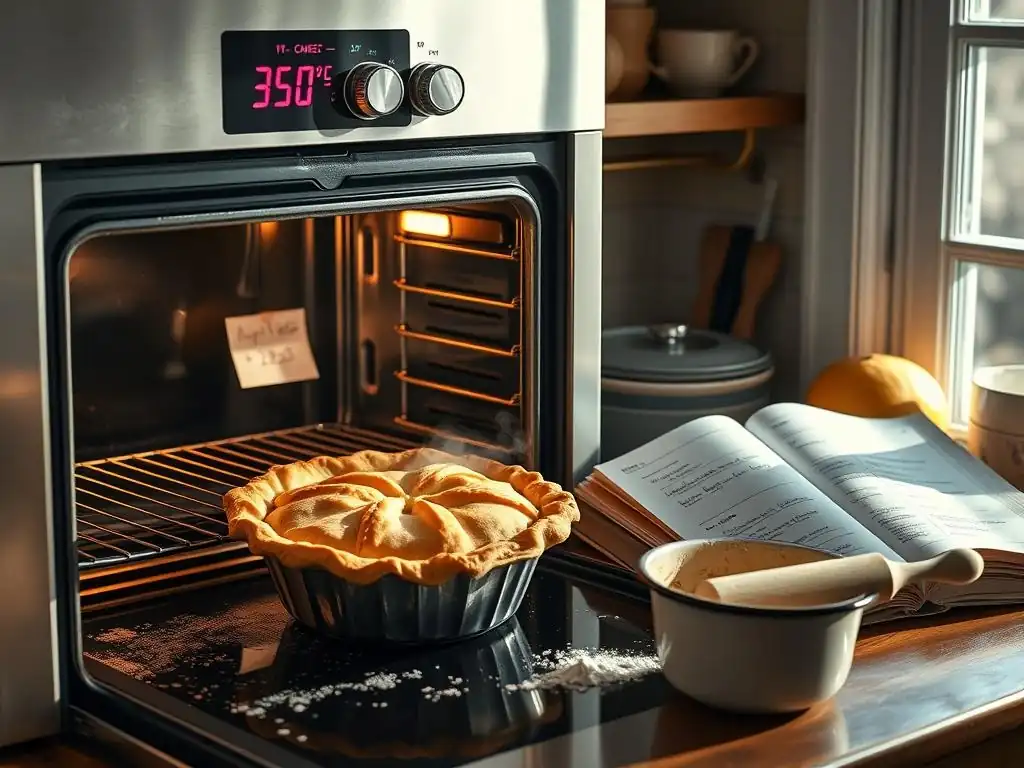
Lowering Oven Temperature: The Primary Adjustment
The most common and often most impactful high altitude baking temperature adjustment is simply lowering the oven temperature called for in a standard recipe. This adjustment is crucial because it directly influences the speed of chemical reactions happening within your baked goods. Leavening agents like baking soda and powder react faster at altitude due to lower pressure; lowering the temperature slightly slows down their initial rapid expansion, giving the structural components (like gluten and egg proteins) time to build strength and set.
For example, if a sea-level recipe calls for baking a cake at 350°F (175°C), a baker at 5,000 feet might lower the temperature to 325°F (160°C). This 25°F reduction provides a gentler heat environment. This slower baking process allows the internal structure of the cake to stabilize before the full force of leavening expansion occurs, significantly reducing the likelihood of the cake collapsing. It also helps manage the rate of moisture evaporation, which happens more readily at altitude due to the lower boiling point of water.
Why Reducing Temperature Prevents Over-Browning and Rapid Evaporation
Reducing the oven temperature in high altitude baking directly addresses two common issues: over-browning and rapid moisture loss. At higher temperatures, the exterior of baked goods browns quickly due to the Maillard reaction and caramelization of sugars. At altitude, this browning can happen even faster relative to the internal cooking rate because moisture is evaporating more rapidly, concentrating surface sugars and potentially leading to a tough or burnt exterior before the interior is fully cooked. Lowering the temperature slows down this surface browning, allowing the heat to penetrate more gradually and cook the interior thoroughly without scorching the outside.
Furthermore, the lower temperature reduces the rate at which water turns to steam and escapes from the baked good. Since water boils at a lower temperature at altitude (e.g., 203°F at 5,000 ft vs. 212°F at sea level), moisture is eager to escape. A standard high temperature accelerates this process. By dropping the oven temperature, you decrease the heat gradient between the oven and the food, resulting in a slower, more controlled evaporation rate. This helps retain crucial moisture, preventing dry, crumbly results and ensuring a tender crumb, especially important for cakes and quick breads.
Recommended Temperature Reductions for Different Altitudes: 3,000-5,000 ft (25°F reduction), 5,000-7,000 ft (25-50°F reduction), 7,000+ ft (50°F+ reduction)
General guidelines for high altitude baking temperature adjustments suggest reducing the oven temperature based on your elevation. These are starting points, and experimentation may be needed, but they provide a solid foundation.
- 3,000 - 5,000 feet: A typical recommendation is to reduce the oven temperature by about 25°F (approx. 15°C). So, a recipe calling for 350°F would be baked at 325°F. This moderate adjustment helps counteract the initial effects of decreased pressure and faster evaporation without significantly increasing the baking time.
- 5,000 - 7,000 feet: For this altitude range, a larger reduction is often necessary, typically between 25°F and 50°F (approx. 15-25°C). A recipe at 375°F might be baked between 325°F and 350°F. The exact reduction within this range might depend on the specific recipe (e.g., cakes often require a larger reduction than cookies) and your oven.
- 7,000+ feet: At elevations above 7,000 feet, the atmospheric pressure is significantly lower, and moisture evaporates much faster. Reductions of 50°F (approx. 25°C) or more are common. A recipe calling for 400°F might need to be baked at 350°F or even lower. Very high altitudes might require even greater reductions, sometimes combined with slightly increased baking times at the lower temperature to ensure the interior is fully cooked.
These recommended high altitude baking temperature adjustments provide a practical starting point. It's important to remember that every oven is different, and humidity levels can also play a role. Using an oven thermometer to verify your oven's actual temperature is always wise when implementing these changes.
Beyond Temperature: Other Essential High Altitude Baking Adjustments
Liquid Adjustments: Increasing Moisture Content
Given that moisture evaporates faster at high altitudes due to the lower boiling point of water, increasing the liquid content in a recipe is often a necessary adjustment alongside high altitude baking temperature adjustments. Adding just a tablespoon or two of extra liquid (like milk, water, or buttermilk, depending on the recipe) per cup of flour can significantly improve the texture and prevent dryness. This extra moisture helps ensure that the baked good remains tender and moist even with the accelerated evaporation rate.
For instance, in a standard muffin recipe calling for 1 cup of milk, a baker at 5,000 feet might add an extra tablespoon of milk. In a yeast bread recipe, slightly increasing the hydration (the ratio of water to flour) can prevent the final loaf from being dense and dry. The goal is to compensate for the moisture lost during the longer, slower bake time at the reduced oven temperature and the inherent faster evaporation at altitude, ensuring the crumb is soft and palatable.
Flour Adjustments: Using Lower Protein Flour, Slightly Reducing Flour Quantity
Flour type and quantity can also be adjusted for high altitude baking. Using a lower protein flour, such as cake flour or pastry flour, can sometimes be beneficial, especially in delicate baked goods like cakes. Lower protein flours develop less gluten, which can help create a more tender crumb that is less prone to becoming tough when moisture is lost faster. For example, substituting a portion of all-purpose flour with cake flour in a high-altitude cake recipe can yield a lighter texture.
Additionally, slightly reducing the overall amount of flour called for in a recipe can help. Flour absorbs moisture, and at high altitude, you need to retain as much moisture as possible. Reducing the flour by a tablespoon or two per cup can subtly shift the balance, leaving more free moisture available during baking. This adjustment, combined with increased liquid and appropriate high altitude baking temperature adjustments, helps prevent the baked good from drying out and becoming dense or crumbly.
Leavening Agent Adjustments: Reducing Baking Powder/Soda
One of the most critical adjustments, often made in conjunction with high altitude baking temperature adjustments, is reducing the amount of chemical leavening agents like baking powder and baking soda. As discussed, these agents produce gases that expand more rapidly and with less resistance at lower atmospheric pressure. Using the full amount called for in a sea-level recipe can cause the baked good to rise too quickly, over-expand, and then collapse as the structure fails before setting.
A common guideline is to reduce baking powder by 10-25% and baking soda by 10-15% at altitudes above 3,000 feet. For example, if a recipe calls for 2 teaspoons of baking powder, a baker at 6,000 feet might reduce it to 1.5 or 1.75 teaspoons. This reduction slows down the initial explosive rise, allowing the structure of the batter or dough more time to strengthen under the gentler heat provided by the adjusted lower oven temperature. This balance between leavening speed and structural setting is key to preventing sunken centers and achieving a stable, even rise.
Mastering Oven Calibration for High Altitude Baking
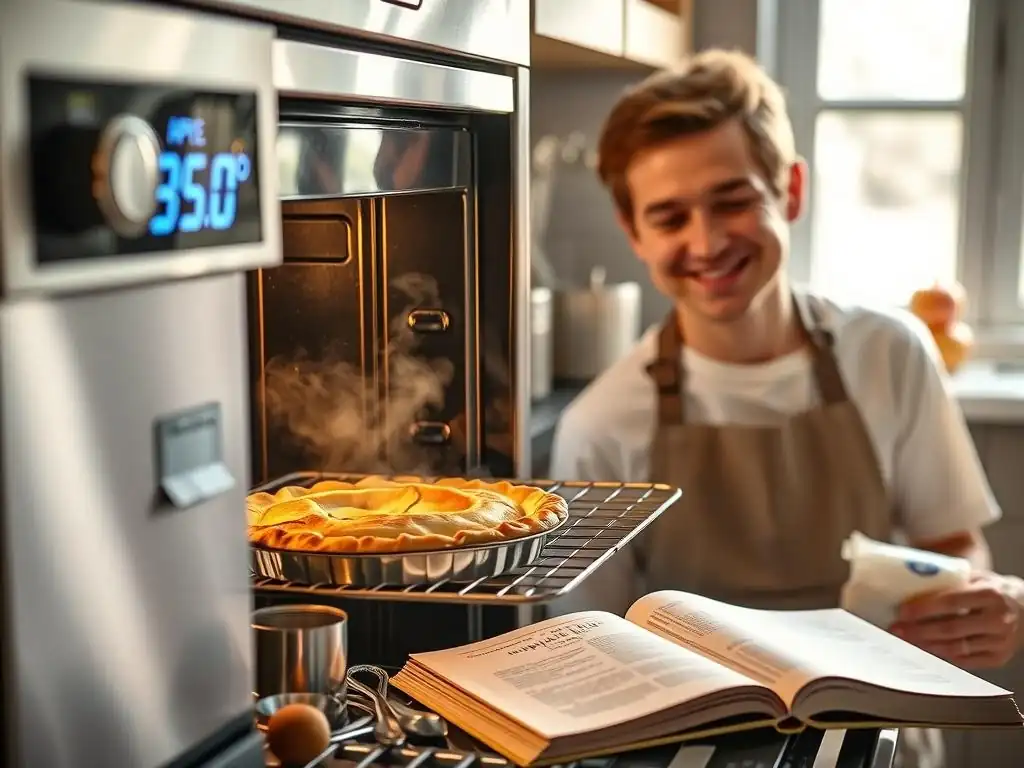
Checking Your Oven's Accuracy: A Simple Guide
Before you even start implementing high altitude baking temperature adjustments, it's crucial to know if your oven is heating accurately. Many home ovens can be off by as much as 25-50°F (15-25°C) from the temperature they indicate. This inaccuracy, combined with the challenges of high altitude, can significantly sabotage your baking efforts. Checking your oven's accuracy is simple and requires only an oven thermometer.
Place an oven thermometer on the center rack of your cold oven. Close the door and set the oven to a specific temperature, like 350°F (175°C). Allow the oven to preheat fully and then wait at least 15-20 minutes after the preheat signal to let the temperature stabilize. Check the reading on the oven thermometer. Does it match the set temperature?
Check it again after another 15 minutes. Do this several times over an hour. Note the difference between the set temperature and the actual temperature reading on the thermometer. This difference tells you how much your oven is off. For example, if you set it to 350°F but the thermometer consistently reads 325°F, your oven runs 25°F cool.
Calibrating Your Oven for Consistent Results
Once you know how much your oven is off, you can either mentally adjust the temperature every time you bake or, if your oven has the feature, calibrate it. Many modern ovens allow you to adjust the internal thermostat settings to compensate for inaccuracies. Consult your oven's manual for specific instructions on how to access the calibration setting, which usually involves a combination of button presses. You can typically adjust the calibration up or down in 5°F or 1°C increments.
If your oven consistently reads 25°F cool when set to 350°F, you would adjust the calibration setting up by 25°F. If it reads 15°F hot, you would adjust it down by 15°F. After calibrating, repeat the oven thermometer test to ensure the adjustment was successful. A properly calibrated oven provides a consistent and reliable starting point, making your high altitude baking temperature adjustments much more predictable and effective.
The Impact of Oven Calibration on High Altitude Baking Success
Using an accurately calibrated oven is perhaps the most foundational step for successful high altitude baking. Without knowing your oven's true temperature, any high altitude baking temperature adjustments you make are essentially guesswork. If you diligently reduce the recipe's temperature by 25°F for your altitude, but your oven is already running 25°F cool, you're actually baking at a temperature 50°F lower than intended, which could lead to undercooked results.
Conversely, if your oven runs hot, your careful high altitude temperature reduction might still result in baking at the sea-level temperature or even hotter. This would exacerbate the issues of rapid leavening expansion, fast evaporation, and over-browning. A calibrated oven ensures that when you set the temperature to your adjusted high altitude setting, you are actually baking at that precise temperature, allowing your other carefully calculated high altitude adjustments to perform as intended and dramatically increasing your chances of consistent baking success.
Troubleshooting Common High Altitude Baking Issues
Cookies spreading too much is a common high altitude woe. This often happens because the leavening expands too quickly and the fat melts too fast before the structure of the cookie has a chance to set. The reduced atmospheric pressure allows the leavening gases to push the dough outwards more readily. One solution is to use high altitude baking temperature adjustments by slightly increasing the oven temperature (contrary to the usual reduction for cakes) by about 15-25°F for certain types of cookies, especially drop cookies. The hotter temperature helps the edges set faster, limiting spread.
Another factor is fat content and temperature. Using butter that is too soft or reducing the amount of fat slightly can help. Ensuring your butter is just softened, not melted, when creaming is important. Some bakers also find chilling the cookie dough for at least 30 minutes before baking helps solidify the fat, reducing spread. Experimenting with a combination of a slight temperature increase and chilling the dough often resolves this issue, producing cookies with better shape and thickness at altitude.
Sunken Cakes: Temperature and Leavening Solutions
A cake that sinks in the middle is a classic sign of high altitude baking trouble, usually pointing to issues with leavening and structural support. The leavening agents produce gases that expand too quickly under lower pressure, causing the cake to rise prematurely and over-expand before the egg proteins and gluten have set the structure. When the weak structure can no longer support the expanded air pockets, it collapses. The primary solution involves high altitude baking temperature adjustments – specifically, lowering the oven temperature as previously discussed (e.g., 25-50°F reduction depending on altitude).
Coupled with the temperature reduction, reducing the amount of chemical leaveners (baking powder/soda) is crucial. This slows down the rate of gas production, allowing the cake to rise more gradually. For example, reducing baking powder by 1/4 to 1/2 teaspoon per teaspoon called for in the recipe can make a significant difference. Additionally, sometimes slightly increasing the amount of eggs or flour can provide extra structural support to better hold the rise at altitude.
Dry Breads: Temperature and Hydration Solutions
Yeast breads baked at high altitude can sometimes turn out dry and dense. This is primarily due to the faster evaporation of moisture during baking at the lower boiling point, even when using high altitude baking temperature adjustments. While yeast activity is also affected by pressure (it can be slightly faster), the main challenge is retaining sufficient moisture. The solution often involves increasing the hydration of the dough and potentially adjusting the baking temperature and time.
Adding a small amount of extra liquid (water, milk) to the dough, typically 1-2 tablespoons per cup of flour, can help. This increases the dough's hydration level, providing more moisture to withstand the faster evaporation. Regarding temperature, while you might slightly reduce the temperature for enriched breads to prevent over-browning, lean crusty breads often benefit from a standard or even slightly increased initial temperature to set the crust, followed by a reduction.
Baking for the correct amount of time is also key; over-baking at altitude will guarantee a dry loaf. Monitoring internal temperature for doneness (around 190-200°F / 88-93°C for most lean breads) is a reliable indicator.
High Altitude Baking Temperature: Practical Examples and Recipes

High Altitude Vanilla Cake with Adjusted Temperature
Let's consider a standard vanilla cake recipe that calls for baking at 350°F (175°C) for 30-35 minutes at sea level. For a baker living at 5,000 feet, applying high altitude baking temperature adjustments is essential. Instead of 350°F, they would set their calibrated oven to 325°F (160°C). This 25°F reduction is the primary temperature adjustment. Additionally, they might reduce the baking powder slightly (e.g., from 2 tsp to 1.75 tsp) and add 1-2 tablespoons of extra milk to the batter.
By lowering the temperature, the cake bakes more gently. The leavening gases still expand more than at sea level, but the slower heat penetration allows the egg and flour structure to firm up gradually. The reduced leavening prevents an explosive rise and subsequent collapse, while the extra liquid helps keep the crumb moist despite the faster evaporation rate at altitude. The cake will likely take slightly longer to bake at the lower temperature, perhaps 35-40 minutes, so checking for doneness with a skewer is important.
High Altitude Focaccia Bread with Temperature Considerations
Focaccia, a relatively flat bread, also benefits from high altitude baking temperature adjustments, although the approach might differ slightly from cakes. A typical focaccia recipe might call for baking at a high temperature, like 400-425°F (200-220°C), to achieve a crispy crust and airy interior. At high altitude, the faster evaporation can lead to a dry crumb before the crust achieves the desired texture.
While a significant temperature reduction might not be needed for crust development, maintaining adequate hydration is crucial. A baker at 6,000 feet might bake their focaccia at 375-400°F (190-200°C), a reduction of 25-35°F, focusing on sufficient baking time to cook the interior without excessive moisture loss. More importantly, they would increase the dough's hydration, potentially adding 2-3 tablespoons of extra water per cup of flour compared to a sea-level recipe. This higher hydration, combined with the slightly reduced temperature, helps the focaccia retain moisture, resulting in a tender crumb beneath the crispy, golden crust.
Tips for Consistent High Altitude Baking Results
Using an Oven Thermometer: A Must-Have Tool
As emphasized earlier, an oven thermometer is your best friend when baking at high altitude, especially when making high altitude baking temperature adjustments. Ovens are notoriously inaccurate, and being off by even 25°F can significantly impact your results at elevation where the margin for error is smaller. A simple, inexpensive oven thermometer placed on the middle rack gives you the true temperature reading inside your oven.
By using a thermometer, you can confirm that your oven is heating to the temperature you set, or you can learn exactly how much it's off. This allows you to make necessary adjustments to your set temperature. For example, if you need to bake at 325°F for your altitude but your oven reads 25°F cool, you know to set the dial to 350°F to achieve the desired 325°F inside. Relying on the oven's display alone is a common pitfall that can lead to inconsistent high altitude baking results.
Monitoring Internal Temperature: Checking for Doneness
Beyond relying solely on visual cues or the time specified in a recipe, using an instant-read thermometer to check the internal temperature of your baked goods is a highly reliable way to ensure they are properly cooked, especially when implementing high altitude baking temperature adjustments which can alter baking times. Since baking times can vary at altitude due to temperature adjustments and faster evaporation, internal temperature is a more accurate indicator of doneness.
For cakes and quick breads, a toothpick test is common, but an internal thermometer reading of 200-210°F (93-99°C) near the center is often a more precise indicator of a fully cooked, moist crumb. Yeast breads are typically done when they reach an internal temperature of 190-200°F (88-93°C) for lean loaves or 180-190°F (82-88°C) for enriched loaves. Using an internal thermometer takes the guesswork out of determining doneness and helps prevent both under-baking (leading to sunken centers) and over-baking (leading to dryness).
The Importance of Accurate Measurements in High Altitude Baking
Precision is paramount in high altitude baking, perhaps even more so than at sea level. Small variations in ingredient quantities, particularly flour, liquid, and leavening agents, can have a magnified effect due to the unique atmospheric conditions. Using measuring cups designed for dry ingredients (leveled off with a straight edge) for flour and liquid measuring cups for liquids is essential. For critical ingredients like leavening, sugar, and fats, weighing them using a kitchen scale provides the most accurate results.
For example, scooping flour directly from the bag with a measuring cup can pack it down, resulting in significantly more flour than intended – potentially 20-25% more. This excess flour will absorb more moisture, leading to a drier result, which is already a challenge at high altitude. Combining accurate measurements with careful high altitude baking temperature adjustments and other recipe modifications ensures that the ratios are correct, providing the best foundation for success.
Conclusion: Achieving Baking Perfection at Any Altitude
Frequently Asked Questions
What are the main challenges of baking at high altitude?
At higher altitudes, lower air pressure can cause liquids to evaporate faster and gases to expand more rapidly. This can lead to dry baked goods and recipes that rise too quickly and then collapse.
Why is oven temperature so crucial in high altitude baking?
Oven temperature plays a vital role in setting the structure of baked goods. By adjusting the temperature, we can control the rate of evaporation and stabilize the gluten before excessive rising occurs, preventing collapse.
How much should I typically adjust the oven temperature when baking at high altitude?
Generally, you'll want to increase the oven temperature by about 25°F (15°C). This helps the baked goods set faster and prevents them from drying out too much.
Besides temperature, what other adjustments might be necessary for high altitude baking?
Other adjustments often include decreasing the amount of leavening agents (baking powder/soda) and increasing the amount of liquid in the recipe to compensate for faster evaporation.
Where can I find reliable high altitude baking recipes or conversion charts?
Websites like BakeWithEase.com offer specific high altitude recipes and conversion charts. Experimentation and careful observation are also key to successful baking at higher elevations.
Final Reflection: The Rising Importance of Altitude in Baking
Mastering high-altitude baking isn't just a niche skill; it's a crucial element for anyone striving to create consistently delicious baked goods, regardless of their location. The lower air pressure at higher elevations significantly impacts baking, leading to unpredictable results if temperature adjustments aren't meticulously considered. Ignoring this fundamental principle can mean the difference between a perfectly risen cake and a dense, disappointing failure.
The impact of altitude on baking extends beyond simply achieving the desired texture and rise. It speaks to a deeper connection between our environment and the culinary arts. It's a reminder that seemingly small variations in our surroundings can have profound effects on the outcome of our efforts. As the global population shifts and more people live at higher altitudes, understanding these adjustments becomes increasingly important. The altitude is the spice of life,
a baker once told me, and I've found that to be truer than I ever imagined when it comes to baking. This isn't just about following a recipe; it's about understanding the science behind it and adapting to the unique challenges of our environment.
Now, I invite you to consider your own baking experiences. Have you struggled with high-altitude baking? What adjustments have you made, and what have you learned? Take the knowledge gained from this article and apply it to your next baking adventure. Don't be afraid to experiment, to adjust, and to perfect your high-altitude baking techniques. The reward – a perfectly baked treat, crafted with precision and understanding – is well worth the effort. Embrace the challenge, and discover the joy of baking at any altitude.
Unlock Your Baking Potential at Altitude!
Thanks for joining us on this high-altitude baking adventure! You've now learned how crucial oven temperature is for perfectly baked goods, no matter your elevation. Ready to put your new knowledge to the test?
- Bake your favorite recipe, adjusting the temperature based on what you've learned. Document your results – even small changes make a difference!
- Share your baking triumphs (and any altitude-related challenges!) on our BakeWithEase community forum. We love hearing from fellow bakers!
- Explore our extensive recipe collection, specifically curated for high-altitude baking. Find new favorites and expand your baking horizons.
So, what delicious high-altitude creation will you bake first?