
Mixing Whisks vs Dough Whisks: Tool Tips for Perfect Batters

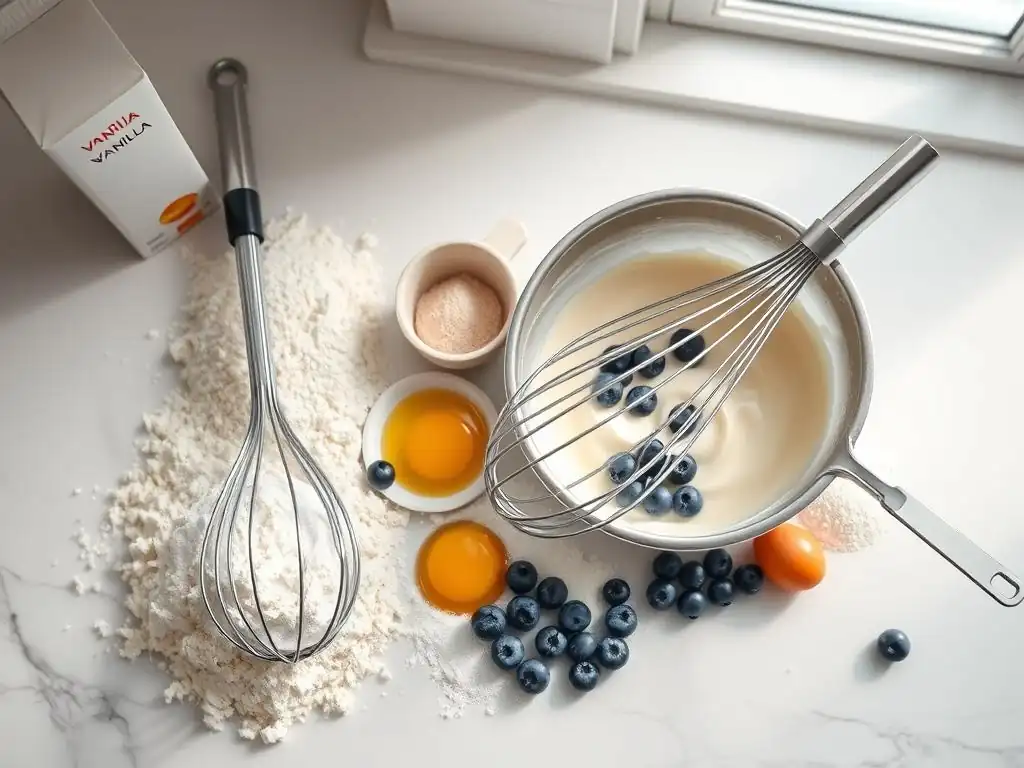
Welcome to BakeWithEase, where baking becomes a joy! Are you ready to unlock the secret to perfectly smooth cake batter? Discover the crucial difference between mixing whisks and dough whisks, and how selecting the best whisk for cake batter can transform your baking experience. Dive in to learn essential tool tips and techniques that will elevate your creations from good to unforgettable!
- Bake Like a Pro: Choosing the Right Whisk
- Understanding Whisks: A Baker's Essential Guide
- Mixing Whisks: The All-Purpose Baking Tool
- Dough Whisks: Your Secret Weapon for Breads and Thick Batters
- Mixing Whisks vs. Dough Whisks: A Detailed Comparison
- Achieving Perfect Batters: Tips & Techniques for Both Whisks
- Beyond Cake Batter: Other Uses for Mixing and Dough Whisks
- Choosing the Right Whisk for Your Baking Needs: A Summary
-
Frequently Asked Questions
- What is the primary difference between a mixing whisk and a dough whisk?
- When is a mixing whisk the best choice for cake batter?
- Can I use a dough whisk for all types of cake batters?
- What features should I look for in a "best whisk for cake batter"?
- Where can I find easy-to-follow cake batter recipes and whisking techniques?
- Final Reflection: The Perfect Whisk: A Recipe for Baking Success
- Unleash Your Inner Baking Whiz!
Bake Like a Pro: Choosing the Right Whisk
Welcome to BakeWithEase, where we demystify baking one tool at a time! Today, we're diving into the world of whisks – those seemingly simple utensils that play a crucial role in achieving everything from fluffy scrambled eggs to perfectly smooth cake batter. While many home bakers might own just one general-purpose whisk, understanding the nuances between different types can significantly elevate your results. Choosing the best whisk for cake batter, for instance, might depend on the specific recipe and desired texture.
Whether you're whipping cream, emulsifying a dressing, or combining dry and wet ingredients for a delicate sponge, the right whisk can make all the difference. This guide will walk you through the distinct characteristics and ideal applications of two fundamental whisk types: the standard mixing whisk and the specialized dough whisk. By the end, you'll have a clearer picture of which tool to reach for to ensure your batters and doughs turn out flawlessly every time. Let's get whisking!
Understanding Whisks: A Baker's Essential Guide
Whisks are fundamental tools in any kitchen, particularly in baking. They are designed to aerate mixtures, combine ingredients smoothly, and prevent lumps. While their basic function is universal, their specific design varies greatly, leading to different performance characteristics depending on the task at hand. Recognizing these differences is the first step toward mastering their use.
A high-quality whisk can truly impact the outcome of your recipes. Imagine trying to achieve stiff peaks for meringue with a fork – it's nearly impossible! Similarly, attempting to incorporate flour into a thick cookie dough with a delicate balloon whisk can be frustrating and inefficient. Understanding the purpose behind each design helps you select the most effective tool, making your baking easier and your results more consistent.
Exploring Different Types of Whisks for Baking
Beyond the standard balloon whisk, there's a surprising variety of whisks available, each optimized for specific culinary tasks. For example, a French whisk is narrower and more conical than a balloon whisk, making it excellent for reaching into the corners of pots and pans when making sauces or gravies. A flat whisk, sometimes called a roux whisk, is ideal for scraping the bottom of a pan and preventing lumps in thick mixtures like sauces or batters.
Then there are specialized whisks like the ball whisk, which uses individual wires tipped with balls to increase contact area, particularly useful for whipping air into lighter mixtures. And, of course, the dough whisk, which we'll discuss in detail, is specifically engineered for handling much thicker, heavier consistencies than a typical mixing whisk can manage effectively. Each type has its place, but for general baking, the mixing whisk and dough whisk cover a wide range of needs.
Why Choosing the Right Whisk Matters for Baking Success
Using the appropriate whisk directly impacts the texture and consistency of your baked goods. For instance, when making a light and airy cake batter, you need a whisk that can effectively incorporate air, creating volume and a tender crumb. A standard balloon whisk is often the best whisk for cake batter in this scenario, thanks to its many wires that create maximum air contact.
Conversely, trying to mix a stiff scone dough with a delicate balloon whisk would likely bend the wires and fail to properly combine the ingredients. This is where a tool like a dough whisk, designed for heavy lifting, becomes essential. Using the wrong tool can lead to overmixing (resulting in tough baked goods) or undermixing (leaving pockets of dry ingredients or uneven textures). The right whisk ensures efficient mixing, proper aeration, and ultimately, baking success.
Mixing Whisks: The All-Purpose Baking Tool
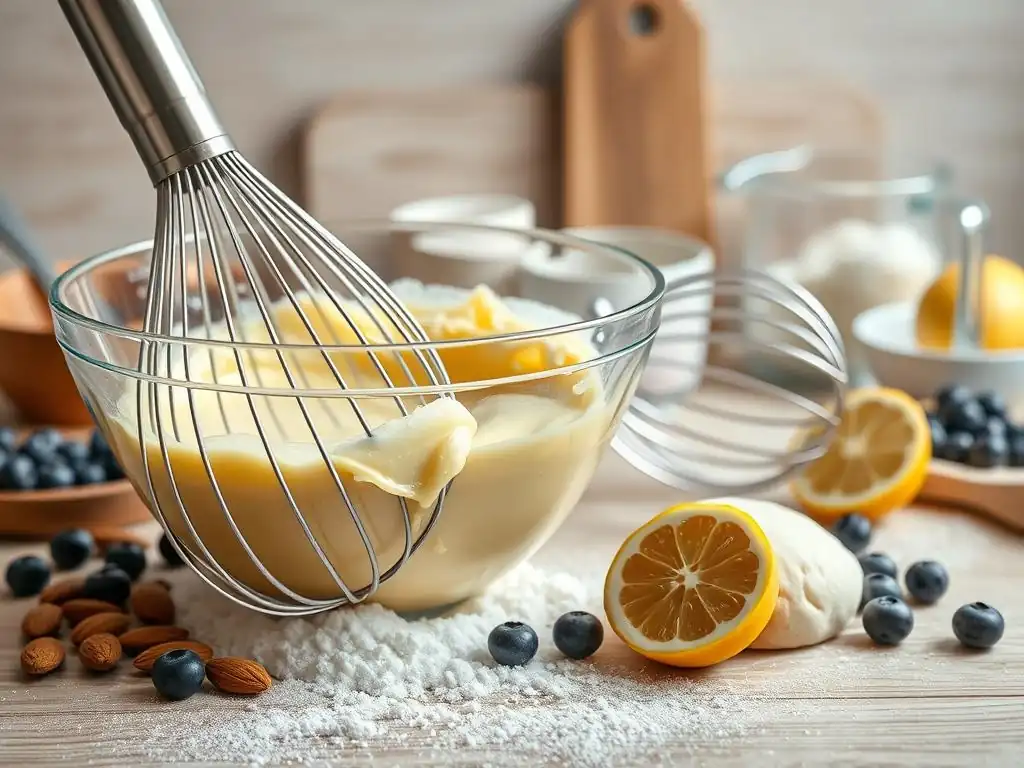
The mixing whisk, often recognized as the balloon whisk, is the most common type found in kitchens. Its design features numerous flexible wires that fan out from a handle, creating a balloon shape. This shape is optimized for incorporating air into liquid mixtures and smoothly combining ingredients in bowls. It's a versatile workhorse for a wide range of baking and cooking tasks.
This type of whisk is particularly effective for tasks that require aeration or emulsification. Think of whipping cream, beating egg whites into meringue, or emulsifying vinaigrettes. Its design allows for maximum contact with the mixture, breaking up clumps and distributing ingredients evenly. For many bakers, a good quality mixing whisk is the starting point for their whisk collection.
What is a Mixing Whisk and its Common Uses?
A mixing whisk, typically the balloon style, consists of a handle attached to a series of thin, flexible metal wires arranged in a bulbous shape. The flexibility and numerous wires are key to its function: they allow it to glide through liquids and semi-liquids, incorporating air and smoothing out textures.
Common uses in baking include whipping egg whites for meringues or soufflés (aiming for soft, firm, or stiff peaks), whipping heavy cream into whipped cream (which can double in volume within minutes with vigorous whisking), and combining wet and dry ingredients for thinner batters like pancakes, crepes, or the initial stages of some cake batters. It's also the go-to tool for making custard bases, gravies, and sauces on the stovetop, where its shape allows it to reach the curved sides of pots.
The Best Mixing Whisk for Smooth Batter: Features to Look For
When selecting a mixing whisk, especially if you're looking for the best whisk for cake batter or other smooth mixtures, several features are important. Look for a whisk with a good number of wires – typically 8 to 12 wires is a good range for efficient aeration and mixing. The wires should be flexible but sturdy enough not to bend easily under moderate resistance.
The handle material is also crucial for comfort and grip. Stainless steel wires are standard and durable, while silicone-coated wires can be useful for non-stick cookware. A comfortable, non-slip handle (like silicone or ergonomic plastic) provides better control, which is essential for achieving smooth, lump-free batters and preventing hand fatigue during prolonged whisking, such as whipping cream for 3-5 minutes to reach stiff peaks.
Advantages of Using a Mixing Whisk for General Baking Tasks
The primary advantage of a mixing whisk is its versatility. It excels at incorporating air, which is vital for leavening in many baked goods like sponge cakes or muffins. Its ability to quickly emulsify liquids also makes it indispensable for smooth sauces and dressings.
Furthermore, the flexible wires are effective at breaking up small lumps in batters and ensuring homogeneous mixtures. For many standard recipes, from whisking eggs for a quiche to combining ingredients for a quick bread, the mixing whisk is the most efficient and effective tool. It's the workhorse that tackles a wide range of tasks with ease.
OXO Good Grips Balloon Whisk: A Recommended Mixing Whisk
A popular and well-regarded example of a quality mixing whisk is the OXO Good Grips Balloon Whisk. This whisk typically features polished stainless steel wires and a comfortable, non-slip handle made from Santoprene rubber. It comes in various sizes, often 9-inch or 11-inch versions, making it suitable for different bowl sizes.
Users often praise the OXO whisk for its sturdy construction, comfortable grip (which remains non-slippery even when wet), and effective performance in whipping air and blending ingredients smoothly. While pricing can vary, a standard 9-inch OXO whisk might retail around $10-$15, offering excellent value for its durability and performance, making it a reliable choice for anyone seeking a dependable general-purpose mixing whisk or the best whisk for cake batter.
Dough Whisks: Your Secret Weapon for Breads and Thick Batters
Moving to the other end of the spectrum, the dough whisk is a specialized tool designed for handling much heavier, thicker mixtures than a standard mixing whisk can comfortably manage. If you frequently bake bread, make stiff cookie doughs, or work with thick batters like those for scones or muffins, a dough whisk is a game-changer.
Unlike the airy design of a balloon whisk, the dough whisk features a rigid loop structure. This unique design allows it to cut through thick doughs and batters efficiently, combining ingredients without overworking the mixture or getting clogged like a traditional whisk or even a spoon might.
What is a Dough Whisk (or Danish Dough Whisk)?
A dough whisk, often referred to as a Danish dough whisk due to its origin, is a specialized kitchen tool characterized by a sturdy wooden handle and a head made of thick, rigid wire loops. These loops are typically arranged in a specific pattern, often one large outer loop with one or two smaller loops inside, creating a minimal surface area.
This design is specifically engineered to mix heavy, sticky doughs with less effort and less sticking than a conventional whisk or spoon. It allows you to incorporate flour into wet ingredients quickly and efficiently, making it particularly popular among bread bakers for its ability to handle high-hydration doughs.
The Unique Design of the Dough Whisk and Its Benefits
The unique construction of the dough whisk, with its thick, open loops, provides significant advantages when working with dense mixtures. The minimal contact surface area prevents sticky dough from clinging excessively to the whisk, a common frustration when using a spoon or spatula.
Furthermore, the rigid loops are strong enough to cut through thick dough, helping to develop gluten in bread doughs without the need for initial hand mixing. It allows for quick incorporation of ingredients like nuts or dried fruit into a stiff batter. This design translates to less effort for the baker and a cleaner, more efficient mixing process compared to using less specialized tools for heavy-duty tasks.
Why a Dough Whisk Excels with Thick Doughs and Heavy Batters
The strength and structure of the dough whisk make it particularly effective for mixtures with a low liquid-to-dry ingredient ratio. Consider a stiff cookie dough or a rustic bread dough with a high percentage of whole wheat flour – these mixtures are challenging for flexible-wired whisks.
The dough whisk's rigid loops power through these dense materials, ensuring all ingredients are evenly distributed. It's excellent for combining the initial wet and dry ingredients for sourdough or yeasted bread before kneading begins. For batters like those for scones or biscuits, which should be mixed minimally, the dough whisk quickly brings the ingredients together without overdeveloping the gluten, which could lead to toughness.
Advantages of Using a Dough Whisk for Bread Baking
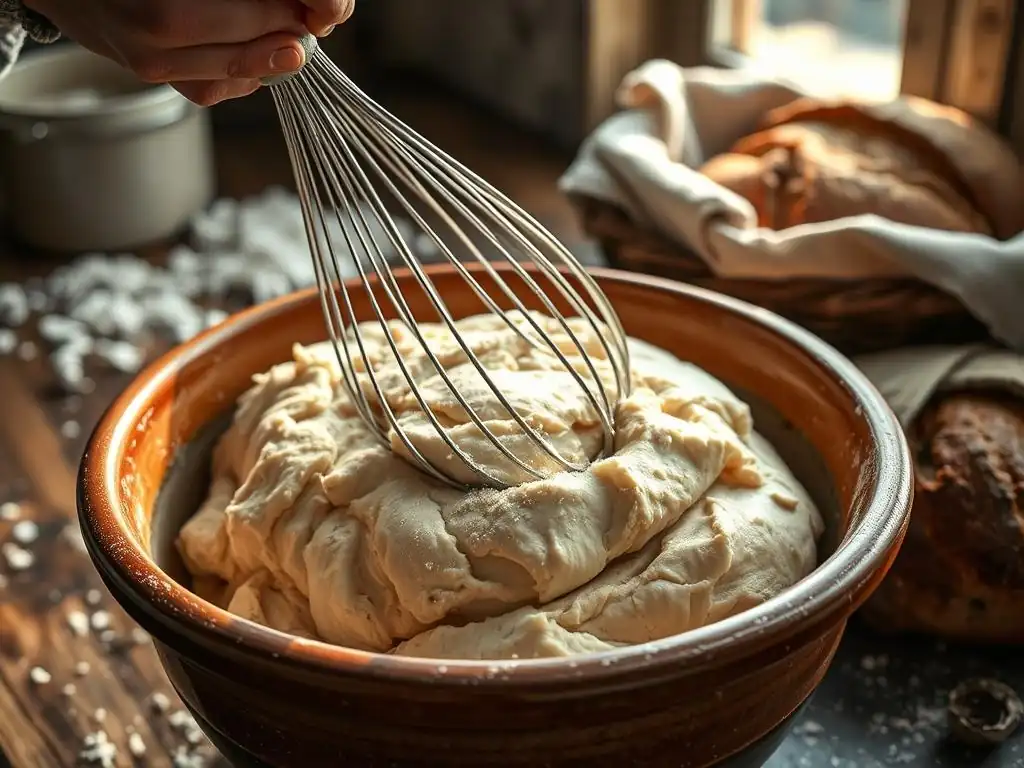
For anyone serious about bread baking, the dough whisk offers several key advantages. It significantly reduces the initial mess often associated with mixing dough by hand, as it keeps the sticky mixture contained within the bowl more effectively than a spoon or spatula.
It allows for quicker and more efficient incorporation of flour, which is especially useful for no-knead doughs or doughs with high hydration levels that are very sticky. The whisk helps to develop some initial gluten structure during the mixing phase. It can also be used to gently fold in additions like seeds, cheese, or herbs into a dough without deflating it. Many bakers find it indispensable for starting their sourdough or artisan bread recipes.
Brod & Taylor Danish Dough Whisk: A Recommended Dough Whisk
A highly recommended example of a quality dough whisk is the Brod & Taylor Danish Dough Whisk. This whisk typically features a sturdy wooden handle (often beechwood) and robust stainless steel loops. It's known for its durable construction and ergonomic handle, which provides a comfortable grip even when tackling tough doughs.
The Brod & Taylor whisk is praised by bakers for its ability to effortlessly cut through and mix even the stiffest doughs, making the initial mixing stage much easier. It's also relatively easy to clean compared to other tools used for dough. While generally more expensive than a basic mixing whisk, often retailing between $15-$25 depending on size and vendor, its performance and durability make it a worthwhile investment for frequent bread bakers or those who regularly work with heavy batters, though it wouldn't be the best whisk for cake batter.
Mixing Whisks vs. Dough Whisks: A Detailed Comparison
Understanding the fundamental differences between mixing whisks and dough whisks is key to choosing the right tool for the job. While both are designed to combine ingredients, their construction dictates their optimal use cases. A mixing whisk excels at aeration and smoothing lighter mixtures, while a dough whisk is built for power and efficiency with dense, sticky doughs.
Choosing the right whisk isn't just about preference; it's about performance. Using a dough whisk for whipping cream would be ineffective, just as a mixing whisk would struggle with bread dough. This comparison highlights the specific areas where each tool shines, helping you make informed decisions in your baking endeavors.
Design and Construction Differences
The most apparent difference lies in their design. A mixing whisk features multiple thin, flexible wires arranged in an open, often balloon-like shape. These wires are designed to whip air into liquids and gently combine ingredients. Materials are typically stainless steel, sometimes with silicone coating.
In contrast, a dough whisk has a rigid, thick wire head formed into one or more interlocking loops, attached to a sturdy handle (usually wood). The wires are much thicker and less numerous than a mixing whisk's, built for strength rather than flexibility or aeration. This minimal, robust design is specifically for cutting through and combining heavy, sticky masses.
Performance with Different Batter Consistencies
This is where the functional difference is most pronounced. A mixing whisk performs optimally with thin to medium-thick batters and liquids. It's the best whisk for cake batter that requires aeration, crepe batter, pancake batter, and whipping tasks like cream or egg whites. It excels at creating smooth, lump-free mixtures in these consistencies.
A dough whisk, however, is designed for the opposite end of the spectrum: thick batters and heavy doughs. It effortlessly combines ingredients for bread, pizza dough, scones, biscuits, and stiff cookie doughs. It cuts through the mass, ensuring even distribution without overworking the gluten in the early stages, a task where a mixing whisk would quickly become overwhelmed and ineffective.
Ease of Cleaning and Maintenance
Generally, a dough whisk is considered easier to clean than a mixing whisk when dealing with sticky doughs. Because of its minimal surface area and thick, open loops, dough is less likely to get trapped and caked onto the wires. A quick rinse under hot water or a brief soak is often sufficient.
A mixing whisk, with its many thin wires packed closely together, can be more challenging to clean, especially after mixing sticky batters or thick sauces. Ingredients can get lodged between the wires near the handle. While many are dishwasher safe, manual cleaning often requires a bit more effort to ensure all residue is removed.
Price Point Comparison: Mixing Whisk vs. Dough Whisk
The price of both types of whisks can vary significantly based on brand, material quality, and size. However, generally speaking, a standard, good quality mixing whisk tends to be slightly less expensive than a comparable quality dough whisk.
You can find decent mixing whisks starting from around $5-$10, with higher-end models reaching $15-$25. Dough whisks, perhaps due to their more specialized nature and robust construction (often involving a sturdy wooden handle), typically start in the $10-$15 range for basic models and can go up to $20-$30 or more for premium versions like those from Brod & Taylor. Investing in a durable version of the best whisk for cake batter (mixing whisk) and a sturdy dough whisk is recommended for serious bakers.
Achieving Perfect Batters: Tips & Techniques for Both Whisks
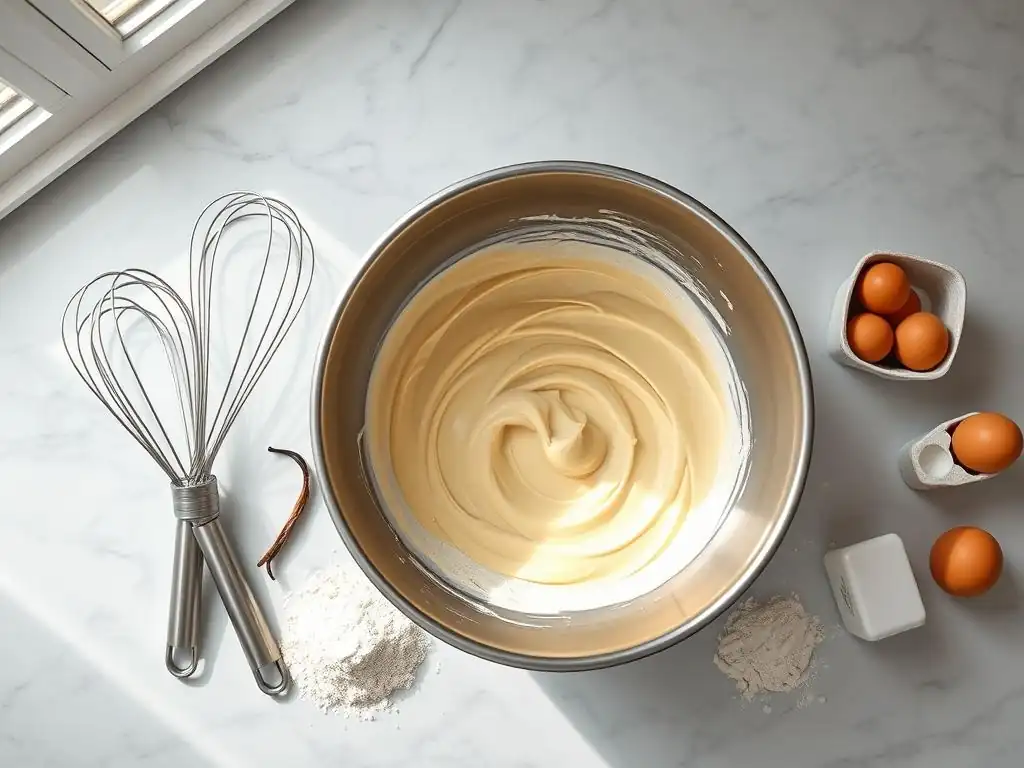
Mastering the whisk isn't just about having the right tool; it's also about technique. Whether you're using a mixing whisk for a delicate meringue or a dough whisk for a rustic loaf, understanding how to use them effectively is crucial for achieving the desired results.
Proper technique ensures that ingredients are combined efficiently, air is incorporated (or not, depending on the recipe), and the mixture reaches the correct consistency without being overmixed or undermixed. Let's explore some tips for getting the best performance out of both your mixing and dough whisks.
Mastering the Mixing Whisk Technique for Light and Airy Batters
When using a mixing whisk for tasks like whipping egg whites or cream, the key is vigorous, rapid motion. Use a large bowl to allow for expansion and prevent spills. Start slowly, then increase speed as the mixture begins to thicken. For maximum aeration, hold the whisk so the wires cut through the mixture at an angle, incorporating as much air as possible with each stroke.
For batters, use a circular motion combined with a back-and-forth or up-and-down movement to ensure all ingredients are scraped from the sides and bottom of the bowl and fully incorporated. Aim for a smooth, homogeneous consistency with no visible dry pockets. For the best whisk for cake batter, gentle but thorough mixing after adding dry ingredients is key to prevent developing tough gluten.
Using the Dough Whisk Effectively for Kneading and Combining Ingredients
The dough whisk is used with a different motion than a mixing whisk. Instead of whipping, you'll use a stirring or folding motion, drawing the whisk through the thick mixture to combine the wet and dry ingredients. The rigid loops act like blades, cutting through the dough and bringing everything together.
For bread dough, use a circular motion to initially hydrate the flour, then switch to a folding motion, bringing the dough from the bottom of the bowl up over itself. The whisk helps develop some initial gluten structure. For stiff batters, use a simple stirring motion until just combined. The goal is quick, efficient mixing with minimal effort, allowing the unique design of the dough whisk to do the heavy lifting.
Preventing Overmixing: A Crucial Tip for All Batters
Overmixing is a common pitfall in baking, particularly when using electric mixers, but it can also occur with hand whisking. Overmixing develops gluten unnecessarily in tender baked goods like cakes, muffins, or quick breads, resulting in a tough, dense texture. For the best whisk for cake batter, stop mixing as soon as the last streaks of flour disappear.
With doughs where gluten development is desired (like bread), overmixing by hand with a dough whisk is less likely than with a stand mixer, but it's still important to follow recipe instructions regarding mixing time or consistency cues. For tender batters, mix until just combined. A few small lumps of flour are often acceptable in quick breads and muffins and will disappear during baking.
Tips for Achieving a Lump-Free Batter
Achieving a smooth, lump-free batter is often the goal, especially for cakes and sauces. Start by whisking your wet ingredients thoroughly before adding dry ingredients. Sifting dry ingredients like flour, baking powder, and cocoa powder can also help break up clumps before they even enter the batter.
When combining wet and dry ingredients, add the dry ingredients gradually or in stages, whisking gently until just incorporated after each addition. For thinner batters, the vigorous action of a mixing whisk is effective at breaking up any remaining small lumps. For slightly thicker batters where you might use a dough whisk initially, you might switch to a flexible spatula to ensure all flour is incorporated without overmixing. Patience and gentle technique are key.
Beyond Cake Batter: Other Uses for Mixing and Dough Whisks
While we've focused on their roles in handling cake batter and dough, both mixing and dough whisks are versatile tools with applications extending far beyond traditional baking. Understanding these additional uses can make them even more valuable additions to your kitchen arsenal.
These tools can streamline various cooking processes, from preparing breakfast staples to crafting homemade sauces and dressings. Their unique designs lend themselves well to tasks that require aeration, emulsification, or the efficient combination of ingredients in different consistencies.
Utilizing Mixing Whisks for Sauces, Dressings, and Egg Dishes
The mixing whisk is indispensable for many stovetop cooking tasks. It's the perfect tool for making smooth gravies and sauces, helping to incorporate flour or cornstarch thickeners without lumps. Use it to constantly stir béchamel or custard to prevent scorching and ensure a silky texture.
For salad dressings and vinaigrettes, a mixing whisk quickly emulsifies oil and vinegar, creating a stable mixture. It's also the go-to tool for preparing eggs – whether you're whisking them for scrambled eggs (incorporating air for fluffiness), omelets, frittatas, or custards. Its ability to incorporate air and create smooth mixtures makes it invaluable in savory cooking as well as baking.
Employing Dough Whisks for Pizza Dough, Scones, and Biscuits
The dough whisk's utility isn't confined solely to yeast bread. It excels at combining the initial ingredients for various types of dough, including pizza dough, which often starts as a relatively sticky mixture.
It's also highly effective for making tender scones and biscuits. These recipes require minimal mixing to avoid toughness. The dough whisk quickly brings the wet and dry ingredients together into a shaggy dough with just a few strokes, ensuring you don't overwork the mixture. It's also useful for incorporating mix-ins like cheese or herbs into these doughs without compressing them.
Choosing the Right Whisk for Your Baking Needs: A Summary
Selecting the best whisk for the job is a simple step that can dramatically improve your baking results. While a general-purpose mixing whisk is essential for lighter tasks and is often considered the best whisk for cake batter, a specialized dough whisk is invaluable for handling heavier doughs and batters.
Understanding the strengths of each tool allows you to work more efficiently, achieve better textures, and ultimately, enjoy the baking process more. Don't feel pressured to buy every type of whisk available, but consider adding a dough whisk to your collection if you frequently bake bread or work with stiff doughs.
Quick Guide: When to Use a Mixing Whisk vs. a Dough Whisk
Here's a quick cheat sheet to help you decide which whisk to grab:
- Use a Mixing Whisk (Balloon Whisk) for:
- Whipping egg whites or cream
- Making light and airy cake batter (often considered the best whisk for cake batter)
- Pancake, crepe, or waffle batter
- Emulsifying dressings and sauces
- Making custards and gravies
- Scrambling or beating eggs
- Use a Dough Whisk (Danish Dough Whisk) for:
- Mixing bread dough (especially high-hydration doughs)
- Combining ingredients for pizza dough
- Making stiff cookie dough
- Mixing scone and biscuit doughs
- Incorporating additions into thick batters or doughs
Investing in Quality: Finding Durable and Reliable Whisks
Regardless of the type, investing in quality whisks is wise. Look for whisks made from durable materials like stainless steel for the wires and comfortable, sturdy materials for the handle (wood, silicone, or quality plastic). A well-constructed whisk will feel balanced in your hand and withstand regular use without bending or breaking.
While budget options are available, spending a little extra on a reputable brand known for quality kitchen tools can save you money in the long run, as durable whisks won't need frequent replacement. Read reviews and consider the specific tasks you perform most often to guide your purchase.
Elevate Your Baking with the Perfect Whisk
Having the right tools, including the best whisk for cake batter and a dedicated dough whisk, empowers you to tackle a wider range of recipes with confidence and precision. These specialized tools are designed to make specific tasks easier and more effective than using a generic utensil.
By understanding when and how to use a mixing whisk versus a dough whisk, you're setting yourself up for baking success. You'll achieve lighter cakes, perfectly mixed doughs, and smoother batters, elevating your baking from good to great. Happy whisking!
Frequently Asked Questions
What is the primary difference between a mixing whisk and a dough whisk?
A mixing whisk is designed for incorporating air and blending lighter ingredients, while a dough whisk is sturdier and meant for mixing thicker, heavier doughs without overworking them.
When is a mixing whisk the best choice for cake batter?
A mixing whisk is ideal when you need to create a light and airy batter, such as for sponge cakes or chiffon cakes, where incorporating air is crucial for texture.
Can I use a dough whisk for all types of cake batters?
While you can use a dough whisk for some cake batters, it's generally not recommended. It's best suited for thicker batters like muffin or quick bread batters, and can overwork a delicate cake batter.
What features should I look for in a "best whisk for cake batter"?
Look for a whisk with thin, flexible wires and a balloon-shaped head. This design allows for efficient air incorporation, resulting in a lighter and fluffier cake.
Where can I find easy-to-follow cake batter recipes and whisking techniques?
BakeWithEase.com offers a wide range of simple recipes, techniques, and tips for bakers of all levels, including guidance on the best whisking methods for different cake batters.
Final Reflection: The Perfect Whisk: A Recipe for Baking Success
The quest for the perfect cake batter isn't just about the ingredients; it's about the tools that bring them together. A seemingly small detail like the type of whisk you use can significantly impact the final product, leading to either light and airy perfection or a dense, disappointing result. This article has explored the subtle yet crucial differences between mixing whisks and dough whisks, highlighting their unique strengths and weaknesses in the context of cake batter preparation.
The impact of the right tool extends beyond the immediate result of a perfectly textured cake. It speaks to a broader appreciation for the craft of baking, the attention to detail, and the understanding that even the smallest element can contribute to a masterpiece. The difference between ordinary and extraordinary is that little extra.
This quote resonates deeply with the core message of this article: the seemingly insignificant choice of whisk can elevate your baking from good to exceptional.
So, as you embark on your next baking adventure, remember the lessons learned here. Consider the specific needs of your recipe, the texture you desire, and the capabilities of your whisks. Don't just grab the first whisk you see; choose the tool that will best help you achieve your culinary vision. You have the power to create something truly extraordinary, one perfectly whisked batter at a time.
Unleash Your Inner Baking Whiz!
Thanks for taking the time to explore the wonderful world of whisks with us! We hope you now feel more confident in choosing the right tool for your baking adventures. Ready to put your new knowledge into practice?
- Master the perfect batter: Try out the techniques we discussed today with your favorite recipe. Notice the difference! What was previously a challenge is now within your reach.
- Share your baking triumphs (or even your funny fails!): We'd love to see your creations and hear your experiences. Let's build a community of baking enthusiasts together!
- Explore different whisk types: Maybe try a balloon whisk for a completely new experience with your next meringue. What will you discover?
So, what delicious creation will you whisk up first?