
Natural Ammonium Carbonate (Baker’s Ammonia) for Crisp Cookies

Welcome to BakeWithEase, your companion on a delicious journey into the world of baking! Ever wondered how to achieve that perfectly crisp texture in your cookies? Prepare to unlock a vintage secret! This time, we're diving into the fascinating world of Baker’s Ammonia, also known as ammonium carbonate, and how it can revolutionize your cookie-baking game, particularly in crafting those irresistible Baker’s ammonia crisp cookies. Intrigued? Let's explore the science and secrets behind this age-old ingredient and discover how to add a delightful snap to your favorite treats.
- Understanding Baker's Ammonia: The Secret to Extra Crisp Cookies
- Achieving the Perfect Crisp: Using Baker's Ammonia in Cookie Recipes
- Springerle Recipe: A Step-by-Step Guide
- Troubleshooting Baker's Ammonia Crisp Cookies: Common Issues and Solutions
- Storing Baker's Ammonia Crisp Cookies for Lasting Crispness
- Where to Buy Baker's Ammonia (Ammonium Carbonate)
- Baker's Ammonia Crisp Cookie Variations: Beyond Springerle
- Frequently Asked Questions
- Final Reflection: The Enduring Magic of Baker's Ammonia
- Unlock Your Baking Potential: Achieve Perfectly Crisp Cookies!
What is Baker's Ammonia (Ammonium Carbonate)?
Baker's ammonia, chemically known as ammonium carbonate ((NH₄)₂CO₃), is a traditional leavening agent with a long history in baking, particularly for thin, crisp baked goods like certain types of crackers and cookies. Unlike modern leaveners like baking powder and baking soda, which produce carbon dioxide gas, baker's ammonia produces both carbon dioxide and ammonia gas when heated. The key characteristic that makes it unique for achieving exceptional crispness is that the ammonia gas completely evaporates during baking, leaving behind no residue that could contribute to chewiness or a soft crumb.
This unique property of full volatilization sets baker's ammonia apart. When dough containing ammonium carbonate is baked, especially at higher temperatures and in thin layers, the gases expand rapidly and then escape entirely from the finished product. This results in a very open, porous structure that becomes incredibly crisp upon cooling. Historically, it was one of the primary chemical leaveners used before the widespread availability of baking soda and baking powder, prized specifically for its ability to create light, airy, and wonderfully crisp textures in baked goods.
Baker's Ammonia vs. Baking Powder and Baking Soda: A Leavening Comparison
The primary difference between baker's ammonia and baking powder or baking soda lies in the gases they produce and what happens to those gases during baking. Baking soda (sodium bicarbonate) requires an acid and moisture to produce carbon dioxide, which creates lift. Baking powder is a complete leavener containing both an alkali (baking soda) and an acid, reacting with moisture and often heat to produce carbon dioxide. Both baking soda and baking powder leave behind a solid residue (sodium salts) in the baked good after the reaction.
Baker's ammonia, on the other hand, decomposes entirely into gases—carbon dioxide, ammonia, and water vapor—when heated above approximately 104°F (40°C). Because all reaction products are gaseous, they can escape the baked good during baking, provided it's thin enough.
This complete escape means no solid residue is left behind to interfere with crispness. This is why baker's ammonia is superior for achieving a dry, incredibly crisp texture, whereas baking soda and baking powder are better suited for baked goods that require lift and a tender, often chewy or cakey, crumb, like muffins, cakes, or thicker cookies, where retaining some moisture is desired.
The main reason bakers turn to ammonium carbonate for certain recipes is its unparalleled ability to produce exceptionally crisp cookies. As mentioned, the complete volatilization of the leavener during baking leaves behind a clean, open structure that dries out thoroughly, resulting in a snap-worthy texture. This is particularly beneficial for traditional European cookies like Springerle, Speculoos, and some types of Lebkuchen, where a distinct crispness is a defining characteristic.
Beyond crispness, baker's ammonia can also contribute to a slightly lighter texture compared to using only baking soda or powder in thin cookies. The rapid gas release helps create small air pockets throughout the dough.
While it's not typically used for significant volume increase in the way baking powder is for cakes, it excels at creating that desirable dry, brittle snap in thin doughs. The absence of residual salts from baking soda or powder can also result in a cleaner flavor profile, allowing the other ingredients, like spices or butter, to shine through more clearly in Baker’s ammonia crisp cookies.
Baker's Ammonia Dosage: How Much to Use for Optimal Crispness
Determining the correct baker's ammonia dosage is crucial for achieving that signature crispness without an unwanted ammonia smell. A common guideline is to use about 1 teaspoon (approximately 3.5-4 grams) of powdered baker's ammonia per cup (about 120-150 grams) of flour in a recipe.
However, this is a starting point, and the exact amount can vary based on the recipe, the thickness of the cookie, and the baking temperature. Using too little may result in less crispness, while using too much can lead to a noticeable ammonia odor in the finished Baker’s ammonia crisp cookies, especially if they are thick or baked at too low a temperature.
It's often recommended to dissolve the baker's ammonia in a small amount of liquid (like milk or water) called for in the recipe before adding it to the dough. This helps ensure it's evenly distributed and begins to activate properly. Always measure carefully and stick to recommended amounts in tested recipes when first experimenting. For instance, a traditional Springerle recipe might use around 1.5 teaspoons of baker's ammonia for a batch using 3 cups of flour, dissolved in a tablespoon or two of milk. Precision in measurement is key to successful Baker’s ammonia crisp cookies.
Baker's Ammonia Baking Temperature: Achieving the Ideal Oven Conditions
Baking temperature plays a critical role when using baker's ammonia. Since it requires heat to fully decompose into gases that then escape, a sufficiently high oven temperature is necessary. Temperatures typically in the range of 350°F to 375°F (175°C to 190°C) are effective for most thin Baker’s ammonia crisp cookies. Baking at too low a temperature might not cause complete volatilization, potentially leaving a residual smell. Conversely, baking too hot can brown the cookies too quickly before the leavener has finished its work and the gases have fully escaped.
For very thin cookies, temperatures towards the higher end of this range can help ensure rapid expansion and quick drying, maximizing crispness. For example, Speculoos cookies using baker's ammonia are often baked around 350°F to 375°F for a relatively short time (8-12 minutes), allowing the ammonia to lift the thin dough and then fully dissipate as the cookies crisp up. Monitoring your oven temperature with an oven thermometer is always a good practice, as accurate temperature is vital for the success of Baker’s ammonia crisp cookies.
Handling dough made with baker's ammonia is similar to handling other cookie doughs, but with a few considerations. Once the baker's ammonia is added, the dough should ideally be mixed until just combined to avoid overdeveloping gluten, which can lead to tough cookies. For many traditional recipes using baker's ammonia, such as Springerle, the dough benefits greatly from a resting period, often overnight or even longer, in a cool place like the refrigerator.
This resting period allows the flavors to meld and, more importantly for some recipes, can help the dough firm up and dry slightly on the surface, which is crucial for achieving sharp impressions with cookie molds. While the leavening reaction from baker's ammonia primarily occurs during baking, the initial mixing and subsequent handling should be done efficiently. For instance, after incorporating the dissolved baker's ammonia into the dough, rolling and cutting should be done relatively quickly before the dough warms up too much. Proper handling and resting contribute significantly to the texture and appearance of Baker’s ammonia crisp cookies.
Springerle Recipe: A Step-by-Step Guide
Traditional Springerle cookies are a classic example of Baker’s ammonia crisp cookies, known for their distinct anise flavor and embossed designs. A basic recipe typically includes:
- All-purpose flour: Approximately 3 cups (around 360-400g)
- Granulated sugar: About 2 cups (around 400g)
- Eggs: 3 large, at room temperature
- Baker's Ammonia (Ammonium Carbonate): 1.5 to 2 teaspoons (dissolved in a little liquid)
- Anise extract or crushed anise seeds: For flavor (e.g., 1-2 tsp extract or 1 tbsp crushed seeds)
- A pinch of salt
- Optional: A tablespoon or two of milk or water to dissolve the baker's ammonia
The quality and ratio of these ingredients, combined with the specific leavening action of baker's ammonia, are what give Springerle their unique texture and flavor. Ensuring ingredients like eggs are at room temperature helps them incorporate better into the dough, leading to a smoother consistency that is easier to press into molds. The anise flavor is traditional, though variations exist.
Preparing the Springerle Dough with Baker's Ammonia
Preparing Springerle dough involves beating the eggs and sugar together until very thick and pale, often for 15-20 minutes with an electric mixer. This long beating time incorporates air and helps dissolve the sugar, contributing to the cookie's texture. While the mixer is running, the dissolved baker's ammonia is added along with the anise flavoring. The flour and salt are then gradually added and mixed in on low speed until just combined, forming a stiff dough.
Once the dough is formed, it is typically wrapped tightly and refrigerated for at least 12 hours, and often up to several days. This chilling period is crucial. It allows the dough to firm up, making it easier to roll and press into the detailed Springerle molds without sticking.
It also allows the Baker’s ammonia to evenly distribute and the flavors to deepen. When ready to bake, the dough is rolled out to about 1/4 to 1/2 inch thickness, pressed with floured molds, and cut into individual cookies. These molded cookies are then often left to air dry for another 12-24 hours before baking, which helps set the design and contributes further to the crispness.
Baking Springerle cookies correctly is key to achieving their characteristic crispness and preventing the ammonia smell. After the molded cookies have air-dried, they are typically baked on parchment-lined baking sheets at a moderate temperature, usually around 325°F to 350°F (160°C to 175°C). The lower initial temperature helps prevent the designs from puffing up too much before the cookie structure sets. Baking times vary depending on thickness, but can range from 15 to 25 minutes.
The cookies are done when they are firm to the touch and the bottom edges are lightly golden. The tops should remain pale, with the embossed design prominent. During baking, the baker's ammonia will fully decompose and the ammonia gas will escape, which you might notice as a distinct smell initially, but it should dissipate completely as the cookies cool. Properly baked Baker’s ammonia crisp cookies like Springerle will have a hard, crisp texture throughout once cooled.
Baker's Ammonia Smell: How to Minimize and Eliminate it
The most common issue when using baker's ammonia is a residual ammonia smell in the finished cookies. This usually happens for a few reasons: using too much baker's ammonia, baking the cookies too thick, or baking at too low a temperature. Since the ammonia gas needs to escape completely, thick cookies or low oven temperatures can trap the gas within the crumb.
To minimize the smell, ensure you are using the correct dosage specified in a reliable recipe. Always dissolve the baker's ammonia in liquid before adding it to the dough for even distribution. Bake thin Baker’s ammonia crisp cookies at the recommended higher temperatures (350-375°F/175-190°C) to encourage rapid gas escape. If baking slightly thicker cookies, ensure adequate baking time to allow all gases to dissipate. Once baked, cool the cookies completely on a wire rack in a well-ventilated area to allow any remaining traces of ammonia gas to escape.
If your Baker’s ammonia crisp cookies aren't achieving the desired crispness, several factors could be at play. The most likely causes include insufficient baker's ammonia, baking at too low a temperature, baking for too short a time, or the cookies being too thick. Baker's ammonia works best in thin doughs where the gases can easily escape, leading to a dry, crisp texture.
To increase crispness, double-check your baker's ammonia measurement – ensure you're using the amount specified for a crisp cookie recipe. Increase the oven temperature slightly (within the 350-375°F range) if your recipe allows, or bake for a few extra minutes until the cookies are thoroughly dried out and the edges are golden. If the recipe results in thick cookies, consider rolling the dough thinner in future attempts. Also, ensure cookies are fully cooled on a wire rack before storing, as residual heat can trap moisture and prevent maximum crispness.
Baker's Ammonia Substitution: What to Do if You Can't Find It
While you can substitute baker's ammonia with baking powder or a combination of baking soda and acid, it's important to understand that you will not achieve the same level of crispness. Baker's ammonia's unique ability to fully volatilize is what creates that specific dry, crisp texture. However, if you need a leavener and baker's ammonia is unavailable, baking powder is the closest substitute for basic lift.
A common substitution ratio is to use approximately 1.5 to 2 times the amount of baking powder as the baker's ammonia called for in the recipe. For example, if a recipe calls for 1 teaspoon of baker's ammonia, you might use 1.5 to 2 teaspoons of baking powder. Keep in mind that this substitution will result in a cookie that is likely puffier and softer or chewier, not truly crisp like those made with Baker’s ammonia. For recipes where extreme crispness is essential, such as traditional Springerle, it's best to source baker's ammonia rather than substitute.
Proper storage is essential to maintain the crispness of Baker’s ammonia crisp cookies. Humidity is the enemy of crisp cookies, as they readily absorb moisture from the air, turning soft and potentially stale. The best containers are airtight tins or plastic containers with tight-fitting lids. Avoid storing them in open containers or on plates, especially in humid environments.
Metal cookie tins are a traditional and effective choice for storing crisp cookies. Ensure the tin is clean and dry before adding the cookies. If you need to stack different types of cookies or layers of the same cookie, you can place parchment or wax paper between the layers to prevent sticking. A well-sealed container creates a barrier against moisture, helping to preserve the dry, crisp texture that baker's ammonia helps create.
Beyond using airtight containers, there are a few extra tips to help prevent Baker’s ammonia crisp cookies from softening over time. Ensure the cookies are completely cooled before storing them; storing warm cookies will trap steam inside the container, leading to sogginess. If you live in a very humid climate, consider adding a moisture absorber designed for food storage, such as a food-grade silica gel packet (ensure it is food-safe and not in direct contact with the cookies).
Avoid storing Baker’s ammonia crisp cookies with other types of cookies that might be softer or contain more moisture, as moisture can transfer. Store the airtight container in a cool, dry place away from direct sunlight or sources of heat, as temperature fluctuations can also affect texture. Following these steps will help your Baker’s ammonia crisp cookies retain their delightful snap for as long as possible, often for several weeks if stored correctly.
Where to Buy Baker's Ammonia (Ammonium Carbonate)
Finding Baker's Ammonia Online and in Specialty Stores
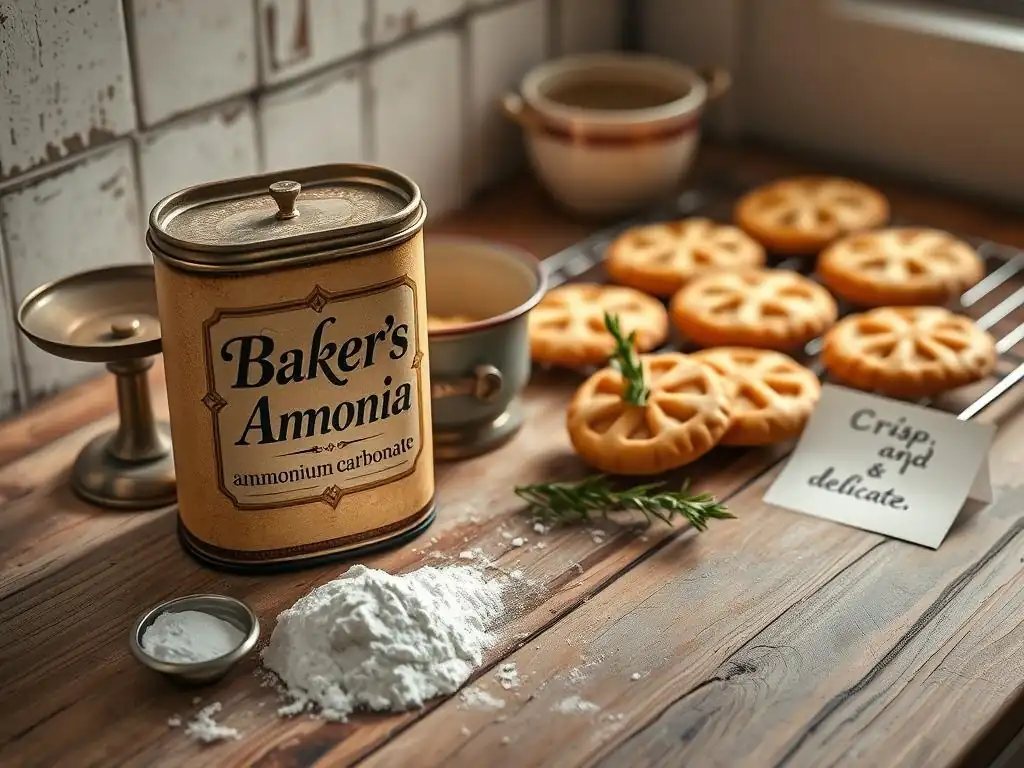
Baker's ammonia, while perhaps not as ubiquitous as baking soda, is readily available if you know where to look. The most convenient way for many home bakers is to purchase it online. Major online retailers specializing in baking supplies or general e-commerce platforms often carry it, sometimes listed under "ammonium carbonate," "baker's ammonia," or its traditional name, "hartshorn."
You can also often find baker's ammonia in specialty baking stores or stores that cater to European or ethnic groceries, as it is a staple ingredient in many traditional European cookie recipes. Calling ahead to these stores can save you a trip. While you might occasionally find it in larger supermarkets with extensive baking aisles, it's less common than baking powder or soda. Look for packaging that indicates "food grade" or "baker's grade" ammonium carbonate to ensure it is suitable for consumption.
Baker's Ammonia: Cost and Value for Home Baking
The cost of baker's ammonia is typically slightly higher per ounce compared to common leaveners like baking soda or baking powder. However, it is usually sold in smaller quantities, such as 1-pound or 4-ounce packages, which are sufficient for many batches of Baker’s ammonia crisp cookies since only small amounts are needed per recipe. A 4-ounce package might cost anywhere from $5 to $15, depending on the brand and retailer.
Considering that a single teaspoon is often enough for a batch of cookies using 2-3 cups of flour, a small package can last for quite some time, making it a relatively economical ingredient for specific recipes. Its value lies not in being a cheap alternative, but in its unique function – enabling the creation of cookies with a crispness simply unattainable with other leavening agents. For bakers serious about replicating authentic traditional Baker’s ammonia crisp cookies, the cost is well worth the unique textural result.
Lebkuchen, traditional German gingerbread-like cookies, are another classic example of a baked good that sometimes utilizes baker's ammonia for leavening, particularly in thinner, crisper versions. While many modern Lebkuchen recipes rely solely on baking soda and baking powder, older or more traditional recipes for certain types, especially those intended to be very flat and crisp, benefit from the inclusion of ammonium carbonate.
In Lebkuchen, Baker's ammonia contributes to a tender but firm interior with a distinct crisp edge, working alongside spices like ginger, cinnamon, cloves, and sometimes pepper. The dough is often dense and spiced, and the baker's ammonia helps provide the necessary lift without leaving a chewy residue. When used in Lebkuchen, the dosage and baking method are tailored to the cookie's specific thickness and desired texture, ensuring the ammonia smell dissipates while achieving the signature Baker’s ammonia crisp cookie quality.
Saltine Cracker Toffee: A Unique Use of Baker's Ammonia
While not a traditional use in the historical sense, some modern adaptations of recipes like Saltine Cracker Toffee (also known as Christmas Crack) have experimented with adding a small amount of baker's ammonia to the melted butter and brown sugar mixture before pouring it over the crackers. The idea here is to create tiny bubbles within the toffee layer as it bakes, resulting in a slightly lighter, crispier, and more brittle toffee texture compared to one made without it.
This application is less about leavening a dough and more about using the decomposition properties of ammonium carbonate to aerate a melted sugar mixture. A very small amount, perhaps 1/4 to 1/2 teaspoon for a standard batch covering a sheet pan of crackers, is typically dissolved and whisked into the hot toffee mixture just before spreading. As the mixture bakes on the crackers, the baker's ammonia reacts, releasing gases that create a subtle honeycomb-like structure within the brittle toffee, enhancing the overall crispness of this simple Baker’s ammonia crisp cookie-like treat.
Frequently Asked Questions
Baker's ammonia, also known as ammonium carbonate, is a leavening agent that releases ammonia and carbon dioxide gas during baking. This creates air pockets and helps achieve a very crisp texture in cookies.
How does Baker's Ammonia differ from baking powder or baking soda?
Unlike baking powder or baking soda, Baker's Ammonia completely evaporates during baking, leaving no aftertaste. It also produces a superior crispness that is hard to achieve with other leaveners.
Is Baker's Ammonia safe to use in baking?
Yes, Baker's Ammonia is safe when used correctly and in the appropriate amounts. Make sure your baking space is well-ventilated to allow the ammonia gas to escape during baking.
Where can I purchase Baker's Ammonia?
Baker's Ammonia can often be found in specialty baking stores or online retailers specializing in baking ingredients. Look for it as ammonium carbonate or baker's ammonia.
While it's difficult to replicate the exact crispness, you can try using a combination of baking powder and baking soda as a substitute. However, be aware that the texture will be different and may not be as crisp.
Final Reflection: The Enduring Magic of Baker's Ammonia
The crisp, delicate texture of cookies made with baker's ammonia isn't just a nostalgic memory; it's a testament to the enduring power of simple, effective ingredients. This unique leavening agent, often overlooked in modern baking, offers a lightness and crispness unmatched by baking powder or baking soda alone. Its subtle contribution to the final product speaks volumes about the importance of understanding the nuances of baking chemistry.
The use of baker's ammonia in cookies represents a fascinating intersection of culinary history and modern baking techniques. Its popularity in the past, and its resurgence today, highlights our ongoing fascination with perfecting classic recipes. The search for that perfect, shatteringly crisp cookie continues to drive innovation and experimentation. The best things in life are simple,
a phrase often used, perfectly encapsulates the elegance of this seemingly simple ingredient and its profound effect on the final product. It reminds us that sometimes, the most effective solutions are the most understated.
Consider, for a moment, the possibilities. You now possess the knowledge to elevate your cookie baking to a new level of crispness and texture. Don't be afraid to experiment, to explore the subtle differences that baker's ammonia brings to the table. Embrace the challenge, and discover the joy of creating cookies that are not only delicious but also a testament to your baking prowess. The journey of mastering this unique ingredient is a rewarding one, and the results are undeniably delicious.
Thanks for taking the time to learn about the secrets of perfectly crisp cookies with natural ammonium carbonate! You've gained valuable insight into a baking technique that truly elevates your creations. Now it's time to put your new knowledge into action.
- Bake a batch of cookies using ammonium carbonate today! Experiment with your favorite recipe and see the difference this ingredient makes in achieving that delightful crispness.
- Share your baking journey! Tell us about your experiences using ammonium carbonate on our social media channels—we’d love to see your results!
- Explore other unique baking ingredients and techniques on BakeWithEase.com to further enhance your baking skills.
Ready to impress yourself and others with flawlessly crisp cookies? What's your favorite cookie recipe that you'll be trying this out on first?