
Giant Cookie Centers Raw, Edges Done? Achieve Even Bake

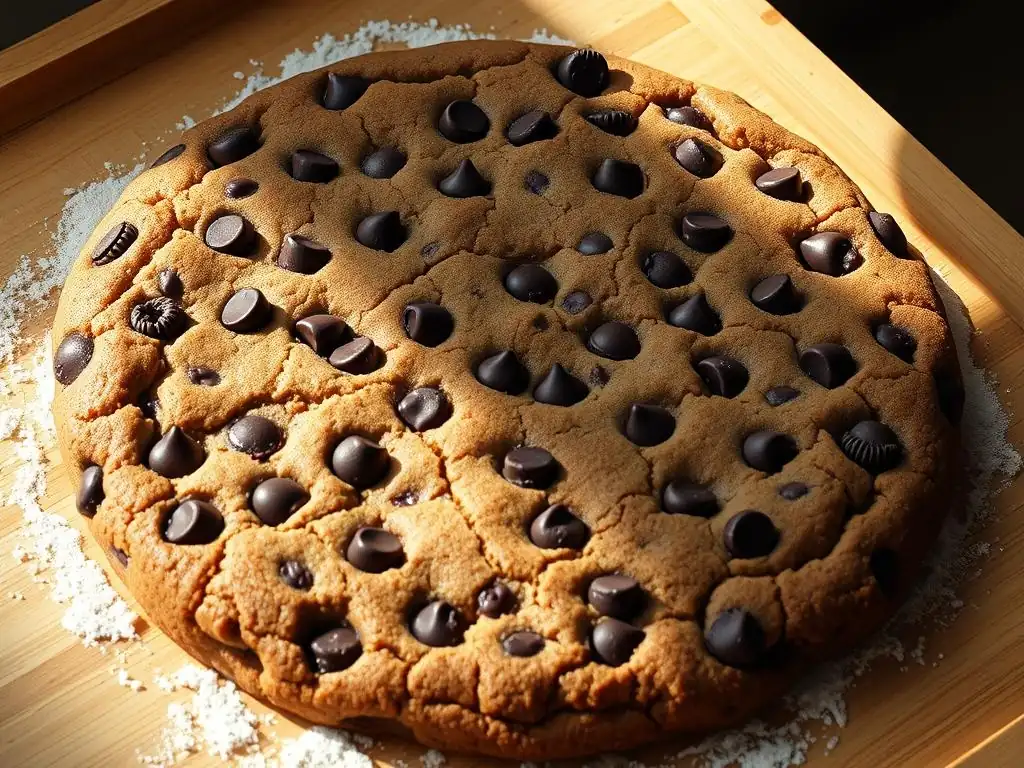
Welcome to BakeWithEase, where we believe everyone can create delicious treats! Ever wrestled with a giant cookie that's perfectly crisp around the edges, but stubbornly raw in the center? You're not alone! Discover the secrets to achieving an even bake and say goodbye to frustrating baking fails. Let's unlock the techniques to perfect that colossal cookie, and explore the science behind beautifully baked goods!
- Achieving Even Baking in Large Cookies
- Understanding Uneven Baking
- Troubleshooting Uneven Baking
- Achieving Even Baking: A Step-by-Step Guide
- Advanced Techniques
- Baking Tips
- Serving and Storage
-
Frequently Asked Questions
- How can I prevent my giant cookie from having a raw center and burnt edges?
- What type of baking sheet is best for evenly baking a giant cookie?
- Should I chill the dough before baking a giant cookie?
- What role does the type of flour play in achieving an even bake?
- Is it important to rotate the cookie during baking?
- Final Reflection: The Quest for the Perfectly Baked Giant Cookie
- Unlock Perfectly Baked Cookies Every Time!
Understanding Uneven Baking
When you're aiming for that perfect, chewy-in-the-middle, crisp-at-the-edges giant cookie, encountering one that's raw in the center while the edges are done can be incredibly frustrating. This common baking challenge stems from fundamental principles of heat distribution and how different parts of a large, dense mass of dough react to oven heat. Understanding these principles is the first step towards mastering the even bake giant cookie.
The primary reason giant cookies often suffer from a raw center is the difference in how heat penetrates and cooks the dough compared to smaller cookies or the thinner edges of the same cookie. Heat travels from the outside in. On a standard cookie sheet in a hot oven, the edges, being thinner and more exposed, heat up and set relatively quickly.
The center, however, is thicker and insulated by the surrounding dough. This means the heat takes much longer to reach the core of the cookie, and by the time it does, the edges may already be overdone or even burnt.
Consider a typical large cookie, perhaps 4-6 inches in diameter and half an inch thick in the center. The edges might be only a quarter-inch thick. Heat energy from the oven and baking sheet is absorbed by the dough's surface. This energy then conducts inwards.
In the thinner edges, this conduction happens rapidly. In the thick center, the heat has a longer path to travel, and the volume of dough to heat is much greater. If you bake until the center appears done based on surface cues, the internal temperature might still be below the point needed to fully cook the starches and proteins, leaving it gooey or raw. Achieving an even bake giant cookie requires compensating for this heat gradient.
Heat Transfer and Dough Consistency in Baking
Heat transfer in baking happens primarily through convection (hot air circulating in the oven) and conduction (heat moving through the baking sheet and the dough itself). For a cookie, conduction from the hot baking sheet is crucial, especially for the bottom and edges. Convection from the oven air heats the top surface. The dough's consistency significantly impacts how effectively heat transfers. Dough with a higher fat content, like butter, tends to melt and spread, potentially creating thinner areas that cook faster. Dough with more flour or less moisture might be denser, slowing heat penetration.
The moisture content within the dough also plays a role. As the cookie bakes, moisture turns to steam, contributing to leavening and texture. This process consumes energy, further influencing how quickly the dough heats up internally.
A very moist center in a large cookie will require more time and energy to reach the necessary temperature for cooking compared to a drier edge. Achieving an even bake giant cookie means controlling these factors – oven temperature, baking time, dough composition, and the geometry of the cookie itself – to ensure that the center cooks at roughly the same rate as the edges.
Troubleshooting Uneven Baking
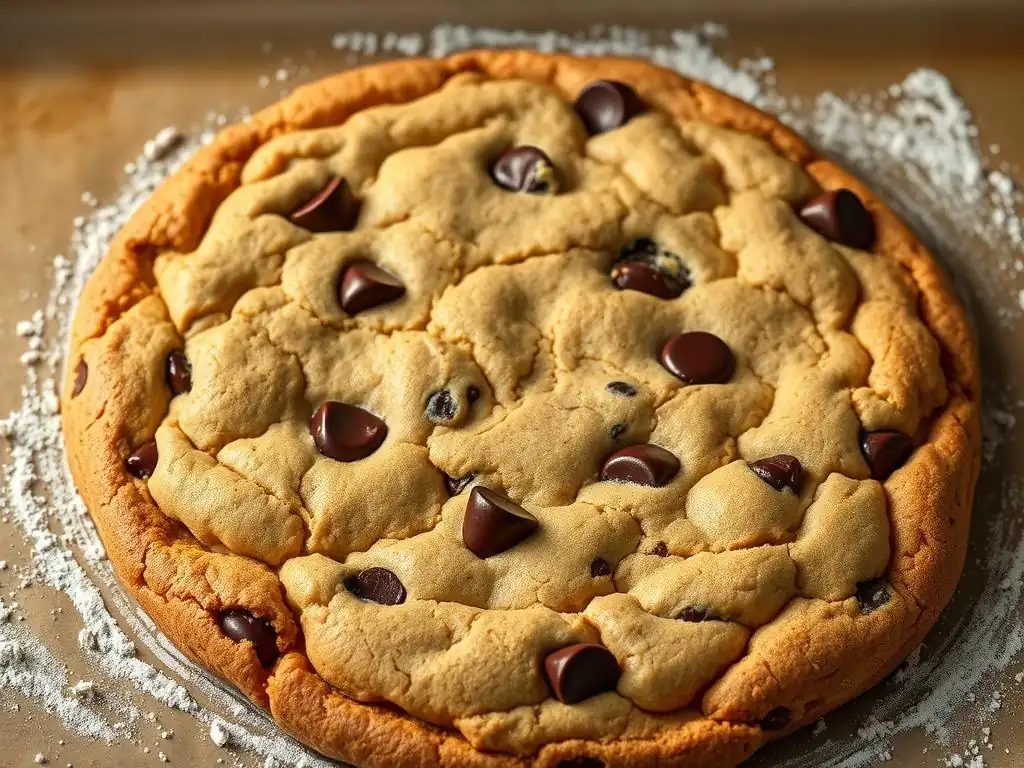
When faced with giant cookies that consistently bake unevenly, it's essential to systematically identify the potential culprits. Several factors, often working in combination, can contribute to this problem. Pinpointing the specific issues in your baking process is key to achieving that coveted even bake giant cookie.
The discrepancy between a done edge and a raw center in large cookies is frequently linked to how heat interacts with the dough mass. Factors like fluctuating oven temperatures, the initial state of your dough, the type of baking sheet you use, and even the way you shape the cookie itself all play significant roles. Addressing these common causes is crucial for consistent results.
Oven Temperature Accuracy
One of the most overlooked factors is the actual temperature inside your oven. Oven thermostats can be notoriously inaccurate, sometimes off by 25°F (approx. 14°C) or even more.
If your oven runs hotter than the setting, the edges of your large cookies will cook and potentially burn much faster than the center has time to catch up. Conversely, if it runs too cool, the cookies might spread excessively before setting, leading to thin, overdone edges and a perpetually underbaked center. Using a reliable oven thermometer is the first step to verifying your oven's true temperature and ensuring it's calibrated correctly for an even bake giant cookie.
Dough Temperature
The temperature of your cookie dough before it goes into the oven is critical. Cold dough, typically achieved through chilling, helps prevent excessive spreading during the initial phase of baking. When cold dough hits the hot baking sheet, the edges warm up and start to cook while the center remains cooler for longer.
This temperature differential, while present, is more manageable than starting with warm, soft dough that spreads immediately. Warm dough spreads out thinner and faster, leading to very thin edges that cook almost instantly, while the center remains thick and raw. Chilling the dough allows the fat to firm up, limiting spread and giving the interior more time to cook before the edges are done, promoting an even bake giant cookie.
Baking Sheet Material
The material and color of your baking sheet significantly impact heat transfer to the bottom of the cookie. Dark, thin metal sheets absorb and transfer heat more quickly and intensely, which can cause the bottom and edges of your large cookies to brown or burn before the center is cooked. Lighter, heavier gauge aluminum sheets transfer heat more evenly and gently, allowing the cookies to bake through without the edges becoming excessively dark. For an even bake giant cookie, a light-colored, heavy-duty baking sheet is generally preferred as it provides a more controlled heat environment from below.
Cookie Size and Thickness Considerations
The inherent challenge with giant cookies is their mass and thickness relative to their surface area. The larger and thicker the cookie, the more pronounced the difference in cooking time between the exterior and the interior becomes. If you're making exceptionally large or thick cookies, simply using a standard cookie recipe and scaling up the size without adjusting baking time, temperature, or technique will almost certainly result in uneven baking.
The dough needs to be shaped consistently, ensuring the center isn't disproportionately thicker than the edges. Techniques like slightly flattening the center or tapering the edges can help, though precision is key for an even bake giant cookie.
Achieving Even Baking: A Step-by-Step Guide
Mastering the even bake giant cookie involves a combination of preparation and technique. By following a few key steps, you can significantly improve your chances of baking large cookies that are perfectly cooked from edge to center. This systematic approach addresses the common pitfalls and sets you up for success.
Step 1: Calibrating Your Oven
Begin by verifying your oven's accuracy. Place a reliable oven thermometer in the center of your oven and preheat it to the desired temperature, say 350°F (175°C). Wait at least 20-30 minutes after the oven indicates it's preheated to allow the temperature to stabilize. Check the thermometer reading. Is it 350°F? Many ovens can be off by 25°F (approx. 14°C) or more. For example, your oven might read 350°F but the thermometer shows 375°F or 325°F. Note the discrepancy.
If your oven is consistently off, you have two options: adjust your baking temperature accordingly (e.g., if it reads 375°F, set it to 325°F for a recipe calling for 350°F) or consider having it professionally calibrated. Knowing your oven's true temperature is fundamental to controlling the baking process and ensuring an even bake giant cookie. This prevents the edges from cooking too fast or too slow relative to the center.
Step 2: Preparing the Dough
The quality and state of your dough are paramount. Start with a well-balanced recipe designed for cookies, paying attention to the fat-to-flour ratio and leavening agents. Once mixed, the preparation steps before scooping are critical for achieving an even bake giant cookie.
Chilling the Dough
Chilling cookie dough is not just about flavor development; it's a crucial step for controlling spread and promoting even baking, especially for large cookies. After mixing, cover the dough and refrigerate it for at least 30 minutes, or preferably several hours, or even overnight. Chilling solidifies the fats (butter, shortening), which means the cookies will spread less rapidly when they hit the hot oven. This slower spread gives the heat more time to penetrate the thicker center before the edges become too thin and overbaked. For giant cookies, a longer chill time, perhaps 2-4 hours, can be particularly beneficial.
Accurate Ingredient Measurement
Precision in ingredient measurement is essential for consistent dough consistency. Using too much flour, for instance, can result in a drier, denser dough that inhibits proper heat transfer. Too little flour or too much fat can lead to excessive spreading, creating very thin edges that cook too quickly.
Weighing your ingredients, especially flour, using a kitchen scale (e.g., 1 cup of all-purpose flour is typically around 120-130 grams) is far more accurate than using volume measures (cups), which can vary depending on how the ingredient is scooped and leveled. Consistent dough composition is key to a predictable and even bake giant cookie.
Step 3: Selecting the Right Baking Sheet
The surface your cookie bakes on has a direct impact on how heat is transferred to the bottom. Choosing the correct baking sheet material and using appropriate liners can make a significant difference in achieving an even bake giant cookie.
Baking Sheet Color
As mentioned earlier, the color of your baking sheet matters. Dark-colored baking sheets absorb more radiant heat and can cause the bottoms and edges of cookies to brown or burn quickly. Light-colored, reflective aluminum baking sheets, on the other hand, reflect radiant heat and transfer heat more gently via conduction. For giant cookies that need more time to cook through without overbaking the edges, a light-colored, heavy-gauge aluminum baking sheet is the ideal choice. This helps ensure the bottom cooks at a more even pace with the top and center.
Parchment Paper or Silicone Mats
Always use parchment paper or a silicone baking mat when baking large cookies. Placing the dough directly on a hot metal sheet, even a light-colored one, can cause the bottom to cook too quickly. Parchment paper and silicone mats provide a buffer, diffusing the heat from the baking sheet and promoting more even heat transfer to the base of the cookie. This helps prevent the bottom from burning before the center is cooked, contributing significantly to an even bake giant cookie. They also make cleanup much easier!
Step 4: Mastering the Baking Process
Even with accurate oven temperatures, well-prepared dough, and the right baking sheet, the actual baking process requires attention and sometimes adjustments to achieve an even bake giant cookie.
Baking Time and Temperature Adjustments
Standard cookie recipes often call for temperatures around 350°F to 375°F (175°C to 190°C) for 8-12 minutes. For large cookies, you often need to adjust both time and temperature. A common strategy for achieving an even bake giant cookie is to lower the oven temperature slightly, perhaps to 325°F or 340°F (160°C or 170°C), and increase the baking time. Baking at a lower temperature for a longer duration allows the heat more time to penetrate the thick center before the edges become overly dark or crisp. This gentle, slower bake helps ensure the entire cookie cooks through evenly.
The Rotate and Bake Method
Ovens often have hot spots, and even with careful temperature control, the heat distribution might not be perfectly uniform. A simple but effective technique is to rotate your baking sheet halfway through the baking time. If you're baking at 340°F for 18-22 minutes, rotate the sheet 180 degrees after 9-11 minutes. This ensures that all sides of the cookies receive equal exposure to the oven's heat, compensating for any temperature variations within the oven cavity. Rotating helps promote an even bake giant cookie, preventing one side from browning significantly faster than the other.
Visual Cues for Doneness
Judging when a large cookie is done can be tricky, as the edges will look finished long before the center is cooked. Rely less on the edges and more on the appearance of the center. For most cookies, you're looking for the edges to be set and lightly golden, while the center still looks slightly soft or even a bit underbaked when in the oven.
The cookie will continue to cook from residual heat on the hot baking sheet after it's removed from the oven. A tell-tale sign for an even bake giant cookie is a slightly puffed center that appears mostly set but not collapsed or overly wet. If the center still looks very wet or shiny, it likely needs more time.
Advanced Techniques
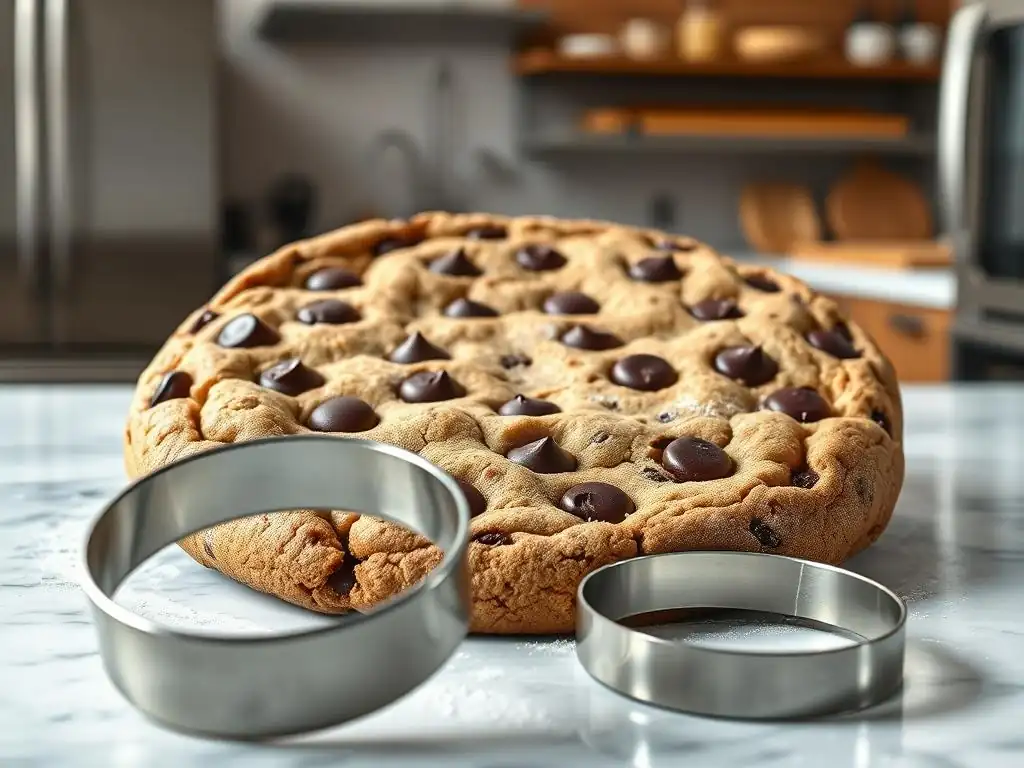
Beyond the fundamental steps, several advanced techniques can further improve your success rate in achieving a perfectly even bake giant cookie, particularly for very large or thick varieties. These methods focus on better heat management and distribution.
Using a Baking Stone or Pizza Stone
A preheated baking stone or pizza stone placed in your oven can provide a consistent, high-heat surface that helps regulate the oven temperature and provides steady radiant heat. Place the stone on the middle rack and preheat it with the oven for at least 30-60 minutes. Then, slide your baking sheet with the giant cookies directly onto the hot stone.
The stone helps absorb and distribute heat more evenly, reducing temperature fluctuations and providing a strong, consistent heat source from below. This can help the bottom and center of the cookie cook through more effectively without burning the edges, contributing to a superior even bake giant cookie.
The Double Pan Method
If you find that the bottoms of your giant cookies are consistently getting too dark before the centers are done, try the double pan method. Place your baking sheet with the cookies on top of another identical or slightly larger empty baking sheet. This creates an insulating layer of air between the bottom of the cookie sheet and the direct heat source (either the oven rack or a baking stone).
This insulation slows down the rate of heat transfer to the bottom of the cookies, giving the center more time to cook through. The double pan method is a simple yet effective way to prevent scorched bottoms and encourage an even bake giant cookie.
Recipe Adjustments
Sometimes, the issue lies within the recipe itself. For giant cookies, recipes with a slightly higher ratio of flour to fat, or those using a mix of butter and shortening (shortening has a higher melting point than butter), might perform better by reducing excessive spread. Adding a small amount of cornstarch can also help create a tender interior while providing structure that resists collapse.
Consider recipes specifically formulated for large cookies, which often account for the different baking dynamics. Experimenting with minor adjustments to your favorite recipe can help you achieve the perfect even bake giant cookie texture and doneness.
Baking Tips
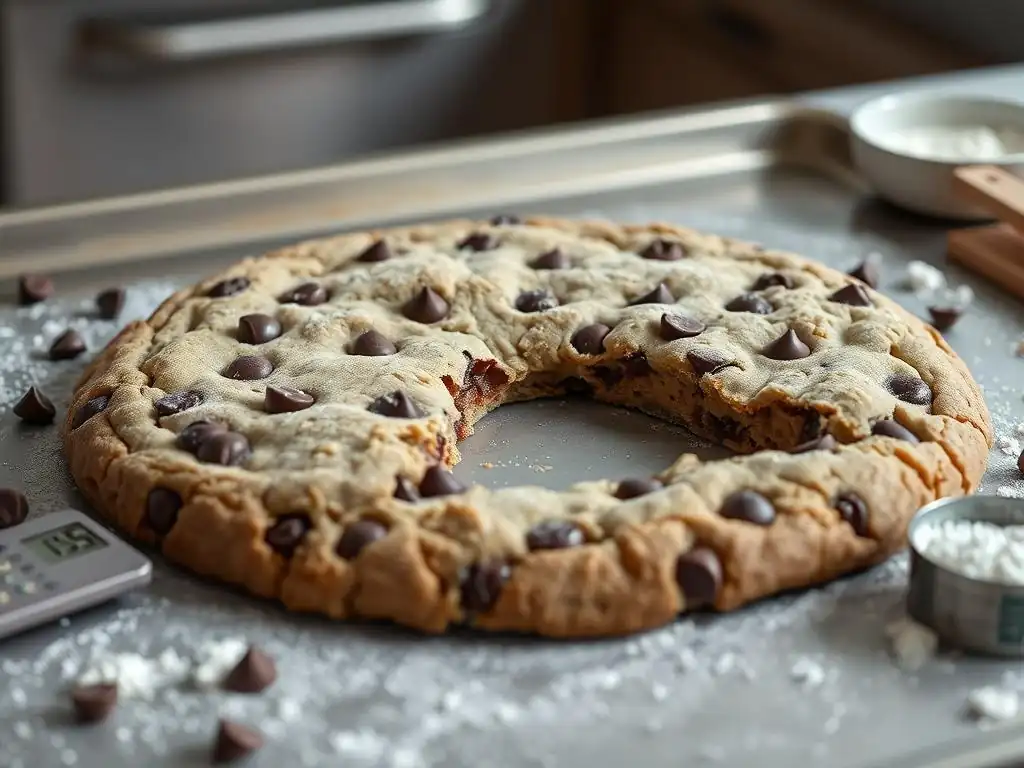
Achieving an even bake giant cookie consistently involves adopting good practices throughout the entire process. From preventing problems before they start to knowing how to save a batch, these tips cover the practical aspects of baking large cookies.
Preventative Measures
The best way to avoid unevenly baked giant cookies is to take preventative steps. Always start with a properly calibrated oven and use a light-colored, heavy-duty baking sheet. Ensure your dough is adequately chilled – this is perhaps one of the most critical steps for controlling spread and promoting evenness. Scoop or shape cookies into consistent sizes and thicknesses; uniformity helps them bake at the same rate. Leave ample space between cookies on the baking sheet (at least 3-4 inches for giant cookies) to allow hot air to circulate freely around each one, aiding an even bake giant cookie.
Rescue Techniques
If you pull your giant cookies from the oven and notice the edges are perfectly golden but the centers still look soft and underbaked, don't despair immediately. You might be able to salvage them. If they are only slightly underdone, leaving them on the hot baking sheet for an extra 5-10 minutes after removing them from the oven will allow the residual heat to continue cooking the center.
For more significantly underbaked cookies, you can carefully transfer them back onto the baking sheet and return them to the oven for a few extra minutes, keeping a close eye on them. Sometimes lowering the temperature to 300°F (150°C) for this final bake helps finish the center without burning the edges.
Achieving Optimal Texture
The goal of an even bake giant cookie isn't just about avoiding a raw center; it's also about achieving the desired texture – often a slightly crisp edge giving way to a soft, chewy interior. Uneven baking compromises this texture. When the edges are overbaked, they become hard and brittle.
When the center is underbaked, it can be gooey or doughy instead of chewy. By implementing the techniques discussed, such as chilling dough, using the right baking sheet, adjusting temperature and time, and rotating the pan, you control the heat distribution to cook the cookie uniformly. This balanced cooking process is what allows the cookie to develop the perfect textural gradient from edge to center.
Serving and Storage
Once you've successfully achieved an even bake giant cookie, letting it cool properly is the final step before enjoying your masterpiece. Allow giant cookies to cool on the baking sheet for 5-10 minutes before carefully transferring them to a wire rack to cool completely. This initial cooling period on the hot sheet allows the residual heat to finish setting the center. Properly baked and cooled giant cookies can be stored in an airtight container at room temperature for several days, maintaining their delightful texture. Enjoy the satisfaction of a perfectly cooked, evenly baked giant cookie!
Frequently Asked Questions
Achieving an even bake requires careful attention to oven temperature and baking time. Lowering the oven temperature slightly and baking for a longer duration allows the center to cook through without burning the edges. Consider using an oven thermometer to ensure accuracy.
A light-colored baking sheet is preferable. Dark baking sheets absorb more heat, potentially leading to burnt edges before the center is cooked. Using parchment paper also helps distribute the heat more evenly.
Yes, chilling the dough is highly recommended. It slows down the spreading of the cookie during baking, preventing thin, overcooked edges and allowing the center to bake more evenly.
What role does the type of flour play in achieving an even bake?
Using the correct type of flour is important. All-purpose flour typically works well. Too much gluten can lead to a tough cookie, while too little might cause it to spread too thin.
Yes, rotating the cookie halfway through baking helps ensure even heat distribution. This is especially important if your oven has hot spots, as it will prevent one side from cooking faster than the other.
The pursuit of the evenly baked giant cookie is more than just a baking challenge; it's a microcosm of striving for perfection in any endeavor. The seemingly simple act of baking a large cookie reveals complexities in heat distribution, ingredient ratios, and even the subtle nuances of oven temperament. Mastering this seemingly simple task requires patience, attention to detail, and a willingness to experiment – qualities valuable far beyond the kitchen.
The journey to achieving that perfectly golden-brown, uniformly cooked giant cookie mirrors our own personal journeys towards achieving our goals. The frustration of a burnt edge or a raw center resonates with the setbacks we face in life. Yet, each failed attempt, each adjustment to the recipe, brings us closer to understanding the process and ultimately, to success. The only way to do great work is to love what you do.
- Steve Jobs. This applies not only to baking but to all aspects of life; the passion and dedication invested in perfecting a giant cookie can be translated into any pursuit we undertake.
Now, consider your own "giant cookie" – that challenging project, ambitious goal, or even a personal relationship that requires careful attention and nurturing to achieve its full potential. What adjustments do you need to make to your "recipe"? What ingredients are you overlooking? Take the lessons learned from baking the perfect giant cookie – patience, precision, and a willingness to learn from mistakes – and apply them to your own life. The result, like a perfectly baked giant cookie, will be incredibly rewarding.
Thanks for joining us on this baking journey! We hope you gained valuable insights into achieving evenly baked cookies, from crispy edges to gooey centers. Ready to put your new skills to the test?
- Bake a batch of your favorite cookies today, paying close attention to the temperature and baking time adjustments we discussed. Don't forget to rotate your baking sheet halfway through!
- Share your baking triumphs (or even your learning experiences!) with us on social media using #BakeWithEasePerfectCookies. We love seeing your creations!
- Experiment with different cookie recipes and techniques—let’s see what delicious surprises you discover!
What’s your favorite tip for achieving perfectly baked cookies? Let's discuss in the comments below!