
Your Cheat Sheet to Easy Vegan Baking Substitutions


Welcome to BakeWithEase, your secret ingredient to baking bliss! Ever wondered how to create delectable treats without any animal products? Unlocking the secrets to delicious vegan baking is easier than you think. This guide dives into vegan baking ingredient substitutions, providing you with a cheat sheet to transform your favorite recipes into plant-based masterpieces. Intrigued? Let's explore how simple swaps can revolutionize your baking game!
- Vegan Baking Substitutions: A Comprehensive Guide
- Understanding Vegan Baking
- Egg Replacements in Vegan Baking
- Dairy Replacements in Vegan Baking
- Sweetener Replacements in Vegan Baking
- Gluten-Free Vegan Baking
- Troubleshooting Vegan Baking Issues
- Advanced Vegan Baking Techniques
- Vegan Baking Substitution Chart
- Conclusion: Mastering Vegan Baking Substitutions
- Frequently Asked Questions
- Final Reflection: The Sweet Revolution of Vegan Baking
- Unlock Your Vegan Baking Potential!
Vegan Baking Substitutions: A Comprehensive Guide
Welcome to the wonderful world of vegan baking! Whether you're new to plant-based cooking or looking to refine your skills, mastering vegan baking ingredient substitutions is key to creating delicious, compassionate treats. It's less about restriction and more about exploring innovative ways to achieve the desired textures and flavors using plant-based ingredients. This guide will walk you through the most common swaps and techniques to make your vegan baking journey smooth and successful.
Understanding Vegan Baking
Vegan baking differs from traditional baking primarily in its exclusion of all animal products, including eggs, dairy milk, butter, and sometimes honey. This requires a different approach to ingredient selection and technique, as animal products often play crucial roles in structure, moisture, leavening, and richness. Learning effective vegan baking ingredient substitutions unlocks a world of possibilities, allowing you to recreate classic recipes and invent new favorites.
The Importance of Ingredient Substitutions in Vegan Baking
Understanding the function of each traditional ingredient is paramount when attempting vegan baking ingredient substitutions. Eggs, for instance, can act as binders, leaveners, or provide moisture and richness depending on how they are used in a recipe. Replacing an egg with applesauce (primarily for moisture/binding) will yield a different result than replacing it with aquafaba (primarily for leavening/structure). A successful vegan baking ingredient substitution isn't just about finding something to replace an ingredient; it's about finding the right something that performs a similar function in the specific context of your recipe.
This careful consideration of function is why a simple one-to-one swap doesn't always work. For example, while a recipe might call for 1/2 cup of dairy milk, simply using 1/2 cup of water might not provide the necessary fat content for richness or protein for structure. Choosing a plant-based milk with a higher fat content, like full-fat coconut milk, or adjusting other ingredients might be necessary. Mastering vegan baking ingredient substitutions involves a bit of culinary detective work and a willingness to experiment, but the results – delicious, animal-free baked goods – are incredibly rewarding.
Key Factors for Successful Vegan Baking
Several factors are critical when making vegan baking ingredient substitutions. Hydration is a major one; different flours and substitutes absorb liquid differently. For instance, gluten-free flours often require more liquid than wheat flour. Leavening is another challenge; replicating the lift provided by eggs can require combining chemical leaveners (baking soda, baking powder) with acidic ingredients or using specific substitutes like aquafaba.
Fat content also plays a significant role in texture and richness. Butter alternatives, such as vegan butter sticks, oils, or even certain purees, must provide the necessary moisture and tender crumb. Using too little fat can result in dry, tough baked goods, while using too much can make them greasy. Balancing these elements – hydration, leavening, and fat – while making vegan baking ingredient substitutions is the foundation of successful plant-based baking.
Egg Replacements in Vegan Baking
Eggs serve multiple purposes in baking: binding ingredients, providing moisture, adding richness, and contributing to leavening. No single vegan substitute can perform all these functions perfectly in every recipe, which is why choosing the right egg replacer is crucial for successful vegan baking ingredient substitutions.
Applesauce: Usage and Applications
Unsweetened applesauce is a popular choice for replacing eggs, particularly in muffins, quick breads, and cakes. Its primary function is to add moisture and act as a binder, helping to hold ingredients together. It typically works best when replacing one or two eggs in a recipe.
When using applesauce as an egg substitute, a common ratio is 1/4 cup of unsweetened applesauce per large egg. Be mindful that using too much applesauce can result in a dense or gummy texture and might impart a slight apple flavor, although this is usually subtle in baked goods. For example, in a standard muffin recipe calling for two eggs, you would use 1/2 cup of applesauce. This swap is particularly effective in recipes where the primary leavening comes from baking powder or soda, rather than the eggs themselves.
Flaxseed Meal: Creating Flax Eggs
Flax eggs are a go-to vegan baking ingredient substitution for binding. Made from ground flaxseed (flaxseed meal) mixed with water, they form a gel-like consistency that mimics the binding properties of an egg white. They are excellent in cookies, muffins, and as a binder in things like veggie burgers.
To make one flax egg, whisk together 1 tablespoon of flaxseed meal with 3 tablespoons of water. Let the mixture sit for about 5-10 minutes until it thickens into a gelatinous consistency. This mixture can typically replace one egg in recipes where binding is the main requirement. While flax eggs provide great binding, they don't offer significant leavening, so they are best suited for recipes that rely on other agents for rise.
Chia Seeds: An Alternative Egg Substitute
Similar to flaxseed meal, chia seeds can be used to create a "chia egg" that serves as an effective binder in vegan baking ingredient substitutions. Chia seeds absorb liquid and form a gel, providing structure and moisture. They are interchangeable with flax eggs in most recipes.
To make one chia egg, combine 1 tablespoon of chia seeds (whole or ground) with 3 tablespoons of water. Stir well and let it sit for 5-10 minutes until a gel forms. Just like flax eggs, chia eggs are primarily binders and are suitable for cookies, brownies, and dense cakes. They can sometimes leave tiny seed speckles in lighter-colored baked goods if whole seeds are used, which might affect the appearance but not the function.
Silken Tofu: Incorporating Tofu into Baking
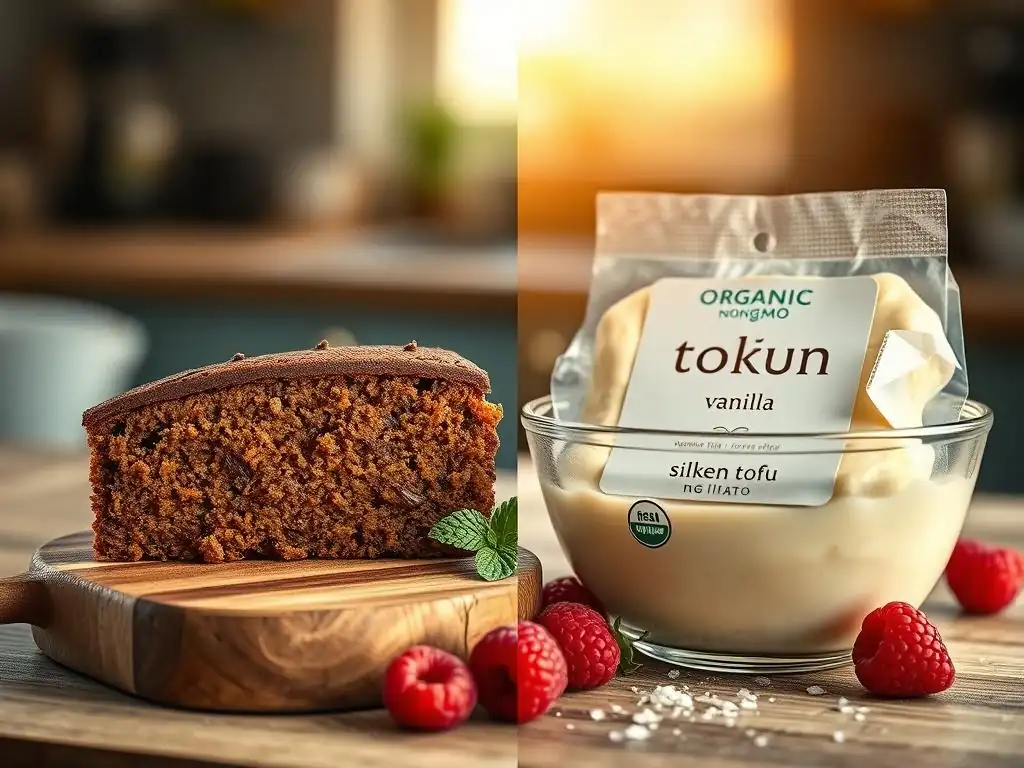
Silken tofu, known for its soft, smooth texture, can be blended into a creamy puree and used as an egg replacement, particularly in richer baked goods like cheesecakes, quiches, and dense cakes or brownies. It provides moisture, richness, and some binding.
When substituting with silken tofu, roughly 1/4 cup of blended silken tofu can replace one egg. It's essential to blend the tofu until completely smooth to avoid lumps in your batter. Tofu works well in recipes where eggs provide structure and a creamy texture. For instance, a vegan chocolate mousse cake might use silken tofu to replace eggs and dairy for richness and structure. However, it doesn't provide leavening, so ensure your recipe has adequate baking powder or soda if rise is needed.
Commercial Egg Replacers: A Detailed Comparison
Several commercial egg replacer products are available, often made from starches (like potato or tapioca starch), leavening agents, and sometimes gums. These products are specifically formulated to mimic the functions of eggs in baking and can be a convenient option for vegan baking ingredient substitutions.
Different brands offer varying results, but they generally provide binding and some leavening. Follow the package instructions carefully, as ratios vary by brand. For example, one popular brand suggests mixing 1.5 teaspoons of its powder with 2 tablespoons of water to replace one egg. These are often versatile and can work in a range of recipes from cookies to cakes, though they typically don't replicate the richness of eggs as well as substitutes like tofu or applesauce might in certain applications.
Dairy Replacements in Vegan Baking
Replacing dairy milk and butter is fundamental to vegan baking ingredient substitutions. Fortunately, the market now offers a wide array of excellent plant-based alternatives that perform beautifully in baked goods, providing moisture, richness, and flavor.
Plant-Based Milk Alternatives: A Comprehensive Guide
Plant-based milks are essential for providing liquid and often some fat in vegan baking. The best choice depends on the desired flavor profile and fat content. Using the right plant-based milk is a key aspect of successful vegan baking ingredient substitutions.
Almond Milk: Flavor and Texture Considerations
Unsweetened almond milk is a common choice due to its neutral flavor and relatively low-calorie profile. It works well as a direct substitute for dairy milk in many recipes, especially those where a strong dairy flavor isn't needed.
However, almond milk typically has a lower fat content than whole dairy milk, which might result in slightly less rich or moist baked goods in some cases. It's a good option for lighter cakes, muffins, and pancakes. For example, in a standard pancake recipe calling for 1 cup of milk, substituting 1 cup of unsweetened almond milk is a straightforward swap that usually works without issue.
Soy Milk: A Versatile Option
Soy milk is often considered one of the most versatile plant-based milks for baking because its protein and fat content are relatively similar to dairy milk. This makes it a reliable one-to-one substitute in many recipes.
Using plain, unsweetened soy milk ensures it doesn't interfere with other flavors. Its composition helps contribute to structure and moisture, making it suitable for a wide range of baked goods, from cookies and cakes to breads and custards. For instance, using soy milk in a vegan sponge cake recipe can help achieve a tender crumb similar to using dairy milk.
Oat Milk: Creaminess and Sweetness
Oat milk has gained popularity for its natural creaminess and slight sweetness. Its higher fat content compared to almond milk makes it an excellent choice for richer baked goods and those where a creamy texture is desired.
Full-fat oat milk can contribute to a moist and tender crumb in cakes and muffins. Its mild, slightly sweet flavor is generally unobtrusive in most recipes. Substituting oat milk for dairy milk at a 1:1 ratio often works well, especially in recipes like scones or biscuits where fat content is important for texture.
Coconut Milk: Richness and Flavor
Coconut milk, particularly full-fat canned coconut milk, is the richest plant-based milk option and is fantastic for adding decadence and moisture to vegan baked goods. It's ideal for recipes like cheesecakes, custards, or rich chocolate cakes.
Using the thick cream from the top of a can of full-fat coconut milk can add significant richness. However, be aware that coconut milk imparts a distinct coconut flavor, which may or may not be desired depending on the recipe. For recipes where you want intense richness without a strong coconut taste, look for "culinary" or "barista" blends that are formulated for neutral flavor, or use a mix of coconut milk and another plant-based milk.
Vegan Butter Alternatives: Oils, Shortening, and Vegan Butter
Replacing butter is another critical step in vegan baking ingredient substitutions. Butter provides fat for moisture, flavor, and helps with leavening in certain techniques (like creaming). Various vegan options can replicate these functions.
Coconut Oil: Texture and Flavor Profile
Refined coconut oil is a solid fat at room temperature (below 76°F or 24°C) and can be used as a direct 1:1 substitute for butter in many recipes. It provides excellent moisture and helps create a tender crumb.
Unrefined coconut oil has a distinct coconut flavor, while refined coconut oil is neutral. Coconut oil works well in recipes where melted butter is called for, like brownies or certain cookies. When creaming is required (mixing solid fat with sugar), ensure the coconut oil is solid but not too hard. It's an effective vegan baking ingredient substitution for achieving richness and a good texture.
Vegan Butter Sticks: A Direct Substitute
Commercial vegan butter sticks are specifically formulated to mimic the texture, flavor, and baking properties of dairy butter. They are often made from a blend of vegetable oils and sometimes contain emulsifiers.
Vegan butter sticks are typically a direct 1:1 substitute for dairy butter in most recipes, including those requiring creaming. This makes them one of the easiest vegan baking ingredient substitutions for butter. Look for sticks specifically labeled for baking, as spreads in tubs may contain more water, which can affect texture.
Applesauce: Applications as a Butter Substitute
While applesauce is primarily used as an egg substitute, it can also replace some of the butter or oil in a recipe to reduce fat and add moisture. However, it cannot replace all of the fat, as fat is essential for texture and richness.
When using applesauce to replace butter, a common approach is to substitute up to half of the required butter or oil with applesauce. For example, if a recipe calls for 1/2 cup of butter, you might use 1/4 cup of applesauce and 1/4 cup of butter alternative or oil. This substitution is best for muffins, quick breads, and cakes where a slightly denser, moister result is acceptable. It's not suitable for recipes where butter provides structure or flakiness, like pie crusts or cookies that need to spread and be crisp.
Sweetener Replacements in Vegan Baking
Ensuring your sweeteners are vegan involves checking labels for animal products like bone char (sometimes used in processing white sugar) or honey. Many natural and refined sugar alternatives are perfectly suitable for vegan baking ingredient substitutions.
Natural Sweeteners: Maple Syrup, Agave, and More
Liquid natural sweeteners like maple syrup, agave nectar, and date syrup are popular vegan choices. They add moisture and distinct flavors, which can complement certain baked goods.
When using liquid sweeteners to replace granulated sugar, you often need to reduce the amount of other liquids in the recipe to maintain the correct consistency. A common starting ratio is to replace 1 cup of granulated sugar with about 3/4 cup of liquid sweetener, while also reducing other liquids by 2-4 tablespoons. Maple syrup works wonderfully in things like pancakes or baked goods with warming spices. Agave nectar is more neutral and can be used in a wider range of recipes. Date syrup adds a rich, caramel-like flavor.
Refined Sugar Alternatives: Vegan Options
Many granulated sugar alternatives are available that are processed without bone char, making them suitable for vegan baking ingredient substitutions. These include organic cane sugar, beet sugar (often vegan), and coconut sugar.
Organic cane sugar is typically processed without bone char and can be used as a direct 1:1 substitute for conventional granulated sugar in most recipes. Coconut sugar has a slightly coarser texture and a caramel-like flavor, performing similarly to brown sugar in terms of moisture retention. Using these alternatives allows for straightforward vegan baking ingredient substitutions without altering the recipe's liquid balance significantly. Always check the label to ensure the sugar is certified vegan or processed without bone char.
Gluten-Free Vegan Baking
Combining vegan baking ingredient substitutions with gluten-free requirements adds another layer of complexity. Gluten provides structure and elasticity, and finding vegan, gluten-free binders is key to preventing baked goods from becoming crumbly or dense.
Gluten-Free Vegan Flour Blends: Tips and Techniques
Using a good quality gluten-free all-purpose flour blend is the starting point for gluten-free vegan baking ingredient substitutions. These blends typically contain a mix of flours (like rice, sorghum, millet) and starches (like tapioca, potato, corn).
It's often recommended to use a blend specifically designed as a 1:1 replacement for wheat flour. However, different blends absorb liquid differently, so you might need to slightly adjust the liquid content. Weighing your flour is crucial for accuracy in gluten-free baking, as scooping can result in too much flour. For example, a cup of gluten-free blend might weigh anywhere from 120g to 140g depending on the composition.
Binding Agents for Gluten-Free Vegan Baking
Since gluten is absent, additional binding agents are often necessary to prevent gluten-free vegan baked goods from falling apart. Common vegan, gluten-free binders include xanthan gum, psyllium husk, and ground chia or flax seeds (as discussed in the egg replacement section).
Xanthan gum is a powerful binder; typically, only 1/2 to 1 teaspoon per cup of gluten-free flour blend is needed for cakes and muffins, and slightly more for breads. Psyllium husk powder is another excellent binder, often used at a ratio of 1-2 teaspoons per cup of flour. These binders work by creating a gel-like structure that mimics some of the properties of gluten, helping to hold the baked good together and prevent crumbling.
Troubleshooting Vegan Baking Issues
Even with the best vegan baking ingredient substitutions, you might encounter challenges. Knowing how to troubleshoot common problems will help you refine your techniques.
Dry Baked Goods: Hydration Solutions
Dryness is a common issue in vegan baking, often resulting from insufficient fat, using substitutes that don't provide enough moisture, or over-baking.
- Consider increasing the amount of fat slightly (e.g., adding an extra tablespoon of vegan butter or oil).
- Ensure you are using a plant-based milk with adequate fat content, like soy milk or full-fat oat or coconut milk.
- If using applesauce or other purees as an egg/fat substitute, check if using a higher-fat substitute (like vegan butter or tofu) might be better for that specific recipe.
- Add a tablespoon or two of extra liquid (plant milk, applesauce, or even water) to the batter if it seems too thick.
- Reduce baking time or temperature slightly.
Dense Cakes: Achieving a Lighter Texture
Dense cakes often result from issues with leavening or over-mixing.
- Check if your leavening agents (baking soda, baking powder) are fresh.
- Ensure you are using enough acidic ingredients (like apple cider vinegar, lemon juice, or buttermilk made with plant milk and vinegar) to activate the baking soda. A common ratio for vegan buttermilk is 1 tablespoon of vinegar or lemon juice per cup of plant milk, left to sit for 5-10 minutes.
- Avoid over-mixing the batter once the wet and dry ingredients are combined; this can develop any potential gluten in the flour (even trace amounts in GF blends) or toughen the batter by overworking binders. Mix just until combined.
- Ensure you are using an appropriate egg substitute that contributes some lift, if needed, or rely heavily on chemical leaveners.
Crumbling is often a sign of insufficient binding or too little fat/moisture, especially in gluten-free vegan cookies.
- Ensure you are using an effective binder like flax eggs, chia eggs, or a commercial egg replacer.
- Check the fat content; cookies need fat to hold together and spread properly. Ensure you are using enough vegan butter or oil.
- If using gluten-free flours, ensure you've added an appropriate binder like xanthan gum or psyllium husk.
- Sometimes, simply letting the cookie dough chill in the refrigerator for 30 minutes to an hour before baking can help the ingredients meld and prevent crumbling.
Advanced Vegan Baking Techniques

Once you're comfortable with basic vegan baking ingredient substitutions, you can explore more advanced techniques using ingredients like aquafaba and xanthan gum to achieve textures previously thought impossible in vegan baking.
Aquafaba: Vegan Meringues and Macarons
Aquafaba, the liquid from a can of chickpeas (or other white legumes), is a remarkable ingredient for vegan baking ingredient substitutions that require whipping. It can be whipped into stiff peaks, much like egg whites, making it perfect for vegan meringues, macarons, and mousses.
To use aquafaba, simply drain the liquid from a can of unsalted chickpeas. About 3 tablespoons of aquafaba can replace one egg white. For meringues, whip the aquafaba using an electric mixer for several minutes until it forms stiff peaks, gradually adding sugar just as you would with egg whites. It's a fantastic example of an unconventional but highly effective vegan baking ingredient substitution.
Xanthan Gum: Improving Texture and Structure
Xanthan gum is a polysaccharide produced by fermentation and is widely used in gluten-free and vegan baking as a stabilizer and thickener. It helps provide structure and prevents ingredients from separating, mimicking some of the functions of gluten or egg proteins.
In gluten-free vegan baking, xanthan gum is crucial for binding and improving texture. As mentioned earlier, typical usage is 1/2 to 1 teaspoon per cup of gluten-free flour blend for cakes and muffins. It helps create a less crumbly texture and improves the overall structure of the baked good. It's a powerful tool in your vegan baking ingredient substitutions arsenal.
Vegan Baking Substitution Chart
Below is a quick reference chart summarizing some common vegan baking ingredient substitutions. Remember that results can vary based on the specific recipe and other ingredients used.
| Ingredient | Substitute | Ratio (Approx.) | Best Uses |
|---|---|---|---|
| 1 Large Egg | 1/4 cup Applesauce (unsweetened) | 1:1 (by volume) | Muffins, quick breads, cakes (for moisture) |
| 1 Large Egg | 1 tbsp Flax Meal + 3 tbsp Water (Flax Egg) | 1:1 (per egg) | Cookies, brownies, binders (not for leavening) |
| 1 Large Egg | 1 tbsp Chia Seeds + 3 tbsp Water (Chia Egg) | 1:1 (per egg) | Cookies, brownies, binders (not for leavening) |
| 1 Large Egg | 1/4 cup Silken Tofu (blended) | 1:1 (by volume) | Rich cakes, quiches, cheesecakes |
| 1 Large Egg White | 3 tbsp Aquafaba (whipped) | 1:1 (by volume) | Meringues, macarons, mousses |
| 1 cup Dairy Milk | 1 cup Plant-Based Milk (Soy, Oat, Almond, etc.) | 1:1 (by volume) | Most recipes (choose based on richness/flavor) |
| 1 cup Butter | 1 cup Vegan Butter Sticks | 1:1 (by volume/weight) | Most recipes, including creaming |
| 1 cup Butter | 1 cup Refined Coconut Oil | 1:1 (by volume/weight, use solid) | Recipes calling for melted butter, some cookies |
| 1 cup Granulated Sugar | 1 cup Organic Cane Sugar or Beet Sugar | 1:1 (by volume/weight) | Most recipes |
| 1 cup Granulated Sugar | 3/4 cup Maple Syrup/Agave Nectar | Approx. 3/4:1 (reduce other liquids slightly) | Recipes where liquid sweetener is suitable |
| 1 cup Wheat Flour | 1 cup Gluten-Free All-Purpose Flour Blend | 1:1 (by volume/weight, add binder if needed) | Gluten-free baking |
Conclusion: Mastering Vegan Baking Substitutions
Embracing vegan baking ingredient substitutions is an exciting journey that opens up a world of delicious possibilities. By understanding the function of each ingredient and choosing the appropriate plant-based alternative, you can create baked goods that are just as satisfying as their traditional counterparts. Don't be afraid to experiment with different vegan baking ingredient substitutions; sometimes, the most delightful discoveries come from trying something new. With patience and practice, you'll become a master of vegan baking ingredient replacements, whipping up compassionate treats for everyone to enjoy. Happy baking!
Frequently Asked Questions
What are the most common vegan baking ingredient substitutions?
The most common substitutions include using applesauce or mashed banana in place of eggs, plant-based milk instead of dairy milk, and coconut oil or vegan butter for traditional butter.
Can I substitute all ingredients in a recipe to make it vegan?
While possible, it's crucial to understand how each ingredient functions. Some substitutions, like replacing gluten-containing flour, can significantly affect the texture and structure of the final product.
What are some good egg substitutes for vegan baking?
Besides applesauce and mashed banana, other excellent egg substitutes include flaxseed meal mixed with water (flax egg), aquafaba (chickpea brine), and commercial egg replacers.
Where can I find vegan butter and plant-based milk?
Most supermarkets now carry a wide variety of vegan butter alternatives and plant-based milks, such as almond, soy, oat, and coconut milk. Check the refrigerated section and the dairy-free aisle.
How does using vegan substitutions affect the taste of baked goods?
The impact on taste depends on the substitution. Some, like using applesauce, can add a subtle sweetness, while others, like using flaxseed meal, may impart a slightly nutty flavor. Choose substitutes carefully based on the recipe's desired flavor profile.
Final Reflection: The Sweet Revolution of Vegan Baking
The accessibility of delicious, ethical baking is no longer a distant dream; it's a reality fueled by simple substitutions. This article has explored a range of readily available ingredients that can seamlessly replace common animal products in your favorite recipes, proving that vegan baking isn't just possible, it's incredibly rewarding. The ease and versatility of these swaps empower anyone to participate in a more compassionate and sustainable culinary world.
The shift towards plant-based diets is more than just a trend; it's a powerful movement reflecting a growing awareness of our impact on the planet and its inhabitants. This journey into the world of vegan baking substitutions has underscored for me the creativity and ingenuity inherent in adapting traditional recipes. The best things in life are unexpected,
and that certainly applies to the delightful discoveries found in experimenting with vegan baking. The sheer variety of flavors and textures achievable with plant-based ingredients is truly inspiring, constantly challenging preconceived notions about what vegan baking can be.
Now, it's your turn to embrace the possibilities. Don't be intimidated by the idea of vegan baking; instead, see it as an exciting adventure. Experiment with the substitutions outlined in this article, adapt them to your own preferences, and most importantly, have fun! Let your creativity flow, and discover the joy of creating delicious, ethical treats that are both satisfying to your taste buds and kind to the planet. The sweet revolution starts in your kitchen.
Unlock Your Vegan Baking Potential!
Thanks for exploring the world of easy vegan baking with us! We hope you've discovered some delicious and simple swaps to make your favorite recipes plant-based. Ready to get baking?
- Try out your favorite recipe with a vegan twist! Pick one recipe you already love and experiment with the substitutions we've outlined. Let your creativity flow!
- Share your vegan baking triumphs (and challenges!) with our community on social media using #BakeWithEaseVegan. Let's inspire each other!
- Consider a new vegan baking challenge: Browse through more of our articles to discover exciting new plant-based recipes.
What's the first vegan recipe you'll be whipping up? Let us know in the comments below!