
Solving the Gummy Texture Problem in GF Baking: Ingredient Fixes

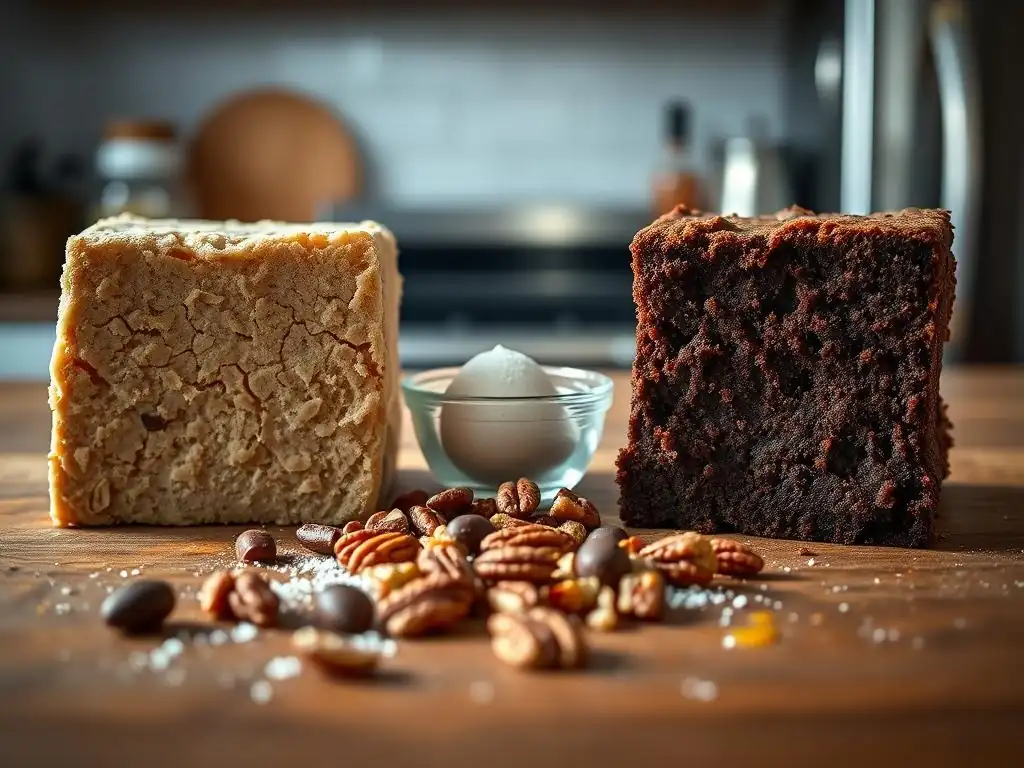
Welcome to BakeWithEase, your haven for all things baking! Ever wrestled with that dreaded gummy texture in your gluten-free creations? You're not alone! In this article, we're diving deep into a Glutenfree gummy baking fix, revealing the ingredient secrets that can transform your baked goods from disappointing to delectable. Curious how to banish that gummy consistency for good? Let's unlock the solution together!
- Solving the Gummy Texture Problem in Gluten-Free Baking: Ingredient Fixes for BakeWithEase
- Understanding the Gummy Texture in Gluten-Free Baked Goods
- Identifying the Culprits: Ingredients That Contribute to Gummy Gluten-Free Bakes
- Gluten-Free Gummy Baking Fix: Ingredient Adjustments for Better Texture
- Specific Gluten-Free Flour Blends and Their Impact on Texture
- Advanced Techniques for Avoiding Gummy Gluten-Free Bakes
- Troubleshooting Common Gluten-Free Baking Problems
- Gluten-Free Gummy Baking Fix: Ingredient Substitution Chart
- Conclusion: Mastering the Art of Gluten-Free Baking with Perfect Texture
-
Frequently Asked Questions
- How does using a gluten-free flour blend contribute to a gummy texture in baked goods?
- What specific ingredients can I add to my gluten-free batter to prevent a gummy texture?
- Does the mixing method affect the gummy texture of gluten-free baked goods?
- How important is using the correct oven temperature when baking gluten-free recipes?
- Can resting the batter before baking help reduce the gummy texture in gluten-free baked goods?
- Final Reflection: Beyond the Gummy: Embracing Gluten-Free Baking's Potential
- Unlock the Secrets to Perfectly Chewy Gluten-Free Baking!
Solving the Gummy Texture Problem in Gluten-Free Baking: Ingredient Fixes for BakeWithEase
Understanding the Gummy Texture in Gluten-Free Baked Goods
Why Gluten-Free Baking Often Results in Gummy Textures
Gluten-free baked goods frequently suffer from a less-than-ideal gummy or dense texture, a common frustration for bakers transitioning from traditional recipes. This undesirable result primarily stems from the absence of gluten, the protein network that provides structure, elasticity, and chewiness in wheat-based baking. Without this natural binder, bakers rely on alternative flours and starches, which behave very differently when hydrated and heated. Many gluten-free flours and starches absorb liquid rapidly and swell significantly, but they lack the structural integrity to hold that moisture in a light, airy matrix.
When these starches gelatinize during baking without sufficient structural support, they can create a sticky, glue-like consistency, especially if proportions or techniques are not carefully managed. Ingredients like tapioca starch, potato starch, and even some rice flours, while useful for providing tenderness and browning, can contribute heavily to gumminess if used in excess or improperly balanced. Mastering the glutenfree gummy baking fix involves understanding these unique properties and adjusting ingredients accordingly to mimic some of gluten's functions.
The Role of Gluten in Traditional Baking vs. Gluten-Free Baking
In traditional wheat baking, gluten proteins (gliadin and glutenin) form an elastic network when mixed with liquid and kneaded. This network traps gases produced by leavening agents (like yeast or baking soda), allowing dough or batter to rise and hold its shape. As the product bakes, the gluten network sets, creating the characteristic open crumb structure and chewy texture found in bread, cakes, and pastries. This protein structure is remarkably robust and forgiving.
Gluten-free baking lacks this built-in protein network. To compensate, bakers must combine various flours and starches, often incorporating binders like xanthan gum or guar gum to provide some semblance of structure and elasticity. These binders help hold the ingredients together and prevent crumbling, but they don't replicate the complex, extensible network of gluten.
Without careful formulation, relying too heavily on starches or gums can lead directly to the dense, gummy texture that many gluten-free bakers struggle with. The challenge is creating a balanced blend that provides structure, tenderness, and moisture retention without becoming sticky or heavy – the ultimate glutenfree gummy baking fix lies in this balance.
Identifying the Culprits: Ingredients That Contribute to Gummy Gluten-Free Bakes
Starch Overload: The Primary Cause of Gummy Gluten-Free Products
Excessive use of high-starch flours and pure starches is perhaps the most significant contributor to gumminess in gluten-free baking. Ingredients such as tapioca starch, potato starch, cornstarch, and even white rice flour are high in amylopectin, a type of starch that gelatinizes readily and can become quite sticky when heated with moisture. While necessary for providing tenderness and browning, an over-reliance on these components in a flour blend can result in a structure that collapses or becomes dense and glue-like upon cooling.
Consider a typical gluten-free all-purpose blend that might contain 30-40% pure starch. If a recipe calls for additional starch (like using tapioca starch to thicken a fruit filling in a pie) or if the base blend is already heavily weighted towards starches, the final product's structure can become overwhelmed by gelatinized starch molecules. This leads to poor crumb development and the dreaded gummy texture. Identifying and adjusting the starch content is a critical step in achieving a glutenfree gummy baking fix.
Gum Overuse: When Too Much Binding Leads to a Chewy Disaster
While necessary to provide structure in the absence of gluten, using too much xanthan gum or guar gum can ironically contribute to a tough, chewy, or gummy texture. These hydrocolloids are powerful binders; they absorb water and create a gel-like consistency that helps hold gluten-free ingredients together and prevents baked goods from crumbling. However, their binding power is intense, and even slight excesses can over-stabilize the dough or batter.
Think of it like adding too much glue – it becomes rigid and unpleasant rather than flexible and supportive. Too much gum can create a texture that feels rubbery or slimy, particularly in delicate items like cakes or muffins. Finding the precise amount of gum needed for a specific recipe and flour blend is crucial. Often, less is more, and starting with a conservative amount, perhaps 1/4 teaspoon per cup of flour blend for lighter bakes, is a good strategy. Overdoing the gum is a common misstep when seeking a glutenfree gummy baking fix.
Lack of Protein: Insufficient Structure for a Light and Airy Bake
Gluten-free baking relies heavily on starches and gums, but often lacks sufficient protein content compared to wheat flour (which is typically 10-14% protein). Protein provides structure and stability, helping to create an open crumb and preventing collapse. Without enough protein to support the rise and set properly during baking, the structure can be weak, leading to a dense base where starches and moisture congregate, resulting in gumminess.
Incorporating gluten-free flours that have higher protein content can significantly improve texture. Flours like almond flour (around 21% protein), sorghum flour (around 11% protein), and buckwheat flour (around 13% protein) can add stability and a more robust structure than blends dominated by rice flour and starches. Even flours like oat flour (around 13% protein) or quinoa flour (around 14% protein) contribute valuable protein. Balancing high-starch flours with protein-rich options is a key component of a successful glutenfree gummy baking fix.
Moisture Imbalance: Too Much or Too Little Liquid
Both excessive and insufficient moisture can lead to gummy textures in gluten-free baking, though for different reasons. Too much liquid can prevent the structure from setting properly during baking. The starches become overly hydrated, and without enough protein or binder to hold everything in place, the interior remains wet and gluey even after the outside appears done. This is particularly true in cakes and muffins where a delicate balance is needed.
Conversely, too little liquid can also cause issues. Gluten-free flours often absorb moisture differently and sometimes more slowly than wheat flour. If there isn't enough hydration initially, the starches may not gelatinize evenly, or the batter/dough might be too stiff, resulting in a dense, heavy texture that can feel gummy. Furthermore, under-hydrated starches might absorb moisture unevenly during baking, leading to pockets of raw or gummy areas. Achieving the correct hydration level is a nuanced but vital part of the glutenfree gummy baking fix.
Gluten-Free Gummy Baking Fix: Ingredient Adjustments for Better Texture
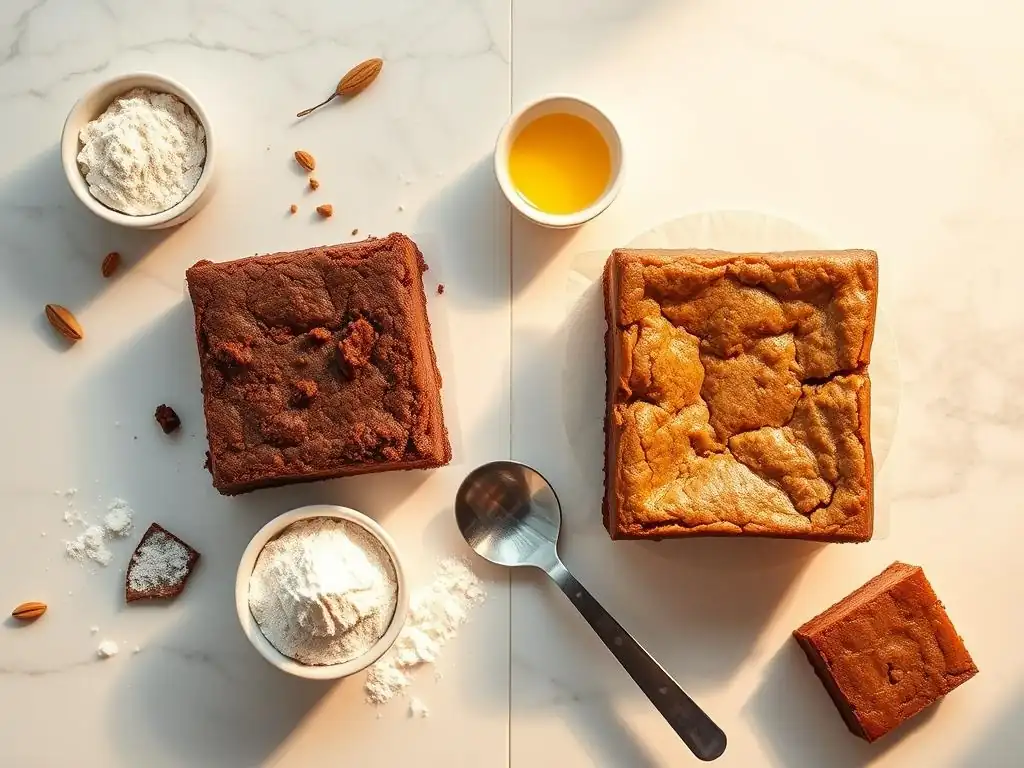
Reducing Starch for a Lighter Crumb
Strategies for Balancing Starch in Gluten-Free Recipes
A fundamental strategy for tackling gumminess is to reduce the overall proportion of pure starches (tapioca, potato, cornstarch) in your gluten-free flour blend or recipe. Instead of relying heavily on these for tenderness, incorporate more whole-grain gluten-free flours or higher-protein flours. For instance, if your current blend is 40% starch, try reducing it to 25-30% and replacing the difference with flours like sorghum, millet, brown rice, or oat flour. This shifts the balance away from pure starch towards ingredients that offer more fiber and protein, contributing to a more open and less sticky crumb structure.
Another approach is to substitute some of the starch called for in a specific recipe (like in a pie filling or sauce) with a different thickener or reduce the overall amount. Sometimes recipes err on the side of too much starch for thickening. Experimenting with a slightly lower amount or using alternatives like psyllium husk (which adds structure and moisture retention without being overly starchy) can provide a glutenfree gummy baking fix in targeted applications.
Recommended Starch Ratios for Different Baked Goods
While there's no single perfect ratio, general guidelines for starch content in gluten-free flour blends can help prevent gumminess. For lighter baked goods like cakes, muffins, and cookies, a blend containing approximately 20-30% pure starch (tapioca, potato, corn) is often successful. The remaining 70-80% should be a mix of whole-grain and white rice flours or other non-starchy gluten-free flours.
For more structured items like bread or pizza crust, the starch content might be slightly lower, perhaps 15-25%, as these recipes often rely more on protein and fiber from whole grains and binders like psyllium husk for structure. Using a blend that is too starchy for bread will almost certainly result in a dense, gummy loaf. Adjusting your flour blend based on the type of baked good is a critical glutenfree gummy baking fix.
Optimizing Gum Usage: Finding the Right Balance for Gluten-Free Structure
Choosing the Right Gum: Xanthan Gum vs. Guar Gum
The two most common gums used in gluten-free baking are xanthan gum and guar gum, and choosing the right one can impact texture. Xanthan gum is derived from the fermentation of sugar by a bacteria (Xanthomonas campestris). It's generally considered more robust and effective at creating structure, especially in yeast-leavened bread, where it helps trap gases. It can, however, sometimes impart a slightly slimy texture if overused.
Guar gum comes from the guar bean and is often preferred for baked goods that don't require as much elasticity, like cakes, muffins, and cookies. Some bakers find it results in a softer crumb. A general rule of thumb is that you might need slightly more guar gum than xanthan gum to achieve a similar binding effect. Experimentation is key, as some recipes work better with one over the other, and finding the right gum and amount is essential for a successful glutenfree gummy baking fix.
Measuring Gum Accurately for Consistent Results
Precise measurement of gums is non-negotiable when seeking a glutenfree gummy baking fix. Even a slight excess can ruin the texture. Gums are powerful, and small amounts go a long way. It's highly recommended to use measuring spoons specifically designed for small quantities (like 1/8 or 1/4 teaspoon) and to level them carefully. Do not scoop directly from the bag; spoon the gum into the measuring spoon and level with a straight edge.
Typical usage guidelines are just starting points and vary by recipe and flour blend:
- Cakes/Muffins: 1/4 to 1/2 teaspoon per cup of gluten-free flour blend.
- Cookies: 1/4 teaspoon per cup of gluten-free flour blend.
- Quick Breads: 1/2 to 3/4 teaspoon per cup of gluten-free flour blend.
- Yeast Breads: 1 to 1.5 teaspoons per cup of gluten-free flour blend.
Starting with the lower end of the range and adjusting in subsequent bakes is a smart approach.
Boosting Protein Content: Adding Strength to Your Gluten-Free Recipes
Incorporating Protein-Rich Gluten-Free Flours
Increasing the protein content in your gluten-free flour blend provides much-needed structure and stability, helping to combat gumminess. Instead of relying solely on rice flours and starches, incorporate flours milled from legumes, nuts, or pseudo-grains. For example, swapping out some white rice flour or tapioca starch for almond flour (about 21% protein), sorghum flour (about 11% protein), or even a small amount of chickpea flour (about 20% protein) can strengthen the crumb structure.
Using a blend that includes flours like oat flour (around 13% protein), buckwheat flour (around 13% protein), or quinoa flour (around 14% protein) also contributes protein and fiber, leading to a less fragile and less gummy result. Aim for a blend where a significant portion (perhaps 30-40%) comes from these higher-protein, higher-fiber sources, alongside balanced amounts of white rice flour and starches. This strategic flour selection is a powerful glutenfree gummy baking fix.
Using Protein Isolates to Improve Texture
For bakers looking for a more targeted approach to increasing protein and improving structure, using protein isolates can be an option, though less common for home bakers. Ingredients like whey protein isolate or pea protein isolate, while not traditional baking ingredients, can be added in small amounts to gluten-free flour blends. These pure protein powders can absorb moisture and contribute to the structural network, mimicking some of gluten's functions more directly than whole flours.
However, using protein isolates requires careful experimentation, as they can also lead to dryness or toughness if too much is added. They are potent and should be used in very small percentages relative to the total flour weight. For most home bakers, focusing on incorporating protein-rich whole flours is a more accessible and often equally effective glutenfree gummy baking fix.
Managing Moisture Levels: Achieving the Perfect Hydration in Gluten-Free Baking
Adjusting Liquid Ratios Based on Flour Blend
Gluten-free flours vary dramatically in their absorbency. Brown rice flour absorbs more liquid than white rice flour, and sorghum can absorb differently than millet. Starches absorb rapidly but don't hold moisture in the same way as fiber or protein. This means that a standard liquid ratio that works for one gluten-free blend might be completely wrong for another, leading to either a dry or a gummy outcome.
When using a new blend or creating your own, it's often necessary to adjust the liquid called for in a recipe. If your blend is high in absorbent whole grains, you might need slightly more liquid. If it's high in fast-absorbing starches, you might need less or need to ensure ingredients are well-distributed quickly.
Pay attention to the batter or dough consistency – it should resemble the texture described in a standard recipe for that type of baked good (e.g., thick but pourable for cake, slightly sticky but manageable for bread dough). Correct hydration is fundamental to any glutenfree gummy baking fix.
The Importance of Rest Time for Proper Hydration
Allowing gluten-free batters and doughs to rest before baking is a simple yet often overlooked step that can significantly improve texture and prevent gumminess. Unlike wheat dough, which develops gluten structure during mixing and kneading, gluten-free mixtures need time for the various flours and starches to fully absorb the liquid. This hydration process helps the binders (like gums or psyllium husk) work effectively and ensures that starches gelatinize more evenly during baking.
For cookies and muffins, a rest of 15-30 minutes at room temperature after mixing can make a difference. For bread dough, a longer rest or even an overnight chill in the refrigerator allows for maximum hydration and flavor development. This resting period gives the ingredients time to mingle and hydrate uniformly, leading to a better structure and less likelihood of a gummy interior. Don't skip this crucial step in your glutenfree gummy baking fix routine.
Specific Gluten-Free Flour Blends and Their Impact on Texture
Exploring Pre-Made Gluten-Free Flour Blends
Pre-made gluten-free flour blends offer convenience, but their composition varies widely, directly impacting the final texture of your baked goods. Some blends are heavily reliant on rice flour and starches (like tapioca and potato), which can easily lead to gumminess if not used correctly or in recipes specifically formulated for that blend. For example, a blend listed as "cup-for-cup" might work well in simple cookie recipes but result in a dense, gummy loaf when used for yeast bread due to its starch-heavy composition.
Other blends incorporate a wider variety of flours, including sorghum, millet, or almond flour, alongside rice flours and starches. These multi-grain blends often provide a better balance of protein, fiber, and starch, resulting in a more desirable texture with less risk of gumminess. When choosing a blend, look at the ingredient list. If the first few ingredients are white rice flour, tapioca starch, and potato starch, be prepared to potentially adjust recipes or techniques to mitigate gumminess. Experimenting with different blends is part of finding your ideal glutenfree gummy baking fix.
Creating Your Own Custom Gluten-Free Flour Blends for Optimal Results
For ultimate control over texture and to specifically address gumminess, creating your own custom gluten-free flour blend is highly recommended. This allows you to tailor the ratios of different flours and starches to suit specific types of baking and your personal preferences. A common approach is to build a blend with a base of rice flours (brown and/or white, perhaps 40-50% of the total), incorporate nutrient-dense, higher-protein flours (like sorghum, millet, oat, or buckwheat, 20-30%), and add starches for tenderness (tapioca, potato, or cornstarch, 20-30%).
For example, a good all-purpose blend might be 40% brown rice flour, 20% white rice flour, 20% sorghum flour, and 20% tapioca starch. You can then add your binder (gum or psyllium) per recipe. By controlling these ratios, you can reduce the overall starch load compared to many commercial blends, increase beneficial protein and fiber, and significantly improve the texture of your baked goods, effectively implementing a personalized glutenfree gummy baking fix.
Advanced Techniques for Avoiding Gummy Gluten-Free Bakes
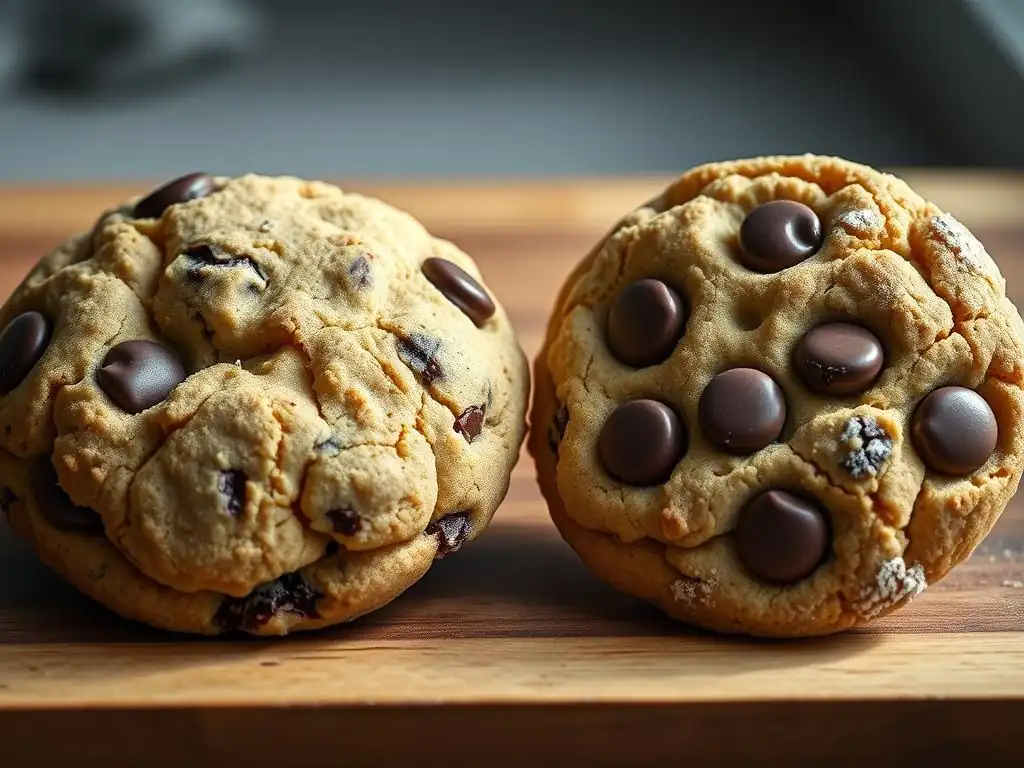
The Importance of Proper Mixing Techniques
Mixing technique plays a crucial role in gluten-free baking and can influence texture. Unlike wheat dough, where vigorous kneading develops gluten, gluten-free batters and doughs require a gentler touch. Overmixing gluten-free ingredients, especially those containing starches and gums, can quickly lead to a gummy or tough result. The goal is to combine the ingredients just until they are uniformly moistened, avoiding excessive agitation that can overwork the binders and starches.
For cakes, muffins, and quick breads, use the muffin method: combine dry ingredients, combine wet ingredients, then add wet to dry and mix only until just combined – a few lumps are acceptable. For cookies, mix until a cohesive dough forms. For yeast bread, mix until the dough comes together and is relatively smooth, but don't expect the elastic windowpane effect of wheat dough. Gentle mixing helps prevent the starches from becoming overly sticky and promotes a lighter crumb, contributing to a successful glutenfree gummy baking fix.
Baking Temperature and Time Adjustments for Gluten-Free Recipes
Baking temperature and time are critical variables that need careful management in gluten-free baking to prevent gumminess. Gluten-free items often benefit from slightly lower oven temperatures or longer baking times compared to their wheat counterparts. This allows the interior to cook through and the starches to set properly without the exterior burning or becoming overly dry. Baking at too high a temperature can cause the outside to set too quickly while the inside remains undercooked and gummy.
For cakes and muffins, reducing the temperature by 25°F (approx. 15°C) and baking for a few extra minutes can ensure the center is fully baked. Bread often benefits from a slightly longer bake at a moderate temperature. Always test for doneness using a skewer or toothpick inserted into the center – it should come out clean or with only a few moist crumbs, not wet batter. Proper baking ensures the starches fully gelatinize and then set, preventing a raw or gummy interior – a key aspect of the glutenfree gummy baking fix.
Cooling and Storage Tips to Prevent Gummy Textures
How you cool and store gluten-free baked goods can also impact their final texture and prevent the development of gumminess. Allowing items to cool properly on a wire rack is essential. This allows steam to escape, preventing condensation from building up and making the bottom or interior soggy and gummy. Cakes should often cool in the pan for a short period (10-15 minutes) before being inverted onto a rack to cool completely.
Storing baked goods correctly is also important. Storing warm items in an airtight container will trap steam and moisture, potentially turning a perfectly baked item gummy. Ensure items are completely cool before storing. For longer storage, many gluten-free baked goods freeze well. Proper cooling and storage help maintain the desired texture achieved through careful ingredient selection and baking, completing the glutenfree gummy baking fix process.
Troubleshooting Common Gluten-Free Baking Problems
My Cake is Gummy in the Center - What Went Wrong?
A gummy center in a gluten-free cake is a classic sign of underbaking or improper hydration/structure. The most common culprits are often a combination of too much liquid relative to the flour blend's absorbency, a starch-heavy flour blend without enough protein or binder to support the structure, or baking at too high a temperature causing the outside to set too fast while the inside remains raw. It could also be a lack of sufficient rest time for the batter before baking, preventing even hydration.
To fix this, first, ensure your oven temperature is accurate (an oven thermometer is helpful). Try reducing the oven temperature slightly (e.g., from 350°F to 325°F or 175°C to 160°C) and extending the baking time. Check for doneness with a skewer in the center. Review your flour blend – is it very high in starches?
Consider swapping some starch for a higher-protein flour like sorghum or oat. Also, ensure you are measuring liquids accurately and that your batter isn't excessively wet. Allowing the batter to rest for 15-20 minutes before baking can also help distribute moisture evenly, providing a crucial glutenfree gummy baking fix.
Cookies that turn out excessively chewy or gummy often point to an imbalance in ingredients, particularly too much starch or too much gum. While some chewiness is desirable in certain cookie types, an unpleasant gummy texture indicates issues with the flour blend or binder levels. Overmixing the dough can also contribute by overworking the binders.
To address this, first, examine the amount of gum in the recipe. For cookies, typically only 1/4 teaspoon of xanthan or guar gum per cup of flour blend is needed. If the recipe calls for significantly more, try reducing it. Next, look at your flour blend. Is it primarily white rice flour and tapioca starch?
Incorporating more brown rice flour, sorghum, or even almond flour can provide a better texture. Ensure you are not overmixing the dough; mix just until the ingredients are combined. Baking time is also key – slightly underbaked cookies tend to be gooier. Ensure they are baked until the edges are set and the centers look cooked, even if still slightly soft. These adjustments are vital for a glutenfree gummy baking fix in cookies.
My Bread is Dense and Gummy - What Adjustments Should I Make?
Dense and gummy gluten-free bread is a common challenge, often resulting from a combination of factors related to structure and hydration. Key issues include a flour blend that is too low in protein and fiber and too high in starch, insufficient binder (like xanthan gum or psyllium husk) to support the rise, incorrect hydration levels (either too much or too little liquid), or inadequate proofing/baking time.
To achieve a better crumb, start by optimizing your flour blend for bread. Use a blend with a good proportion of whole grains (brown rice, sorghum, millet) and less pure starch (aim for under 25%). Ensure you are using enough binder; yeast bread often requires 1 to 1.5 teaspoons of xanthan gum or 1-2 tablespoons of psyllium husk (whole or ground, follow recipe type) per cup of flour blend. Check your liquid amount – is the dough the right consistency (often like a thick batter or very soft dough)?
Ensure adequate proofing time for the dough to rise sufficiently, and bake thoroughly until the internal temperature reaches around 200-210°F (approx. 93-99°C) for a standard loaf. These adjustments are fundamental to a glutenfree gummy baking fix for bread.
Gluten-Free Gummy Baking Fix: Ingredient Substitution Chart
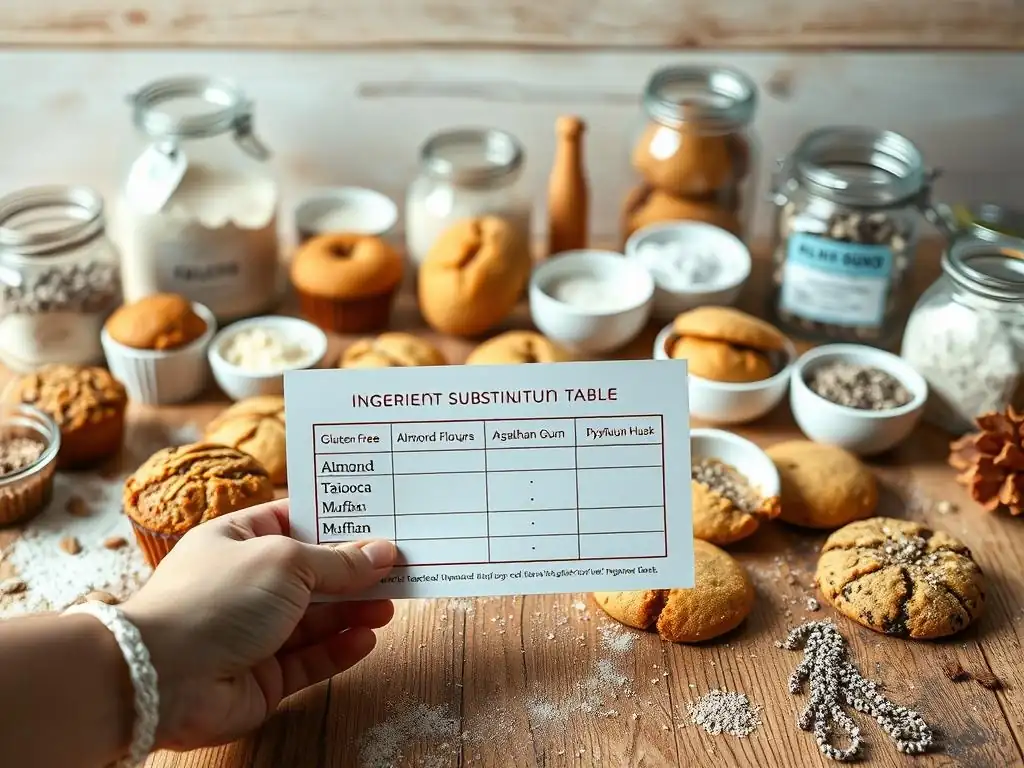
Quick Reference Guide for Common Gluten-Free Ingredient Substitutions to Avoid Gummy Textures
Here is a quick reference for ingredient swaps that can help mitigate gumminess in gluten-free baking:
| Ingredient Contributing to Gumminess | Potential Gluten-Free Gummy Baking Fix Substitute | Notes |
|---|---|---|
| Excess Tapioca Starch | Sorghum Flour, Brown Rice Flour, Oat Flour | Adds protein/fiber, reduces pure starch load. Adjust liquid slightly. |
| Excess Potato Starch | Millet Flour, Buckwheat Flour, White Rice Flour | Balances starch with other textures. Use in moderation. |
| Excess Cornstarch | Sweet Rice Flour (in moderation), Arrowroot (less) | Cornstarch is a potent thickener; reduce or swap for less potent. |
| Starch-Heavy GF Blend | Custom Blend w/ more whole grains/protein | Create a blend with ~20-30% starch max for cakes, ~15-25% for bread. |
| Too Much Xanthan Gum | Reduce Amount, Try Guar Gum (for cakes/cookies) | Use precise measurements (1/4-1 tsp per cup flour, depending on bake). |
| Too Much Guar Gum | Reduce Amount, Try Xanthan Gum (for bread) | Similar to xanthan, precise measurement is key. |
| Lack of Protein/Fiber | Almond Flour, Sorghum Flour, Oat Flour, Psyllium Husk | Adds structure and moisture retention. Substitute some starch/rice. |
| Excess Liquid | Reduce Liquid Slightly, Add More Flour Blend (if needed) | Adjust based on batter/dough consistency. Rest time helps hydration. |
| Insufficient Liquid | Add More Liquid (milk, water, egg) | Add gradually until correct consistency is reached. |
- Note: Substitutions may require slight adjustments to liquid or other ingredients. Experimentation is key to finding the perfect glutenfree gummy baking fix for your specific recipe and flour blend.
Conclusion: Mastering the Art of Gluten-Free Baking with Perfect Texture
Overcoming the challenge of gummy texture is one of the most significant hurdles in gluten-free baking, but it is absolutely achievable with the right knowledge and techniques. The key lies in understanding the unique properties of gluten-free ingredients, particularly the balance between starches, proteins, fibers, and binders like gums. It's rarely one single issue but rather a combination of factors related to flour blend composition, hydration, mixing, and baking.
By focusing on reducing overall starch load, optimizing the use of binders, incorporating protein-rich flours, managing moisture carefully, and employing proper mixing and baking techniques, you can dramatically improve the texture of your gluten-free baked goods. Creating your own custom flour blends allows for maximum control and is often the most effective path to consistent, non-gummy results.
Don't be discouraged by initial failures; gluten-free baking is a science that requires practice and adjustment. With persistence and attention to these ingredient fixes and techniques, you can confidently achieve a perfect, light, and airy crumb, truly mastering the ultimate glutenfree gummy baking fix on your baking journey.
Frequently Asked Questions
How does using a gluten-free flour blend contribute to a gummy texture in baked goods?
Gluten provides structure and elasticity. Gluten-free flour blends often lack this, resulting in a gummy texture due to the higher starch content absorbing too much moisture.
What specific ingredients can I add to my gluten-free batter to prevent a gummy texture?
Adding ingredients like tapioca starch, potato starch, or xanthan gum can help improve the structure and reduce the gummy texture. They work by mimicking some of the properties of gluten.
Does the mixing method affect the gummy texture of gluten-free baked goods?
Yes, overmixing gluten-free batter can lead to a gummy texture. Mix until just combined to avoid developing excessive starch gelatinization, which contributes to unwanted stickiness.
How important is using the correct oven temperature when baking gluten-free recipes?
Using the correct oven temperature is crucial for gluten-free baking. Too low a temperature can result in undercooked centers that contribute to a gummy texture.
Can resting the batter before baking help reduce the gummy texture in gluten-free baked goods?
Yes, allowing the batter to rest for a short period can help the starches hydrate more evenly, potentially reducing the gummy texture and improving the overall crumb.
Final Reflection: Beyond the Gummy: Embracing Gluten-Free Baking's Potential
The struggle with gummy gluten-free baked goods is far from a niche problem; it's a significant barrier preventing many from fully embracing a gluten-free lifestyle. This persistent texture issue isn't just about taste; it's about accessibility, inclusivity, and the joy of baking for everyone. Solving this challenge unlocks a world of culinary possibilities for those with dietary restrictions and those simply seeking delicious, healthy alternatives.
The journey to mastering gluten-free baking has been a personal one, filled with both frustration and triumph. I've learned that the "gummy" texture is often a symptom of underlying issues, not an inherent flaw in gluten-free flours. Understanding the science behind these issues – the role of starches, the importance of proper hydration, and the need for careful ingredient selection – has been transformative. The greatest discovery of all time is that a person can change his future by merely changing his attitude.
– Oprah Winfrey. This quote resonates deeply, as changing my approach to gluten-free baking, from frustration to experimentation, yielded incredible results.
Now, it's your turn. Don't let the fear of a gummy texture hold you back from exploring the vast and delicious world of gluten-free baking. Experiment with the techniques and ingredient substitutions outlined in this article, and remember that each failed attempt brings you closer to mastering the art. Embrace the challenge, celebrate your successes, and most importantly, enjoy the process of creating delicious, satisfying gluten-free treats that you and your loved ones can savor.
Unlock the Secrets to Perfectly Chewy Gluten-Free Baking!
Thanks for diving into the world of gluten-free baking with us! We hope you’ve gained valuable insights into tackling that pesky gummy texture. Ready to put your new knowledge to the test?
- Master the art of gluten-free flour blends: Experiment with different ratios of your favorite gluten-free flours to find the perfect combination for your next recipe. This is where the real magic happens!
- Share your baking triumphs (and challenges!): Join our BakeWithEase community on social media and let’s inspire each other. Use #BakeWithEaseGF.
- Challenge yourself with a new recipe: Why not try that gluten-free bread or cake you’ve been eyeing? You've got this!
What's your favorite gluten-free flour blend, and what are you baking next?