Using a Couche: Proofing Baguettes for Perfect Shape
✨ Discover the secrets of baguette shaping with couche to achieve flawless, artisanal loaves. BakeWithEase.com guides you through expert techniques for perfect…
Read article
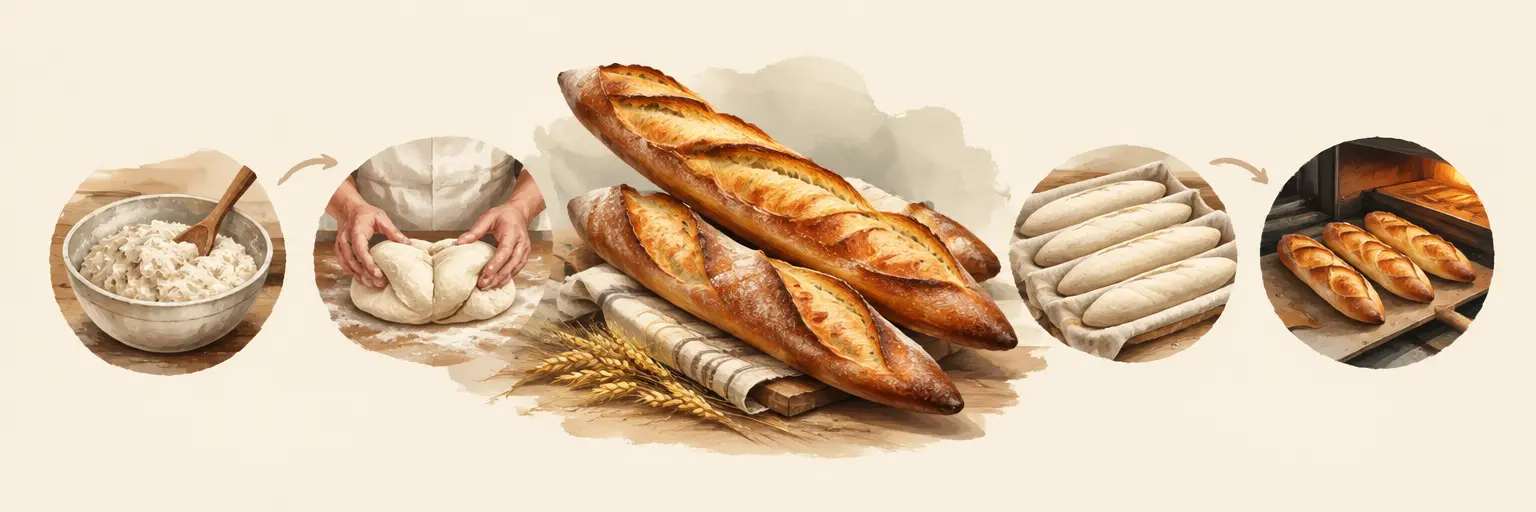
Master the timeless craft of artisan baguette techniques with BakeWithEase, where crisp, golden crusts and airy, holey crumbs become your signature. 🥖 From perfecting the slow fermentation that builds deep flavor to mastering the slashing angle that creates that iconic ear, we break down every step—kneading, shaping, and steam-injected baking—into simple, foolproof guidance. Whether you’re a beginner chasing your first crackly loaf or a seasoned baker refining your poolish ratios and laminated folds, these proven methods will elevate your home oven results. Unlock the secrets of professional texture and taste with easy-to-find ingredients and visual cues. Start your baguette journey today and turn ordinary flour and water into extraordinary, bakery-worthy bread. 🥐✨
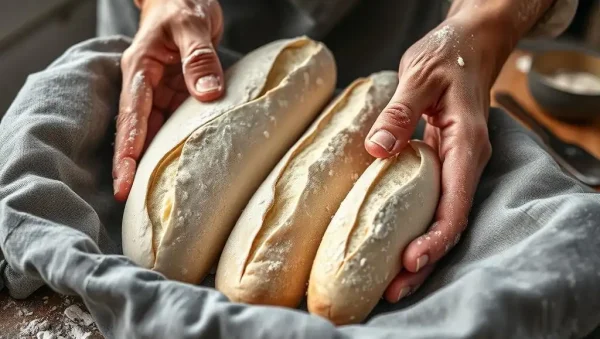
✨ Discover the secrets of baguette shaping with couche to achieve flawless, artisanal loaves. BakeWithEase.com guides you through expert techniques for perfect…
Read article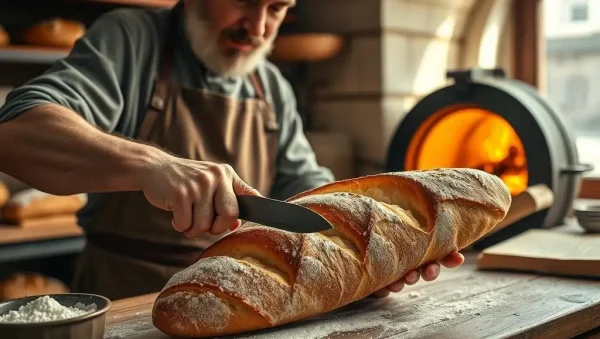
🍞 Discover the rich history and essential French baguette baking techniques that transform simple ingredients into iconic, crusty loaves. BakeWithEase.com offers accessible…
Read article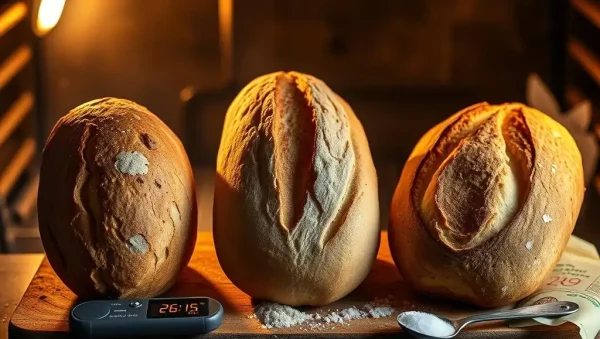
🌟 Discover essential Baguette oven spring troubleshooting tips to perfect your crust and texture. Learn simple techniques to address common issues and…
Read article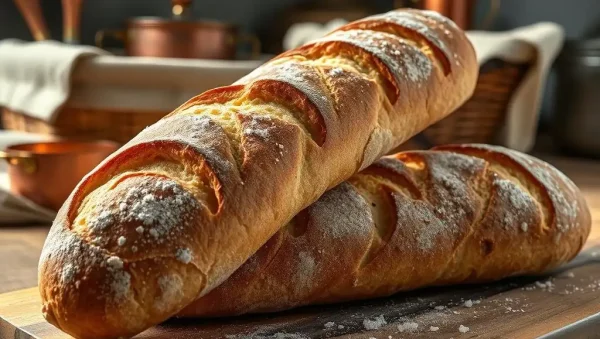
🍞 Discover expert tips for perfecting your sourdough baguette recipe with BakeWithEase.com. Whether you're a beginner or a seasoned baker, learn simple…
Read article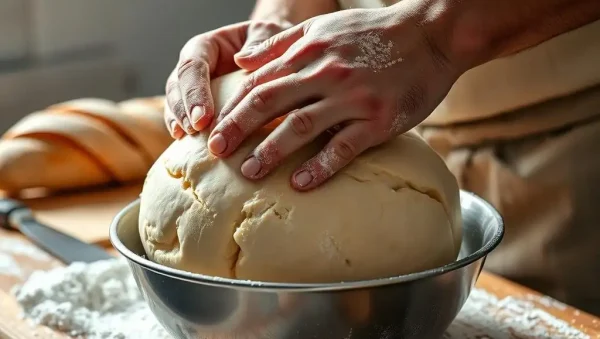
😊 Discover the essential Baguette dough degassing techniques to perfect your loaf. Learn when and how to degas for optimal texture and…
Read article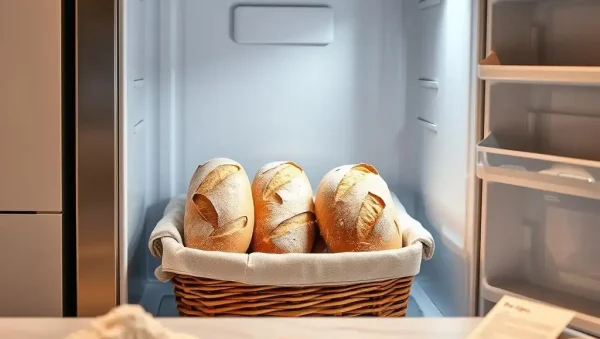
😊 Discover the fridge baguette proofing method, a game-changer for bakers seeking perfect crust and flavor. Learn how this technique enhances your…
Read article
🥖 Discover the secrets to perfect baguettes with our comprehensive guide on baguette hydration levels recipe. Learn how adjusting water content can…
Read article
🥖 Discover the calming art of hand mixing baguette dough, a therapeutic process that connects you to traditional baking. At BakeWithEase.com, we…
Read article
🔍 Discover the common dense baguette crumb reasons and learn how to troubleshoot this issue. BakeWithEase.com provides simple tips and techniques to…
Read article
😊 Discover the easiest way to transfer baguettes to a hot stone with our expert tips. Our guide simplifies the process, ensuring…
Read article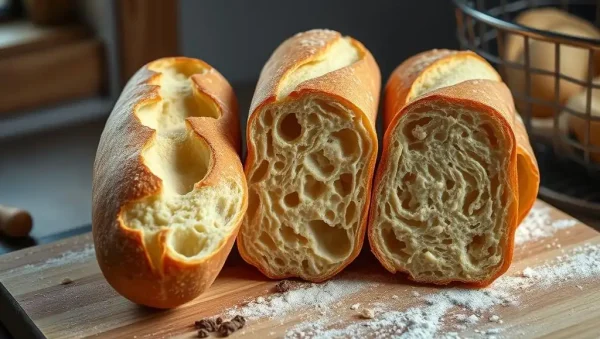
😊 Discover essential underproof baguette troubleshooting tips to identify signs of underproofing and learn simple solutions for perfect, airy loaves. BakeWithEase.com is…
Read article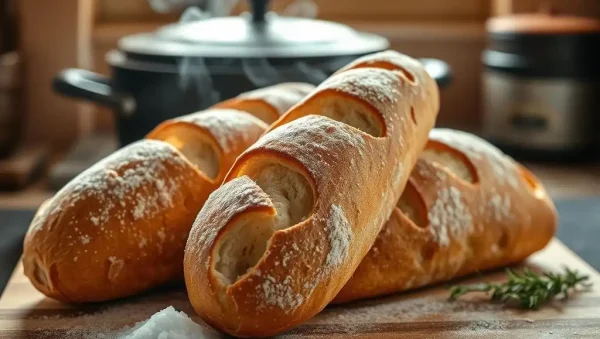
🍞 Discover the magic of the NoKnead Baguette: an artisan-quality bread achievable with minimal effort. BakeWithEase.com guides you through simple steps and…
Read articleWelcome to Artisan Baguette Techniques, the heart of BakeWithEase.com’s Bread Baking category. Here, we transform the humble baguette from a simple loaf into a canvas for true craftsmanship. Whether you’re chasing that crackling crust, an open, honeycombed crumb, or the unmistakable aroma of a Parisian boulangerie, this subcategory is your dedicated guide. We break down professional methods—from autolyse and fermentation to scoring and steam—into clear, actionable steps. Perfect your home oven, elevate your baking confidence, and discover why the artisan approach changes everything. Let’s bake with intention, precision, and a little bit of flour-dusted magic.
Fermentation is where artisan baguettes earn their complex taste and texture. Unlike quick breads, a true baguette relies on slow, controlled fermentation to develop acids and esters that deliver a tangy, nutty depth. You’ll learn to manage bulk fermentation and cold retarding in the fridge, which not only boosts flavor but also improves dough handling. Our guides explain how temperature, hydration, and time interact, helping you read your dough’s cues like a pro. Expect clear timetables, visual indicators for doneness, and troubleshooting tips for over- or under-fermented batches. The result? A baguette that tastes as artisanal as it looks.
We also dive into preferments like poolish and levain, showing you how each impacts crust color and crumb openness. You’ll master the art of extending fermentation without over-proofing, using simple observation skills—like poking the dough and checking its jiggle. By the end, you won’t just follow a recipe; you’ll understand why each step exists, giving you the freedom to adapt to any kitchen environment. Say goodbye to dense, flavorless loaves and hello to baguettes that sing with every bite.
Shaping is where most home bakers lose the battle for airy crumb. This section breaks down the classic tri-fold and roll technique, emphasizing gentle handling to preserve gas bubbles. You’ll learn how to pre-shape into logs, rest, and then perform the final shape with just the right amount of tension—enough to create a tight skin but not so much that tears occur. Visual guides and slow-motion breakdowns highlight hand placement and pressure points. For a twist, we introduce lamination (a fold often used in sourdough) to build extensibility and strength, ideal for high-hydration baguettes (75% and above). Expect step-by-step instructions with timing cues for each fold.
Shaping isn’t just about looks; it dictates oven spring and crumb structure. A poorly shaped baguette may burst or flatten, while a well-tensioned one will puff uniformly. We provide practice routines and “do’s and don’ts” for beginners, plus advanced tips for achieving that classic elongated silhouette with slightly pointed ends. You’ll also learn how to use a couche (linen cloth) to support shapes during final proofing, preventing spreading and maintaining that beautiful seam. With our guidance, your baguettes will look bakery-worthy before they even hit the oven.
No artisan baguette is complete without a glossy, crackly crust, and that’s achieved through steam and scoring. The steam keeps the surface moist during the first minutes of baking, allowing maximum oven spring and a paper-thin, shattering crust. Here, we explain how to generate steam at home—using a preheated cast-iron pan with water, a spray bottle, or a Dutch oven alternative—and the exact timing for venting. You’ll also master the art of scoring: the angled slashes (usually 3–5) that control where the dough expands. Our tutorials cover blade angle (30–45 degrees), depth (about a quarter-inch), and rhythm so your cuts open into beautiful “ears.”
We go beyond basics, teaching you how to adjust scoring based on dough hydration and proof level. Over-proofed dough requires shallower scores; under-proofed needs deeper, more decisive cuts. We also share tips for using a lame (scoring blade) versus a sharp knife, and how to handle sticky dough without deflating it. Expect before-and-after photos of scored loaves, plus troubleshooting for common issues like tearing or burst sides. With these techniques, you’ll achieve that artisanal island-shaped bloom and a crust that crackles audibly as it cools—a true sensory reward.
The choice of flour and hydration ratio dramatically affects your baguette’s crumb and crust. Discover why bread flour with high protein (11–13%) is ideal for structure, and how adding a small percentage of whole wheat or rye adds flavor without compromising strength. We break down hydration levels—from 65% for beginners to 80% for experts—and how to adjust water temperature for consistent dough. Central to this is the autolyse method: mixing flour and water before adding salt and yeast, which improves gluten development and extensibility. Learn the best autolyse timing (30–60 minutes) and how it reduces kneading time while enhancing flavor.
We also explore the role of diastatic malt and enzymes, which promote browning and a deeper crust color. You’ll understand how altitude or humidity alters hydration needs, plus how to use a digital scale for precision. Our hydration cheat sheet helps you visualize dough consistency—from shaggy to silky—so you can confidently adjust on the fly. By mastering this foundation, you’ll be able to predict how your dough will behave during shaping and baking, allowing for a more intuitive, artisan-level approach. It’s not just about following percentages; it’s about feeling the dough.
Proofing is where patience pays off, and timing is everything. This section covers final proofing at room temperature versus cold retarding, and how to judge readiness without a timer. You’ll learn the “poke test” (dough springs back slowly) and the “jiggle test” (dough wobbles like jelly) to avoid under- or over-proofing. For busy home bakers, we emphasize retarded proofing in the fridge—up to 24 hours—which improves flavor and allows you to bake on your schedule. Expect charts comparing proof times at different temperatures, plus tips for transferring delicate, proofed dough to your baking stone without deflating it.
We also discuss the crucial bench rest after pre-shaping, which relaxes gluten and makes final shaping easier. Miscalculate proofing, and you might get a dense baguette (under-proofed) or a flat, porous mess (over-proofed). Our visual guide shows what perfect proof looks like—slight puffy, with small bubbles visible under the surface. You’ll also learn how to use a sample piece of dough as a “peek” to track fermentation progress. By mastering timing, you’ll gain the confidence to bake artisan baguettes on weeknights or weekends, with a schedule that fits your life. No more guesswork—just reliable, repeatable results.
For artisan baguettes, an autolyse of 30 to 60 minutes is optimal. Mix only the flour and water, then cover and rest. Stay below 60 minutes to avoid over-oxidation, which can weaken gluten. During this time, enzymes break down proteins, making the dough easier to shape and improving extensibility—your baguettes will have a more open crumb and better flavor.
Yes, but you’ll need to create a hot surface. Use an inverted sheet pan preheated in the oven for 30 minutes, then slide your shaped baguettes onto it with parchment. For steam, place a pan of hot water on the lower rack. Alternatively, bake in a preheated cast-iron Dutch oven with the lid on for 15 minutes, then uncovered—this mimics professional steam injection.
This usually means your dough is over-proofed or your blade angle is too shallow. Ensure final proof leaves a slight push-back when poked. Score at a 30–45 degree angle, cutting about ¼-inch deep, and use a very sharp lame. If dough is sticky, dust the surface lightly; also, hold your blade at a steeper angle initially for a dramatic opening.
Start at 70% hydration (e.g., 500g flour to 350ml water). This level is easy to handle—not too sticky—while still producing a decent crumb. Once comfortable, increase to 75–80% for a lighter, airier texture. Use bread flour with 11–13% protein to support higher hydration without losing shape.
Absolutely, but expect a milder flavor. For a quick version, use 1% instant yeast (about 5g per 500g flour), mix directly into the flour. Add water and salt, then fold for 15 minutes. You’ll still get a decent loaf, but skip cold fermentation if time is short. For the best artisanal taste, try a poolish—it’s worth the extra day.